Pigeons are EVERYWHERE in NYC- you cannot escape them. Whether someone is from NYC or not, they associate pigeons with the city. They have been in NYC since the beginning. In a way, Pigeons symbolize New Yorkers, due to their adaptability and hustle.
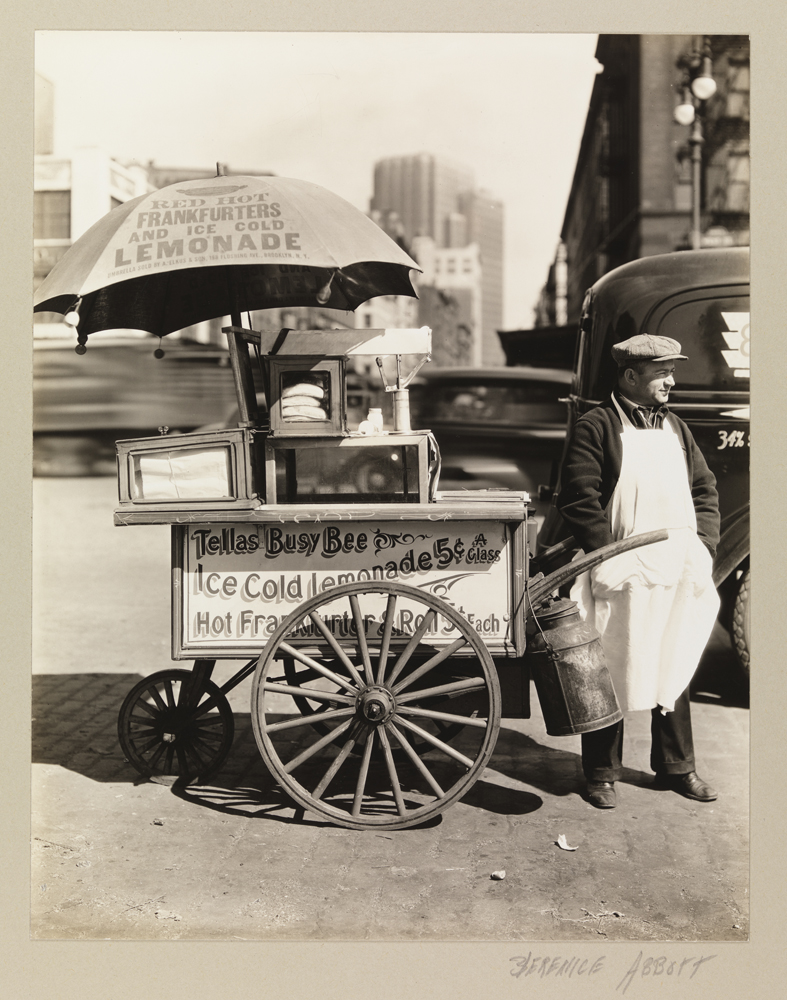
An icon is a well-known image, symbol, or object that has social, cultural, or historical significance. Icons often trigger strong cultural associations or emotions and can represent an important figure, movement, or idea. Essentially, icons are used to express meaning and ideas. New York City is full of icons that capture the character of the city, such as food items, notable athletes, musicians, statues, architecture, and more. I chose the hot dog stand because it is one of the first things that comes to mind when I think of New York City streets. The NYC hot dog stand represents the city’s immigrant history and fast-paced life. Hot dogs first appeared in New York in the 1860s when German immigrants began selling sausages in buns, quick and cheap meals, from pushcarts throughout Manhattan. Nathan’s hotdogs started in Coney Island in 1916, helping push the NYC hotdog across the country. By the 1950s, hot dogs were everywhere in the city, and still to this day, they have major prominence for both tourists and locals. Overall, hot dog carts are a major part of the city, and they represent New York’s fast-paced life and mix of cultures.
Sources
Mittenthal, Eric. 2016. “Hot Dog History | NHDSC.” Hot-Dog.org. 2016.
https://www.hot-dog.org/culture/hot-dog-history
“This Is the Original | Nathans.” n.d. Nathansfranks.sfdbrands.com.
An icon is a symbol that represents something larger than itself. they are instantly recognizable and carry deep meaning and identity for a city. Icons that are buildings or structures embody the history and culture of a place, and are widely known. The reason i chose the one world trade center is because it is a powerful symbol of the city’s resilience, hope, and renewal after the 9/11 attacks. The building stands on the site of the original world trade center, representing the city’s strength to rebuild after a tragedy. It is also one of the tallest buildings in the western hemisphere, representing modernity, and showing how New York honors the past and embraces the future. The building was designed by architect David Childs in 2006, and reaches 1,776 feet tall, symbolizing the year the declaration of independence was signed. It serves as office space, and observation deck, and theres a memorial nearby honoring the lives lost in 9/11.
Explore WTC. “One World Trade Center.” Explore WTC. Accessed September 8, 2025. https://www.explorewtc.com/en/local/learn-about-wtc/one-world-trade-center.html
I chose the bagel because it represents New York’s immigrant roots and food culture. Growing up in a Jewish-American household, bagels have always been an integral part of my upbringing since I was young. You can find bagel shops in almost every neighborhood, and the one close to my home is one I grew up going to. It was a routine in my family to visit at least once a week. Bagels are not just a food to me, but they’re tradition, comfort, and community. As Polish and Eastern European Jewish immigrants settled in New York in the 19th century, they brought the bagel with them. By 1965, bagels became a phenomenon where bagels were rising in popularity comparable to pizza and the hot dog. Soon after, individuals learned to eat bagels with another food tied to immigrants, with that being lox and cream cheese. Lox and cream cheese, originally served in Jewish delis during the 201th century, have become a prized accompaniment to bagels. Additionally, it has become a widely known fact that with a fresh New York bagel, it is almost sacrilegious to toast it as an untoasted bagel represents a true New York bagel.
Source:Blakemore, Erin. “The Unusual History of the Beloved Bagel.” National Geographic, May 3, 2023.
An icon is something you see that immediately reminds you of a certain place, idea, or feeling. It sticks in your mind and carries meaning just by looking at it.
I picked the Columbus Circle Globe at 59th Street. When I commute to Manhattan and come out of the station there, I always look up at it. For me, it represents and is reminiscent of how international and diverse New York City is.
The globe was made by artist Kim Brandell and put up in 1996 in front of the Trump International Hotel and Tower. It looks similar to the bigger Unisphere in Queens from the 1964 World’s Fair. Today, it’s a famous landmark at Columbus Circle and a reminder of NYC’s global reach and diversity.
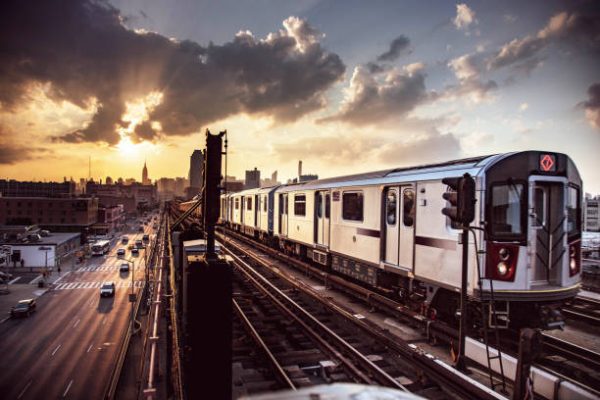
I believe that the Subway is one of the things that best represents New York. It is a staple in the everyday life of most New Yorkers in one way or another. Whether it be jumping on the train to work or school, taking it late with friends, or that feeling when you just barely make it on time, almost all of us have experienced the Subway in one capacity or another. I chose the subway because of its crucial role in our everyday lives.
From my perspective, the icon that best represents NYC is the MTA’s New York City Subway Map (specifically the Hertz version since it’s more popular). I chose this image because the map exemplifies the interconnectedness between the five boroughs and reflects the city’s complex subway system through train service lines. Furthermore, the map portrays major geographical and landmark elements in the city, such as the parks (Central Park, Van Cortlandt Park, Corona Park, etc), rivers (Hudson River, Harlem River, East River, etc), and islands (Randall’s Island, Governor’s Island, etc). The map has become one of the most looked at maps in human history, as it helps riders figure out which stops to get off at and which trains to take to their desired location. The official subway map was not created until 1940, since three separate companies originally established the subway. Ever since, the official map has undergone numerous revisions and redesigns. The image I specifically chose is the Hertz version, which has been used since 1998, only being replaced in April 2025. In the mid-1970s, the MTA commissioned Michael Hertz to design a new subway map that was easier to read. Massimo Vignelli had already created a colorful subway map and introduced it in 1972, but few riders liked it, mainly because Vignelli’s map didn’t include the city’s geography. Hertz’s map included streets, neighborhoods, and other surface points that helped people see the span of NYC more clearly. The Hertz map was a group collaboration between Michael Hertz’s firm, an MTA committee led by John Tauranac, who studied different designs and gathered input, and Japanese designer Nobuyuki Siraisi, who rode every subway line with his eyes closed to map out the curves in the routes (Vignelli’s original map included straight lines, which were not as accurate).
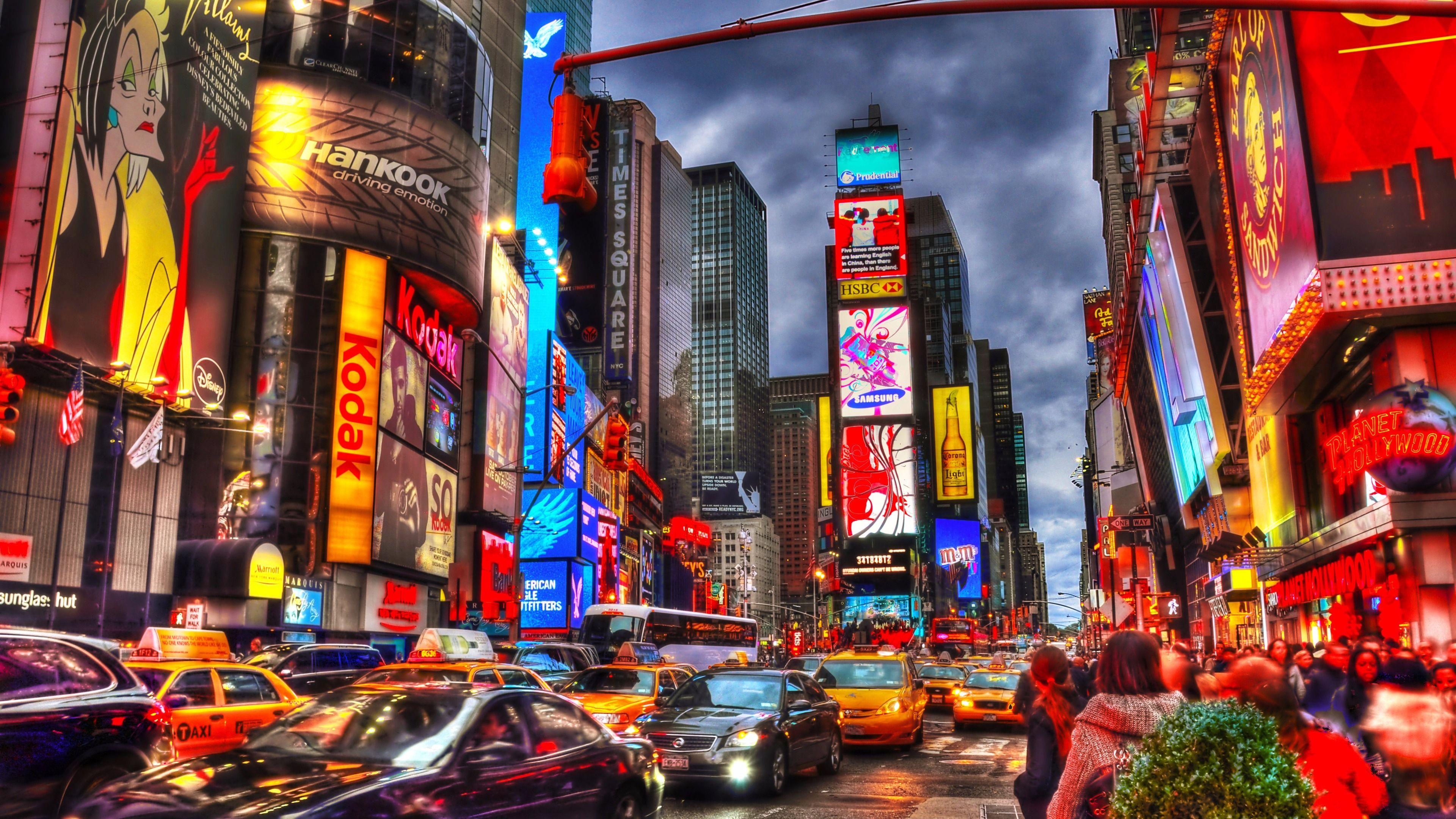
Times Square is one of the most famous icons of New Yprl because it capture’s the city’s every, culture and constant motion. Historically, it was named after the New York Times in 1904, when the newspaper moved its headquarters there. Over time, it grew into the heart of the city’s entertainment scene, filled with theaters, flashing billboards and crowds. It’s where people go to celebrate New Year’s Eve, a tradition that’s broadcast all over the world, making it a symbol not just of New York, but of excitement and possibility. Culturally, Times Square represents the “city that never sleeps”. The neon lights, Broadway shows, and street performers show off the creativity and hustle that define NYC. It’s crowded and chaotic, but that’s part of what makes it so iconic. It embodies the energy that people imagine whrn they think of New York. I chose Times Square because it feels like the perfect representation of New York’s personality. When you’re standing there, surrounded by lights ans people from all over the world, you feel the city’s mix of ambition, culture, and diversity all in one place. It’s not just a location, its’s an experience.