Alternative Art Spaces and Art in the Service of Social Justice- Augusta Savage

Image result for the harp augusta savage

An example of an artist who has shown their work in New York City that has addressed issues of social justice is black female artist and activist Augusta Savage (1892-1962). One of her works was a sculpture called The Harp, which was inspired by the song “Lift Every Voice and Sing” and also originally named after the song. The Harp was commissioned for the New York World’s Fair in 1939 and destroyed shortly after it was open to the public because of lack of  funding. The significance of The Harp is that it represents black resilience and liberation. The 12 African American singers that make up this structure represent the strings of a harp that symbolize the strength and unity of the black community. The exaggerated heights of the children also symbolize a brighter future and metaphorical heights that can be reached through liberation (“The Harp – the Body Is Memory: An Exhibition of Black Women Artists”).  

“The Harp – the Body Is Memory: An Exhibition of Black Women Artists.” The Body Is Memory: An Exhibition of Black Women Artists, sites.smith.edu/afr111-f19/the-harp/.

– Emmanuella Bentil
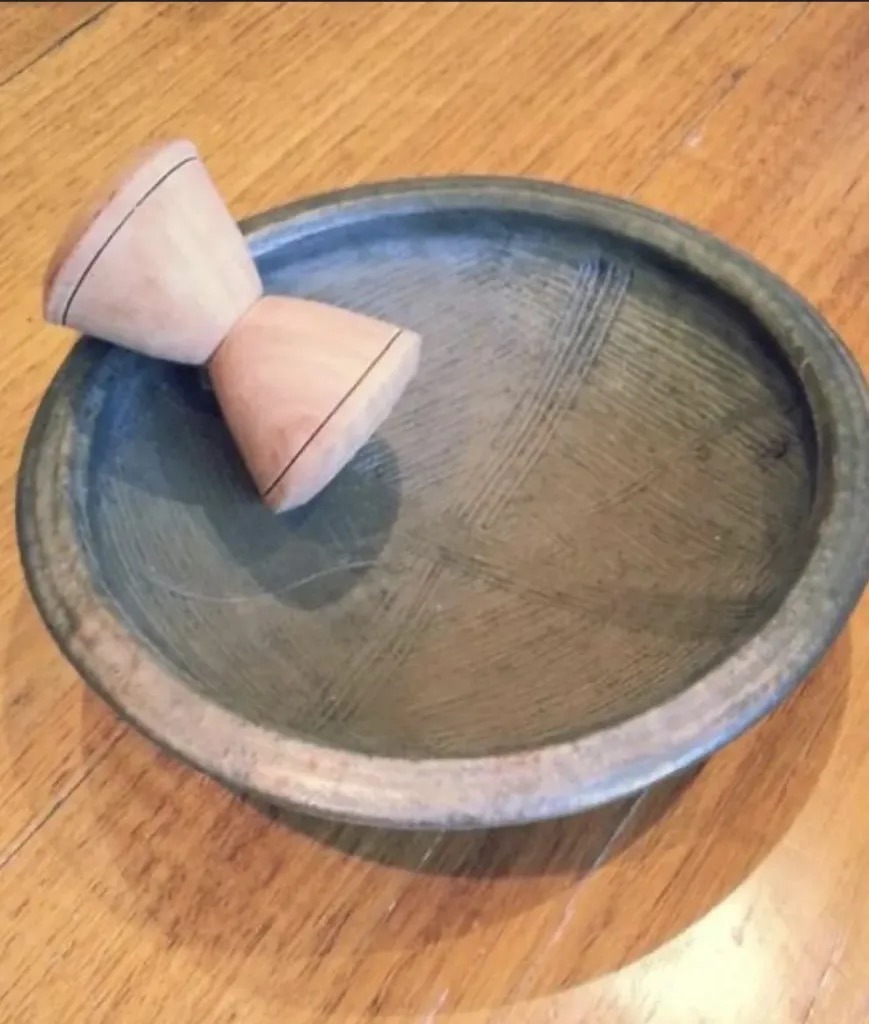
New York: A City of Immigrants – Asanka

An object that ties me back to my Ghanaian background is the black earthenware, known as “asanka” in Twi or Fante; it is a kitchen tool used to grind ingredients to prepare sauces or soups. This object is used with a “tapoli,” a wooden pestle. The earthenware is made from natural clay with a ridged interior that helps with the mashing process of ingredients when preparing meals. The earthenware is also a bowl used to serve various cultural dishes. My family and I use the earthenware to make a delicious spicy sauce consisting of tomato, hot peppers, and sardines, called “mako”, that can be eaten with rice, banku, dokun, and other dishes.

– Emmanuella Bentil

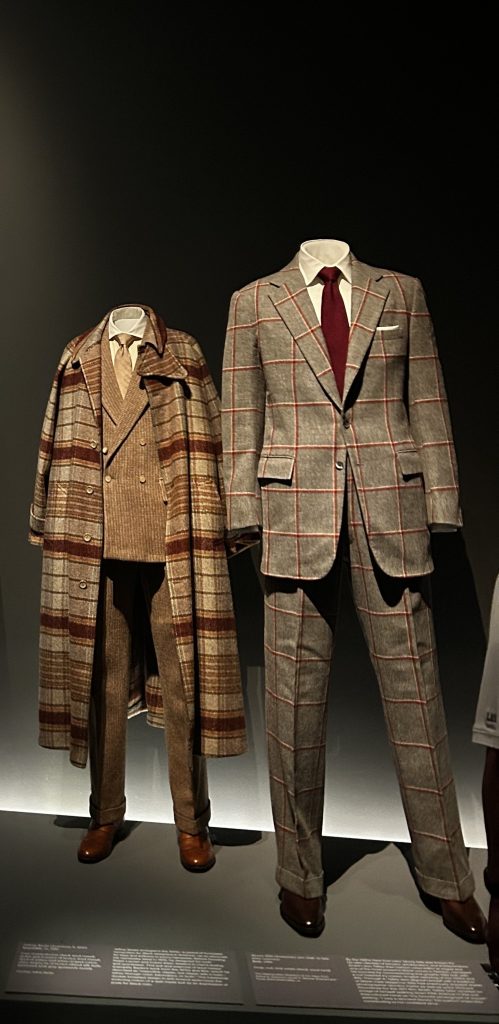
Superfine: Tailoring Black Style

These pieces caught my attention because they look professional but fashionable. They also look like the fancy suits my little brother would wear for his birthday or on special occasions. The significance behind these tailored suits is to command respect through one’s attire. Black politicians and cultural leaders have long recognized the power of dress and how it impacts how a person views and respects them. As Frederick Douglass said, colored Americans can uphold their dignity and respect through their attire (Superfine: Tailoring Black Style—the Metropolitan Museum of Art, 2015)

Reference:

Superfine: Tailoring Black Style – The Metropolitan Museum of Art. (2015). Metmuseum.org. https://www.metmuseum.org/exhibitions/superfine-tailoring-black-style/inside-the-exhibition

The Afro-Futurist Room: Out / Side of Time

The living room and television give a more futuristic feel to the period room. The television of the mid-twentieth century was a narrative device used to introduce many significant events into the home. On the TV, it plays a new short film, made by a British filmmaker, Jenn Nkiru, who is of Nigerian descent. The significance of her film was to commemorate the visionary concept of the cultural and historical experiences shared within communities of African descent. She also explored the term “cosmic archaeology,” which she defines as the connection between history through visual memory (The Metropolitan Museum of Art, n.d.).

Reference:
The Metropolitan Museum of Art. (n.d.). The Metropolitan Museum of Art. https://www.metmuseum.org/exhibitions/afrofuturist-period-room/visiting-guide

Proudly powered by WordPress | Theme: Baskerville 2 by Anders Noren.

Up ↑