The song is about resisting the systemic racist power structures in the U.S. by calling out corrupt authority, biased media, and figures who represent white supremacy, influencing Black audiences towards pride and organized resistance. It turned a catchy hip-hop song into a protest anthem to urge people to challenge the abuse of power.
Do you find any relevance with today?
I do find relevance with it today, especially with the police brutality, mass incarceration, and racist stereotypes that we see portrayed in some media, which are still challenged through the Black Lives Matter movement.
What are some of the NYC themes?
Some of the NYC themes are the crowded streets and political protests, specifically in Brooklyn and other major Black neighborhoods, to confront gentrification and racial injustice.
How do they drive home the beat?
Public Enemy drives home the beat by layering drums, horn stabs, vocal shouts, and siren noises to make the beat feel like a street party and political march. Combining this with the chant, “Fight the Power!”, it creates a rhythmic hook that the crowd can participate in with the kick and snare, becoming a catchy slogan.
What about the visuals? What choices do they make in the videos?
The visuals portray a hot-summer Brooklyn march with Public Enemy on a flatbed truck, surrounded by a crowd carrying signs, wearing buttons, and holding up images of notable figures like Malcolm X and the Black Panthers. Spike Lee also utilizes handheld camerawork and visible microphones, giving the music video a documentary mood that highlights community action.
Where did the artists take their names from (if this applies)?
The group “Public Enemy” took their name from the phrase “public enemy number one”, which implies that they are viewed as dangerous by the system because they are willing to reveal the uncomfortable truths. Chuck D’s name is a shortened but commanding version of his real name, Carlton Douglas. Flavor Flav’s name comes from his role as an energetic hype man who adds personality to the group.
What is sampling? What do they sample in the song you chose?
Sampling is when you take short pieces of existing recordings and reuse them or loop them inside a new track, which is typically combined with other layered sounds. “Fight the Power” incorporates numerous samples, such as using material from James Brown (“Funky Drummer”, “Funky President”, and “Hot Pants”) and a vocal clip from civil rights activist Thomas “TNT” Todd at the beginning.
Siyan Wong is a New York City based artist whose subjects are the working poor, the homeless, women and the elderly. One of her projects is called “Five Cents a Can: Making Visible the Invisible”, which raises questions about migration, inequality, aging among individuals who are poor and Asian (more specifically canners). She started painting the canners after encountering the same elderly Chinese lady going through garbage in the back of her apartment building every Saturday morning. When she befriended her, Siyan discovered that Choi Yi, the elderly Chinese lady, is 93 years old, has four children and many grand-children, and used to work in garment factories until they closed in Chinatown. She lives in the public housing near Siyan and takes pride and work. The resilience of the canners inspired Siyan to question whether one should be aging with such hard work for bare survival, when many people are living in comfortable luxury.
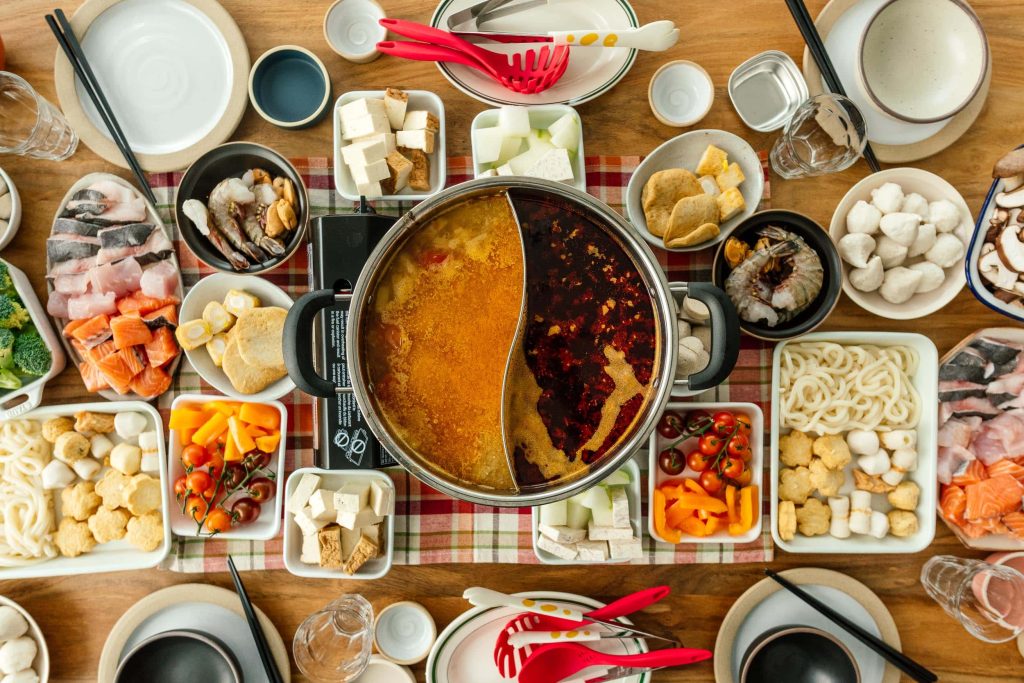
An object that ties me to my background is hot pot. Hot pot is a communal Asian dish that involves a simmering pot of rich broth, where people can cook different raw ingredients in the broth (ex: seafood, vegetables, noodles, meats), and when ready, they would dip the cooked food in customized dipping sauces. In my family, we usually have hot pot on special occasions and holidays, especially on holidays like Chinese New Year, Christmas, Thanksgiving, birthdays, etc. Whenever my family has hot pot, we always invite my aunts, uncles, and cousins to gather together at my house to have it together, and it’s a lovely experience. Through hot pot, we get to catch up while sharing a delicious meal, and it has become a tradition in my family. Hot pot has become a symbol of both unity, family, and warmth.
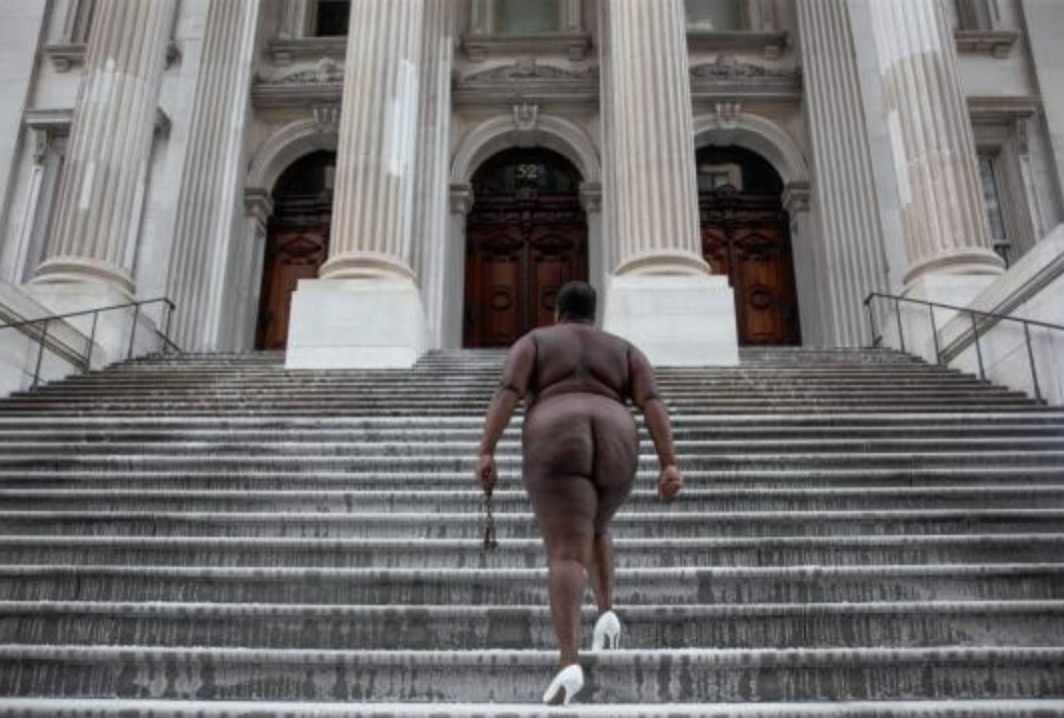
This artwork is called “Over My Dead Body” created by Nona Faustine. Part of her larger “White Shoes” series, the photograph depicts Faustine from behind in nude holding a shackle in one hand, wearing only her white shoes, as she climbs the steps of the Tweed Courthouse in Manhattan. The building overlooks the graves of the adjacent African Burial Ground, where Black people were buried in the 18th century. Faustine acts as an indictment, a Black woman who is exposing a disgraceful truth about the nation’s history and its “proudest” landmarks. The white heels are a symbol of white patriarchy and an affirmation that the main subject is a free Black woman. When she walks up the steps as her complete nude self, she celebrates her freedom. She represents the marginalized communities, specifically Black women, who have once experienced the atrocities of enslavement. Through intentional compositions and extensive research, she reveals the hidden histories of Black people in the United States.
From my perspective, the icon that best represents NYC is the MTA’s New York City Subway Map (specifically the Hertz version since it’s more popular). I chose this image because the map exemplifies the interconnectedness between the five boroughs and reflects the city’s complex subway system through train service lines. Furthermore, the map portrays major geographical and landmark elements in the city, such as the parks (Central Park, Van Cortlandt Park, Corona Park, etc), rivers (Hudson River, Harlem River, East River, etc), and islands (Randall’s Island, Governor’s Island, etc). The map has become one of the most looked at maps in human history, as it helps riders figure out which stops to get off at and which trains to take to their desired location. The official subway map was not created until 1940, since three separate companies originally established the subway. Ever since, the official map has undergone numerous revisions and redesigns. The image I specifically chose is the Hertz version, which has been used since 1998, only being replaced in April 2025. In the mid-1970s, the MTA commissioned Michael Hertz to design a new subway map that was easier to read. Massimo Vignelli had already created a colorful subway map and introduced it in 1972, but few riders liked it, mainly because Vignelli’s map didn’t include the city’s geography. Hertz’s map included streets, neighborhoods, and other surface points that helped people see the span of NYC more clearly. The Hertz map was a group collaboration between Michael Hertz’s firm, an MTA committee led by John Tauranac, who studied different designs and gathered input, and Japanese designer Nobuyuki Siraisi, who rode every subway line with his eyes closed to map out the curves in the routes (Vignelli’s original map included straight lines, which were not as accurate).
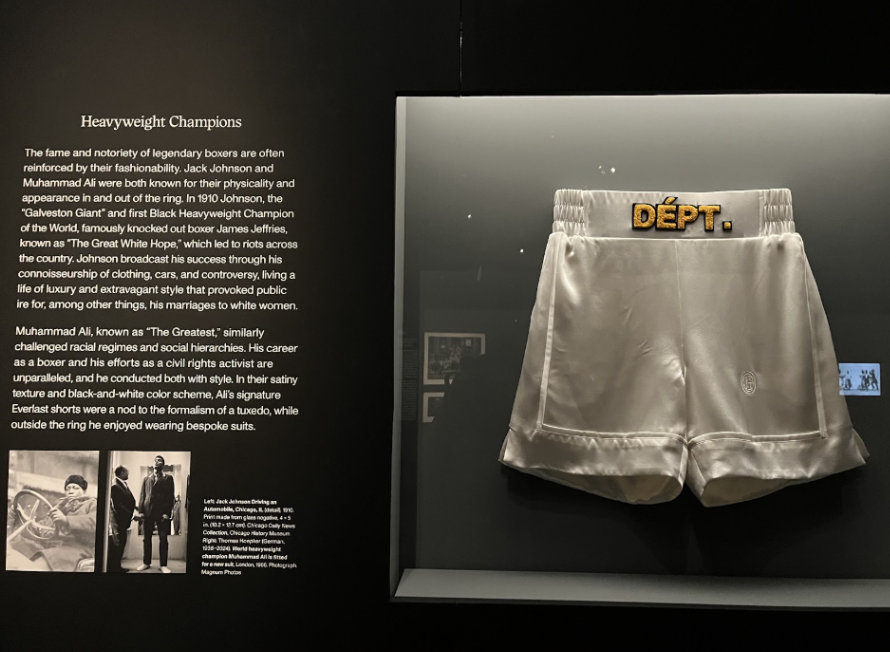
This pair of white satin boxers with the lettering “DÉPT.” caught my interest when I entered the Superfine exhibit because of how iconic boxing briefs are in popular culture. Heavyweight champions Jack John and Muhammad Ali popularized the boxing briefs as fashion. Jack Johnson, known as the “Galveston Giant” and the first Black Heavyweight Champion of the World, famously beat James Jeffries, known as “The Great White Hope”. His win sparked riots throughout the nation, but Johnson celebrated his victory by displaying a life of luxury. Additionally, Muhammad Ali, known as “The Greatest” boxer, also challenged racial prejudice in style, as he wore his signature Everlast shorts, which acknowledged the formalism of the tuxedo. These white satin boxing briefs exemplify Black resilience against attempts to silence their voices and the powerful impact of resistance against racial discrimination.
I signed up for the Churn, c. 1700-1800. This plunger-style butter churn was created out of cedar wood and was essential in domestic life. After fresh milk was collected, a worker would let it ferment and wait for the cream to rise to the top before churning. Global folklore believes that tired workers would try to accelerate this laborious process by singing songs as they separated the yellow fat from the buttermilk. Albert Richardson, a Black inventor, patented the modern butter churn in 1891, which allowed for a more efficient process to create butter, revolutionizing the food industry. This object relates to the exhibit because it exemplifies the impact of Black excellence and imagination, which are key themes of Afrofuturism.