A Vietnamese Family’s Hotpot

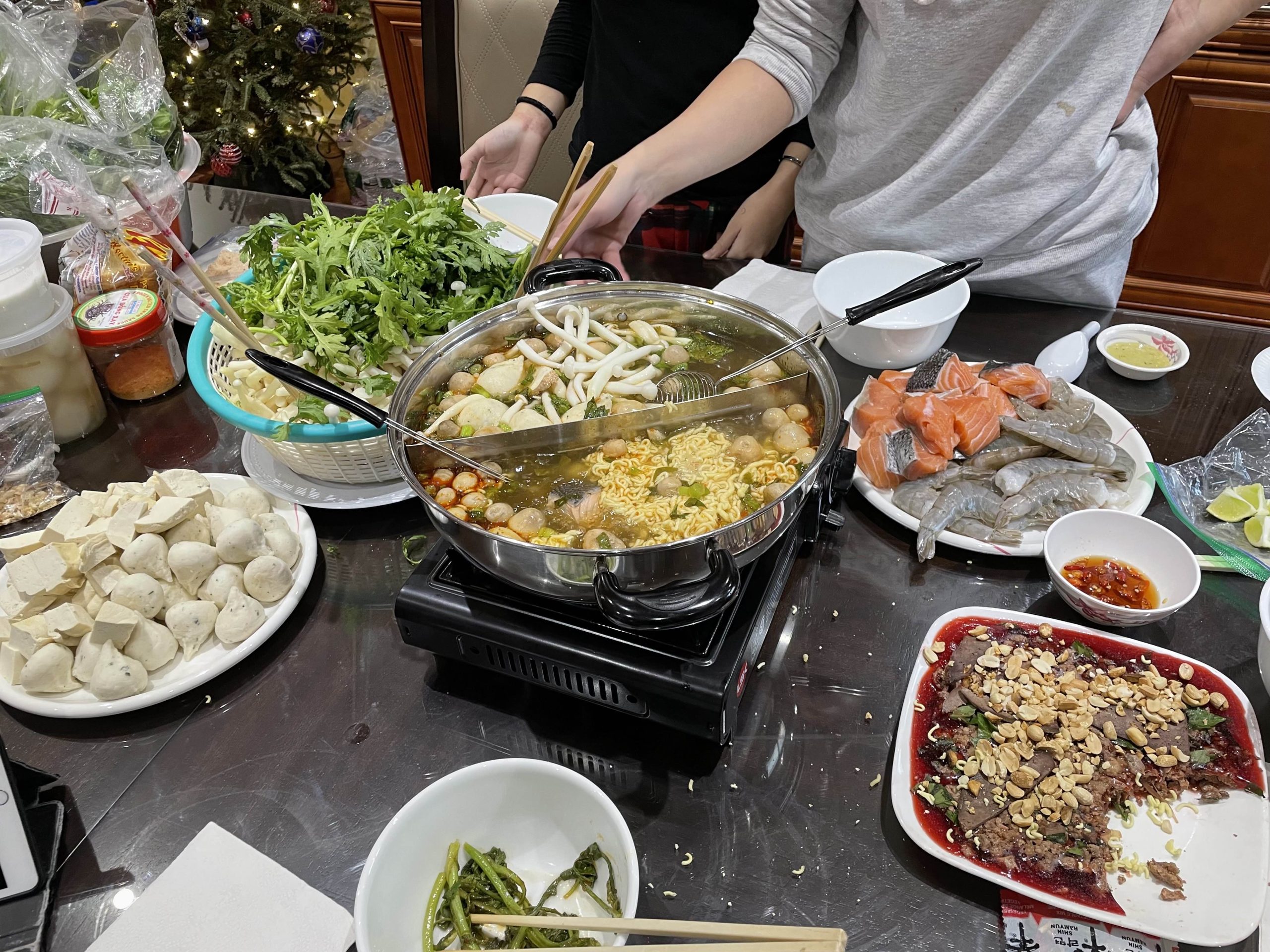
My family doesn’t have many grand objects from our Vietnamese heritage. And of those we do own, I don’t have much personal attachment to them. However, something that I’ve grown up with that I do adore is the Hotpot we always use for big dinners. I don’t know when we got it, all I know is that this pot has been in our family for as long as I can remember. Whenever we have a large group of people, usually family from out of state, we always use this for dinner. This picture is actually from Christmas dinner 2024.

The reason this pot means so much to me specifically is because of how many memories of mine revolve around this piece of cookware. Hotpot always leads to lighthearted conversations, a delicious meal, and patiently waiting for our food to finish cooking. The food each person chooses to cook and eat always reflects who they are. I remember that this specific night was when I tried fish roe dumplings for the first time and fell in love. In fact, part of the reason I’m in college is because of this pot as I actually wrote my college essay on it.

Whenever I go into storage to grab the pot, every memory of the fun and laughter it’s brought to my family comes flooding back. It may not be as glamorous as a piece of jewelry or as grandiose as a family heirloom, but our Hotpot has brought my family a sense of joy that just can’t be recreated.

My Story Object

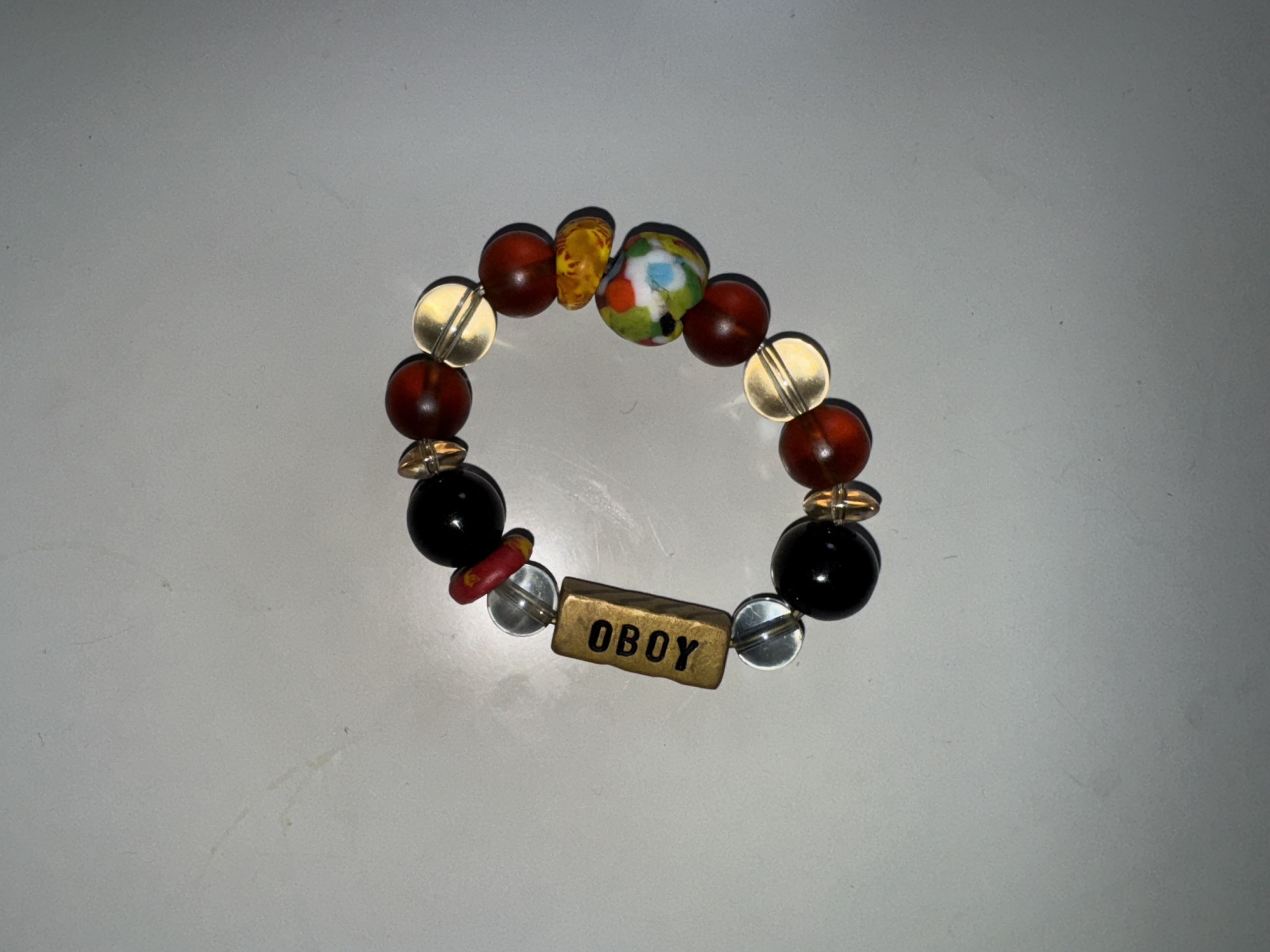
The Ghanaian bracelet is representative of the overall culture and tradition that is preserved within the country. From generations to generations, these bracelets preserve history, values, and the overall gist of what it means to be Ghanaian. From the pure black beads to multi-colored beads, these all have an individual meaning and all serve a collective purpose in conveying a cultural message. The black beads represent faith, strength, and wisdom while the colorful beads represent riches, prosperity, and royalty. These all serve a collective purpose for representing Ghanaian culture. When I first received this bracelet from my aunt who brought it from Ghana, I was indifferent to it. I viewed the bracelet as just another object that I could wear and was creatively distinct from my other accessories. However, as she began to discuss how she views Ghanaian culture and fashion it changed my indifference. I became ecstatic because I had something where I could represent my identity. The bracelet transcends just a fashion piece and is a statement of my heritage and history. It serves as a reminder that I am always representing Ghana and motivates me to put my best foot forward in everything that I do.

Nardi Game Set

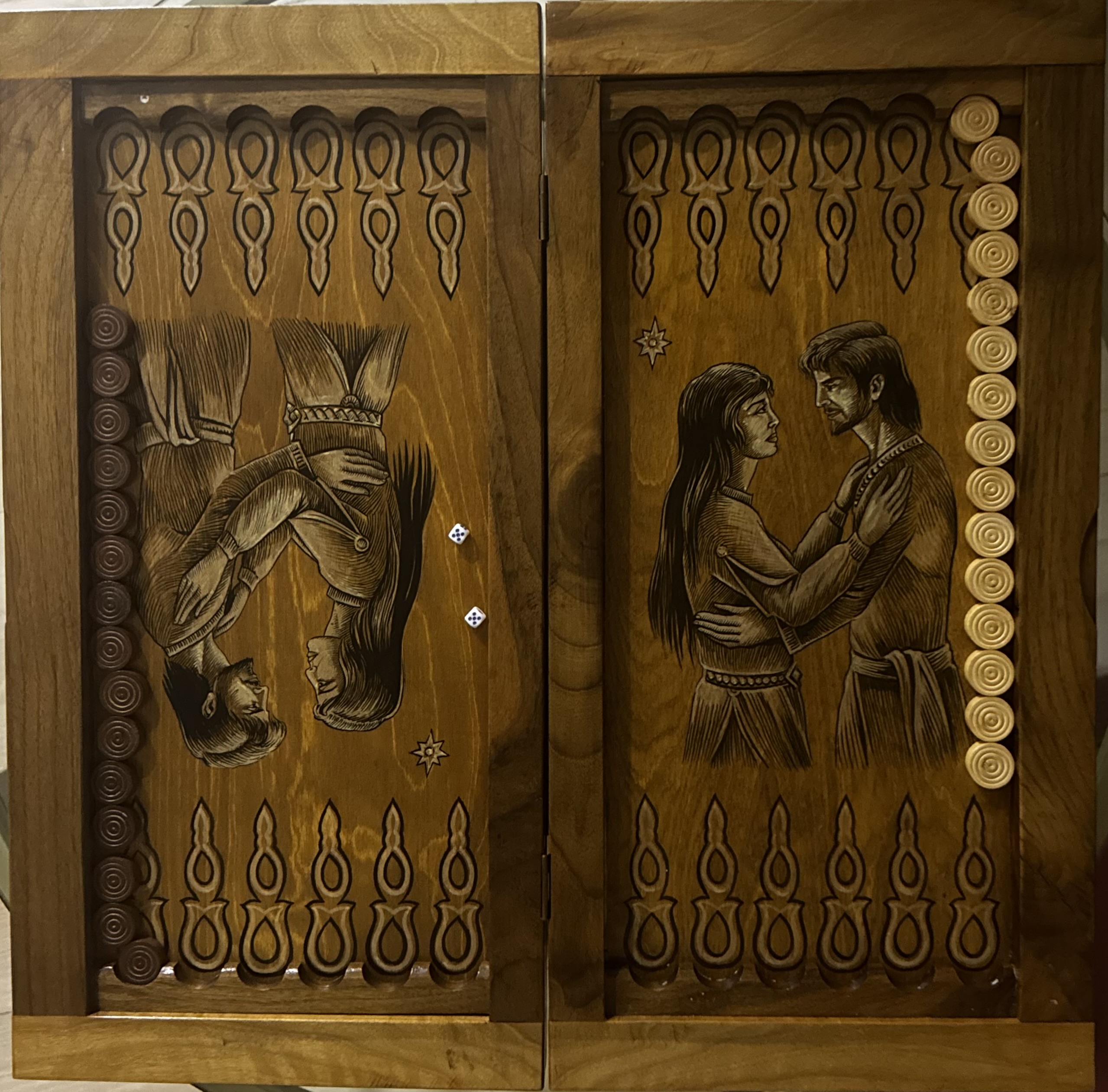
The thwack and slam of the checkers permeate the air as my father confidently flows through the game, moving his checkers to block me in. 10-year-old me sits there, contemplating my next move. Strategizing if I want to be bold or safe in protecting my checkers. This game, Nardi, also known as Backgammon, was one of the first board games taught to me by my father. Nardi is a board game that originated in ancient Persia and spread to countries such as Georgia, Armenia, and Azerbaijan. My family, from Azerbaijan, has learned and played nardi for generations. At first, the game was intimidating to learn, with its aggressive smacking of the checkers and rolling the dye while counting in Farsi. I remember sitting at the table, rolling the dice, getting a 6 and a 5, or, as my father calls it, “Şeş Beş.” As I learned new strategies, moves, and the Farsi language, I also became closer to my family and culture. Our game set specifically was made and brought from my country, Baku, Azerbaijan, making it even more special to me and my family. As it’s another object symbolizing our history. Today, I stand as a champion within my family, being almost undefeated as I play against my family. I hope to pass down this game and game set to my children, teaching them ways to strategize, learn, play, and bond with family.

Golden Chopsticks of the Tieh Family

My mother immigrated to California from Taiwan in 1976. With her were two pairs of golden chopsticks, a family heirloom with engravings in Archaic Chinese that had been passed down for generations. At eight years old, she learned that the American Dream was not in San Francisco. She moved to New York soon after, where her parents worked at a mail facility. Her father’s doctorate in law and her mother’s degree in teaching meant nothing if not in English. The golden chopsticks were shut away in a kitchen drawer. We use forks and knives in America.

In China, chopsticks made from precious metals (usually silver) symbolize wealth and safety. In ancient times, nobles were afraid of being poisoned. Silver and gold would become tainted and turn dark if in contact with certain poisons, so noble families ate with chopsticks made from those metals. The benefit was twofold: a parade of luxury and the calmness of safety. These utensils sometimes also had engravings on the side. My mother’s chopsticks said “Bring Auspiciousness.”

My mother worked towards this goal for years. As she grew older, she seemed every part the quintessential daughter. A division I athlete at Columbia University. Perfect—until she had to transfer. After all, how can an immigrant afford an Ivy League education on a mailman’s salary?

Yet, the engravings on the chopsticks did not rust; her goal stayed the same. She graduated from Baruch and stayed for her MBA, where she met my father, and then started at a top law firm. The chopsticks were polished for her wedding, sitting centerpiece at the dining table. The party was not just a celebration of love, but also for the hard work of her parents. She was their American Dream.

Gardening

Gardening was never seen as just a hobby on my mother’s side of the family. It was an art, a skill, and a way of understanding feng shui. In direct translation, feng shui means “wind-water,” and it reflects the flow of energy within a home and family. My grandparents, like many people of their generation, believed that when plants grew healthy and strong, it was a sign that the family carried positive energy, along with wealth, prosperity, and good health. To them, a garden was never just decoration. It was a reflection of the people who cared for it and the life growing around it.

Some of my earliest memories are of visiting my grandparents and seeing their garden. I remember the bright leaves shining under the sun, the sharp tang of lemons in the air, and the Golden Nanmu tree that always stood out to me as something rare and almost sacred. Every time I returned, everything seemed bigger, stronger, and more alive. As a child, I used to wonder if my grandpa had some kind of secret potion that made everything grow so beautifully. But there was no secret. It was just patience, routine, and care. He watered each plant carefully, paid attention to every leaf, and nurtured the garden the way someone would care for a child. That was what made it so beautiful. It was not magic.

That is why gardening means so much more to me now. It is not just about plants. It is about what those plants represent. Each tree, fruit, and flower carries a history of where my family came from and what they believed in. My grandparents brought with them not only traditions, but also a way of seeing the world, one where care and growth were deeply connected. They believed that what you nurture will eventually flourish, whether that is a garden, a home, or a family.

My mother inherited that same skill and artistry from her parents and brought it with her to the United States in 2004. Even after moving to a new country, she held onto this part of home. Over time, as she became busy raising my sisters and me, gardening blended into daily life rather than standing apart from it. It became something quieter but still deeply present, woven into the way she cared for our family. My uncles also have gardens of their own, which makes this tradition feel even larger than one person. It stretches across generations. In many ways, my grandparents planted more than seeds when they came here. They planted values, habits, and traditions into foreign soil, trusting that future generations would continue to grow from them.

That is why gardening is my object. It is physical, but it is also symbolic. It represents patience, care, family history, and the idea that growth takes time. It connects me to my grandparents, to my mother, and to a cultural belief system that sees nature as deeply tied to the energy of a home. When I think about gardening, I do not just think about leaves or fruit. I think about inheritance. I think about what gets passed down without always being spoken. I think about how something as ordinary as watering a plant can hold history, love, and intention.

Gardening matters to me; it reflects growth that comes from being nurtured, protected, and given time. In that way, gardening tells the story of my family. It tells the story of how my grandparents carried their beliefs into a new land, how my mother continued them, and how I now see myself as part of that same living history. Gardening is not just a hobby. It is a tradition, a legacy, and a reflection of the roots that continue to ground me.
Bánh bèo & Bánh bột lọc

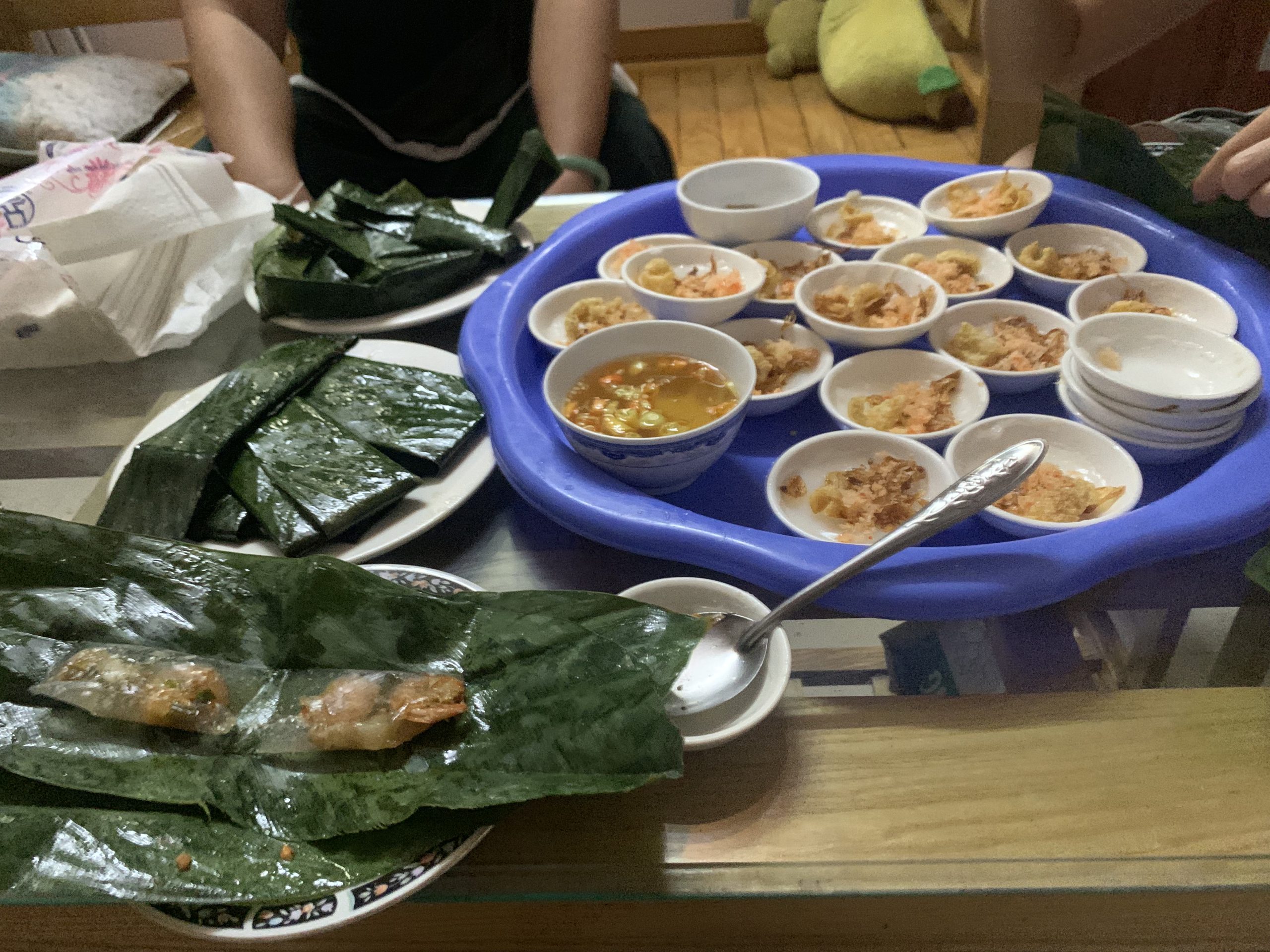
Bánh bèo and Bánh bột lọc are bite sized, savory Vietnamese dishes from the city in Vietnam that my father is from, Huế. Bánh bèo is uniquely served on small, individual dishes, and my father always told me that stacking the dishes became a competition of who could eat the most. Bánh bột lọc is wrapped, steamed, and served in banana leaves, and perhaps part of how much I love this dish is because of the element of surprise. When we eat these dishes, my father always reminds me to drown my bites in the slightly sweet and spicy Vietnamese dipping sauce served on the side, Nước chấm. I’ve been to many Vietnamese restaurants in New York and these specific dishes are rare to find. Ever since I was young, my family would often make an entire trip to Philadelphia to visit an authentic Vietnamese bakery called Ba Le that has a vast selection of traditional Vietnamese desserts, sauces, and dishes. For gatherings, my family sometimes orders large platters of Bánh bèo and Bánh bột lọc from a local family in Queens. When I visited my family in Huế in the summer of 2023, I was so excited to try Bánh bèo and Bánh bột lọc from my aunt’s neighbors. It was served exactly how I’d always eaten it, but it was even more special now that I was enjoying it with my family in Vietnam. Whenever I think of the taste of Vietnam, the first thing I think of are these two special dishes.

Proudly powered by WordPress | Theme: Baskerville 2 by Anders Noren.

Up ↑