

Bread is a staple food made from flour and water, often combined with a leavening agent like yeast or baking soda. Its importance stems from the simplicity of its ingredients, yet its remarkable versatility. Bread has served humans as a major food source since prehistoric times and has been prepared in various forms using a wide array of ingredients and baking methods. The earliest known bread dates back to the Neolithic period, which is approximately 12,000 years ago (Britannica). Bread also functions as what scholars describe as a transregional node, a food that travels across borders, adapts to new cultures, and still maintains its essential structure. Because bread can be reinvented in each region while remaining recognizable, it becomes a shared point of connection between cultures that otherwise have little in common.
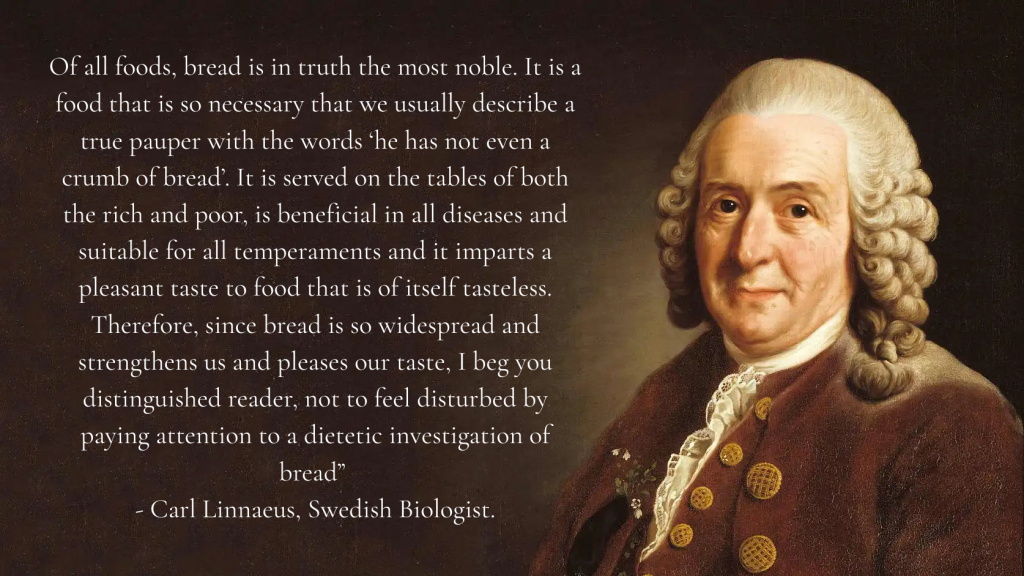
Carl Linnaeus points out how it doesn’t matter what your background is; we all consume bread. It is one of the few foods that can represent anyone and makes sense in virtually all contexts of food (National Library of Medicine).
Bread as a cuisine staple and ingredient is found on nearly every continent. Antarctica is the only continent where it is not a cuisine as there are no permanent residents, but the Sledging Biscuit was created as a high-calorie food to keep expeditioners fed in the extreme cold climate (Eyes of Bread).
That being said, bread is not only a crucial ingredient for diversity, it also embodies diversity. From the Dabo bread in Ethiopia to the tortillas in Mexico, bread has been independently invented multiple times, and has been spread throughout the entire globe. Nearly every culture has a form of bread.

