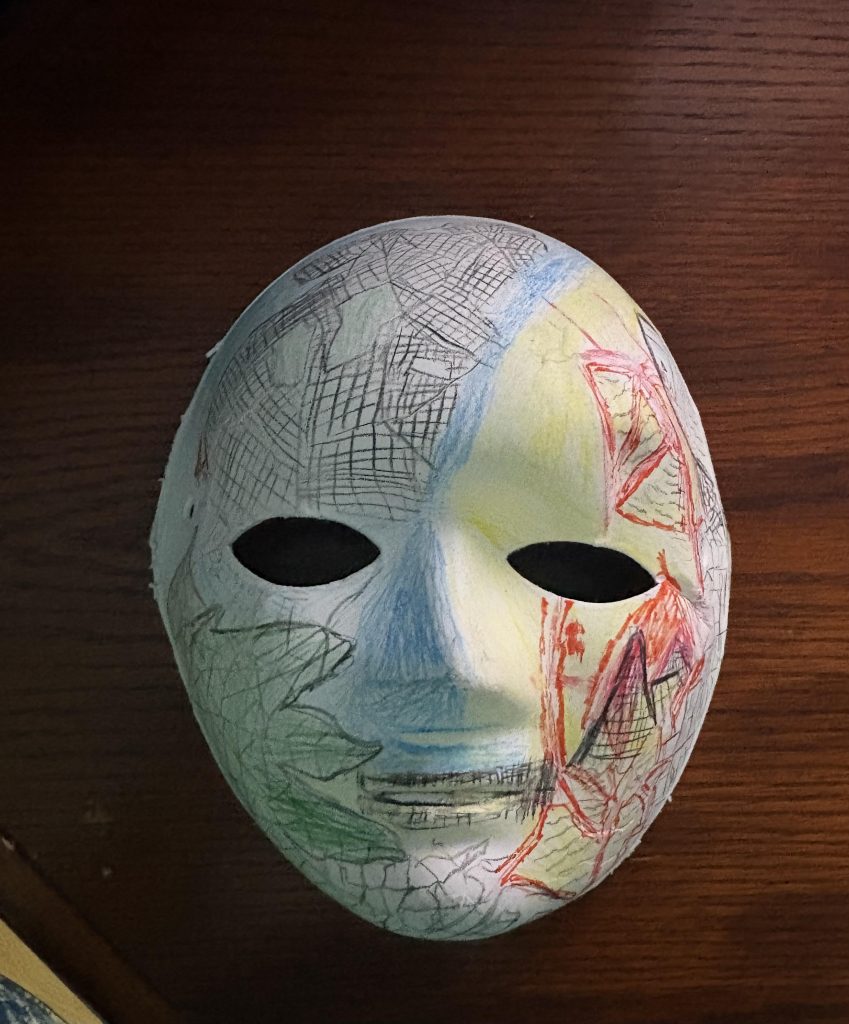
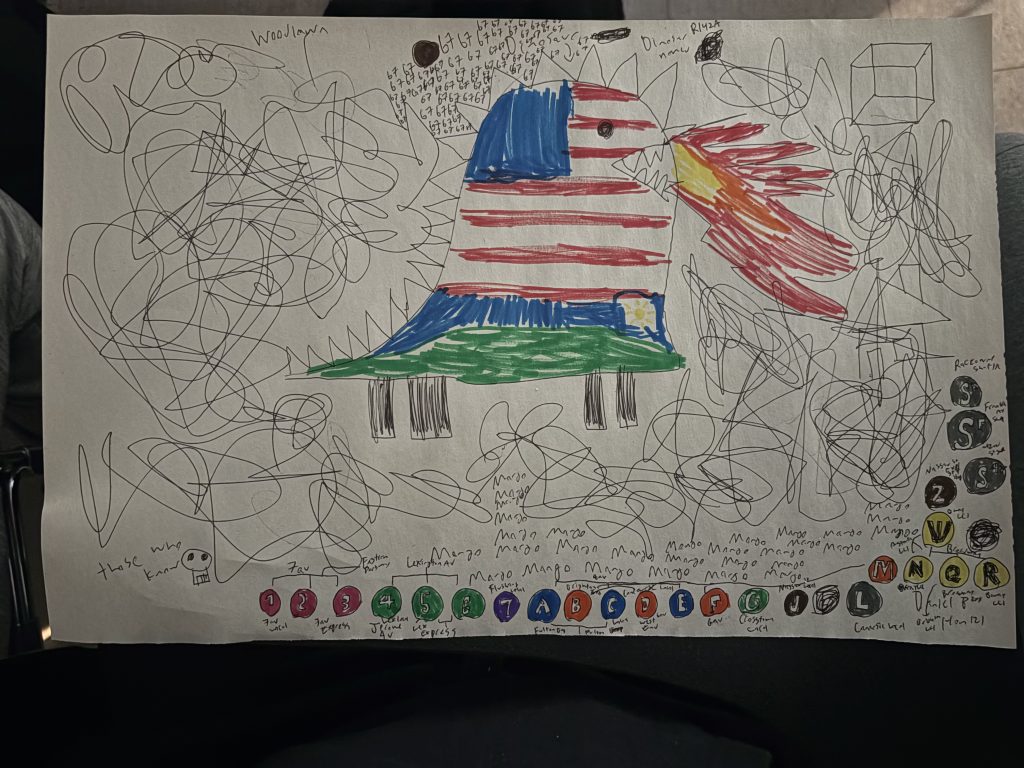
I included, to the best of my ability, a simplified grid map of Brooklyn, and chose to attach it to the left(I know it’s on technically on the right in reality thanks to how pictures work but still) side of my forehead, as a lot of my time is spent reminiscing about the time in which I lived there. Many of my core childhood memories were made when I lived in Sheepshead Bay, so Brooklyn has always been something special and dear to me. I still have to commute there on the regular, so it’s not like it has completely left my life even today. I also have a massive leaf attached on the right side of the mask, as I have a deep liking towards nature and often go for strolls in parks all over the city in my free time. I also have two stripes running through most of the mask’s center, one blue one yellow, reflecting my nationality. My country of origin is a major source of pride for me, and it’s been instrumental in helping me understand myself and the land from whence I came. Even though I was born there, I constantly need some kind of reminder of where my origins lied, and I thought including the flag would help with that.
On the right, I’ve drawn a couple of small-ish volcanoes, but tried to make them look somewhat like the Library of Alexandria since I am kind of fond of history, especially ancient history. The volcanic design mainly echoes my love for nature, which I already tried to express through the leaf, but I just thought it was worth bringing up. I do have some squiggly lines locked within geometric shapes present. They’re there because I wanted to try and bridge my interest in reading (especially nonfiction) and a burgeoning interest in math that I developed pretty recently. All the way on the right edge of the mask, I do have quite a few illustrations of buildings in the background, again reinforcing my interest in urban planning if the grid of Brooklyn on the left didn’t already. Finally, I have a monitor on top with a “run” button, since I also like to code in my free time.
Last weekend, I was asked to go to see my very first Opera performance at Lincoln Center. In general, I can’t say that it’s my kind of performance; while the soundtrack and the level of effort the participants put into making it run smoothly were both undeniable, I couldn’t immerse myself into it no matter how hard I tried for a variety of reasons. For one, (although this is no one’s fault in particular, I’m sure Opera tickets aren’t known for their affordability), I constantly had to deal with the feeling of not being entirely present, simply due to the sheer distance from the stage. The view itself was fine, I just felt..kind of far from all of the action. It certainly didn’t help that I didn’t figure out how to turn captions on until well after the first segment, so I had to constantly keep up using the very little Italian that I knew. That kind of undermined the lack of a smooth progression of the plot that I felt consistently throughout the play. The few brief references to France’s state as a country around the time were pretty interesting, however, even if they didn’t really contribute to a cohesive narrative as much as the abject poverty the characters constantly wrestled with. Overall, while the Opera was no doubt exciting to watch, I couldn’t really appreciate it for what it was trying to say or do.
Now, onto the comparison between the opera and Rent. In general, I found the latter to be much more readily applicable to our existing social context, and, more generally, reality. While watching Rent, I actually felt like I was watching something that could have happened in recent, living memory. I guess the whole “East Village, struggling to make rent and even survive, gritty” nature of the movie turned out to be more relatable than 1840s Paris, where tuberculosis ran rampant. The general sense of community that each character was able to experience also helped tremendously, as, unlike in the play where it felt more like everyone had, at least partially, their own separate lives and plots, there was a much clearer sense of community. That’s part of the appeal Rent had in my case; additionally, I enjoyed how much more fluid the movie actually felt, particularly when placed against the Opera. It feels like Rent was also much more accurate in reflecting the typical lives which artists experience. Obviously, there were time constraints, but it felt like each of the individual parts were overly discrete and completely independent of one another. Angel’s death was also far sadder than Mimi’s, which, honestly, came out of nowhere besides very flimsy foreshadowing in the form of a cough in the Winter.
As you can probably conclude, I enjoyed Rent far more than I did the Opera. It felt infinitely more “real” and relevant to the times we live in, in clear contrast to the Orleanist-era play I experienced, and also allowed for far more attachment to the characters.
Last Friday, while I was working on my graffiti poster, I ended up having the opportunity to listen to Rich Stremme speak about his experience in the field of tattooing. I deeply enjoyed such a mini lecture, as I was able to learn more about a field that I rarely had contact with before.
There were a few things I enjoyed in particular. For example, his discussion about the history of tattooing and its evolution from a hidden niche arising from trans-Atlantic piracy (and other areas) to a burgeoning new field that has seen radical transformation, especially in New York, since its legalization in the 80s-90s. I also enjoyed his several personal anecdotes, especially how committed he seemed to be to the art of tattooing (based on his mentoring in Upstate NY by Pat, for which he had to drive several hours no doubt. It’s equally as interesting that he started much later in life, at the age of 35, as it’s not often for people to pick up new hobbies around that age.) He also hinted towards a clear divide in tattooing based on distinct styles (such as his preference for older/more traditional forms, from what I remembers) and ways in which specific groups conduct themselves based on tattoos, such as Hells Angels. I wasn’t aware that tattooing formed such a fundamental part of their identity.
Overall, I probably won’t end up getting a tattoo, but I do appreciate Rich’s expertise in the field, and it’s clear he had a deep life-long passion for it.
Earlier this week, I ventured with the rest of my class to the Brooklyn Museum. As a preliminary to my actual discussion regarding it, I’ll say upfront that I found it to be underwhelming and short of the expectations I had for it as advertised. There were some really interesting or appealing exhibits, but, for the most part, they were monotone and didn’t pique my interest in any meaningful way.
I say this in full seriousness: the journey to the museum, which I had previously mimicked when driving into Downtown Brooklyn. I spent around 75% of my commute glancing at the window at brownstones, bodegas, or new luxury condos that seemed effectively abandoned (the other 25% was talking about the mayoral elections with 3 other people). I will say, it was pretty interesting that we hopped off the highway near Sunset Park, as, typically, my family and I would go all the way to the Brooklyn Bridge and then make an attempt to leave on an offramp. Anyways, our commute wrapped up after passing several blocks worth of late Victorian/Gilded Age buildings, and we ended up having to walk an extra block’s worth of ground just to get into a cramped auditorium.
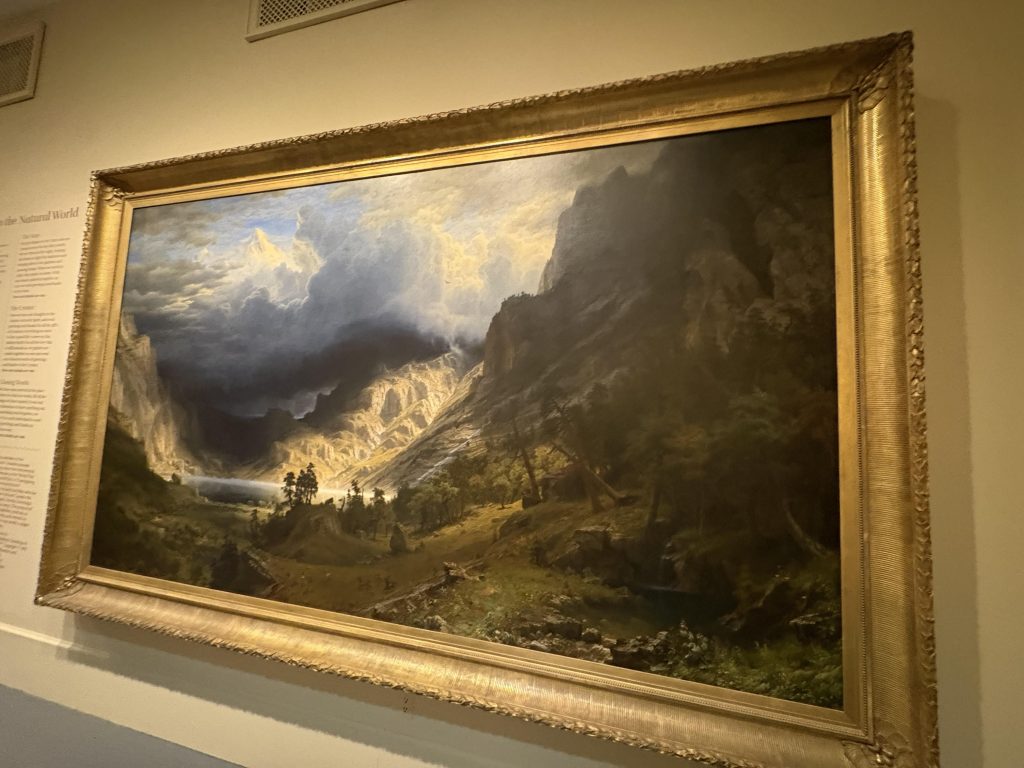
The exhibits themselves, like I said previously, were nothing to gander at twice (for the most part). I noticed that a majority of the exhibits presented to us either had humans directly in them (whether in a self-portrait or other form), or involved deeply human elements. I know that sounds generic, but that is genuinely one of the deepest observation I had about the gallery itself. I, for some reason, thought that the Brooklyn Museum was specifically about Brooklyn and its history going into it, and while there were some elements (such as a painting of the Brooklyn Bridge and the lobby having a Dodgers banner and a BMT subway map) of Brooklyn’s identity, it ended up being a run-of-the-mill gallery. I was extremely disappointed to find out that there happened to only be one floor that we could actually visit. For a borough that would be the third biggest city in the country if not for the consolidation? Extremely disappointing, maybe even embarassing. Out of the pieces that were there, nothing was world-famous or even particularly appealing, besides the occasional chair. I really don’t understand why there were so many chairs. Overall, I can’t say much as very little actually stood out to me, but there was one piece I was interested in highlighting.
“A Storm in the Rocky Mountains, Mt. Rosalie” was one of the few pieces in the Brooklyn Museum that I could say, with confidence, that I enjoyed looking at more than once. The very obvious beauty of the scenery depicted, while breathtaking, was only part of the story, as, after my visit, I ended up looking the painting up in the Museum’s collection, and learned more about the “concealed legacy of colonialism and violence” (as written by the museum itself); I had assumed the painting was a direct reflection of 19th century American expansionism due to the subtle yet ominous cloud in the background, but didn’t fully confirm such a suspicion until I looked it up and found it. It reminded me deeply of “American Progress” by John Gast, not only because of that ominous cloud/clear sky divide as shown in both Gast’s work and in “A Storm in the Rocky Mountains”, but because of the sheer beauty and breadth of the mountains/wilderness depicted, even if such beauty/breadth is much more noticeable in the latter versus the former. While it had no visible signs of people, the battle between dark and light stood out in it, and I constantly went back to the piece both during my visit and after to fully take in everything it had. Overall, while my museum visit was deeply underwhelming, shorter, and less interesting than I had hoped, I found that particular piece to be captivating and truly outstanding.
To be perfectly honest, I don’t have the energy to come up with a funny hook or witty remark in my current state. I just hosted the second Zoom meeting I’ve ever had, and talking at or to people exhausts me. Forgive me for my poor time management, Ms. French. I’m going to follow my usual structure (commute, experience, exit and reflection), but with a slight twist: I’ll break down my thoughts on each of the four (six? Was the sequencing defined by music style?) performances individually and then give my overall take. Let’s get into this.
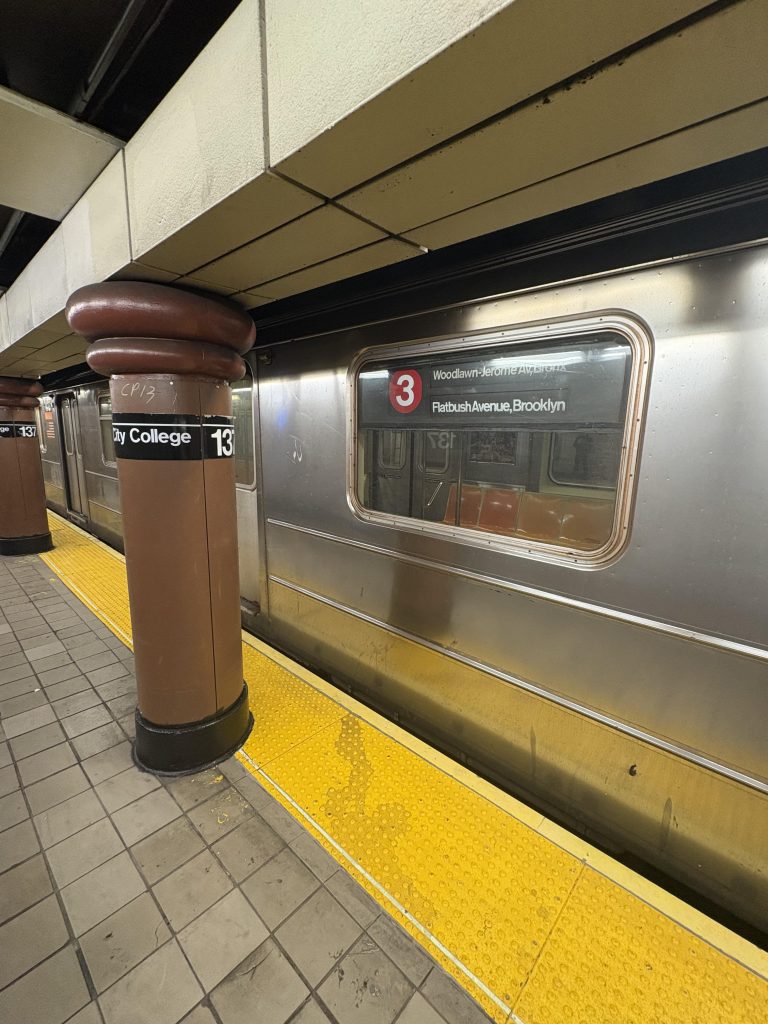
The commute was nothing unusual, to be quite frank. I do normally venture out into the city once a month or so..because that’s what normal people do…, so the SIR and ferry ride kind of blurred together. I did manage to meet someone from our class, which was nice and briefly woke me up from my tired Sunday slumber. As per usual, I wounded up being multiple hours early, so…I did a normal person thing and rode around on the 3 train that was going via the 1 line for some reason. I barely made it back in time to Chelsea to go to the theater, and ended up having to walk in the rain. I wound up going inside and somehow almost getting lost in the theater, which, for some reason, has a reception room smaller than my closet. I stood around, confused, but eventually waddled my way outside, where everyone appeared out of what seemed like thin air. After a grueling 10 minutes of waiting out in London weather, we went inside and then proceeded to wait a half hour, in which time I checked my phone no fewer than 12 times. To be honest, I didn’t care much for being sat (sit? sitten??) in the second row right in front of the stage, as, throughout the show, I ended up having to constantly raise my neck and stare up like a stairway to heaven just appeared before my very eyes. On my thirteenth-fifteenth time looking at my phone, everything around me darkened and the show began.
The first show, at least in my eyes, was a quintessential European-style ballet in which men danced with women and vice versa. Not much was left to be desired in its wake, as the bar was low and there’s very little you can ask of a “generic” ballet performance. The music was the blandest thing I ever heard, even when I appreciate classical music regularly. (especially Beethoven and Tchaikovsky) I mean that with no disrespect to the writers or any musicians involved, I just genuinely could barely sit through the music without snoozing. The ballet itself was pretty impressive, but there was nothing that stood out to me. It followed the conventions of everything I thought was ballet, and I think every single dancer was pretty solid.
The second performance. Yes, that one. What was I even looking at? I still don’t know. I didn’t even try to process it afterwards, just because it was so contradictory to every other performance that it resulted in an aneurysm every time it crossed my mind. It sounded like if cavemen were brought back and then given 40 kilograms of Adderall. I had to stare down the paper I was given upon my entrance for no less than half of it, just out of sheer embarrassment and out of a need to keep myself from giggling like a toddler who just chewed on a crayon. If I had to provide any thoughtful analysis, it would be that it was purposely placed to succeed the most typical, Victorian era ballet before it immediately blew up all standard conventions about said ballet. It felt a lot less authentic than anything I’d ever seen, and it reminded me of a kind of drunken, raw state that completely removes any filters people may have. Also, I feel bad for that giant violin for being played like a set of juxtaposed rubber bands.
I honestly really liked the third performance, and I have no clue why. It did not speak to me and barely kept me from leaving the room out of confusion and a complete loss of critical thought following what preceded it. It reminded me of something more out of Disney except perhaps a little dicier or suggestive. The coloring was amazing, however, and the choreography was still excellent. I can’t opine much on the third “segment” or performance, as…I just liked it. It was calming, and even if a little too graphic at times, still let me stay in that chair after the preceding torrent of zoo animal noises.
Now, initially, I liked the third performance more than the fourth, just because the fourth felt incredibly drawn out. However, after deep consideration, I regret to inform you that I have changed my mind and will be moving forward with another candidate at this time. (Internship applications are getting to me, sorry). I found the choreography (dozenth time I’m using that word at this point, sorry for the redundancy) to be something truly remarkable, and the core strength of everyone involved really shined through in this performance. I never truly appreciated how much preparation went into this or any other dance performance until I saw the amount of strength certain dancers had; it was, honestly, something out of this world. The music itself was something to be enjoyed, just because it was so different from whatever I listen to on Spotify as I try to get through my homework. My point that it was long, regardless of how good the music and coordination was, still stands. The concluding part of the section in particular barely let me stay in my chair, and it felt quite repetitive. In spite of that, I can confidently say that I liked the fourth segment the most, just because it showcased what the dancers were best at.
Overall? I’m still confused as to why so many contrasting styles were meshed together in this Austria-Hungary-esque amalgamation of performances. Maybe the point that the director(s) were trying to prove is that art can manifest itself in countless different ways, and that it can’t fit into a single binary. Or they were just trying to keep the audience awake. (In that regard, they certainly succeeded) After the show concluded, I went outside and waited for no apparent reason with a bunch of my peers before marching to the 1-2-3 subway station. I somehow had the energy to constantly gaze out of the window of a moving train after all of that, even if there was nothing besides tunnels, stations, and the occasional street jester juggling rats. The ferry back was unremarkable, and I ended up gouging down on some chips. That’s it. I barely remember it to be honest, just because I was so dazed after being trapped in a dark room listening to possibly ai generated classical, noises from 28,000 BC, Disney but slightly more suggestive, and Near Eastern folk music. It was not worth a rainy Sunday, but you have to work with what you have at some point.
I unfortunately took no pictures besides the 3 train I rode back and forth to City College on beforehand; enjoy. You know I was there.
Also, why did they move back and forth and keep bowing like a group of nutcrackers at the end? Were they trying to farm applause? With that core strength, they may actually deserve it
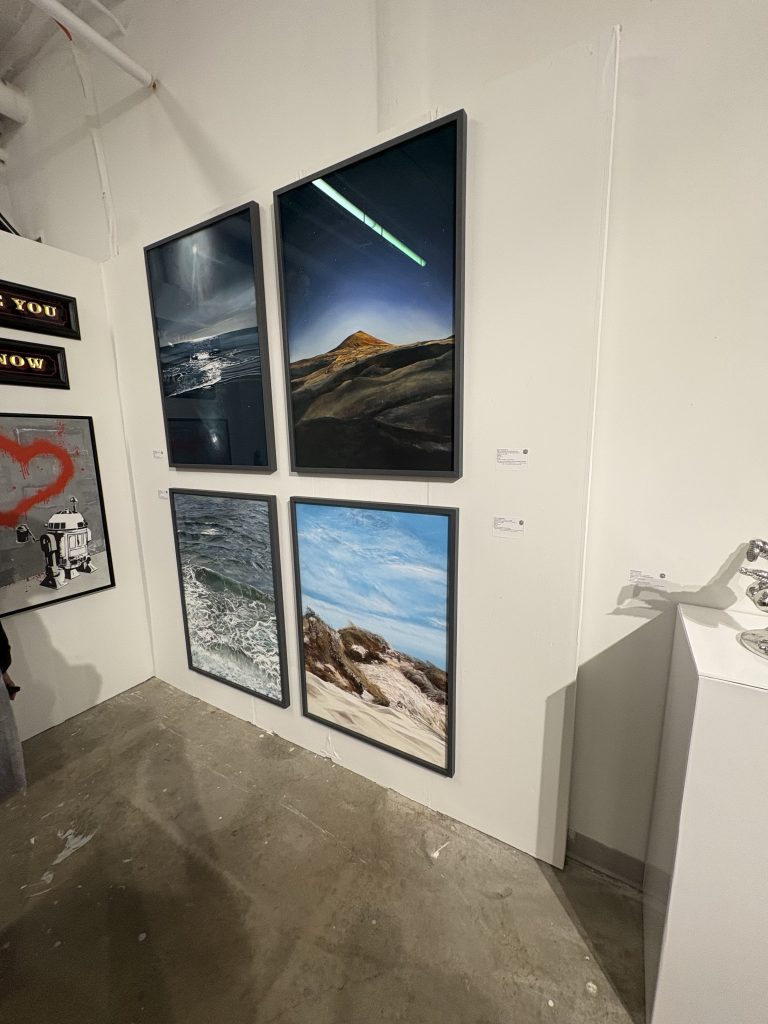
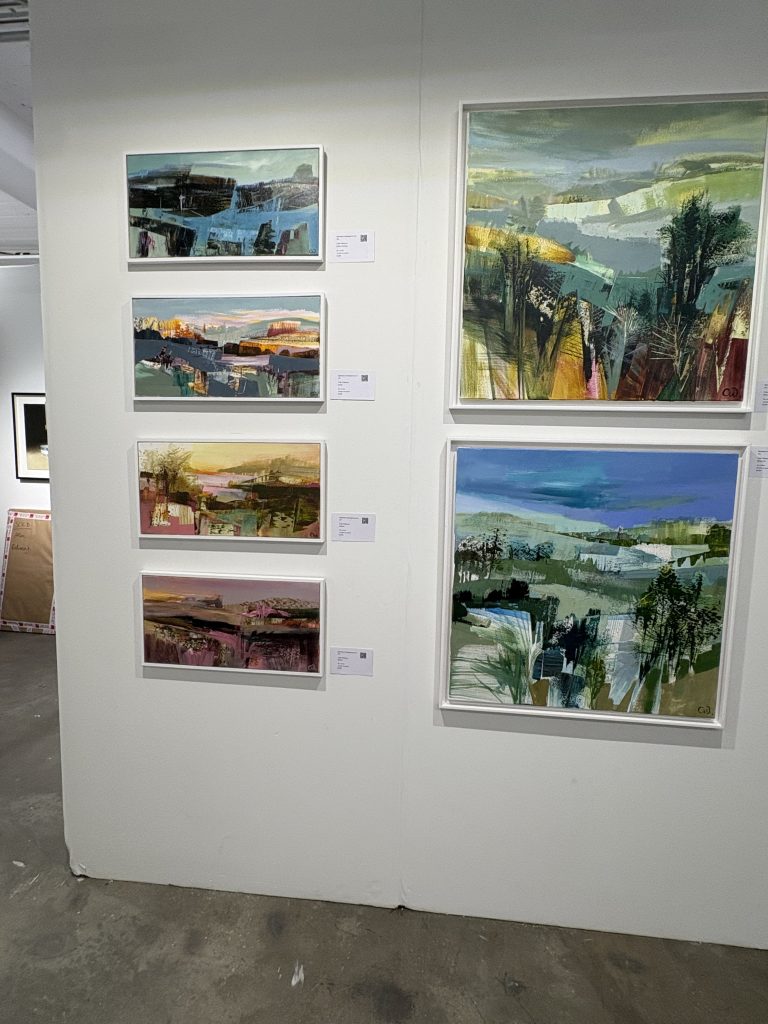
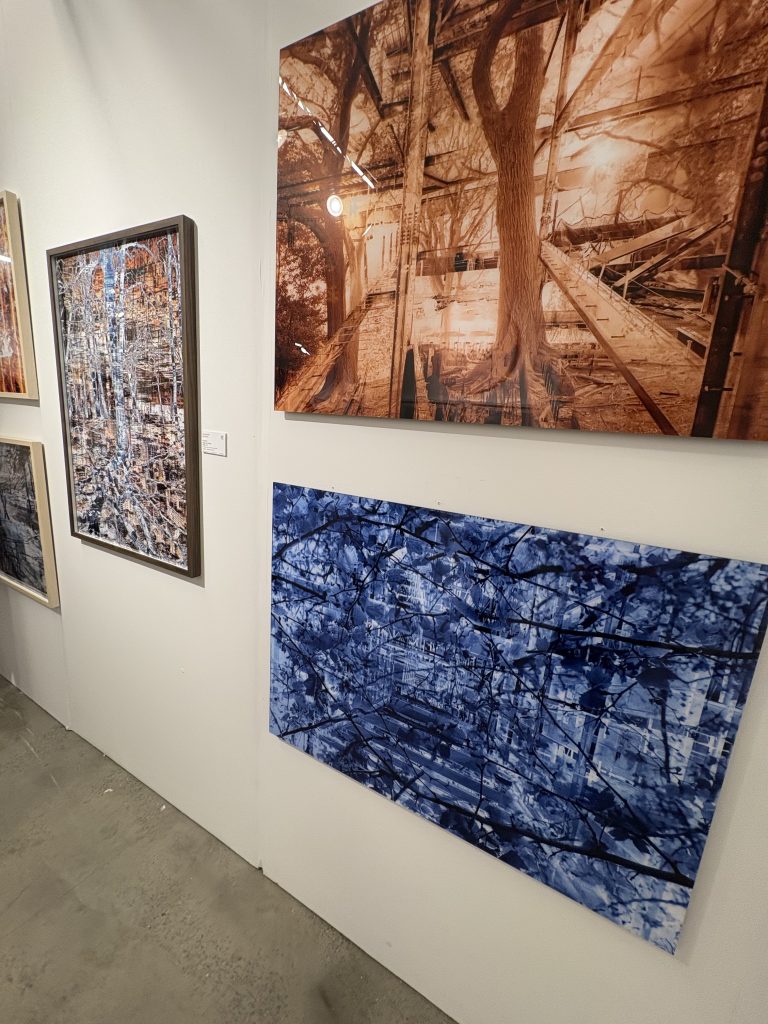
On Saturday, I visited the Affordable Art Fair in the Chelsea neighborhood of Manhattan. I honestly probably would have enjoyed it far more if it weren’t for the commute itself (not to say I didn’t enjoy it; I absolutely did.) Holy smokes, the commute. Getting to the AAF was probably one of the worst experiences I’ve had this year. Between the R train taking 25 minutes to get to Bay Ridge-86th to the C train–an d I am not exaggerating when I say this–moving through tunnels slower than my 6 month old cousin crawls, I’ve never regretted just paying 8 dollars for any one of the SIM express buses more than I did on Sunday. It’s bad enough already having to cross a harbor just to reach civilization as a Staten Islander, but the MTA’s constant inability to fix its own signal problems or time track replacements correctly certainly doesn’t help.
When I did finally get there, I couldn’t actually do much besides sit in one of those riverside parks by the Hudson. I didn’t have the strength to even get up and observe art after what that atrocious, pathetic excuse of a subway system did to me. As much as I’d like to say that I thought about something, whether it be the river in front of me or the family of geese behind me, I didn’t. I felt exhausted. I did ultimately get up and go to the art fair, however, and I was pleasantly surprised by what I saw. Immediately upon entering, there was an array of different cafes lined up, where people were all feasting upon what appeared to..surprisingly..actually be pretty good food. I didn’t have the money for any of those paninis or salads, so I kept going. After showing the staff my ticket, I in return received some puny little Walgreens-esque ticket. Really? You’re going to be selling art pieces worth tens or hundreds of thousands of dollars and you’re giving me a ticket that looks like it was pulled straight from a dollar store? Anyways, I got on the elevator (which was jam packed) and went to the fourth floor, where my journey began.
I have mixed but overall positive reactions about my actual experience at the Affordable Art Fair. When I first got off the elevator and entered a theater-esque setting, I expected for there to be far more. It just turned out to be a lobby, though. After some walking, I found the place where the actual art exhibits were happening, and I was shocked by the complexity of where each piece/collection was located. There was a map, but it resembled a maze and honestly left me more confused than before I saw it. I ended up just starting with whatever piqued my attention first and going about my journey with whatever followed. I was honestly kind of shocked by the sheer density of the exhibits, like there were people, and art pieces, practically everywhere surrounding me. At any given time, two diametrically opposed styles were placed against each other and surrounded by visibly wealthy people bartering or simply taking a look. On one side there were some self-portraits, and on the other, there was some kind of abstract multi-colored clusters of who-knows-what. To be honest, I found a lot of the art to be really appealing to the senses; the majority of it, regardless of whatever message was being conveyed, genuinely looked GOOD. I struggled to find deeper meaning in it…anywhere…because every single piece was either on sale or already sold. It was clear that the vast majority of people were going just to browse for something that they could put up in their living room as a symbol of status or to show off to their friends. All of the art involved was being commoditized, and, even if I didn’t really appreciate that salient theme (or lack thereof) much, I clocked it instantly and went about my visit purely focusing on what appealed to me visually. I did struggle to understand what exactly caused certain art to clearly sell for far more (as there was a section specifically for art under $1000), but maybe it was just all of those rich people bidding against one another. Maybe the shallowness of the whole experience and the lack of meaning ANYWHERE wasn’t helped by the sheer quantity of works on display, but I nonetheless enjoyed taking a gander at a bunch of pieces that wanted to be sold and hoisted in some 2 bedrooms on Roosevelt Island. Overall, 7/10. I’d say the commute and $40 I had to pay (which I didn’t even know I didn’t have to pay until it was casually mentioned in seminar long after I bought the ticket) was worth it, mainly because the artwork jumped AT me with flashy visuals. Call my liking towards the pieces shallow, but I probably would have been far more aggressive with the lack of meaning if it hadn’t been for my getting there completely exhausting me.
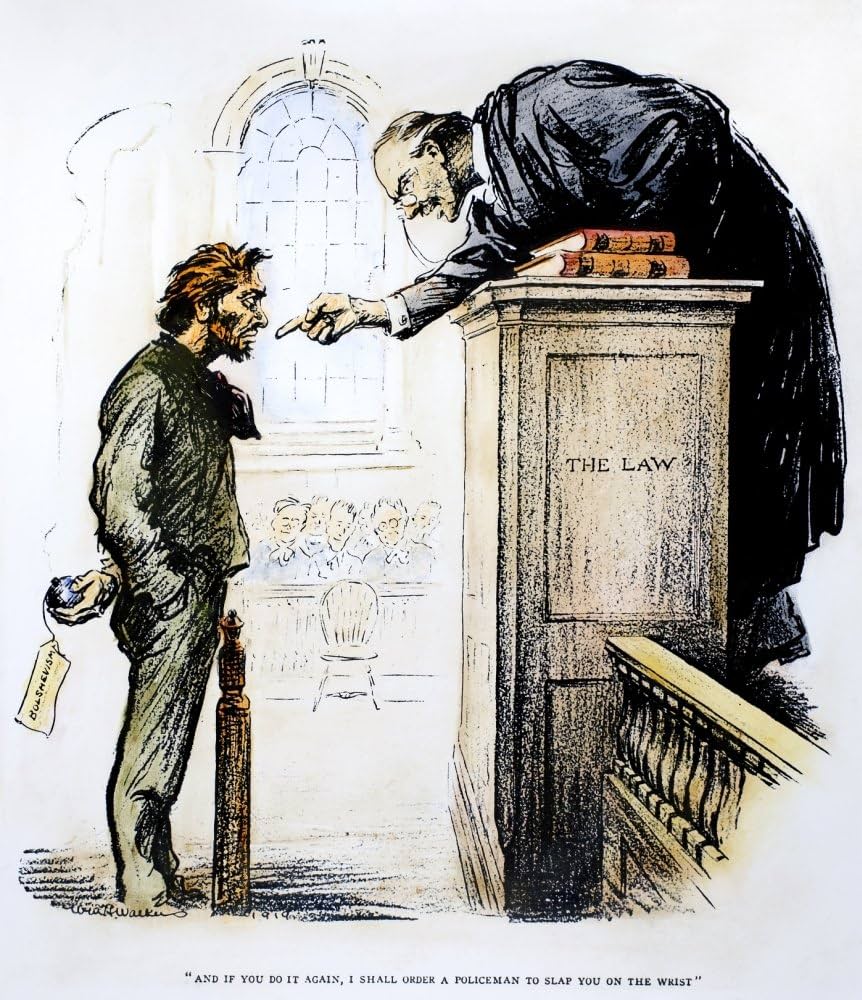
The image I have attached below depicts a pro-communist protester being given a light sentence while concealing a bomb with name “bolshevism” behind the individual, hidden such that the judge cannot see it.
This artwork was published either at the beginning or height of the Red Scare of the late 1910s, in which there was mass upheaval inside the United States due to the sudden rise of marxism-leninism in Eastern Europe; there were riots and counter-riots fought between anarchists, communists, police, and those who believed that any of the previously listed groups posed an existential threat to the United States’s way of life. The artwork shown fits directly into this context; an individual who clearly has some involvement in pro-communist terror, fake or real as it may be, being given a punishment that is incredibly light (literally a slap on the wrist). This artist is clearly dissatisfied with the state of affairs in courts, and likely aims to further fuel the Red Scare in order to trample out any supposedly bomb-wielding communists.
This theme is readily applicable to the modern American political climate and our nation’s present state, as people from both sides believe that their opposition, often portrayed as violent and radical, is not being punished enough and poses an existential threat to the United States’s cohesion and wellbeing. As the magnitude of our nation’s polarization increases, so too does the call for overwhelming, often extrajudicial, force to quell any opposition (for fear of the future danger it may pose).
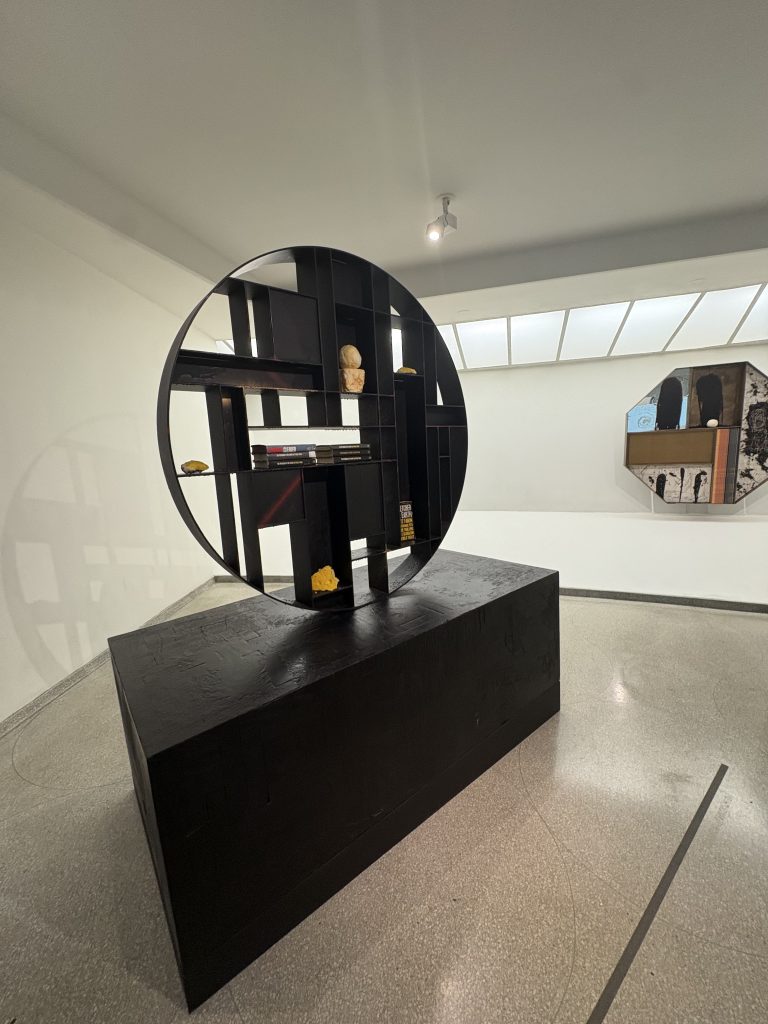
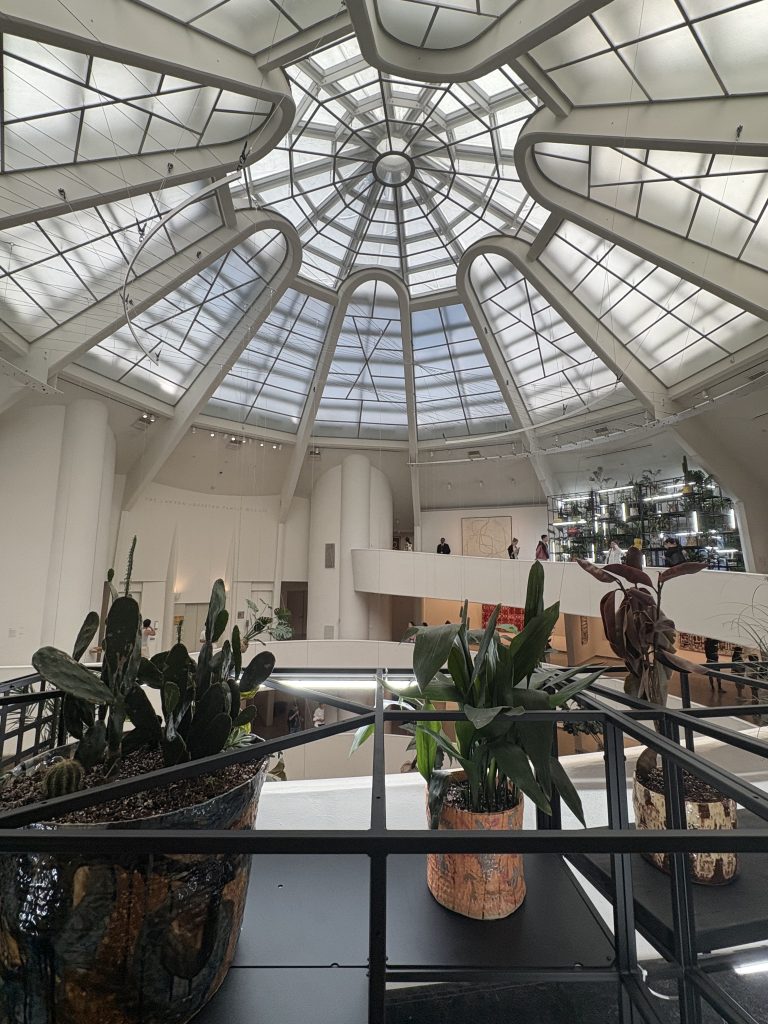
My visits to the Guggenheim were…an experience, to say the least. They ended up being far more draining, confusing, and, in a strange way, uncanny than I ever would have anticipated. My first journey began with a crammed bus ride directly from CSI’s campus that left me exhausted before I even made it into Manhattan, coupled with a ride in an old “6” train car with barely any functioning air conditioning. Notwithstanding, I made it and was shocked by how small and unimposing the museum’s building was compared to what I had pictured in my head, albeit its architecture was every bit as stunning. Upon my entry, I was pleasantly surprised to find out that my ticket was free per the words of my vendor (I’m happy to say that the entire admission process went smoothly and felt more like stepping into a 5-star hotel than a half-baked mega sized seashell), and, on that note, I rode the elevator to the 6th floor and began my journey.
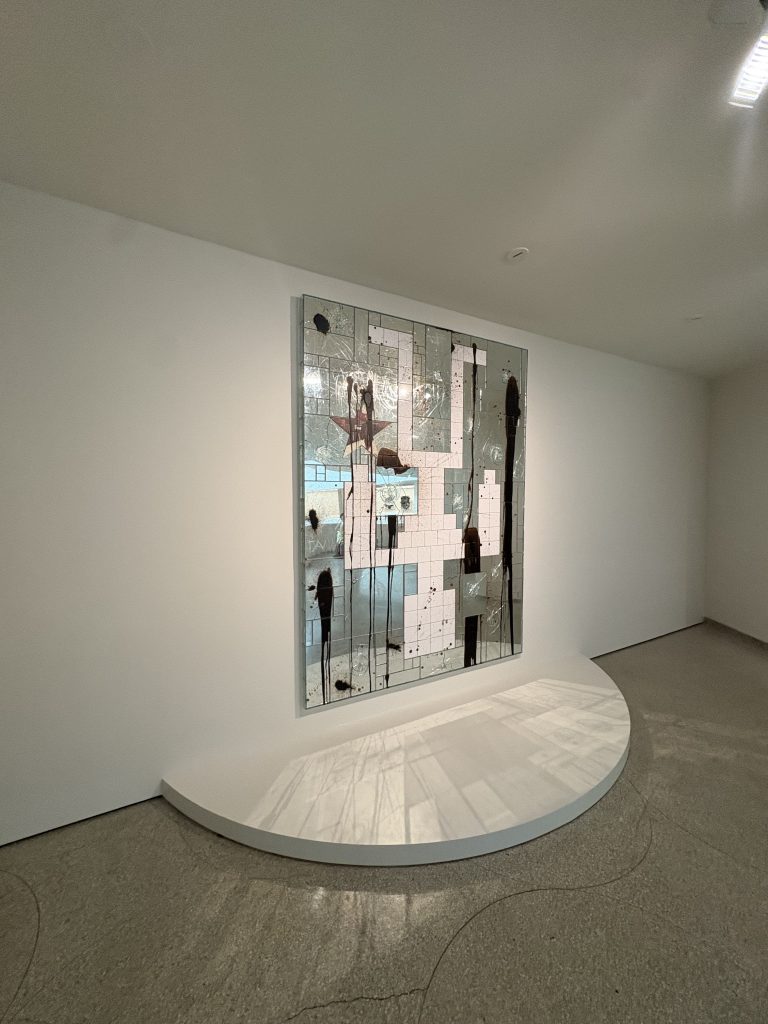
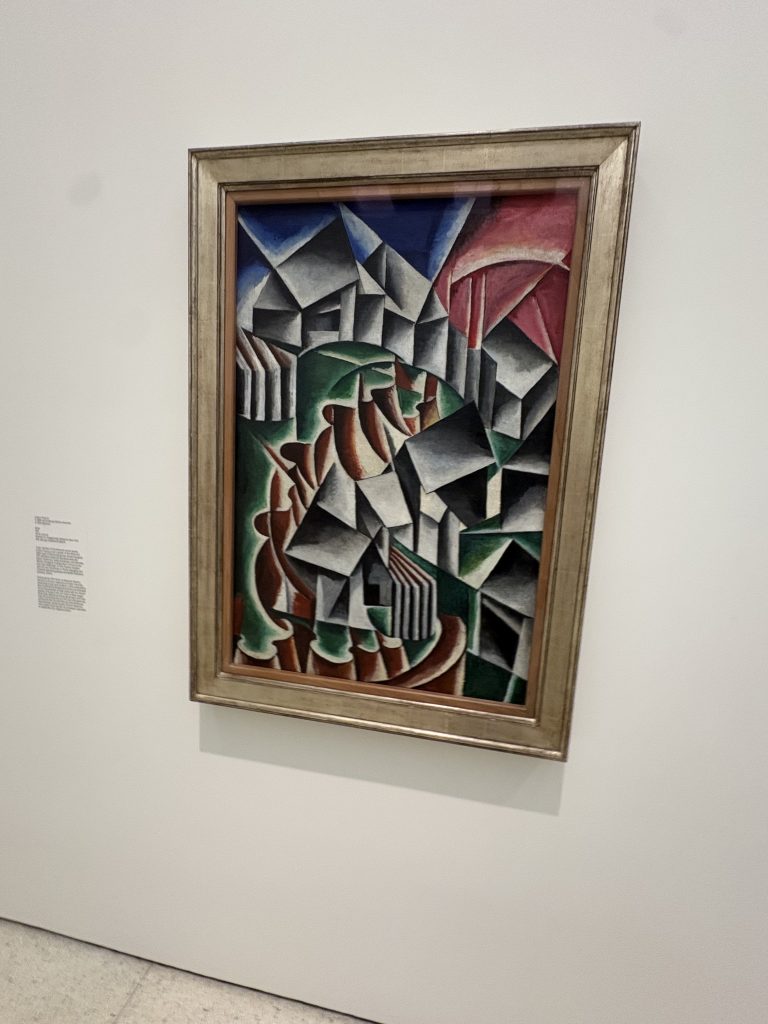
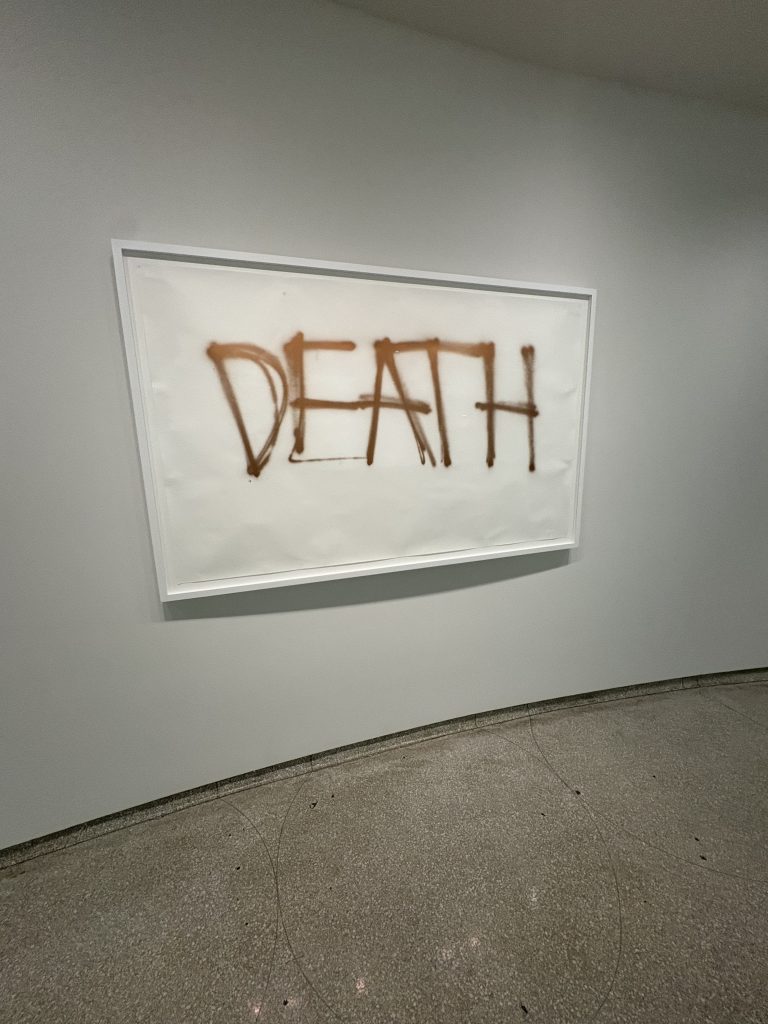
On my first visit, to be perfectly honest, the art didn’t particularly resonate with me on any level, and it immediately struck me as very abstract, with an extremely limited amount of people on all level outside the one closest to the ground floor, which features a figure staring (judgmentally) at the viewer. It’s completely unchronological to mention the bottom floor before where I originally started, in the same way the building’s immediate beauty stands juxtaposed with its deeply underwhelming artwork. However, there were a few works that stood out to me amidst the sea of cryptic or outright nonsensical works in the Guggenheim, one of which seemed to be a kind of Paleolithic leather hide or mud-like surface. Whereas most works were eerie messages or displaced furniture, the hide deeply resonated with me as, thanks largely to its littered human-like remains, I was instantly able to clock it as a kind of graveyard, perhaps symbolizing the dirty nature of death. The museum also happened to have plenty of distorted paintings that, for some reason, vaguely reminded me of traditional African works. That’s about where the human and “living” aspect of the museum ended; whatever was left felt sterile, or, at most, unsettling, including the various array of vandalized mirrors with cryptic messages like “RUN”. There also happened to be a variety of desecrated furniture such as flipped tables or outright ruined shelves. Whatever furniture wasn’t destroyed felt deeply unhuman (such as the 3d diamond-shaped cabinet with copies of the same book stacked on top of each other), but there was very little room for interpretation besides “You don’t belong here”, and that message seemed to be a constant theme throughout my first visit. The only artwork in the entire museum that I could say I enjoyed with conviction would be the section littered with a vast array of Futurist artwork, but that’s only out of a deep fascination for the context in which it was developed (Italian Futurism in the prelude to WW1 and Russian Futurism in the 1910s-20s). If not previously alluded to already, I didn’t care much for the Guggenheim’s artwork, as it seemed to be in constant revolt against my very being, with its vindictiveness against my humanity being ever-present and facing me through the building’s circular, inward-facing design. Although I could forgive that vindictiveness if it felt readily applicable directly towards me, it more so just felt like the museum was being spiteful against anyone who dared to enter its doors and looked inside of it past its elaborate outside design. I struggled to find any deeper meaning besides a collective ugly rage against the visitor, shown in the copy-and-pasted spray paints of words on mirrors trying to signal urgency.
My second visit wasn’t much better, and mainly just felt the same, except my lazy confusion was mixed in with that of the two classmates who I had gone with. Originally, we planned on going to the Met under the presumption that it, like the Guggenheim, was free for CUNY students or even anyone living in the Tri-State area. I also personally felt unfulfilled after my first visit to the Guggenheim and was looking towards a fresh start. That quickly evaporated once we met one of the vendors, who seemed deeply uninterested in explaining the museum’s policy towards visitors and would much rather fan us out of his presence like a collective of annoying fruit flies. Out of what I got to see in the Met before ushering myself out, the architecture seemed rather elaborate and much more pleasant to the eyes as opposed to the Guggenheim’s sterile insides, though I wouldn’t get to know that architecture’s connection to the Met’s real artwork…because I didn’t bring 17 bucks. We walked roughly 4-5 blocks uptown and went to the Guggenheim, and, although my classmates initially cheered due to the lack of an admissions fee for us as CUNY students, those cheers of excitement quickly evaporated and were replaced by grumbles and confusion. If you were expecting an awakening in which I discovered what the Guggenheim really wanted me to know about it and the work inside of it, you’re wrong. I did get to uncover a few new rooms I hadn’t previously gotten to witness, but nothing about them could be tied back to the broader uncanny feeling I got in the main 6-floor circular structure. Those works weren’t really in sync with that broader unwelcome/unnatural theme and felt largely like filler, so I can’t say I’m able to tie them back to what I principally felt in that museum. Were they appealing to the eyes? Sure. Did I manage to uncover a broader theme that woke me up from my near slumber derived from my second commute? Nope. Overall, my second experience wasn’t anything to gloat about to friends or even mention in casual conversation, much like my first.
As much as I’d like to say I found something remarkable about the Guggenheim, I can’t really say that. The cryptic messages and hastily desecrated pieces of furniture were….alright, I guess? They made sense in contrast to the outer beauty and spiraling warmth of the Guggenheim’s design, but outside of that, I didn’t find anything that had a “wow” factor. I can’t say I outright hated it, but the collections were limited, unremarkable, and often out of sync with the central message I got from the museum. I probably would have had more to write about if I wasn’t cheap and paid for the Met.