
This is a gallery curated by you, the students taking part in our Night at the Museum. Make it your own!
To have your own response appear on this page, form a group and submit a response.
-
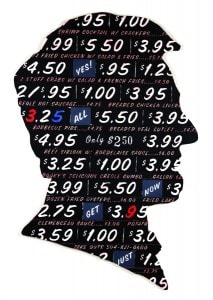
Black Lincoln for Dooky Chase
Skylar Fein
2010
What do you see going on in this work of art? Is there a story depicted?
We see a figure of Abraham Lincoln’s head and inside is a portrayal of his legacy through food. He didn’t care about slavery in regards to morality, but economically. He wanted to profit in the form of food. His abolition wasn’t motivated through morality, he thought slaves were bad for the economy.
What different visual elements (ie: line, color, light, proportions, scale, composition, media type etc.) do you notice, and how do they help you make sense of the artwork?
We see lines in rows separating his head, and it shows prices of foods. On the surface level, it seems like an innocent food market, but it shows history on a deeper level.
How does this object compare to other objects, stories, or ideas you already know about?
This compares to history as we know it. Abraham Lincoln abolished slavery, but this image shows that there’s more to a story. He’s not just a hero, he was profit motivated.
What choices do you think the museum made about the object’s display?
We think the museum had to decide to show blind spots in history. Lincoln is way ahead of his time, yes, but he is still in his time. He is still a white man who didn’t see slaves and black people as people. The museum chose to display this part of history.
Group Members
Abigail Migirov, Umar Habib, Charolette Grider, Christopher Dagoon
-
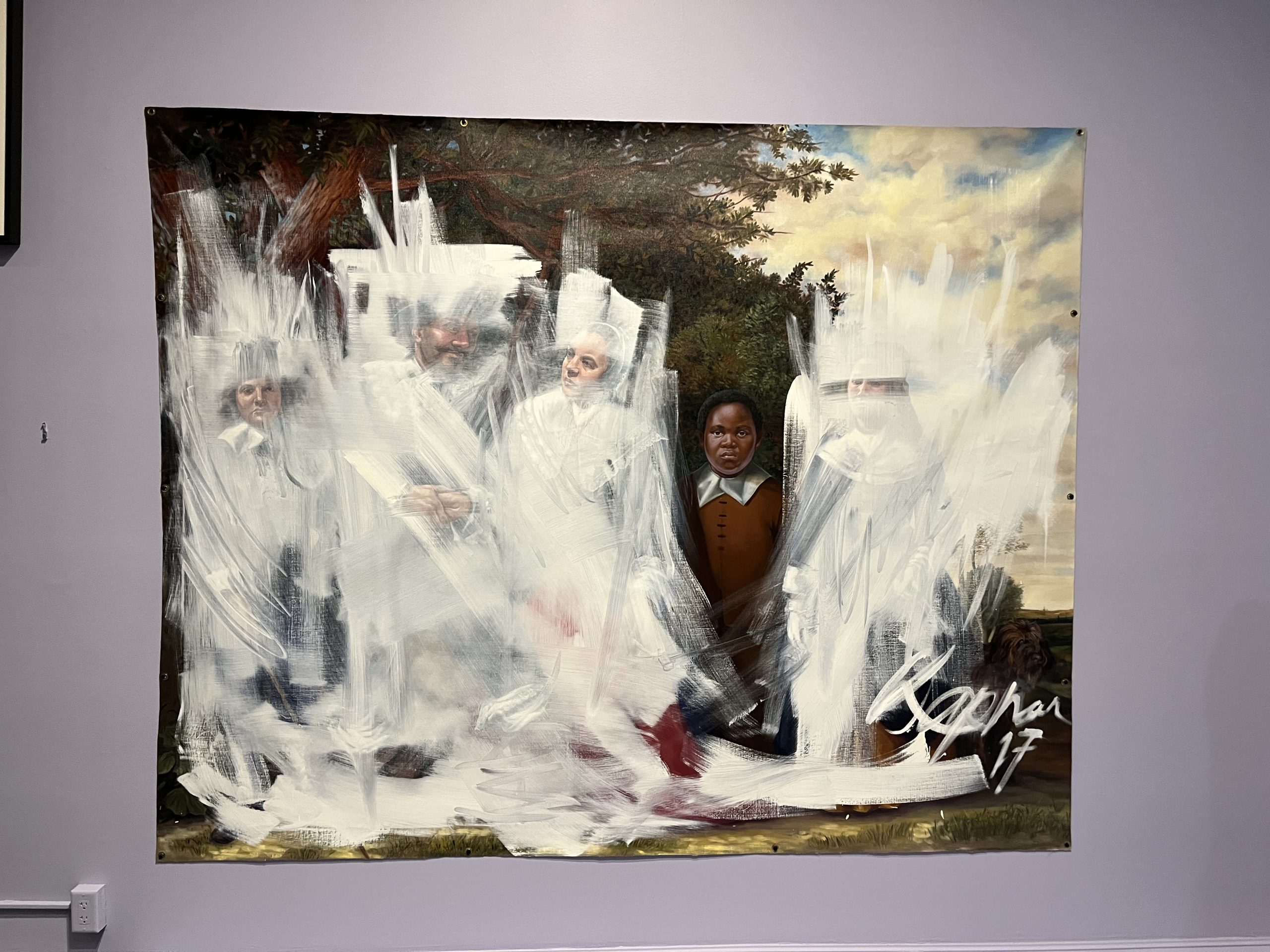
Shifting The Gaze
Titus Kaphar
2017
What do you see going on in this work of art? Is there a story depicted?
In this work of art 5 people are depicted, an African-American boy surround by a white family of four. It is implied that the boy is their servant. What makes this photo abnormal is that the white family is completely painted over in a shade of white. There isn’t really a story being depicted, but the painting is definitely sending a message, this message being that the history of African-Americans should be put into a stronger focus, and are currently being underrepresented.
What different visual elements (ie: line, color, light, proportions, scale, composition, media type etc.) do you notice, and how do they help you make sense of the artwork?
I noticed many visual elements, the first one being the medium, which is oil on canvas. However, this is less important in our interpretation. What played the most significant role was the proportions and color. The African-American servant was much smaller than the white people surrounding him, seeming to shy away from the scene. However, the color, which was mainly white, helped create a contrast that highlighted the boys appearance despite his smaller stature. We believe this choice has greater implications, those being that the servant might be viewed less significantly in the context of the setting, but also plays a greater role in the grand scheme of history simultaneously.
How does this object compare to other objects, stories, or ideas you already know about?
This photograph reminds me of the MuseumsAre Not Neutral movement I read about for my IDC class. There are a lot of parallels between the messages both of them portray. Specifically, the pair are both advocating for greater representation and appreciation for the impact made by African-Americans on history.
What choices do you think the museum made about the object’s display?
The museum employs at least two tactics to help this image stick out in the room. The first one is the addition of a spotlight hanging from the ceiling. The brighter lighting helps the painting look more appealing, and is one of the reasons I was drawn to it. The second tactic was painting the wall behind it a light purple color. This color choice created a strong contrast, also helping the painting to stand out in the sea of art.
Group Members
Matthew Jaskiewicz, Edrin Ahmetaj, Adi Feratovic, Simone Oduola, Alexandria Giannopoulos, Matthew Bologna, Ryan Huang, Alexander Boyarsky, Jan Czartoryjski,
-
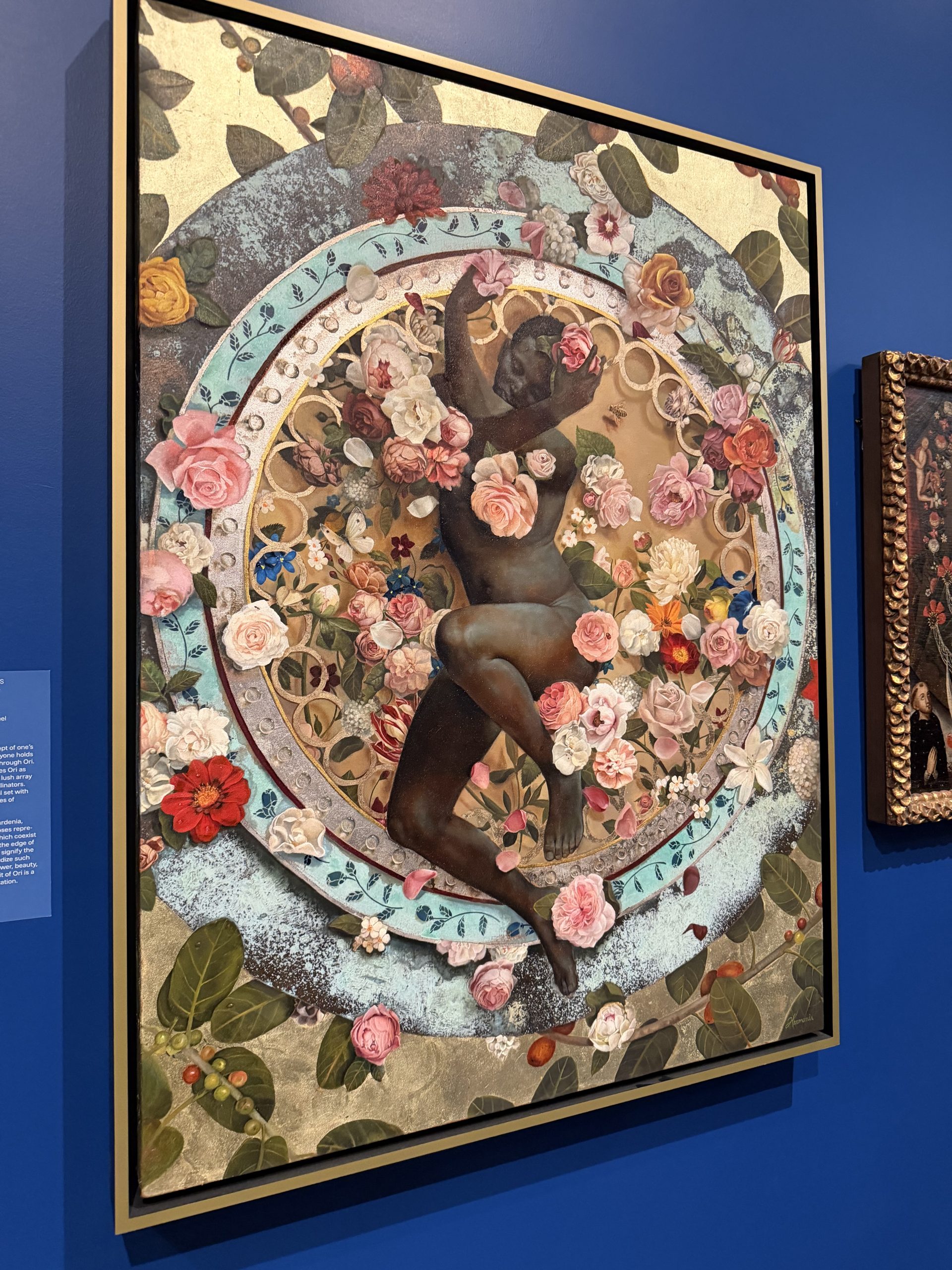
Ori
Harmonia Rosales
2022
What do you see going on in this work of art? Is there a story depicted?
In this work, a nude woman is depicted among flowers. She is enclosed within several circles and the corners of the painting are filled up with leaves and berries. There is no clear story in the image, but the woman seems content while holding two flowers: a peony and hibiscus.
What different visual elements (ie: line, color, light, proportions, scale, composition, media type etc.) do you notice, and how do they help you make sense of the artwork?
There is a cacophony of colors in this image, ranging from pink to blue. The flowers are arranged in lines around the woman that drag the eyes repeatedly over her figure. Her body is centered and the circles that… encircle… her also being the eyes back to the center. The circles are made of material that seems to be aged, rusted, or oxidized may symbolize a layer of protection of her peace from the outside.
How does this object compare to other objects, stories, or ideas you already know about?
This is quite a unique piece from the works we are familiar with, though the pose of reminiscent of cherubs in paintings.
What choices do you think the museum made about the object’s display?
The painting was displayed against a blue wall, with no other paintings above or below it. This allows viewers to fully take in the work and also brings the eyes more to the warmer parts of the image, such as the center.
Group Members
Izzy Rodrigues, Vivienne Frankiv, Denesia Garcia, Sahana Singh
-
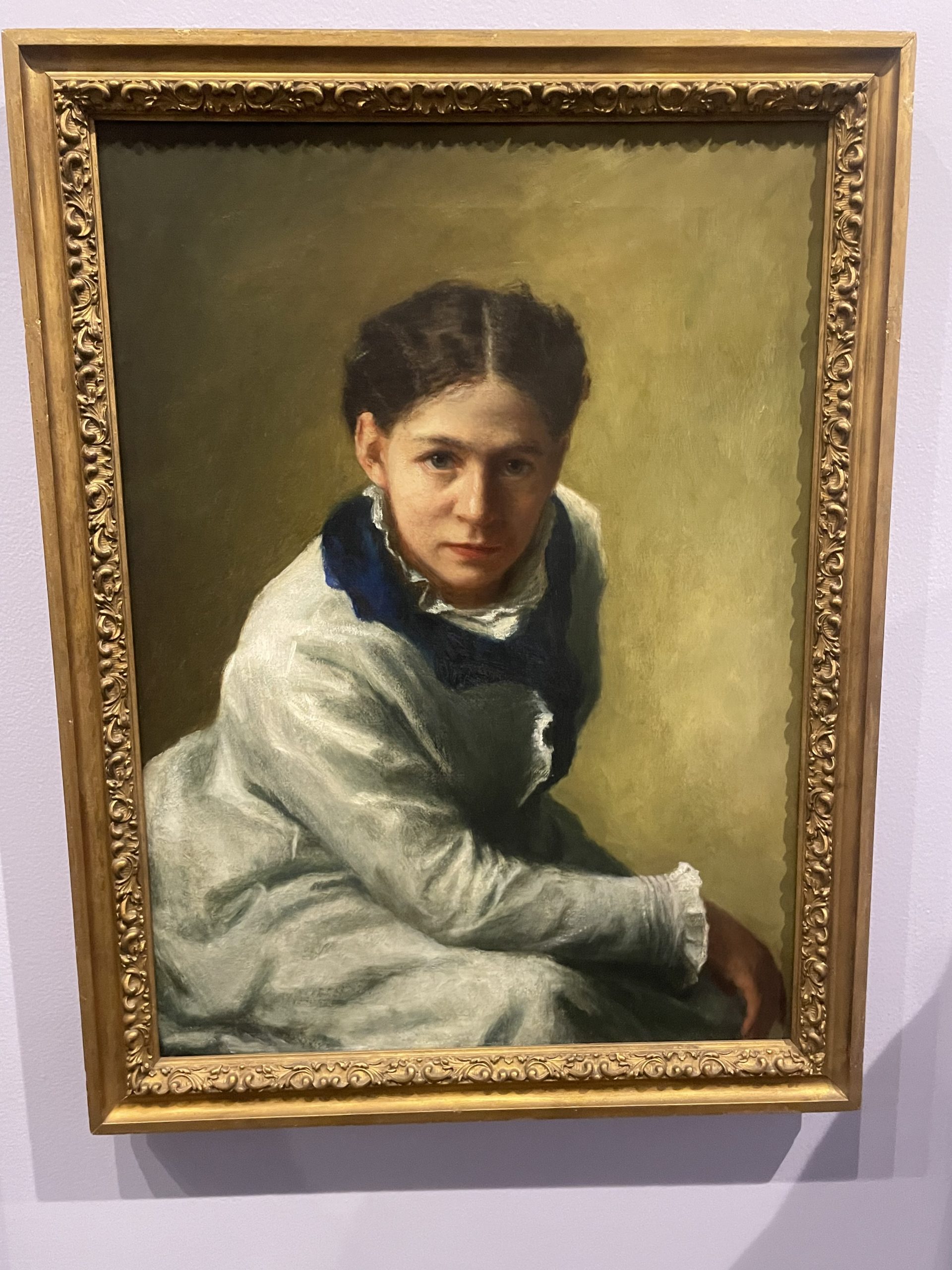
Sarah Cowell LeMoyne
Jane E. Bartlett
1877
What do you see going on in this work of art? Is there a story depicted?
The portrait depicts a woman, leaning forward, gaze bold and staring at the viewer. She is assertive, almost as if she is challenging us.
What different visual elements (ie: line, color, light, proportions, scale, composition, media type etc.) do you notice, and how do they help you make sense of the artwork?
She is the sole subject of the painting, emphasizing her bold stance. The dramatic shadows on the left of her figure contrast with the right, creating a sense of drama.
How does this object compare to other objects, stories, or ideas you already know about?
Sarah Cowell LeMoyne is depicted as an unwavering figure at a time when women’s political rights were not ensured. This piece may serve to center the will of women to be seen as powerful.
What choices do you think the museum made about the object’s display?
She is placed at eye level, allowing her gaze to catch the attention of the viewer intimately. She is surrounded by portraits of other women, creating a collective presence.
Group Members
Asahi (Karen) Ono, Isabela Morales
-
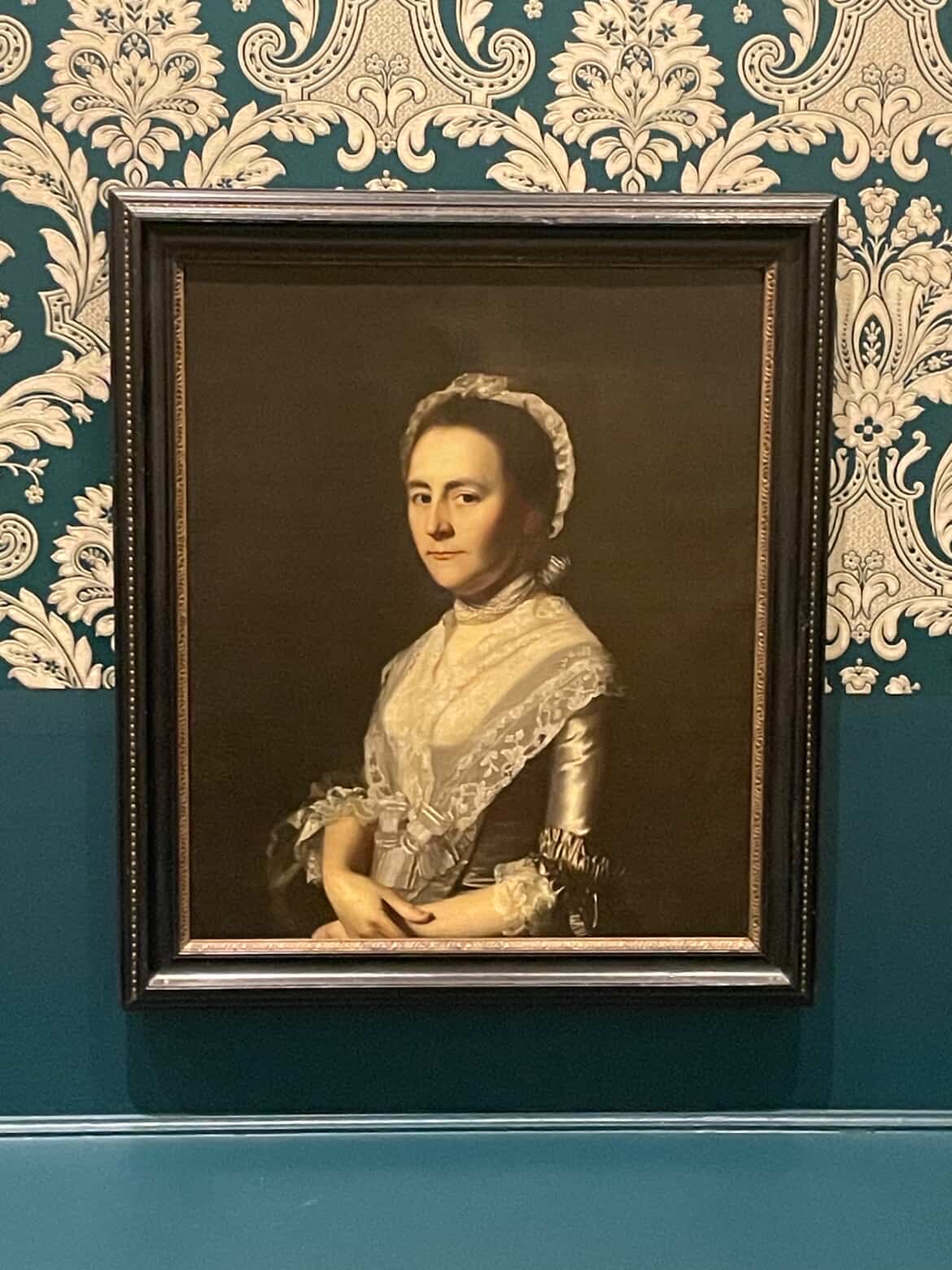
Mrs. Alexander Cumming ( Wlizabeth Goldthwait, later Mrs. John Bacon)
John Singleton Copley (American, 1738-1815)
1770
What do you see going on in this work of art? Is there a story depicted?
The female figure depicted in the portrait sits alone in a dark room, the sole focus of attention. She has vacant eyes and a tight smile, ultimately creating a stern expression. Her lack of jewelry and ornate appearance yet silken clothing suggests that she is a woman coming from wealth and status. Her posture also remains upright, but seems to be turning toward the viewer hesitantly. Based on these aesthetic characteristics, it is evident that she was from a conservative, upper class household. The portrait does not particularly showcase a directed story but more so is up for interpretation with its unique adjustment to the wall (low almost touching the ground) and also the woman’s very prominent attire.
What different visual elements (ie: line, color, light, proportions, scale, composition, media type etc.) do you notice, and how do they help you make sense of the artwork?
The contrast between the pale white woman with her grey clothing and the dark background creates an uncomfortable atmosphere, enticing the viewer into a wary state with the subject. Moreover, the subject’s expression borders between neutrality and sadness as only the edges of her mouth point slightly downwards. As the figure takes up almost the whole portrait with no other subject, or decoration, the viewer is forced to focus on only her. The light on the woman’s clothing highlights her elite status. Symbols such as her jewelry, lace, and satin textured clothing contribute to this overall idea of old-money. These different visual elements create an experience composed of discomfort, forced closeness, and awkwardness; the artwork forces the viewer to be in an awkward discussion where the object—not the viewer—has the high ground.
How does this object compare to other objects, stories, or ideas you already know about?
In other museums, for example the Frick Collection, portraits of the wealthy are held at a higher elevation than of eye level, seemingly belittling the audience. The portraits are made without flaws; blurring imperfections creating an unrealistic impression of those of a higher status. The height and grand size of the portrait creates a wealthy spectacle for the viewer. Wealth is displayed in many other forms outside the portrait such as, the frame with gold embroidery, or the wall behind it having an element pattern. In this particular portrait, the figure is dressed very modestly with little to no skin showing, her hair is tidy, and is positioned with a blank background, adverse to other female portraits along this wall.
What choices do you think the museum made about the object’s display?
Detailed in a blurb titled “Framework: Several Seats,” the visitors find an explanation for the position of all portraits. They sit low on the green and gold gilded wall, below the viewers eye line. This feels strange, as such portraits of those in power are often placed high above, in positions of veneration. However, the choice to place these portraits so low originates from the rebuke of “have several seats,” originating from Black and Latinx ballroom culture. Additionally, the gilded patterns on the green wall are unfinished, and the actual frame of the portrait is plain and a dark wood. This is atypical for portraits, which are often in gilded gold frames. The artworks, while on display, are being critiqued for their horrific roles in colonialism, white supremacy, and enslavement. The critique is not overt, but the choice to display the portraits below eye level is unconventional enough to startle the viewers into question.
Group Members
Suha Tasfia, Ariyya Mohsin, Elaine Ching, Elizabeth Gonzalez Lopez, Musfikah Maishah, Nazarin Jamil
-
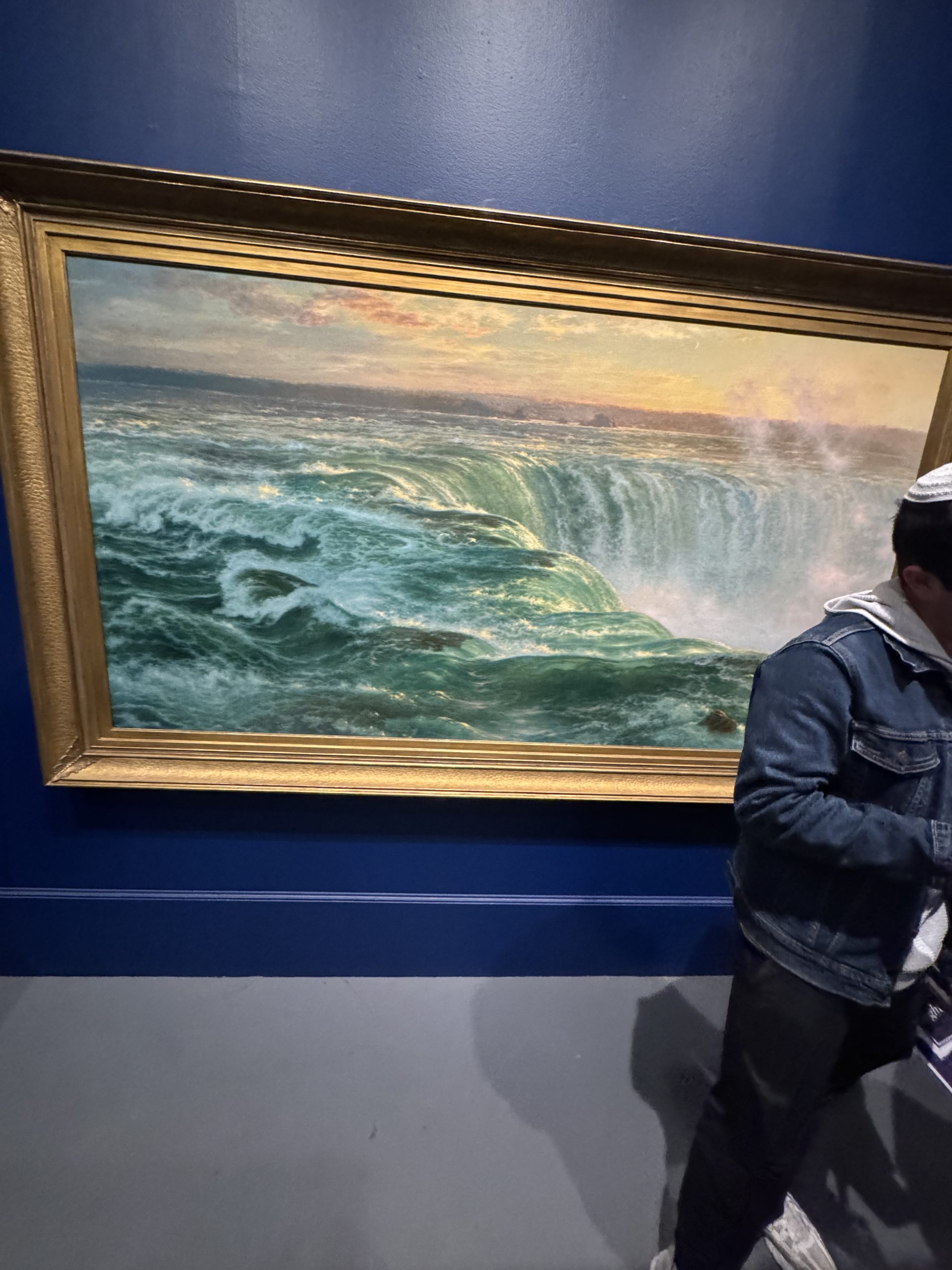
Niagara
Louis Remy Mignot
1866
What do you see going on in this work of art? Is there a story depicted?
We see a beautiful waterfall, sunset, all the water going downwards creating a cloud, and a small moon on top. But at a deeper level there’s a story of our lives. The story of our lives we’re riding the waves the waves go up and they go down but it’s a relatively smooth ride. then what happens? The ground falls out from beneath us and we feel like everything‘s going wrong. Nothing‘s going our way. We hit rock bottom then, just like the water vapor, we rise back up.
What different visual elements (ie: line, color, light, proportions, scale, composition, media type etc.) do you notice, and how do they help you make sense of the artwork?
The water vapor gives an astral feel to the picture especially when coupled with the moon in the light sky
How does this object compare to other objects, stories, or ideas you already know about?
This is very similar to the book of judges in the bible, where there is a cycle that repeats itself, just like the water cycle that first evaporates then returns to the water.
What choices do you think the museum made about the object’s display?
Put it front and center because it’s a fundamental way of looking at our lives. And it gives color to the room.
Group Members
Noah Segelnick, Ethan Monhian Binyamin orkaby, Ariel Rogoff, Jacob Hamui, Evelyn Kofman, Abe Janani
-
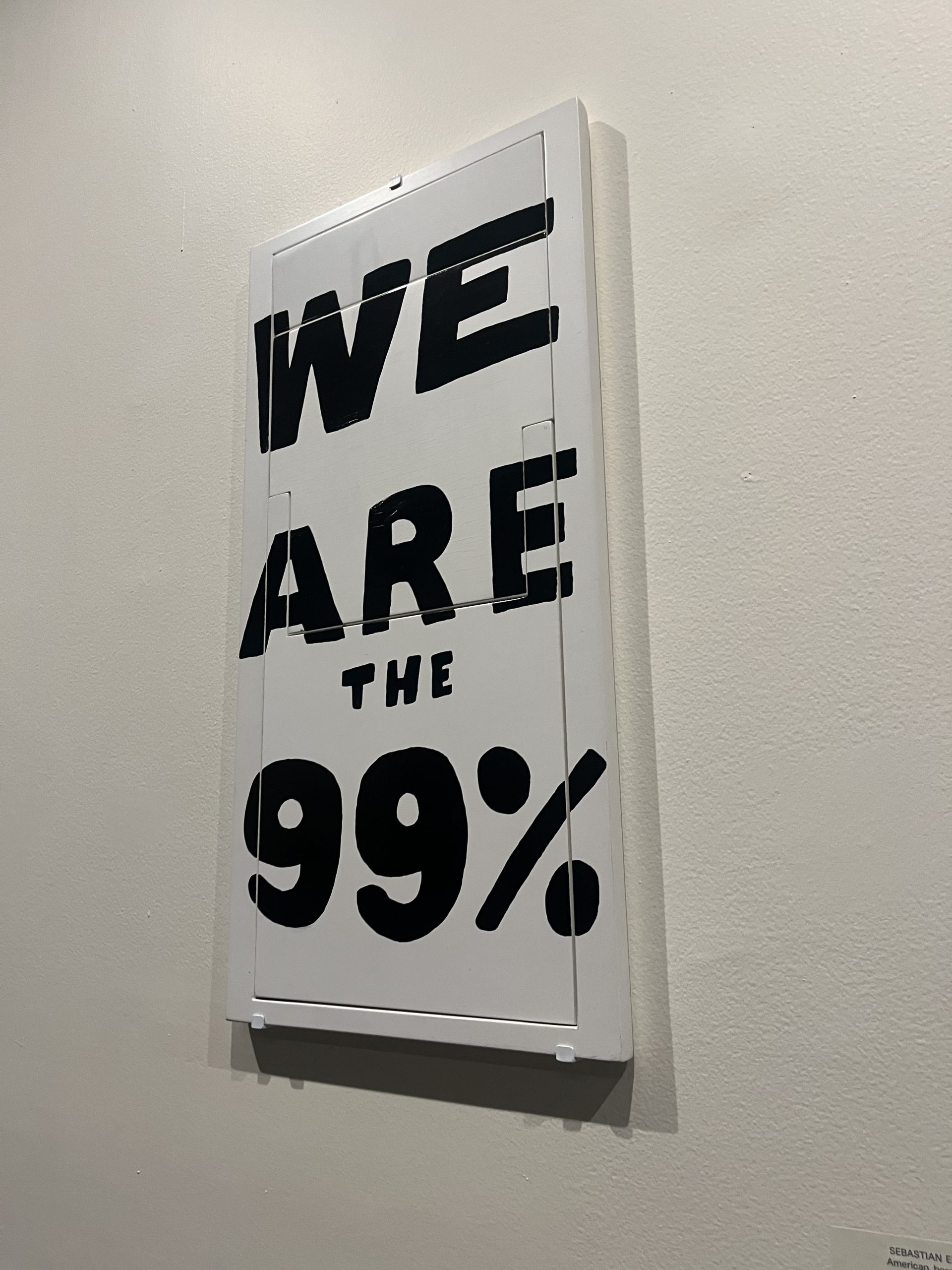
“We Are The 99%” from the serious Occupy Chairs 2012
Sebastian Errazuriz
2012
What do you see going on in this work of art? Is there a story depicted?
It is a folded chair, but at first it doesn’t appear like it because there is big, black bold letters. The phrase is symbolic as it was used in The Occupy Wall Street movement protests.
What different visual elements (ie: line, color, light, proportions, scale, composition, media type etc.) do you notice, and how do they help you make sense of the artwork?
It has large, black letters painted on with acrylic paint which contrast with the white chair. Since the words pop out so much, you can easily see it in a crowd of protestors.
How does this object compare to other objects, stories, or ideas you already know about?
The artist didn’t intent to make this object aesthetically pleasing like other painting we see, but it was more about the functionality of his work. It is functional because it spreads the message of protesters and serves them when they need a seat to rest.
What choices do you think the museum made about the object’s display?
They decided to hang the chair against the wall and not put it with the other chairs, because it serves a greater purpose and is meant to be a statement. Errazuriz’s belief that the general population cannot be controlled by the wealthiest in the nation, adds onto the claim that everyday objects can hold deeper meanings.
Group Members
Michelle Ahumada and Lizbeth Bermeo
-
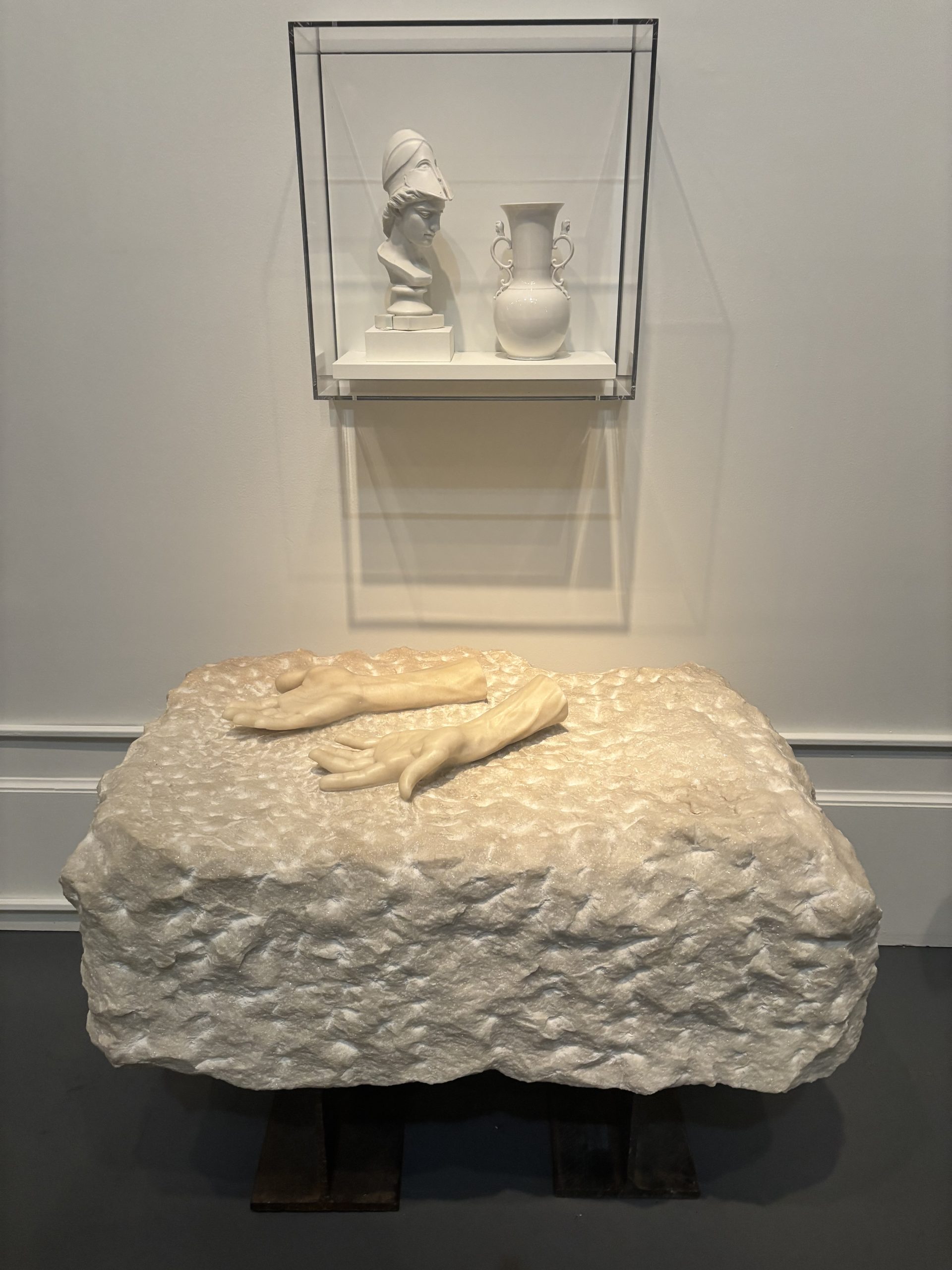
Relaxed
Louise Bourgeois
1990
What do you see going on in this work of art? Is there a story depicted?
We see a block of rugged marble with a pair of chopped off hands on top of it. The block of marble is also being supported by pieces of metal on the bottom. Since the hands also look to be from different people, possibly a man and woman, we believe the story being depicted is two lovers who died together in a romantic way.
What different visual elements (ie: line, color, light, proportions, scale, composition, media type etc.) do you notice, and how do they help you make sense of the artwork?
We notice the color of the marble is off white and might have some gray aspects, also how rough the marble is since usual marble seen in fancy settings is perfectly smooth with black streak designs. In addition, the hands looked to be depicted as different hands with different size fingers, which helped us make sense of the work because it gives the thought of the hands being people who were in love or had a close relationship, and give the lifeless block of marble some humanity.
How does this object compare to other objects, stories, or ideas you already know about?
The texture of this object is very different compared to other objects in the room, with it being shiny and reflective and resembling a marble stone. The presentation of this object is also fairly different from others since it is on the ground and only supported by rusty pieces of metal, giving the image a more alienated look compared to the more up-kept images in the room. The roughness of the object also differs it from other objects since it’s very rough around the edges which can also differ it from usual marble seen in modern housing.
What choices do you think the museum made about the object’s display?
We think the choice of keeping the object outside of protection like glass to give off the image of ruggedness that the block of marble also depicts.
Group Members
Dorian Baptiste, Dylan Uludag, Moses Ezekiel, Matthew Martin
-

Black Lincoln for Dooky Chase
Skylar Fein
1968
What do you see going on in this work of art? Is there a story depicted?
We see a figure of Abraham Lincoln’s head and inside is a portrayal of his legacy through food. He didn’t care about slavery in regards to morality, but economically. He wanted to profit in the form of food. His abolition wasn’t motivated through morality, he thought slaves we’re bad for the economy.
What different visual elements (ie: line, color, light, proportions, scale, composition, media type etc.) do you notice, and how do they help you make sense of the artwork?
We see lines in rows separating his head, and it shows prices of foods. On the surface level, it seems like an innocent food market, but it shows history on a deeper level.
How does this object compare to other objects, stories, or ideas you already know about?
This compares to history as we know it. Abraham Lincoln abolished slavery, but this image shows that there’s more to a story. He’s not just a hero, he was profit motivated.
What choices do you think the museum made about the object’s display?
We think the museum had to decide to show blind spots in history. Lincoln is way ahead of his time, yes, but he is still in his time. He is still a white man who didn’t see slaves and black people as people. The museum chose to display this part of history.
Group Members
Abigail Migirov, Charlotte Grider, Christopher Dagoon, Umar Habib
-
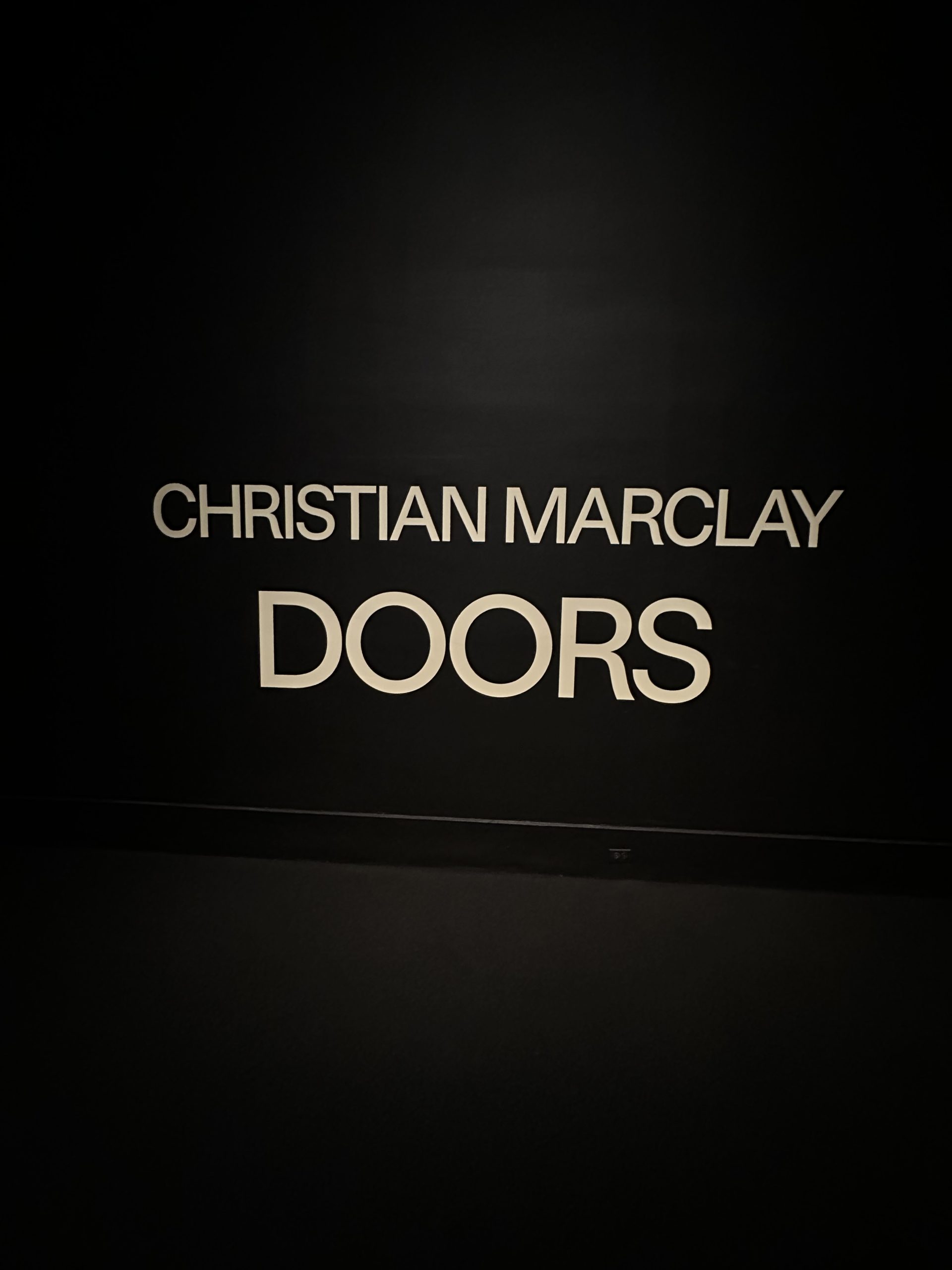
DOORS
Christian Marclay
2022
What do you see going on in this work of art? Is there a story depicted?
This artwork is an experience that follows several different stories, all centered around doors and the realities they create.
What different visual elements (ie: line, color, light, proportions, scale, composition, media type etc.) do you notice, and how do they help you make sense of the artwork?
The different time periods displayed through the work helped to show that the artwork pasted different stories together. The general interaction with doors helped to paint a general motif. There was not a lot of music, but when it was featured, it helped to show the story being depicted in that scene.
How does this object compare to other objects, stories, or ideas you already know about?
This film reinforces the idea that “as one door closes, another door opens.”
What choices do you think the museum made about the object’s display?
The film centered around opening and closing doors, so it was very interesting that to view the film, you had to walk through an open curtain, and walk out of a closed curtain. You make your own existence as you enter and exit the film.
Group Members
Ryan Gill, Fabianna Cedeno, Talysha , Christina Prakash, naama ben ami bc

