


This is a gallery curated by you, the students taking part in our Night at the Museum. Make it your own!
To have your own response appear on this page, form a group and submit a response.
-

UNION PORCELAIN WORKS Water Filter
Marie Bernice Bitzer
1882
What do you see going on in this work of art? Is there a story depicted?
There is Chinese artwork design on the water purifier. This water purifier was used by the elite. It is a way of symbolizing the luxury in late 19th century. The elites are separating themselves from the peasant class.
What different visual elements (ie: line, color, light, proportions, scale, composition, media type etc.) do you notice, and how do they help you make sense of the artwork?
The artwork is divided into rectangular sections with each section having a unique triangular pattern. The pattern designs are reminiscent of Chinese artwork. The colors gradually get to a darker shade of the same color going from bottom to top. At the top the cover is made in the same design as the top of Chinese monk temples. It shows a complete replication of Chinese art style.
How does this object compare to other objects, stories, or ideas you already know about?
This object highlights the greater story of how the elite class separates themselves from the peasants. Something as simple as a water filter can have such complexities in terms of arts. Whereas, the peasants were just relying on the government to have proper filtering system for them.
What choices do you think the museum made about the object’s display?
The museum decided to display this item with other objects used in households like food containers from different eras with different designs. Displaying these items together shows that art can be found in the mundane everyday objects such as food containers.
Group Members
Yahya Hussain
-
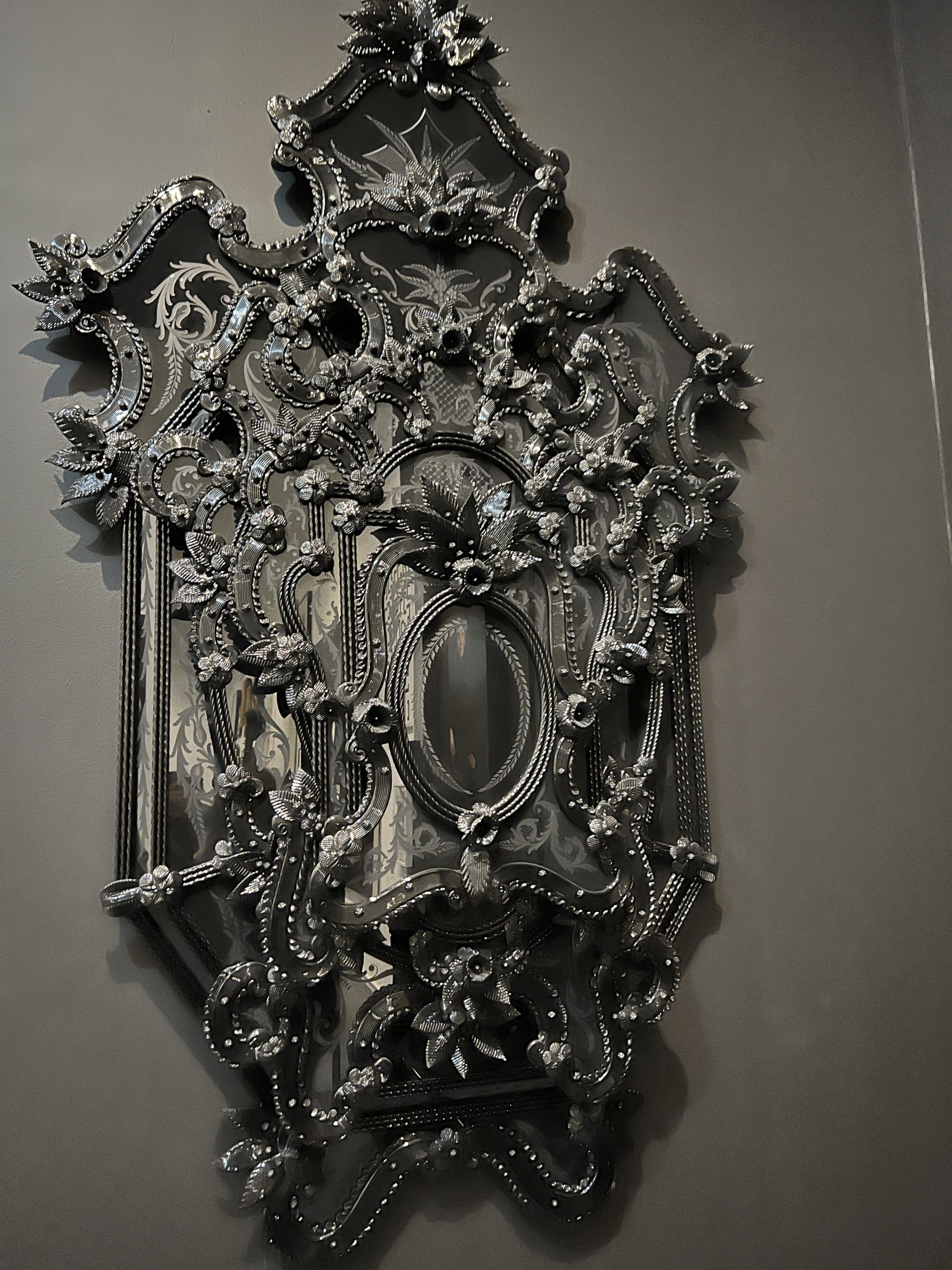
Iago’s Mirror
Fred Wilson
2009
What different visual elements (ie: line, color, light, proportions, scale, composition, media type etc.) do you notice, and how do they help you make sense of the artwork?
The mirror first off has many layers to it. Additionally, it has a lot of curves and floral designs that flow throughout the whole piece seamlessly. Importantly, the color is the most dominant part of this piece. The reason is because usually mirrors are either silver or really bright, but this one is fully encovered by black. For this same reason, it makes the mirror seem eerie and powerful at the same time. With this contrast being maybe the reason why the artists created this piece.
Group Members
Donobant Sarmiento, Kashvee Kayani
-
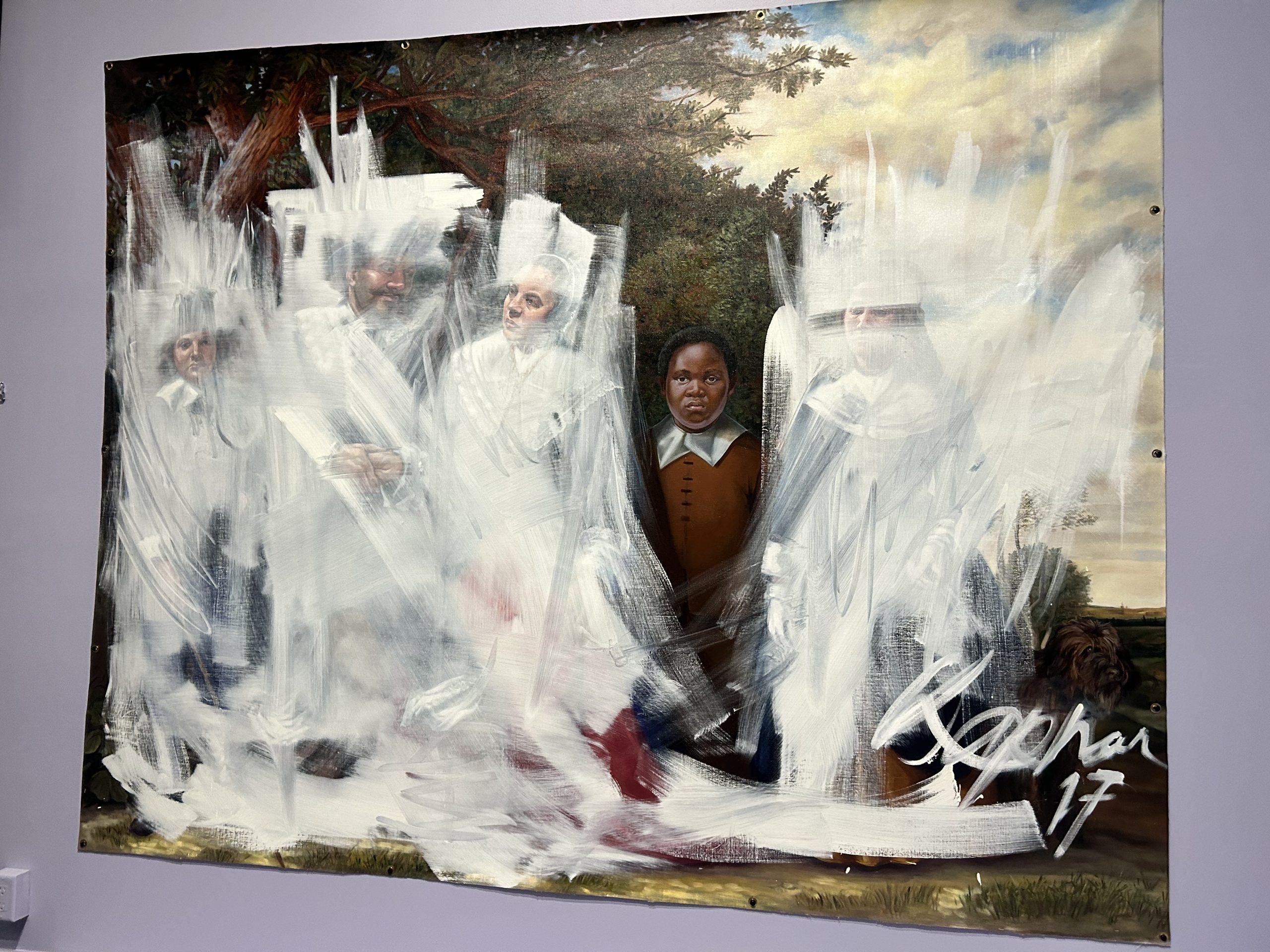
Shifting The Gaze
Titus Kaphar
2017
What do you see going on in this work of art? Is there a story depicted?
In this work of art there are five people, with a young, African American boy presumably a servant, sounded by a white family. But, what stands out, is that the white people have white paint and brush strokes covering their bodies. The background is a nature scene with trees and clouds. The painting conveys a stance rather than a story. It shows how in society African Americans are overlooked and unrepresented.
What different visual elements (ie: line, color, light, proportions, scale, composition, media type etc.) do you notice, and how do they help you make sense of the artwork?
What was most noticeable to us were the large rather irrational brush strokes of the painter. Additionally, the painting was quite large, yet the boy in the middle was small in comparison. His dark skin tone and clothing stood out against the mainly white painting. They convey the entire message of the piece: to shift the gaze. These contrasts help the viewer focus on the one thing, the African American boy, who is not focused on or seen in society.
How does this object compare to other objects, stories, or ideas you already know about?
This reminds me of the reading I recently did for my english class, Nobody Mean More to Me Than You by June Jordan. Essentially, she created the first and only Black English course at her school. When teaching, she saw how her African American students couldn’t recognise their own identity in writing; they had become conformed to the “white standard english”. In the educational system, black students and their language is overlooked just as the boy in the painting is.
What choices do you think the museum made about the object’s display?
I think the museum chose to use a purple wall behind the painting in order to make the whiteness of the object stand out even further, as opposed to if it was against a white wall.
Group Members
Lucy Donahue, Mea Cleary, Maddy Walker
-
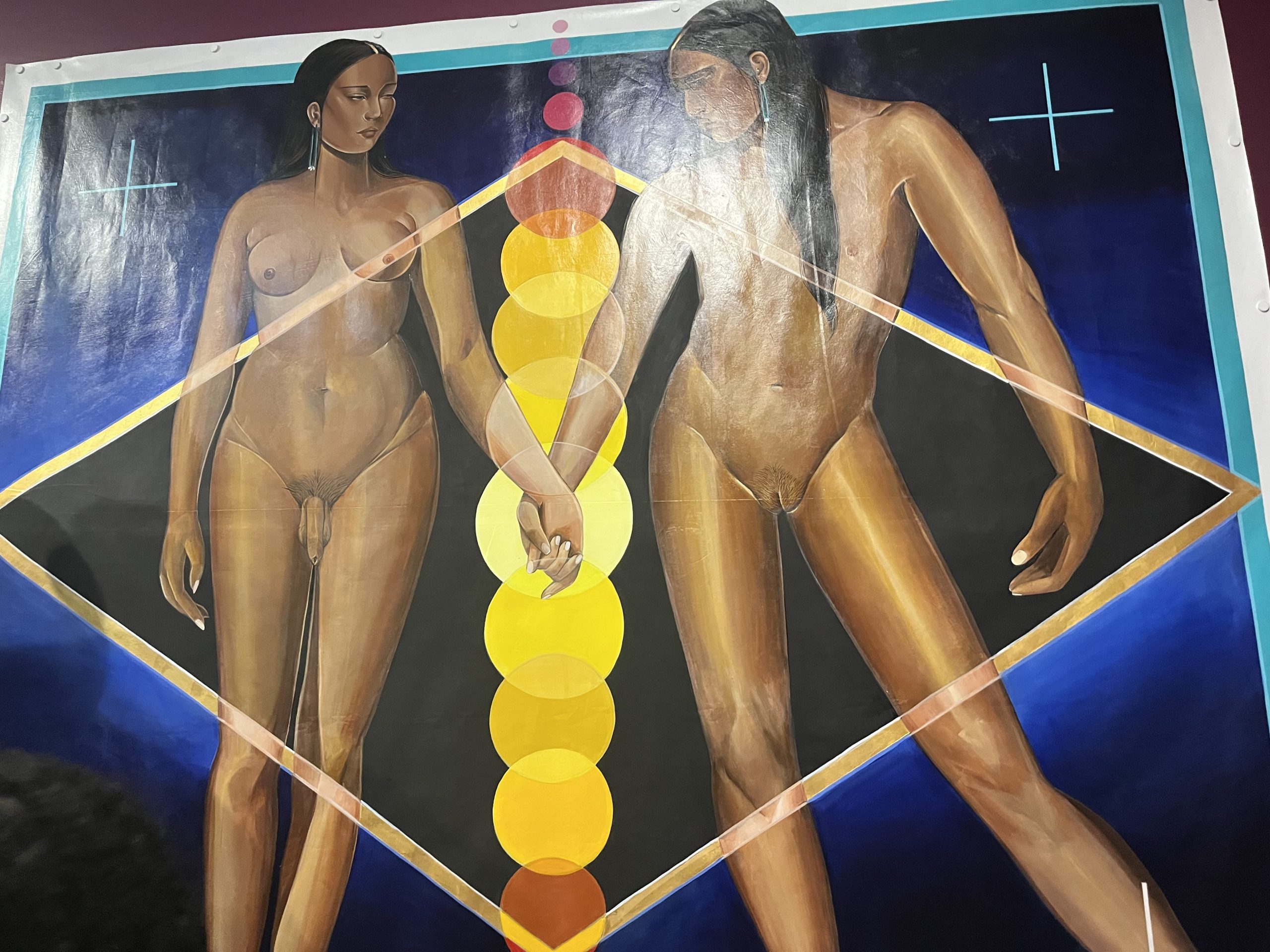
Four Genders Were Born
Nanibah Chacobn
2022
Group Members
Mira Sophia Goodman-Singh, Pari Patni, Namarachi, Oracle, Mariel, Krishna
-
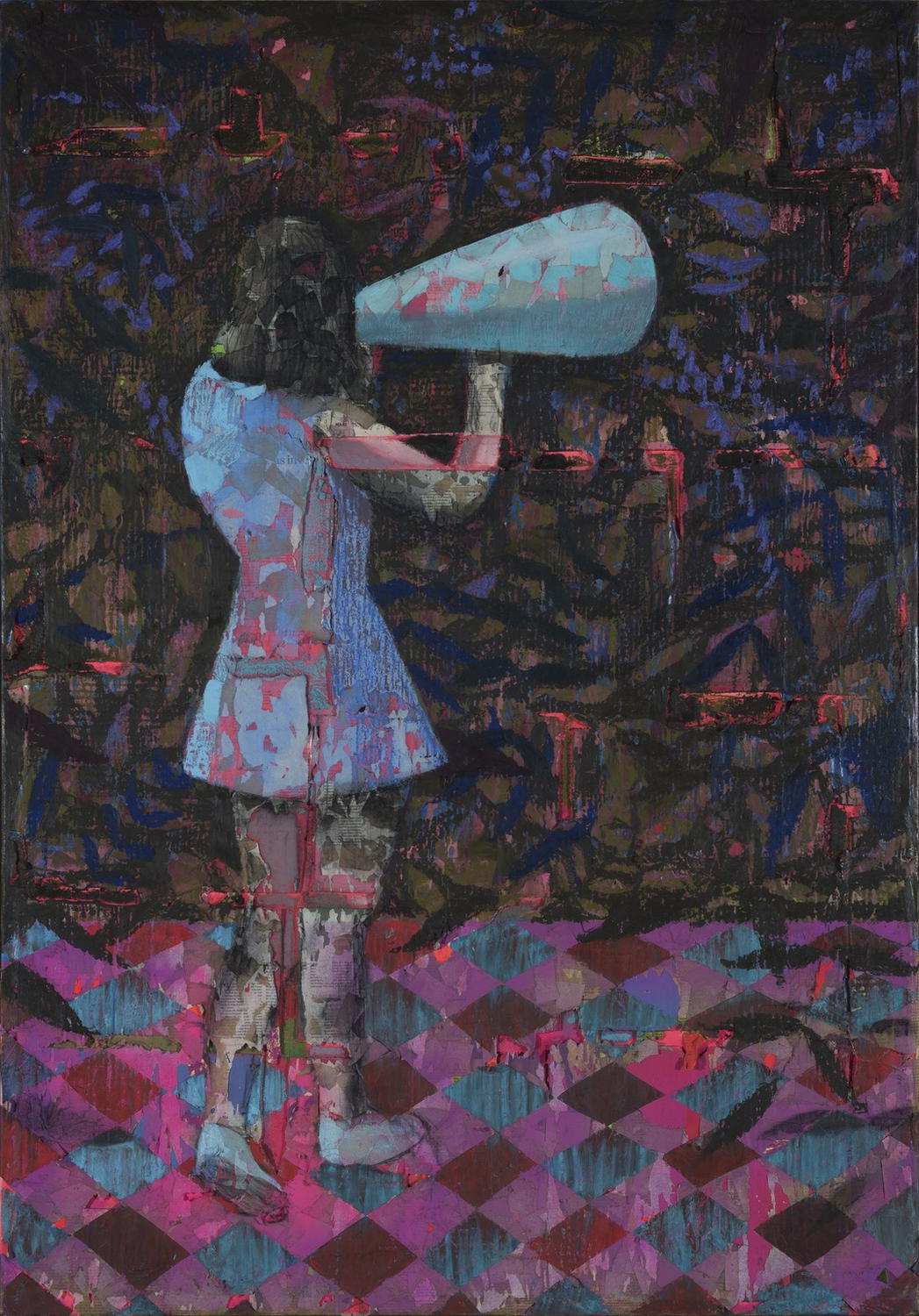
“Blue Horn”
Derek Fordjour
2017
What do you see going on in this work of art? Is there a story depicted?
In the artwork Blue Horn, a single cheerleader stands with her back to the viewer, dressed in the classic cheerleader “look”, on a pink and teal checkered floor. The contrast creates a sense of dislocation. The cheerleader seems out of place which can question her identity, performance and visibility. The picture feels like it tells a story about being watched or performing. The cheerleader might represent people who are seen only for how they perform, not for who they are.
What different visual elements (ie: line, color, light, proportions, scale, composition, media type etc.) do you notice, and how do they help you make sense of the artwork?
Color: The vivid pink-and-teal checkered floor grabs attention to the eye because of its artificial brightness which disrupts any sense of naturalism. The cheer uniform, saturated in similar colors, further amplifies the visual intensity, ensuring the figure remains the main point against the darker toned background. The background, which resembles a jungle, consist of dark, muddy shades of green and brown heightens the contrast with the uniform and floor. • Line & Composition: The figure being slightly off centered and facing its back towards the viewer creates a balanced yet dynamic composition. The grid of the floor produces strong checkered lines to draw the viewer's eye inwards, towards the figure. • Medium & Texture: The mixing of cardboard and carved newspaper into the surface gives a very tactile and layered texture. This artwork isn’t only paint on a canvas, but it is physically built up by layering. This layered ground brings forth depth and creates a feeling of distance between the viewer and the subject. • Scale / Proportions: The artwork is 60 × 40 inches which is large enough to capture the viewer's attention. The figure is portrayed in a natural size or just a little bit larger than life, which makes the subject feel present and confrontational. • Light / Mood: The mood is kind of dreamy or surreal: the bizarre floor and jungle background make the scene less stable. • Media type: The mixed media (oil pastel, charcoal, acrylic, and cardboard/newspaper) suggests a kind of layering of meaning: using “found” or commonplace materials (newspaper) hints at social commentary (mass media or representation) which is deeper than the surface image.
How does this object compare to other objects, stories, or ideas you already know about?
In this artwork, the big blue horn can be symbolized in many different ways. The idea and symbolism we chose to weave throughout this painting was the idea of strength on the outer surface although not always within. The woman had the capability to lift her arms high with the horn in her hand, proud of who she is no matter who sees her beyond the stage or not. Compared to Joseph in the Christian Bible, after he was thrown into a pit and sold by his siblings, he winded up becoming king. He had to lift his arms up during kingship no matter what his life at home was like. From here we see the importance of having that strength on the outer surface and lifting your arms up with that horn.
What choices do you think the museum made about the object’s display?
We believe the museum's decision to place this artwork in that specific area was a very well thought out decision, giving cohesiveness to the other artworks around it. The blue was like the diamond to the ring, adding that touch to the room by giving a lot of color and meaning throughout. You know what they say, everything has a purpose! We see here this artwork served a big purpose not only for the audience but also for the artworks around it. The painting was also measured to be at eye level so us, as the audience, have an in person feeling, as if we’re physically standing right behind that cheerleader. The lights in the room are also highlighted to bring out the color and texture in the artwork, which was done immaculately.
Group Members
Gabbie Azizian, Raquelle Tawil
-
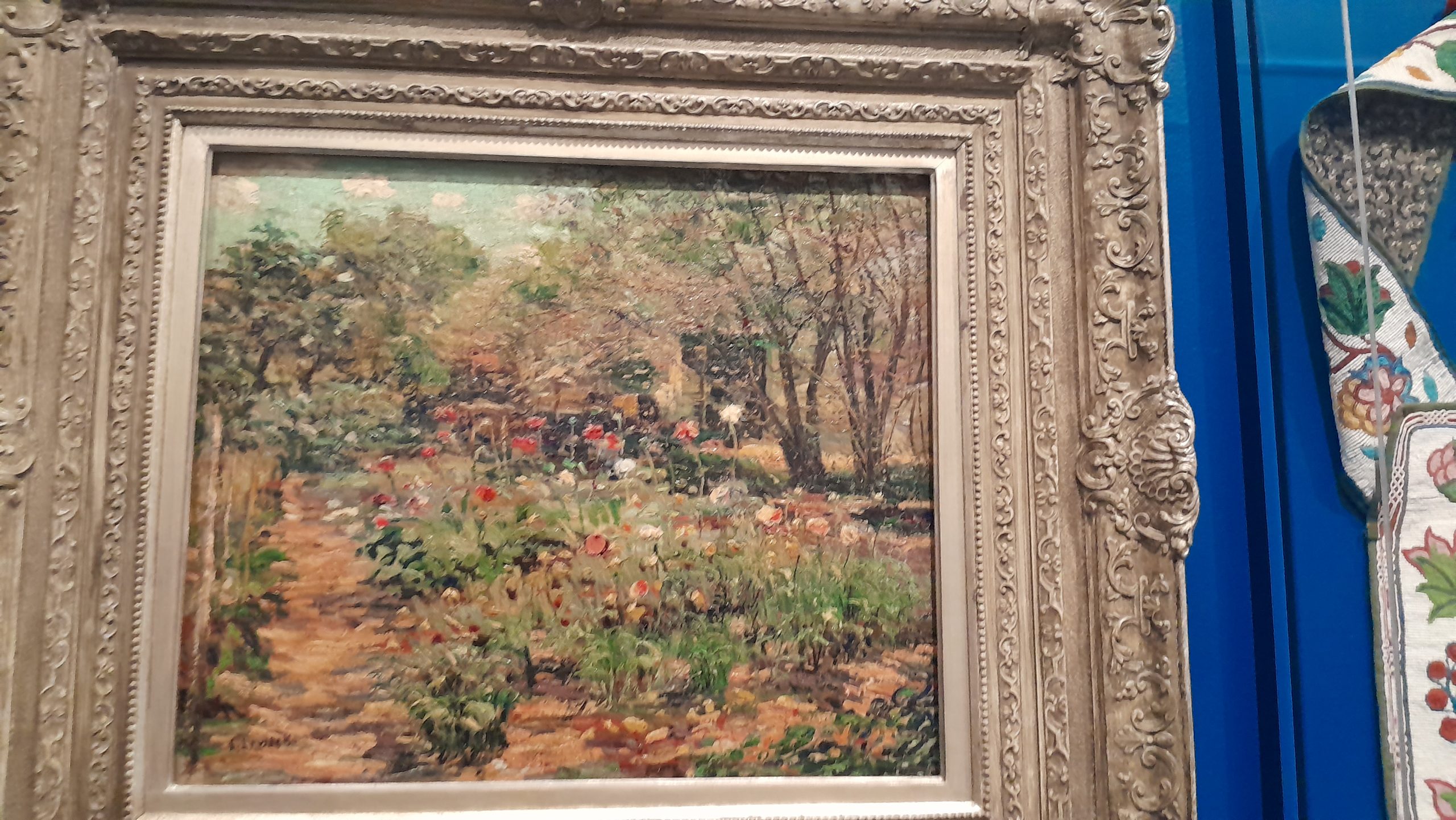
Garden Landscape
Ernest Lawson
1915
What do you see going on in this work of art? Is there a story depicted?
Admist several artifacts, the one that caught our eyes this fall evening depicts a fall scenery. The "Garden Landscape" by Ernest Lawson is an eyecatching oil painting of wild flowers. At first glance, the florishing flowers sprouting through the greenery depicts new beginnings. The brown pathway to the left leads to the flourishing flower beds. The small spots of red juxtaposes the green and brown surroundings, allowing ones eyes to be instantly drawn.
What different visual elements (ie: line, color, light, proportions, scale, composition, media type etc.) do you notice, and how do they help you make sense of the artwork?
The perspective of depth makes the painting more 3D and personalized. It almost feels like being featured in the art, almost like one is in the scene of the garden itself. The similar color palatte of the background makes the art more cohesive and well put together which also allows the blossoming flowers to pop out. The medium of oil and the lack of true blending makes the artwork more apealing from afar. In a close up stance, the individual strokes were inticrate.
How does this object compare to other objects, stories, or ideas you already know about?
Comparing to the present Brooklyn Botanical Garden, the placement of the flowers are very wild yet deliberate where as in the present the flower bunch seems void of variety. In the present scene, the placement of the flowers caters to the industrial setting whereas the painting depicts the unsual and natural setting of the flowers.
What choices do you think the museum made about the object’s display?
The location of the Brooklyn Museum plays a big part in the selection of this oil painting. The Brooklyn Botanical Garden is almost an entity of the borough itself. Pertaining to the flower exhibition, it is crucial to show the significance of flower in global cultures giving the audience a chance to determine its significance to them.
Group Members
Faiza Murshed, Geetika Das, Stephanie Liu Sophia Luo
-
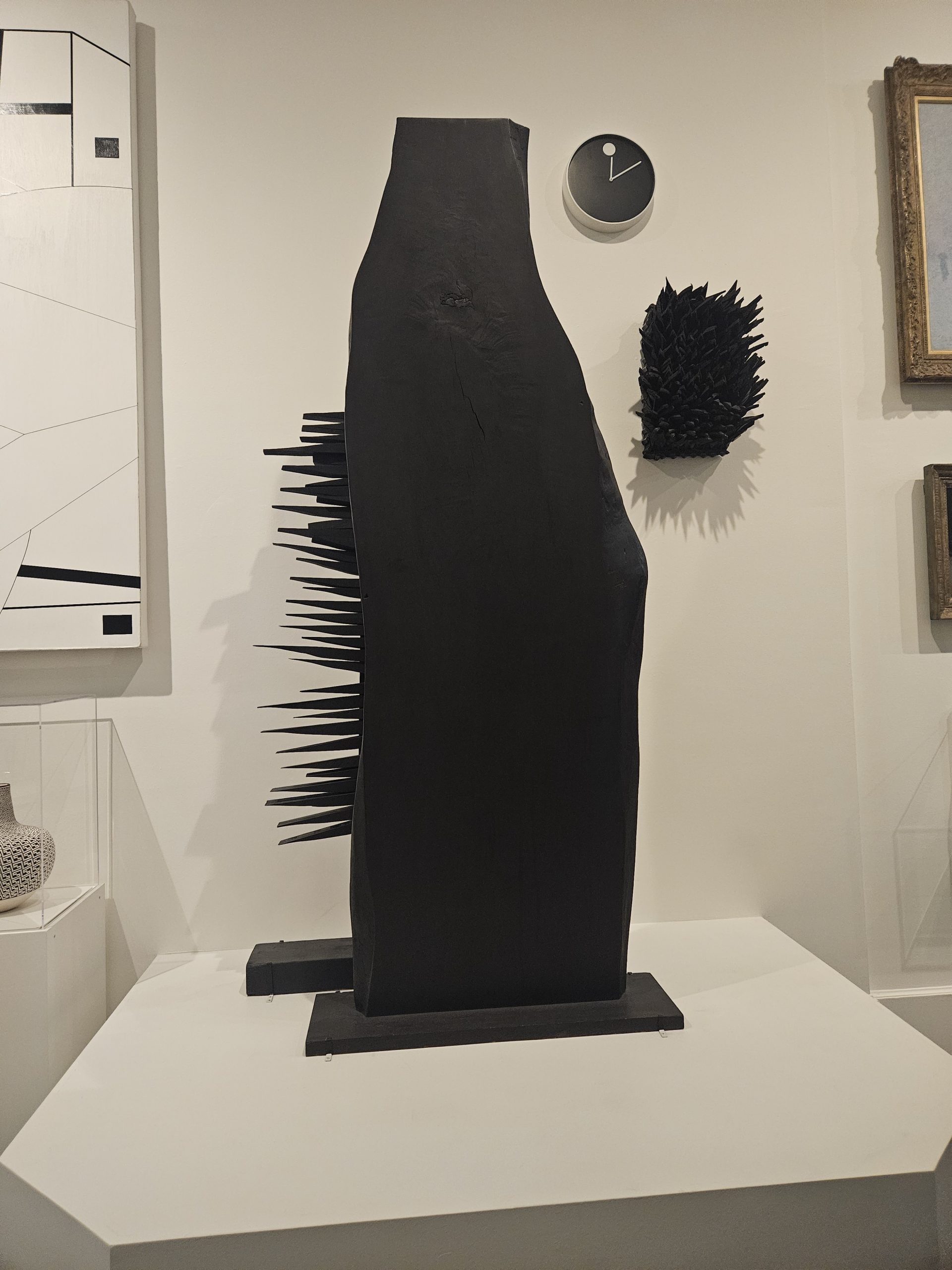
First Personage
Louise Nevelson
1956
What do you see going on in this work of art? Is there a story depicted?
In First Personage by Louise Nevelson, we see two large wooden structures, both painted entirely black. One is a tall, flat, and solid panel, while the further panel is more chaotic and jagged, with sharp wooden pieces jutting out in multiple directions. The front form suggests a composed exterior. The face and facade we show to the world, while the spiky structure represents a hidden, more complex inner self. The “us” we carry within.
What different visual elements (ie: line, color, light, proportions, scale, composition, media type etc.) do you notice, and how do they help you make sense of the artwork?
The artwork is entirely monochromatic, oil painted in deep black, placing a greater focus on form and shadow rather than color. The human-like scale of the sculpture makes it feel like a physical presence, something you can stand in front of and almost relate to as another person. It truly made every person in my group stop dead in their tracks.
How does this object compare to other objects, stories, or ideas you already know about?
This sculpture reminds me of how people often have both a visible, composed side and a hidden, more complex emotional world. It connects to the idea of wearing a “mask” in public while holding deeper truths within. The piece also shares similarities with other modern sculptures that use abstraction and texture to convey emotion and forms of Indigenous art that use symbolism and form rather than realism to tell stories.
What choices do you think the museum made about the object’s display?
The museum likely placed this sculpture in a spacious white area where viewers can walk around allowing them to experience the contrast between the calm front and chaotic back. The museum also included interpretive text to explain the conceptual meaning behind the work, helping viewers connect emotionally and intellectually.
Group Members
Zara Gingishvili, Katherine Pendorak, Saad Nagi, Daniel Azbel, Aiden Krasnopolskiy
-
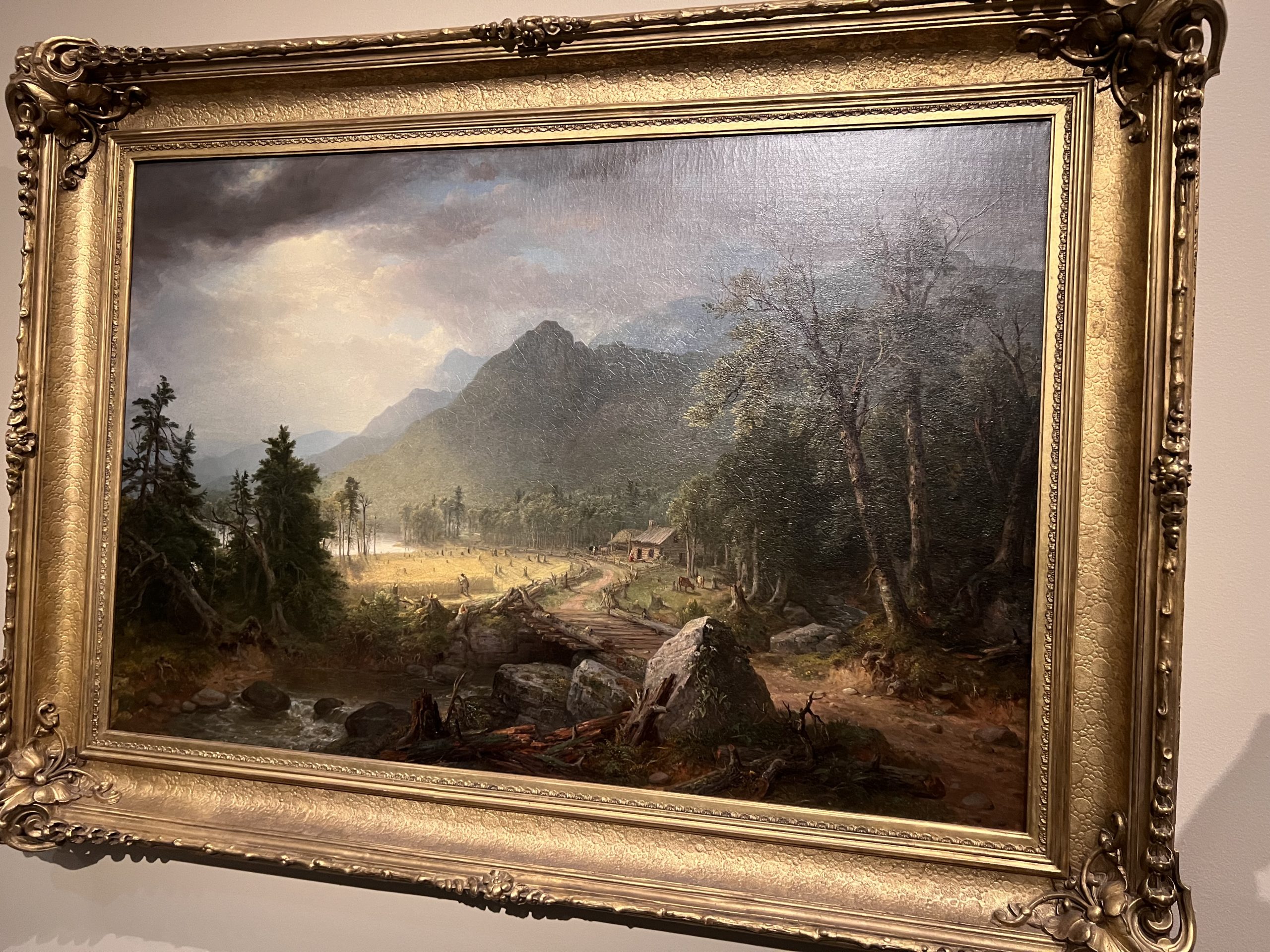
The first harvest on the wilderness
Asher B Durand
1855
What do you see going on in this work of art? Is there a story depicted?
In The First Harvest in the Wilderness, Asher B. Durand shows settlers harvesting crops in a clearing surrounded by vast nature. The small figures working the land suggest human perseverance and harmony with the wilderness. The scene tells a story of new beginnings and settlement in early America.
What different visual elements (ie: line, color, light, proportions, scale, composition, media type etc.) do you notice, and how do they help you make sense of the artwork?
The frame consists of gold elements that add a rich component to the piece of art, and the colors chosen portray a gloomy setting that encapsulate the fulfillment of the Manifest Destiny. The painting doesn’t have any coverings and isn’t perfectly smooth.
How does this object compare to other objects, stories, or ideas you already know about?
This object is similar to other paintings in the terms of nature and civilization, in this case which manifest destiny is being shown.
What choices do you think the museum made about the object’s display?
The museum definetely put it in a very lit up and bright space to show its history and impact
Group Members
Alexandra Rahman, Atiqa Ullah, Jana Ahmed, Subhah Hoque, Tara Bailovic
-
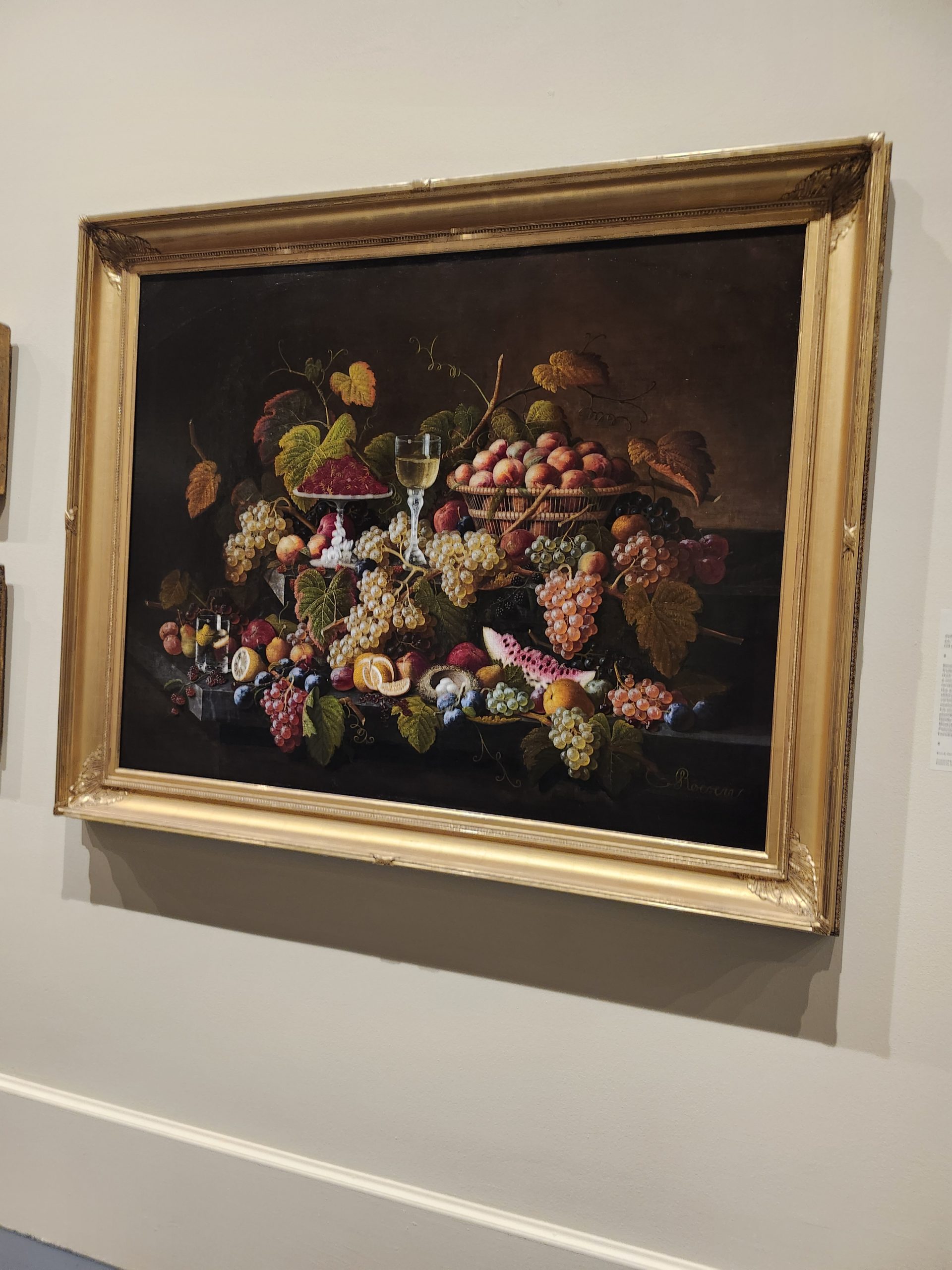
Still life with fruit
Severin Roesen
1816-1872
What do you see going on in this work of art? Is there a story depicted?
we see different fruit and other foods such as eggs and cutlery, also a birds nest,
What different visual elements (ie: line, color, light, proportions, scale, composition, media type etc.) do you notice, and how do they help you make sense of the artwork?
There are so many different elements. There are different types of muted and bright colors all throughout the painting. The proportions are very lifelike.
How does this object compare to other objects, stories, or ideas you already know about?
We think it tells the story of life and gluttony, as well as overconsumption. it shows the perishable characteristic of life and how beautiful it can be if cherished correctly.
What choices do you think the museum made about the object’s display?
It was surrounded by other food paintings, as well as being put in a brightly lit place to show off its beautiful colors. it was also the centerpiece for the food paintings to showcase its star-like characteristics.
Group Members
Anjali Nair, Khadijah Shoaab
-
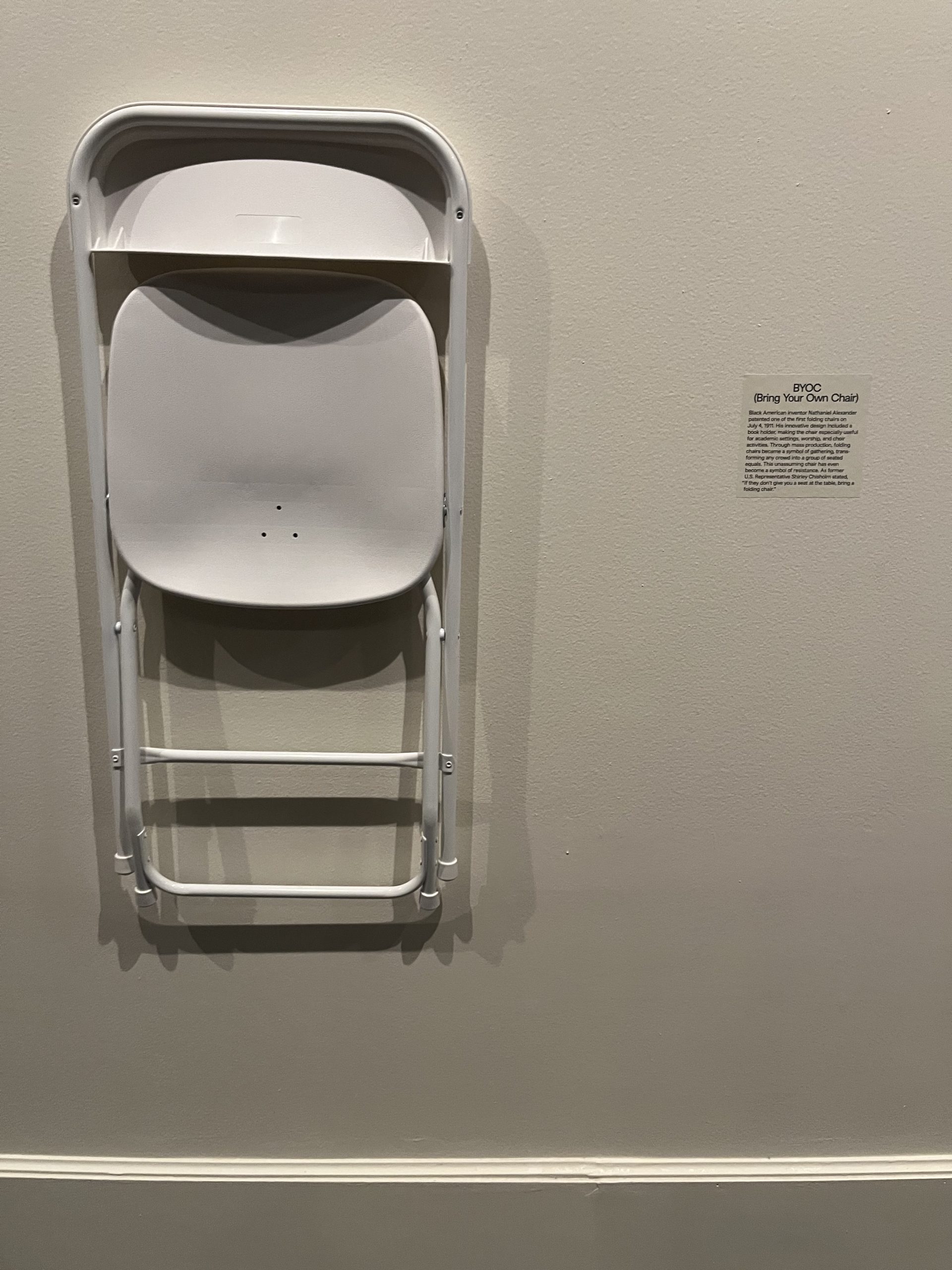
BYOC (Bring Your Own Chair)
Nathaniel Alexander
1911
What do you see going on in this work of art? Is there a story depicted?
The inventor of the folding chair created it as a way of adding people who are not invited into conversations, highlighting racial inequality and the strength held by Black people in spite of that inequality.
What different visual elements (ie: line, color, light, proportions, scale, composition, media type etc.) do you notice, and how do they help you make sense of the artwork?
The chair is white, with no details, showing how unassuming it is, however the reality is that it stands for racial equality.
How does this object compare to other objects, stories, or ideas you already know about?
Due to the chairs plainness, it stands out against everything else, and therefore draws the viewers eye.
What choices do you think the museum made about the object’s display?
They put it among other chairs in order to highlight its simple design, but significant meaning about racial equality.
Group Members
Diana Kolari, Gurjot Bains, Sabrina DERKACH, Jake PECHTER

