
This is a gallery curated by you, the students taking part in our Night at the Museum. Make it your own!
To have your own response appear on this page, form a group and submit a response.
-
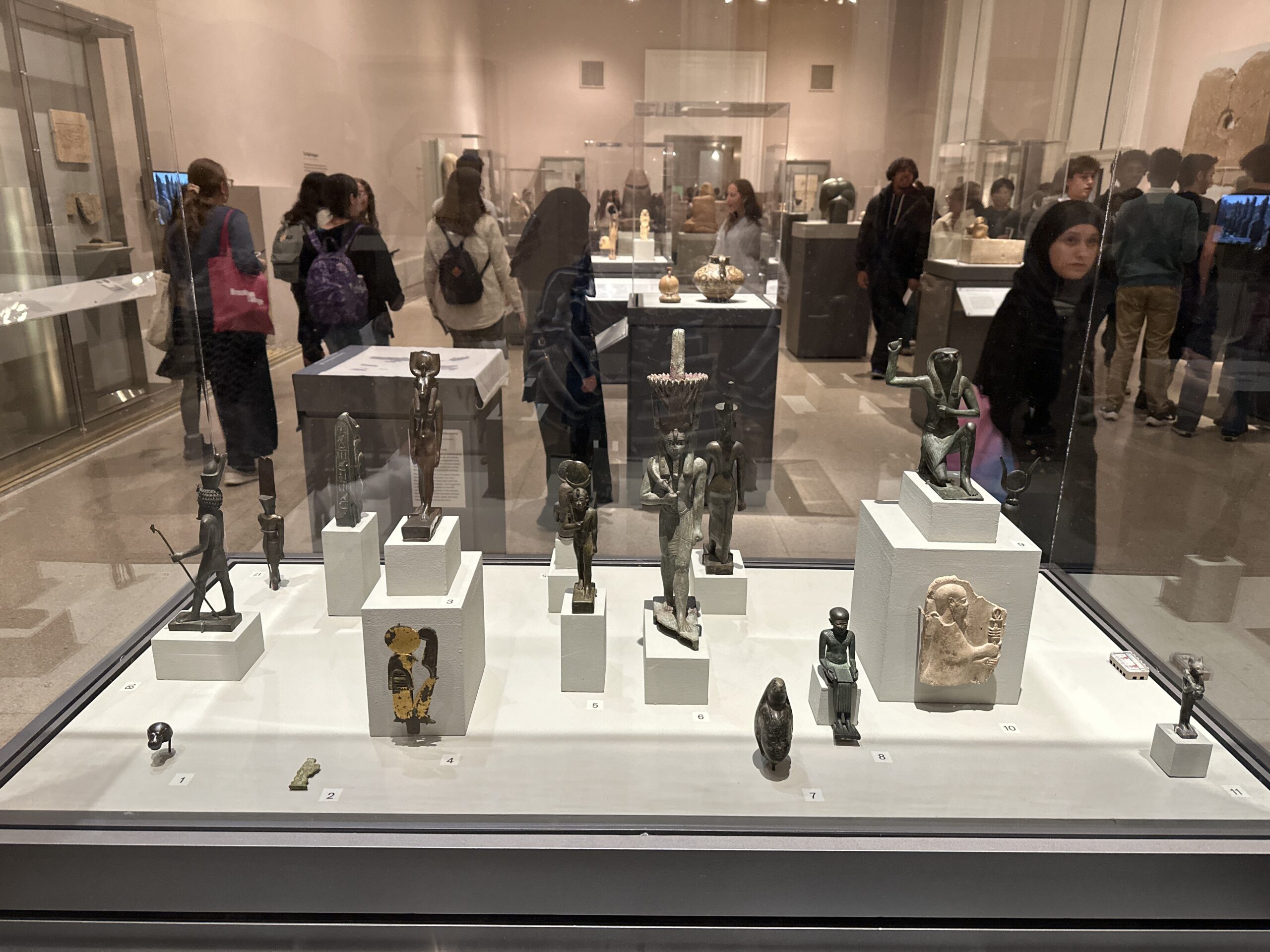
Attributes of the Gods
Charles Edwin Wilbur
Ancient Egypt
What do you see going on in this work of art? Is there a story depicted?
In this world of art, the various illustrations of the gods is meant to portray a dedication of praise to the gods and a show of faith.
What different visual elements (ie: line, color, light, proportions, scale, composition, media type etc.) do you notice, and how do they help you make sense of the artwork?
For the different Gods, the statues are of different proportions which can represent the different levels of power which can convey an imbalance. Some are in human form and some are in animal form.
How does this object compare to other objects, stories, or ideas you already know about?
This exhibit compares to others by showcasing statues instead of being in art form such as a painting or scab of writing on a stone.
What choices do you think the museum made about the object’s display?
I think the museum deliberately put certain gods on pedestals to possibly highlight the power dynamics that exist between the gods. Certain gods are up higher than others possibly because they were probably considered top of the hierarchy or more idolized.
Group Members
Reem Hamdan (Baruch), Badriah Saleh,(Brooklyn), Kaaif Ali (Baruch) , Milagro Cruz (Brooklyn), Alishya Loyd (Baruch) , Syeda Rahman (Baruch)
-
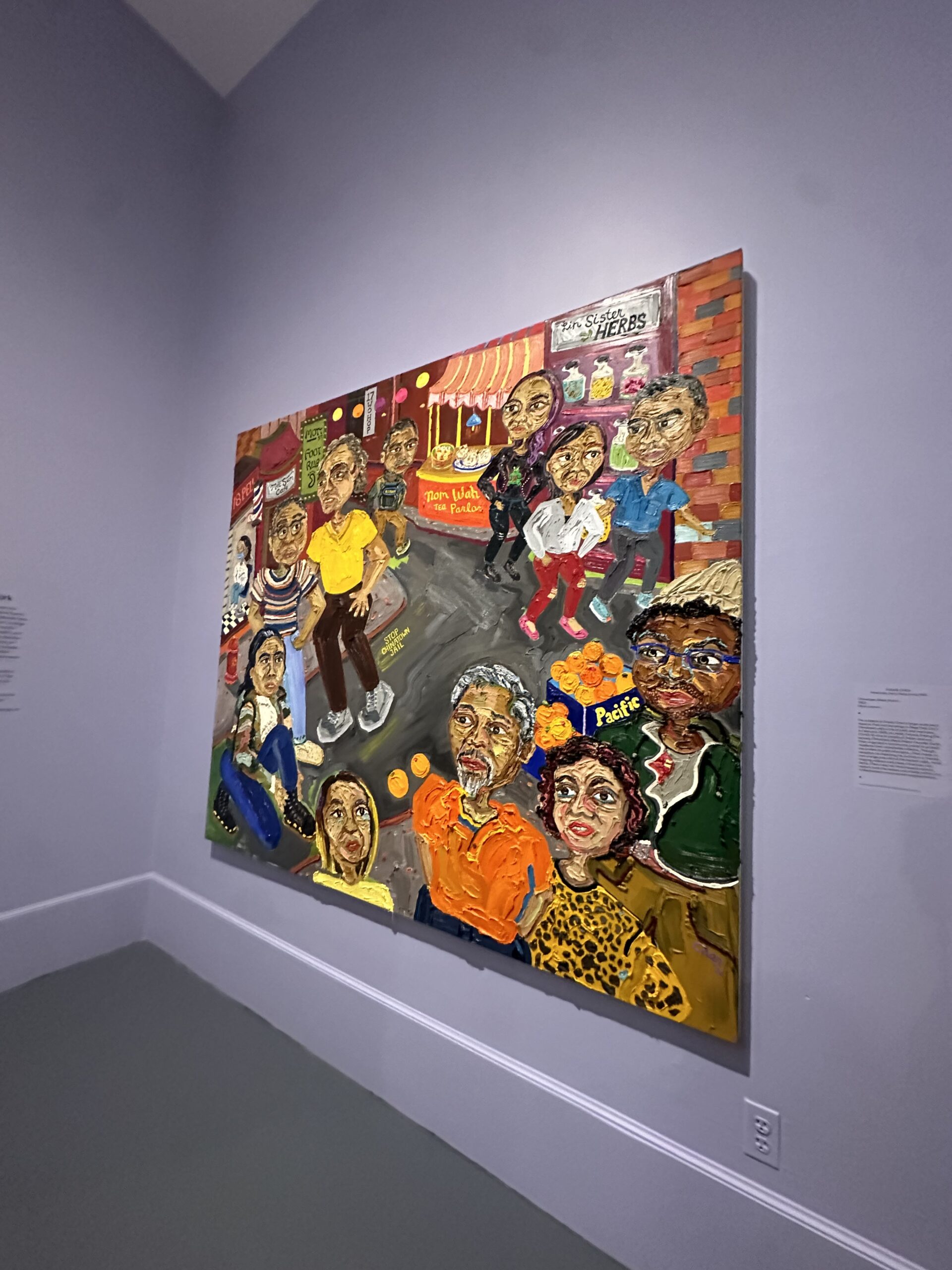
Chinatown Block Watch
Susan Chem
2022
What do you see going on in this work of art? Is there a story depicted?
The art is depicting a story of sharing Chinese culture cuisine and other key aspects of the culture.
What different visual elements (ie: line, color, light, proportions, scale, composition, media type etc.) do you notice, and how do they help you make sense of the artwork?
The first thing we noticed was the oil painting creating textures and vibrant colors which gives us the impression that the culture is dynamic and vibrant.
How does this object compare to other objects, stories, or ideas you already know about?
It compares because of its story of diversity and immigrants settling into new countries, similar to immigration photography series we’ve seen in our IDC 1001H course.
What choices do you think the museum made about the object’s display?
Placing it at the end of gallery at a large scale to really catch visitors attention, especially with its vibrant colors and textures.
Group Members
Sara Smith, Annalise Cortez, Yadira Fuentes, Sarah Aghababayeva, Abbah Fatima
-
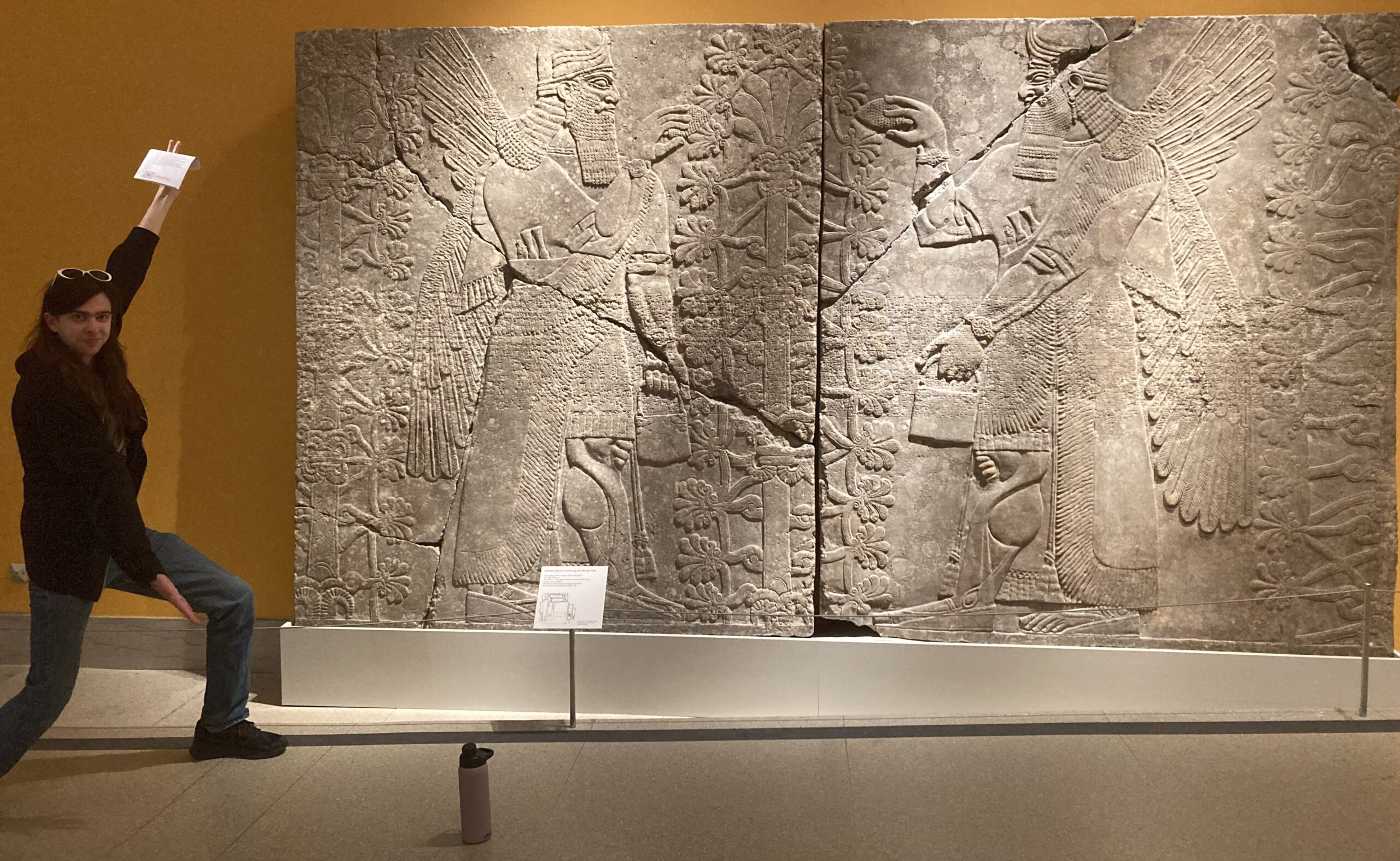
Apkallu-figures Fertilizing the Sacred Tree
Unknown Artist, under the reign of Ashur-Nasir-Pal II at the palace at Nimrud, Iraq
883-859 BCE
What do you see going on in this work of art? Is there a story depicted?
The piece has two figures tending to the garden, which represents the prosperity of Mesopotamia. The symmetry of the figures conveys a sense of unity.
What different visual elements (ie: line, color, light, proportions, scale, composition, media type etc.) do you notice, and how do they help you make sense of the artwork?
The figures are similar but have slightly different details, such as their earrings. This difference is reinforced by the side decorations. There is also text across the middle of the relief in cuneiform, which means the piece probably was meant to serve both as art and some kind of documentation.
How does this object compare to other objects, stories, or ideas you already know about?
The poses of the figures are similar to those found in ancient Egyptian art, which could indicate an exchange of ideas between the two cultures.
What choices do you think the museum made about the object’s display?
The relief is up against a wall and lit from above, like it might have been originally. However, the lighting is warm which makes the relief blend in a little with the orange wall. The blending in affect is counteracted by the placement of the relief on a pedestal not touching the wall, and overall the effect is very natural.
Group Members
Artemis Bogin & Alice Hellman
-
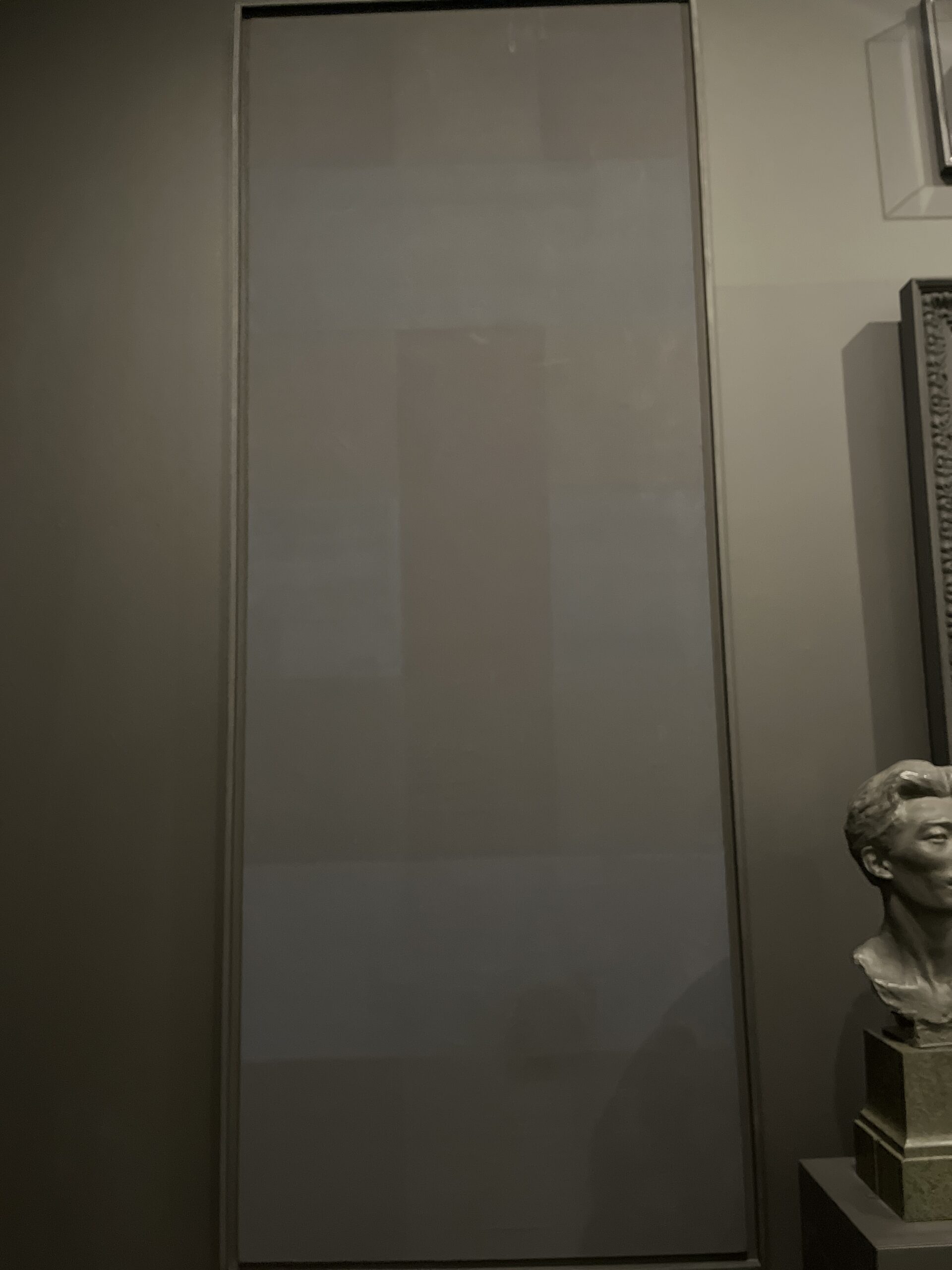
Untitled(Composition #104)
Ad Reinhardt
1954-60
What different visual elements (ie: line, color, light, proportions, scale, composition, media type etc.) do you notice, and how do they help you make sense of the artwork?
Ad Reinhardt wanted to convey seeing through black as given through the additional text. The artwork uses squares of slightly varying shades of black.
How does this object compare to other objects, stories, or ideas you already know about?
At first glance I wouldn’t have guessed it would go to a museum. It is very black and empty but with further observation, the absence of detail leads us to think further delving deeper into the feelings that the painting conveys for the person who is viewing it.
Group Members
Dylan Rosenberg, Stephen Lau
-
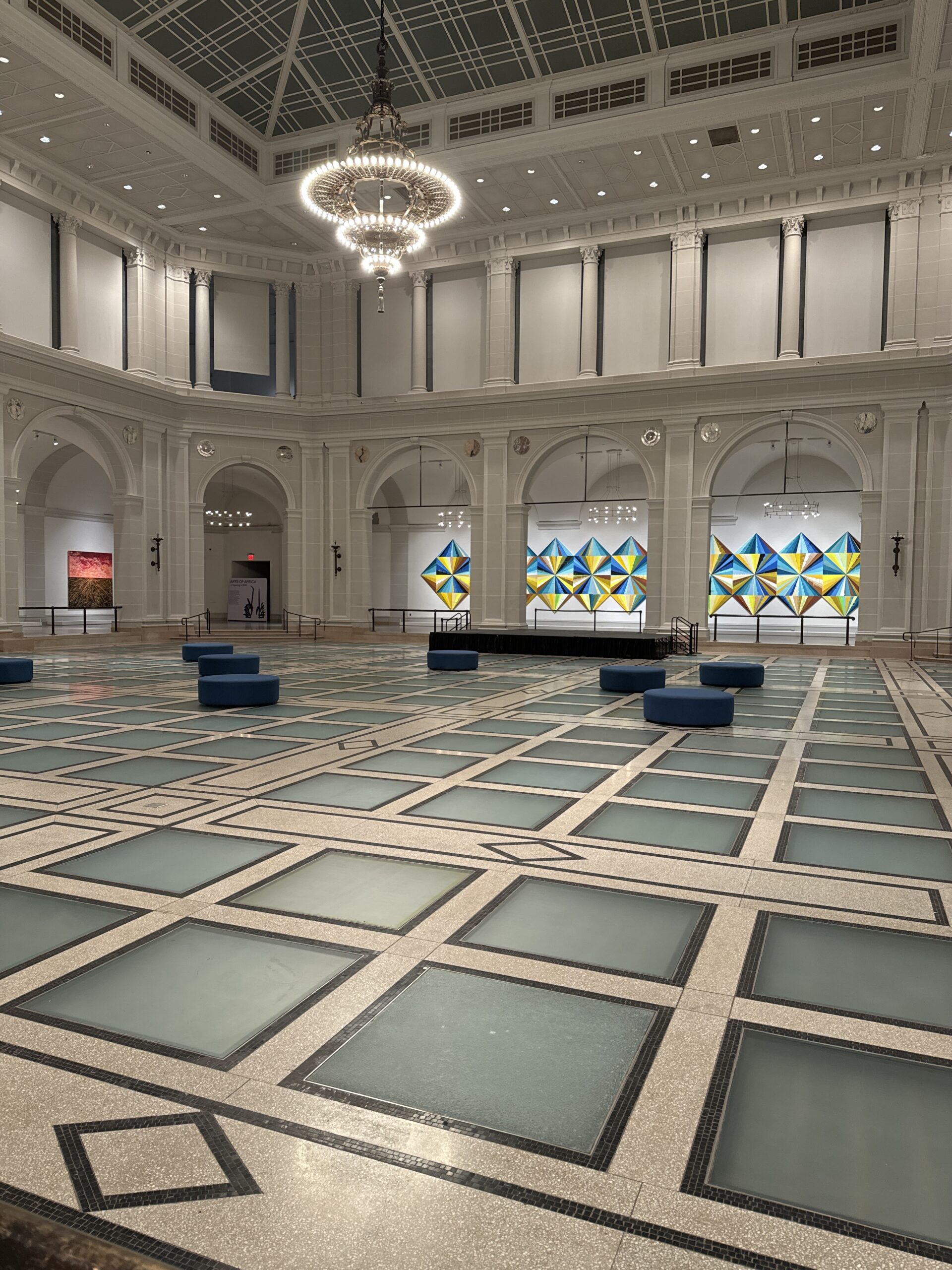
No More Drama
Kennedy Yanko
2022
What do you see going on in this work of art? Is there a story depicted?
There are blue tiles on a white floor. It consists of blue round ottoman chairs, that are scattered around the floor. The space is open and brightly lit. The story we got from the space is a story of isolation and keeping to one’s self.
What different visual elements (ie: line, color, light, proportions, scale, composition, media type etc.) do you notice, and how do they help you make sense of the artwork?
The blue tiles on the floor follow a square shape. There is a reoccurring pattern of diamonds on the floor. The chairs are blue just like the tiles on the floor. This color scheme follows the bright, positive theme of the room. The lighting makes the area seem homey, shining a positive light on isolation from evil of the outside world.
How does this object compare to other objects, stories, or ideas you already know about?
The chairs are set up spaced apart, which reminded my group of the conditions during covid. It feels that the chairs are social distanced, representing the disassociation of society during that horrific time.
What choices do you think the museum made about the object’s display?
Kennedy Yanko produces work that obscure the boundaries of painting and sculpture. Yanko addresses how human perception and societal expectations are conflicted. This very message can be observed through the severe conditions of the COVID pandemic: though humans naturally crave physical interactions, it conflicted with the societal expectations that people should quarantine for the good of the people.
Group Members
Olivia Gorski, Wafa Berri, Michelle Zheng, Julia Kaylakov, Mabel Ramales
-
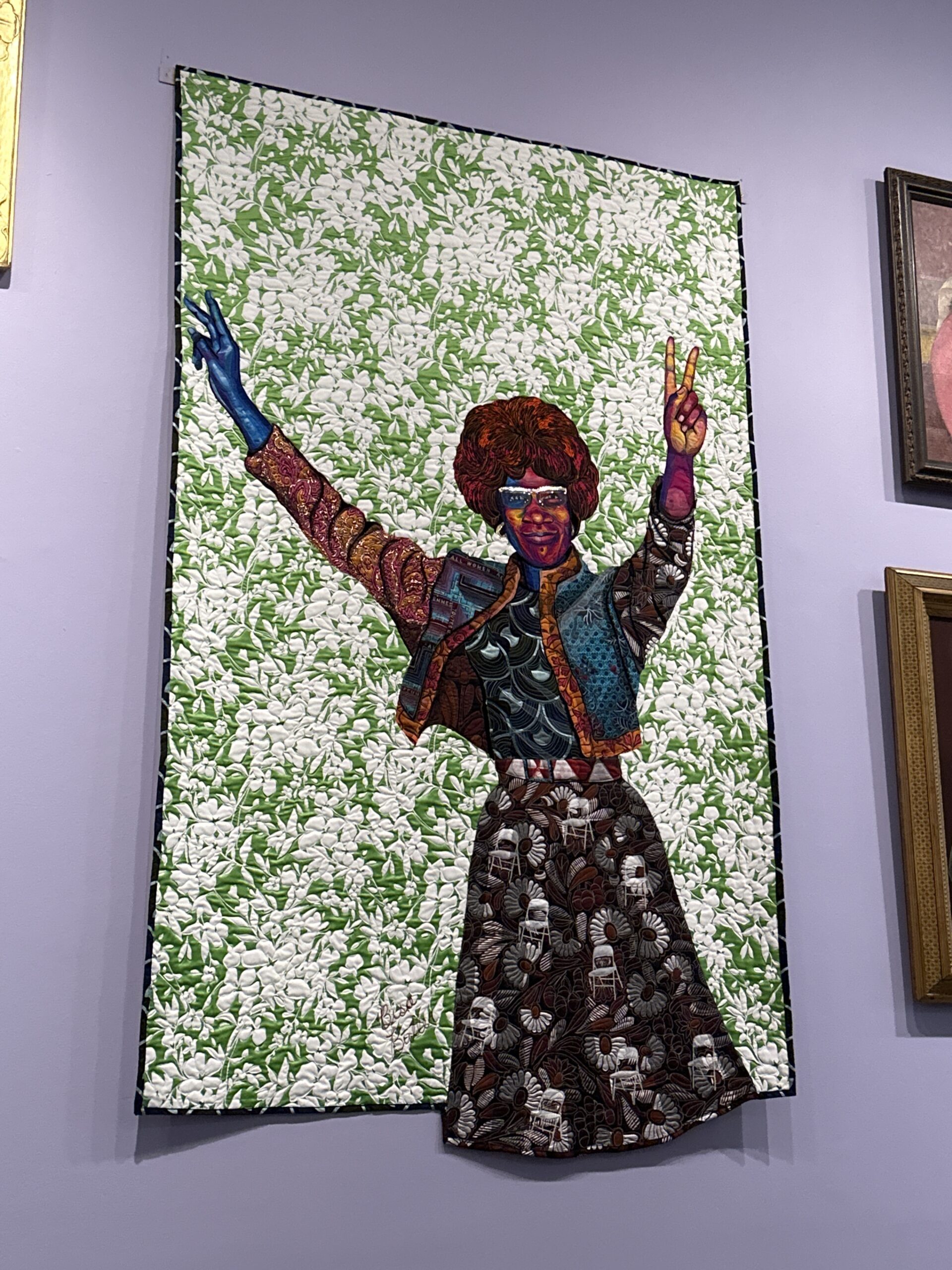
Bring a Folding Chair: A portrait of Shirley Chisholm
Bisa Butler
2024
What do you see going on in this work of art? Is there a story depicted?
She looks very proud. She may have just won the senator election or given a speech to her supporters. She may be introducing herself to a crowd.
What different visual elements (ie: line, color, light, proportions, scale, composition, media type etc.) do you notice, and how do they help you make sense of the artwork?
It’s made of fabric like a collage. Some parts are sparkly and she’s very colorful in general. She’s also shown in a green background with plants, showing that there is growth in America because she’s an African American woman holding a position of power in NY.
How does this object compare to other objects, stories, or ideas you already know about?
A lot of the paintings look very vintage, but this one in particular looks more modern, It also uses fabric whereas the other works are actual paintings.
What choices do you think the museum made about the object’s display?
Because the piece is so large, it’s displayed in the center. It also breaks up the color schemes of the surrounding paintings which are very gloomy.
Group Members
Zahin, Renee, Hope, Rachel Dayts
-
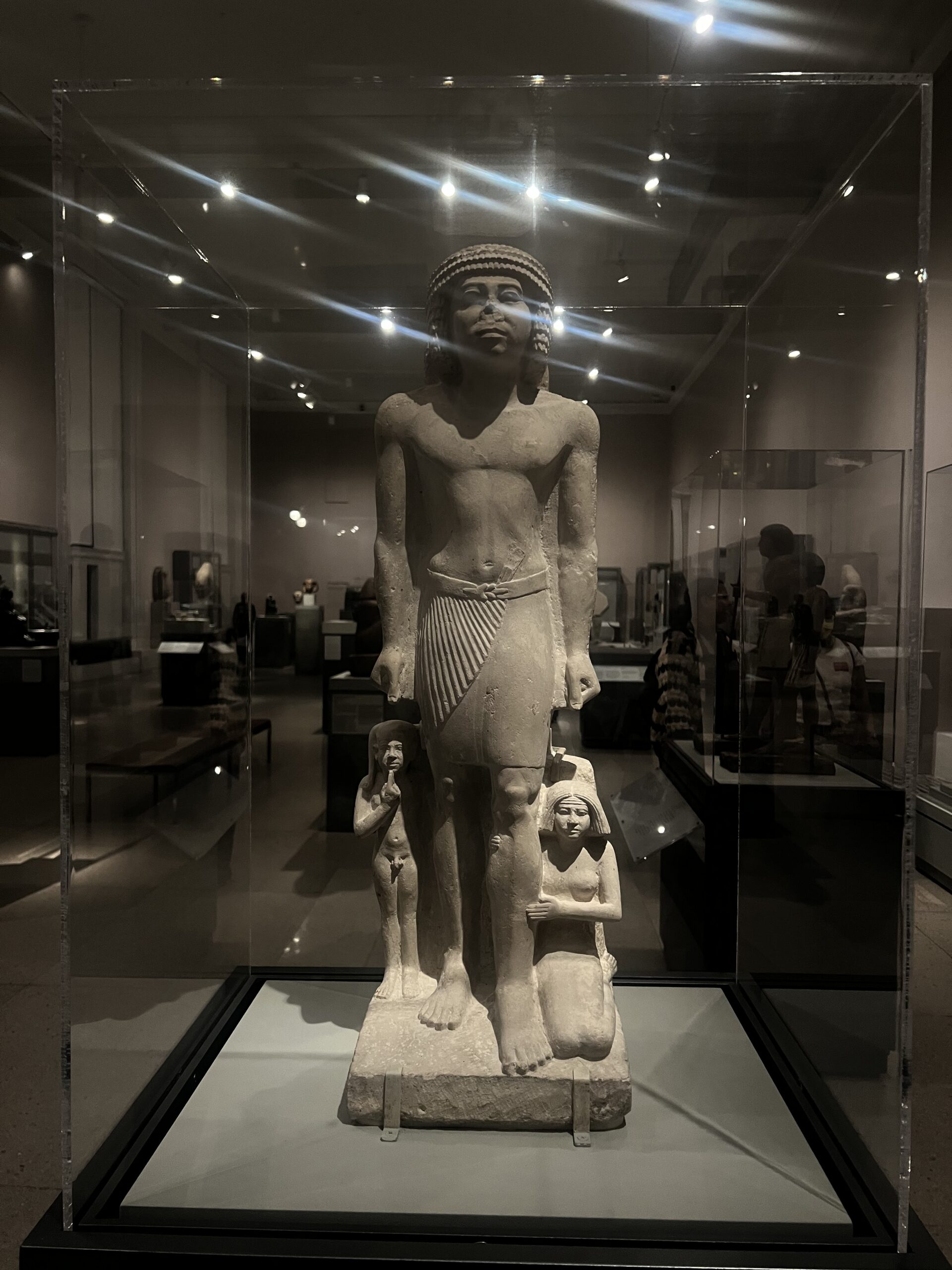
State of a family group
Charles Edwin Wilbour Fund
Circa 2371-2298 B.C.E
What do you see going on in this work of art? Is there a story depicted?
It exemplifies a family of three, consisting of a father, mother, and son. In this sculpture, we see early depictions of patriarchy as the father is built the largest, the son being second largest, and the mother being the smallest. Despite the son’s age, the mother is still constructed as the shortest figure, likely due to her gender. Additionally, the mother can be seen gripping the father’s leg, showing how she is gripping for support, furthering the idea of a patriarchal society.
What different visual elements (ie: line, color, light, proportions, scale, composition, media type etc.) do you notice, and how do they help you make sense of the artwork?
The mother (the only female in the sculpture) is the shortest figure and the 2 males in the sculpture are constructed taller and standing upright. These elements help visualize the values of society dying this time period as patriarchal elements are evident early on in history.
How does this object compare to other objects, stories, or ideas you already know about?
From past history classes, we learned about the patriarchal elements of society from different time periods and how women were seen as weaker and treated differently. We can connect this to today’s society and compare it to the strides made in women’s rights. For instance, we can compare this to women’s right to vote and other battles we were able to overcome.
What choices do you think the museum made about the object’s display?
The museum was placed in the Egyptian art area as it further helps us visualize values in ancient Egyptian societies. Next to the hieroglyphics and other sculptures the museum displayed, this one helps us go deeper into familial relationships and societal dynamics.
Group Members
Kate Krichevsky, Eliza Kacaj, Maria Ioffe
-
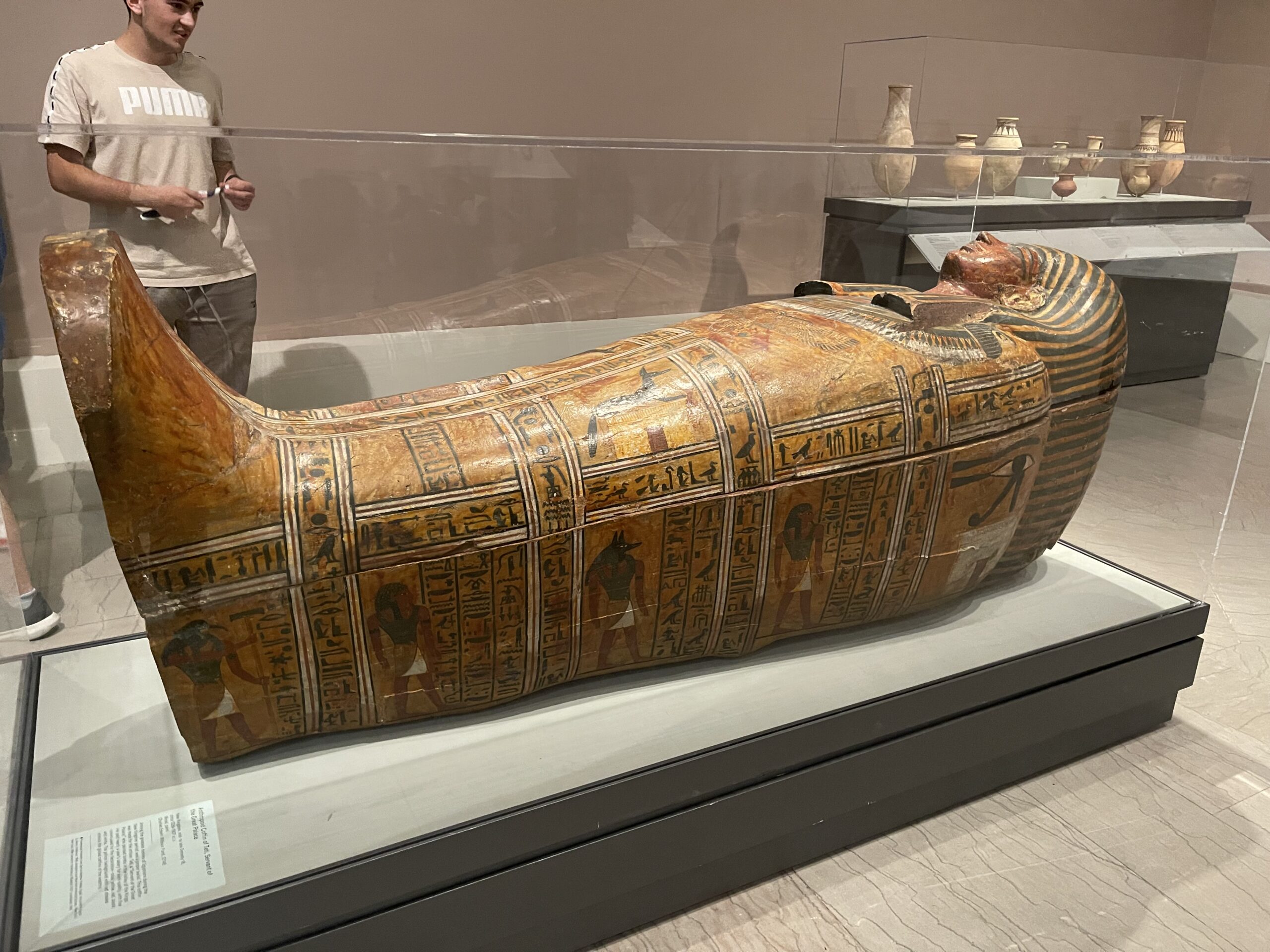
Anthropoid Coffin of Teti
Charles Edwin Wilbour Fund
1339-1307 BCE
What do you see going on in this work of art? Is there a story depicted?
To us the story is kind of unclear because there are symbols of animals and hieroglyphics. There are human-like figures and a pet. Maybe the animal was the dead person’s previous pet.
What different visual elements (ie: line, color, light, proportions, scale, composition, media type etc.) do you notice, and how do they help you make sense of the artwork?
There is a figure at the bottom of the feet and the top of the head, which may represent the deity that they believe in and since they died, they want this deity rot let them unit the afterlife. The colors of the coffin also represent the wealth of this person.
What choices do you think the museum made about the object’s display?
The object is more in the middle of the room, providing a greater sense of space to look around the mummy sculpture and surrounded by other objects relating to the time period.
Group Members
Emily Tiwary
-
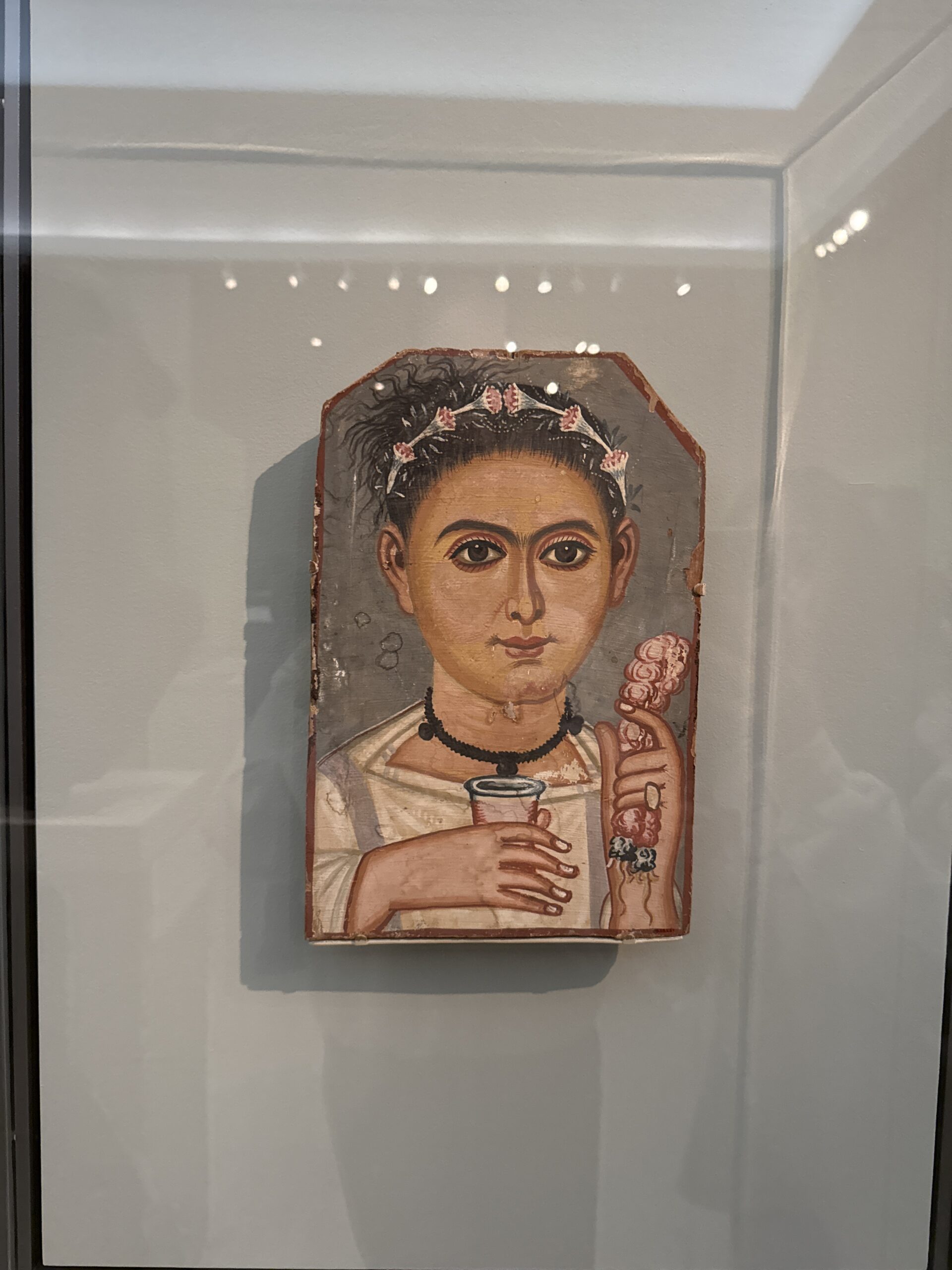
Boy with a Floral Garland in His Hair
Roman Period, unknown
200-230 c.e.
What do you see going on in this work of art? Is there a story depicted?
This looks like a portrait of someone wealthy at the time.
What different visual elements (ie: line, color, light, proportions, scale, composition, media type etc.) do you notice, and how do they help you make sense of the artwork?
There is different colors and patterns, as well as flowers in his hair.
How does this object compare to other objects, stories, or ideas you already know about?
It resembles Frida Kahlo.
What choices do you think the museum made about the object’s display?
They put it on its own column so that it draws attention to the portrait.
Group Members
Francesca Oliva, Jacqueline Halabi, Georgia Gramshi
-
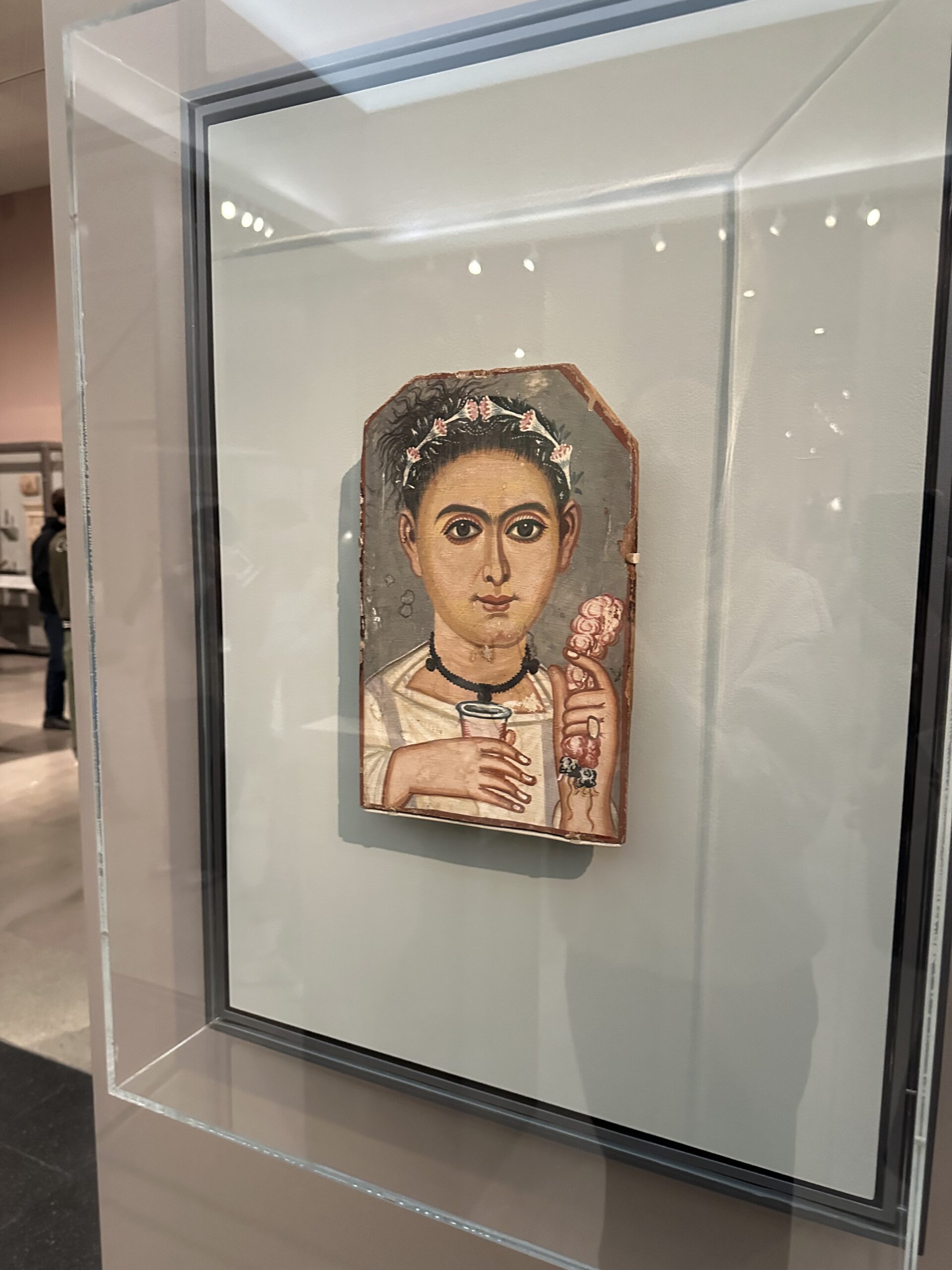
Boy with a floral garland in his hair
Charles Edwin Wilbour
200-230 cE
What do you see going on in this work of art? Is there a story depicted?
This is a portrait of someone wealthy and of status.
What different visual elements (ie: line, color, light, proportions, scale, composition, media type etc.) do you notice, and how do they help you make sense of the artwork?
Many different colors and patterns as well as flowers in his hair
How does this object compare to other objects, stories, or ideas you already know about?
This portrait resembles Frida Kahlo.
What choices do you think the museum made about the object’s display?
The museum displayed it on its own wall to draw attention.
Group Members
Francesca oliva, Georgia Gramshi, Jacqueline Halabi

