Jacques Agbobly’s Ensembles: Jacques Agbobly created this look to celebrate his family and cultural roots. The design nods to his childhood memories—like the hairbraiding salons he visited and the earrings his grandmother and aunts wore to church. At the same time, it honors heritage by echoing the colors of bags West African migrants used to carry their belongings.
Ori Cohen – Afrofuturist Object
Lugo Portrait Cup Henrietta Lacks: The Lugo Portrait Cup of Henrietta Lacks is a ceramic piece by artist Roberto Lugo, who often combines traditional pottery with portraits of important Black figures. This cup honors Henrietta Lacks, a Black woman whose cells were taken without her consent in 1951 and went on to become vital in medical research. I chose this object because it blends art, history, and justice—it turns an everyday object into a powerful tribute, reminding us of both exploitation and resilience.
Superfine Object
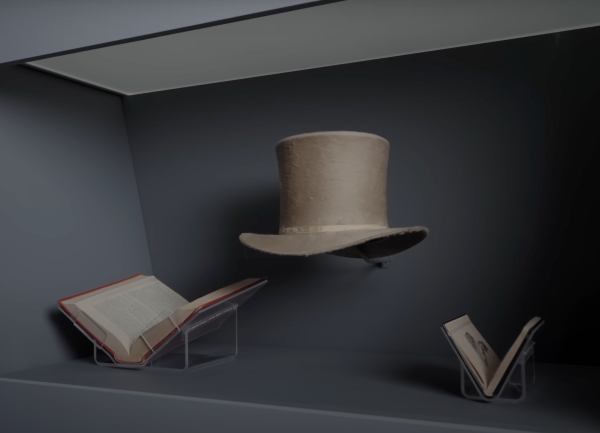
The object that caught my attention was the the top hat from the Crafts’ escape story. I found it powerful because it wasn’t just a piece of clothing. It was a disguise that helped Ellen and William Craft escape from slavery. Ellen, who was light-skinned, dressed as a wealthy white man, while William pretended to be her servant. The hat symbolized not fashion for fashion’s sake, but survival, bravery, and cleverness.
Superfine: Black Tailoring – Max Goldstein
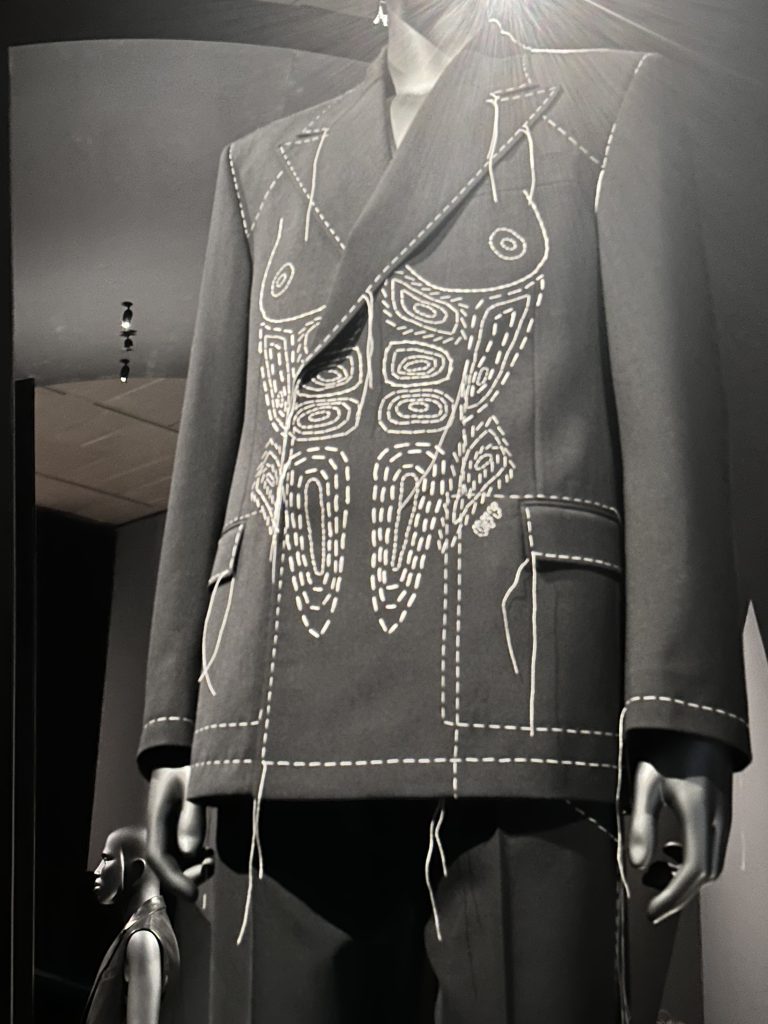
The object I chose was this wool “Body Stitch” jacket designed for Virgil Abloh’s Off White as Off White’s first collection after Abloh’s death. It caught my eye as a fan of Virgil Abloh and his work seeing the impressive embroidery of anatomical chest and torso made me wonder what it represented. After reading the description, learning the symbolism of the garment as to how it comments on what is masculine and what is feminine and how standardized garments conceal the identity and individuality of the wearer. The jackets embroidery marks the wearer as either male or female regardless of the wearers gender talking about how the exterior is superficial.
Superfine – Heavyweight Champion Boxer Briefs
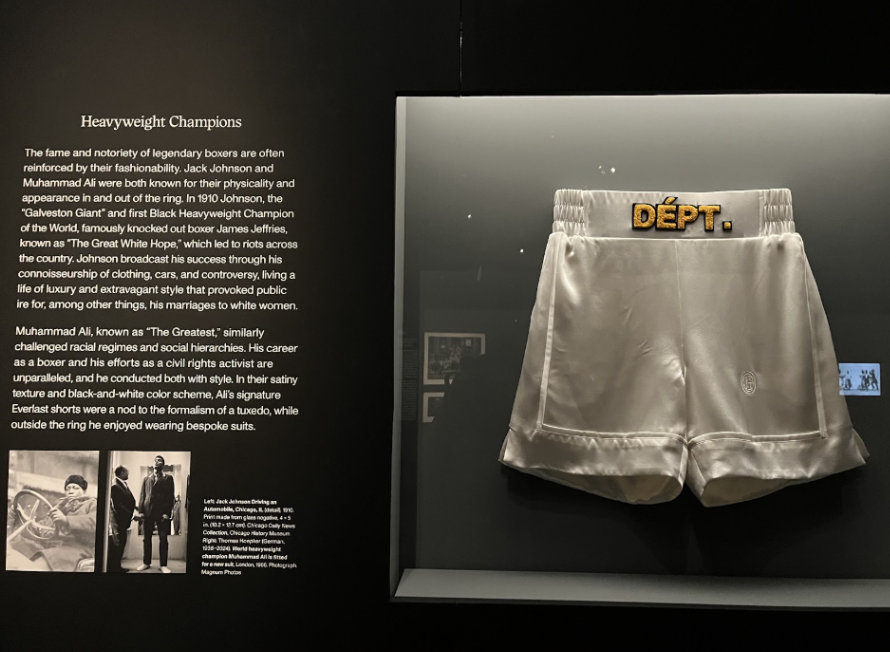
This pair of white satin boxers with the lettering “DÉPT.” caught my interest when I entered the Superfine exhibit because of how iconic boxing briefs are in popular culture. Heavyweight champions Jack John and Muhammad Ali popularized the boxing briefs as fashion. Jack Johnson, known as the “Galveston Giant” and the first Black Heavyweight Champion of the World, famously beat James Jeffries, known as “The Great White Hope”. His win sparked riots throughout the nation, but Johnson celebrated his victory by displaying a life of luxury. Additionally, Muhammad Ali, known as “The Greatest” boxer, also challenged racial prejudice in style, as he wore his signature Everlast shorts, which acknowledged the formalism of the tuxedo. These white satin boxing briefs exemplify Black resilience against attempts to silence their voices and the powerful impact of resistance against racial discrimination.
– Fiona Wong
Afrofuturism – Churn c. 1700-1800
I signed up for the Churn, c. 1700-1800. This plunger-style butter churn was created out of cedar wood and was essential in domestic life. After fresh milk was collected, a worker would let it ferment and wait for the cream to rise to the top before churning. Global folklore believes that tired workers would try to accelerate this laborious process by singing songs as they separated the yellow fat from the buttermilk. Albert Richardson, a Black inventor, patented the modern butter churn in 1891, which allowed for a more efficient process to create butter, revolutionizing the food industry. This object relates to the exhibit because it exemplifies the impact of Black excellence and imagination, which are key themes of Afrofuturism.
– Fiona Wong

Superfine: Tailoring Black Style (André Leon Talley Military Cape)
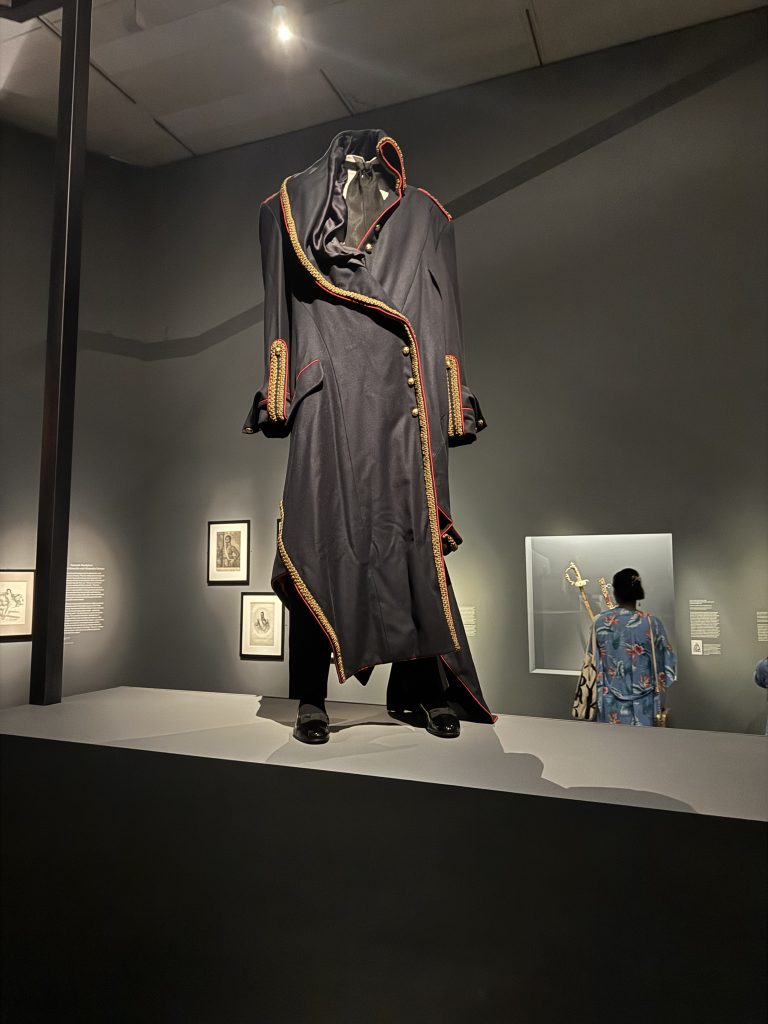
As I entered the exhibit, my eyes were immediately drawn to André Leon Talley’s cape, the way a moth is pulled toward a beam of light. The piece doesn’t just make a statement—it commands the room with undeniable power. Despite its fashionable appearance, it still carries the weight of a military cape, demanding respect with its presence. Fabric becomes armor here, announcing authority while maintaining its fashion. To me, it evoked the iconic and legendary Jack Sparrow in Pirates of the Caribbean—a mix of presence, command, and voguish style.
Superfine Boxing Gloves – Matthew Bologna
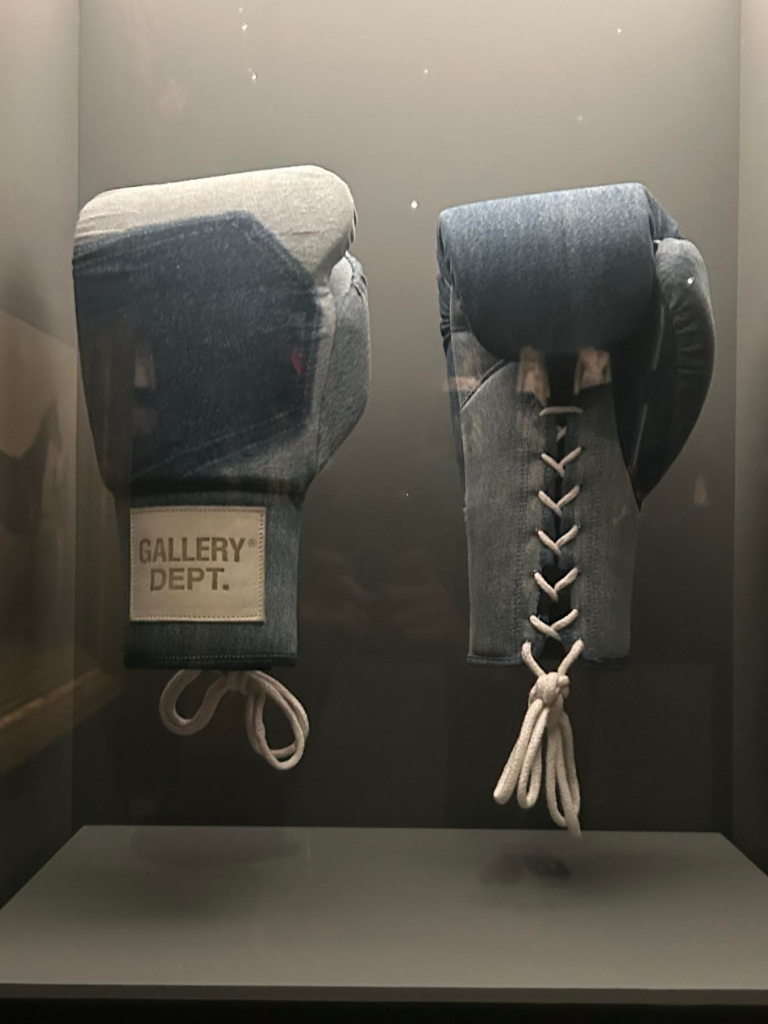
One object from the Superfine that caught my attention was the boxing gloves from the champion portion of the exhibit. Honestly, when I first saw them, I thought they were cool, but I was very interested to learn the way in which they connect back to the rest of the exhibit. The gloves are meant to represent the impact that African Americans, such as Muhammad Ali, have had in breaking down racial norms (Superfine:Tailoring Black Style).
Superfine: Tailoring Black Style. The Metropolitan Museum of Art. (n.d.-b). https://www.metmuseum.org/exhibitions/superfine-tailoring-black-style/inside-the-exhibition
Superfine-“Aime”
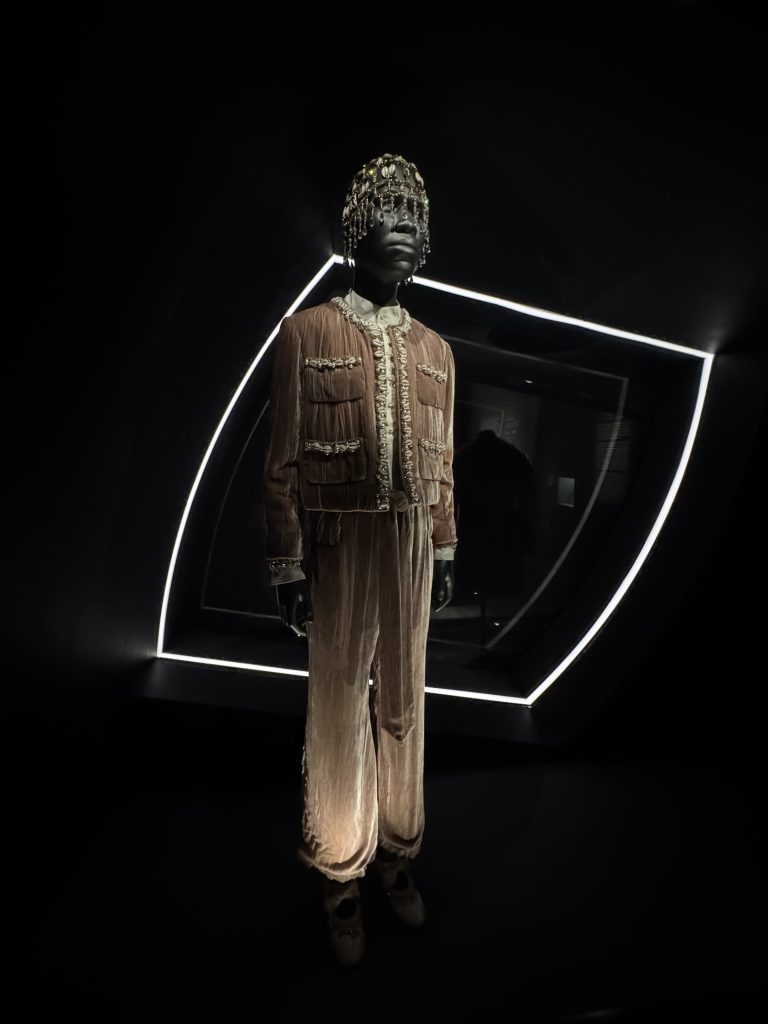
I chose Grace Wales Bonner’s “Aime” because of it’s uniqueness. The use of cowrie shells and materials like crushed velvet and crystals shows the fancy and luxurious clothing worn by European men in the 1700s. It also tributes African traditions and symbols of wealth. This object specifically displays Black beauty and luxury, challenging conventional ideas. It is a contemporary fashion item that tells a much deeper story about identity and heritage. Overall, this clothing shows cultural pride and self expression by mixing history and modern times.
Afro-futurist Room Salt Box 1850-Matthew Bologna
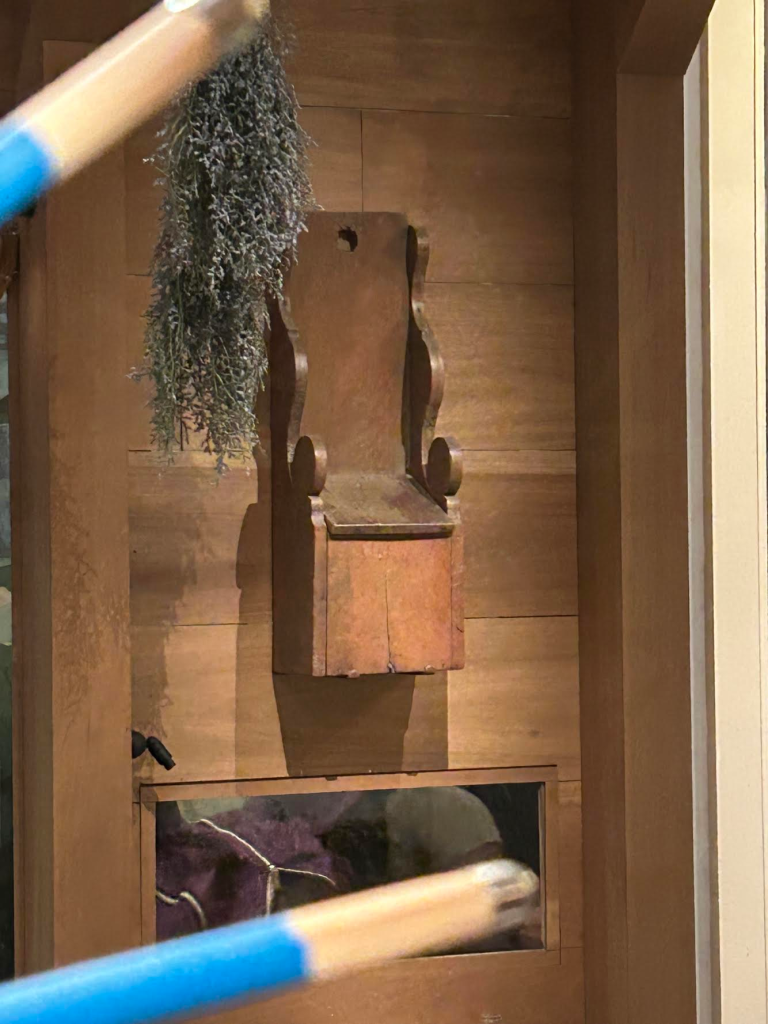
During and throughout the 19th century, a saltbox was an essential part of any household. The purpose of a salt box was to hold salt, which in this time period was used to preserve food that would otherwise spoil. Salt boxes were not only used for practicality but in some cases as decoration. People would sometimes paint and decorate their salt boxes. One example of this was Samuel L. Plank, an Amish folk artist in Mifflin County, Pennsylvania, who decorated the salt boxes he made (Galler, Salt boxes: Essential yet rarely noticed 2017). This specific salt box was made in Pennsylvania in 1850 out of yellow pine wood (Salt Box – American).
Galler, M. (2017, December 10). Salt boxes: Essential yet rarely noticed. The Georgetowner. https://georgetowner.com/articles/2017/12/06/salt-boxes-essential-yet-rarely-noticed-2/
Salt Box – American. The Metropolitan Museum of Art. (n.d.-a). https://www.metmuseum.org/art/collection/search/6944