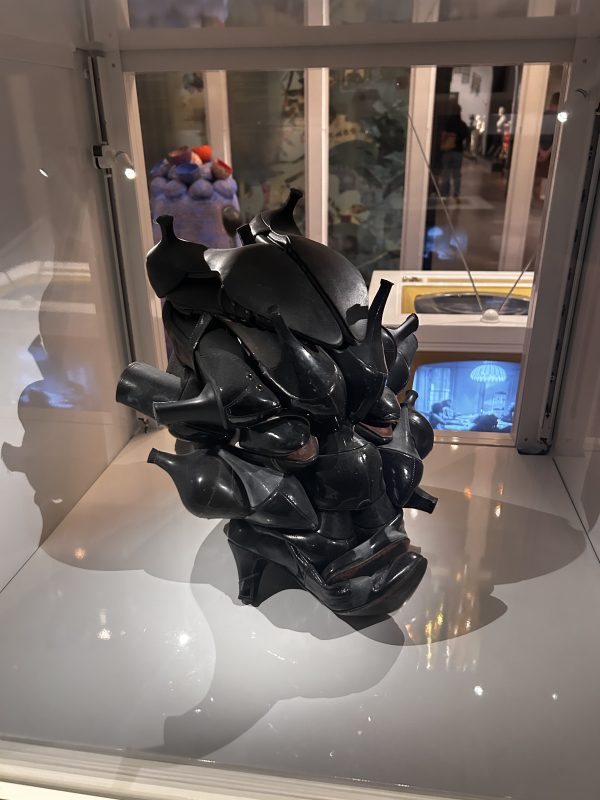
Superfine – UGG-Tasman Onia

This exhibit caught my eye because I have my own pair of Ugg’s that look similar to these. The Tasman Onia by Superfine makes a bold statement at the Met, blending cozy craftsmanship with high fashion. Its sculptural silhouette and materials turn the classic slipper into an iconic fashion statement. This specific piece is very popular and seen in many different outfits all around the world.
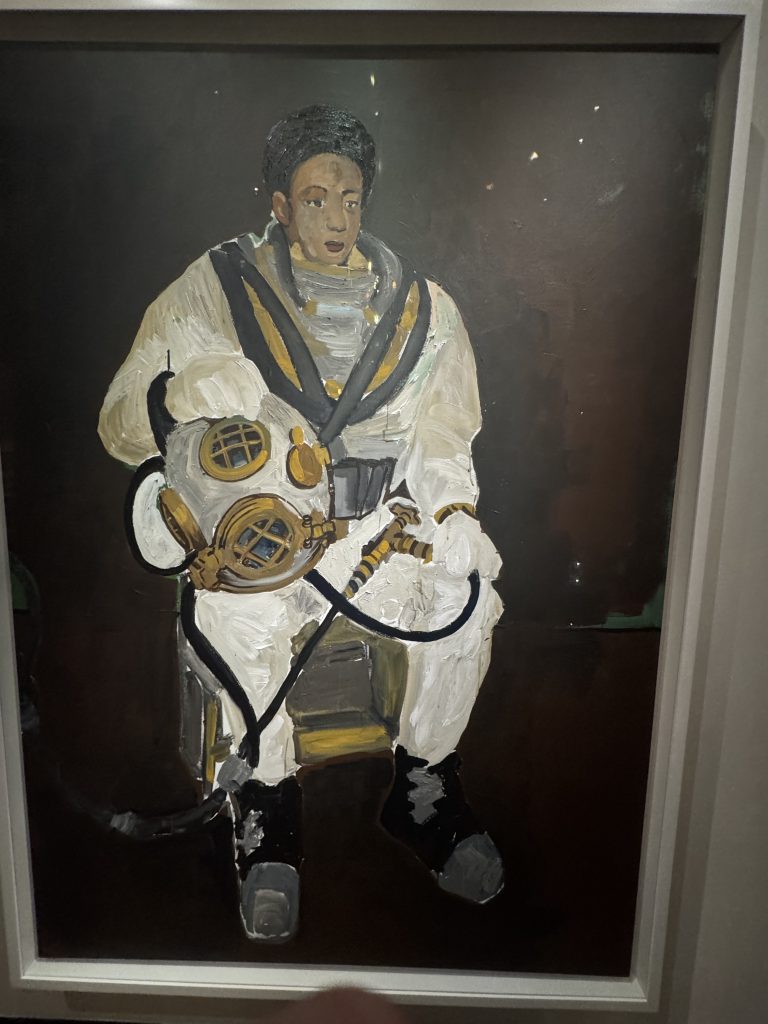
Afro-Futurist Room (Andrea Motley Crabtree)

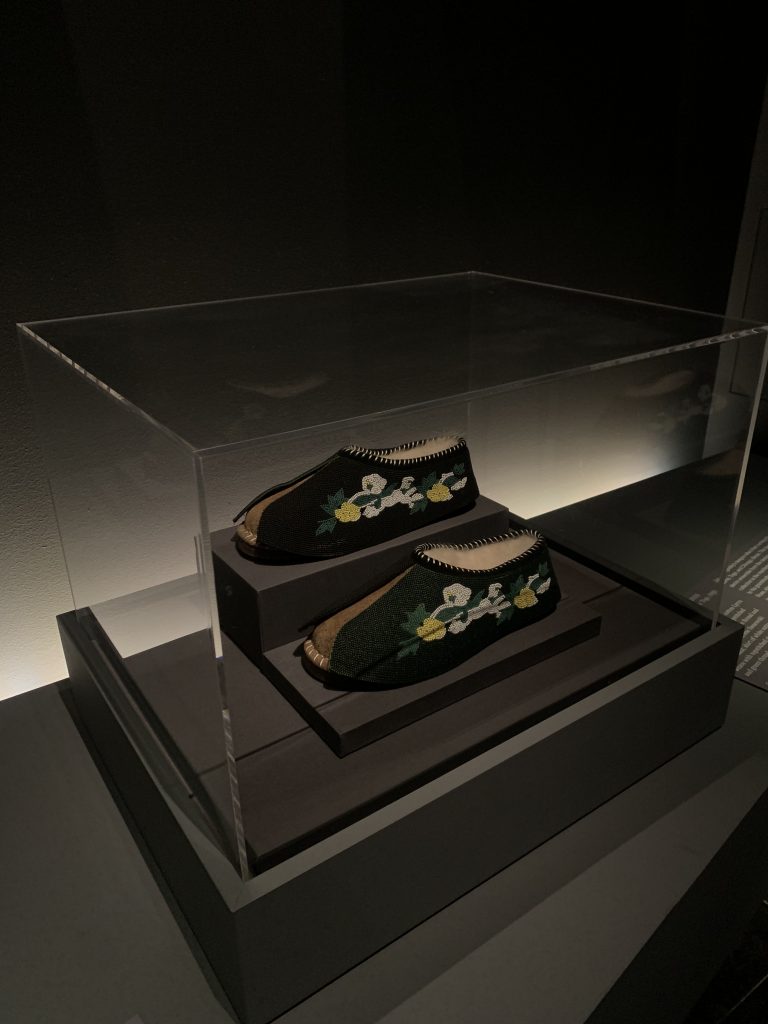
The object that I chose was the portrait based on a 1982 photograph of Andrea Motley Crabtree. I chose this object because it caught my eye right away. I was also intrigued since it honors Crabtree’s achievements as both the first woman and the first Black woman deep diver in the United States Army, showing great accomplishment in an area that has historically excluded people like her. The artwork of her wearing the diving suit shows Afrofuturist ideas of strength and adventure. In this portrait, the ocean is connected to both technology and the history of slavery, using Afrofuturism to transform that history into a story of Black identity and hope.

Afro-Futurist Room – Lugo, Digable Underground

This part of the Afro-futurist room caught my eye because it looks like a spice cabinet. It doesn’t just hold one object to signify its message but instead a variety of little bottles that have herbs in them, made by the experimentalists of Seneca Village. These vibrant ceramics celebrate creativity and Black-American identity.

Simpson, Earth & Sky


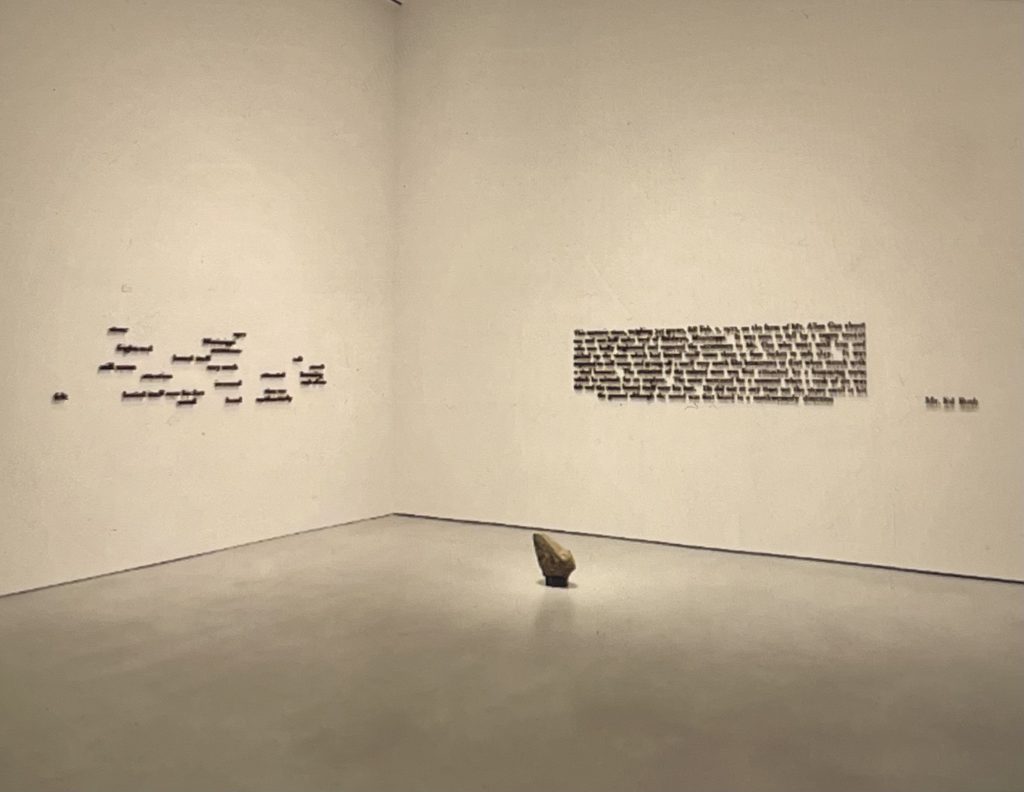
Lorna Simpson’s piece Earth & Sky (unknown fall) is an Afrofuturist artwork that pulls lines from an old geology textbook, referencing things like meteorites and natural forces. Her work ties into the room’s themes of Black memory, history, and imagining new futures. Especially for Black communities whose stories have often been left out in the past. It’s a subtle but powerful piece that connects science, history, and imagination to elaborate on Black excellence. It brings together history and the idea of what could be, which is what Afrofuturism is all about, mixing the past with dreams of the future.

Hauser & Wirth. “Lorna Simpson – Earth & Sky.” 2024, https://www.hauserwirth.com/hauser-wirth-exhibitions/lorna-simpson-earth-and-sky/

superfine object

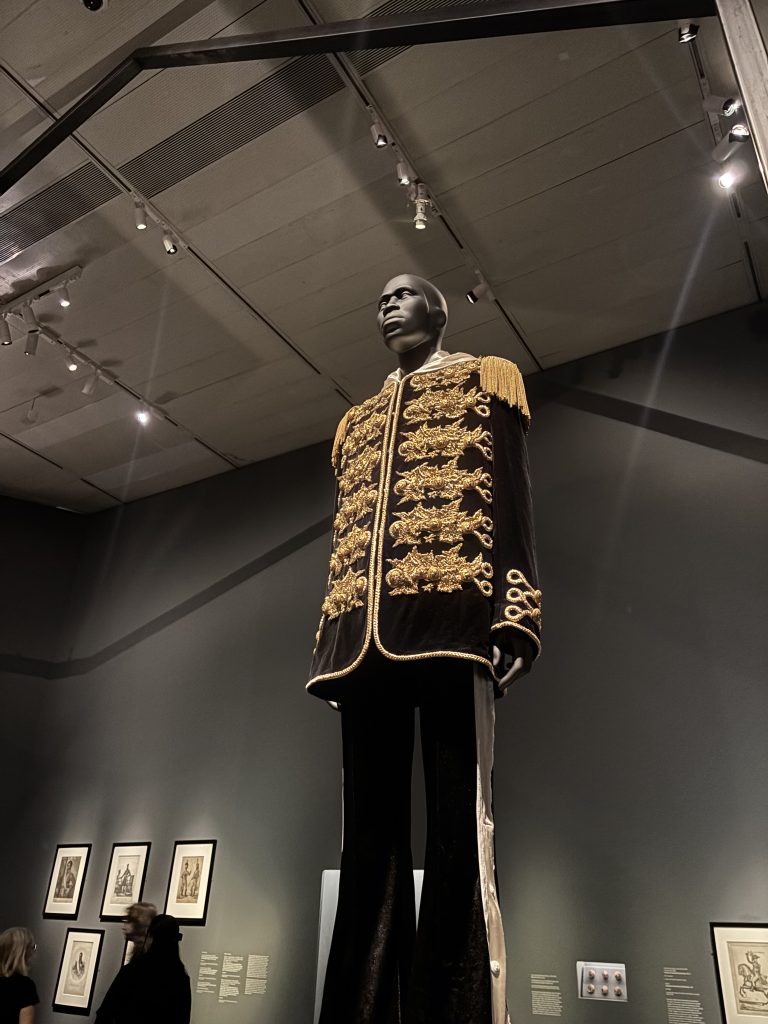
the balmain outfit in the superfine room shows how’s fashion can mix history with modern style. Oliver Rousteing takes inspiration from the Veste Hussard, a 19th century French cavalry jacket, and turns it into a dramatic black coat with gold braids, pearls, and crystals. He pairs it with casual track pants, making the look feel fresh. The mix shows how’s Balmain uses fashion as a way to express power and confidence, while proving that luxury can connect to everyday streetwear.

André Leon Talley military cape

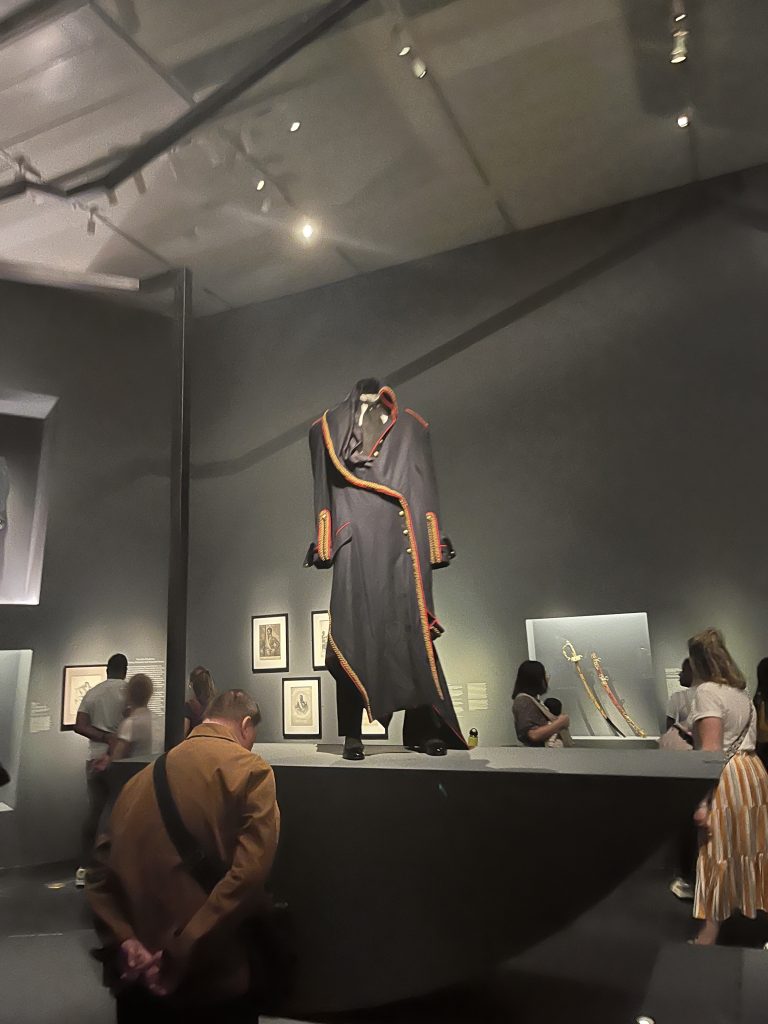
The André Leon Talley military cape was domineering, giving off an aura of power. Reminiscent of American Revolutionary War uniforms, it was positioned at the exhibit so that people had to look up at it, causing the cape to loom overhead and create a towering presence that emphasized its presence and authority.

The Afro-Futurist Room: the herbalist paraphernalia

I chose the herbalist paraphernalia, for example the books written by Octavia E. Butler. Books like the Wild Seed connect tradition and imagination. Afrofuturism uses objects like these to show how old practices can have an effect on the development of the future. In the Met’s Afrofuturist Room the herbalist items are placed to represent cultural resilience. They link the past of Seneca Village to creative futures. Ultimately this shows how knowledge and creativity continue to be passed on across generations.

Tailoring Black Style

While I was walking through the the exhibit, this caught my eye immediately. The one dollar bill sticking out of the pocket in the suit was almost ironic. Suits usually represent formality and a level of wealth which contrasted with the singular dollar. The true intention behind the design was an attempt to critique capitalism.

Superfine: Tailoring Black Style

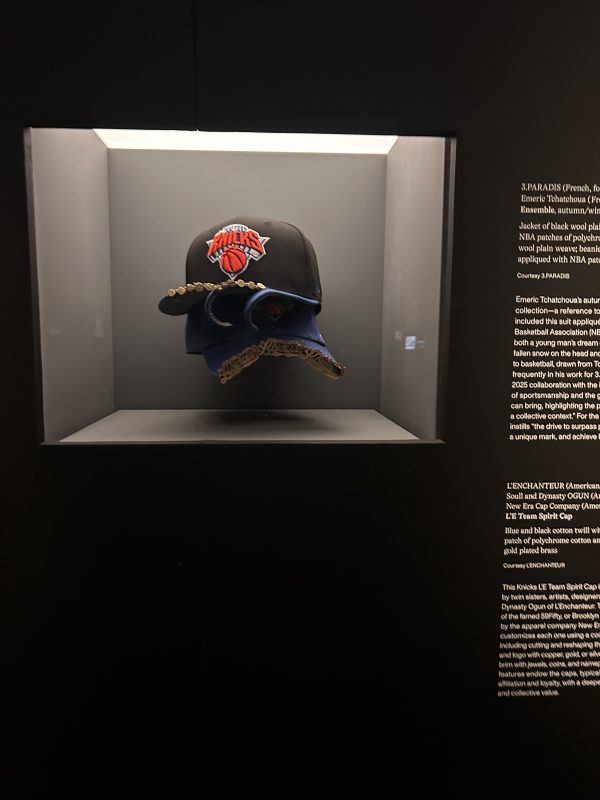
 The object I chose was the Knicks hat with polychrome cotton from Emeric Tchatchoua’s “Snow Day” collection. It caught my eye due to the cotton embroidery technique and because I did not expect to see a sports hat in this exhibition. However, after reading the description, I was inspired by how the collaboration was focused on how the dream to play in the NBA has a major weight on one’s mindset, similarly to how fallen snow can have a weight on your head and shoulders. It highlights how goals like playing in the NBA create a drive to train hard in the name of reaching success and that people are united by sports. The Knicks are a key part of NYC spirit and seeing how an artist interprets and creates art on something like a hat reminded me that art can come from anything.

The Afro-futurist Room Object (Shine)

This piece is Shine by William Cole. At first glance, it may look like just a bunch of polished black heels in a pile. However, these heels are strategically placed. Cole based the design on Cameroonian masks. The soles of the shoes are used to emphasize facial features such as the mouth and eyes. It took me some time to realize that the soles were placed in a way that created a face and I wanted to learn more about the story behind it’s creation. Although the shoes themselves are not from Africa and instead from America, Cole wants to emphasize that the original source of the materials are not what is important but that this piece of art pays homage to African culture through the style of the mask and how it looks like it’s from a different time frame based on its cultural based design.

Proudly powered by WordPress | Theme: Baskerville 2 by Anders Noren.

Up ↑