
Topic: Urban Citizenship, Belonging & Immigration
By: Hana Ramusi, Michael Darvishzadeh, and Pathok Khondoker
Pre and Post 9/11: Brooklyn

Brooklyn is home to many Muslim-Americans, with immigrants coming from Bangladesh, Pakistan and various Middle Eastern countries. It has transformed diversity in NYC, introducing new aspects of culture and religion. Flatbush, Coney Island and Bay Ridge are just a few neighborhoods that impacted Islamic culture, making it more known across the world. However, on September 11th 2001, NYC never looked the same. The Twin Towers collapse due to the hijacking caused by the Islamic extremist group al-Qaeda. Muslims were never treated the same after; discrimination increased and Muslims became victims of hate crimes. A detailed research done by our team analyzed how Muslims where affected through immigration, urban citizenship and belonging.
On October 3rd 1965, President Lyndon B. Johnson signed a law that abolished the nations quota system that has restricted immigrants outside of Western European countries to enter the United States. It was passed during the height of the Cold War and erased this longstanding policy of limiting immigration, based of background.
“Forty years of testing have proven that the rigid pattern of discrimination has not only produced imbalances that have irritated many nations, but Congress itself, through a long series of enactments forced by the realities of a changing world saw fit to modify this unworkable formula so that today it remains on the books primarily as an expression of gratuitous condescension” -Chairman of the House Judiciary Committee

Immigration Enforcement Since 9/11
This allowed increased immigration from South Asia and the Middle East, and later from 1966 to 1997, 2.78 million people Muslims immigrated. However, the “Brain Drain” Effect was formed due to the law prioritizing professionals with special skills. The law specifically excluded religion, yet creating a socio-economic divide between Muslims. Over 70% of educated French Muslims report feeling like “second class citizens”, feeling discrimination in daily activities.
Zein Rimawi, a Palestinian immigrant whose story is told as a part of the Muslims in Brooklyn Oral History Project undertaken by the Brooklyn Historical Society, is one shining example of the community built prior to the attacks. In his story, Rimawi shares how after coming to the U.S. and settling in Bay Ridge, he participated in forming mosques and establishing Al-Noor School. In particular, he states that members of the community cooperated in collecting necessary finances, securing premises, and creating organizations that could ensure security and well-being for future generations
Second Class Citizens: What is the Story?

ACCESS community members at the Women’s March, 2017.
As with any Immigration, along with the feeling of hope came the feeling of intimidation and isolation. People often left behind many friends and family when they came to America and so they felt alone and that they didn’t fit in with a community.
Rabia Kamal, author of Reimagining Islam: Muslim Cultural Citizenship in the Post-9/11 American, writes about how younger Muslims in America did not feel connected to their parents’ cultures nor did they feel at home within American society. Kamal describes the experience of the second generation Muslims as feeling like they did not completely belong to any environment. To the outside world, they were viewed differently due to their religion or origin (Kamal 96). This feeling of doubt of their belonging was one of the reasons that there was such a need for making a community for not just Muslims but all immigrants alike.
How Did it Change Post 9/11?
Immigration Laws
In the aftermath of 9/11 however, federal priorities shifted drastically, leading to expansion of enforcement mechanisms and creation of institutes such as US Immigration and Customs Enforcement and ICE. The government additionally called for more technological advancements and data sharing in immigration documents, with machine-readable tamper proof visas and such. The shift marked the beginning of a broader pattern in which suspicion became embedded not only in law but in everyday life. As a result many feel pressure to adjust their behavior in order to avoid scrutiny, whether through changes in appearance, speech or public presence. Reflecting how surveillance extends beyond normal enforcement and into daily life shaping urban spaces.
The Visa Reform Act of 2002 focused on tightening boarder security and enhanced visa screening. The law orders the development of the Student Exchange Visitor Information System, to track enrollment on Muslim, foreign students. There had been an increase in Boarder Patrol and the Immigration and Naturalization Service Personnel. It mandated that all US visa and travel documents must be machine readable, so that immigration agencies can link internal databases, so deportation becomes easier.
“In response to the terrorist attacks of September 11, 2001, the government created expansive new police powers in the effort to combat terrorism. It is now well documented that these new powers – authorized by the USA PATRIOT Act, presidential directives, F.B.I regulations, court rulings, and more – have seriously undermined long-recognized constitutional protections afforded to individual privacy, lawful political expression, and due process of law. Government officials have been conducting detentions without charges, engaging in widespread ethnic and religious profiling, perusing personal records and monitoring private communications without legal basis, and conducting secret judicial proceedings.”
–Udi Ofer
Education

The Khalil Gibran International Academy is a public school located in Boerum Hill, Brooklyn, New York City. It was opened 4 years after the attack on September 11, creating an Arabic-language dual curriculum public school. It was open to the public and proved that Arab and Muslim communities were welcomed all over New York City, symbolizing an equal education for all.
“I don’t recognize the people who committed the attacks as either Arabs or Muslims”—leaving the false impression that I denied that individuals of this background were responsible. The New York Sun left out the second half of the quote, in which I vehemently condemned those individuals for 9/11. The second part of the quote stated, “Those people who did it have stolen my identity as an Arab and have stolen my religion.”

Debbie Almontaser was forced to resign from the Khalil Gibran International Academy, as the Department of Education acted out of religion bias. She had been accused of making offensive comments, painting herself as an “extremist”. Almontaser’s attorney, Alan Levine that the commissions report could have influence to city officials and found that her comments where not protected by the First Amendment. The bigots did not have the power to take the power away from Almontaser, the DOE did the bigot’s work; she finally asked for reinstatement and an award for damages done.
Modern World
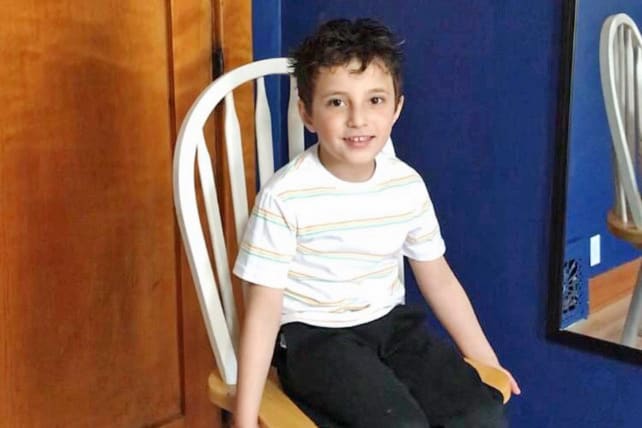
6-year-old Wadea Al-Fayoume.Courtesy of Hela Yousef
To bring light to one of the victims where Islamophobia was at its most violent, the killing of ‘Wadea Al-Fayoume,’ a six year old Palestinian-American boy who was murdered on October 2023. His mother Hanaan Shahin was also critically injured. The murderer was their landlord who had come knocking at her door angry at what was happening in Israel and Hamas war, charging while yelling “You Muslims must die.” While often described as an isolated hate crime, the factors surrounding the attack reflect an environment in which Muslim and Arab identities have long been framed through hostility.
The dynamic of Islamophobia is further reinforced through policy decisions that normalize it at the national level. The implementation of Executive Order 13769 aka “the Muslim Ban” signed by President Donald Trump in January of 2017 marked a clear moment when the hatred was signed into law. The policy restricted entry from several predominantly Muslim countries, signaling that religious and cultural identity could serve as a basis for ban.
For communities like Brooklyn’s Bay Ridge neighborhood (home to a longstanding Palestinian and Arab Muslim population) the aftermath was immediate and personal. Residents who had spent years building mosques, schools, and communal institutions found their loyalty questioned and their visibility weaponized against them. Gathering outside a mosque or praying in shared spaces could draw hostility from neighbors who had once been indifferent.

Scholar Moustafa Bayoumi captured this reality with stark clarity: Muslim Americans had always lived somewhere between acceptance and rejection, but after 9/11, the scales tipped sharply. They were no longer simply immigrants or neighbors. They became, in the eyes of a frightened nation, a security threat to be monitored.
Yet the post-9/11 era also gave rise to unexpected resilience. Rather than retreating, many communities deepened their internal bonds. New Muslim leaders emerged who refused the false choice between American and Muslim identity, insisting these were not competing labels but complementary ones. Individuals like those interviewed in the Muslims in Brooklyn project describe maintaining family ties and community roots even as public spaces felt hostile and unwelcoming.
Today, more than two decades on, the effects persist. Second and third-generation Middle Eastern Americans continue to navigate a layered identity shaped by the cultures their families brought, by an American society that often still views them with suspicion, and by communities that found new strength precisely because belonging was never guaranteed.


Leave a Reply