Image Source: Gary He/The Guardian
By: Jacqueline Alberto, Jaicee Cofresi, Michael Gordon, Mark Shrivastava
Table of Contents

Flushing has undergone a dramatic change in population demographics in recent decades. According to statistics from the Census of Population and Housing, Flushing’s population was 76.2% white and 5.6% Asian in 1970. By 1990, the Census found that this proportion had drastically changed to 28.9% white and 35.8% Asian, who had grown from a small minority to become the largest group in the area. And this trend did not stop in the twentieth century. The NYU Furman Center reports that by 2023, the populations had shifted even further apart: Flushing’s Asian population reached 54.7% while the white population dropped to just 19.7%. Flushing is unrecognizable from what it once was, owing its transformation to a variety of economic, social, and political considerations.
In the late twentieth century, the perception among longtime residents of Flushing was that the increasing Asian population sought to metropolize the neighborhood. The area experienced a rejuvenation, caused chiefly by the Asian immigrants. This included the replacement of many long time establishments, and the sudden shift caused discord among those who liked what they had. A primary example of such an incident is the building of the Lohs Mall. As vacancies increased in downtown Flushing, Eileen Loh – a Taiwanese immigrant – sought to construct a mall which would include dozens of stores as well as an outdoor plaza, which she envisioned would host Asian cultural events. But where Loh saw promise, others saw demolition. Pam Keating, a longtime resident, reminisced about how, “Buildings used to be three stories, now they’re 10, 12. It’s going very vertical very suddenly. The whole quality of the place has changed” (Fried, B8). In addition to her aesthetic and cultural complaints, Keating argued that Flushing lacks the infrastructure for their dreams. This disagreement led to Keating’s pushback against the project, further emphasizing how this was not just a fight with words but had real consequences in the future of the neighborhood.
Despite these fears, Flushing’s has not seen a qualitative shift in its economic climate. Data from the New York State Comptroller reveals that although private sector employment in Flushing grew from 70.9% in Flushing between 2000 and 2019, which was over double the growth in Queens and New York City during that time, wages grew only 46% between 2010 and 2019. Similarly, they reported that between 2000 and 2019 total business grew 81.8%, which was nearly triple the growth that NYC experienced. But in 2019 a staggering 87.4% of businesses in Flushing were microbusiness with fewer than ten employees. These statistics do not paint the picture of an up and coming metropolis but instead demonstrate that Flushing has retained its character of small businesses.
A similar conclusion can be drawn from a 2016 assessment of downtown Flushing by the NYC Department of Small Business Services. Although the unemployment rate was lower than the rest of the city, the median household income was only $39,565 – as opposed to $52,259 in NYC.
They also found that a majority of businesses had fewer than three full time employees, and less than 10% had more than ten. This goes to show that Flushing’s economy has remained fairly modest in terms of the types of stores it attracts.

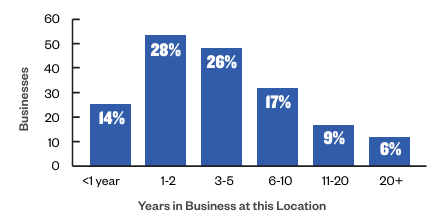
Although the economy style has remained consistent, the stores which make up the economy have changed. That same Department of Small Business report found that only 6% of stores in downtown Flushing said they had been in their location for over twenty years, and 42% had been in their location for less than three.
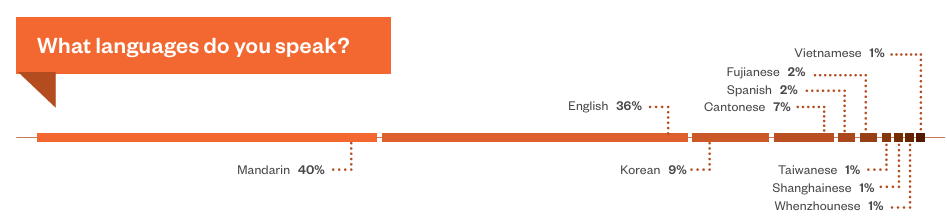
Another proof for the change in business is that more storeowners spoke Mandarin (40%) than English (36%), which is certainly a drastic shift from a few decades prior. The surplus of stores comes at a cost, though. Although downtown Flushing reported a 1.1% storefront vacancy rate, which is significantly lower than the average rate of 8.3%, this also means there is a lot of traffic and competition. When they asked the storeowners which resources would help them grow their business, the two most common requests were marketing support and space improvements. We can conclude from this that although the image of Flushing as a metropolis has not been actualized, it has changed very starkly from what it once was due to the massive increase in its Asian population, and the hopes of the long-term residents to retain what they had has not come to pass as well.
Flushing is a unique and complex instance of Gentrification. On the one hand, the legacy residents were correct in their concern that the influx of Asian immigrants would radically alter the scene of Flushing in the subsequent decades. Flushing is indeed unrecognizable from what it was decades ago. On the other hand, the economic vision they ascribed to them, which perhaps some of them did imagine, has not become the Flushing of today. It remains an economy run on small businesses. Flushing did not follow a typical pattern of gentrification characterized by rising wealth and large-scale redevelopment. Instead, it developed into a dense, small-business-driven economy with high activity but relatively low incomes.
From 2009 to 2019, Flushing represented the NYC neighborhood with the second highest number of condominium units constructed at 3,075 units, a statistic only behind Williamsburg.With the median sale prices reaching $650,000, these luxury developments do not target the current residents of Flushing, but rather wealthy transnational buyers (Chen, NYT). Flushing’s current situation has been shaped by state and city actions that center real estate revenue rather than Flushing’s own communities.
Chart Source: Nancy Packes Data Services By The New York Times


Black Dublin
Part of the land where Downtown Flushing currently stands was once known as Black Dublin in the 1800s due to its Black and Irish working class population. Looking into the history of Black Dublin and what it is now, reveals how the city continues to harm Flushing’s communities. During the New Deal Black Dublin was redlined and labeled as a Grade D “hazardous” area just because African Americans lived there (Hum, Progressive City). This label cut the community off from financial investment, and allowed urban planner Robert Moses to use eminent domain in the 1950s to bulldoze the neighborhood. This displaced 250 families and 38 businesses. Much of this land was used to build the 5-acre Municipal Parking lot #1 and widen Union street. Despite the neighborhood being nothing close to a “slum” the city labeled its action as a “twin attack on slum and traffic conditions” (Hum, Progressive City).

The Macedonia AME Church, a central part of Black Dublin, founded in 1811 was spared from Moses’s destruction, as the leaders of the Church successfully argued it was hallowed ground due to the African American and Native American human remains buried on the site (Hum, Progressive City). In 2005, the Bloomberg administration privatized the municipal parking lot, selling the land to a transnational developer group for a heavily discounted $20 million to create Flushing Commons, a luxury mixed-use development (with condos, of course). In 2018, the Macedonia AME Church was sold for nearly $12 million to developers backed by Chinese crowdfunding. The historical church was demolished to make room for a 14-story luxury tower, removing one of the last physical remnants of Black Dublin (Hum, Progressive City).
Flushing Today
Today, Flushing is hot on the real estate market mainly being marketed to affluent Chinese immigrants and overseas investors from abroad rather than members of the current community (Medium). In China, citizens can only hold a 70-year lease on state-owned land, however the U.S. allows for real estate to be an asset with no time limit. Additionally developers build mixed-use complexes (with condos and amenities) and use Feng Shui elements and designs similar to those found in large Chinese cities (Shen, Medium).
Below are a few recent luxury developments in Flushing:
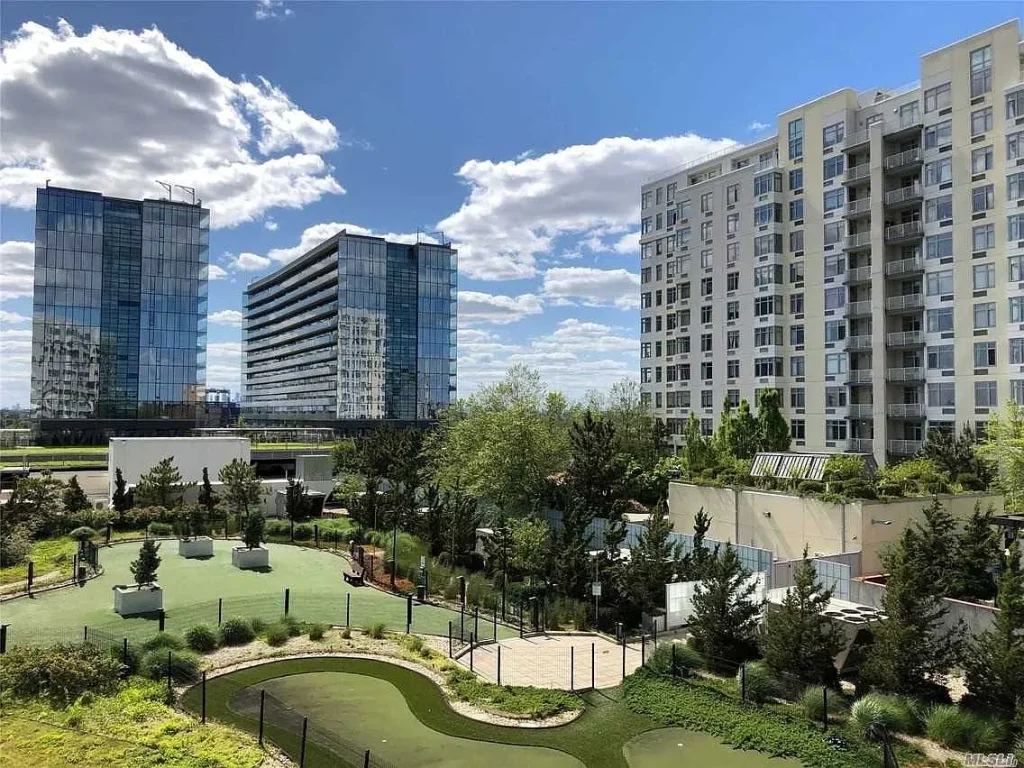
Skyview Parc
Complex with over 1,200 condos across two developments. Features a massive 700,000 sq. ft. retail mall, along with private greenspaces and indoor amenities.
Tangram
1.2 million sq. ft. mixed-use complex with around 300 luxury condos, a hotel, and an office tower. Features a 4D cinema, food hall, and mall.
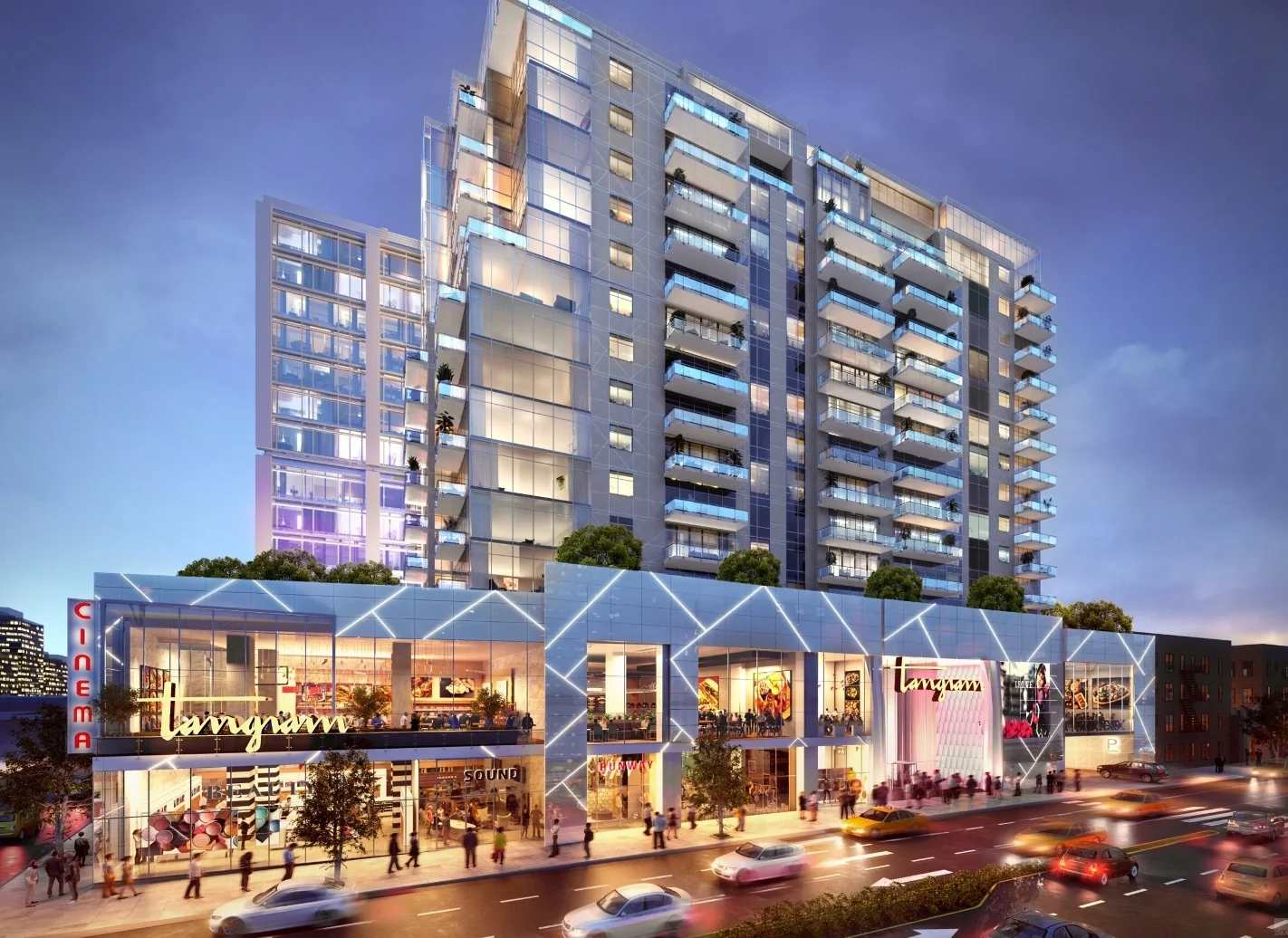

Flushing Commons
A 5-acre mixed-use development (replacing Municipal Parking Lot #1) featuring 600 residential condos, office space and retail space. The complex includes a 1.5-acre public plaza, a YMCA, community space, and a underground parking garage.
The SFWD
The Special Flushing Waterfront District (SFWD) is the next and largest step in Flushing’s gentrification. The plan proposes 13 towers, a hotel, office space, and 1,725 luxury condominiums in a 29 acre area on the eastern shore of Flushing Creek. The plan adds over 1,000 new sewage connections to a creek that already receives over 1 billion gallons of raw sewage and polluted stormwater every year (Guardians of Flushing Bay). However the developers still secured a “Negative Declaration”. This loophole allowed them to conclude the project would have “no significant effect” on the environment, allowing them to bypass an Environmental Impact Statement (EIS), which would assess the development’s impact on the environment (MASNYC). The city also granted developers special waivers to exceed strict federal aviation height limits and lower their parking requirements to maximize buildable commercial space. The privatization of the creek has little to offer Flushing’s working class population. The developers are offering only 61 affordable housing units out of 1,725. These units are reserved for households making 80 percent of the Area Median Income (a flawed statistic which allows developers to look at larger areas) at $85,000 a year. This excludes the actual residents of downtown Flushing, where the median household income is just $28,988 with 32 percent of households living below the poverty line (MASNYC).
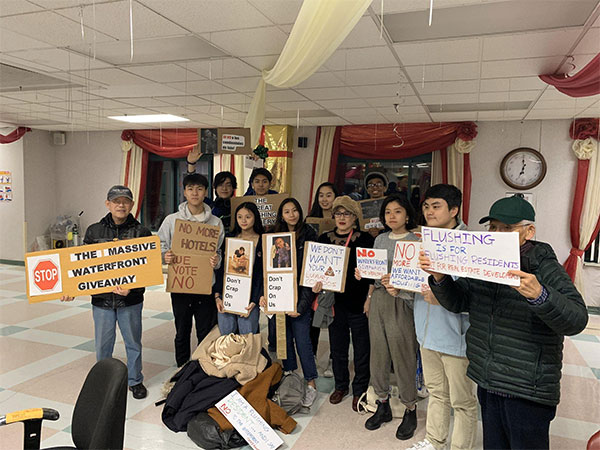
Long serving mom-and-pop shops and traditional groceries like Assi Plaza and Great Wall Supermarket are being replaced by fine dining and high-end international food chains to appeal to wealthy buyers (Ngu, The Guardian). This in addition to rapidly increasing rents, has made Flushing increasingly unaffordable to the working-class population that originally built its cultural reputation. In response to the encroaching SFWD and other luxury developments, grass roots organizations have formed the FED UP Coalition (Flushing for Equitable Development and Urban Planning). They have held protests and filed a lawsuit against the city, arguing that the developers illegally bypassed environmental reviews and hid the fact that the project would dump over 1,000 new sewage connections into Flushing Creek (MASNYC). Activists against luxury developments are demanding for public investment including affordable housing, accessible greenspaces, schools, and facilities that would help Flushing’s working-class communities (MASNYC). Instead of being treated as developer’s playgrounds Flushing’s working-class immigrant community and history should be protected by city planners and government.

Follow the path to approval
CB7’s approval became one of the most controversial moments in the redevelopment process, raising questions about who city planning policies truly benefit. Although community boards in New York City serve only an advisory role, their recommendations can significantly influence city planning decisions and shape public opinion.

Former Queens Borough President Claire Shulman became one of the most influential figures connected to the project. Shulman was involved with nonprofit investment groups that promoted private investment and redevelopment initiatives such as the Special Flushing Waterfront District. Critics argued that her involvement blurred the line between public service and private development interests. At the same time, Chuck Apelian, who served as a land-use leader on Community Board 7 while also working as a paid consultant connected to developers, became another source of controversy. Community members argued that these overlapping roles created potential conflicts of interest and raised concerns about whether community input was being represented fairly.

As a result, CB7’s approval became one of the most controversial moments in the redevelopment process, raising broader questions about who city planning policies truly benefit. For many residents and critics, the approval symbolized how redevelopment decisions in New York City can prioritize private investment and luxury development over the needs of existing communities. While supporters framed the project as an economic revitalization effort, opponents viewed it as another example of gentrification disguised as urban improvement.
Rezoning and Mandatory Inclusionary Housing
The controversy surrounding CB7’s approval cannot be separated from a larger citywide planning strategy taking place at the same time. Under Mayor Bill de Blasio, New York City launched an ambitious rezoning agenda intended to address the city’s housing crisis through increased development and Mandatory Inclusionary Housing (MIH) policies. De Blasio argued that allowing denser residential construction in neighborhoods across the city would encourage developers to build new housing while requiring a percentage of units to be designated as affordable. In theory, rezoning projects like the Flushing Waterfront were supposed to balance economic development with affordability. However, many of these policies often produced luxury housing while failing to provide deeply affordable units for working class residents already living in the area. In Flushing, concerns grew that CB7’s approval of a luxury focused waterfront project would accelerate displacement, rising rents, and gentrification rather than address housing insecurity.

Understanding why CB7’s decision became so controversial demands looking at how de Blasio’s rezoning strategy affected the type of development that followed and why many residents believed the promise of affordable housing fell short
Why Affordable Housing Fell Short
Former New York City Mayor Bill de Blasio promoted neighborhood rezonings across the city as part of a plan to create more affordable housing and reduce the housing crisis. His administration argued that increasing housing supply would stabilize rents and improve affordability. However, many rezoned neighborhoods instead experienced rising rents, luxury development, and displacement pressures. One major criticism was that “affordable housing” was based on regional income levels rather than the incomes of local residents, making many units too expensive for the communities they were meant to serve. The Flushing waterfront project reflects these same problems, since only about 5% of the new units are designated as affordable, while the majority are expensive units at market rate. This falls far short of the goals of New York City’s Mandatory Inclusionary Housing (MIH) program, which generally requires developments to dedicate around 20-30% of units to affordable housing. As a result, many residents view the project as another example of rezoning policies prioritizing private profit and luxury development over true community affordability.

The first map illustrates the relationship between Mandatory Inclusionary Housing (MIH) projects and the percentage of affordable units that would actually be affordable to local residents without additional subsidies. The darker red neighborhoods represent areas where only 0–20% of affordable units would be locally affordable, meaning that most residents in those communities would still struggle to afford the housing produced through MIH. This pattern exposes one of the central problems with de Blasio’s rezoning strategy. Although MIH was introduced to require developers to include affordable housing in new residential projects, affordability was often calculated using Area Median Income (AMI) standards that reflected broader regional incomes rather than neighborhood-level wages. In places like Flushing, where many working-class immigrant families earn significantly below regional averages, units classified as “affordable” often remained financially inaccessible to existing residents. The map also demonstrates that many neighborhoods receiving MIH rezonings overlap with communities already experiencing development pressure and rising housing costs. Instead of preventing displacement, rezonings frequently accelerated real estate speculation and luxury construction. As investment increased, rents and property values rose, placing additional financial pressure on longtime residents. This reinforces concerns that redevelopment policies prioritize attracting investment over preserving affordability for the people already living in these communities.

The second graph further highlights the mismatch between housing policy and actual need. It compares the number of housing units needed by income level to the goals established under Housing New York 2.0, de Blasio’s housing initiative. The most striking imbalance appears among extremely low income households, where the city faced a need for approximately 396,250 housing units, yet the housing plan only targeted about 31,500 units. Similarly, very low income households required over 118,000 units, while the city’s goal remained significantly lower at around 43,500 units. Groups with moderate and middle incomes, on the other hand, were given objectives that were proportionately closer to (even greater than) existing needs. For example, low income households needed roughly 40,104 units, while the city planned for 166,500 units, a dramatically higher target. This imbalance suggests that housing production focused more heavily on populations that were easier for developers to serve financially, while the residents experiencing the most severe housing insecurity received far less support.
Together, these graphs reveal a major weakness in de Blasio’s affordable housing strategy. The city produced housing, but not necessarily the type of housing most urgently needed. While rezoning and MIH increased development and added units to the housing market, they failed to address affordability for extremely low income and working class residents. In neighborhoods such as Flushing, this gap between policy goals and local realities contributed to fears that redevelopment would increase displacement and deepen gentrification rather than stabilize communities. These shortcomings became especially important in redevelopment projects like the Flushing Waterfront, where promises of affordability existed alongside plans dominated by luxury housing and private investment, raising doubts about whether rezoning truly served longtime residents
Flushing’s cultural vibrancy can be felt throughout its streets. Restaurants, festivals, and shops keep visitors and locals engaged in the neighborhood’s activities. One could walk down Main Street and find shelves of fruits, baked goods, and souveneirs for sale. The “cultural producers” behind these shops and restaurants directly impact the image of vibrancy Flushing is known for, and yet, these crucial business-owners could be financially threatened by the effects of Flushing’s new wave of gentrification. The rising rents and increased demand from investors could push the culture out of Flushing, and force it to diffuse into surrounding areas.
This issue moves beyond whether the streets and shops “look vibrant”. Putting the ethocultural base of Flushing at risk creates long term instability in the neighborhood’s social ecosystem. Flushing, being one of the East Coast’s primary Asian ethnic enclaves, has a uniquely strong support system for incoming East Asian residents. This system takes shape through the nuance of daily life in Flushing. There is an abundance of shops which conduct business in residents’ native languages. Many of these businesses offer targeted products and services, including fruits, meals, and baked goods from hyper-specifc regions in East Asia, as well as region-specific spas and salons. By providing residents with goods and services from abroad, Flushing’s embedded cultural support system creates an ecosystem in which residents can “feel at home” and thrive.
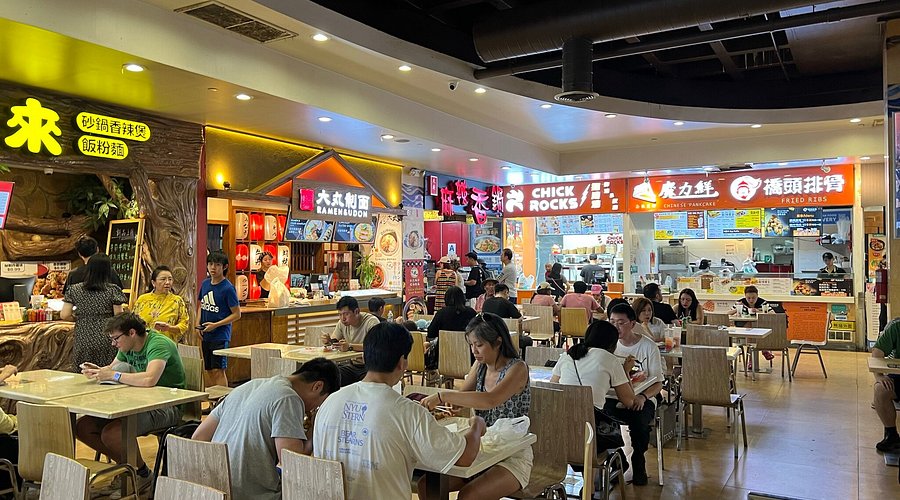
Gentrification could cause the graudal removal of this support, as more cultural producers are pushed out and replaced with generic, corporation-centered businesses that fail to provide resdients with the same level of cultural synergy.
Unfortunately, the factors that have the potential to destabilize Flushing’s current cultural foundation are inherently linked to its position as an ethnic enclave. Outside of Manhattan, Flushing is one of New York City’s biggest financial hotspots, as it houses dozens of transnational banks, thus giving the neighborhood a strong connection to Chinese and Taiwanese finance centers. While the presence of these banks makes international business easy for many residents, it also pulls real estate investors to the area, which leads to the aforementioned demand for Flushing property. Therefore, the cultural density of Flushing, which has been a boon for its residents across several fields, is also a risk.
The issue is further exacerbated by the financial states of several cultural producers. Restaurant workers are especially at risk, as their average salary often borders on recognized poverty in the Flushing area. Beyond the workers, several businessowners could face relocation or foreclosure if rent and pressure to sell from investors continue to rise. Since Flushing is and has historically been comprised of mostly small/microbuninesses, pressure on these essential members of society would cause a massive cultural restructuring in which mom-and-pop stores are pushed out. This follows a general pattern of gentrification seen in other areas of New York City, namely Williamsburg, Harlem, and Bushwick. Corporations that can support higher rent could dive into real estate holes and set up shop; however, due to the impersonal nature of these businesses, a culturally “familiar” feeling could be lost.
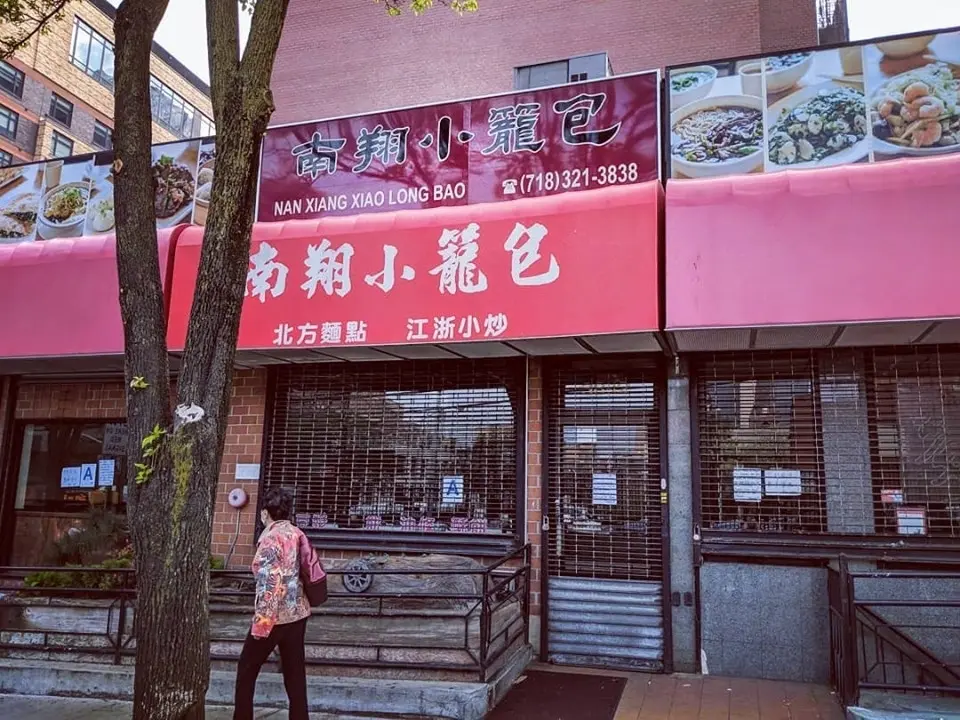
In a double-edged style, the cycles of immigration leading to the gentrification of today’s Flushing are largely responsible for the cultural vibrancy of the neighborhood. Without the hyperdensification and intra-diversification of Flushing’s demographic, the town would not be home to varying religious centers, famous restaurants, and an ineffable cultural energy that runs throughout the town. In studying the intersection of gentrification and culture, it is necessary to unlabel gentrification as an isolated event, and recognize it in the context of wider-spanning events, which often include decades of migration and economic change. The effects of gentrification are felt beyond rising prices. They have a tendency to seep into the ineffable energy of a neighborhood and change it completely.
Despite Flushing being a fairly recent ethnic enclave, it has cemented itself as an important haven for one of the East Coast’s densest East Asian populations; however, its novelty lends itself to instability in the long run. Its cultural sanctity must be protected, as thousands of residents thrive in a system which is familiar and welcoming to them. These residents deserve to have control over the land they reside in, and not to be pushed out by the effects of gentrification. The society has a chance to stand up for its culture while the gentrification is in its infancy. If the residents and local politicians play their cards in the best interest of preserving culture, Flushing has a chance to stop and reverse the incoming damage gentrification could inflict.


Leave a Reply