

Guernica by Pablo Picasso was created in 1937, in the aftermath of the Nazi bombing of the Spanish town of Guernica. It acted as an anti-war symbol, and depicts the shock, horror, and death (particularly among civilians) involved in war.
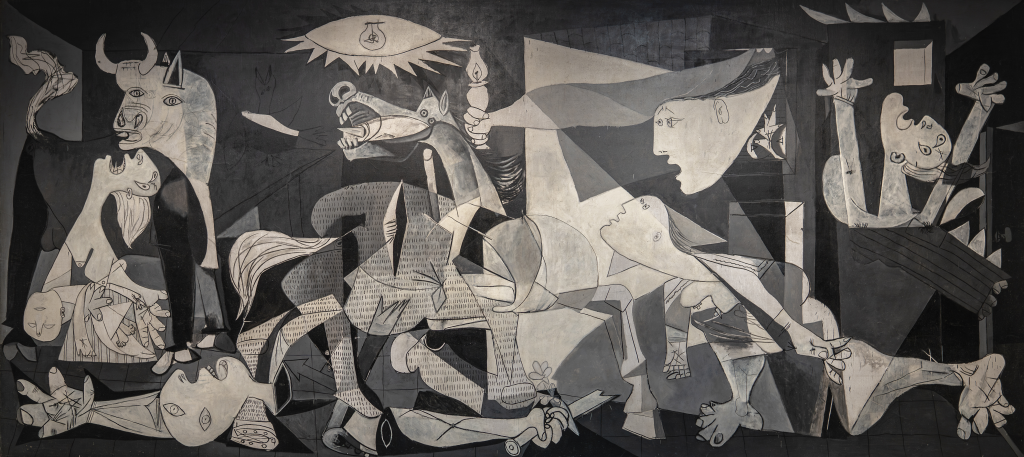
Even almost a century later, this mural is still relevant. Despite the only certainty in war being its devastation, to this day, humanity is constantly at odds with itself. Despite centuries of violence, and countless deaths, war will never cease to exist. Today, this art is applicable to people who suffer from the effects of war, such as the citizens of Ukraine who suffer similar bombings relentlessly. The shock expressed on the faces of the caricatures shows the natural human reaction to violence and destruction, and is something which will never change regardless of how much time passes.
This art piece reflects how the victims of war are the masses, while those who orchestrate it often suffer little consequences comparatively, which holds true until today. Political figures who embroil nations/regions in war seldom suffer the personal loss of ordinary civilians, as depicted by the throng of people fleeing and dying in Guernica. In our own nation, we see the effects of this as people emigrate from their nations and seek refuge in the U.S.A as a means of survival, struggling with adapting to a new culture, making money, and in many cases leaving behind loved ones, while wealthy leaders who can flee at anytime enjoy cushy lifestyles.
Furthermore, the lightbulb in this mural, which many interpret as either the bombing itself or the eyes of God reflects how in both interpretations, average people are unable to prevent tragedy. Humanity is unable to protect itself when outside forces are at play, and is at the mercy of higher powers/those in power.


Leave a Reply