
This is a gallery curated by you, the students taking part in our Night at the Museum. Make it your own!
To have your own response appear on this page, form a group and submit a response.
-

The Great Deep
Frederick J. Waugh
1909
What do you see going on in this work of art? Is there a story depicted?
We saw the contrast between the churning darker waters and the warm light of a sunset reflected on the clouds in the back. This drew focus on the water itself while making the dark colors pop out. With rocky waves and a hiding sun it creates a somewhat lonely experience, or possibly even ominous.
What different visual elements (ie: line, color, light, proportions, scale, composition, media type etc.) do you notice, and how do they help you make sense of the artwork?
We noticed the color contrasts between the dark cool tones and the bright warm tones, cutting the piece into parts as seen in many paintings of this style. This works to add more depth and complexity to the painting, as well as to add emphasis on each end of the spectrum.
How does this object compare to other objects, stories, or ideas you already know about?
This reminded us of The Great Wave off Kanagawa through the themes of the sea’s rising waves and strength, yet the style seemed closer to impressionist and romantic style art from our history classes.
What choices do you think the museum made about the object’s display?
We believe that the museum chose to match the painting with similar styles and themes, as across from the painting shown was a waterfall with a bright sunrise glow and glowing mist. This created contrast across the room extending past each piece alone.
Group Members
Ruby Moran, Kenneth Guan, Santiago Patino, Sunny Maharjan, Michelle Vadderman
-
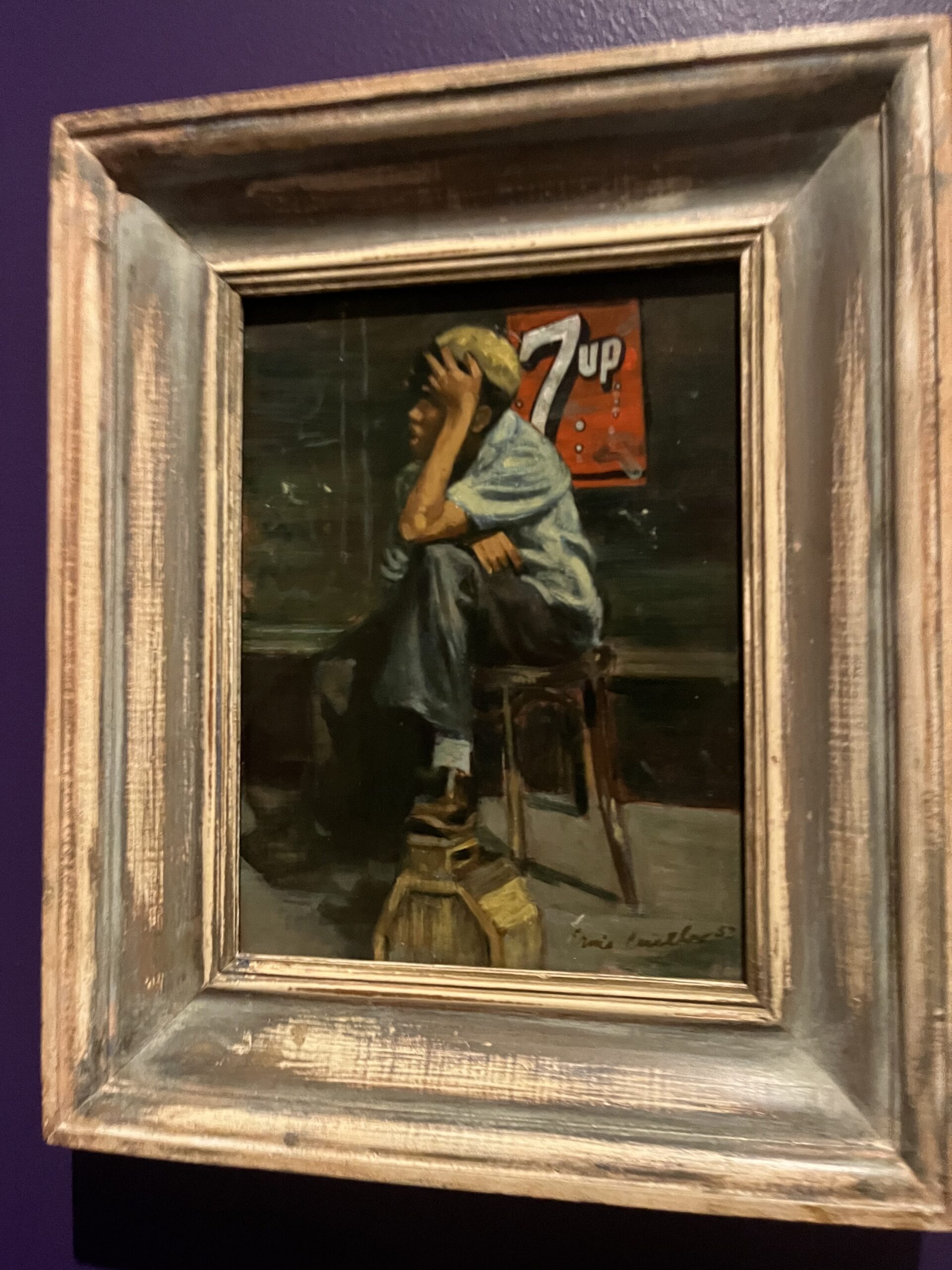
Shoe Shine
Ernest Crishlow
1953
What do you see going on in this work of art? Is there a story depicted?
Although the art piece is rather simple it poignantly captures the emotions and daily subjugation faced by Black Americans at the time. The young boy with his faded blue shirt and tired wandering expression seems tired not simply with his work at a soda factory but also at the unfair conditions of the time, he looks almost hopeless at the desolate conditions he sees himself and his fellow community tirelessly endure.
What different visual elements (ie: line, color, light, proportions, scale, composition, media type etc.) do you notice, and how do they help you make sense of the artwork?
The desolate mood is set up by the painting’s pack of colour; the boy is dressed in a faded blue shirt surrounded by a dark-brown background. The boy with the dull colored shirt seamlessly blends into the dusky plain background, becoming almost invisible to the viewer, just as Black Americans were made invisible by their community and by history. The painting further uses perspective to add depth and meaning to it; instead of learning oking directly front-center at the viewer, the boy looks somewhere off to the side further detaching him from both the painting and the viewer mirroring the segregation Black Americans where subjugated to by their White counterparts. However this perspective of gazing off to the side, detaching the boy from the viewers gaze, also solidifies the boy’s identity as other than the painting or how others view him, he seems to defiantly live his own life despite k “nowing that everything he is doing is being put under the scrutiny of others. The boy has a distinct personality detached from the simple historical narrative of pity and struggle; he is free in a sense by not giving the viewer the satisfaction of seeing his entire face, as he still gains possession over his identity.
How does this object compare to other objects, stories, or ideas you already know about?
The painting like other Civil Right works of arts, is a political and social movement pointing out the flaws of society and its inherit prejeduce and bigotry. In leaving the person in the photo u a med, the artist creates a anonymity, suggesting that anyone could be on that boy’s position and further that millions of Black Americans have and still do face prejeduce that is unjustified, making the painting relevant to all of us, even today.
What choices do you think the museum made about the object’s display?
The painting was placed amount the other paintings regarding social change events like the Black Lives Matter Movement, Civil Rights movement, feminest movement etc, establishing the painting not merely as a pretty piece of art but as a rebellion in itself.
Group Members
Areeba Ali, Hannah Gomez
-

The Arm Wrestle of Chip & Spike; aka: Star-Makers
Oscar Yi Hou
2020
What do you see going on in this work of art? Is there a story depicted?
This artwork depicts a Communist poster-style handshake of two friends. They appear worn-out and have expressions that don't fit in with their colorful background.
What different visual elements (ie: line, color, light, proportions, scale, composition, media type etc.) do you notice, and how do they help you make sense of the artwork?
This painting includes many abstractions, avoiding realism and becoming more abstract closer to the borders. Wide paint or pastel strokes were used, giving it a tangible texture. Since the main figures are very large (almost full size) and their faces are very detailed, the viewer is drawn to them immediately. The color scheme is deliberately vibrant and makes it stand out from neighboring works of art. The color pallete is unrealistic and makes the painting feel surreal.
How does this object compare to other objects, stories, or ideas you already know about?
It is shows a cultural camarederie (since the animals reference zodiac signs and the Chinese names of the figures portrayed). It is a very unique portrait in that it toes the line between abstract art and realism, using a classical portraiture style creatively.
What choices do you think the museum made about the object’s display?
This painting stands out because it lacks a frame and is very colorful (unlike the paintings around it with their mute palettes). It is also placed so as to contrast with the painting above it, which depicts two white upper-class American women clasping hands in a luxurious setting (while this one shows two working-class Chinese people in casual attire with an abstract backdrop).
Group Members
Sophia Hart, Adriana Ndokaj, Rebecca Barsegyan, John Lee, Brendan Kwan, Ahmed Radwan, Daniel Leyzerzon, Wilson Wu
-
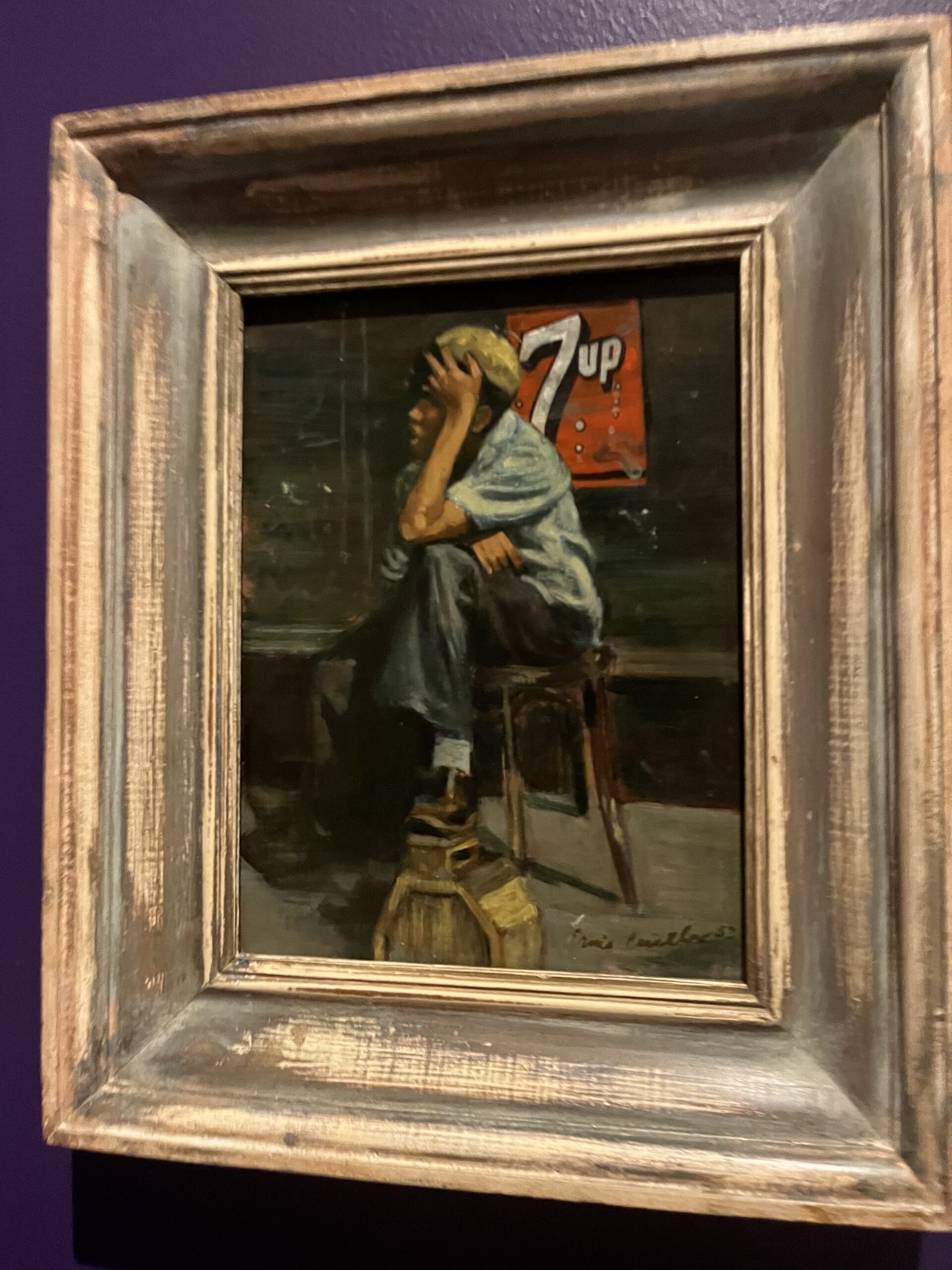
Shoe Shine
Ernest Crichlow
1953
What do you see going on in this work of art? Is there a story depicted?
Although the art piece is rather simple it poignantly captures the emotions and daily subjugation faced by Black Americans at the time. The young boy with his faded blue shirt and tired wandering expression seems tired not simply with his work at a soda factory but also at the unfair conditions of the time, he looks almost hopeless at the desolate conditions he sees himself and his fellow community tirelessly endure.
What different visual elements (ie: line, color, light, proportions, scale, composition, media type etc.) do you notice, and how do they help you make sense of the artwork?
The desolate mood is set up by the painting’s pack of colour; the boy is dressed in a faded blue shirt surrounded by a dark-brown background. The boy with the dull
Group Members
Areeba Ali, Hannah Gomez
-
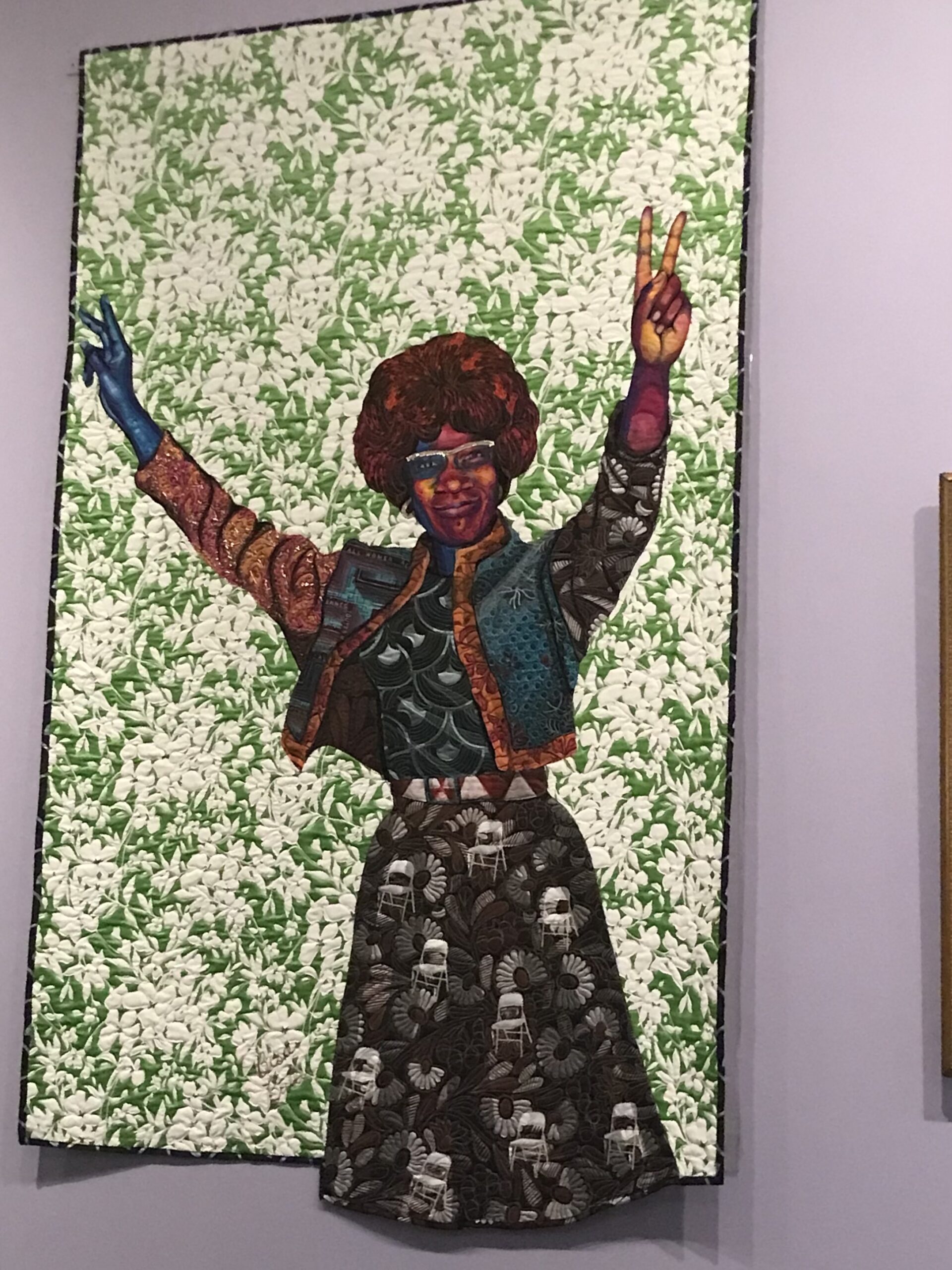
Bring a Folding Chair: A Portrait of Shirley Chisholm
Bisa Butler
2024
What do you see going on in this work of art? Is there a story depicted?
The artwork shows Shirley Chisholm raising her arms in the air. She’s wearing sunglasses and a skirt with folding chairs on it, along with textured patterns on her clothing.
What different visual elements (ie: line, color, light, proportions, scale, composition, media type etc.) do you notice, and how do they help you make sense of the artwork?
The artwork has vibrant colors and various patterns, especially on her outfit. The background has a green and white floral design. Chisholm is large compared to the canvas, making her stand out.
How does this object compare to other objects, stories, or ideas you already know about?
It connects to themes of Black empowerment, similar to other works celebrating civil rights leaders or political figures.
What choices do you think the museum made about the object’s display?
The museum likely chose to display it to honor Chisholm’s historical significance and her contributions to American politics.
Group Members
Rifa, Tasnin
-
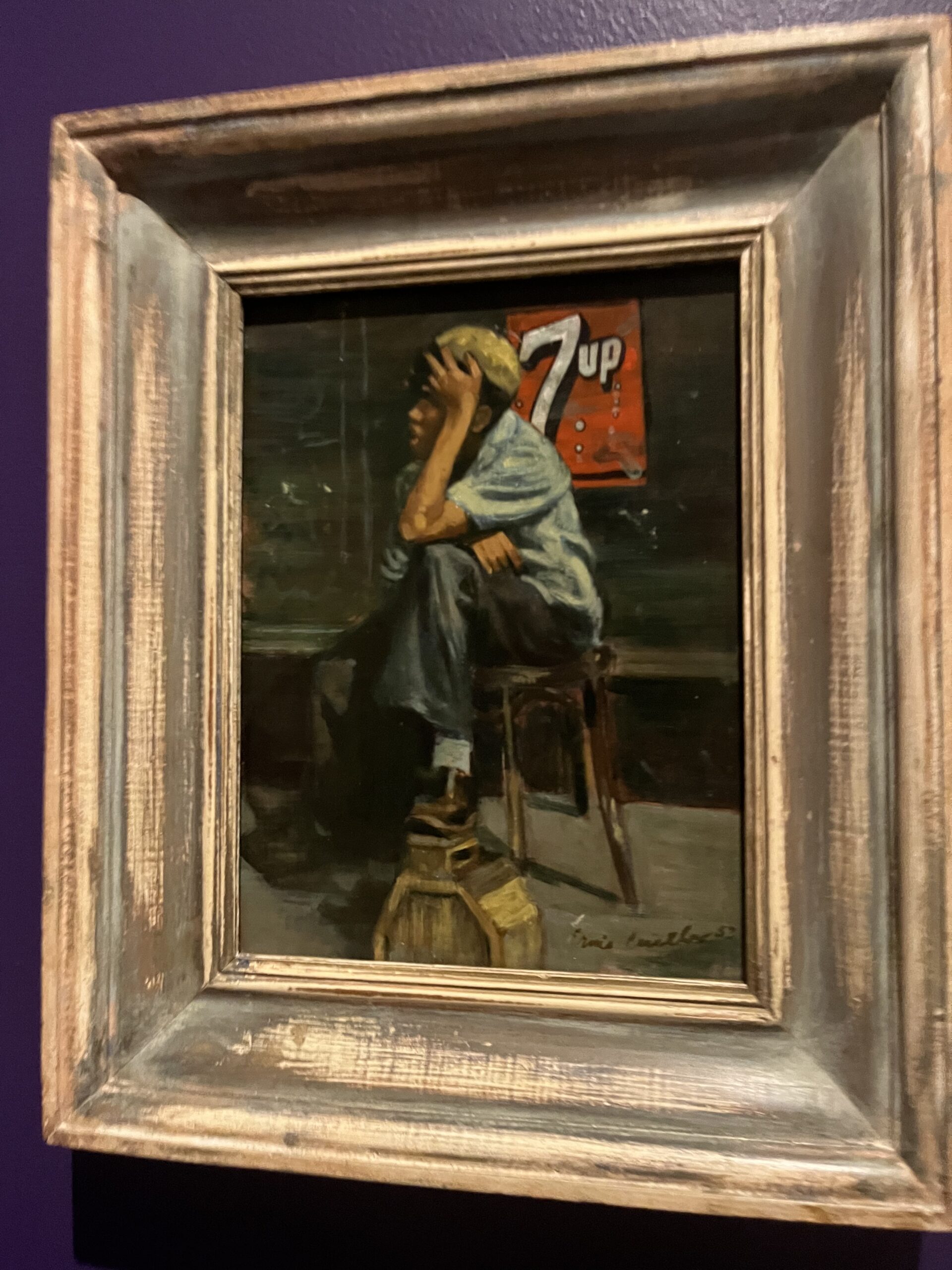
Shoe Shine
Ernest Crichlow
1953
What do you see going on in this work of art? Is there a story depicted?
The piece although si
Group Members
Areeba Ali, Hanah Gomez
-

Shoe Shine
Ernest Crichlow
1953
What do you see going on in this work of art? Is there a story depicted?
The piece although si
Group Members
Hannah Gomez, Areeba Ali
-

Chinatown Black Watch
Susan Chen
2022
What do you see going on in this work of art? Is there a story depicted?
The description mentions xenophobic attacks and racism Asians experienced during the years when Covid 19 was at its peak
What different visual elements (ie: line, color, light, proportions, scale, composition, media type etc.) do you notice, and how do they help you make sense of the artwork?
The artist uses texture “thick impasto style”, and sharp lines to emphasize vibrant contrast, depicting tensions within the Manhattan neighborhood. There is a warm color scheme, with shades of yellow, red, orange, brown, and occasional views of green, blue etc. The variety in color palettes highlight the diversity of the neighborhood. One thing that stands out is the “stop Chinatown jail” which could be referring to the confinement of Asians because they were marginalized and attacked outside of their communities. Even though Covid already confines them within their homes, yet they feel confined to a small group of people who in society are viewed as the cause of global devastation
How does this object compare to other objects, stories, or ideas you already know about?
Stereotypes within communities that might seem harmless are detrimental to whole communities. Despite the already diverse background of the city, people fall victim to racial micro aggressions and outright racism due to circumstances out of their control.
What choices do you think the museum made about the object’s display?
This was a pretty unique place to display the painting, because this section of the exhibition mostly features paintings with a cooler color palette, resembling more historical features in the earlier centuries rather than something as modern as 2 years ago.
Group Members
Alyssa, Yasmillee, Koudjedji
-

Still Life With Fruit
Severin Roesen
Ca. 1860
What do you see going on in this work of art? Is there a story depicted?
I see a very still, tranquil table of fruits!! While I don’t think one exact story is apparent, I feel like this was a good depiction of how normalized the luxury of fruit was and how fruit was considered on some civilizations/periods of time a sign of wealth.
What different visual elements (ie: line, color, light, proportions, scale, composition, media type etc.) do you notice, and how do they help you make sense of the artwork?
I see very muted colors, with highlights giving some fruit a glow that draws the audience into them first. They helped me make sense of the artwork because it gave the piece a sort of elegance that resonates with the wealthier class and the groups of every society that had the ability to be more extravagant and lavish with their way of living.
How does this object compare to other objects, stories, or ideas you already know about?
This really contrasts the type of art I’ve seen from the Classical Greek era, especially Golden Age Athens, as their style of painting was not as focused on food but on portraying figures of significance and key moments in their culture, like the painting of Socrates on his deathbed, for instance that tells an entirely different story of someone who also lived an eccentric, comfortable life.
What choices do you think the museum made about the object’s display?
I really think the style of the painting, capturing still art in a very classy way, had to do with why the museum displayed this painting.
Group Members
Mayar Shihadeh, Aseel Ahmed
-

Female figure
Charles Edwin Wilbour Fund
3500-3400
What do you see going on in this work of art? Is there a story depicted?
we see 3 different sculptures of women, one leveled up high and the other two in a lower level. The text provided states that this is taken place where ritual was happening for a celebration
What different visual elements (ie: line, color, light, proportions, scale, composition, media type etc.) do you notice, and how do they help you make sense of the artwork?
Some visual elements we captured was the light coming down on the top of the box to be more vibrant whereas the others have more shadows. We see different levels which make us feel that the woman above is meant to be more powerful then the other two as she looks more uplifted in her spirits and shows more height than the other two.
How does this object compare to other objects, stories, or ideas you already know about?
We compared this to women’s rights movements. The different elements women fought for like voting and equal rights in workplaces. We also thought about what struggles women in high class face and we narrowed it down to image problems to fit the societal and environmental pressures that come with being wealthy. Keeping their composure on the surface to keep their image in society.
What choices do you think the museum made about the object’s display?
We believe the museum placed this Art piece here because it is surrounded by other sculptures representing the same origin of ancient Egypt. It makes sense to keep the art pieces together in similar sections for the audience to make connections find similarities and comparisons.
Group Members
Lisneiry Garcia Tavaraz, Sasha Samaroo, Paola Jimenez

