
This is a gallery curated by you, the students taking part in our Night at the Museum. Make it your own!
To have your own response appear on this page, form a group and submit a response.
-
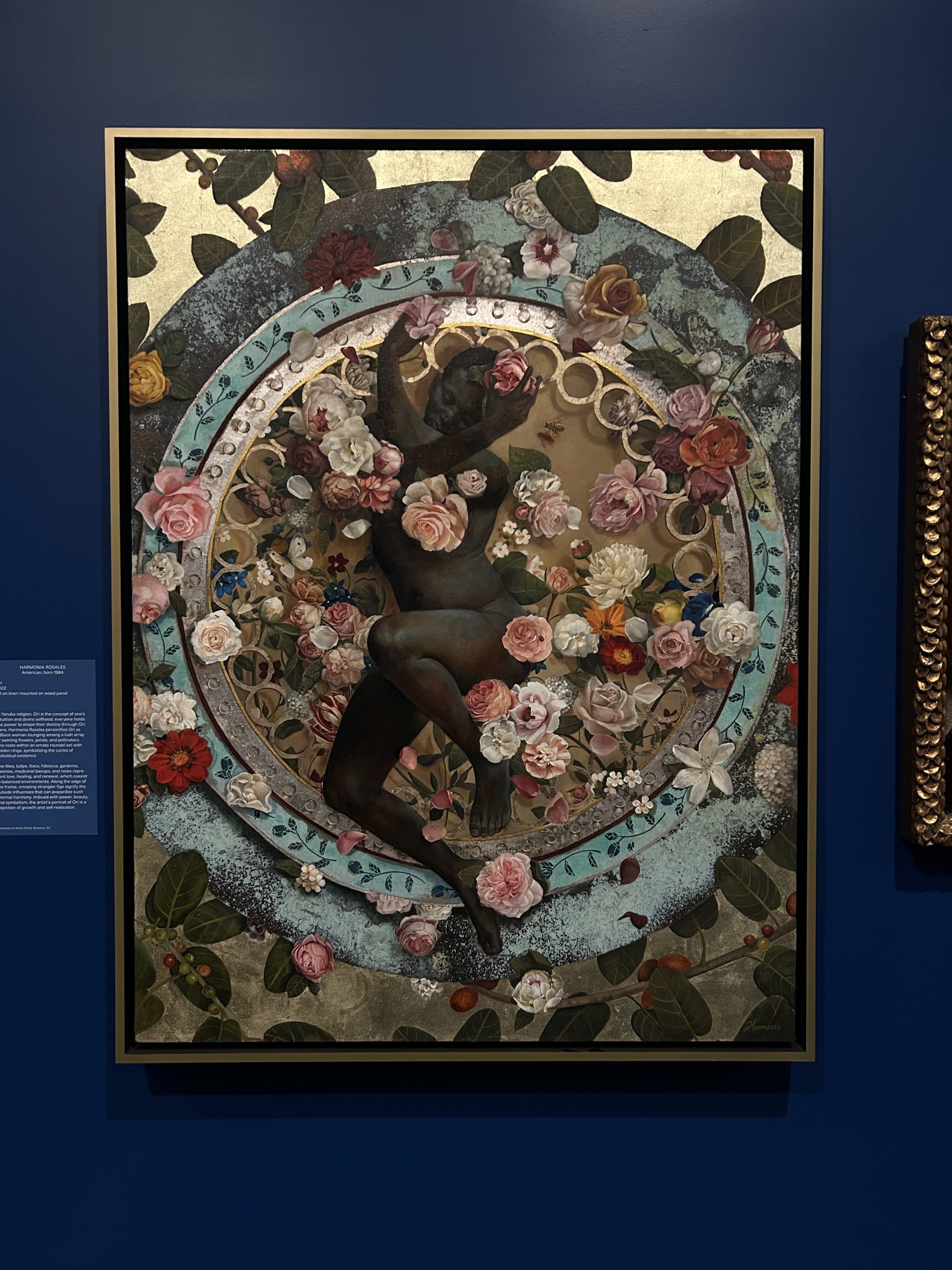
Ori
Harmonia Rosales
2022
What different visual elements (ie: line, color, light, proportions, scale, composition, media type etc.) do you notice, and how do they help you make sense of the artwork?
There are many brightly colored flowers and circle borders towards the edges of the painting while there is a dark figure in the middle. The person is being centered around the beautiful elements like how each one of us is surrounded by people who make our lives colorful. Additionally, whatever the figure is going through could be a cycle because they are surrounded by circle borders. Ultimately the painting becomes a symbol of the various experiences (hardships) that shapes us as individuals.
Group Members
Annriya Prince, Angelina Sunny, Nichole Manalil
-
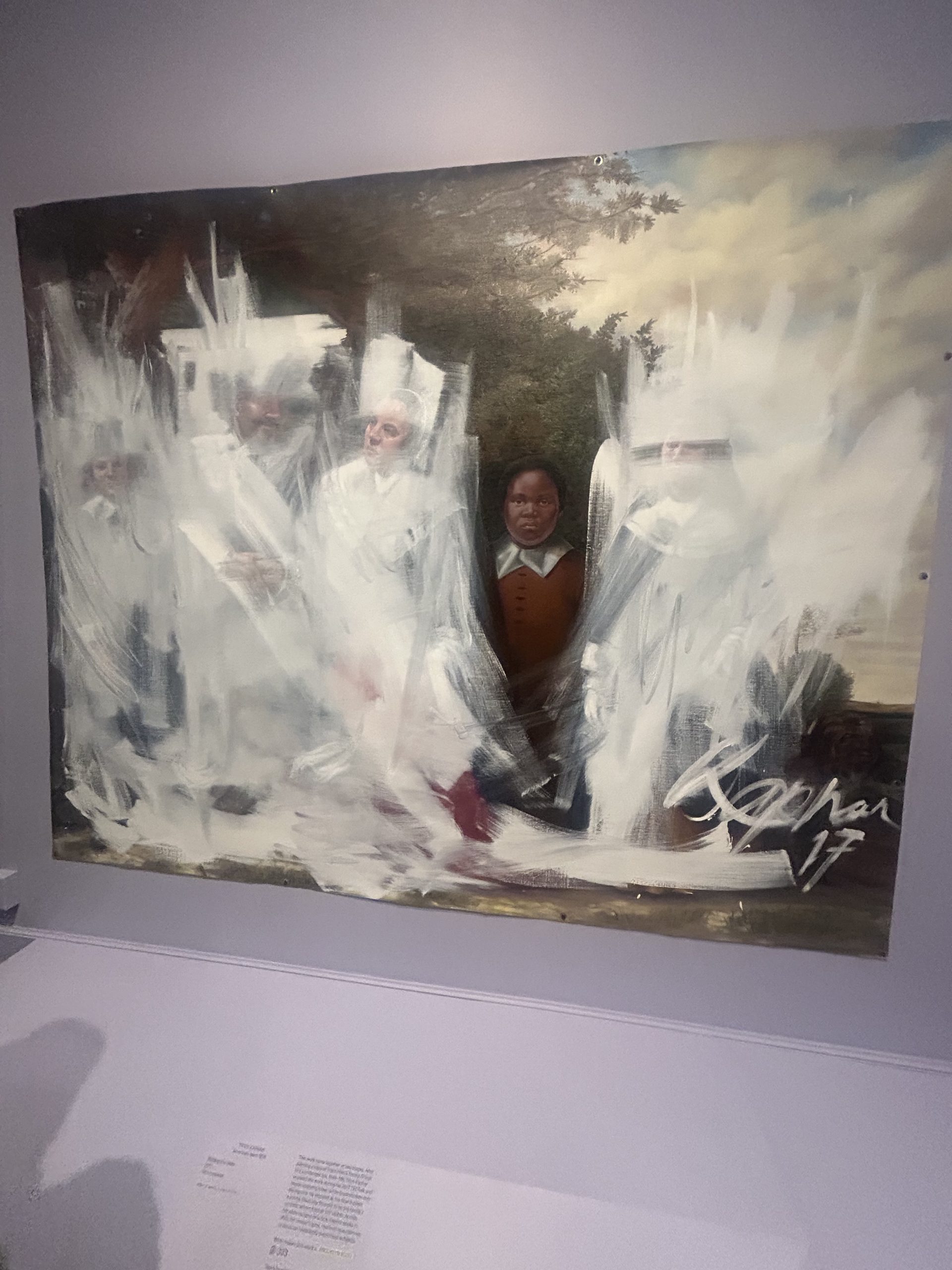
Shifting the Gaze
Titus Kaphar
2017
What do you see going on in this work of art? Is there a story depicted?
There are people standing together, probably a family or everyone who lives in a home. There are white people and one black boy. The white individuals are scribbled over in white paint.
What different visual elements (ie: line, color, light, proportions, scale, composition, media type etc.) do you notice, and how do they help you make sense of the artwork?
The white individuals are painted over with thick white brush strokes, canceling them out of the focus of the picture. There is a black boy standing facing center looking at the viewer. He is untouched by the paint
How does this object compare to other objects, stories, or ideas you already know about?
This makes us think about how now in the 21st century, more than ever before, black americans are reclaiming their identity and they’re space in society, no longer being pushed out of the narrative
What choices do you think the museum made about the object’s display?
They put it eye level so everyone could see it and wouldn’t walk past without noticing.
Group Members
Michelle Nisimov, Inaya khwaja, Maria Seville, Isaac Amazon
-
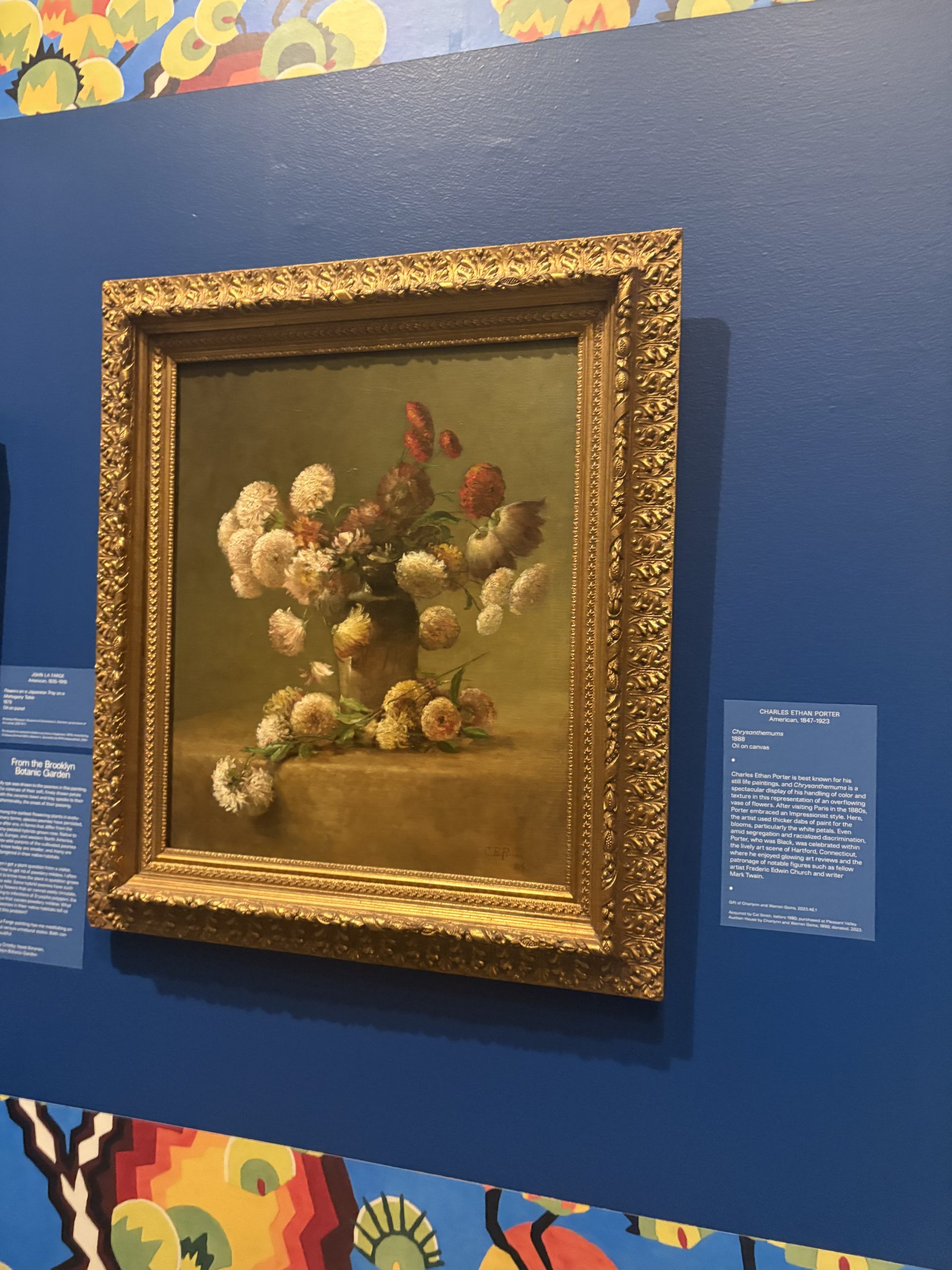
Chrysanthemums
Charles Ethan Porter
1888
What do you see going on in this work of art? Is there a story depicted?
We see a jar of flowers, some in full bloom, some in the process of doing so, and others wilting. While others have fallen out of the vase. It simply shows flowers in a vase overflowing.
What different visual elements (ie: line, color, light, proportions, scale, composition, media type etc.) do you notice, and how do they help you make sense of the artwork?
It uses thick dabs of paint for the petals, with thinner delicate lines for the stem of the flower. It also utilizes very muted colors in the background with light bright colors for the flowers to create the contrast. The proportions are very to scale. The elements allow for the art to make sense to the simplicity of the art subject itself, making it evident what it is and to see the brush strokes put into the oil painting itself.
How does this object compare to other objects, stories, or ideas you already know about?
This work personally for us doesn’t fully compare to other works we know about, however maybe similarly to like the Starry Night, a true story isn’t seen, but simply a visual satisfaction is achieved.
What choices do you think the museum made about the object’s display?
We think the display choices of this art that was made by the museum was that with placing the solid blue line strip directly behind the art to highlight it from the abstract pattern allows for a clear view of the art itself. It also is placed among other floral works, creating a evident theme.
Group Members
Mia Cole, Julia Schmidberger
-

Garden Landscape
Ernest Lawson
1915
What do you see going on in this work of art? Is there a story depicted?
The artist captured a garden as if it was made out a cloud. The fluffy and soft textures capture a sort of soft beauty the artist saw at the botanical gardens. I see a gate in the distance of the artwork and a picket fence. The picket fence and the gate were man made which indicates to me that a story that humans take protective measures for the flowers in the image.
What different visual elements (ie: line, color, light, proportions, scale, composition, media type etc.) do you notice, and how do they help you make sense of the artwork?
Looking at “From the Brooklyn Botanic Garden” we could see how the colors, perspective, and styles evoked emotions of nostalgia, tranquility, and calmness within their audience. Looking closer at the colors relationships, the dullness within the greens contrasted with the bright reds, pinks, whites of the flowers: and the yellows of the paths and changing seasons of the leaves leave the viewers feeling drawn. The spacing especially when it comes to perspective is entrancing, the cluttering of the flowers on the right white the clearness of the path on the left really makes you feel like you're there at the moment. The pickets on the side show the preservation of nature itself, flowers protected on the other side. The artwork's purpose through these observations gives the representation of the Brooklyn botanical garden’s community and love for it, in the unique way an artist can.
How does this object compare to other objects, stories, or ideas you already know about?
The softest reminds us of Monet paintings and his love for nature (i e. the water lillies). The flowers seems to have buds of red and white. This compares to the colors of other flowers that I know of such as marigolds and lavender.
What choices do you think the museum made about the object’s display?
Every room is designed with care even down to the wallpaper. The painting is meant to be in the room with all the other objects intentionally placed there. The museum made sure to place the painting on wall and give it enough space between other potraits. This positioning was done so the image can be see properly and not overlap with other images. Also a description was placed next to the image in order to help th audience understand what the painting is depicting.
Group Members
Jasmine Man, Pooja Perera, Puja Desilva, and Kate Peters
-
Shifting the Gaze
Titus Kaphar
2017
What do you see going on in this work of art? Is there a story depicted?
There are people standing together, probably a family or everyone who lives in a home. There are white people and one black boy. The white individuals are scribbled over in white paint.
What different visual elements (ie: line, color, light, proportions, scale, composition, media type etc.) do you notice, and how do they help you make sense of the artwork?
The white individuals are painted over with thick white brush strokes, canceling them out of the focus of the picture. There is a black boy standing facing center looking at the viewer. He is untouched by the paint
How does this object compare to other objects, stories, or ideas you already know about?
This makes us think about how now in the 21st century, more than ever before, black americans are reclaiming their identity and they’re space in society, no longer being pushed out of the narrative
Group Members
Michelle Nisimov, Inaya khwaja, Maria Seville, Isaac Amazon
-
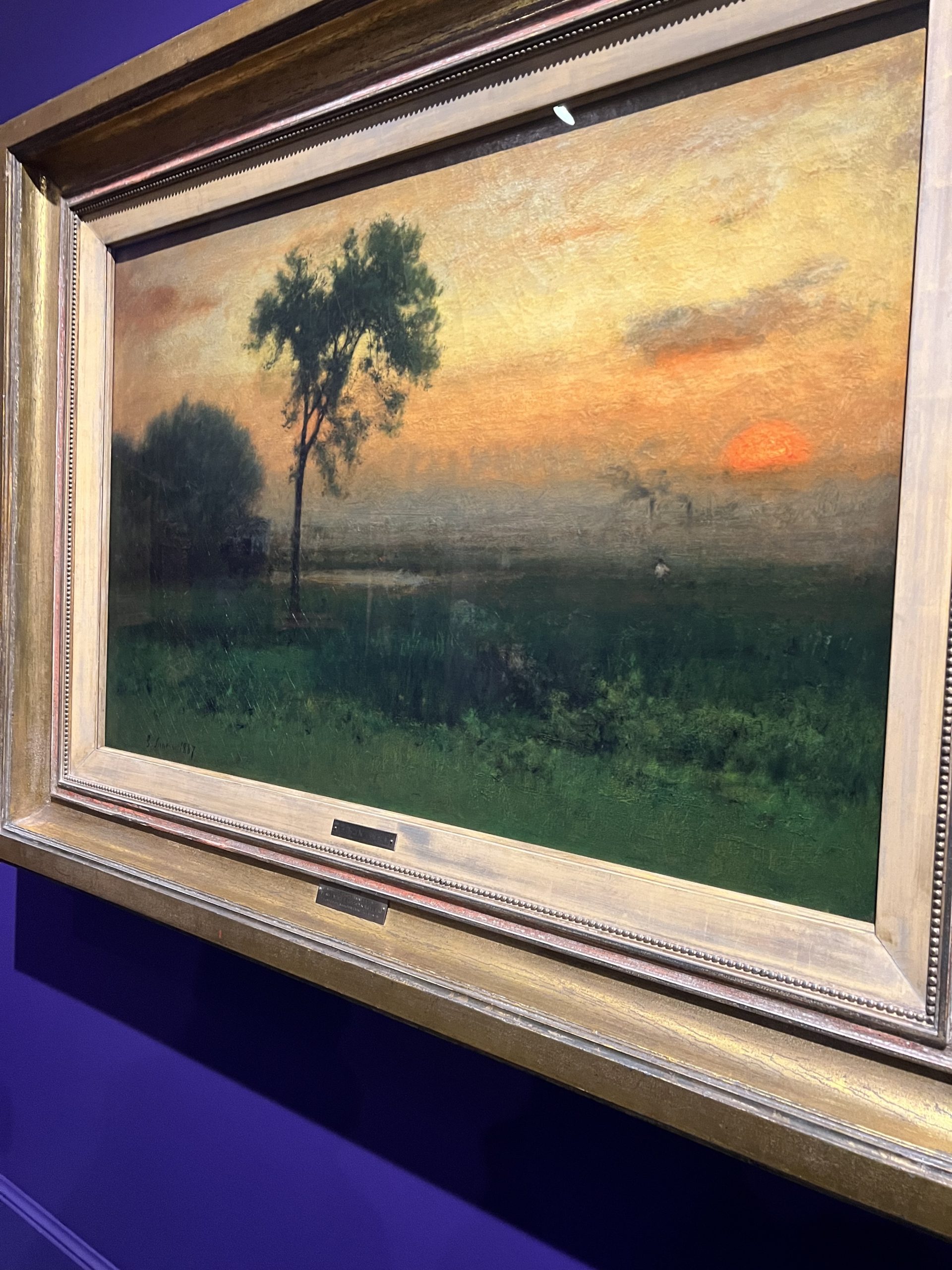
Sunrise
George Inness
1887
What do you see going on in this work of art? Is there a story depicted?
This painting depicts a blazing, colorful sunset. There’s only one person visible who is running through a field. It’s very hazy, but you can still see the factories in the back. It shows the connections between the industrial era and the rural world.
Group Members
Reditha, Andrew, Mikayla, Feriel, Lola, Alexandra, Vanhuong, Jessica.
-
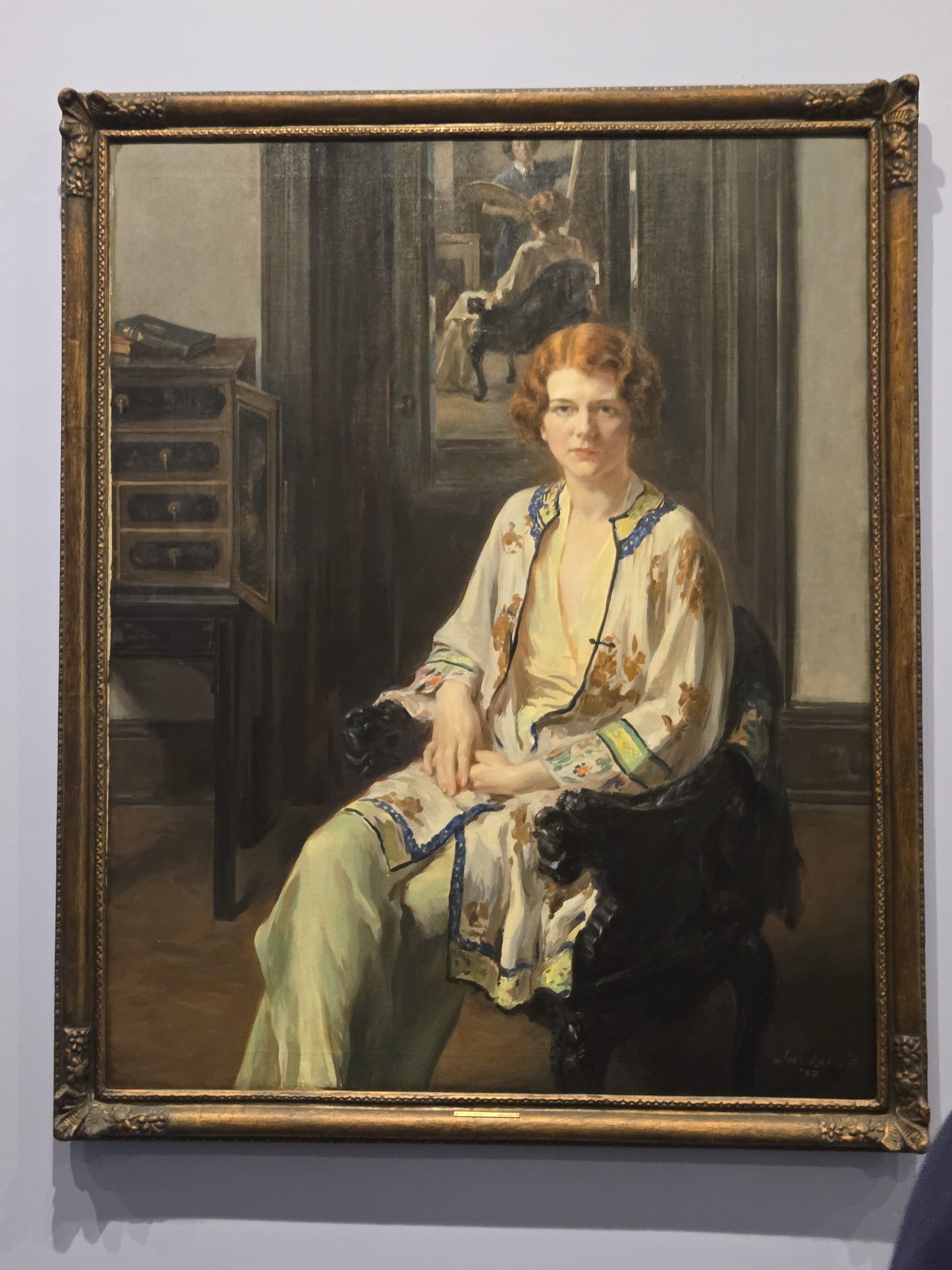
Javanese Coat
Kyohei Inukai
1932
What do you see going on in this work of art? Is there a story depicted?
The subject of the painting is a woman sitting on a chair, wearing a yellow blouse, pants, and a house coat with flowers. In the background, there is a mirror depicting the artist who is currently painting her.
What different visual elements (ie: line, color, light, proportions, scale, composition, media type etc.) do you notice, and how do they help you make sense of the artwork?
There is a lot of yellow and other warm colors (on the woman as well as the surroundings), which evokes a calm and relaxed mood. Since the artist is painting his lover, it can be assumed that these colors were chosen to reflect the positive feelings they felt when they spent time together.
How does this object compare to other objects, stories, or ideas you already know about?
Portraits were typically done for high status individuals, and they often took a very long time. By making a portrait in the same style as the ones done for important figures, the artist demonstrates how much he admires his partner. Additionally, the artist's choice to include himself in the background of the painting, despite the fact that portraits typically only focus on one subject, including both the artist and the subject may symbolize how in their relationship, they both complete each other. Lastly, giving importance to both the subject (deemed to be of higher importance) and the artist (a Japanese immigrant), Inukai demonstrates the interaction between different classes and cultures.
What choices do you think the museum made about the object’s display?
The museum placed this painting next to other portraits. Some of them depicted high class figures and others included people who seem to lead more ordinary lives.
Group Members
Connie Pierre-Louis, Francesco Borgognone, Matthew Groysman, Ounay Tawadrous, Travis Sebastian, Terrence Liao, Noah Arthungal,Julian Isler, Christal Colin, Alexandria Giannopoulos, Simon Myaskovsky, Liam Ryan, Ismaeel ElShafei, Sasha Lopez, Catherine Feery
-
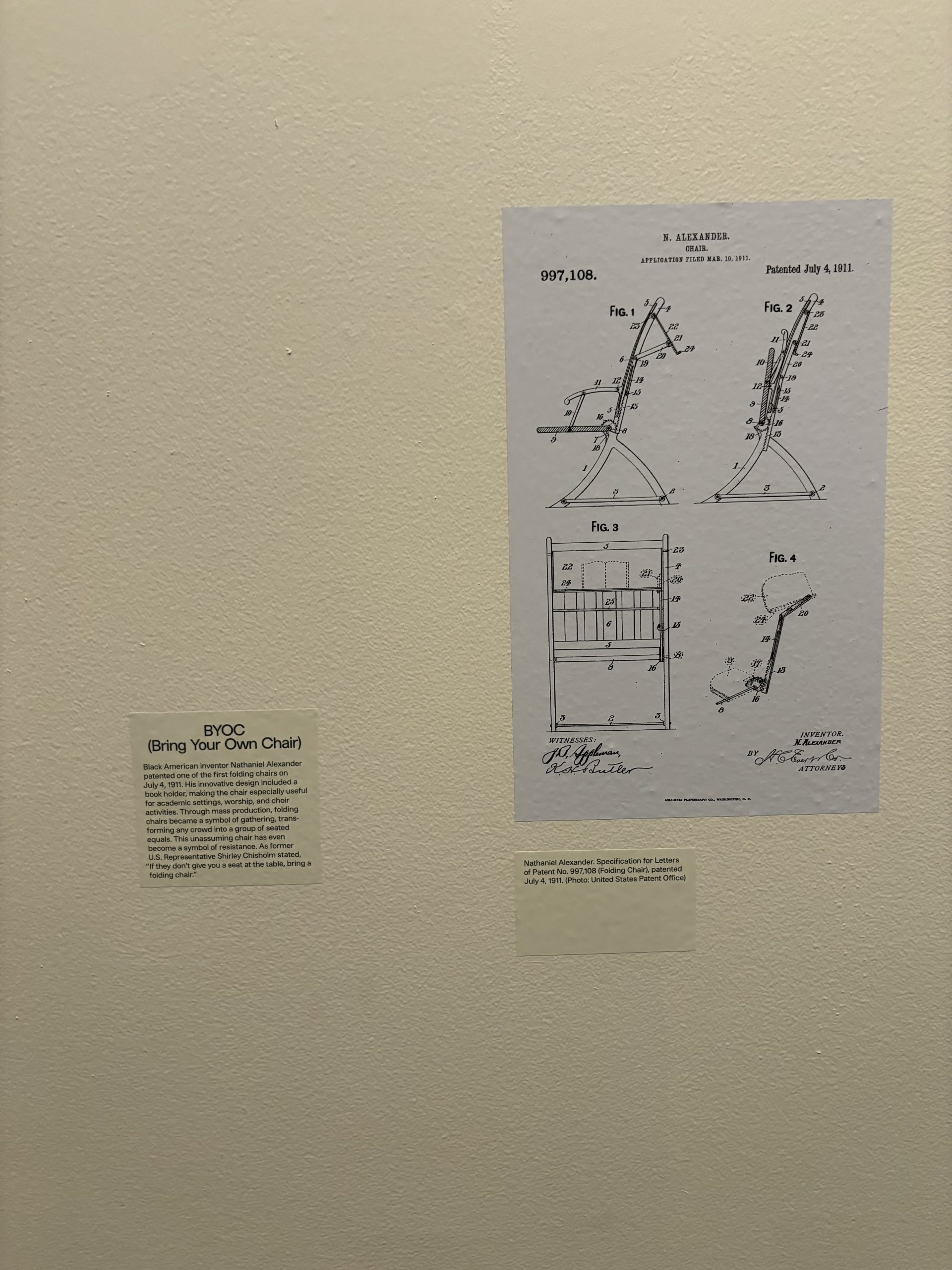
BYOC (Bring Your Own Chair)
Nathaniel Alexander
1911
What do you see going on in this work of art? Is there a story depicted?
The inventor of the folding chair created it as a way of adding people who are not invited into conversations, highlighting racial inequality and the strength held by Black people in spite of that inequality.
What different visual elements (ie: line, color, light, proportions, scale, composition, media type etc.) do you notice, and how do they help you make sense of the artwork?
The chair is white, with no details, showing how unassuming it is, however the reality is that it stands for racial equality.
How does this object compare to other objects, stories, or ideas you already know about?
Due to the chairs plainness, it stands out against everything else, and therefore draws the viewers eye.
What choices do you think the museum made about the object’s display?
They put it among other chairs in order to highlight its simple design, but significant meaning about racial equality.
Group Members
Diana Kolari, Jake Pechter, Gurjot Bain, Sabrina Kerkach CSI
-
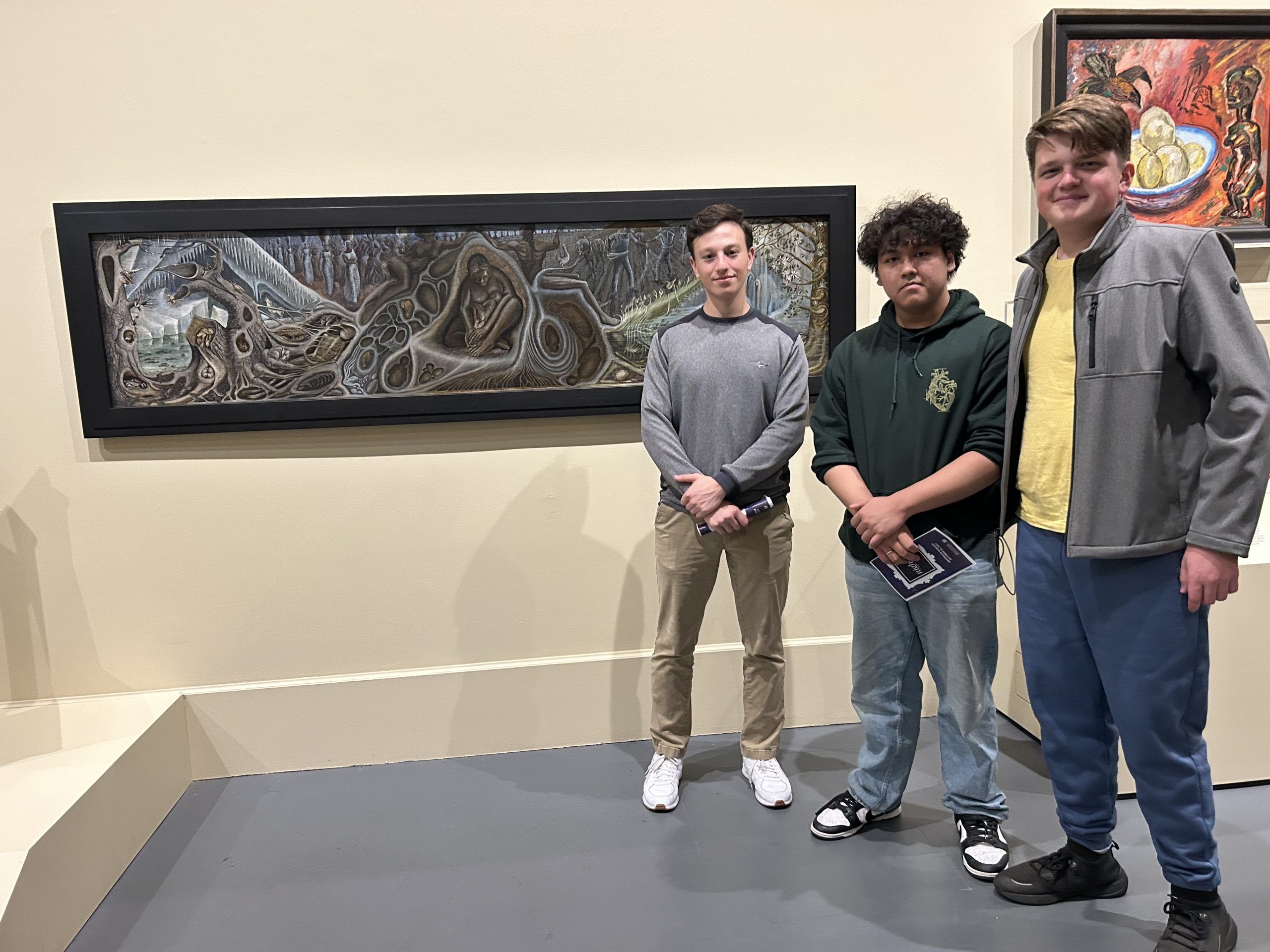
The web of life
John webbers
1958
What do you see going on in this work of art? Is there a story depicted?
The work of art is an illustration of a life cycle and also of the similarities between man and animal. We grow as embryos, develop into infants, rely on our mothers for sustenance, and then grow into adults. It’s notable to mention that the artwork presents a dichotomy of gender roles wit women harvesting the plants the men have sown. Also there is the idea of returning to nature in death as symbolised by the tree roots sucking into a decaying body.
What different visual elements (ie: line, color, light, proportions, scale, composition, media type etc.) do you notice, and how do they help you make sense of the artwork?
The painting is done on wood to reinforce nature and there is the bright sun and gloomy ice that portrays life and death and harvest and hunger.
What choices do you think the museum made about the object’s display?
The choice of the painting being in a nature exhibition especially near transcendental paintings exclaim how nature isn’t all pretty and how death is a major part of it.
Group Members
Alexander Genkin, Benjamin Brinzensky, Chan Moe Aung
-
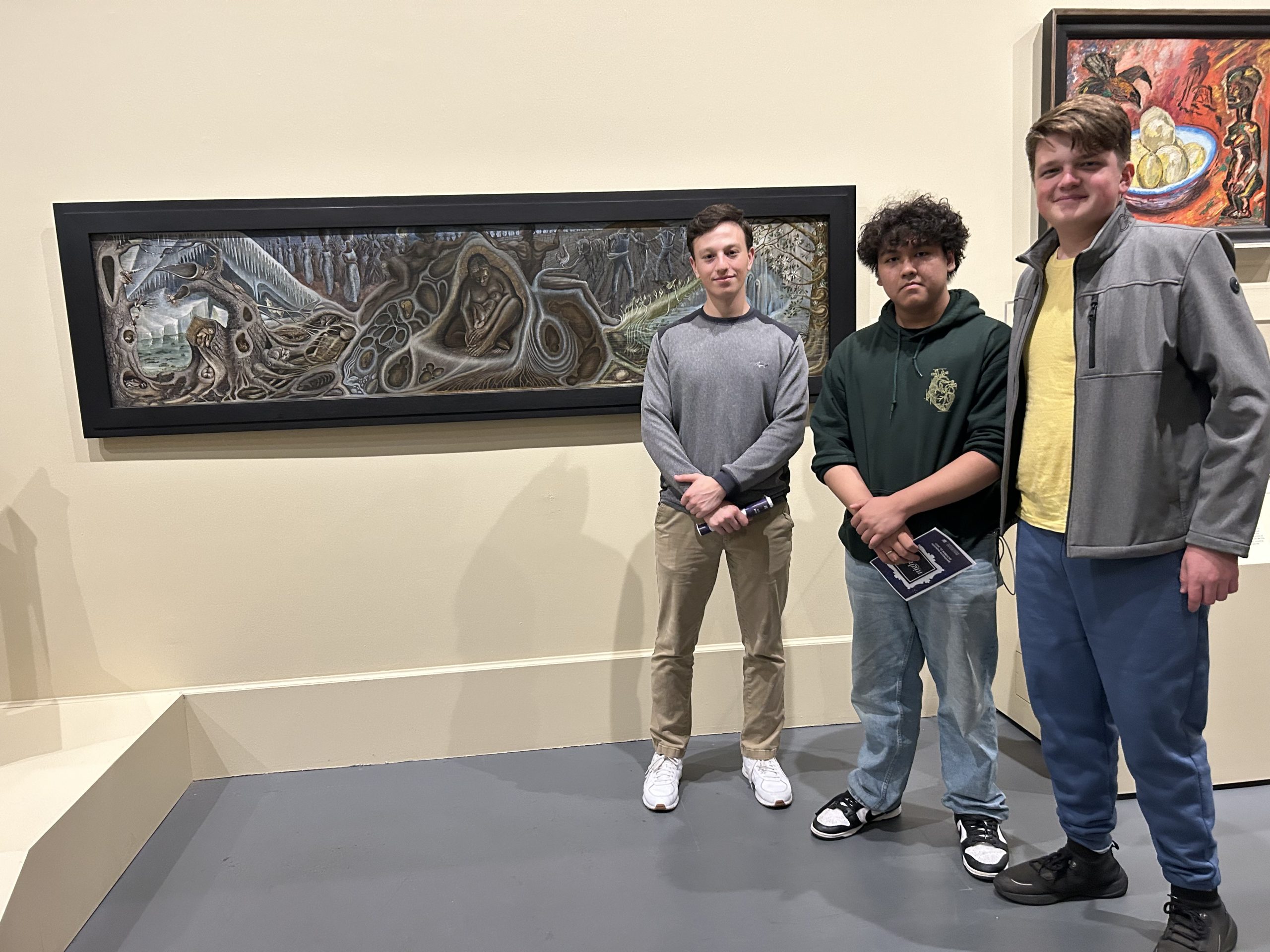
The web of life
John webbers
1958
What do you see going on in this work of art? Is there a story depicted?
The work of art is an illustration of a life cycle and also of the similarities between man and animal. We grow as embryos, develop into infants, rely on our mothers for sustenance, and then grow into adults. It’s notable to mention that the artwork presents a dichotomy of gender roles wit women harvesting the plants the men have sown. Also there is the idea of returning to nature in death as symbolised by the tree roots sucking into a decaying body.
What different visual elements (ie: line, color, light, proportions, scale, composition, media type etc.) do you notice, and how do they help you make sense of the artwork?
The painting is done on wood to reinforce nature and there is the bright sun and gloomy ice that portrays life and death and harvest and hunger.
What choices do you think the museum made about the object’s display?
The choice of the painting being in a nature exhibition especially near transcendental paintings exclaim how nature isn’t all pretty and how death is a major part of it.
Group Members
Alexander Genkin, Benjamin Brinzensky, Chan Moe Aung

