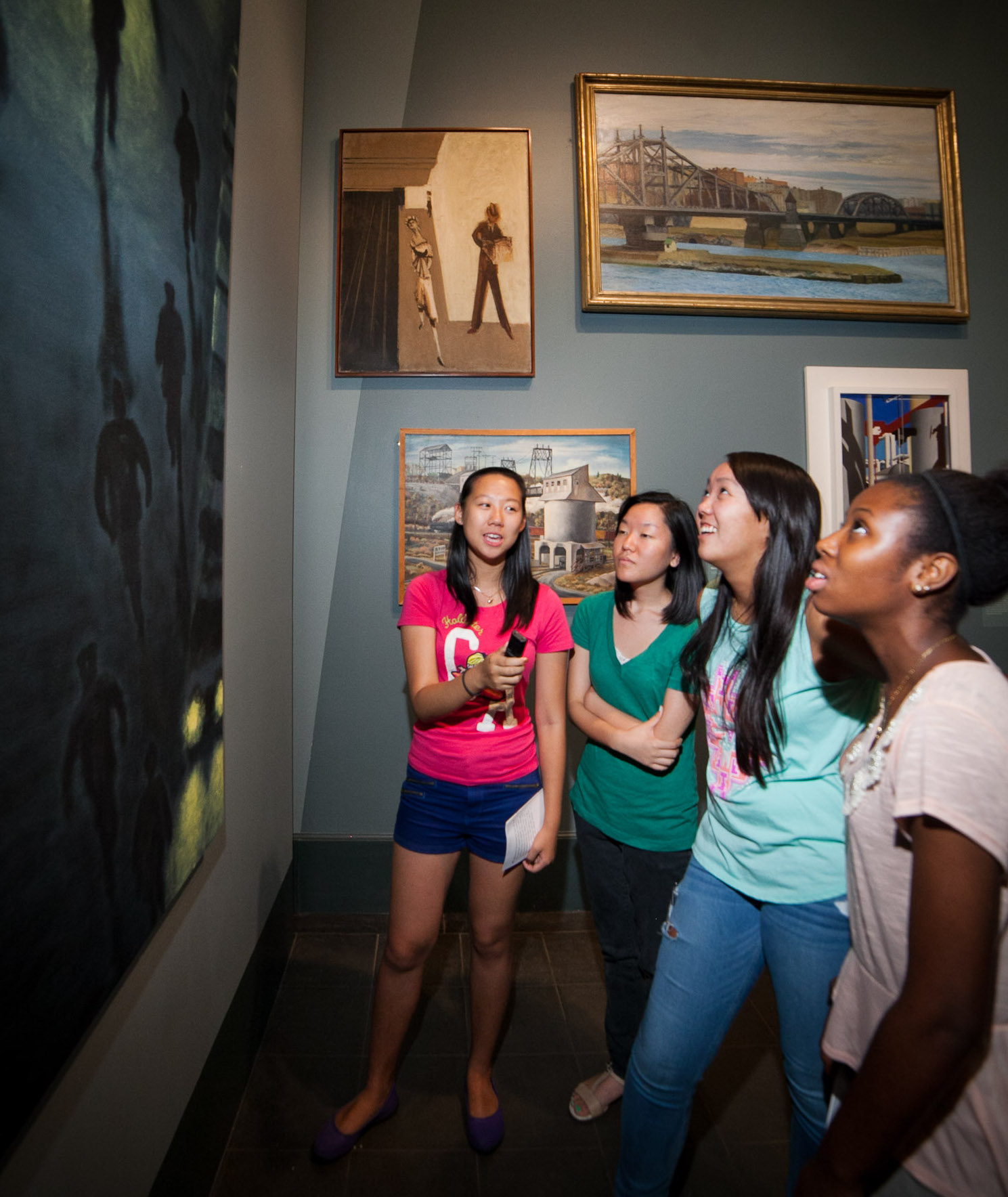
This page compiles your reflections on art, community, museums, and more, informed by your time at Night at the Museum.
To have your own reflection appear on this page, submit a reflection of your own.
Analog fan? You can also respond to these prompts on paper and peruse the responses of others. Come find our table on the third floor.
-
Choose a piece of art you saw that invoked strong feelings for you. Describe the response you had and why. (Don’t forget to include the title and artist.)
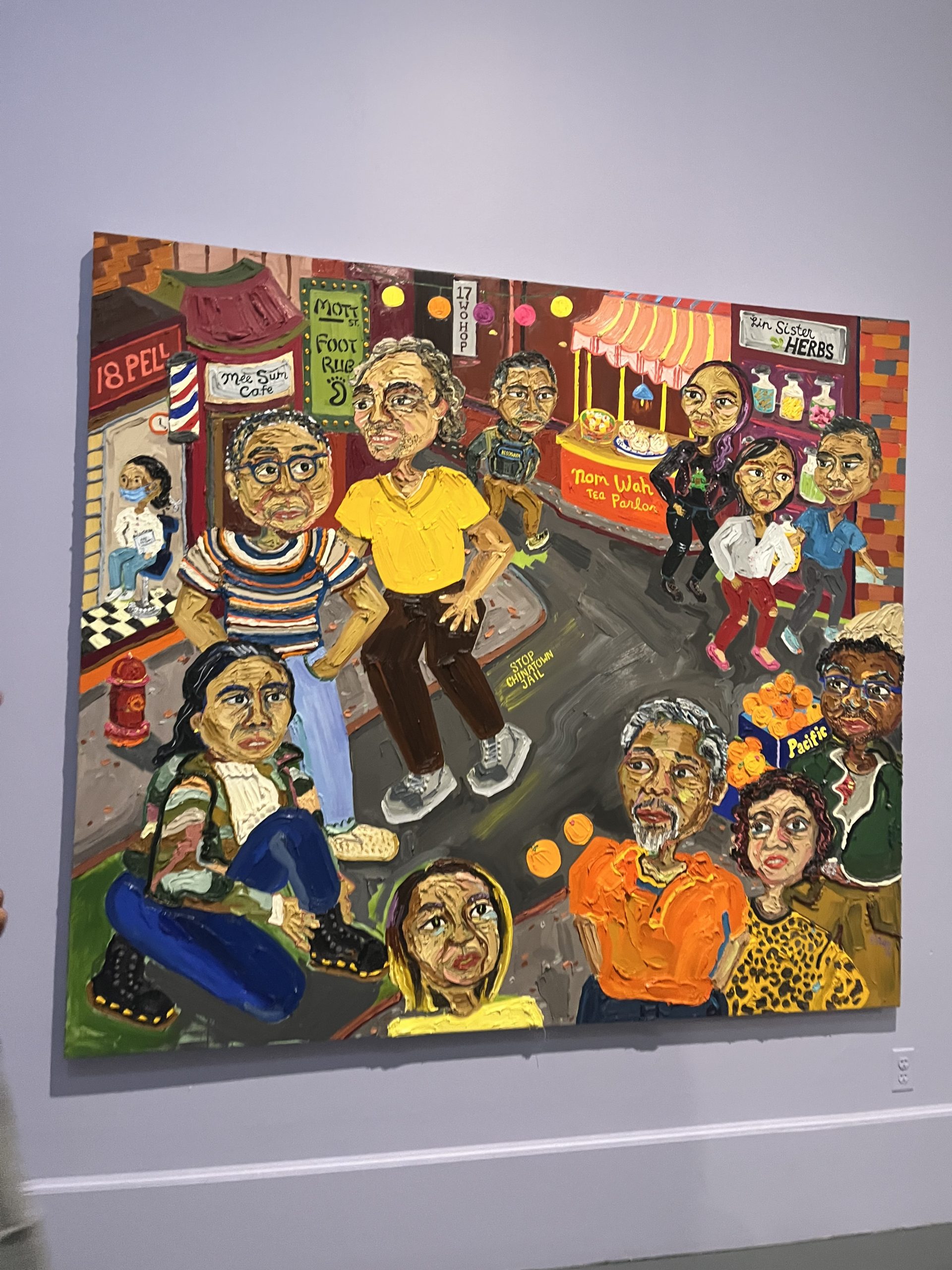
The piece “Chinatown Block Watch” (2022) by Susan Chen immediately caught my eye. Its bright, vibrant colors alongside the extremely detailed faces automatically reminded me of the smaller communities of New York. It felt (and still feels) welcoming in a way. The art style reminded me of how I used to draw back in elementary school, so it was really nice to see something unconventional in a museum including a lot of traditional art. Even though the background is vibrant, the people’s expressions are serious, and all of them do their own things. Some walk, some stare, and one seems to be tying her shoe. After reading the description, I was a bit shocked that tension was one of the feelings the artist wanted to convey. I can see it after looking at it for a longer time, but the vitality message overcame that for the first impression. It really comes to show how these tight-knit communities have a lot of power in their sole existences.
Fabianna C
Queens College
-
How would you relate your current major or field of study to your experience at Night at the Museum? What connections can you see?
I am a nursing major and I saw a strong relationship between my major and the Brooklyn Museum. This experience at the Night at the Museum showed me the importance of anatomy and the human body. Many of the paintings showcased anatomy.
Sofia Nielsen
College of Staten Island
-
Compare how this experience reinforced or challenged your previous ideas about museums. Would you encourage other Macaulay students to visit museums?
The experience I had at the museum tonight definitely challenged my previous ideas about museums. I always visited museums with the mindset that I was an observer, but never really went and discussed the ideas I generated about the art works I saw. However, tonight I got the chance to discuss my ideas, and even compare them to the ideas of my peers. This unique experience helped me realize that the true purpose of museums is not to observe, but to analyze and discuss. When you generate opinions and meaning from artwork, that is when you gain the most value from visiting museums, especially when you consider multiple perspectives. On that note, I would 100% encourage other Macaulay students to visit museums. I would also advise them to bring a friend because it makes the museum visit both more enjoyable and insightful.
Matthew Jaskiewicz
Baruch College
-
Where and how do you see yourself, your communities, and/or New Yorkers in this museum?
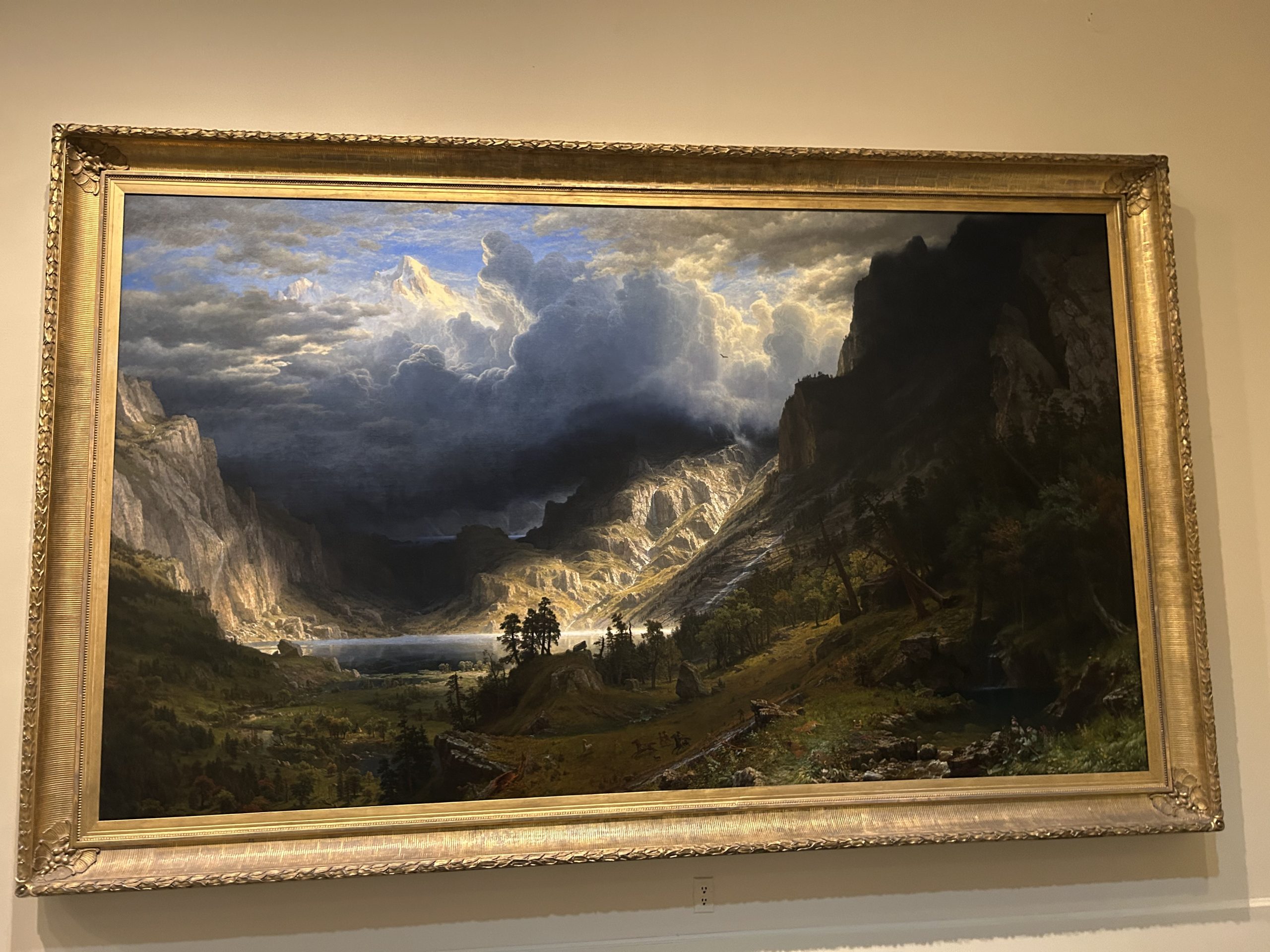
I see history and culture in the Museum. My community, myself, and New York is built on the cultures of our past. These cultures are all displayed in the museum as a form of art. Seeing who lived on the very land we live on today, how different types of people were treated, and how people lived throughout the years is so important to learn about, explore, and see in museums like this. I loved having this experience and being able to physically see art from all different eras, and try to study their meanings.
Abigail Migirov
Brooklyn College
-
What would you add that is missing or what would you like to see in the American art exhibit in the future?
More in general. The art works on display rarely had a general theme per each room, giving a scattered impression. I wish that we were able to see the other floors, or even just the closed off Monet section. I also feel like there should be more diversity in their artists, oftentimes they had African Americans and English men. It would be nice to see some artwork from the Asian community as well as more European and Slavic artists. It also would be nice to see all the paintings on the walls, instead being met by printed out pages with a mini version and a brief description.
College of Staten Island
-
What would you add that is missing or what would you like to see in the American art exhibit in the future?
I would like to see more Native American artwork, considering there were some pieces that were anti colonialism, I think it would be nice to have some pieces which place an emphasis on the culture of Native Americans especially in the New York region. I think there was not enough of this type of artwork.
College of Staten Island
-
Choose a piece of art you saw that invoked strong feelings for you. Describe the response you had and why. (Don’t forget to include the title and artist.)
A piece of art that evoked a strong emotion for me was Doors by Christian Marclay. This piece is a film that depicts people going in and out of doors, but as a door closes, the camera’s perspective shifts to a different scene, of a different person closing a door. I found this piece enjoyable because of its commentary on such an ordinary thing: doors. Doors act as a performative aspect of our lives, as opening a door creates a new existence on the other side. They act as separators between realities, and this film experiments with the different worlds that doors have behind them. This piece was so thought-provoking, as it made me think about how the fulfillment of all my dreams and wishes could be just behind one door. This door is not a magical door that will shift me to a new existence, but a door to a lecture hall, or to a professor’s office, or to an internship, that allows me to sculpt the reality I want
Ryan Gill
Queens College
-
Choose a piece of art you saw that invoked strong feelings for you. Describe the response you had and why. (Don’t forget to include the title and artist.)
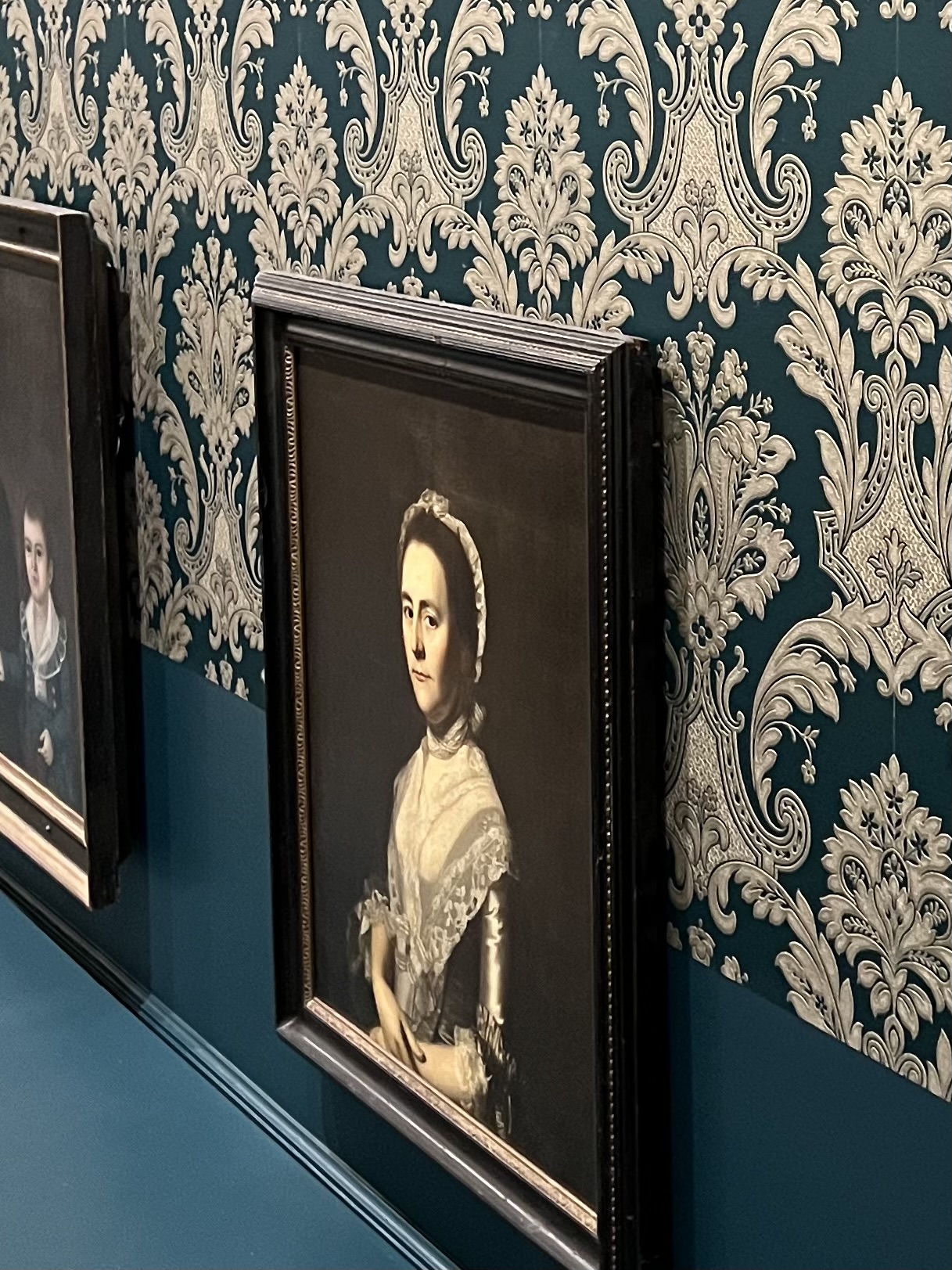
This portrait immediately caught my attention because of the woman’s unsettling expression. There is a sharpness in her eyes and a faint, almost smug smile that gives the impression she isn’t a kind or genuine person. The artist’s use of shadow and muted color makes her seem distant and untrustworthy, as if she’s concealing her true intentions behind a composed exterior. What fascinated me most was how a simple portrait could suggest so much about a person’s character. Instead of admiring her grace, I found myself questioning her morals, which made the painting unexpectedly powerful.
Ariyya Mohsin
Hunter College
-
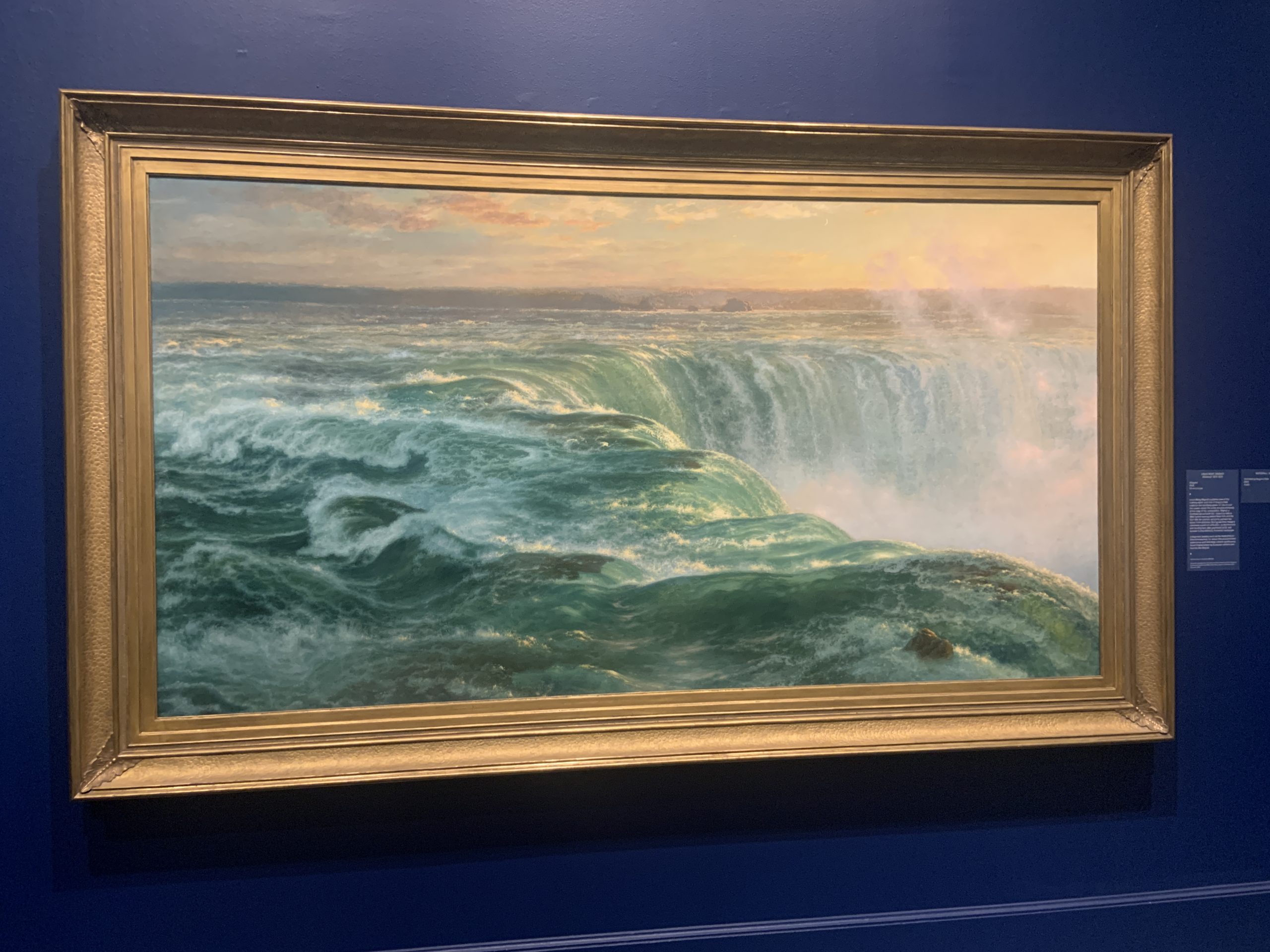
Choose a piece of art you saw that invoked strong feelings for you. Describe the response you had and why. (Don’t forget to include the title and artist.)
The title of this painting was Niagara. I didn’t catch the artist name but it was in the marine exhibit. The painting was that of Niagara Falls and it was very beautifully painted. It was the American side of Niagara Falls and it was easy to tell it was painted but it was still very realistic. It was painted at the time of sunset and it was very serene. I used to go to Niagara Falls when I was younger and it invoked very nostalgic feelings for that reason.
Karen Y
College of Staten Island
-
Compare how this experience reinforced or challenged your previous ideas about museums. Would you encourage other Macaulay students to visit museums?
I would highly suggest not only my fellow Macaulay students, but everyone in general to frequently visit museums. Exhibits, especially in NYC, are so vast and diverse that you’re able to tap into experiences and cultures you would have otherwise never experienced. The Brooklyn Museum stood out to me in particular due to its unique architecture and way of displaying artwork. The framing of pieces added to their meaning, rather than simply being placeholders. In a sense, it refuted the idea that museums have to be plain spaces that try their best to be unassuming. Rather, it can be vibrant, detailed, and an architectural artwork itself.
Hunter College

