

I really enjoyed the Society of Illustrators. I came into the museum with no knowledge of what it was. I didn’t prepare how I would normally prepare, looking at the museum’s website, seeing what’s on display, and any other information so I don’t feel out of place. But I went in blind. Indemnity I felt the difference from when I went to Whitney. The Society of Illustrators is extremely small, with only three rooms. The first two galleries had a wide variety of illustration, a lot of which I either recognized from my favorite children’s books or to the New York Times comics. The third “room” ,that was more of a hallway, had an exhibit from Anna and Elena Balbusso. When I first walked into the museum it felt closer to the Alice Austen house but as I moved through the connection faded. The galleries are packed with illustrations. The way the art was displayed made me overwhelmed from a distance so I was forced to be up close to the art. Due to being so close to the art I was able to see and really appreciate the detail that was put into each piece.
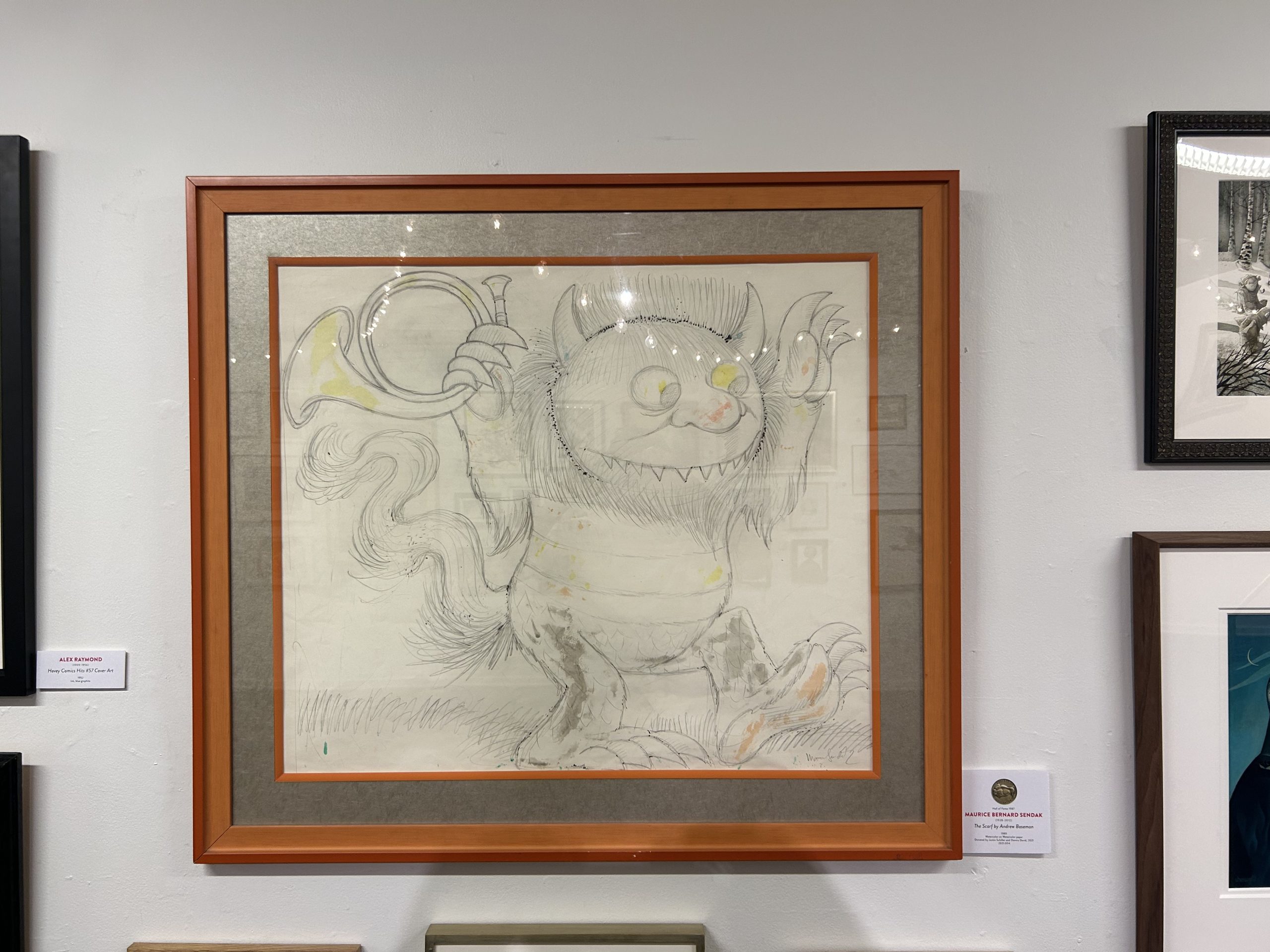
My favorite illustration in the museum is a piece by Maurice Sendak. The piece is an illustration of a character from Where the Wild Things Are. Where the Wild Things Are is my favorite book from my childhood. However, prior to the visit I had forgotten about my connection to this book, so when I saw the drawing I immediately was reminded of when I used to flip though the pages looking at the picture. Being reminded of my childhood was a nice change of pace. Usually at museums I have to sit with the art and dig deep to find the connection. But with this piece I had already found the connection from my many rereads of the book, and seeing this piece brought that connection back out.
When I visited the Society of Illustrators it was mid day on Friday. I was alone and was one of 3 people in the museum. For the majority of my visit i was alone with the art.


Hi Ilan, I really like how you described going in blind to the Society of Illustrators, sometimes that makes the experience feel more genuine, and you can tell your reactions weren’t shaped by any expectations. I relate to what you said about the small space being almost deceptive; you think it’ll be a quick visit, and then suddenly you’re surrounded by walls packed with art, forcing you to get close and actually pay attention. I also agree with your choice of piece, it’s one of my favorites too. I didn’t read the book as a kid, but I’ve seen the character many times, and I can imagine how strong that nostalgia must’ve felt for you. Since we have visited different kinds of museums, would you prefer a smaller kind of museum or bigger ones?
Hi Illan, I think it’s really interesting that the connection to the Alice Austen House faded after a while. For me, it did fade a little too, but I also found the connection was strengthened in some ways. The collage of photographs that Alice took of everyday New York life reminds me of the variety and organization of the Society’s wall art, even if it’s a loose connection, for example. It’s interesting how much can be different in the physical location, the exhibits, and how those compliment each other— not all museums are alike, not even similarly sized ones like the Alice Austen House and Society of Illustrators. Do you think you have a preference between museums like the Alice Austen House or the Society of Illustrators, and/or just large museums or small museums generally? I don’t remember Where the Wild Things Are too well, but I do remember the character and it’s a great rendition that the artist made. I remember looking at it for longer than other pieces myself, in-part because I love how the Society of Illustrators includes more lighthearted pieces from media, like the animation exhibit and Where the Wild Things Are. It’s nice how that art can instantly bring back the warm memories and nostalgia of when you read it.