
This is a gallery curated by you, the students taking part in our Night at the Museum. Make it your own!
To have your own response appear on this page, form a group and submit a response.
-
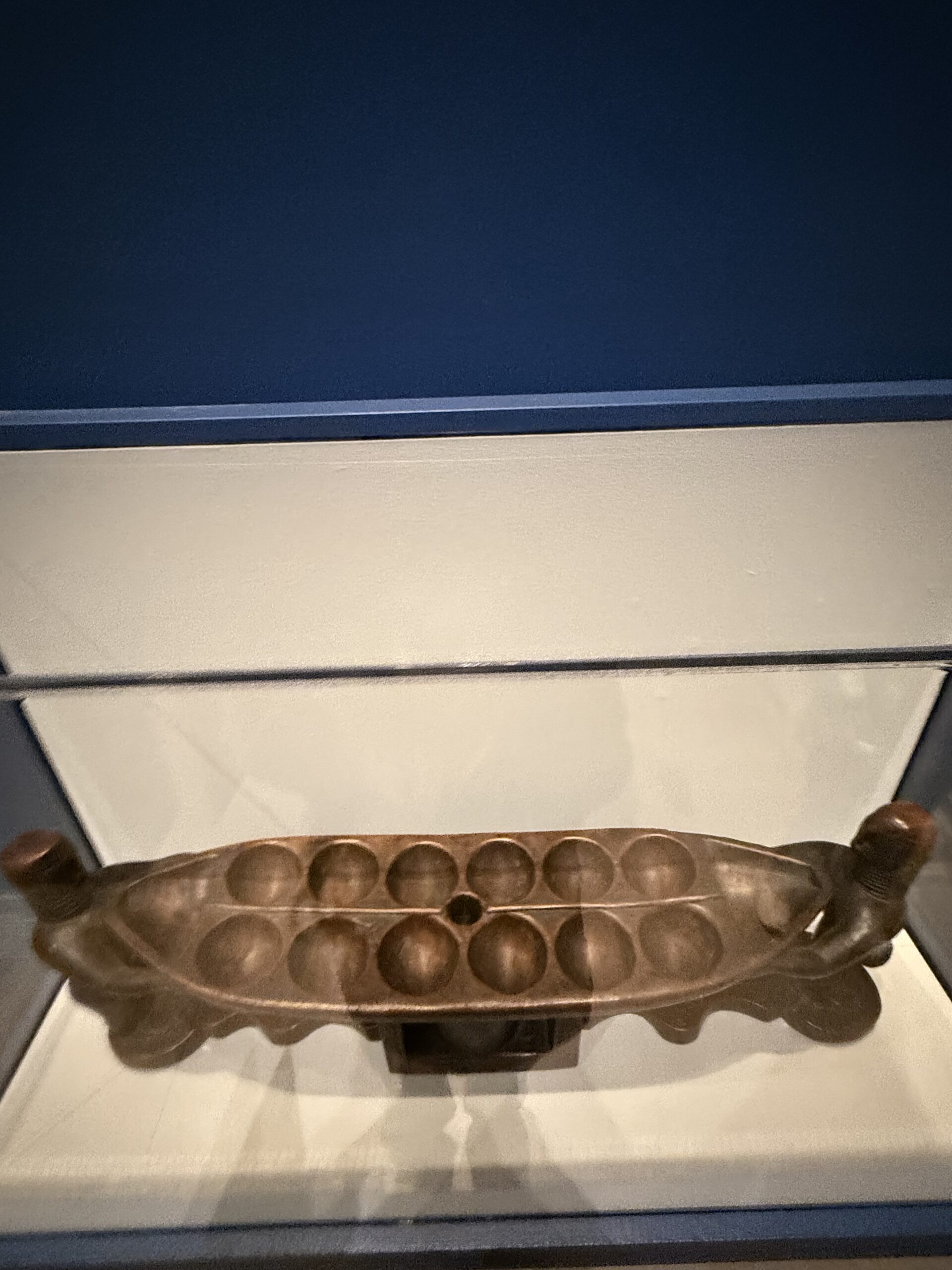
Mancala Game Board, 19th century
Unknown Bullom or Bidjogo artist
19th century – Acquired 1922
What do you see going on in this work of art? Is there a story depicted?
While walking around the museum, in the Egyptian section we stumbled upon a board game that seemed familiar to us. While closely looking at it reminded us of the game Mancala. Upon wanting to find out more, we decided to read the description. It turned out to be an ancient version of Mancala.
What different visual elements (ie: line, color, light, proportions, scale, composition, media type etc.) do you notice, and how do they help you make sense of the artwork?
The version presented to us was being held by two human like statues which was what caught our attention in the first place. The game board appeared to be shaped like a boat. This to us felt that it showed that boats were essential during the time period, and that people weren’t all about working. They had leisure time to play games just like we do today.
How does this object compare to other objects, stories, or ideas you already know about?
We were shocked to learn that even Mancala was played many years back. It shows the immense impact that many things from the past have on the world today. From the games we play to the traditions we practice in our daily lives. It’s amazing how much we can learn by just visiting a museum and carefully observing what’s around us and learning about ancient history and its connection with the modern day.
Group Members
Vanessa Morales and Susanna Hernandez
-

Anthropoid Coffin of Teti, Servent of the Great Palace
Charles Edwin Wilbour Fund
1339-1307 B.C.E.
What do you see going on in this work of art? Is there a story depicted?
Hyroglifics and registers depicting the persons authority. An important person being mummified.
What different visual elements (ie: line, color, light, proportions, scale, composition, media type etc.) do you notice, and how do they help you make sense of the artwork?
Dogs, one eye drawn, symbols, Egyptians(people), depicted with Horus so there is importance in the person mummified. Horus being drawn on your tomb amplifies your importance.
How does this object compare to other objects, stories, or ideas you already know about?
This is an actual person and one of the biggest pieces.
What choices do you think the museum made about the object’s display?
It is the only human thing surrounded by objects and in the center of the room.
Group Members
Vincent Le, Naheema Olatidoye, Nicole Rodriguez, Faith Davenport, Alexis Rowe, zury Cordova, Alanis Castillo, Guraneel Kaur, Fatemah Mashuka
-

My Friend Will Be Me
Sahsa Gordon
2022
What do you see going on in this work of art? Is there a story depicted?
It's VERY colorful, especially compared to the work around it. A woman is nude and happy and painting something.
What different visual elements (ie: line, color, light, proportions, scale, composition, media type etc.) do you notice, and how do they help you make sense of the artwork?
The un-real proportions and shiny canvas contribute to a "otherworldly" feel. Although it looks like digital art at first glance, it's actually an oil painting.
How does this object compare to other objects, stories, or ideas you already know about?
I don't know anything that can compare to this!
What choices do you think the museum made about the object’s display?
It was put in the nude section & in the center of the wall for prominence.
Group Members
Alexander Marty
-
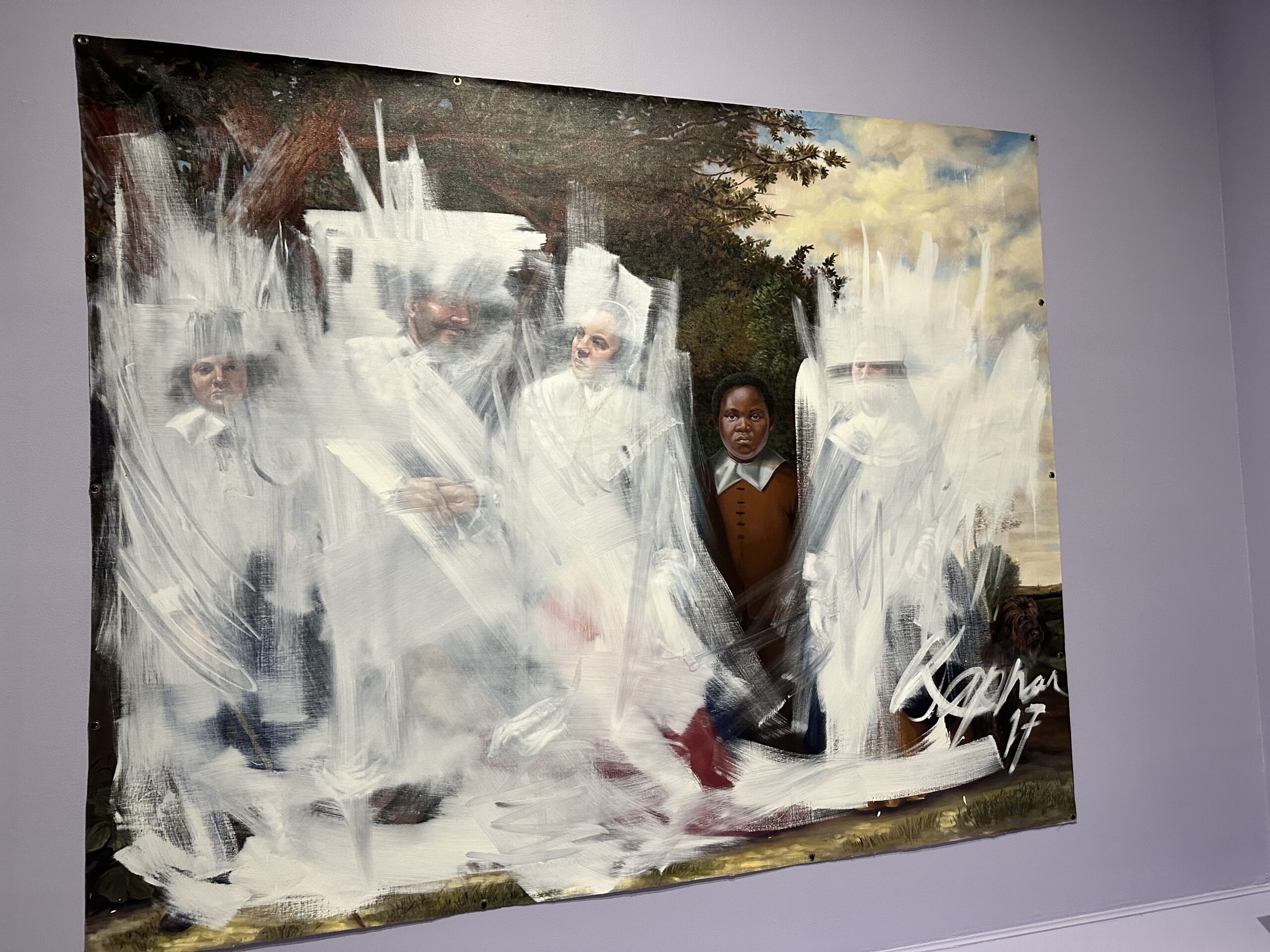
Shifting the Gaze
Titus Kaphar
2017
What do you see going on in this work of art? Is there a story depicted?
We can see that the painting is clearly showing us the black boy. As written on the description, this is a family with a black boy thought to be their servant. There are two stages to this artwork, this being the second in which he covered the other people to give the focus of attention to the black boy.
What different visual elements (ie: line, color, light, proportions, scale, composition, media type etc.) do you notice, and how do they help you make sense of the artwork?
The very first thing we saw in this artwork is the white brushstrokes. Most of us had the expression of “wow” because of how fast we understood it.
How does this object compare to other objects, stories, or ideas you already know about?
We already know about the history of colored people and how we’ve always been under the white people. Also, compared to other artworks, this is bold and provocative, drawing people’s eyes to this specific artwork.
What choices do you think the museum made about the object’s display?
If you haven’t entered the room, you wouldn’t be able to see the artwork but as soon as you do, it draws your attention. I think it having a powerful meaning also goes with how it is kinda of hidden. The spot it was put in is perfect.
Group Members
Monique Simpson, Angelique York, Cassandra Tirado
-
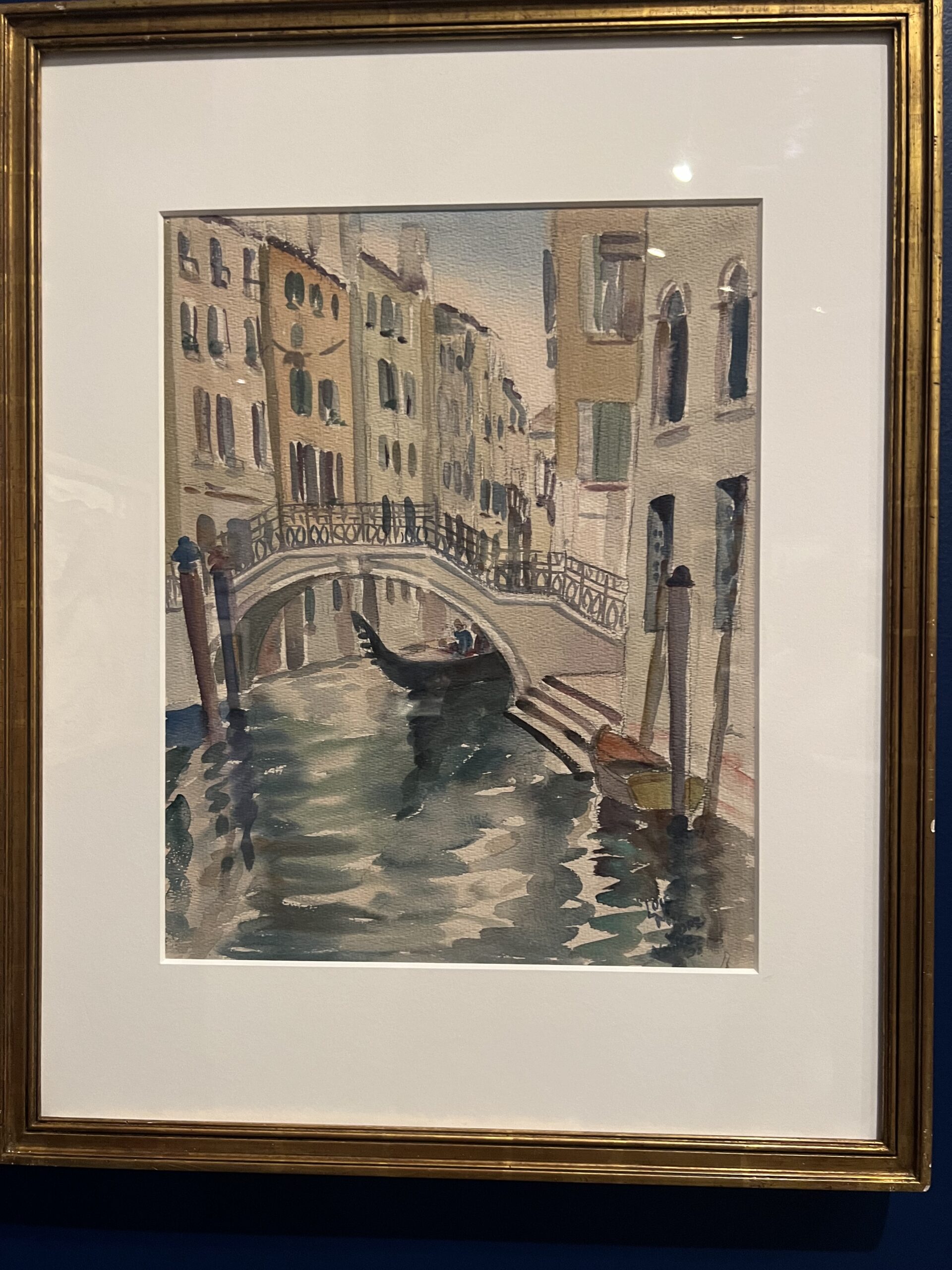
The Bridge
Loïs Mailou Jones
1938
What choices do you think the museum made about the object’s display?
The museum chose to display this object in a room full of other artworks depicting the presence of water and this theme was effectively united through the blue walls, emphasizing this message.
Group Members
Suzanna, Gianna, Gaby, Aidan, Matt, Sasha
-
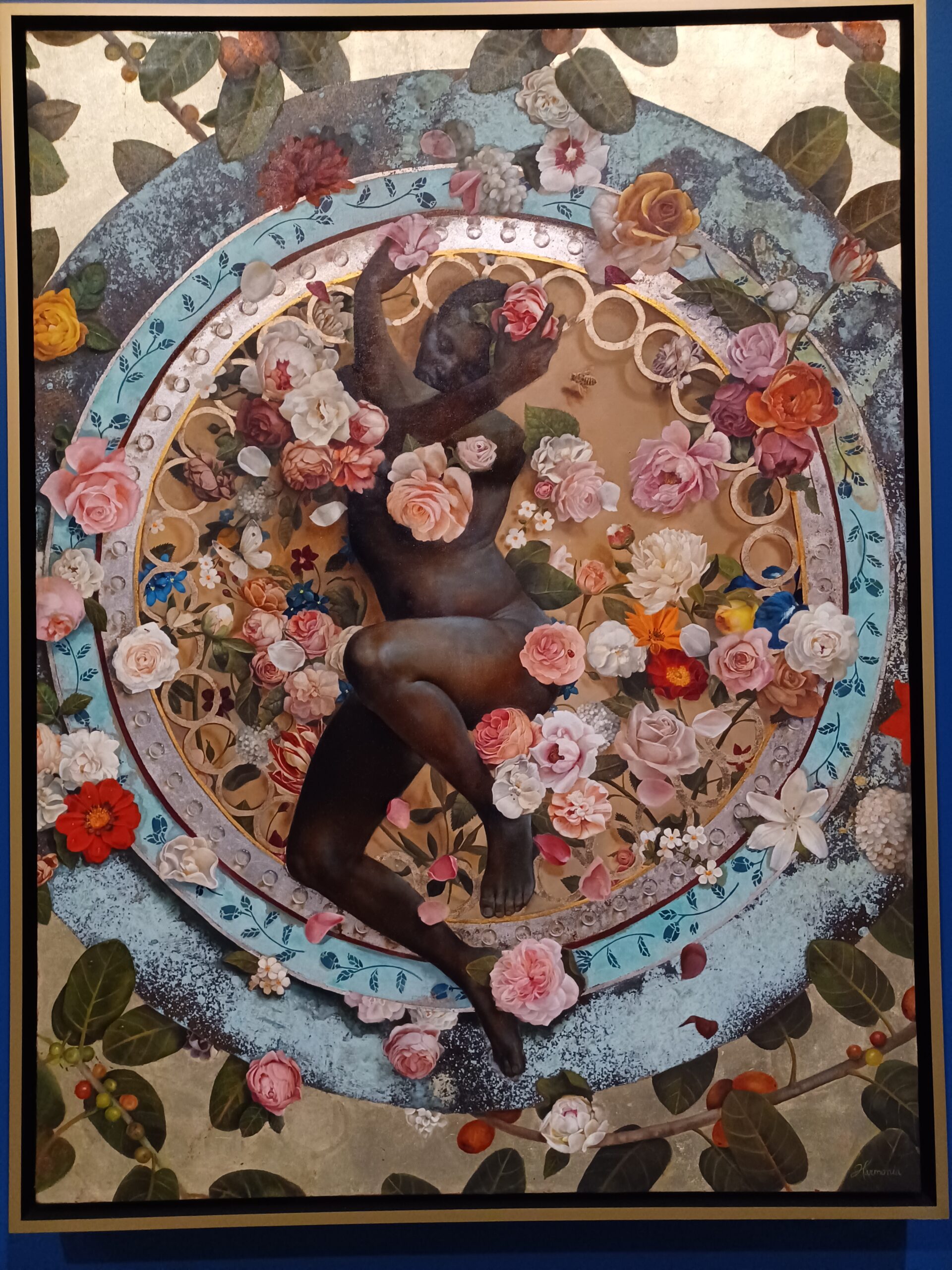
Ori
Harmonia Rosales
2022
What do you see going on in this work of art? Is there a story depicted?
In this painting, there is a woman relaxing among a variety of flowers. A bee is also seemingly pollinating the flowers, which allows her to be more at peace and in harmony with herself.
What different visual elements (ie: line, color, light, proportions, scale, composition, media type etc.) do you notice, and how do they help you make sense of the artwork?
The color of the woman's skin tone is juxtaposed by the vibrancy of the flowers, making her stand out in the piece. Additionally, the fact that she is shown without clothing symbolizes that she is showcasing her real self, rather than hiding her identity behind clothes. Moreover, the use of rings and circles, as opposed to harsh, direct lines, reinforces the idea of being at peace with oneself.
How does this object compare to other objects, stories, or ideas you already know about?
One of the main focuses of the artwork is the emphasis on flowers, and flowers are generally seen as positive aspects of nature. As a result, this piece reinforces the idea that flowers are calming and relaxing.
What choices do you think the museum made about the object’s display?
The museum decided to place the piece, which contains bright flowers, in this particular room because the other paintings and displays are all of flowers.
Group Members
Emily Hu and Kayla Gonzalez
-
The Bridge
Loïs Mailou Jones
1938
What do you see going on in this work of art? Is there a story depicted?
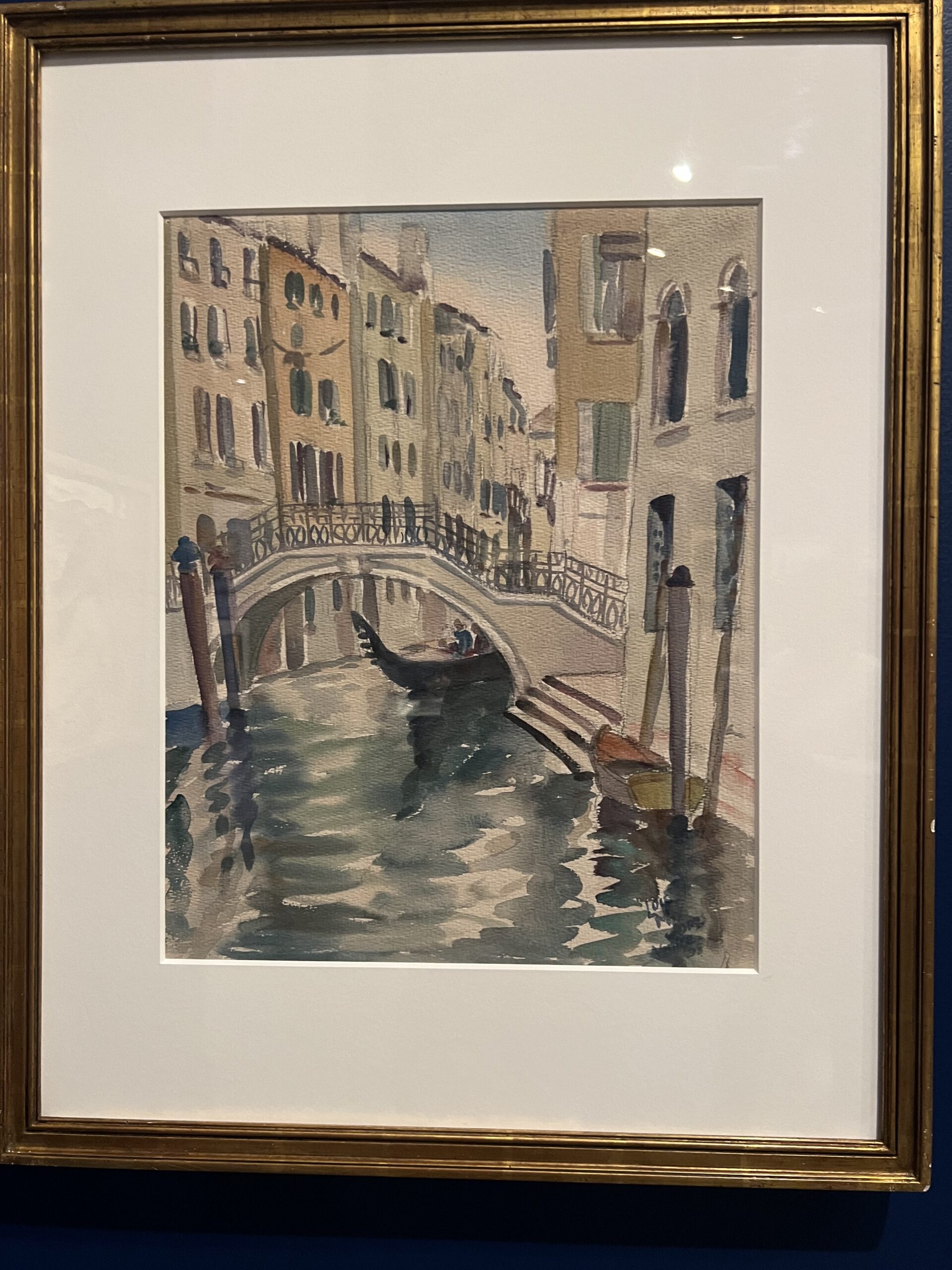
In this work of art, there is a boat passing under a bridge over a body of water. The setting seems to be taking place in Venice, Italy. The story depicted regards the subtle coloration and shifting effects of light on the city’s iconic and imperiled waterways.
What different visual elements (ie: line, color, light, proportions, scale, composition, media type etc.) do you notice, and how do they help you make sense of the artwork?
I notice the use of various watercolors, depicting a Venetian canal and the shifting interest of the artist from flickering lights of Impressionism to Post-Impressionism.
How does this object compare to other objects, stories, or ideas you already know about?
This object compares to the pictures of Venice I see in real life along with the ideas of water applications into art.
What choices do you think the museum made about the object’s display?
The museum chose to incorporate this piece of art within the blue section full of artworks depicting the presence of water.
Group Members
Suzanna, Gianna, Aidan, Sasha, Math, Gaby
-

The Great Deep
Frederick J. Waugh
1861-1940
What do you see going on in this work of art? Is there a story depicted?
The painting is less of a story and more of way to showcase a specific form of art to create waves.
What different visual elements (ie: line, color, light, proportions, scale, composition, media type etc.) do you notice, and how do they help you make sense of the artwork?
We belive that the waves look more glossy and rough compared to other paintings we looked at and this looked more real. At first we thought the jagged edges were to signify mountains but the foam and sky soon made us realize that this was untrue.
How does this object compare to other objects, stories, or ideas you already know about?
Well in previous paintings, we saw waves and such as much more calmer, not so jagged and strong. And they never really were meant to be the focal point of the painting but instead an background meant to accentuate something else or other.
What choices do you think the museum made about the object’s display?
They chose to make it one of the first paintings visitors see when the enter the room.
Group Members
Octavia Singleton
-
Y
Z
Z
What do you see going on in this work of art? Is there a story depicted?
X
Group Members
X
-
Stained Glass Through Locked Doors
Unknown
Unknown
What do you see going on in this work of art? Is there a story depicted?
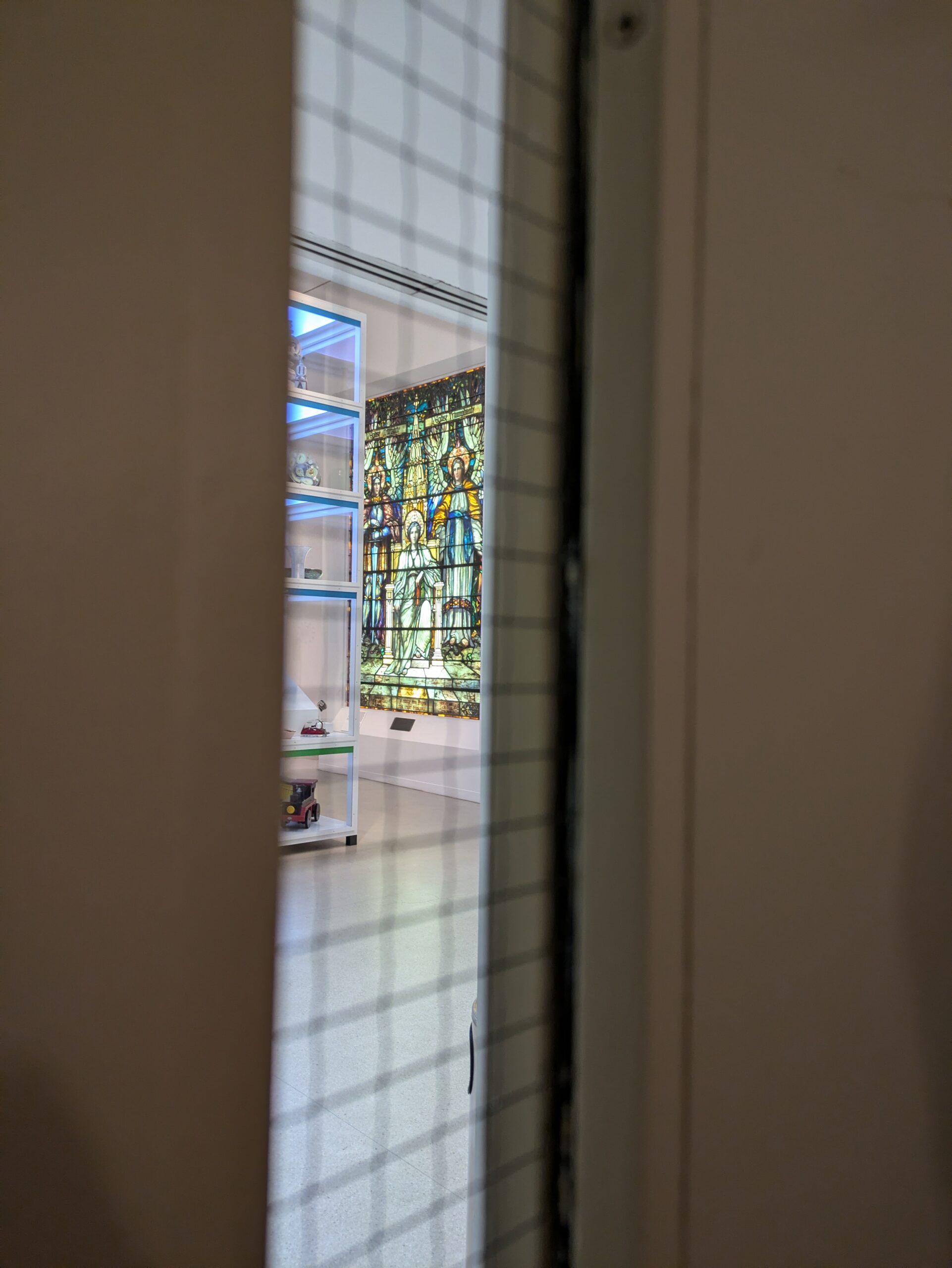
The fourth floor was closed to us today. Through a small window in the staircase, though, we were allowed a glimpse into the gallery, containing religious artwork as well as modern reinterpretations of renaissance pieces.
What different visual elements (ie: line, color, light, proportions, scale, composition, media type etc.) do you notice, and how do they help you make sense of the artwork?
Although we were only allowed a glimpse into the gallery through the door, different windows and angles of approach allowed different views into multiple pieces. A multimedia exhibition became a single piece as our observation and perspective of it was restricted.
How does this object compare to other objects, stories, or ideas you already know about?
Compared to other objects in the museum, crowded with descriptive plaques and information to be gained about each peace, this pushed us individually to employ our more limited perspectives to not only physically perceive the art but also to interpret it.
What choices do you think the museum made about the object’s display?
We can't speak on why that particular floor was closed to us, but the unique circumstances led to a special method of interpreting the pieces we saw.
Group Members
Andrew Kokolakis, Tomas Ryan, Nour Sulaiman, Zoe Rodriguez Ladias, Sophia Remorca, Katherine Reshetnikov

