
This is a gallery curated by you, the students taking part in our Night at the Museum. Make it your own!
To have your own response appear on this page, form a group and submit a response.
-
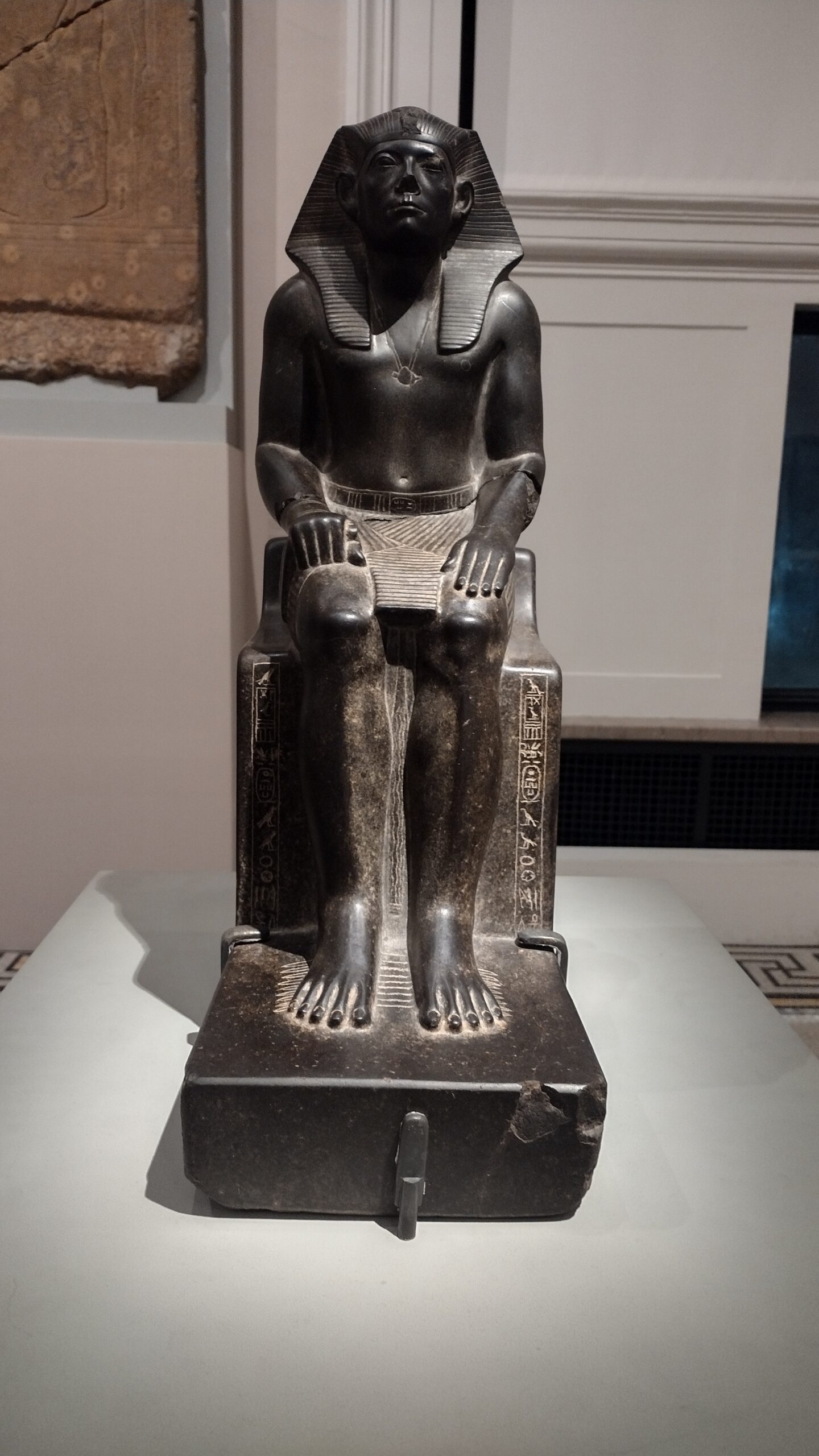
King Senwosret III
Unknown
Circa 1836-1818 BCE
What do you see going on in this work of art? Is there a story depicted?
In this piece, I see an ancient Egyptian pharaoh being depicted in a position of reverence and respect. He is sitting up straight, in a very idealistic style, with a benevolent and wise expression. Both the seated pose and the pharaoh's outfit are traditional, according to the plaque, but the expressiveness of the subject's face was at the time a recent development.
What different visual elements (ie: line, color, light, proportions, scale, composition, media type etc.) do you notice, and how do they help you make sense of the artwork?
The artwork is depicted in an extremely idealistic style. Ancient Egyptians idolized their leaders, whose power was affirmed through the gods. The pharaohs were practically gods unto themselves and had to be depicted as such, with no faults or imperfections. The material used is granite, and the minor details and embellishments stand out against the darker material, creating a contrast of light against dark so that they can be easily noticed. There are also tiny hieroglyphics etched onto the sides of the throne, which could be either prayer or praise. This helps me to understand the purpose and intent behind creating such a statue.
How does this object compare to other objects, stories, or ideas you already know about?
I am taking core art history, and a lot of the features of the ancient Egyptian artwork are things we have recently finished learning about in class. The composition, poses, appearance, and materials etc are all familiar and relevant concepts, and that background knowledge helps me better understand why these artifacts were created. Art in ancient Egypt was not usually created for pleasure or enjoyment. Rather, artists were trained from a young age to create art as forms of worship. This statue reminds me of how artists used their talent to glorify their leaders and culture, preserving their values for us to analyze millennia later
What choices do you think the museum made about the object’s display?
The museum chose to display it in a room with warm, low lights so that the colour of the materials used would stand out, and that the small details and engravings on the statue would be illuminated and not hidden in shadow. It is not covered in a glass case like some of the other statues that are made of calcite, probably because those materials are more fragile and vulnerable to erosion and are just more sensitive in general.
Group Members
Marooha Atif
-
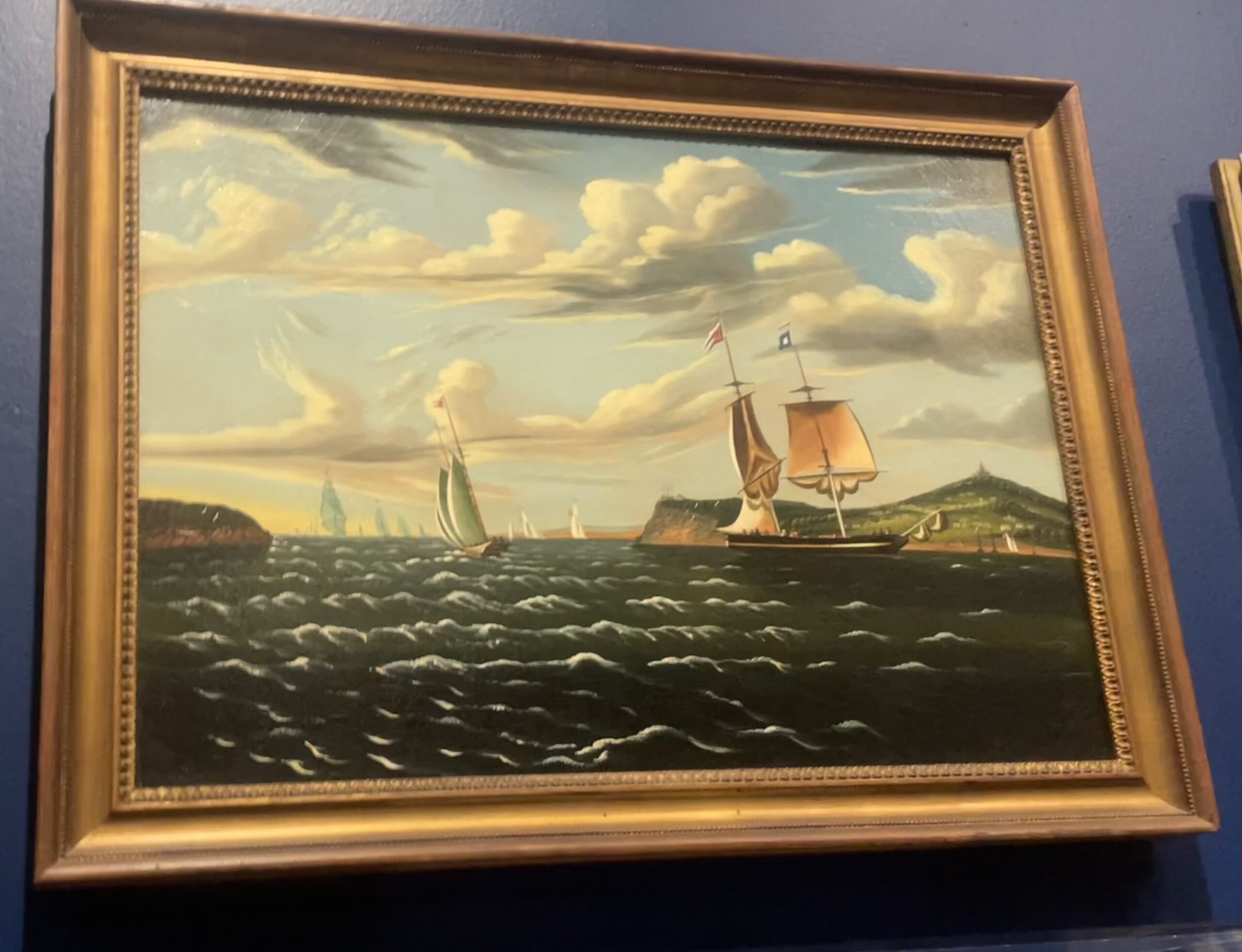
Staten Island and the Narrows
Thomas Chambers
1835-55
What do you see going on in this work of art? Is there a story depicted?
The painting depicts the view of New York during the early to mid 1800s from the Narrows between Brooklyn and Staten Island. This painting focused on the idea of arrivals of different groups and peoples into New York and the feeling new arrivals feel as they reach New York.
What different visual elements (ie: line, color, light, proportions, scale, composition, media type etc.) do you notice, and how do they help you make sense of the artwork?
The painting uses various warm tones to depict a dusk-like period in the day, using white lines to show waves flowing in the water. The boats was tinted orange, showing this does of dusk as they travel through the Narrows. There are various boats making their way through the Narrows, as they approach New York City. The clouds are also shaded and flowing in a way that shows absence of wind blowing through the Narrows.
How does this object compare to other objects, stories, or ideas you already know about?
The painting shows the experiencing of arriving to New York, showing a unique and interesting perspective on the feeling of arriving to new places. May of the other objects and paintings show different perspectives and ideas on what New York is and how it feels, and this painting definitely shows the idea of bringing fresh eyes to New York.
What choices do you think the museum made about the object’s display?
The museum like put this paining in its specific location to depict this idea of coming into New York for the first time. It was put there because it connected to New York, and by standing at the beginning of the New York Displays.
Group Members
Michelle Rakhamimov, Barbara Pacheco, Kevin Perez
-
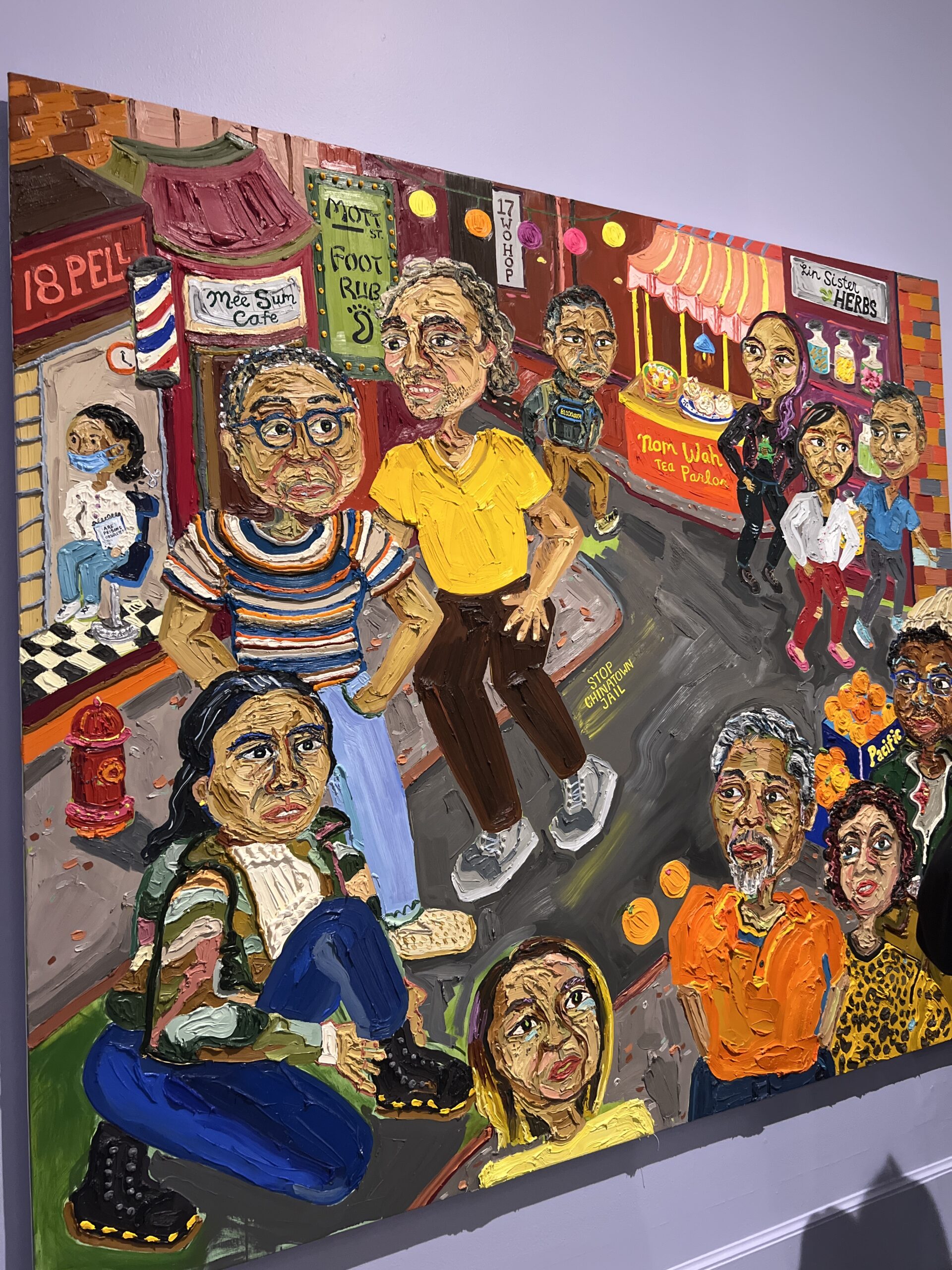
Chinatown block watch 2022
Susan Chen
2022
How does this object compare to other objects, stories, or ideas you already know about?
This painting is definitely larger than the other paintings and it also feels more 3D than the others.
Group Members
Mari Khan, Emanuel Zecena, Kelly Gonzalez
-
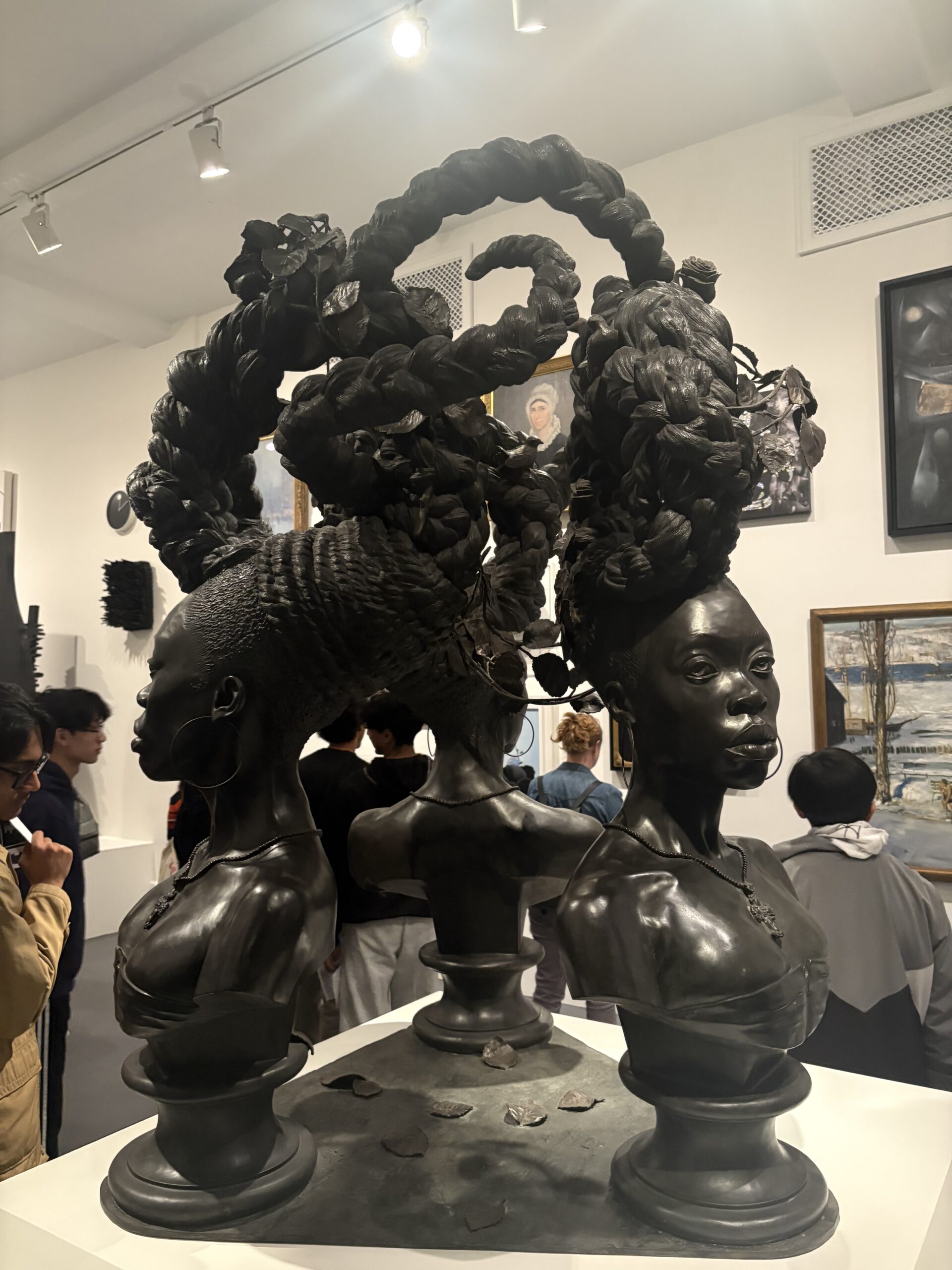
Bound
Kehinde Wiley
2014
What do you see going on in this work of art? Is there a story depicted?
We see three Black women with braided hair that intertwine with each other. It forms a bond between each woman depicting a sort of sisterhood. The story seems to align with one of empowerment, as the women embrace their hair, bodies, and culture. There are also leaves and roses which could symbolize nature and tells the story of embracing one’s natural features.
What different visual elements (ie: line, color, light, proportions, scale, composition, media type etc.) do you notice, and how do they help you make sense of the artwork?
The sculpture is crafted using some sort of black marble, which stands in constant with the typical white marble and faces seen in sculpture.
How does this object compare to other objects, stories, or ideas you already know about?
Not many art pieces, let alone sculptures, are made depicting Black bodies and faces. The cutoff at the chest also helps in highlighting the features that are most looked down upon in society: Black hair and faces. It doesn’t show the entire body like many White sculptures do. We also found a comparison between the Egyptian statues seen in the 3rd floor. These sculptures cover the face with a mask, whereas Wiley aims to embrace the natural face.
What choices do you think the museum made about the object’s display?
It’s placed in the center right at the start of the room putting it on full display—it calls the attention of any viewer. Not to mention, this shows how the faces aren’t being hidden away in some corner and are instead bold and present. The piece was also placed among other works of Wiley which focus on Black empowerment and faces.
Group Members
Briant DeJesus, Rosa (Kennedy) Betances
-
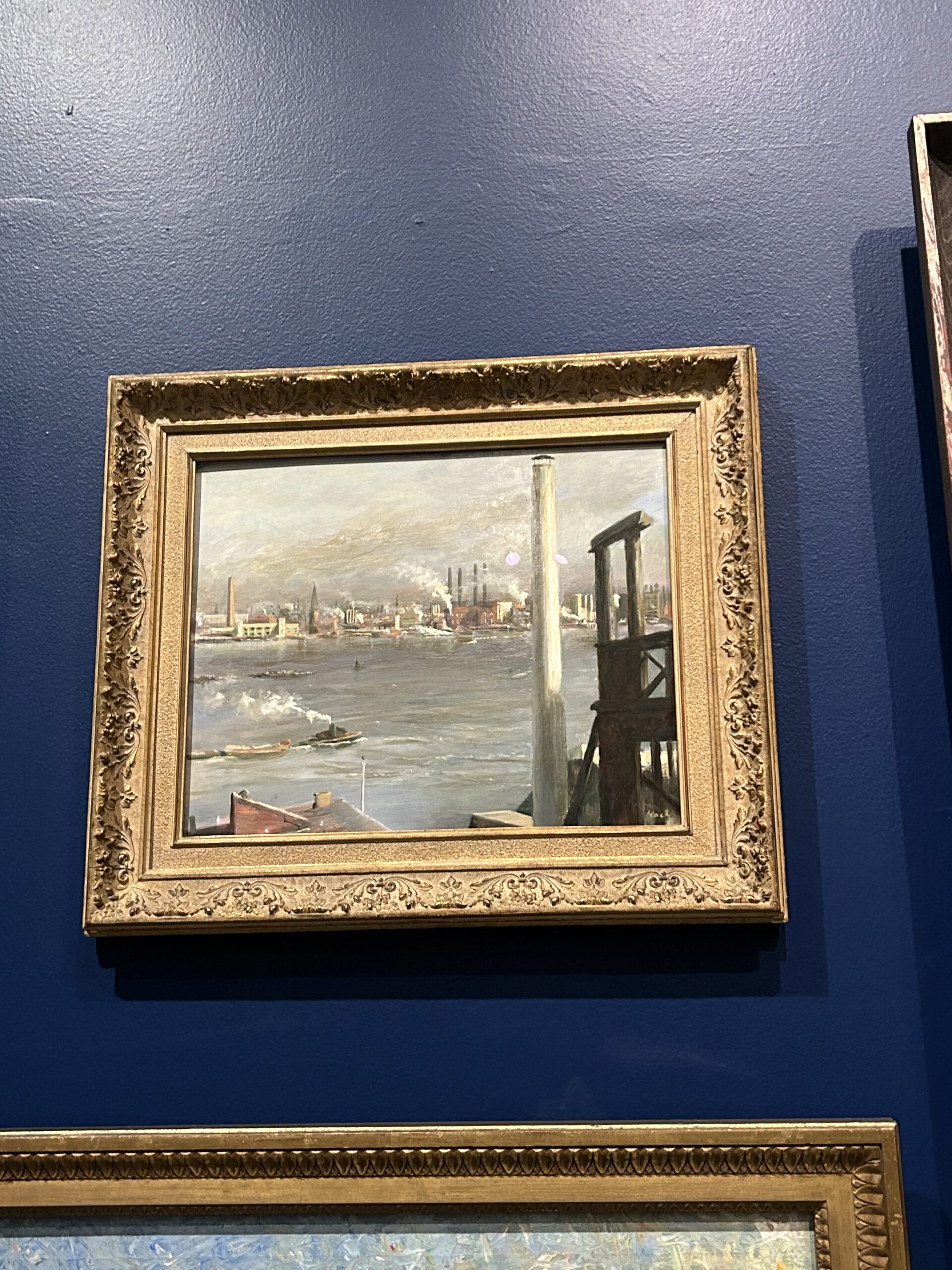
East River
John Koch
1935
What do you see going on in this work of art? Is there a story depicted?
We see the story of the expansion of the city for better and for worse. The factories and smokestacks are representative of the economic growth, but at the same time pollute the East River.
What different visual elements (ie: line, color, light, proportions, scale, composition, media type etc.) do you notice, and how do they help you make sense of the artwork?
The factories and the water blend together in strong hues of gray. The forefront of the painting is not the focus but the farther shore. The sky and water have taken on the same smoky hue. The division between them is what has made them that way.
What choices do you think the museum made about the object’s display?
This represents perhaps the rock-bottom form of what used to be a source of life for indigenous people. In conversation with the other paintings of rivers and bodies of water, a tragic story of violence and colonialism is told.
Group Members
Morgan Rose Bent, Ami Dube
-
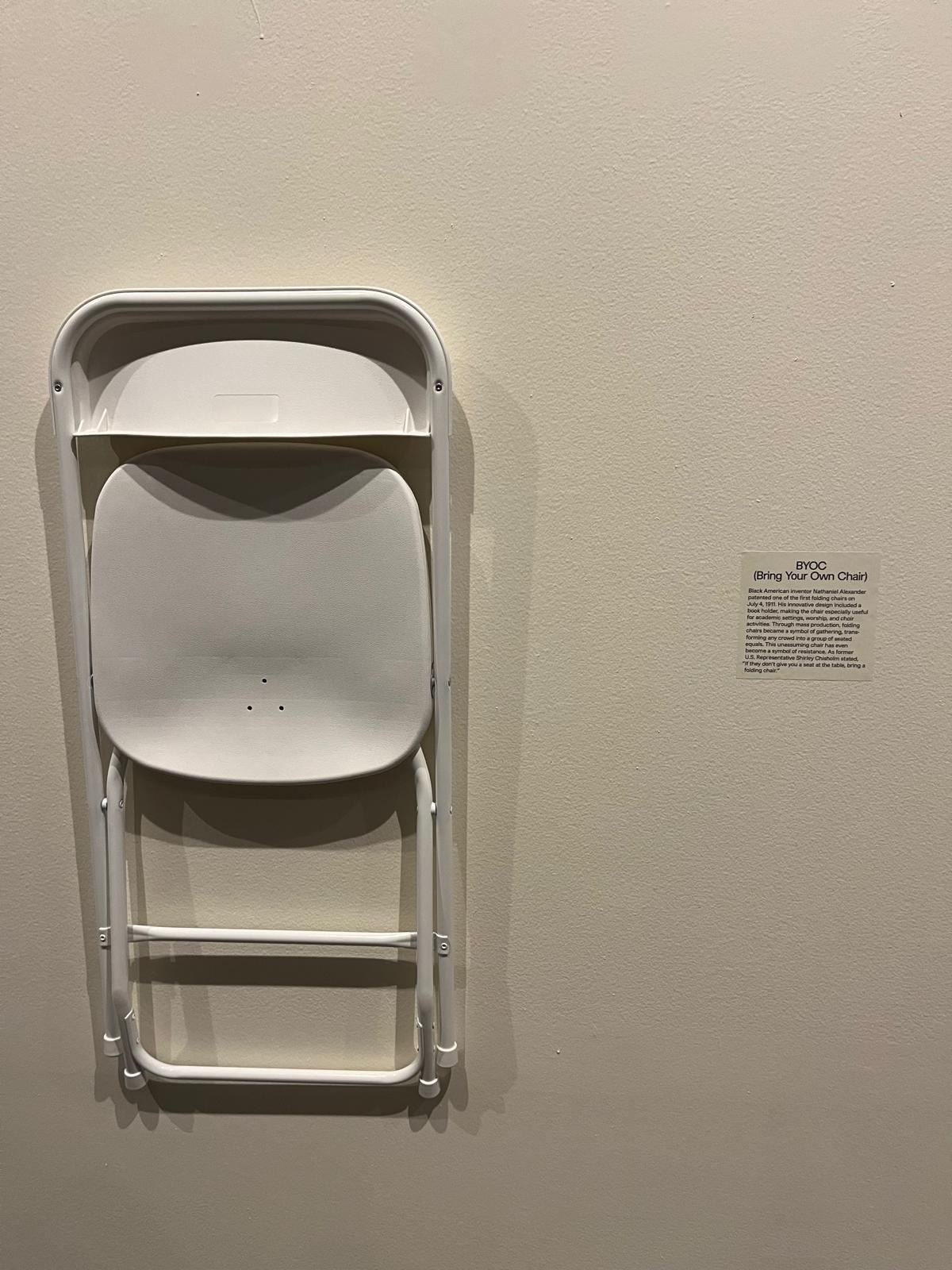
BYOC (Bring Your Own Chair)
Nathaniel Alexander
1911
What do you see going on in this work of art? Is there a story depicted?
It’s a white chair, and the light hitting it offers many different ways of looking at the depth and contrast. The shadows represent a sense of loneliness, because you are providing your own chair. It’s showing a lack of community and neighborhood
What different visual elements (ie: line, color, light, proportions, scale, composition, media type etc.) do you notice, and how do they help you make sense of the artwork?
It’s made of hard plastic, which is white in this case, but there are so many other shapes and sizes and colors
How does this object compare to other objects, stories, or ideas you already know about?
It’s unique and abstract. It’s very open to interpretation by the viewer
What choices do you think the museum made about the object’s display?
The fact that they hung it on the wall instead of having it opened on the chair. Shoes the ability to change it’s functionality within a space
Group Members
Rivka Saperstein, Nava Talitian, Adina Tanner, Benjamin Alter, Eitan Rochwarger, Ethan Braunstein, Hannah Zakry, Andrew Berger, Yaron Rahmani, Paige Mayer
-

Untitled
Andrea Chung
2022
What do you see going on in this work of art? Is there a story depicted?
Two, ghost-like hands that seem to protrude through the wall, tell the Afrofuturist myth of Drexciya, an underwater kingdom populated by amphibious creatures that are descendants of unborn children of pregnant enslaved women that ended up thrown overbord along the Middle Passage. The hands look like they have spend a lot of time under water as they are showing signs of aging underwater. Under the coating, the hands are white, alluding to the supernatural aspect. They hold crystals wrapped in beaded strands and shells. One of the falangs on the right hand's index finger is broken off.
What different visual elements (ie: line, color, light, proportions, scale, composition, media type etc.) do you notice, and how do they help you make sense of the artwork?
The texture and the color of the blue-green pigments help the audience understand that the hands spended a lot of time under water. Usage of crystals and shells give more context to the artwork. Also, because the hands hold them in the way that suggests that they can fall off, we can understand that the idea is not in their possession by hands but in their meaning. The beaded strings are composed in a specific way. Both of them wrap the pinkie, which suggests that they have a deeper meaning. The way hands holds the "treasures" may allude to the themes of power.
How does this object compare to other objects, stories, or ideas you already know about?
The artwork evokes themes of labor, identity, and the passage of time, often reflecting on the histories and stories embedded in everyday objects. This work can be compared to traditional symbols of labor, like the calloused hands of workers, representing the physical and emotional toll of toil.
What choices do you think the museum made about the object’s display?
The Brooklyn Museum made the decision to place them so high that we can't see what is in the hands exactly. The artwork is all alone and is not closely surrounded by other artworks. The light is also directed right on them, creating a long, well-defined shadow below.
Group Members
Sasha Shablii, Natalia Urbáez, Ariana Ashby
-
Shifting the Gaze
Titus Kaphar
2017
What do you see going on in this work of art? Is there a story depicted?
Certain subjects are crossed out, all of them being White except for one you g man who is visibly shown and is Black
What different visual elements (ie: line, color, light, proportions, scale, composition, media type etc.) do you notice, and how do they help you make sense of the artwork?
There is paint being slashed and splattered on the canvas. The white paint makes a good contrast with the Black skin.
How does this object compare to other objects, stories, or ideas you already know about?
It shows us that people can be overlooked in paintings and history even if they make up the whole image.
What choices do you think the museum made about the object’s display?
It was important to showcase underpresented groups and people
Group Members
Rameshwar, Makula, Chennai, Ruhma, Tasnin
-
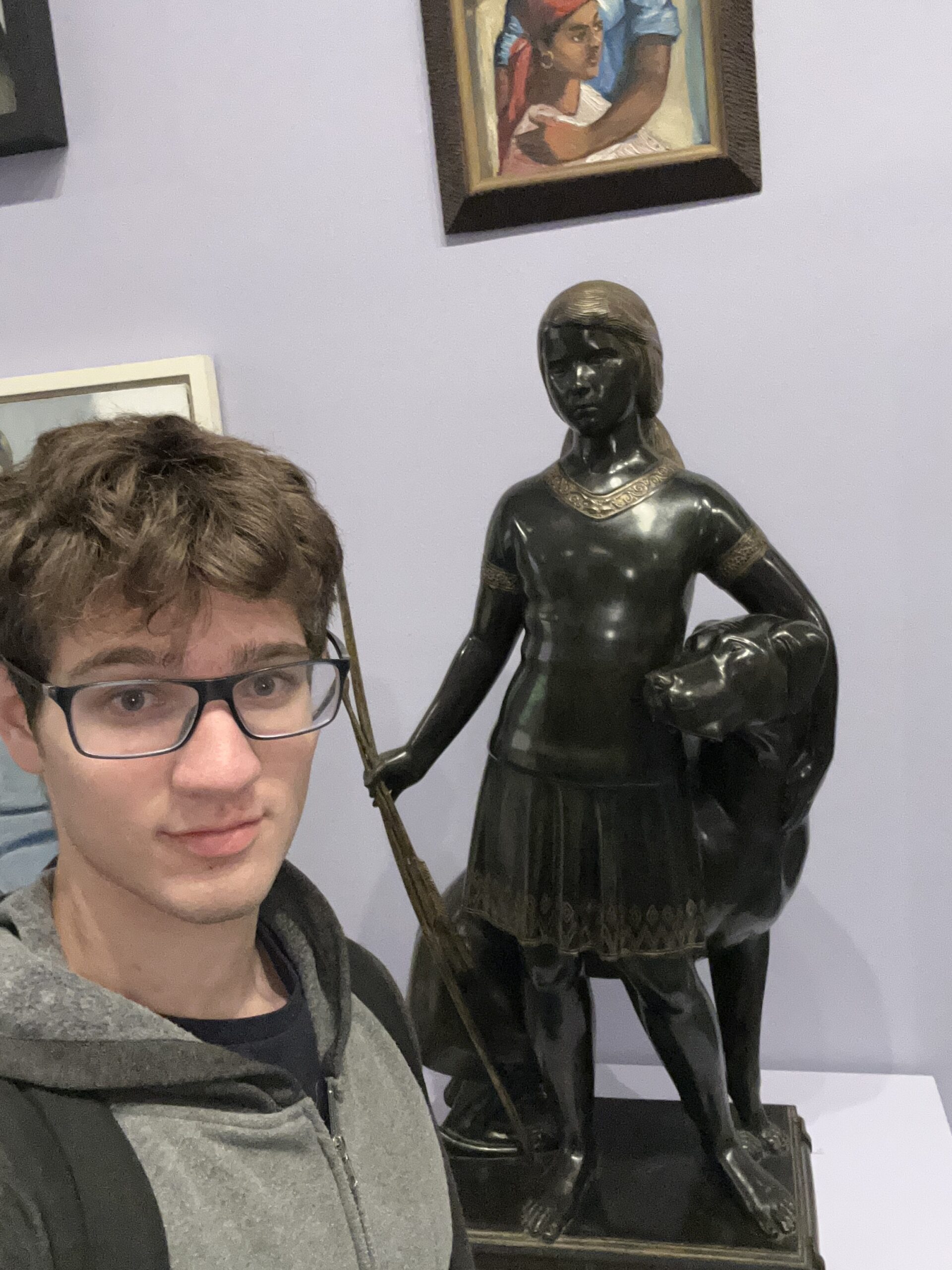
Vivian St. George and Her Dog
Paul Howard Manship
1924
What do you see going on in this work of art? Is there a story depicted?
She’s hunting
What different visual elements (ie: line, color, light, proportions, scale, composition, media type etc.) do you notice, and how do they help you make sense of the artwork?
Very simple, like her lifestyle.
How does this object compare to other objects, stories, or ideas you already know about?
The dog could be out of some myth, she as well.
What choices do you think the museum made about the object’s display?
Part of the native people section
Group Members
Just me (I had class earlier)
-
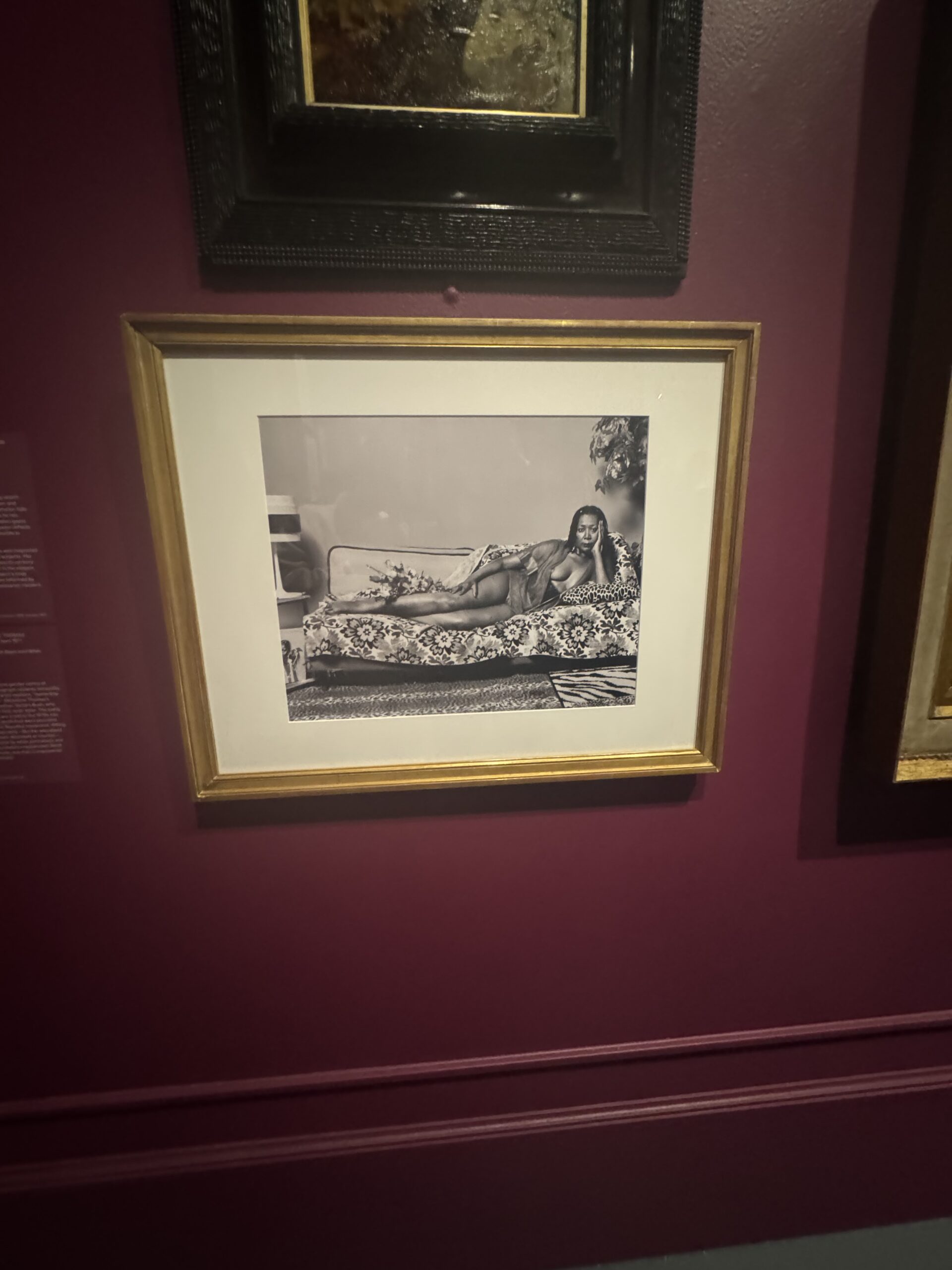
Madame mama bush
Mickalene Thomas
2007
What do you see going on in this work of art? Is there a story depicted?
We find this piece of art fascinating because of how the woman is depicted. In this piece of art the woman is showing feminine grace and sexual beauty. And throughout history black women are stereotyped as aggressive and dirty and not shown as beautiful. Yet the artist did the complete opposite and showed the beauty and grace of black women and that they aren’t what they are depicted as.
Group Members
Sophia Nobile, Ryan Maca, Julia Hurynovich, Zoe George, Nicolle Jimenez

