
This is a gallery curated by you, the students taking part in our Night at the Museum. Make it your own!
To have your own response appear on this page, form a group and submit a response.
-

Shifting the Gaze
William K, Jacob’s Jr
2017
What do you see going on in this work of art? Is there a story depicted?
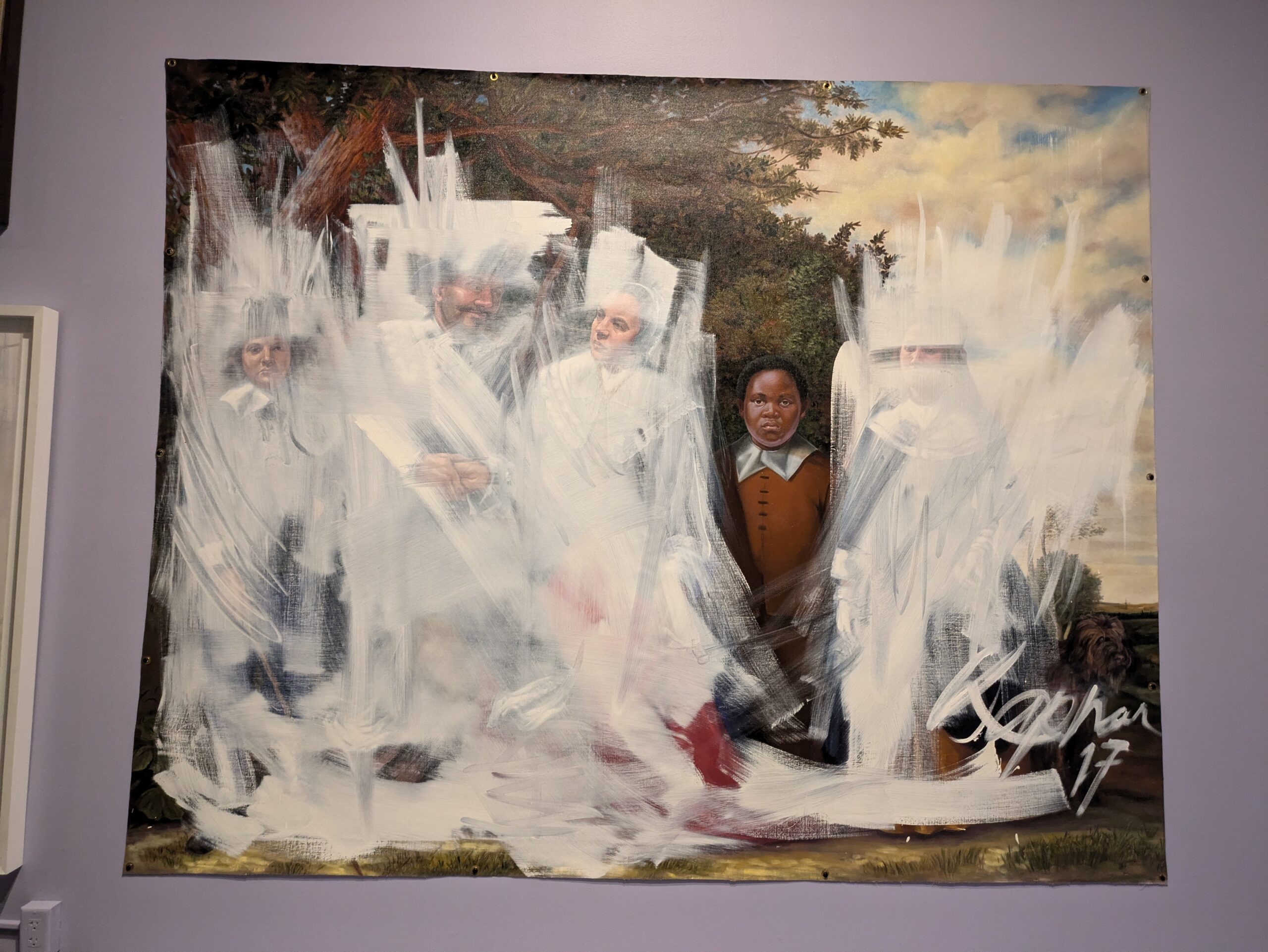
in this painting the story we saw depicted is one of oppression and slavery. the black boy represented within the story is shown to be upset while the white people in the story are brushed over with white paint. we interpreted this 2 different ways. one way was that we saw this was that the people who created this saw the artist as the white people as pure and saviors of the black boy within the story. another way it was interpreted was that the shite paint kinda looks like KKK cloak and it was suppose to show the transition from how slavery has changed over time to be less subtle.
What different visual elements (ie: line, color, light, proportions, scale, composition, media type etc.) do you notice, and how do they help you make sense of the artwork?
The white paint is very see through on the faces. The strokes are very messy and gives kind of an urgency to cover the white people up.
How does this object compare to other objects, stories, or ideas you already know about?
This artwork compares to others in the sense that it takes a different approach to depicting the everlasting impact slavery has had on people. from the totally ovoid to the little subtleties that come that still exist today.
What choices do you think the museum made about the object’s display?
one choice that definitely had to be mad was the choice of where this artwork was to be placed. in this sense we believe that the museum knew the artwork would have the most impact being surrounded by art from the african american community
Group Members
Mamadou Sanoh Leython Vazquez, Haziel Panton, Tyler Brown, Grismeidi Romano, Emma Ransom,
-
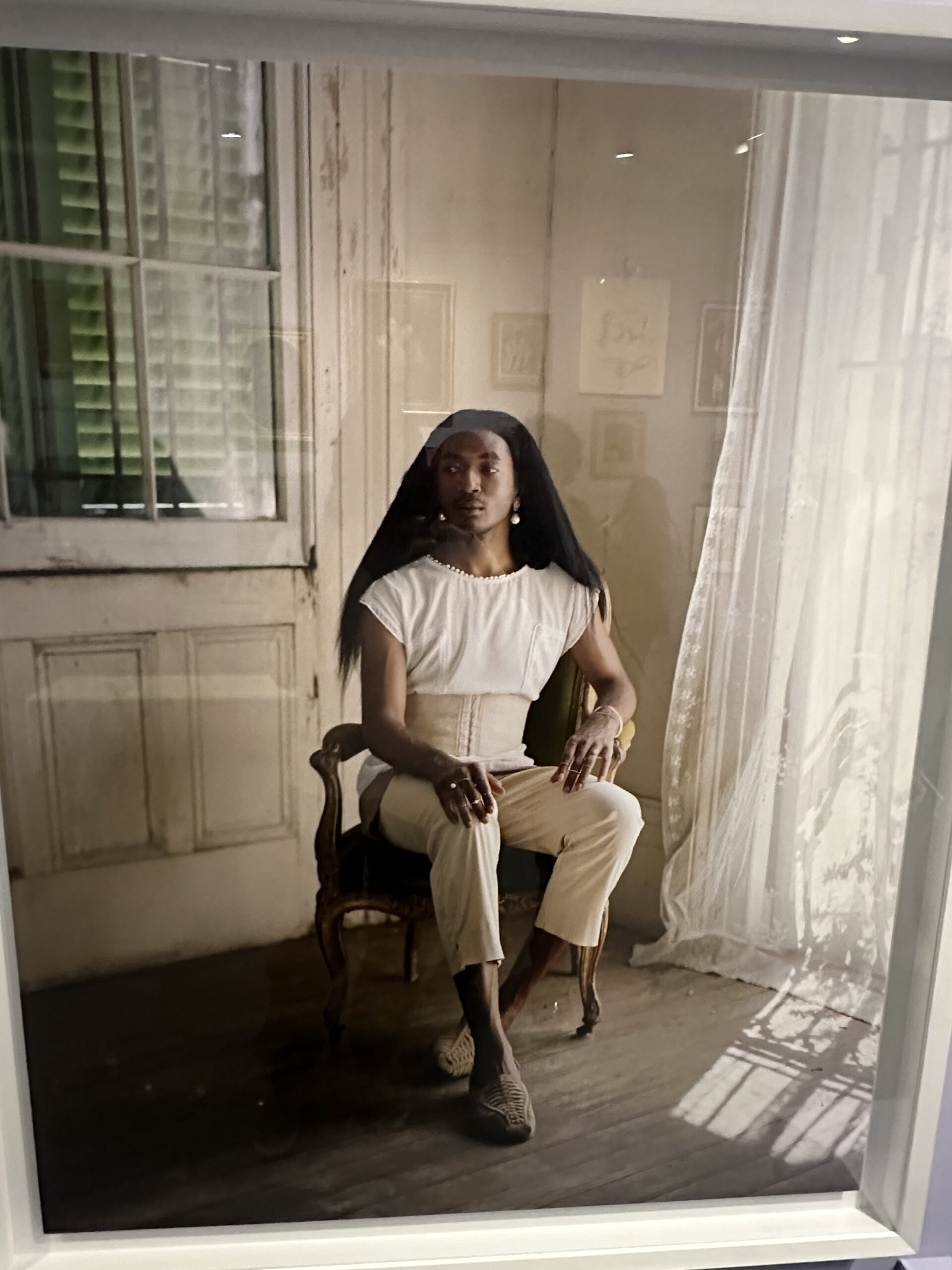
Keni, New Orleans
Alec Soth
2018
What do you see going on in this work of art? Is there a story depicted?
Keni sits elegantly and pridefully on a chair in what might be their home. They look away from the camera with an uninterested, stern look.
What different visual elements (ie: line, color, light, proportions, scale, composition, media type etc.) do you notice, and how do they help you make sense of the artwork?
The lighting compliments Keni’s outfit and adds more regality to the photo. The fact that it’s a photograph also helps it stand out from the surrounding works. The main color is white, and other shades close to it.
How does this object compare to other objects, stories, or ideas you already know about?
With the theme being witness, this one is a story of self-expression and uplifting one’s self.
What choices do you think the museum made about the object’s display?
Surrounded by other clear paintings, Keni’s is more realistic because it’s a photograph.
Group Members
Judd, Oliver, Steevens
-

Mary Magdalene
Richard Saltonstall Greenough
1869
What do you see going on in this work of art? Is there a story depicted?
The women looks to be in distress because she has her right arm over her head like she is in pain. Her garments are flowing down. And she seems to be thinking of ways to resolve her problems.
Group Members
Keanna Lewis, Margot Dragos, Sangeeta Chakraborty, Katherine Reshetnikov, Ruth-Shamard Thomas
-
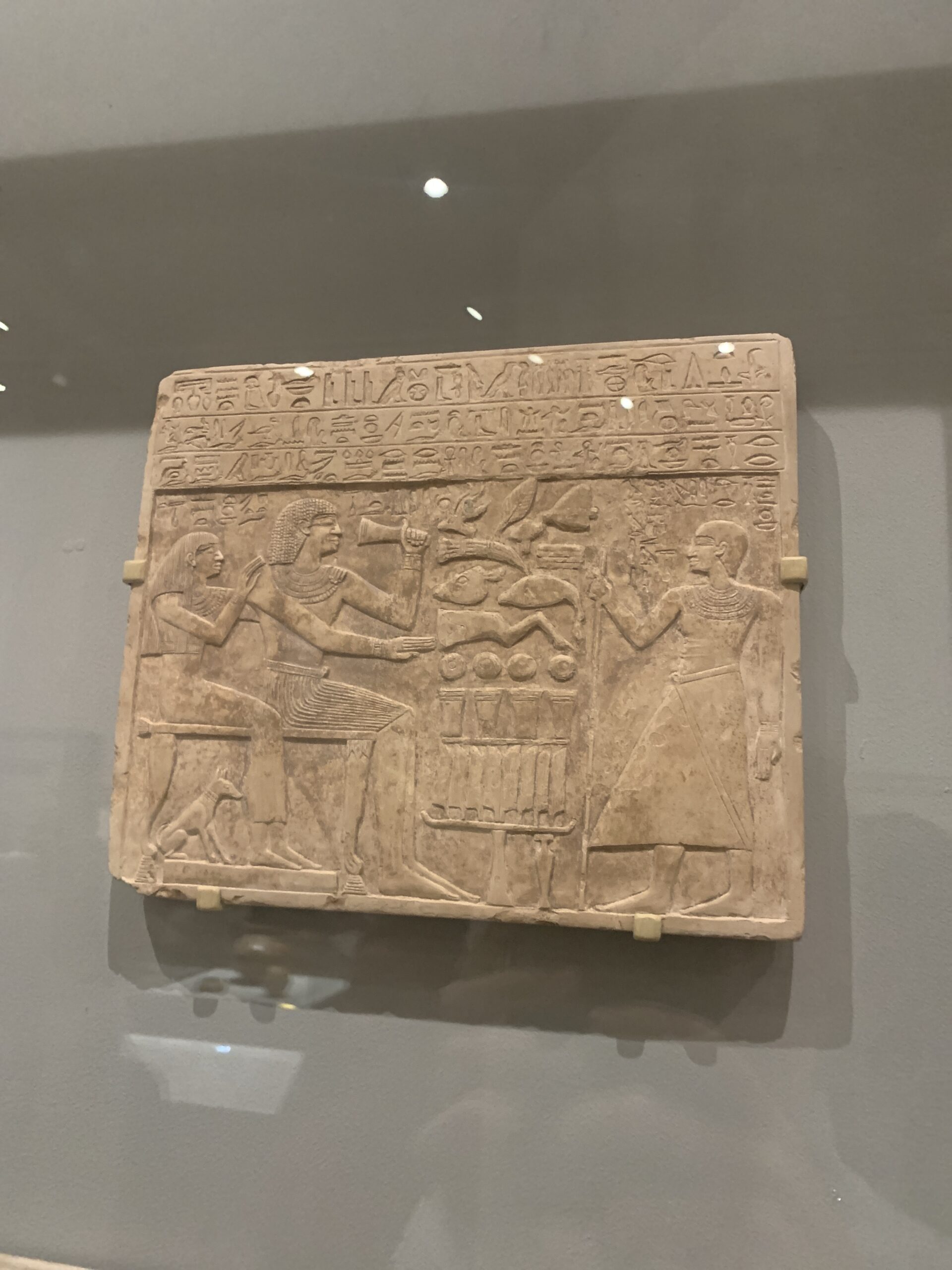
Funerary Stela of Intef and Senettakh
Qurnah in western thenbes
2065-2000
What do you see going on in this work of art? Is there a story depicted?
You can see two parents with a dog under their feet and a son facing them.
What different visual elements (ie: line, color, light, proportions, scale, composition, media type etc.) do you notice, and how do they help you make sense of the artwork?
The emphasised lines and different sized lines add levels of details and texture.
How does this object compare to other objects, stories, or ideas you already know about?
The hieroglyphics on the top of the piece remind us of other Egyptian pieces and the style of art reminds us of other works in stone like this.
What choices do you think the museum made about the object’s display?
Having it on a wall makes it easier for the public to see and its eye level ness is useful. It is encased in glass so it doesn’t get damaged.
Group Members
Elizabeth Fernandez Betzaly Collado Charlotte Peralta Sunehra Ibnat Jenny Pan, Elola Eckford
-
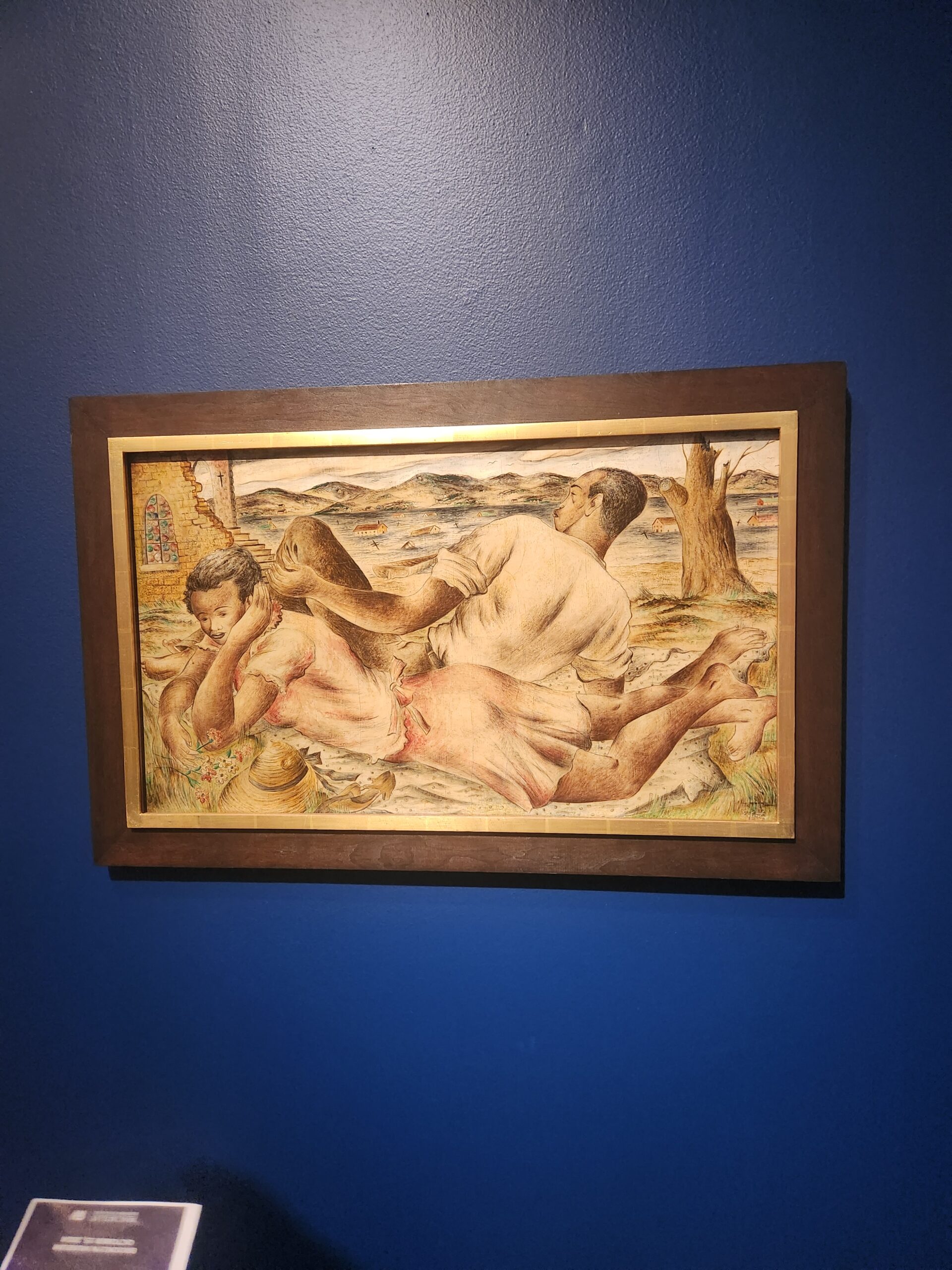
Southern Landscape (Southern Flood)
Eldzier Cortor
1944-1945
What do you see going on in this work of art? Is there a story depicted?
There's a large flood passing through a community, drowning entire houses and telephone poles. A man and woman lay together, with the man looking at the destruction and the woman looks away from the wreckage in a traumatized manner. The story which is depicted is that black Americans have been stranded by a flood and there's a lack of resources being allocated to address their plight.
What different visual elements (ie: line, color, light, proportions, scale, composition, media type etc.) do you notice, and how do they help you make sense of the artwork?
There's a darkness in parts of the mountains and the water. There is also a lot of whitness in the water, in their clothing and the towel. There are bright colors, including red, green and yellow on the church. The whiteness and bright colors contrast with the black skin. This contrast could highlight the emphasis on their race and how their race factors into how they have been affected by the hurricane. The ubiquity of the whiteness represents how color has been robbed from their lives. The man and woman appear larger in comparison to the background of intact houses because it demonstrates how far away they are from the safety possessed by the white, wealthy households.
How does this object compare to other objects, stories, or ideas you already know about?
This object compares to other ideas as far as the parting of the Red Sea because these two people would literally have to part the sea to escape to the wealthy area. The many crosses depicted in the painting which are also telephone poles and the church in the water demonstrates that the religion has fallen because the racial minorities depicted have been trapped. Christianity has failed to liberate black Americans from economic inequality. This painting also relates to the black experience of oppression in Ameria more generally.
What choices do you think the museum made about the object’s display?
This display relates to water as that is the subject of the other paintings in the exhibit. Water represents the passageway between oppression and liberty because it has a cleansing effect.
Group Members
Michael Gardella, Joe Geraci, George Kotsis, Aleksey Moshkov, Elisa Ujkashi, Jackson Mushnick, Anna Kopachevsky, James Finnegan, Shahad Hossain, Niko Profita, Danil Gurshumov, Abdoulaye Diop, Zasu Alvarez, Audrey Young, Brendan Kwan
-
Shifting the Gaze
William K. Jacobs Jr Fund
2017
What do you see going on in this work of art? Is there a story depicted?
The boy is a servant of the family. We can see from the blank stare on his face that he is used to being overlooked by the family. But now, the boy is visible and he is the main character.
What different visual elements (ie: line, color, light, proportions, scale, composition, media type etc.) do you notice, and how do they help you make sense of the artwork?
The fact that the boy is positioned proportionally behind the family makes us understand how the boy was treated by the family. The use of the white color is a contrast to the boy. The white covers up the family, showing that they are in a different world than the boy. Finally the boy is being seen.
How does this object compare to other objects, stories, or ideas you already know about?
This aligns with the ideas of how African Americans were overlooked and mistreated in the past. This painting was chosen because it highlights the idea that no longer will people be neglected but instead they will be a part of the story.
What choices do you think the museum made about the object’s display?
The painting is being displayed in the new American exhibit. It features pieces that express being seen as opposed to just seeing. In this painting we are witnessing the servant being seen for the first time.
Group Members
Deborah Bernfeld, Rebecca Braun, Ayelet Maltz
-
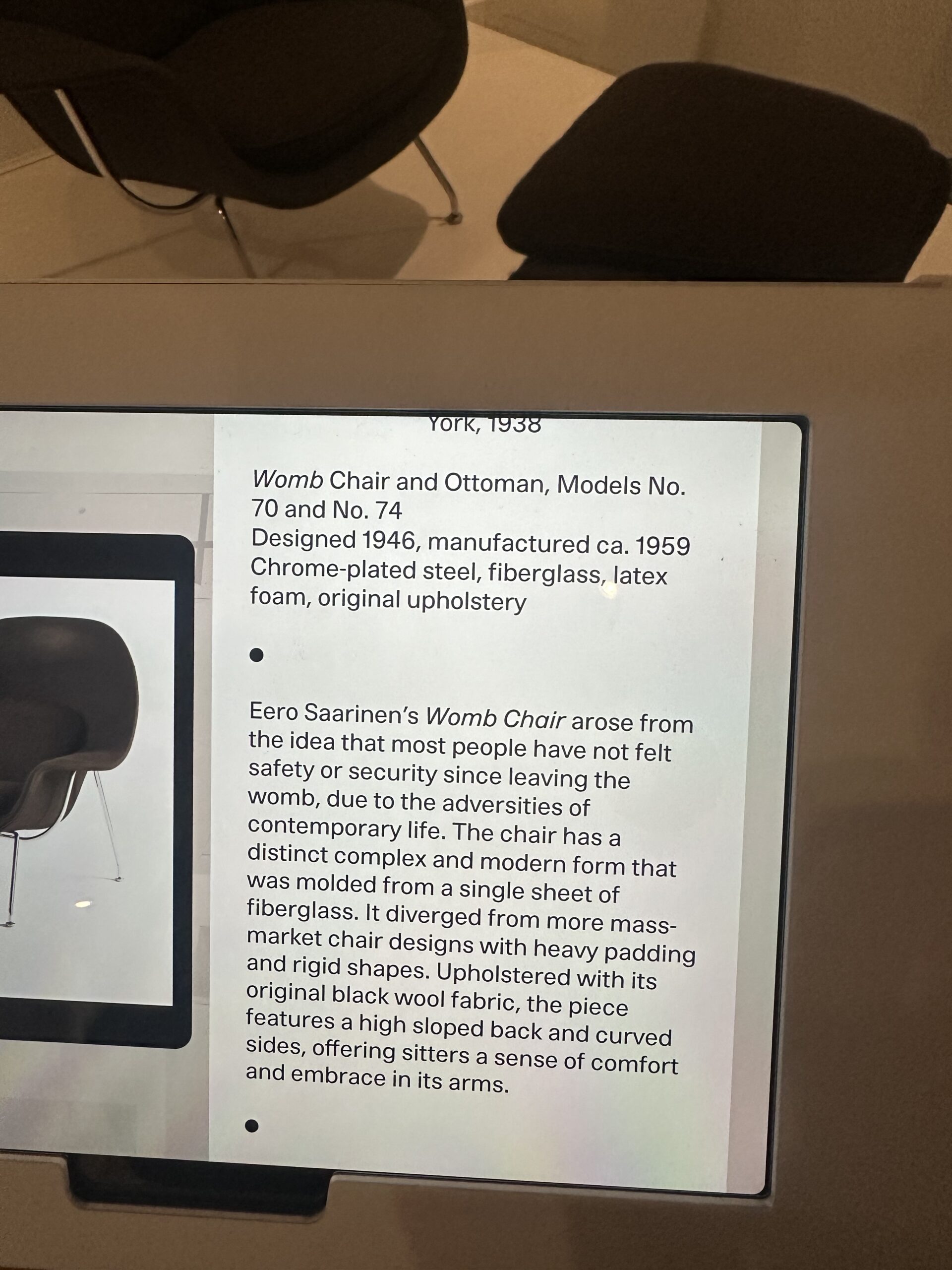
Womb Chair and Ottoman
EERO SAARINEN
1959
What do you see going on in this work of art? Is there a story depicted?
A comfy chair the story that is depicted is the feeling and essence of the warmth and comfort of a mother’s womb
What different visual elements (ie: line, color, light, proportions, scale, composition, media type etc.) do you notice, and how do they help you make sense of the artwork?
You can see the texture popping from the chair and it looks really cool and it gives it a different type of feel
How does this object compare to other objects, stories, or ideas you already know about?
The material that is used in this work of art is very unique and deliberately thought out.
What choices do you think the museum made about the object’s display?
I think they were trying to help us to understand why the artist made these choices about the specificity in the color, material and texture of the chair
Group Members
Jayce, Erick, Luke
-
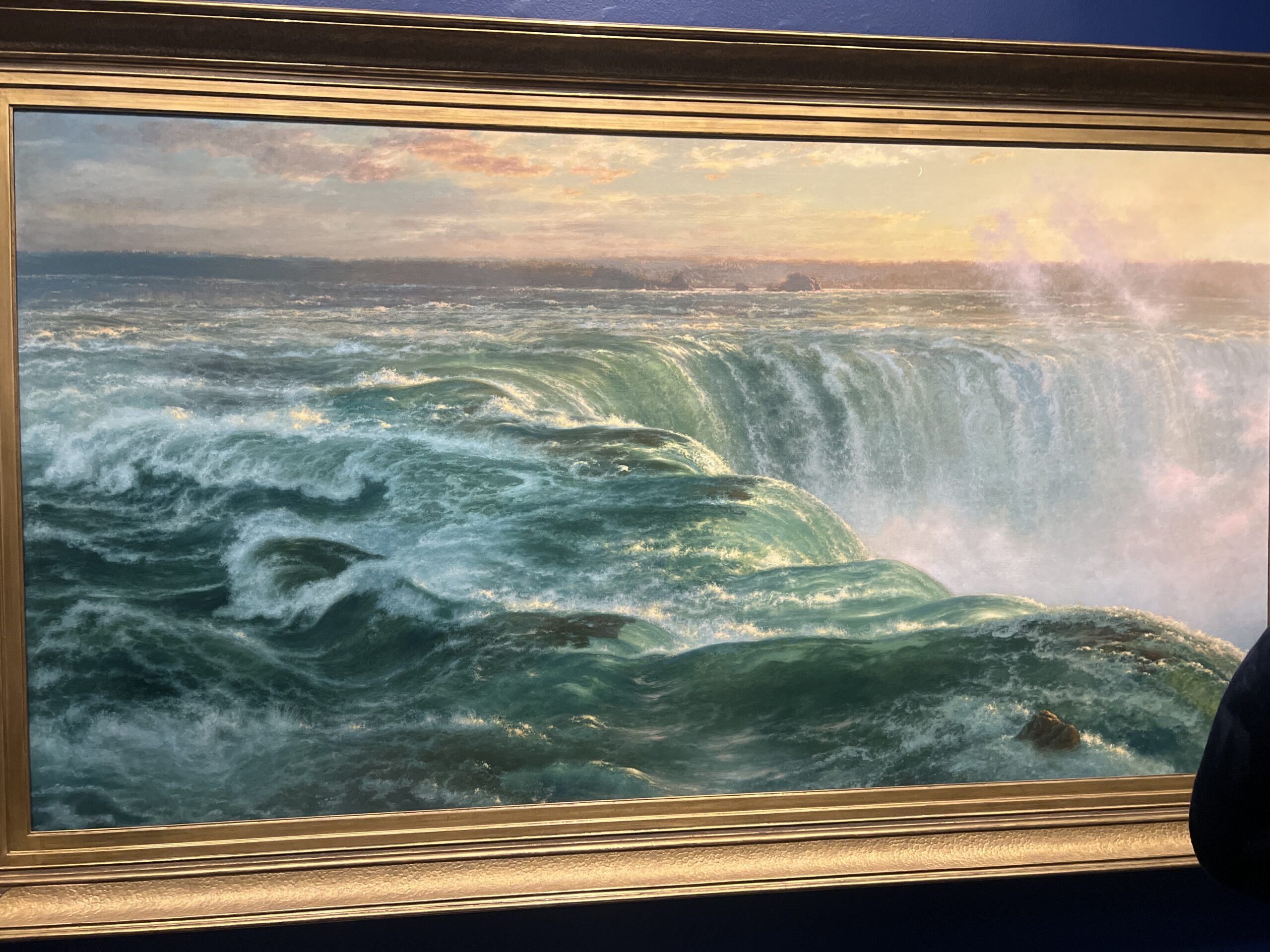
Niagra
Louis Remy Mignot
1866
What do you see going on in this work of art? Is there a story depicted?
It’s a waterfall, but it’s also more than that. The waves are rushing as the sun sets or rises. You can see the mist rising from the center of the waterfall. It really accurately depicts what the actual niagra falls looks like.
What different visual elements (ie: line, color, light, proportions, scale, composition, media type etc.) do you notice, and how do they help you make sense of the artwork?
You can see the brush strokes when the light hits it a certain way. We can see the cracks in the paint from when the oil paint dried. The horizon is very clear and contrasts the water. You can see the where the sun would be based on the conceptual nature of the light.
How does this object compare to other objects, stories, or ideas you already know about?
It is very accurate to niagra falls. Most of us in our group have been, and we agree that the picture captures its essence beautifully.
What choices do you think the museum made about the object’s display?
The painting looms large in a sea of smaller paintings. The fact that it’s from an up close angle that would not be seen in real life seems very purposeful and very poetic.
Group Members
Anna, Stephen, Iman, Junie, Robert, Dennis, Sebastian, Matt, Josh, Safa
-
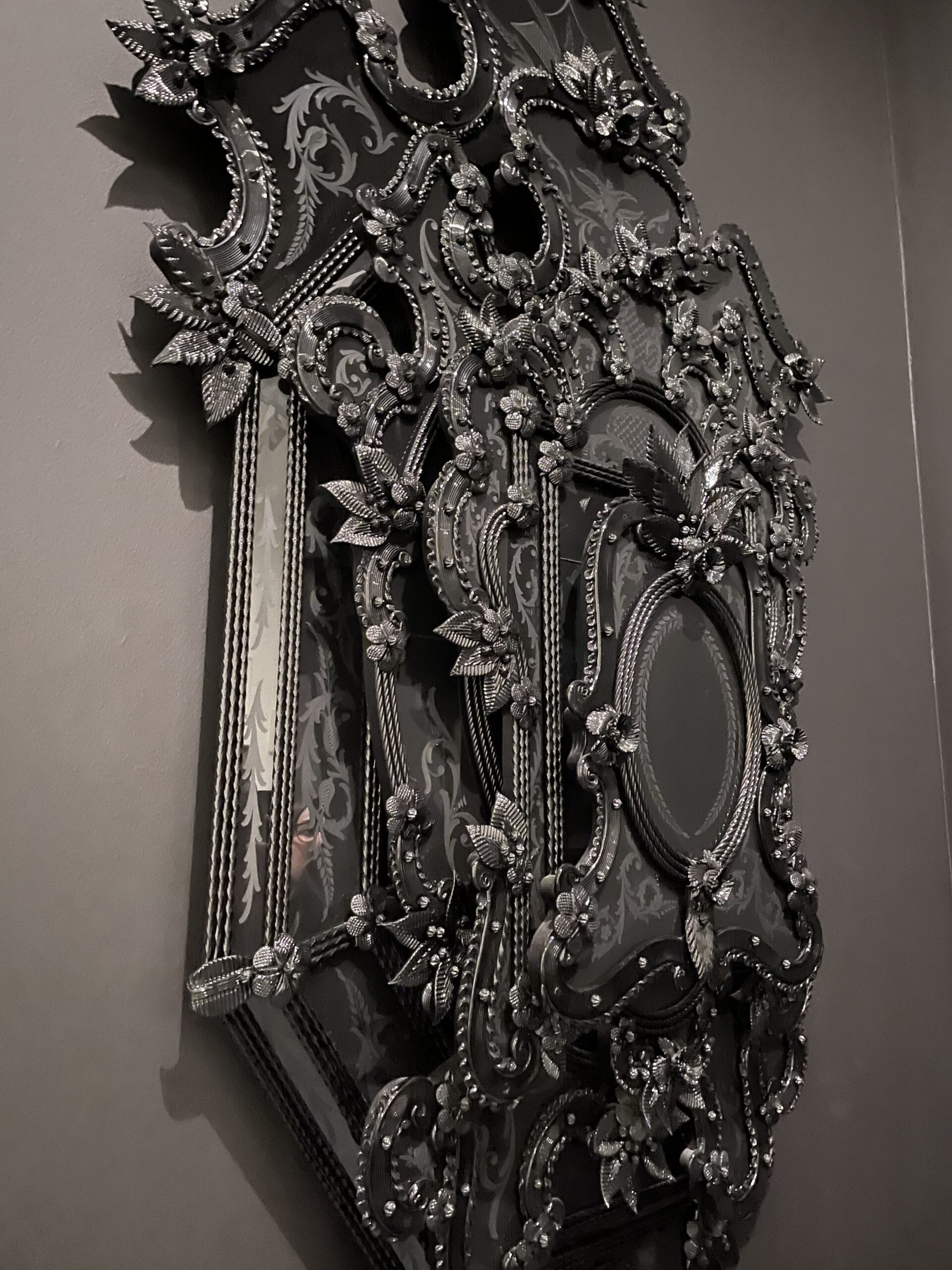
Iago’s Mirror
Fred Wilson
2009
What different visual elements (ie: line, color, light, proportions, scale, composition, media type etc.) do you notice, and how do they help you make sense of the artwork?
We noticed that the scale of this artwork was very big and only used one color: black. Also, the lights from the ceiling brought out the details and the shimmer of the piece which was very captivating. It helps us make sense of the artwork because it displays a style from the rococo period, but with a different color pallet. This piece was made in 2009, so it combines different aesthetics together.
What choices do you think the museum made about the object’s display?
The piece was included in a room with black and white artwork but it’s placed on its own wall by the exhibit’s exit. The wall is the same pitch black as the object which makes it a hidden gem to the individuals who actually notice it.
Group Members
Zara Soofizada, Sienna Kwok
-
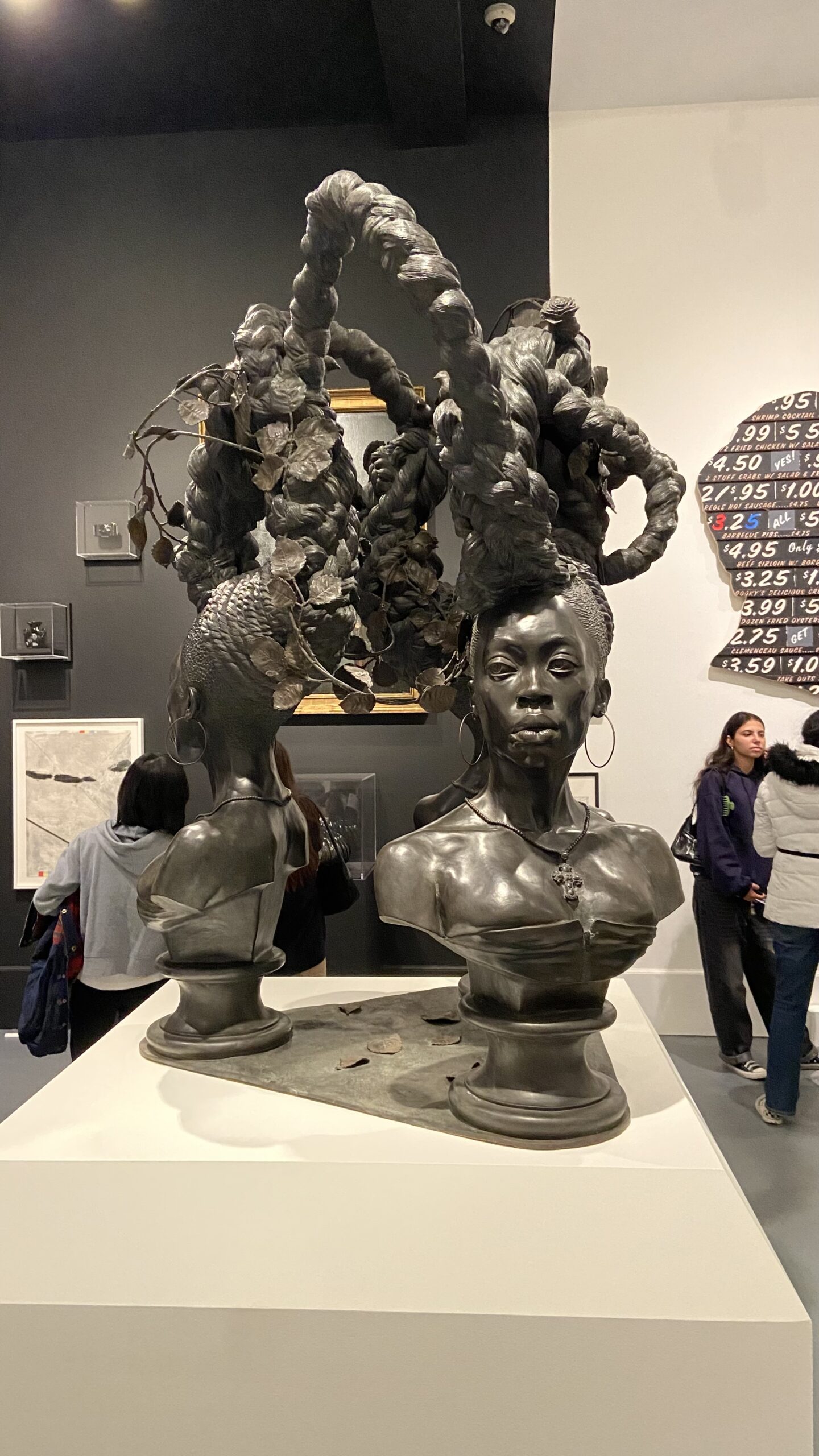
Bound
KEHINDE WILEY
2014
What do you see going on in this work of art? Is there a story depicted?
I see three different black women that are connected by their intertwining hair. The story being told is the power behind black femininity and how hair is an important part of one's identity.
What different visual elements (ie: line, color, light, proportions, scale, composition, media type etc.) do you notice, and how do they help you make sense of the artwork?
We notice the greenery in the women's hair and it's role in beautifying their relationship with their hair, and through that, with each other and themselves. We notice their facial proportions and how they convey a confident expression, particularly through their sharp gaze.
Group Members
Anthony, Jasmina

