
This is a gallery curated by you, the students taking part in our Night at the Museum. Make it your own!
To have your own response appear on this page, form a group and submit a response.
-
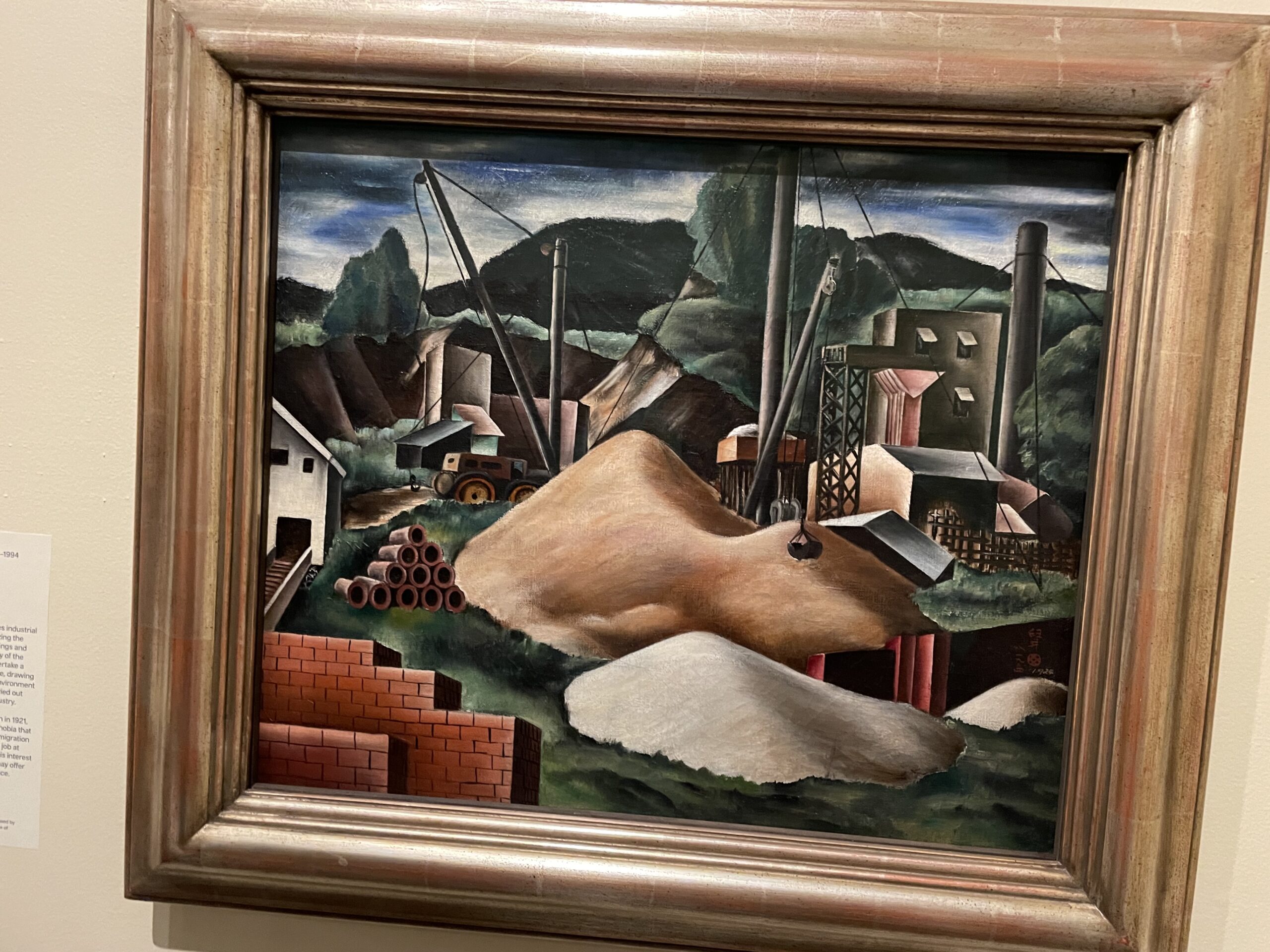
Bronx, N.Y.
Bumpei Usui
1924
What do you see going on in this work of art? Is there a story depicted?
I see a lot of construction going on, most likely depicting the setting of Bronx. I see sand piles up, along with construction material.
What different visual elements (ie: line, color, light, proportions, scale, composition, media type etc.) do you notice, and how do they help you make sense of the artwork?
I see shading, bright construction materials, it’s an oil on canvas medium. There are lines depicting the holes that are dug for construction, leaving a pit.
How does this object compare to other objects, stories, or ideas you already know about?
This compares to middle class labor and the skies are dark, showing how the work is really intense. This is the 1900s, but it was pretty intense on the working class, and it reminds me of poems of African American writers and Asian Americans who were put to work during this time, often on heavy duty construction,
What choices do you think the museum made about the object’s display?
The museum expresses American culture and talks for itself, which is why the museum made the choice to include it.
Group Members
Illan Saji, Ariel Makovoz, Giovanny Klyd Exilus, Sebastian Rajguru
-
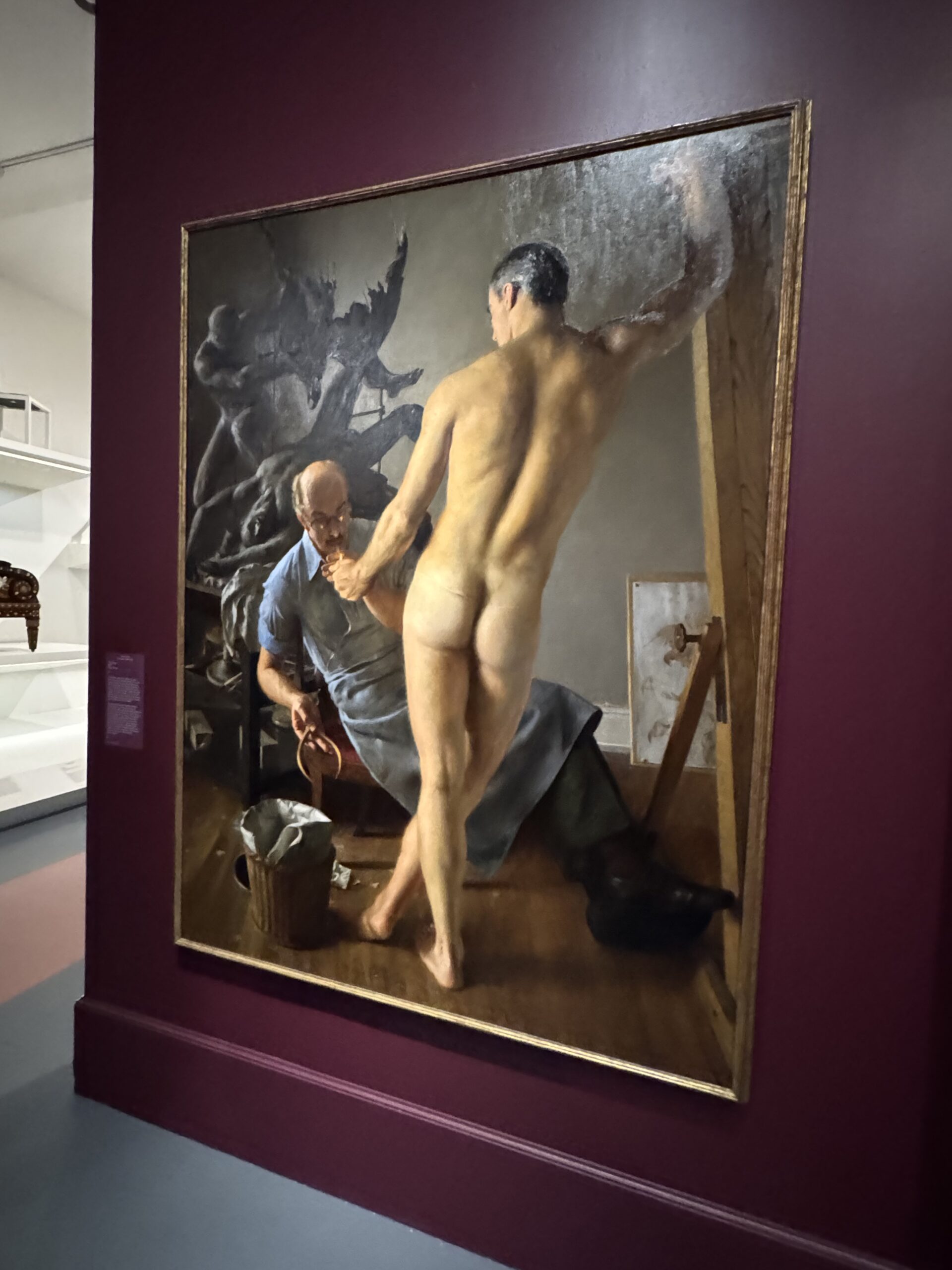
The Sculptor
John Koch
1964
What choices do you think the museum made about the object’s display?
The museum placed the painting in a room of similar works of art, all containing nudity in some aspect. One thing that is particularly interesting about this piece is that it is one of the only nude males in the room.
Group Members
Nathaniel Levin, Carina Fu, Alice Adeline, Breanna Corcoran, Dominic Intervallo
-
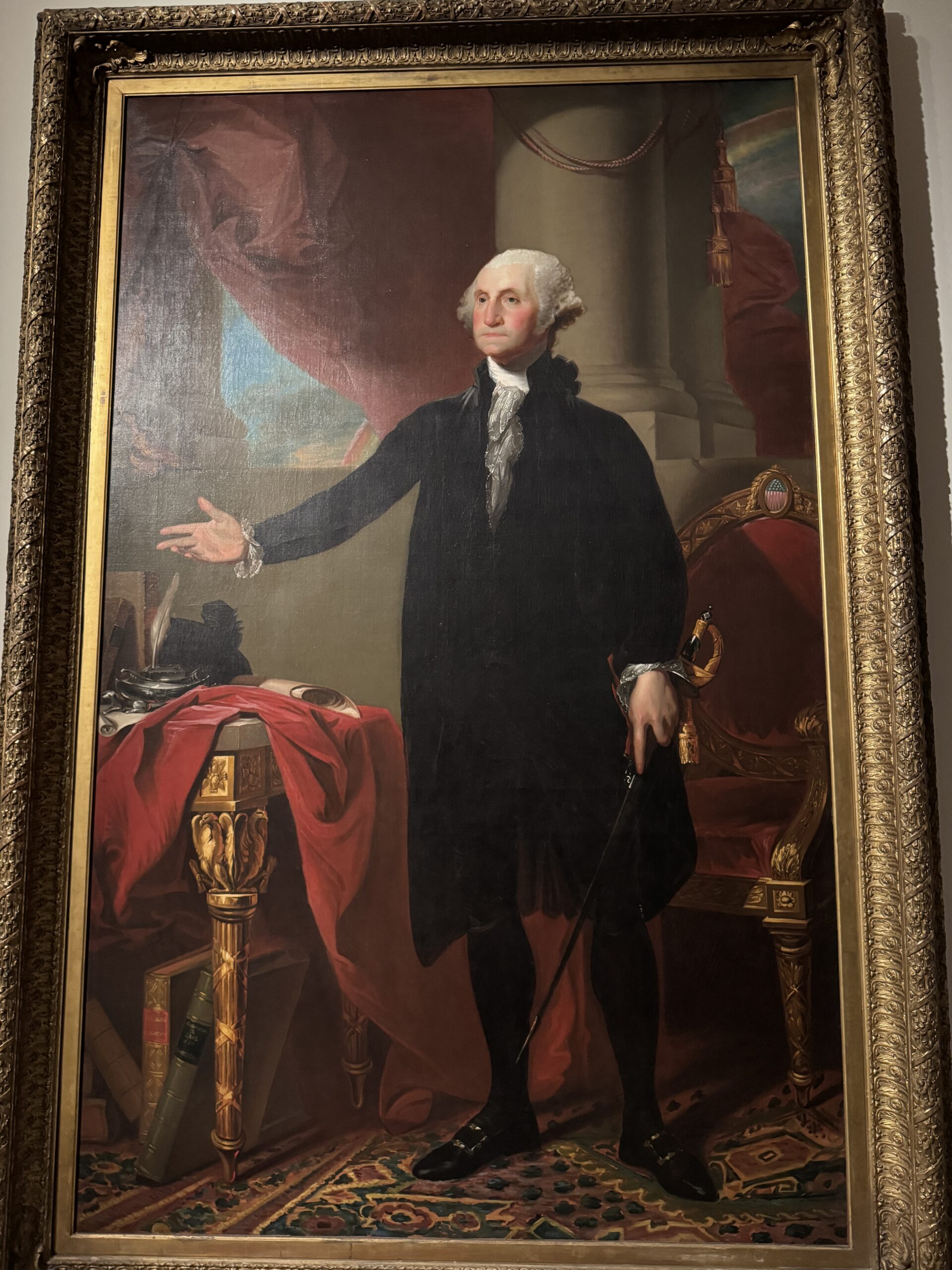
The Sitter, George Washington
Hubert Stuart
1796
What do you see going on in this work of art? Is there a story depicted?
In paintings where George Washington is depicted standing, such as The Lansdowne Portrait by Gilbert Stuart, Washington is often shown in a dignified, authoritative stance. He is typically dressed in formal attire, with one arm extended as if addressing a crowd or giving direction, symbolizing leadership and statesmanship. The setting often includes symbols of governance, like a table with documents or the American flag, reinforcing his role as the nation’s first president. The portrait emphasizes Washington’s strength, resolve, and his pivotal role in shaping the young republic.
What different visual elements (ie: line, color, light, proportions, scale, composition, media type etc.) do you notice, and how do they help you make sense of the artwork?
The colors used in the painting are very symbolic and regal like. Symbolizing his position and power.
How does this object compare to other objects, stories, or ideas you already know about?
The question next to the painting is intriguing as it brings to light and provokes the viewer to reflect on their previous knowledge of Washington juxtaposed to the reality of his leadership. Is he really as great as a leader as we learned in the past? It brings into question other aspects such as his status as a slave owner and a general that did indeed devastate towns during wartime.
What choices do you think the museum made about the object’s display?
We were intrigued as we passed by, due to the large scale of painting and the recognizable figure in that the painting depicts.
Group Members
Amanda Alencastro, Janel Wang, Nisha Nibu, Anjali George, Sakshi Tiwari, Kelly Aquino, Hannah Marie Arcenal
-
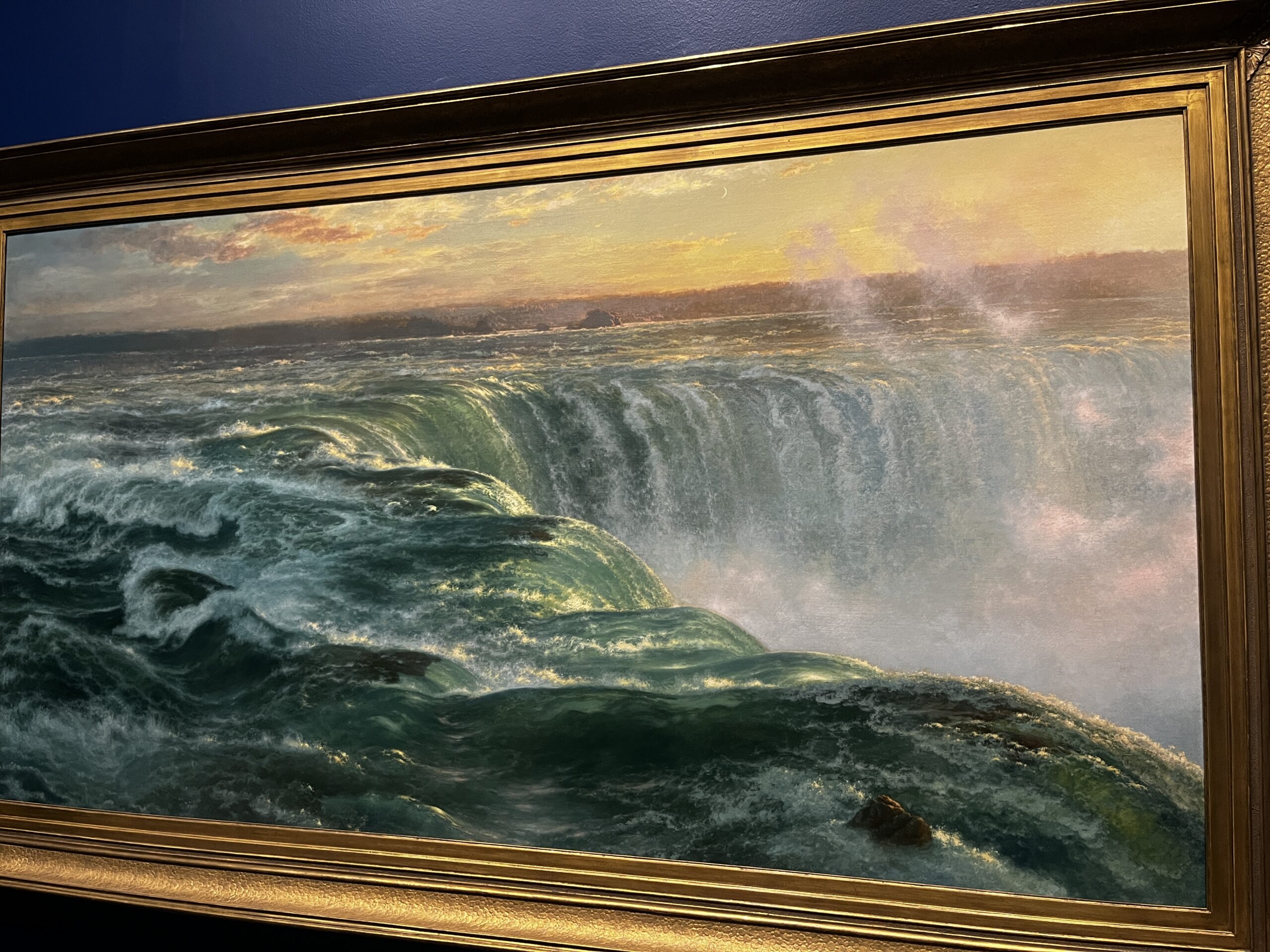
Niagara
Louis Rémy Mignot
1866
What do you see going on in this work of art? Is there a story depicted?
This is tranquility. This is peace in a frozen moment of what is otherwise a constant crashing rush, and this is “calm before the storm.” This is a moment of submission to a gigantic wonder, the viewer at the brink of being washed over, but not quite.
What different visual elements (ie: line, color, light, proportions, scale, composition, media type etc.) do you notice, and how do they help you make sense of the artwork?
We see the sea. This is technically inaccurate because the painting is of a waterfall, but the grandiosity of it makes it feel all-encompassing, with the water taking up 80% of the canvas, even more than the sky. The colors are pastel and dream-like as a result. The sky is like the negative space and overall there’s a sense of dashing into the distance or in the mist of the waterfall, with the only point of clarity being the small waves before the edge, showing us where the viewer stands both physically and in the story, at the very brink, not knowing and not caring what lies beyond this majestic fall.
How does this object compare to other objects, stories, or ideas you already know about?
This style reminds us of the Western Expansion mindset where artists heavily idealized the natural wonders of the United States and subsequently pushed for Americans to move into those areas. We thought about the concept of water as a source of life and how it is put on a pedestal in this painting. Furthermore, especially after seeing the description of the artist contributing to indigenous displacement, we thought about how these sources of life were not shared but rather the center of conflict between different groups, with each viewing the same falls slightly differently but valuing it all the same.
What choices do you think the museum made about the object’s display?
We’re noticing two kinds of groupings in terms of where this painting is: it compares to the other water-centric paintings on the wall (water is usually used as a medium of travel in these paintings but not in this particular depiction of Niagara Falls), and in Native American art in conflict with forced invasion by the aforementioned settlers. There are Native American pieces with elements of water and waterfowl (e.g., a beaded bag with a swan on it), showing how the same natural subjects were “claimed” by different groups.
Group Members
Ami Dube, Ashlin Davila, Annamarie Dixon, Zoe George, Kateryna Taranenko, Angie Mekki, Eshaal Ubaid, Christine Van, Julia Hurynovich
-
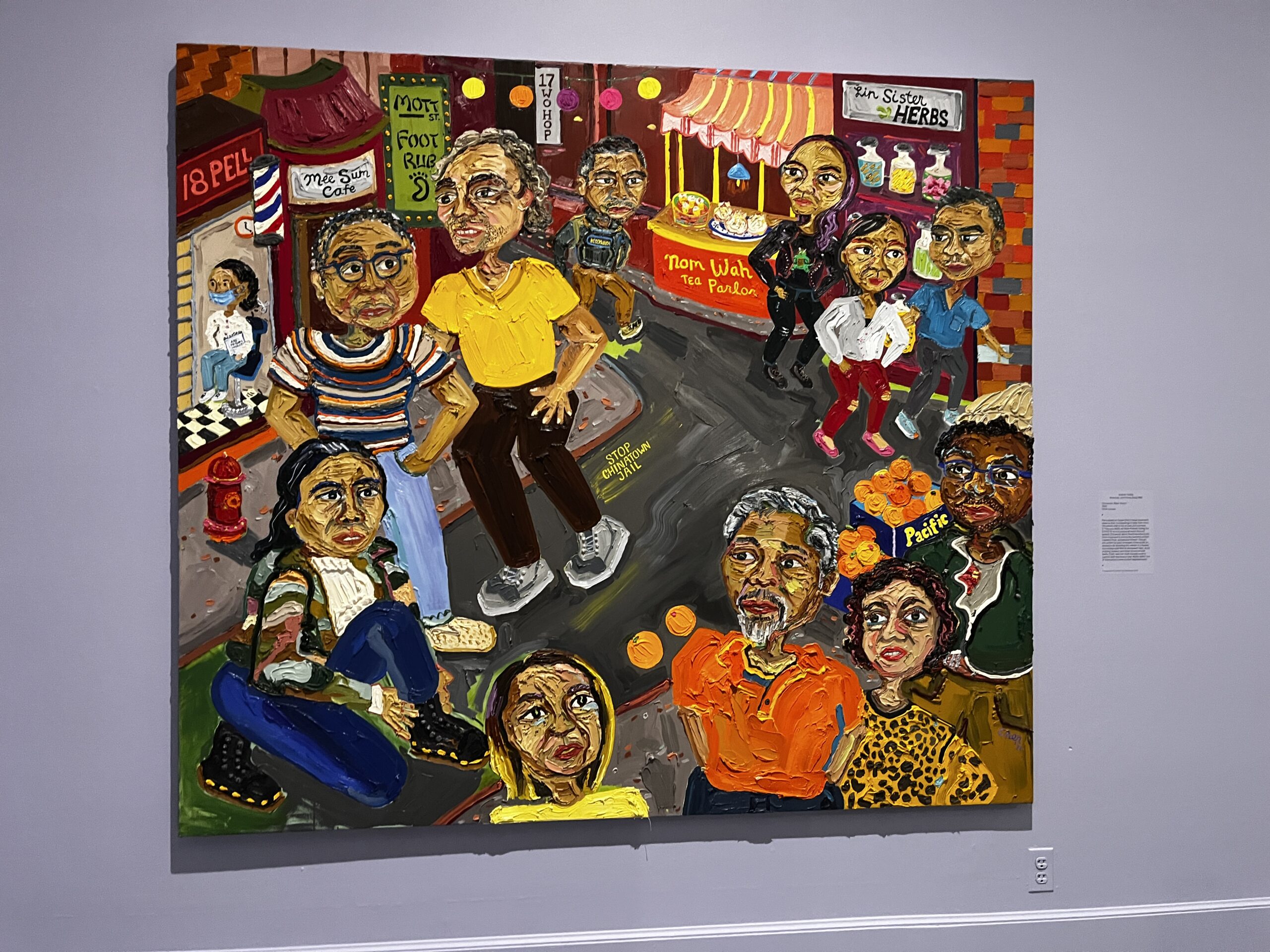
Chinatown Block Watch
Susan Chen
2022
What do you see going on in this work of art? Is there a story depicted?
There is a man wearing a block watch vest that is patrolling the block. The other residents of the community are watching the man with fear as they are being pushed away from their community. This reflects xenophobic attacks that were happening due to the COVID-19 pandemic.
Group Members
Jayson Vasquez, Deven Williams, Ethan Wen
-
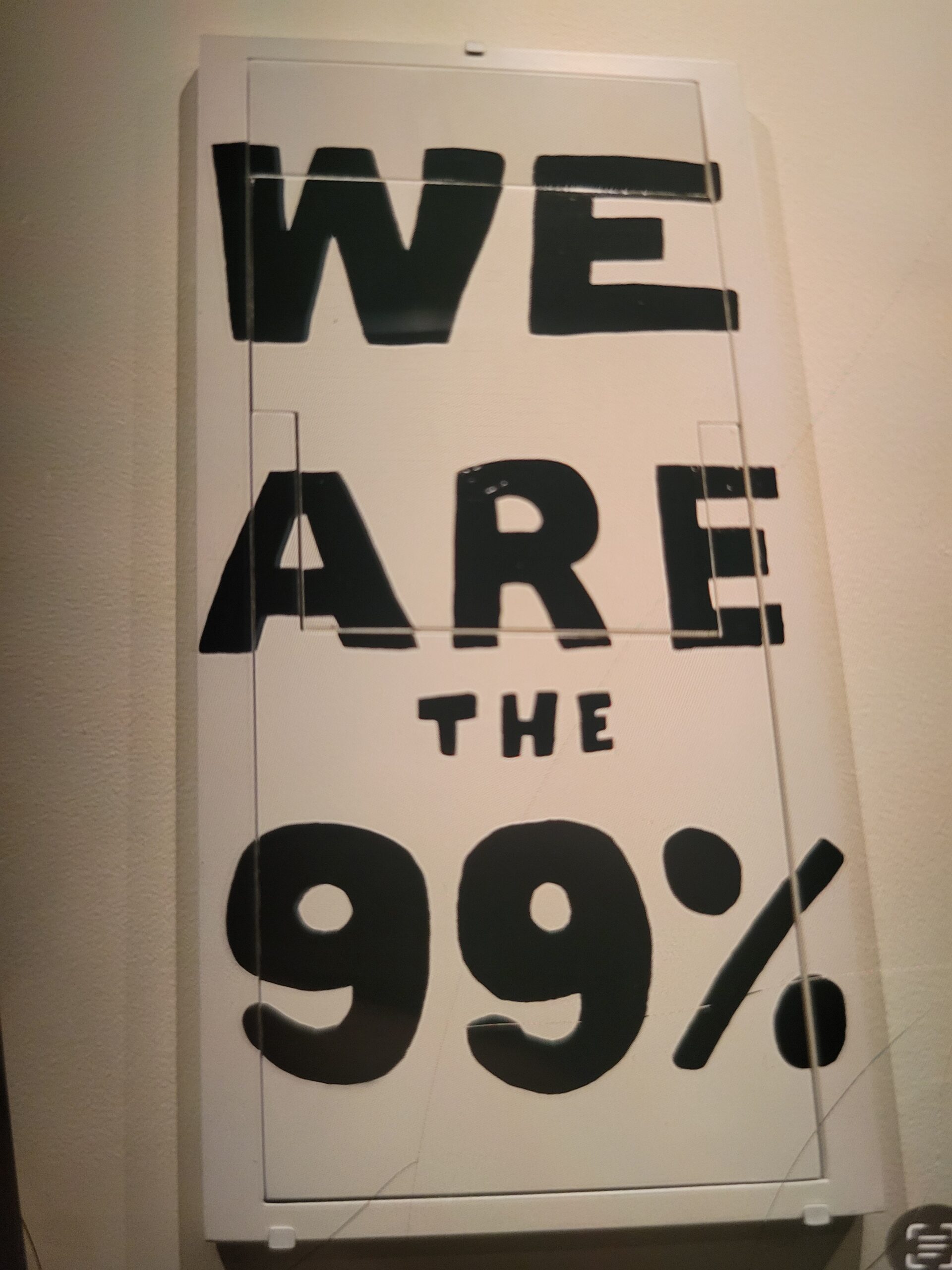
We are the 99%
Sebastian Errazuriz
2012
What do you see going on in this work of art? Is there a story depicted?
Big black letters plastered on a folding chair. Mimics a poster, 3-D like quality to it. Something transported, can be in the street in other places than a museum. Artwork for the people, the masses, the opposite of tge 1%
What different visual elements (ie: line, color, light, proportions, scale, composition, media type etc.) do you notice, and how do they help you make sense of the artwork?
These words a clear straight to the point. Using only 4 words max attention is drawn to the message immediatly. Juxtaposition between the white background/chair and the bold black text.
How does this object compare to other objects, stories, or ideas you already know about?
Blurring the line between art and protest. In oppositions to the typical idea of art you would see in a museum. Plain woeds on text create a message and perhaps that is the greater art. Its a chair! An object you see everyday turned into something new.
What choices do you think the museum made about the object’s display?
Choose to lay it flat on the wall as if it was a painting. Also putting it next to a non folded chair reminds us that there can be different functions for everyday things.
Group Members
Sienna Marie Saballegue, Anna Rosario
-
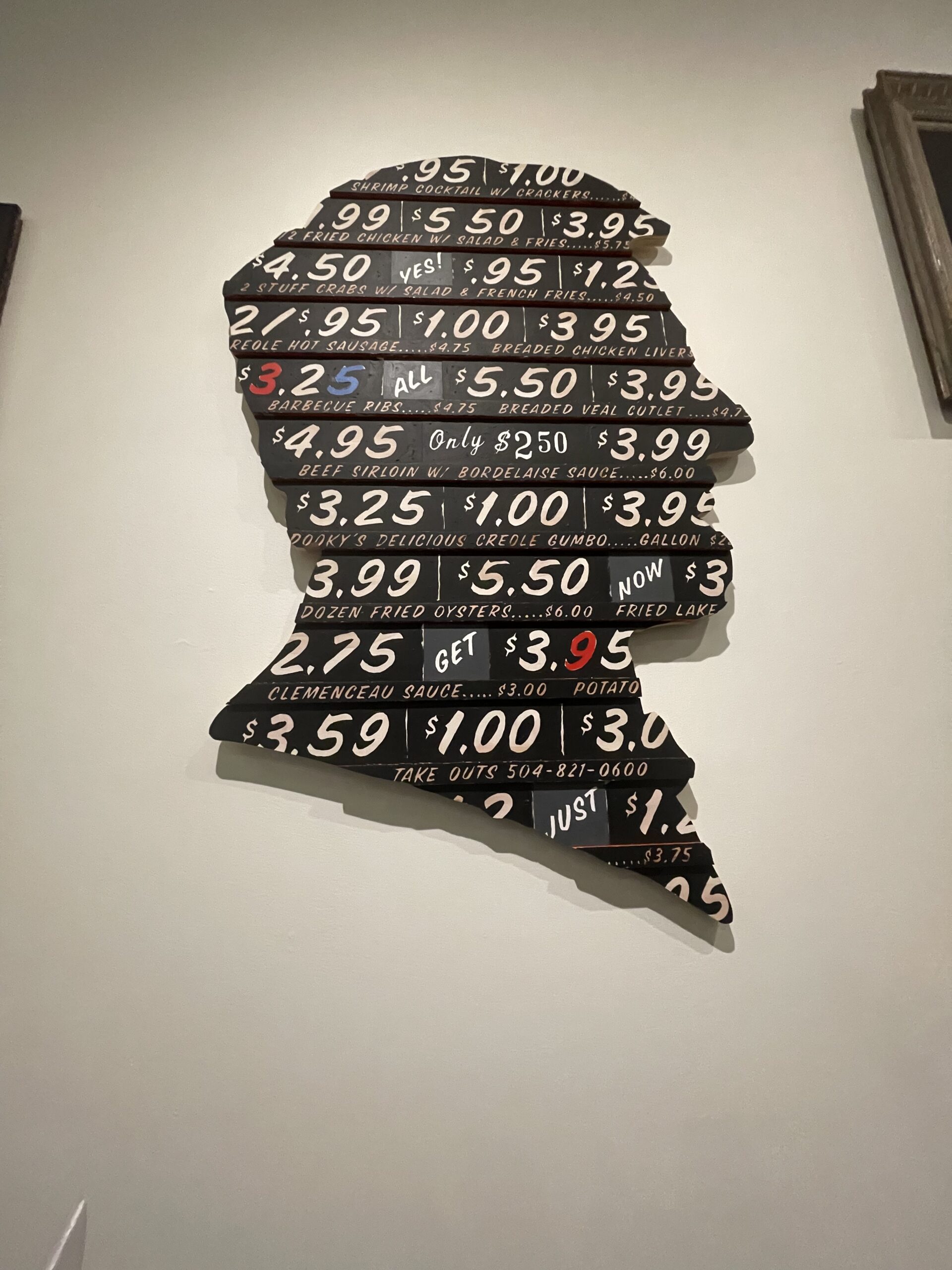
Black Lincoln for Dooky Chase
Skylar Fein
2010
What do you see going on in this work of art? Is there a story depicted?
In this work of art, we see a cutout of President Abraham Lincoln’s head. Within this cutout, there is a menu from Dooky Chase, a Black-owned restaurant famous for hosting Civil Rights-era meetings in New Orleans. This work depicts the story of many enslaved Black Americans at the time with the opposing positions on enslavement held by Lincoln. Lincoln was known for supporting the abolition of slavery and the government of Louisiana was a prominent center of chattel system. Fein uses the menu prices to substitute for humans that were being bought and sold at the time. It is a deep choice as both food and humans were considered commodities in Southern states during slavery.
What different visual elements (ie: line, color, light, proportions, scale, composition, media type etc.) do you notice, and how do they help you make sense of the artwork?
The main driving force of the understanding of this art piece lies in the use of a cardboard cutout of Lincoln’s head as the background of the art piece. The use of the dollar signs and prices helps us understand the idea that people were being bought and sold like regular commodities at the time in Southern states. The prices literally represent the prices of goods, but metaphorically represent the value of an enslaved American.
How does this object compare to other objects, stories, or ideas you already know about?
This object’s stories and meaning comes out more naturally and draws your eyes and heart in as it is more obvious and deep than the other landscapes displayed in the museum. At first glance, the piece just looks like a cardboard silhouette of a familiar face in American History. But, it is not until you look deeper and take into context the time period that Lincoln was president that you realize that the piece is about the Civil War and Civil Rights Movement.
What choices do you think the museum made about the object’s display?
The Museum made an important choice in hanging the piece up as it catches your attention from afar and draws you in.
Group Members
Marwa Ahmed, Maya Hussein, Avneet Kaur, Haadiya Malik, Ashany Marjo
-
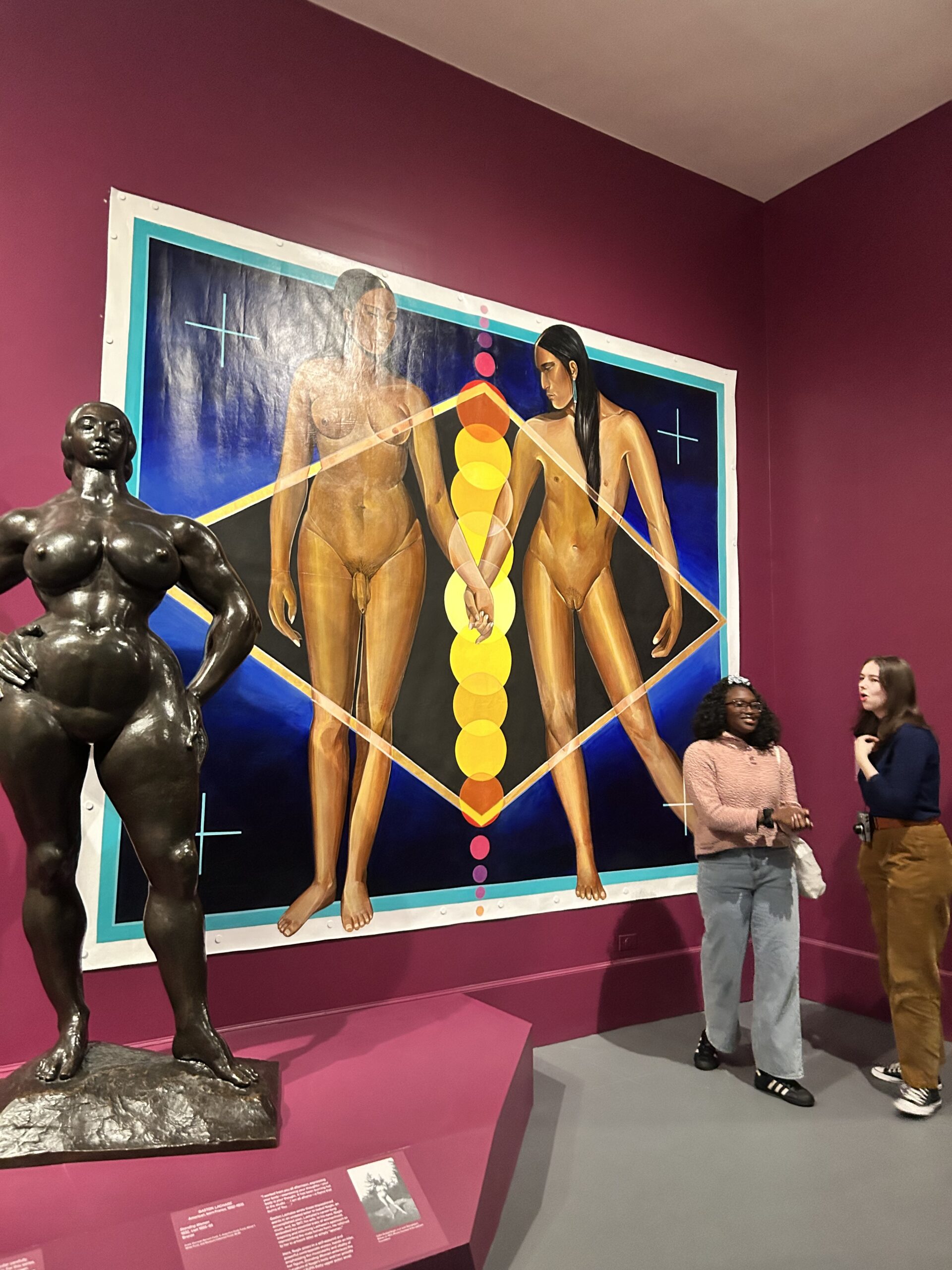
Four Genders Were Born…
Nanibah Chacon
2022
What do you see going on in this work of art? Is there a story depicted?
There are two naked people, one presumably male and female. Their genitalia is exposed. They seem to be partners or somewhat sensual and comfortable with one another.
What different visual elements (ie: line, color, light, proportions, scale, composition, media type etc.) do you notice, and how do they help you make sense of the artwork?
There is different work of angles, lines, colors, circles that help accentuate the figures in the painting, It helps bring to light where the two figures stand, their relationship, and more.
How does this object compare to other objects, stories, or ideas you already know about?
It displays naked and raw bodies like other pieces in the section, but it also touches upon gender and gender expression in a way that other pieces don’t. It is definitely bigger than other pieces, too, designed to stand out.
What choices do you think the museum made about the object’s display?
The museum might have made the choice to display this object in order to create a certain story about comfort in bodies, and the importance of storytelling and expression within one’s body in certain cultures. It helps to create a story around gender, expression, and culture.
Group Members
Franxalier Causapin, Gray Lopez, Edith Felipe, Jacqueline Singhnani
-
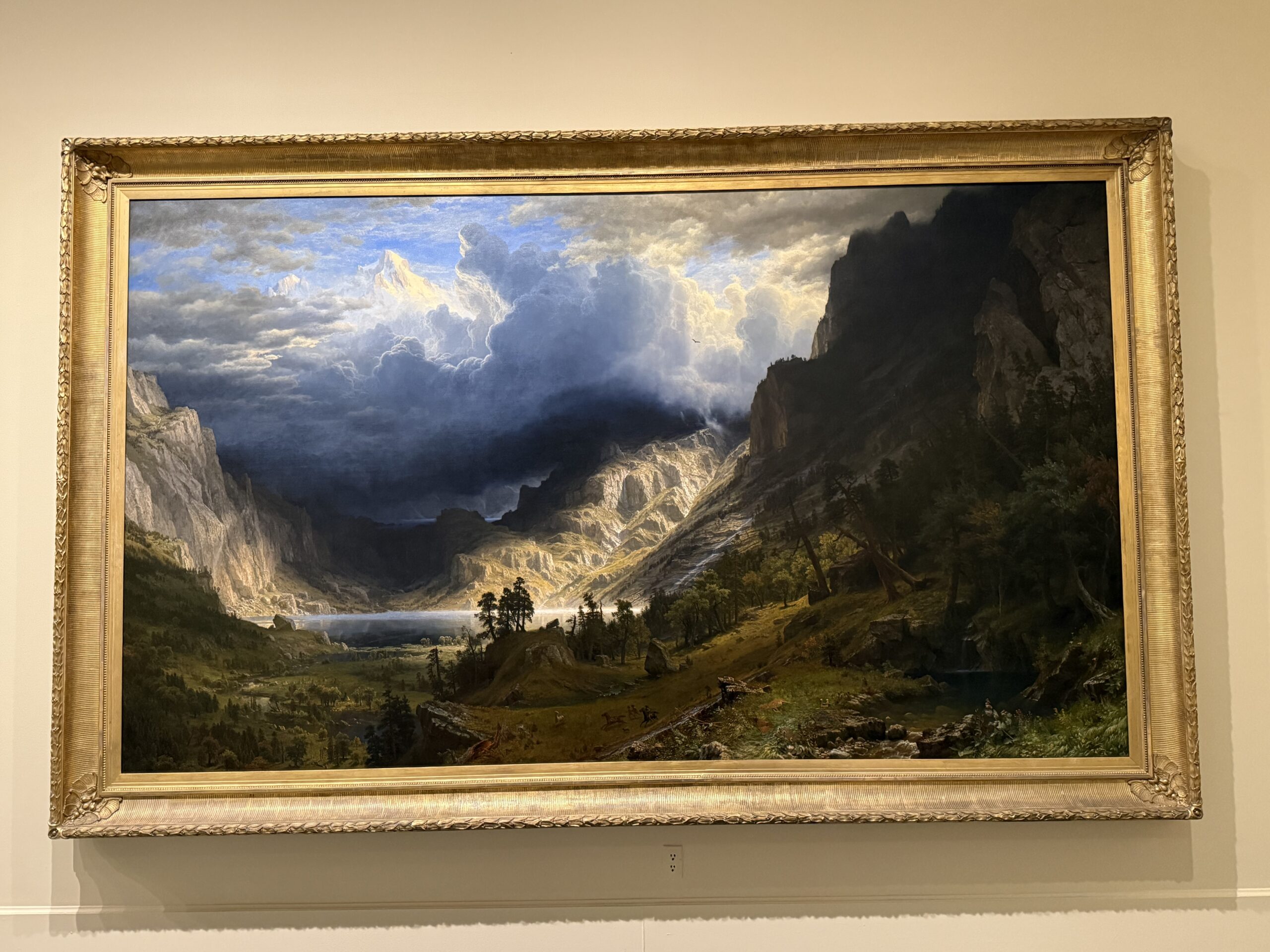
A storm in the Rocky Mountains, Mt. Rosalie
Albert Bierstadt
1866
What do you see going on in this work of art? Is there a story depicted?
I see a lot going on in this beautiful work of art. For example, the skies portray a contrast between light and dark, with dark clouds on the bottom and the bright sunshine in the sky at the top. I see brightness in the valley on top of the lake as well as darkness. In contrast, I see horses running around in the bottom from the light areas of the mountain to the dark, and I see grand depictions of a towering mountain range surrounding the valley.
What different visual elements (ie: line, color, light, proportions, scale, composition, media type etc.) do you notice, and how do they help you make sense of the artwork?
This artwork portrays a great variety of scale, showcasing massive mountain ranges surrounding the valley bathed in sunlight while also coating the valley in darkness, accentuating the tiny nature of the trees in comparison to all else.
How does this object compare to other objects, stories, or ideas you already know about?
The piece is connected to many artworks in a similar time period that aimed to glorify the American natural lands
Group Members
Syed Hussain, Jirel Gonzalez, Joseph Rippo, Armand Surban, Rachel Ruggeri, Grace Burke
-
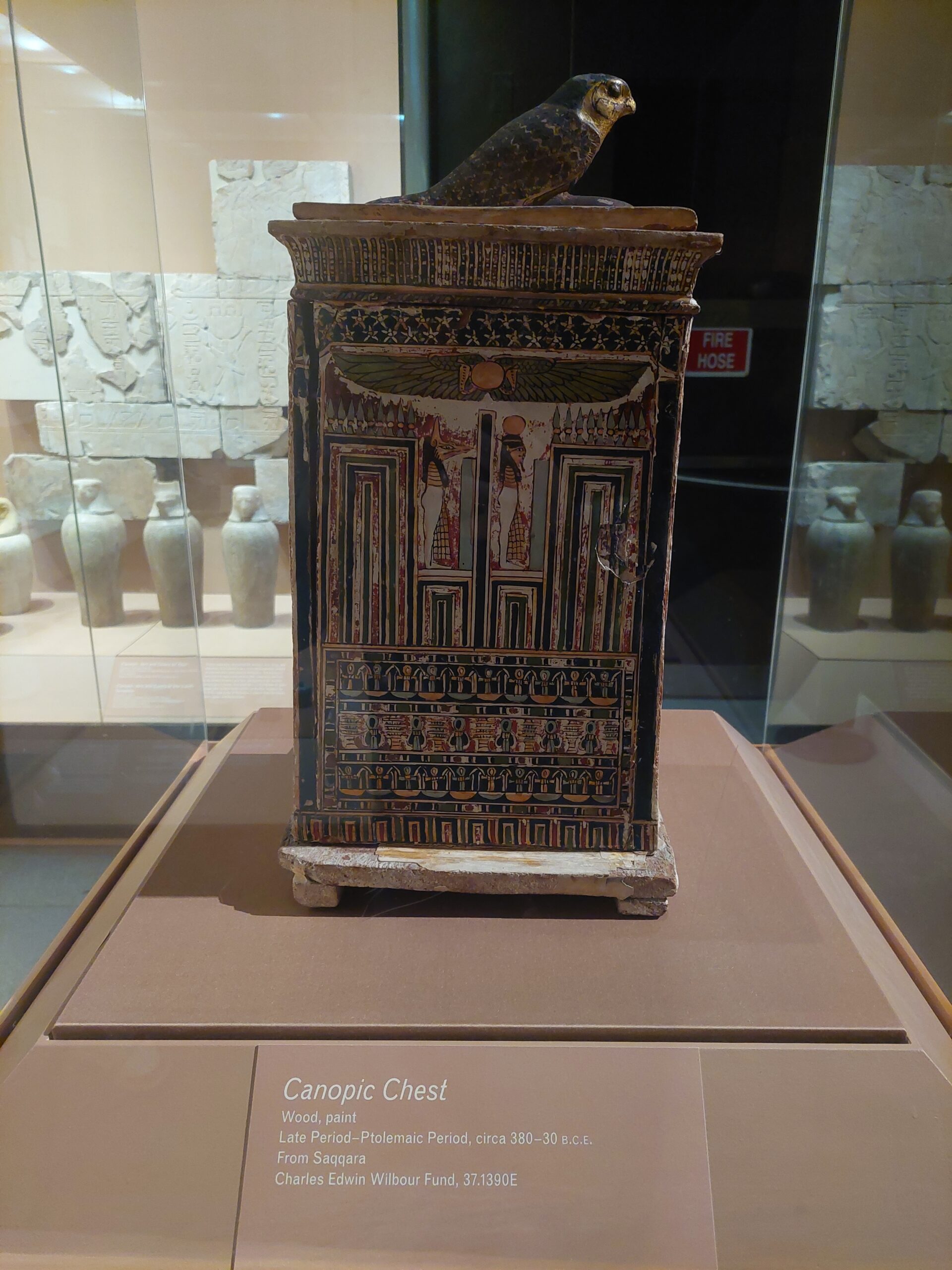
Canopic Chest
Charles Edwin Wilbour Fund
380-30 B.C.E.
What do you see going on in this work of art? Is there a story depicted?
There are some elements of symbolism and meaning from the art on the chest. The front has centered gates, the whole chest has Egyptian style decorations and eagle wings on the top. There are also stars near the top on all four sides. All of it depicts what we believe to be an acsension beyond life.
What different visual elements (ie: line, color, light, proportions, scale, composition, media type etc.) do you notice, and how do they help you make sense of the artwork?
The artwork on the box has near complete symmetry, heavy use of lines and shapes, and the box itself has a rectangular proportion.
How does this object compare to other objects, stories, or ideas you already know about?
The object is similar in the context of most mourning rituals in other cultures with removal of organs that the chest itself stored and preparation for laying the body to rest.
What choices do you think the museum made about the object’s display?
The chest is set upon a pedestal behind a glass cube to preserve its current state at a viewable distance.
Group Members
Dennis Shlaih, Martin Draus, Krystian Gawecki

