
This is a gallery curated by you, the students taking part in our Night at the Museum. Make it your own!
To have your own response appear on this page, form a group and submit a response.
-
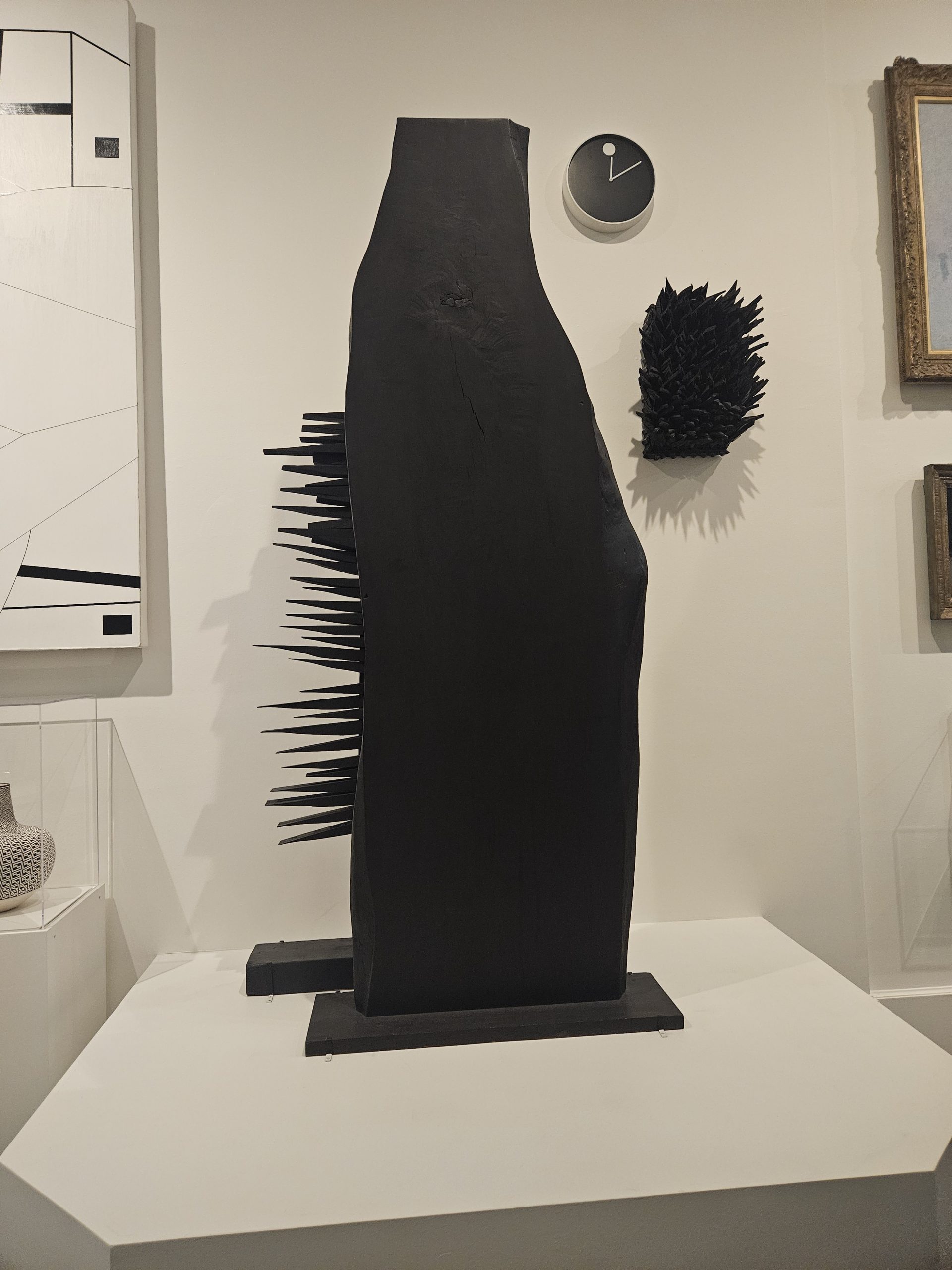
First Personage
Louise Nevelson
1956
What do you see going on in this work of art? Is there a story depicted?
We saw a large black slab that was cracked on multiple parts. From behind this broken piece we see sharp black spikes poking out almost like it is fighting to break through the clean perfection in front of it. The story being depicted is one that shows the cracking of ones outer layer. The facade we put on for others and the complexity of human emotion.
Group Members
Saad Nagi, Katherine Pendorak, Aiden Krasnopolskiy, Daniel Azbel
-

Niagara
Louis Rémy Mignot
1866
What do you see going on in this work of art? Is there a story depicted?
In this painting, there is a depiction of the Niagara Falls. It appears to be during sunset or sunrise, and the crescent moon is still visible.
What different visual elements (ie: line, color, light, proportions, scale, composition, media type etc.) do you notice, and how do they help you make sense of the artwork?
This work was done with oil on canvas. There is a horizon line with a large foreground. Also, the harsh and rough texture of the water contrasts the softness of the mist. There also appears to be mostly warm tones.
How does this object compare to other objects, stories, or ideas you already know about?
What differentiates this painting from other landscape paintings is the scale. This painting is around 8’ by 5’. The magnitude of the painting drew our eyes and reminded us of the personal connections we each drew to when we visited. We felt that this painting was a glorification of the reality we saw at Niagara Falls.
What choices do you think the museum made about the object’s display?
The museum seems to have drawn extra attention to the painting by giving it its own wall and spotlight. It also reflects the framework of the room, signifying how Niagara Falls is the epitome of human inability to swim with the flow of the water. It ultimately signifies humanities need to relinquish control of nature.
Group Members
Savidya Kulawansa, Amber Gaw, and Maxim Borisov
-
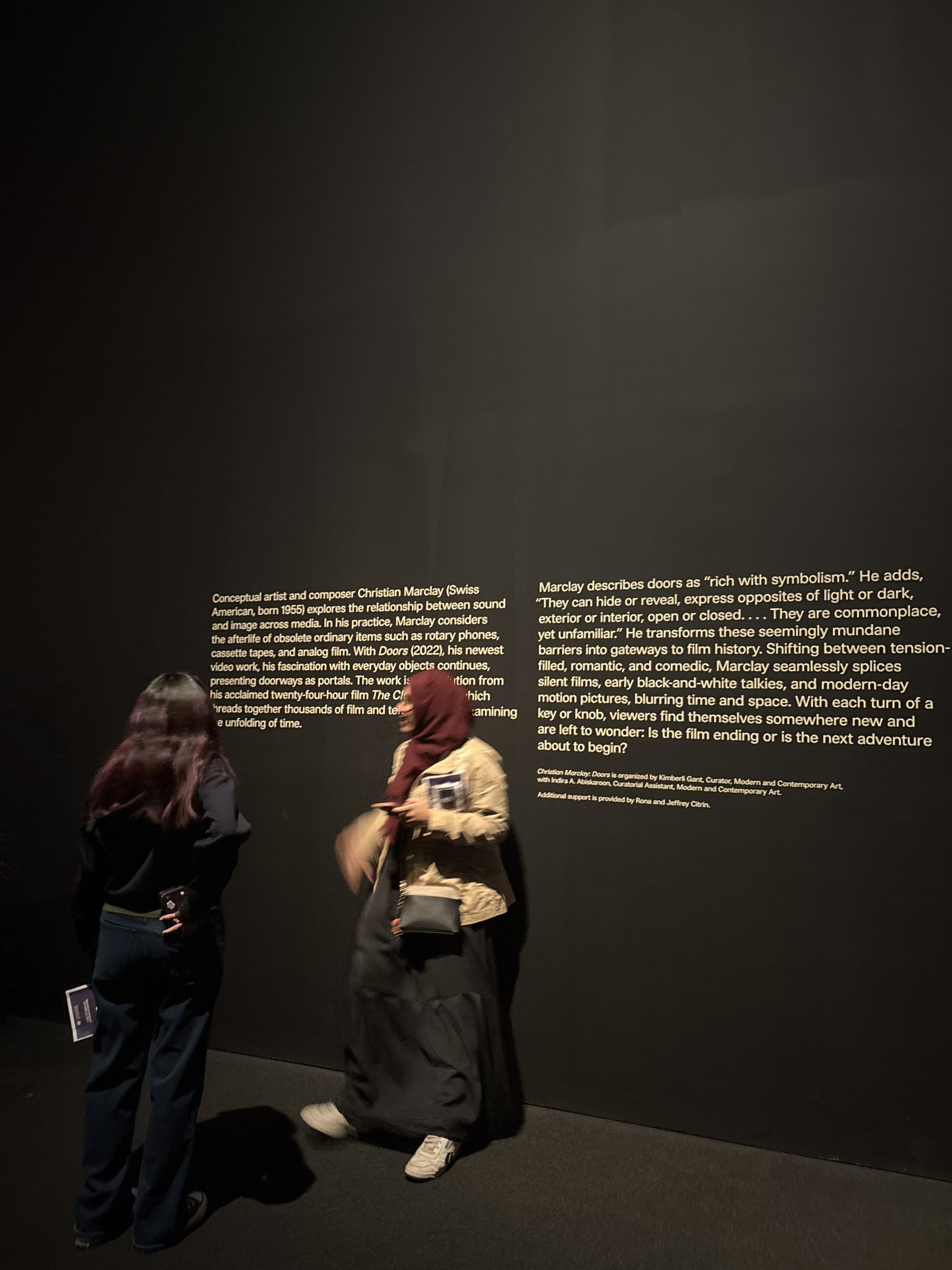
Doors
Christina Marclay
2022
What do you see going on in this work of art? Is there a story depicted?
In this work of art, there’s a dedicated montage of black and white film detecting movement with doors. There are a multitude of stories being depicted based on the different films. There is no film of dialogue but the actions occurring during certain clips set up the plot line for a couple of videos before changing.
What different visual elements (ie: line, color, light, proportions, scale, composition, media type etc.) do you notice, and how do they help you make sense of the artwork?
The clips of films are a mix of black and white and colored film with a horizontal orientation that helps the viewer view the story through different lenses. Additionally, the music is a big factor in how individuals react to the film and creates a sense of expectation of what the viewer is expecting to see. There is a flow being created due to the music but it’s also a bit unexcepted as when one door closes another door opens.
How does this object compare to other objects, stories, or ideas you already know about?
It’s very different from other art forms that we know of, because the films are from a different time period that we are not familiar with and because of that we aren’t super connected to it or understand the choices that the author has made in choosing certain films to include in this artwork. As per the ideas, it follows a story composition with a climax, falling action, and a semi resolution which resembles the story format that we are all familiar with,
What choices do you think the museum made about the object’s display?
The museum gave it its own exhibit and keeps it in the dark with a lot of space to make the viewer feel like they’re actually in a movie theater rather than just having us look at a small screen that resembles the phone screen that the youth are often always looking at.
Group Members
Yaretzi Vidals and Natalie Parong
-

A Storm in The Rocky Mountains, Mt. Rosalie
Albert Bierstadt
1866
What do you see going on in this work of art? Is there a story depicted?
In this work it depicts a stork over the rocky mountains. It also show a group of Native Americans hunting deer, showing them chasing one by foot and horse, as well as a dead deer nearby.
What different visual elements (ie: line, color, light, proportions, scale, composition, media type etc.) do you notice, and how do they help you make sense of the artwork?
The colors are dark and bright, showing the sun shining in the spots that the storm has yet to touch, while being dark under the storm, showing its arrival.
How does this object compare to other objects, stories, or ideas you already know about?
It is a story we haven't heard before, and it is just another painting we have seen, among the others we saw today.
What choices do you think the museum made about the object’s display?
The museum put the painting first in its exhibit, and it was in an area with other art depicting the natural world.
Group Members
Bohdan Omeliukh, Daniel Bolotovskiy
-
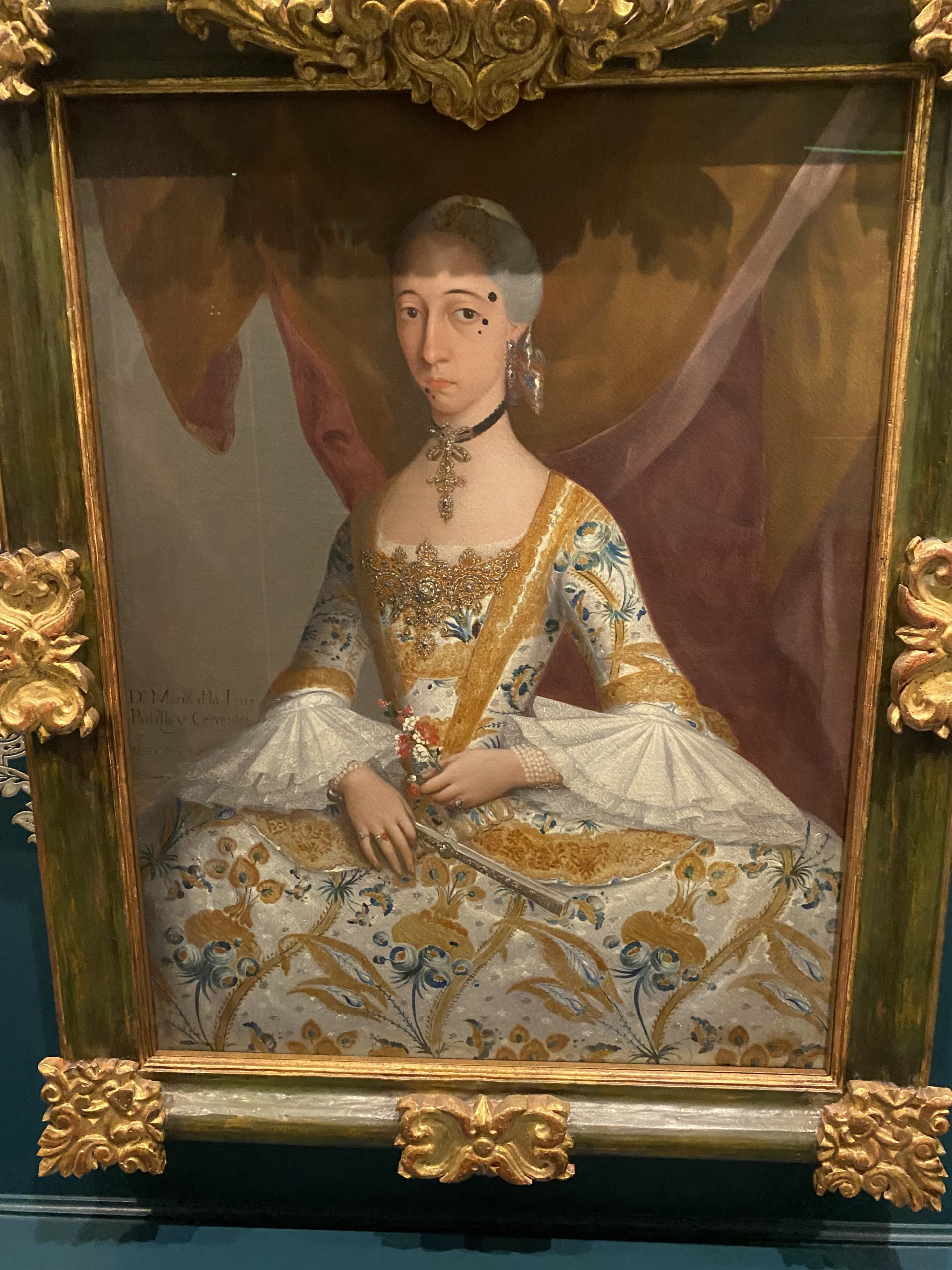
Doña Maria de la Luz Padilla y Goméz de Cervantes
Miguel Cabrera
1760
What do you see going on in this work of art? Is there a story depicted?
In this piece, there is a woman with a richly embroidered dress. She appears to be very wealthy. The story depicted here is of beauty in the 18th century. To make the woman appear beautiful, the painter added artificial marks.
What different visual elements (ie: line, color, light, proportions, scale, composition, media type etc.) do you notice, and how do they help you make sense of the artwork?
This artwork invokes a sense of balance. The opaque colours and muted background create balance and establish the poise and high status of the subject.
How does this object compare to other objects, stories, or ideas you already know about?
I was already somewhat familiar with the fact that women are often expected to uphold a standard of beauty. I think it’s interesting that rather than the subject having to alter her appearance directly, the painter was able to represent it on canvas.
What choices do you think the museum made about the object’s display?
The museum provided a detailed overview of the marks on the subject’s face, which provided context to the painting. The subject is represented with Chiqueadores, or false beauty spots. With this information, I am able to contextualise the making of the painting as a commission from an aristocratic woman.
Group Members
Nanakofi Kagya, Ayesha Javaid, Joséline Mendez, Cheyenne Nicholls
-

Textile Design for Cretonne
Loïs Mailou Jones
1928
What do you see going on in this work of art? Is there a story depicted?
We can see growing trees decorated with colorful prints. We can interpret this work as a story of growth and blossoming, both in the literal sense (physical growth) and the figurative sense (emotional growth).
What different visual elements (ie: line, color, light, proportions, scale, composition, media type etc.) do you notice, and how do they help you make sense of the artwork?
Bright colors (red, yellow, green), jagged and smooth lines of varying thickness, random placement of the trees throughout the wall. These elements help establish a tone to the piece, and give it a light and vibrant feel.
How does this object compare to other objects, stories, or ideas you already know about?
The fact that this piece is projected onto the walls of an entire room sets it apart from other pieces in the museum. I can relate this to other abstract pieces I have seen before, since it is more surreal.
What choices do you think the museum made about the object’s display?
The museum made the choice to project this piece on the walls of an entire room. We believe they made this choice to compliment the other pieces in the room, and sort of force you to pay attention to the piece since it is projected everywhere.
Group Members
Olivia Treadwell, Paul Jara, Tamia Turner, Keely Jean-Baptiste, Ayane Castro, Leah Katz, Jenna Wong
-
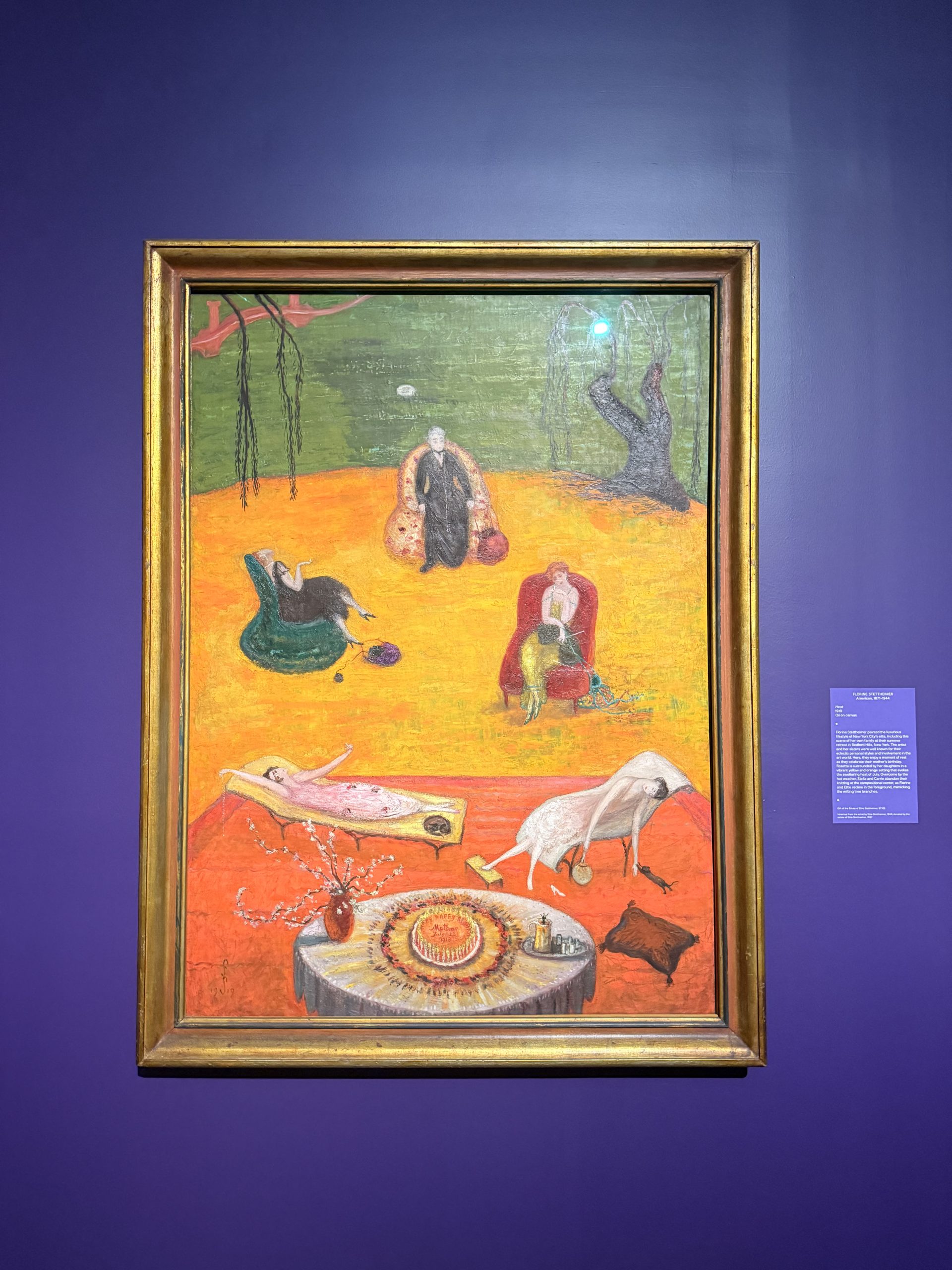
Heat
Florine Stettheimer
1919
What do you see going on in this work of art? Is there a story depicted?
Telling about how much rich people don’t care, cake is untouched, the cat is begging for their attention and trees are weeping as the wealthy lay back and care little for what luxuries present them. About privilage
What different visual elements (ie: line, color, light, proportions, scale, composition, media type etc.) do you notice, and how do they help you make sense of the artwork?
the people in the painting mimick the wilting the trees as they are comfortable and laid back, their limbs drooping as does the trees branches- for different reasons. The people have no worries in the world while the tree dies from their neglect.
How does this object compare to other objects, stories, or ideas you already know about?
This reminds of The Great Gatsby, that also details the pitfalls of privilege , which already parallels a timeless reality that the wealthy who have the benefit to not care can wreak havoc through simple neglect
What choices do you think the museum made about the object’s display?
the surrounding exhibits contains other works that might only be in possession of the wealthy, like historical artifacts and unique silverware that demonstrates the same “eclectic personal styles” the people pictured have
Group Members
Yasemin, Daryna, Adam, Anna, Oleksandra
-
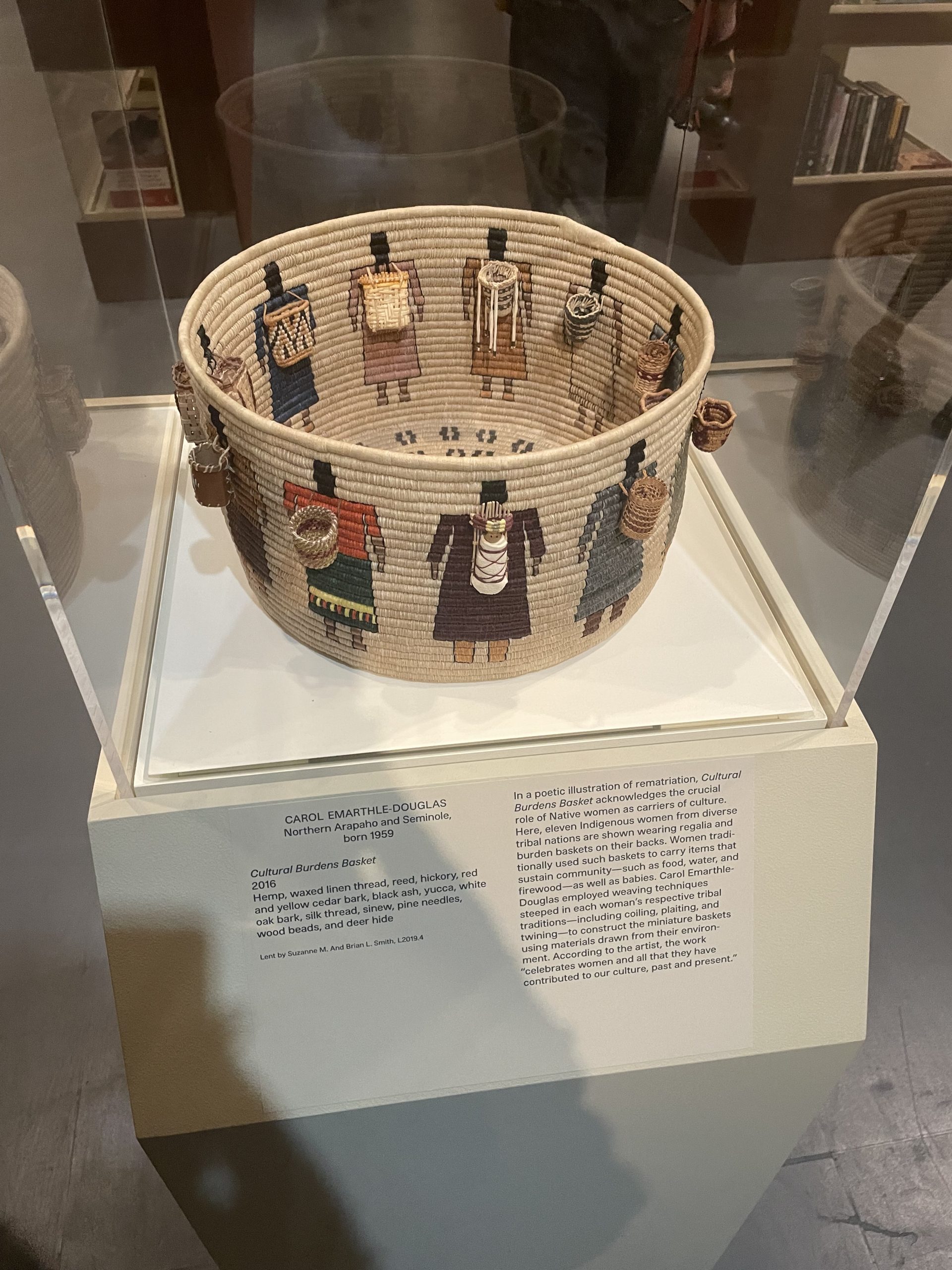
Cultural Burdens Basket
Carol Emarthle-Douglas
2016
What do you see going on in this work of art? Is there a story depicted?
I see that the basket depicts women holding their individual baskets around the piece. This could siginify the role of native women and what their baskets contributed the their communities.
What different visual elements (ie: line, color, light, proportions, scale, composition, media type etc.) do you notice, and how do they help you make sense of the artwork?
I see that each woman depicted on the basket has their own colors. They each wear different style shirts and skirts which can demonstrate their own unique personality which can be forgotten when talking about heir contributions.
How does this object compare to other objects, stories, or ideas you already know about?
This object is one similar to those that display the ignored and neglected history of women in many societies. Women have contributed substantially to the development of the modern world not just being homemakers.
What choices do you think the museum made about the object’s display?
I believe that the museum used the glass to protect the delicate basket and preserve its history.
Group Members
John Franks Jason Moy Joshua Mo
-
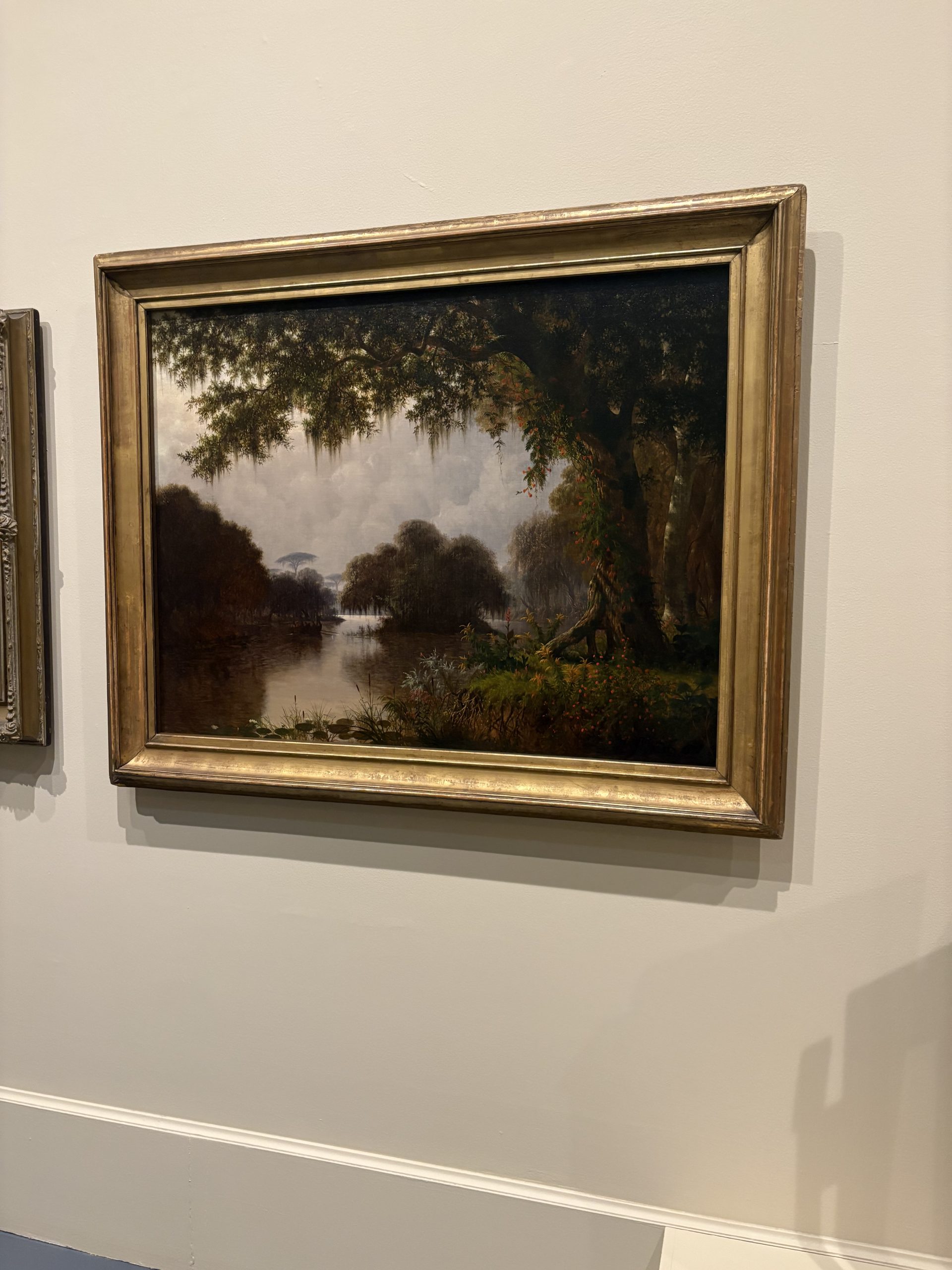
Evangeline
Joesph Rusling Meeker
1827-1887
What do you see going on in this work of art? Is there a story depicted?
The painting shows a quiet landscape with trees, water, and a soft, cloudy sky. It feels calm but also a little sad. It has a very fairy like vibe with the flowers and soft colors. There is a story being depicted which is about a poem “Evangeline” which expresses the journey of heartbreak and hope of a women searching for her lover.
What different visual elements (ie: line, color, light, proportions, scale, composition, media type etc.) do you notice, and how do they help you make sense of the artwork?
The colors are soft and natural, with greens, browns, and light blues that make the scene feel calm. Light shines through the clouds, giving the painting a gentle glow. Everything blends together nicely, making it look peaceful and a little fairy like.
How does this object compare to other objects, stories, or ideas you already know about?
It reminds us of many other landscape artwork of nature with emphasis on calm and quiet. The mood also is similar to the type you find in romantic art, evoking feelings to the viewer.
What choices do you think the museum made about the object’s display?
The museum utilized a gold frame to make the soft colors stand out as well as puts a light on the art piece to make the small images more visible.
Group Members
Suzan, Krisha, Wafa, Khalil, Yassin
-
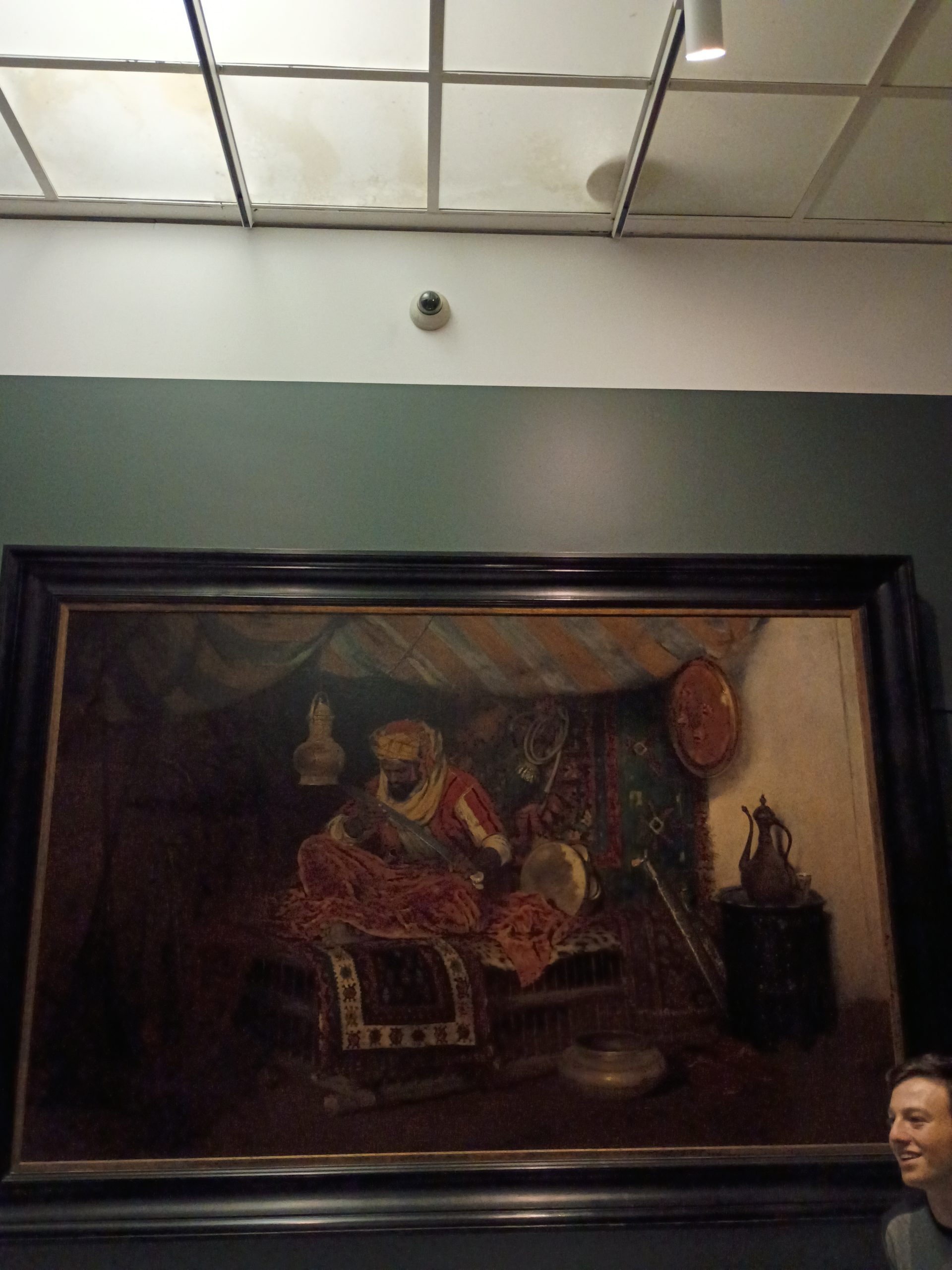
The Moorish Warrior
William Merritt Chase
1878
What do you see going on in this work of art? Is there a story depicted?
A presumably North African man is sat atop a bed covered with colorful rugs and blankets; he is staring intently at his sword and he is sat near an array of tapestries, vases, and pots.
What different visual elements (ie: line, color, light, proportions, scale, composition, media type etc.) do you notice, and how do they help you make sense of the artwork?
There is a stark contrast of the light between the darkness surrounding the man and the brightness of the foreground.
How does this object compare to other objects, stories, or ideas you already know about?
It is similar to classical art of Renaissance and post Renaissance West.
What choices do you think the museum made about the object’s display?
It is placed in a display of other paintings that exoticize other peoples and cultures
Group Members
Kai, Nick, Ilya, Bogdan, tajrian, Jonathon

