
This is a gallery curated by you, the students taking part in our Night at the Museum. Make it your own!
To have your own response appear on this page, form a group and submit a response.
-
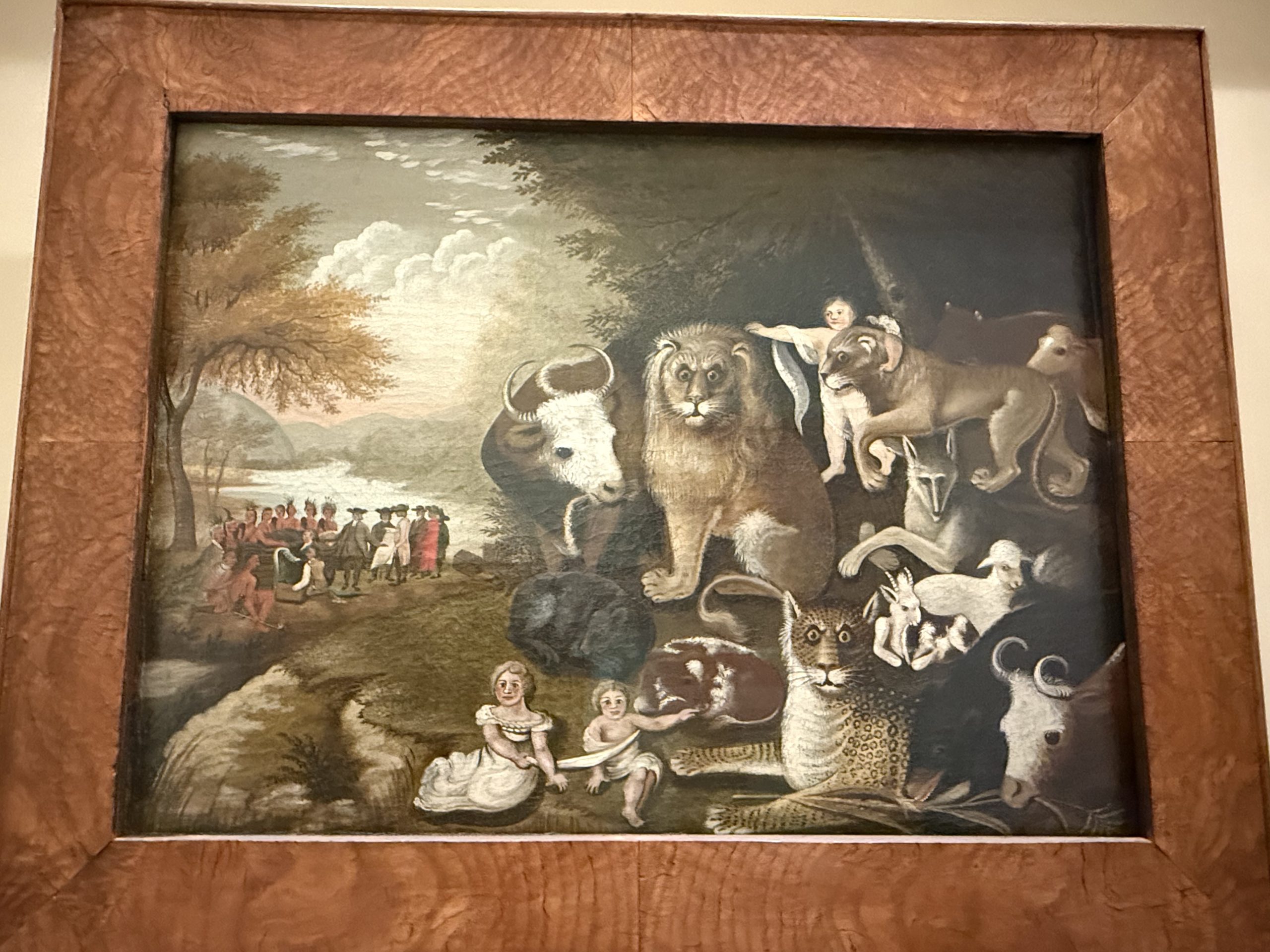
The Peaceable Kingdom
Edward Hicks
1833-34
What do you see going on in this work of art? Is there a story depicted?
In this painting we depict there are colonizers from Great Britain in the background shipping away and stealing the land of the Native Americans. The little white babies with the wings playing with the animals most likely represents the passing of the animals which represents how the Native Americans are getting their life taken away. This painting shows the history of our lands, and the wild animals that are on the opposite end of the natives also shows separation because of colonization.
Group Members
Eloradana Francisco, Freya Montas, Dorcas Taiwo
-
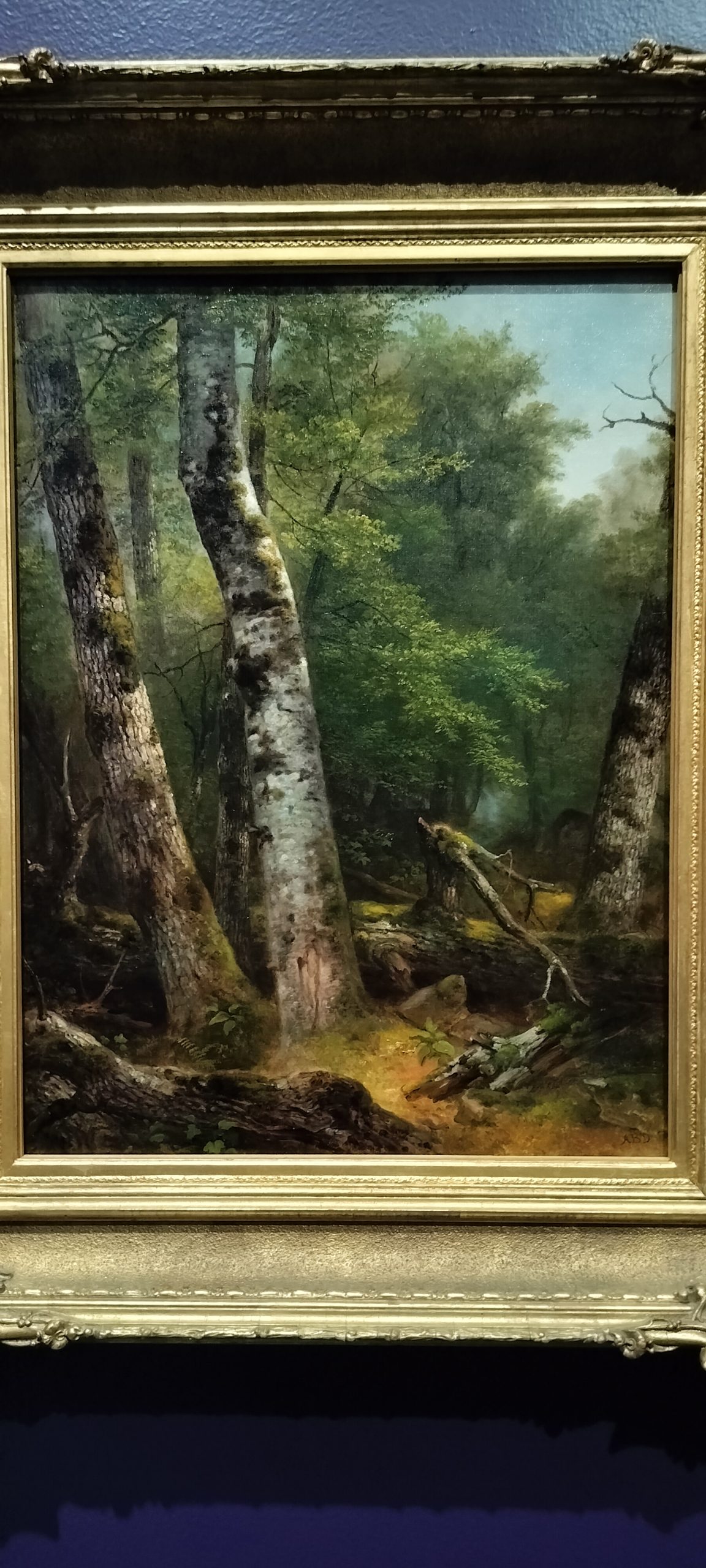
Landscape (birch and oaks)
Asher Brown Durand
1855 – 57
What do you see going on in this work of art? Is there a story depicted?
We see decay and growth, we see destruction and creation,life and death, broken and created.
What different visual elements (ie: line, color, light, proportions, scale, composition, media type etc.) do you notice, and how do they help you make sense of the artwork?
Everything is compressed and is filled with vertical strokes. The background is blurred to show the depth of the forest.
How does this object compare to other objects, stories, or ideas you already know about?
Compared to others, it is more serene but yet gloomy and spooky. It is more clearly depicted and realistic. It brings to mind the enchanted forest from a series of fairy tales.
What choices do you think the museum made about the object’s display?
It was placed with other paintings depicting the same genre, placed around paintings of forests that contrasted the objects style. The frame manages to bring more attention to the painting. It is situated right around the corner of a room with vibrant colors and people, bringing attention to the beauty and serenity of nature in general.
Group Members
Meewal jacob, Irene wu, Ashley arndt, Karen yacoub
-
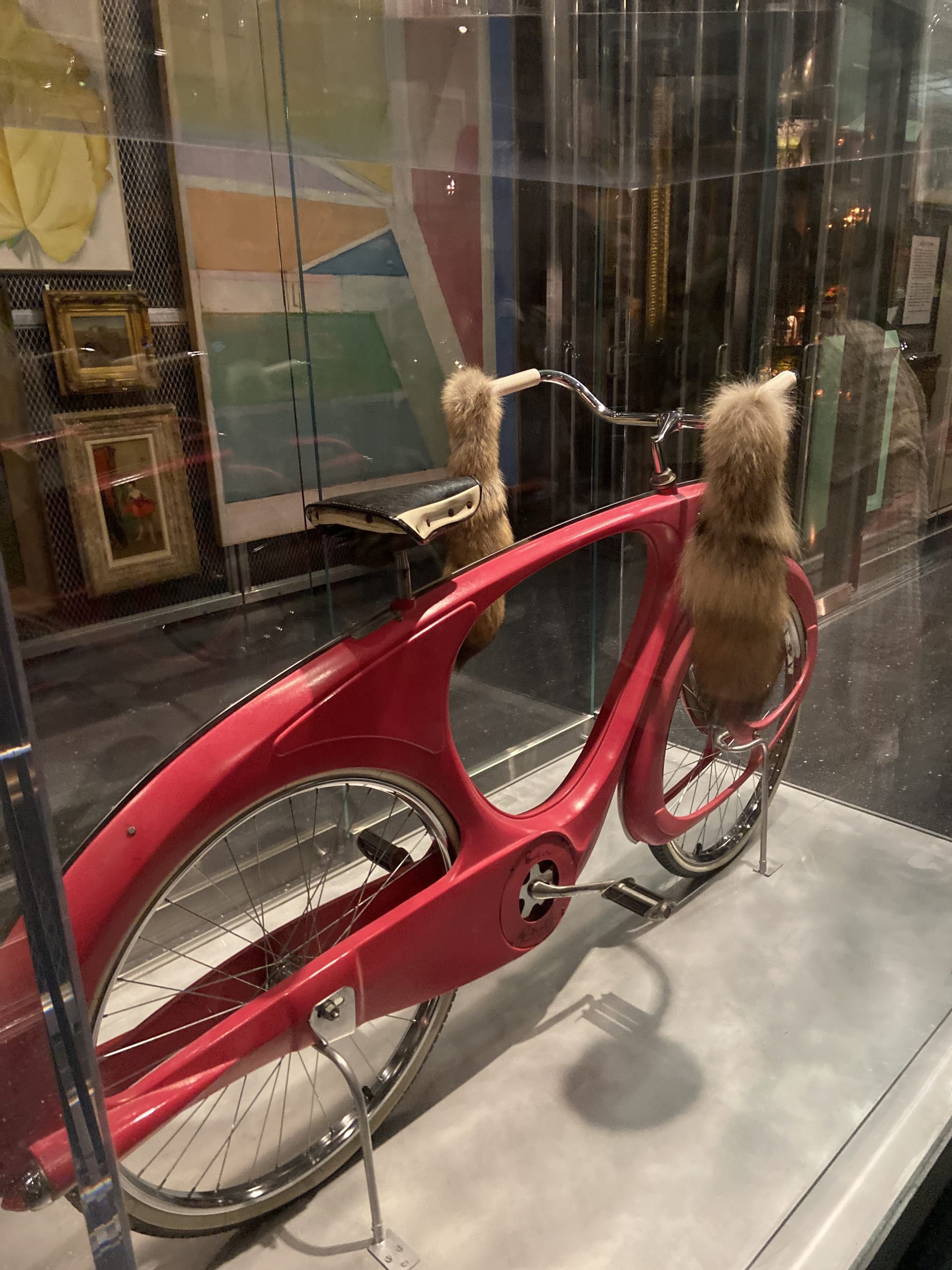
No title- bike
No artist posted
No year
What do you see going on in this work of art? Is there a story depicted?
It is a bike with air attached on the handle that looks like ears. It is telling the tale of futuristic transportation
What different visual elements (ie: line, color, light, proportions, scale, composition, media type etc.) do you notice, and how do they help you make sense of the artwork?
The hair on the handlebars makes the bike look different and unique. It isn’t the usual so that makes us think it is from the future
How does this object compare to other objects, stories, or ideas you already know about?
It compares to a regular bike that is strictly functional while this bike tells the story of the future. It’s interesting to see what people from the past imagined the future would be
What choices do you think the museum made about the object’s display?
It’s in a clustered area but it stands out because it’s in its own case. Although it doesn’t have a description it stands alone to be interpreted
Group Members
Sylvia Saad, Zaria Hosein, Elizabeth Juarez, Shivani Hardat, Anya Pawa, Haley Cruz
-
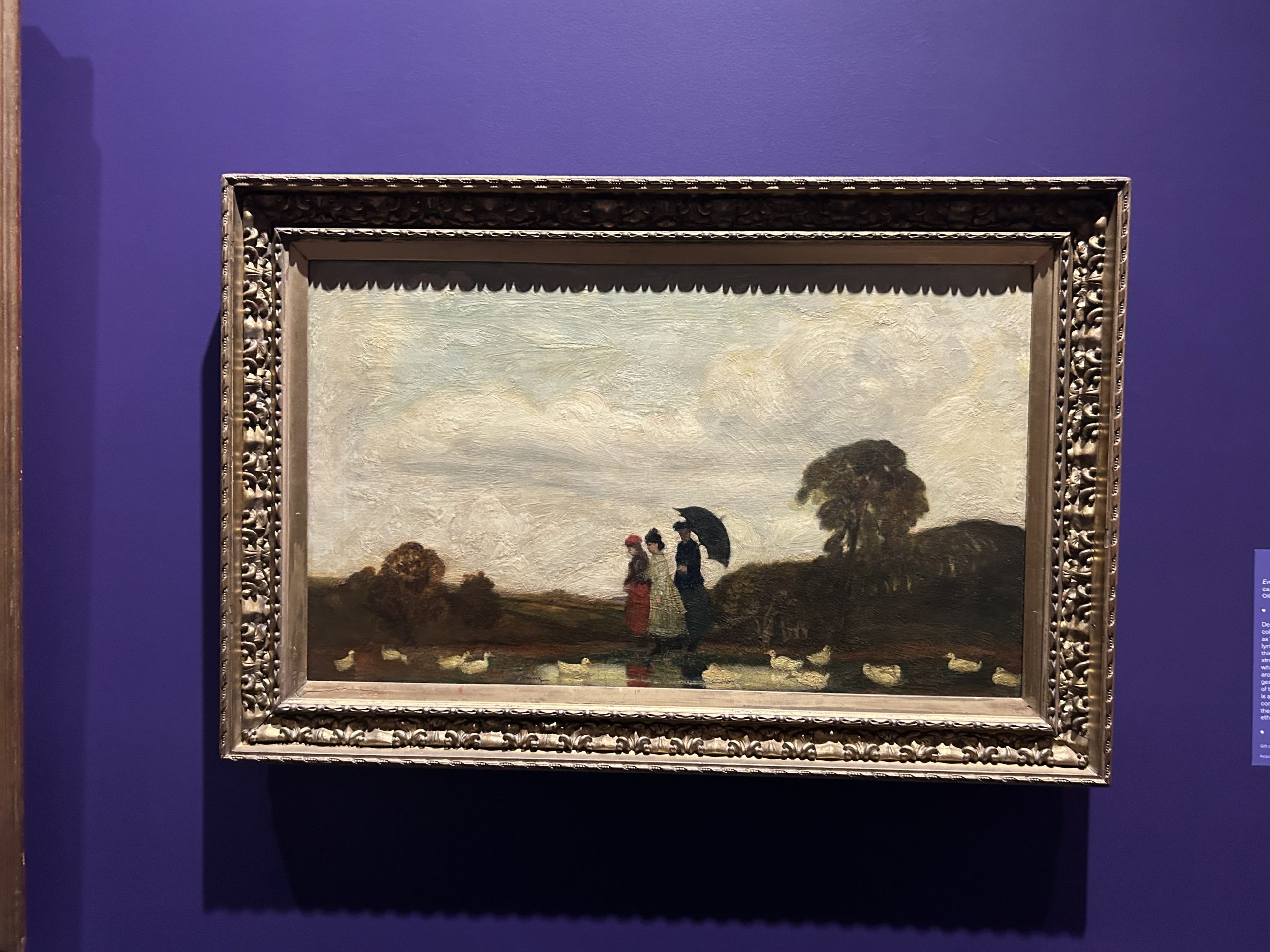
Every Saturday
Arthur B. Davis
1895-96
What do you see going on in this work of art? Is there a story depicted?
It looks like there’s a family walking near ducks. It can be a Saturday because that is the title. Also, we think it rained because there’s water and a person has an umbrella.
What different visual elements (ie: line, color, light, proportions, scale, composition, media type etc.) do you notice, and how do they help you make sense of the artwork?
The artist uses the lower half of the canvas and creates negative space in the sky. The sky seems to be cloudy without any sun in sight. A lot of warm colors in the painting signifying possibly 2 in the afternoon.
How does this object compare to other objects, stories, or ideas you already know about?
The painting style looks like it’s a technique used in the 1800s. It seems to be a style that was part of the realism in the years prior to abstract art in the 1900s. However we also think that it is not capturing everything.
What choices do you think the museum made about the object’s display?
They placed the painting with loads of other paintings that have trees and a focus on landscape. Everything is fond in oil paint or realistic. This is also in the exhibit called a quiet place, so the museum was probably going for a nice, peaceful, and comforting vibe. This painting suits all the other ones present.
Group Members
Rehmil and Megha
-
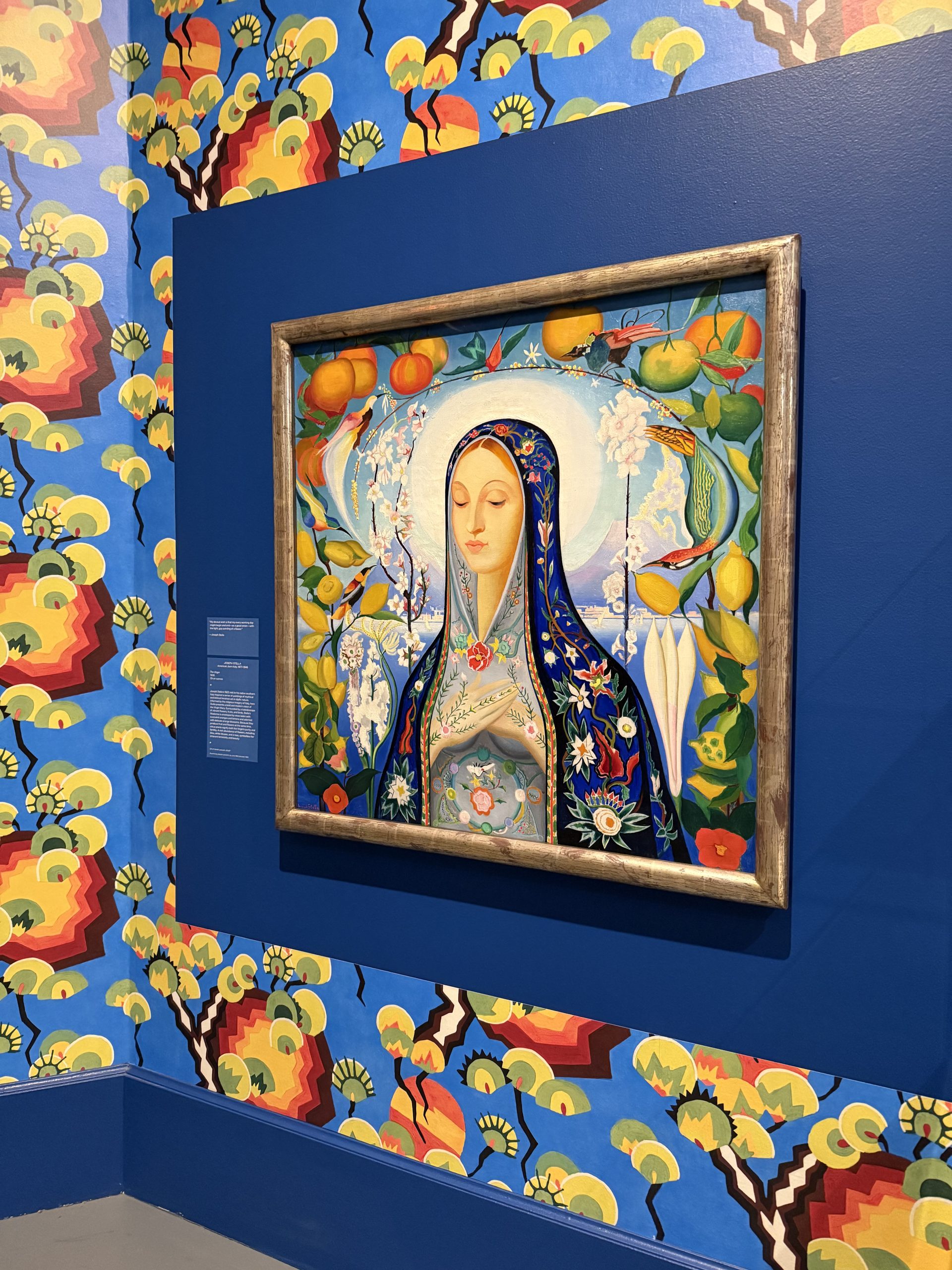
The virgin
Joseph Stella
1926
What do you see going on in this work of art? Is there a story depicted?
I see a painting of a women. She is surrounded with fruits to signify fertility and life. The background of the walls match the paintings background, this adds on the similar scheme.
What different visual elements (ie: line, color, light, proportions, scale, composition, media type etc.) do you notice, and how do they help you make sense of the artwork?
The visual elements showcase a very colorful and vibrant painting in combination to the bag round walls. The colors include blue, different shades of green, and blue.
Group Members
Francesca Lapointe, Fawziyah Abidabaher, Suah Kim
-
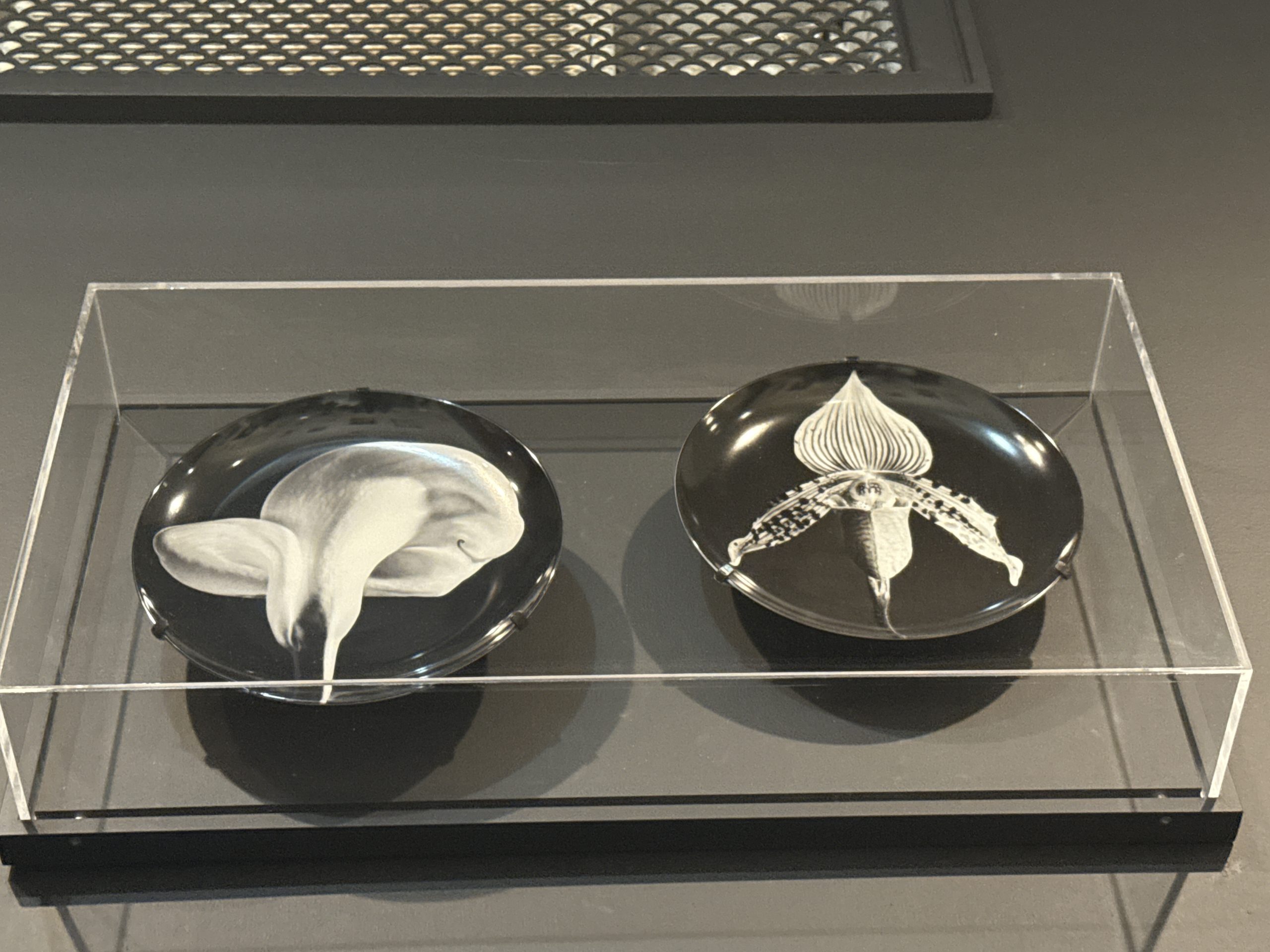
Calla Lily Plate
Robert Mapplethorpe, Swid Powell
1989
What do you see going on in this work of art? Is there a story depicted?
In this art work, we see a flower blooming in darkness. We feel that the story depicts the possibility of life blooming in the darkness.
What different visual elements (ie: line, color, light, proportions, scale, composition, media type etc.) do you notice, and how do they help you make sense of the artwork?
It is a photograph on a glazed plate. There is simple composition and high contrasts between white and black.
How does this object compare to other objects, stories, or ideas you already know about?
In the book written by Mapplethorpe’s best friend, Patti Smith, who is the writer of the book Just Kids, both Smith and Mapplethorpe’s lives transformed while they lived in a depression and time of crisis in figuring out their purpose. This deeply connects with that idea, with a flower blooming and gaining a beautiful life in extreme darkness.
What choices do you think the museum made about the object’s display?
The objects display is in a dark room, but the light given in the plates brings a contrast to the dark corners of the room.
Group Members
Lukasz Grum, Victoria Skomra, Felicia Cruciata
-
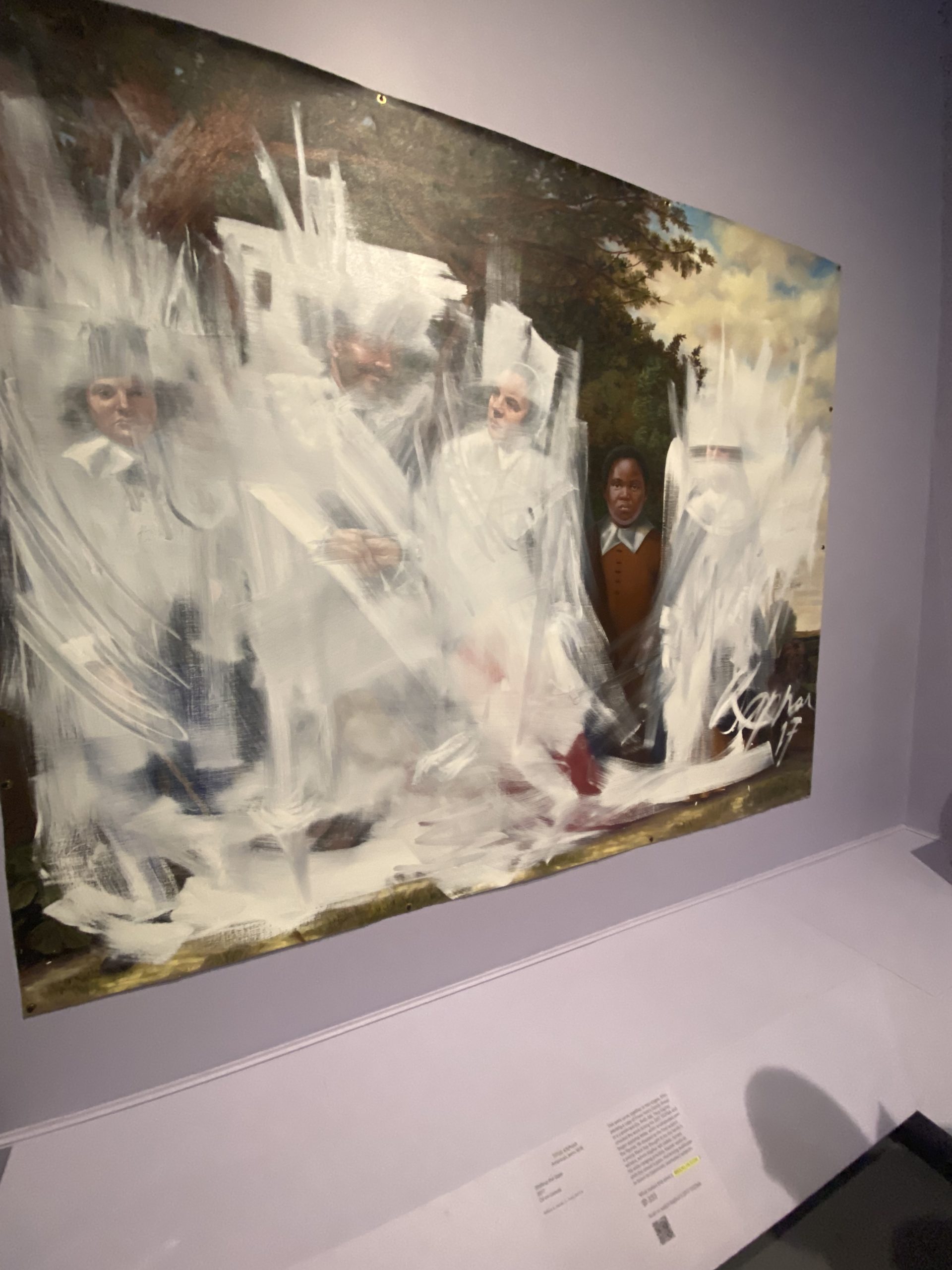
Shifting the gaze
Titus kaphar
1976
What do you see going on in this work of art? Is there a story depicted?
It is seemingly a white family that is enjoying a picture together as part of their everyday life however for some reason there seems to have been something that happened that might’ve affected only the white family with the black servant boy being the only one left. This is clearly shown by the white family have white brush marks over them as if to erase the idea of the white family from the painting.
What different visual elements (ie: line, color, light, proportions, scale, composition, media type etc.) do you notice, and how do they help you make sense of the artwork?
This artwork instantly makes you notice the only person that isn’t crossed over with white paint. Everyone that was crossed over seems to be white or light-skinned, while the only person that isn’t crossed over is the dark-skinned child. It is also worth noting that whoever painted over these people left their signature with the same paint used to cover them.
How does this object compare to other objects, stories, or ideas you already know about?
I’ve visited many museums that have this style/subject of painting and it seems to me that the point of this painting is a subversion of the trope. For example in paintings that depict a white family as well as their black servants the black subjects usually are not depicted to be making direct eye contact with the viewer since it was viewed as improper. Additionally, there are multiple instances of these kinds of paintings that end up having the black servant erased off the painting. So the painting is a subversion because not only does the black kid make very clear eye contact with the viewer but the actual subjects that are the white family are the ones that are erased in this case. This is likely done to shed light on how black servants in white families used to be depicted and why it was racist.
What choices do you think the museum made about the object’s display?
With the painting being in a corner, and also being one of the biggest canvases amongst the room, we think this display was placed there to quickly grab the attention of the viewers. Moreover, compared to the other art displayed in the room, this one had a unique and powerful exhibit.
Group Members
Thomas Solimeo, Brandon Guo, Aria Jafari, Ruben Torres
-
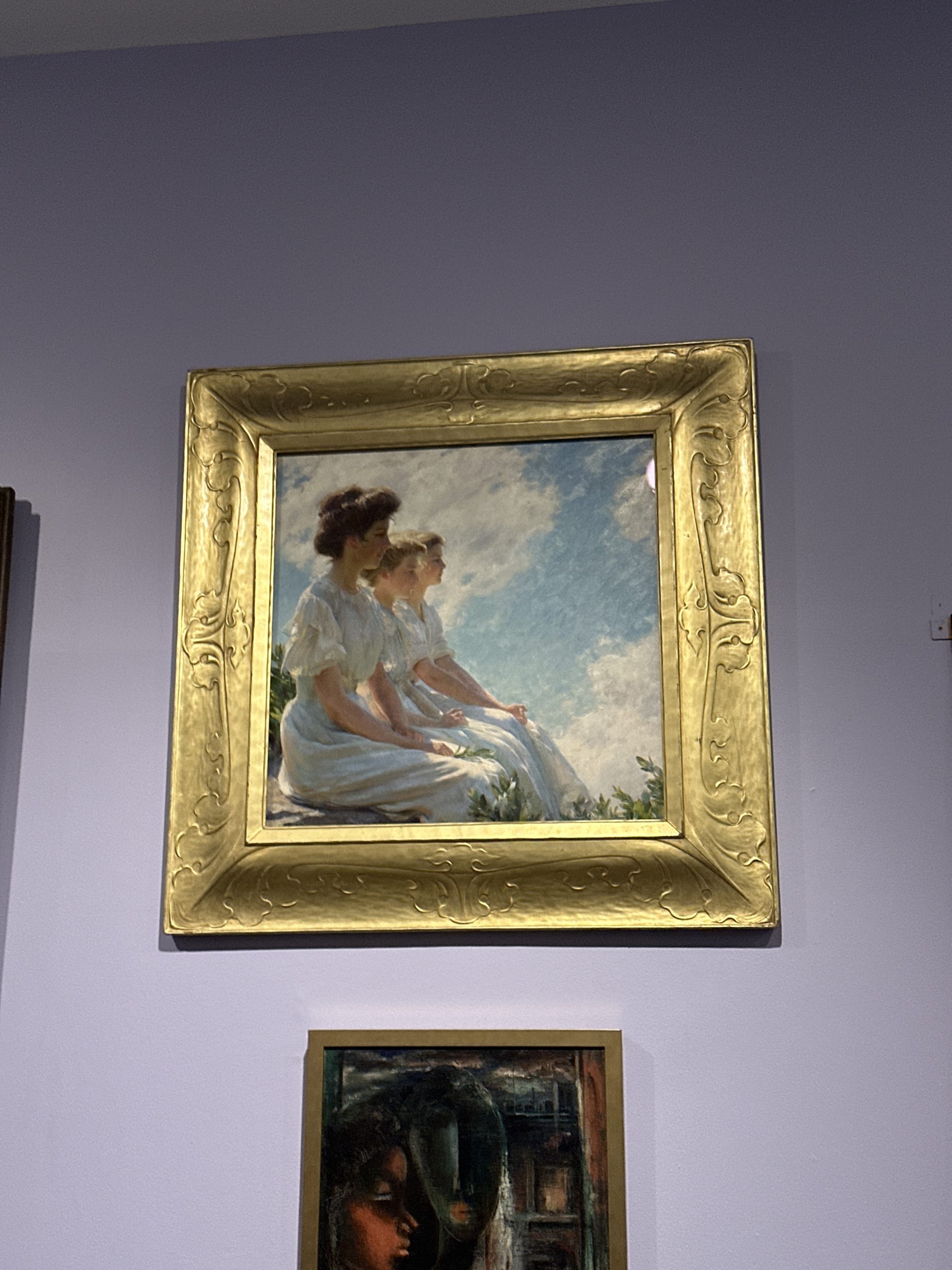
on the heights
Charles Courtney Curran
1909
What do you see going on in this work of art? Is there a story depicted?
back when the painting was made in 1909, it depicts the same roles that women had in the household. This is why we think that the two sisters are wearing the same dress as their mother and because they’re looking solemnly out into the background because they’re envisioning a life that they never are going to get.
What different visual elements (ie: line, color, light, proportions, scale, composition, media type etc.) do you notice, and how do they help you make sense of the artwork?
the first thing i noticed was the use of light pastel colors. it gives the artwork a very soft tone with tranquility, and the way the women are looking out into the distance also adds to that vibe. in addition to the light blue dress and sky, the inclusion of green in the background adds to the breezy nature scene that I can feel through the artwork.
How does this object compare to other objects, stories, or ideas you already know about?
this painting reminded me of when I was learning about the industrial revolution and how femininity and childhood were kind of linked away. That’s how I see the children and the woman having the same clothing and it’s kind of a soft view, and it’s like the woman’s world is more softer. There’s not much to worry about in quotations compared to a man’s world. they look like they’re taking a break as well.
What choices do you think the museum made about the object’s display?
I feel like the museum wanted to amplify woman’s voices and to show different depiction of life for a woman.
Group Members
Rachel sasao, harquin rodriguez, leart Brahimaj, Judea Mercer, Kerem Satar
-
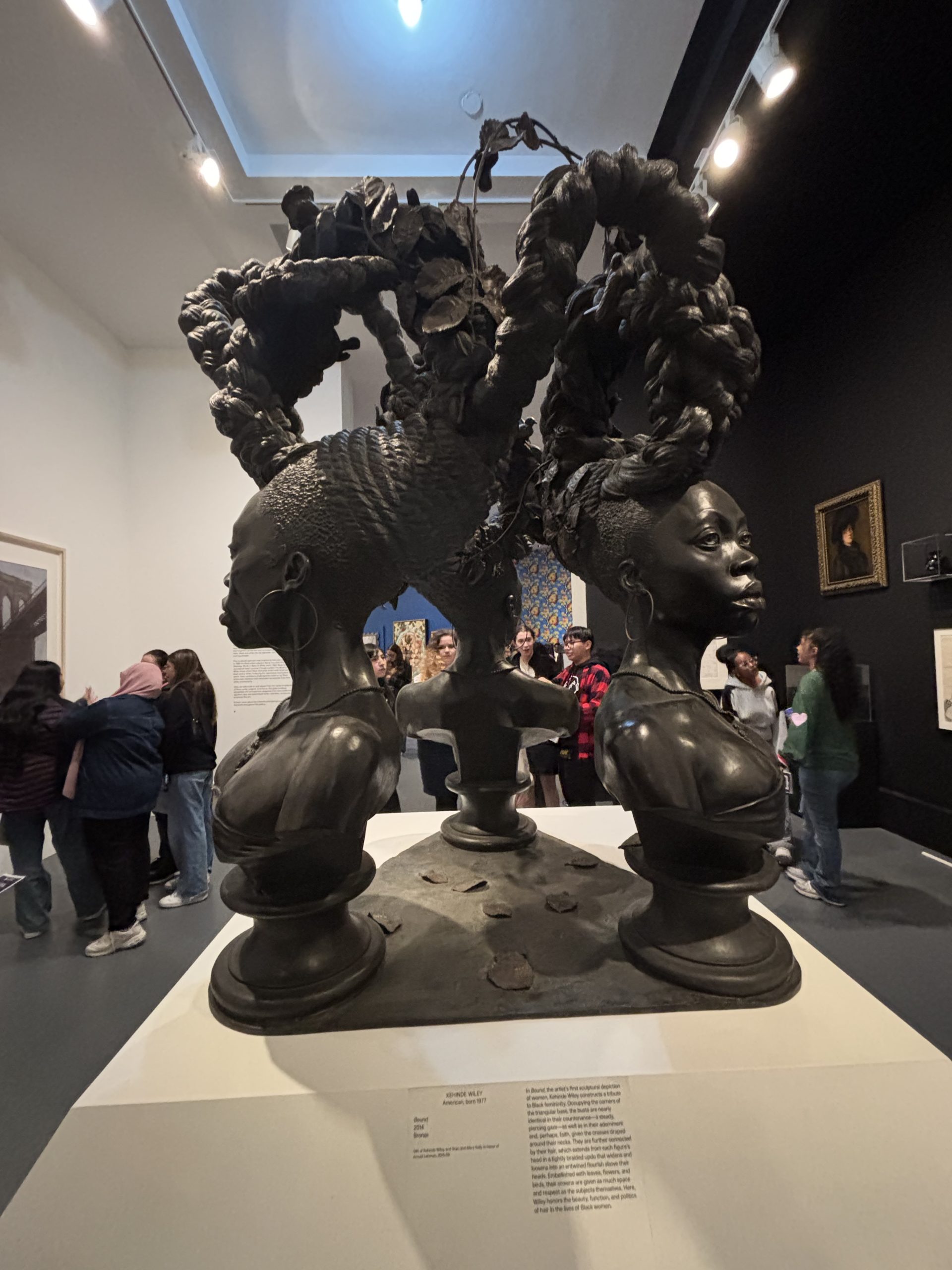
Bound
Kehinde Wiley
2014
What do you see going on in this work of art? Is there a story depicted?
I see black women with their hair intertwined. The women look very confident. Their hair is a symbol of connection with each other and the leaves represent their connection to nature.
What different visual elements (ie: line, color, light, proportions, scale, composition, media type etc.) do you notice, and how do they help you make sense of the artwork?
Their skin is smooth while their hair is course and textured. They are all wearing jewelry making them look empowered.
How does this object compare to other objects, stories, or ideas you already know about?
This object represents the feminine empowerment and we think it related Frida Kahlo. Her artwork explores gender expression and feminism.
What choices do you think the museum made about the object’s display?
They put it right in the middle catching the eyes of the people. They want to display confident women and empower other females through this piece.
Group Members
Daisy Chan, Shalyssa Mantock, Amna Tayyab, Rafeea Rahman
-
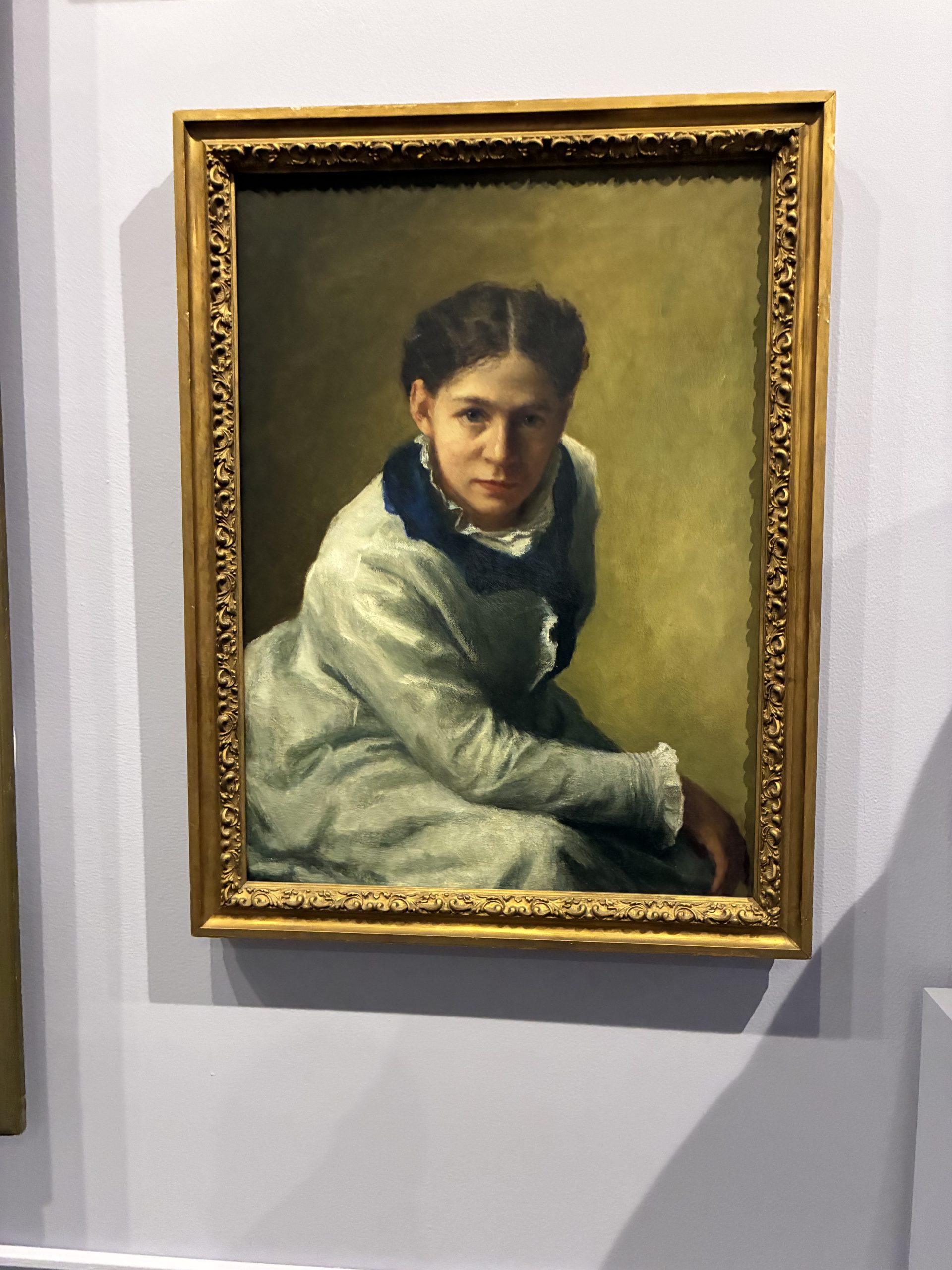
Sarah Cowell LeMoyne
Jane E. Bartlett
1877
What do you see going on in this work of art? Is there a story depicted?
The subject’s expression is very focused and is staring at the audience assertively. Her intimidating aura differs from what was expected of women during the time period that the artwork was created. Women were supposed to be quaint and calm, qualities that the woman in the painting is not.
Group Members
Nicole, Saheras, Rianne, Jaicee, Emily

