
This is a gallery curated by you, the students taking part in our Night at the Museum. Make it your own!
To have your own response appear on this page, form a group and submit a response.
-

Give Flowers. Often.
Laura Wheeler Waring
1940
What do you see going on in this work of art? Is there a story depicted?
When initially viewing this artwork, we simply see an African American woman sitting and holding flowers. However, she is dressed in dark blue with colorful patterns of flowers. Also, she seems to be wearing a ring and has a happy expression, suggesting she is married but is able to act independently, suggesting she is breaking bounds within marriages.
What different visual elements (ie: line, color, light, proportions, scale, composition, media type etc.) do you notice, and how do they help you make sense of the artwork?
In this artwork, there is a great variety of colors that both contrast and complement each other. Her dress is a dark blue but is highly contrasted with orange and red flowers, as well as a lighter background. These contrasts suggest this woman is fighting many issues in society, like both womens rights and discrimination, which were very large social issues in the year 1940 when this painting was made.
Group Members
Andy Shyklo, Fiona Wong, Dhruv Agarwal, Farhan Ahsan, Aisha Zaidi, Eiriny Ayoub, Zena Shaalan
-
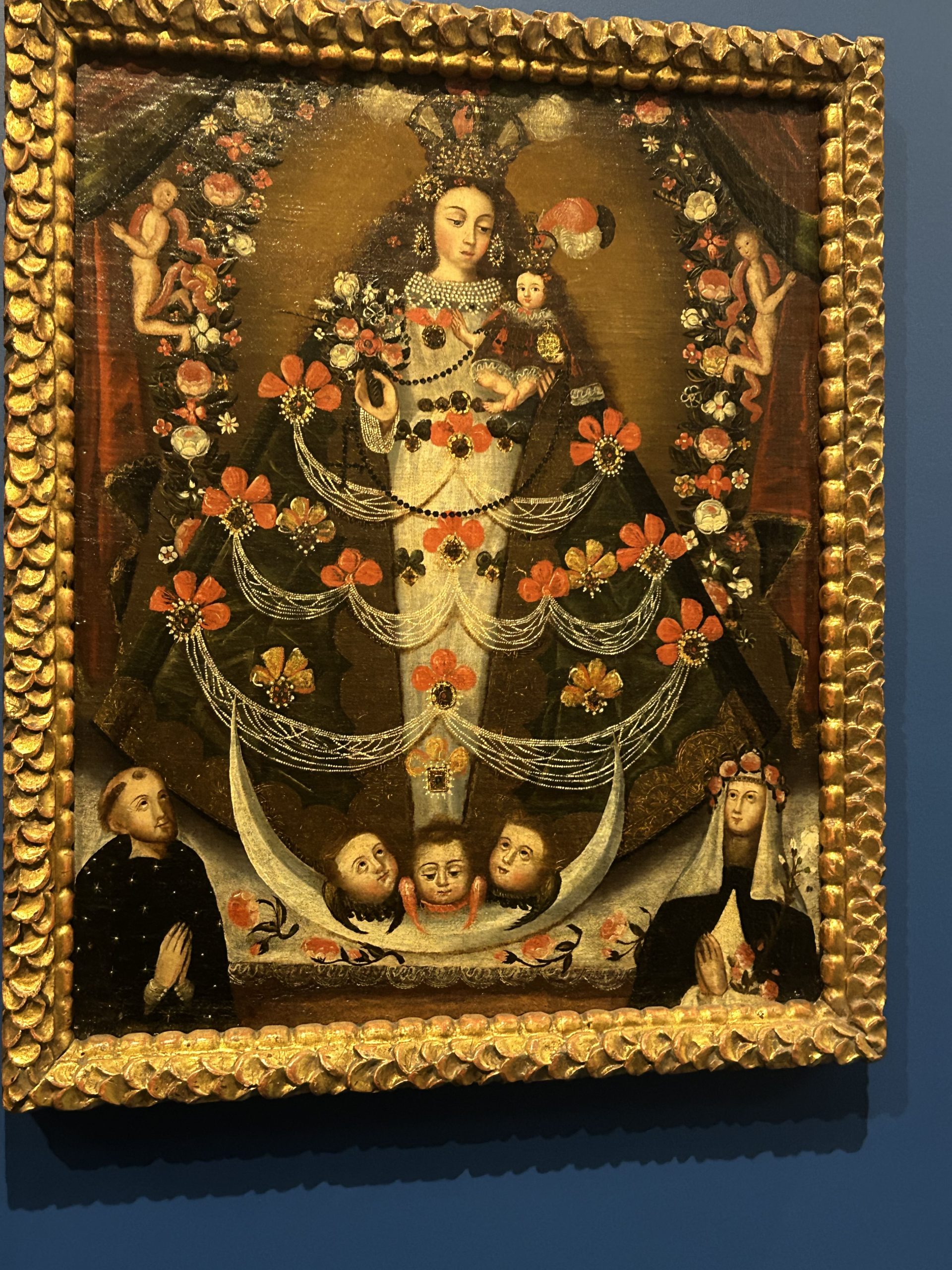
Virgin of Pomata with St. Nicholas and St. Rose of Lima
Frank L. Babbot
1700-1750
What do you see going on in this work of art? Is there a story depicted?
This painting seems to be portraying the rise or blessing of the virgin of Pomata.
What different visual elements (ie: line, color, light, proportions, scale, composition, media type etc.) do you notice, and how do they help you make sense of the artwork?
The virgin of Pomata is dressed in jewels and flowers. She is also surrounded by two other saints, St. Nicholas and St. Rose of Lima, as well as angels. Her hair is very long and covered in flowers.
How does this object compare to other objects, stories, or ideas you already know about?
In other religious paintings you can see a halo around the head of a saint or the virgin Mary, however; in this painting there are no halos around the heads of the saints or the virgin of Pomata. The virgin of Pomata is dressed very differently compared to that of the virgin Mary for example, she’s dressed in a more flamboyant style.
What choices do you think the museum made about the object’s display?
The frame surrounding the painting is bright gold and textured compared to the plain blue wall that it’s placed upon, causing it to pop
Group Members
Tasnim Rahman, Finn Rodriguez, Yerlina Martinez Arcadio
-
Bridge Tower
Glenn O. Coleman
1929
What do you see going on in this work of art? Is there a story depicted?
I see the Brooklyn Bridge. A battleship is at the foreground of the painting. A cautionary story may be told based on the red waters near the battleship under the bridge.
What different visual elements (ie: line, color, light, proportions, scale, composition, media type etc.) do you notice, and how do they help you make sense of the artwork?
There is a divide in theme and color between the left and right half of the painting. The left half shows the glamour of the city, while the right half shows the harsh reality of war, particularly highlighted through the red tones seen throughout the right half versus the light blue cheerful color theme seen on the left.
How does this object compare to other objects, stories, or ideas you already know about?
This object does share a common theme with anti-war sentiment art pieces, since it evokes an emotion of fear for possible combat activities.
What choices do you think the museum made about the object’s display?
This painting is surrounded by other paintings that depict a body of water in a similar light blue color tone. Looking from left to right, the painting become more dull. A darker intellectual theme emerged from left to right.
Group Members
Vic Chen, Tahmid Rahi, Haroon Awan, Arif Mohamed, Matthew Hartmann, Aevann David, Ryan Radwan
-
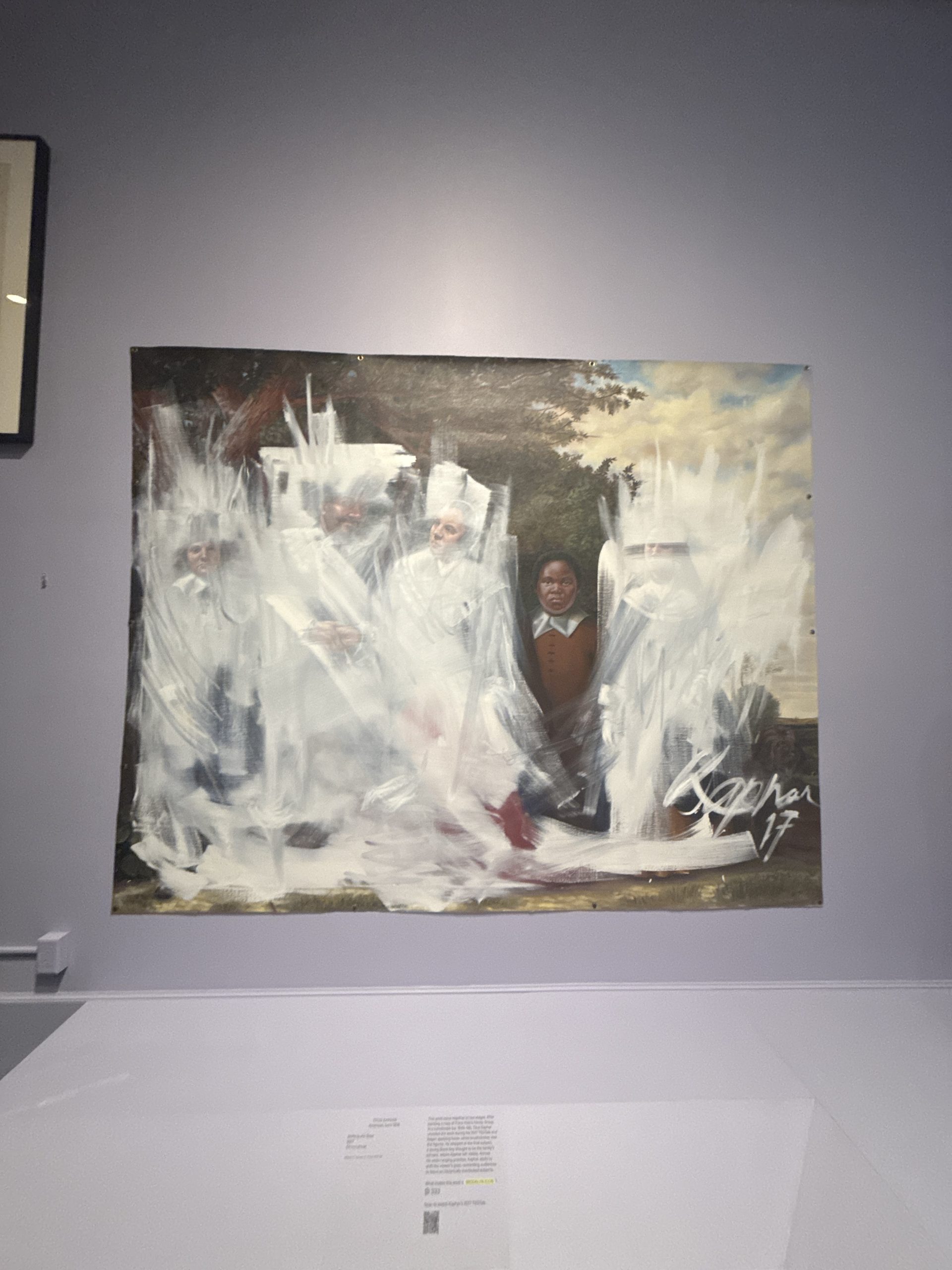
Shifting the gaze
Titus kaphar
2017
What do you see going on in this work of art? Is there a story depicted?
We see that there is clearly one focus being depicted and that is of the black boy.
What different visual elements (ie: line, color, light, proportions, scale, composition, media type etc.) do you notice, and how do they help you make sense of the artwork?
The white stokes that cover the other figures tell a clear story of what the artist is saying. It’s time to shift the focus.
How does this object compare to other objects, stories, or ideas you already know about?
We know that art was predominantly used to make light on the rich and white people focusing on their jewelry, clothes, and color.
What choices do you think the museum made about the object’s display?
The figure next to the artwork known as the Kwakawaka were used to portray and communicate status, and the “Shifting the Gaze” piece next to it shows a contrast that indicates the status is not the focal point.
Group Members
Maria Vasylets, Gabrielle Petroff
-
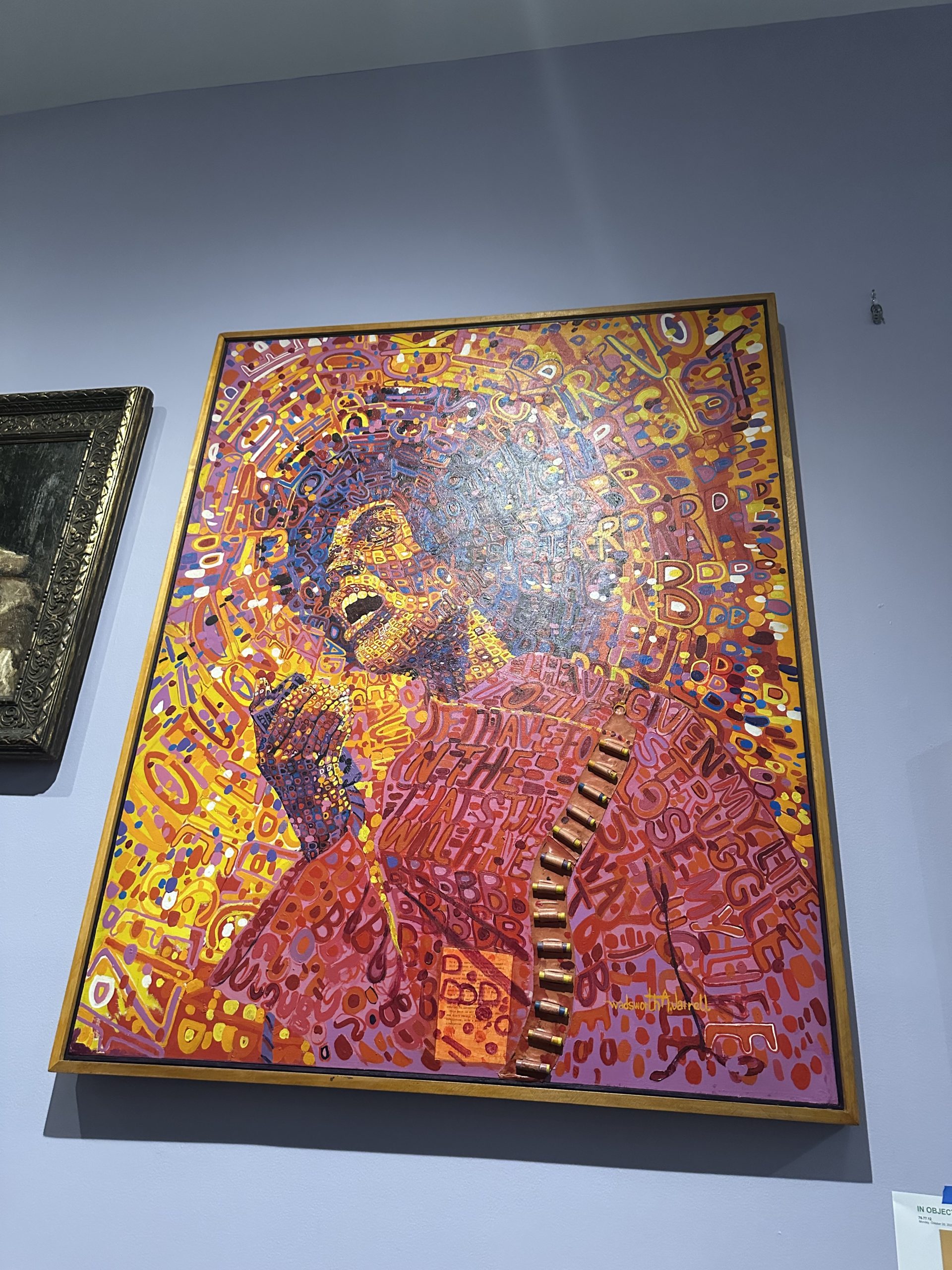
Revolutionary (Angela Davis)
Wadsworth Jarrel
1971
What do you see going on in this work of art? Is there a story depicted?
We see a passionate woman speaking into a microphone. The woman in the painting is Angela Davis, who is an activist to black liberation. It shows her strength and the empowerment it had onto her community.
What different visual elements (ie: line, color, light, proportions, scale, composition, media type etc.) do you notice, and how do they help you make sense of the artwork?
This artwork displays pastels on it that could resemble bullets. The painting was drawn with acrylic and displays light yellows and pinks. It helps us make sense of the liveliness and passion behind the activism. The powerful, colorful words surrounding the woman also helps display the powerful energy.
How does this object compare to other objects, stories, or ideas you already know about?
This object had significant impact to the black community shown in an artist way through pastels. It tells a story in a vibrant and engaging way to the audience.
What choices do you think the museum made about the object’s display?
The pictures surrounding are human portraits that display humanity around the world in different time periods.
Group Members
Mark Erlenwein, Kinga Karp, Leanngelisse Davalos
-
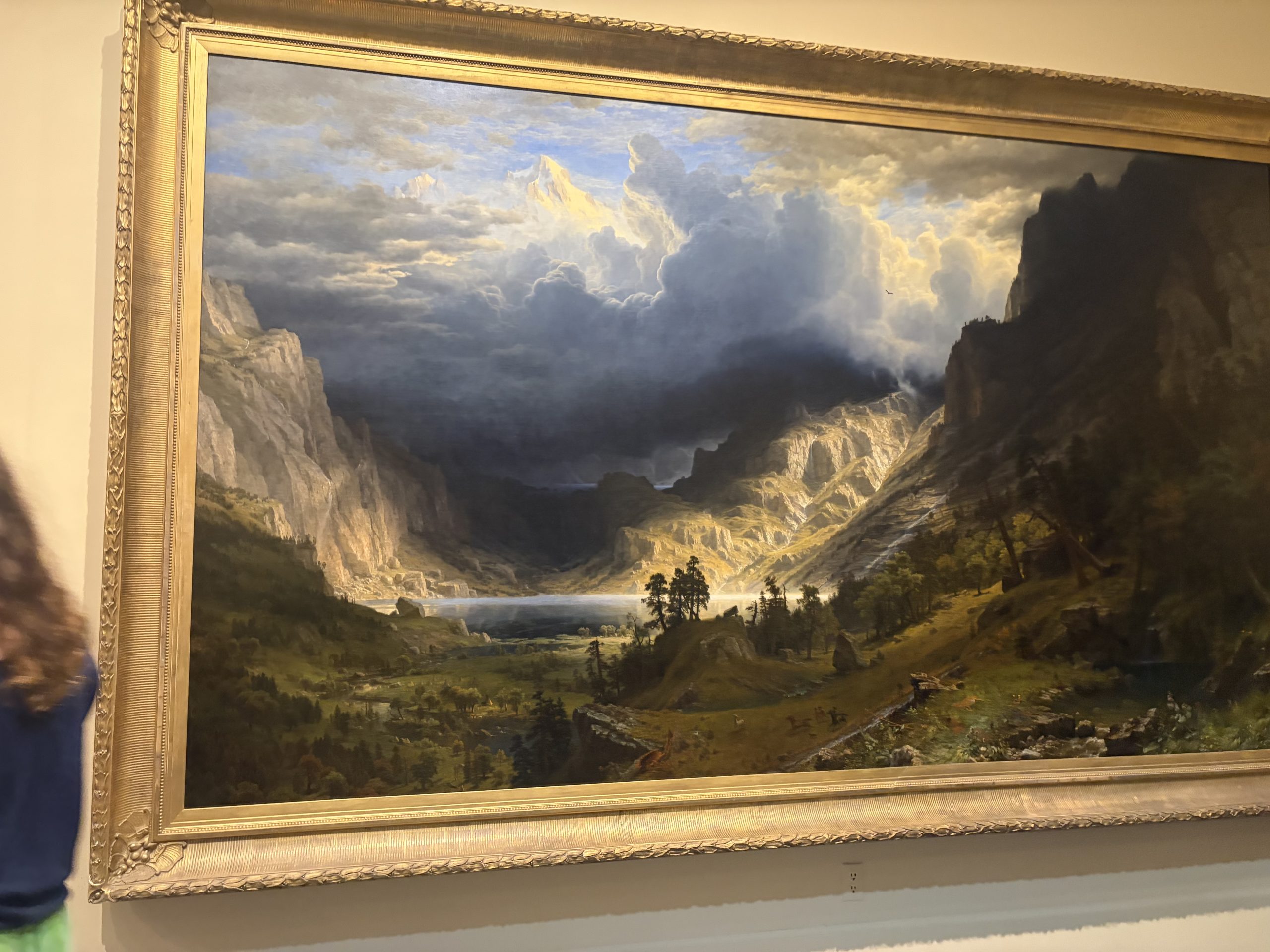
A storm in the Rocky Mountains , Mt. Rosalie
Albert bierstadt
1866
What do you see going on in this work of art? Is there a story depicted?
A storm is hitting the rocky mountains
What different visual elements (ie: line, color, light, proportions, scale, composition, media type etc.) do you notice, and how do they help you make sense of the artwork?
The darkness of the clouds with the bright mountains show the visual of the storm
How does this object compare to other objects, stories, or ideas you already know about?
Complete nature with no creature to enhance the story drawing attention directly to nature
What choices do you think the museum made about the object’s display?
The size of the picture. So that it makes you feel like you are in the storm.
Group Members
Valerie serieh Evie Kattri
-
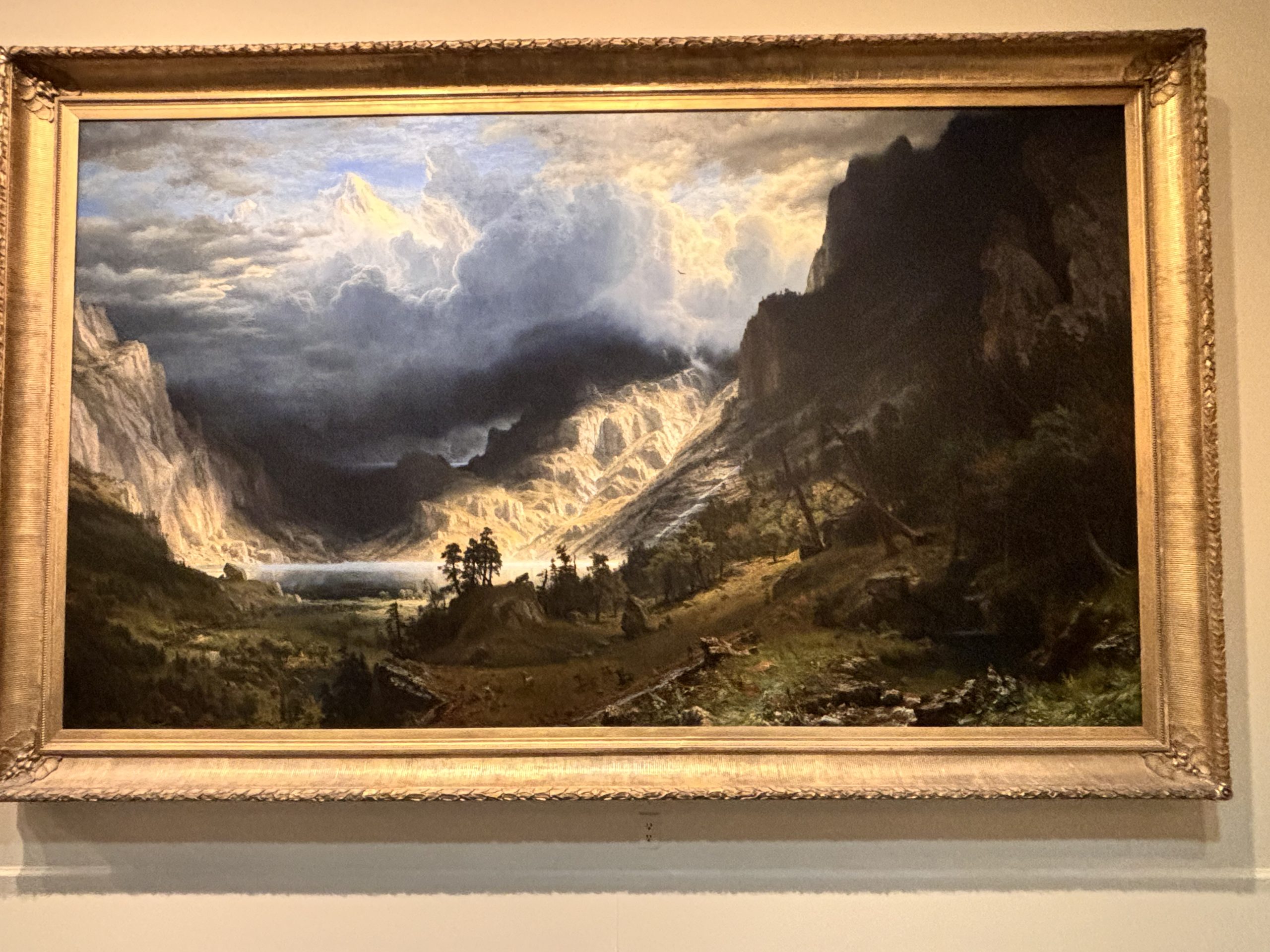
A Storm in the Rocky Mountains, Mt. Rosalie
Albert Bierstadt
1866
What do you see going on in this work of art? Is there a story depicted?
We see a small community depicted. In the distance we see teepees set up. In the foreground on the right, we see a dead deer and some hunters on horseback. It appears one of the hunters is chasing his horse.
What different visual elements (ie: line, color, light, proportions, scale, composition, media type etc.) do you notice, and how do they help you make sense of the artwork?
The painting is very large, but the story takes place in a very small part of it. We can take in the grand scenery, but only after looking closely can you see the civilization. Light is contrasted here. We see sunshine near the mountain and lake, yet darkness is creeping in from above. There is a sense of foreboding, and it seems a storm is coming on.
How does this object compare to other objects, stories, or ideas you already know about?
The painting tells the story of a Native American tribe. This fits with the native theme of other artwork in this section of the museum.
What choices do you think the museum made about the object’s display?
It is the first piece of artwork you notice when you enter this section of the museum. It is large and catches the viewers attention. There is nothing else near it, and as you walk by, you are captured by the painting.
Group Members
Annamaria Moog, Alexandra Hall, Felicia Granel, Mayra Park, Lenin Tunja
-
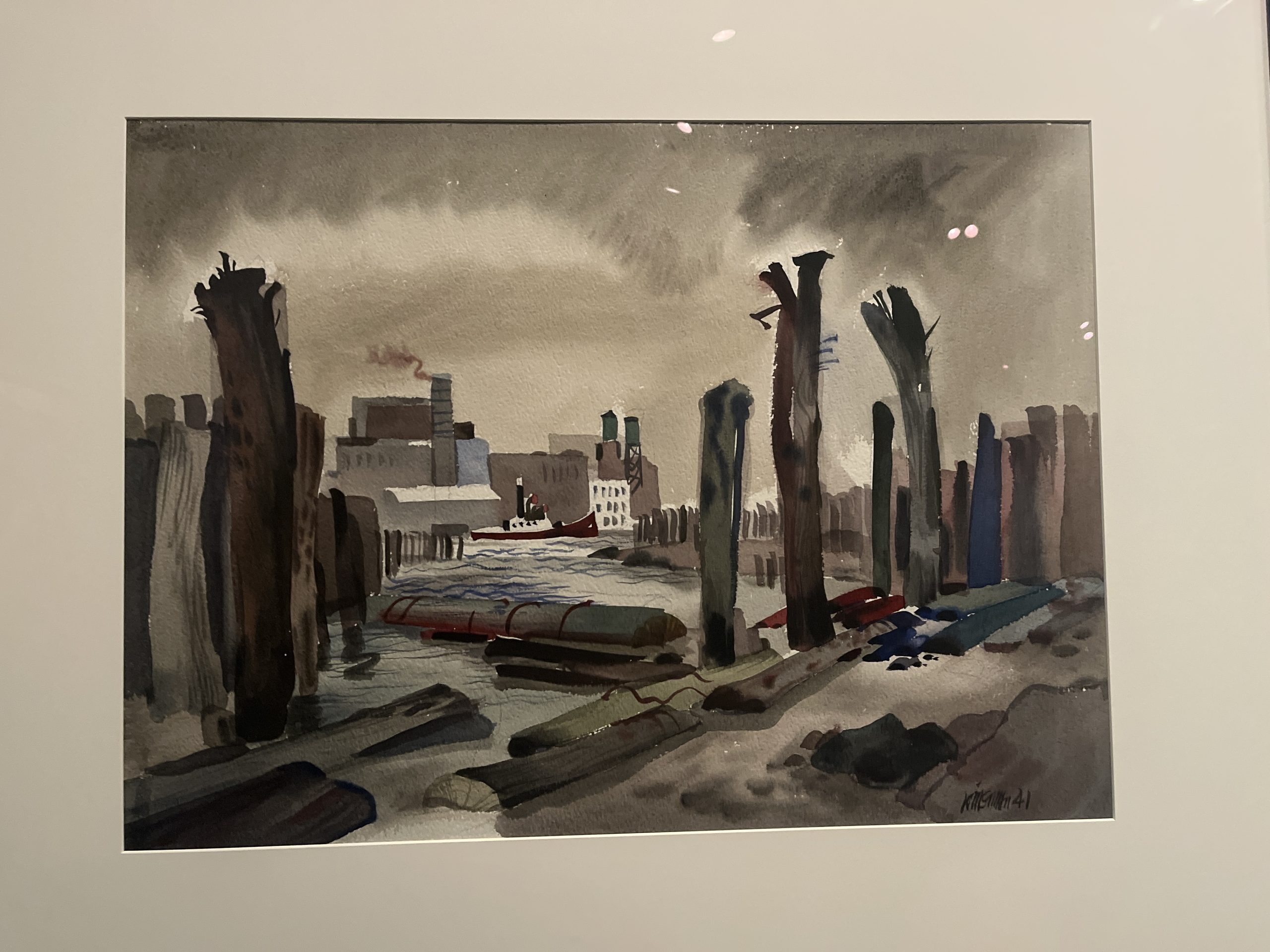
Old Logs
Dong Kingman
1941
What do you see going on in this work of art? Is there a story depicted?
There is a boat about to set sail in polluted water. The water seems dirty from lots of logs and other garbage by it.
What different visual elements (ie: line, color, light, proportions, scale, composition, media type etc.) do you notice, and how do they help you make sense of the artwork?
The dark colors represent the pollution from the factory. The gloomy sky gives a negative mood.
How does this object compare to other objects, stories, or ideas you already know about?
Because I live right by the water I see factories by the city sending pollution just like this out into the environment every day.
What choices do you think the museum made about the object’s display?
The painting represents a Brooklyn setting, and this is in a Brooklyn Museum showing that it represents the setting of the painting.
Group Members
Daniel Pfleger, Matteo Manieri, Abdallah Saad
-
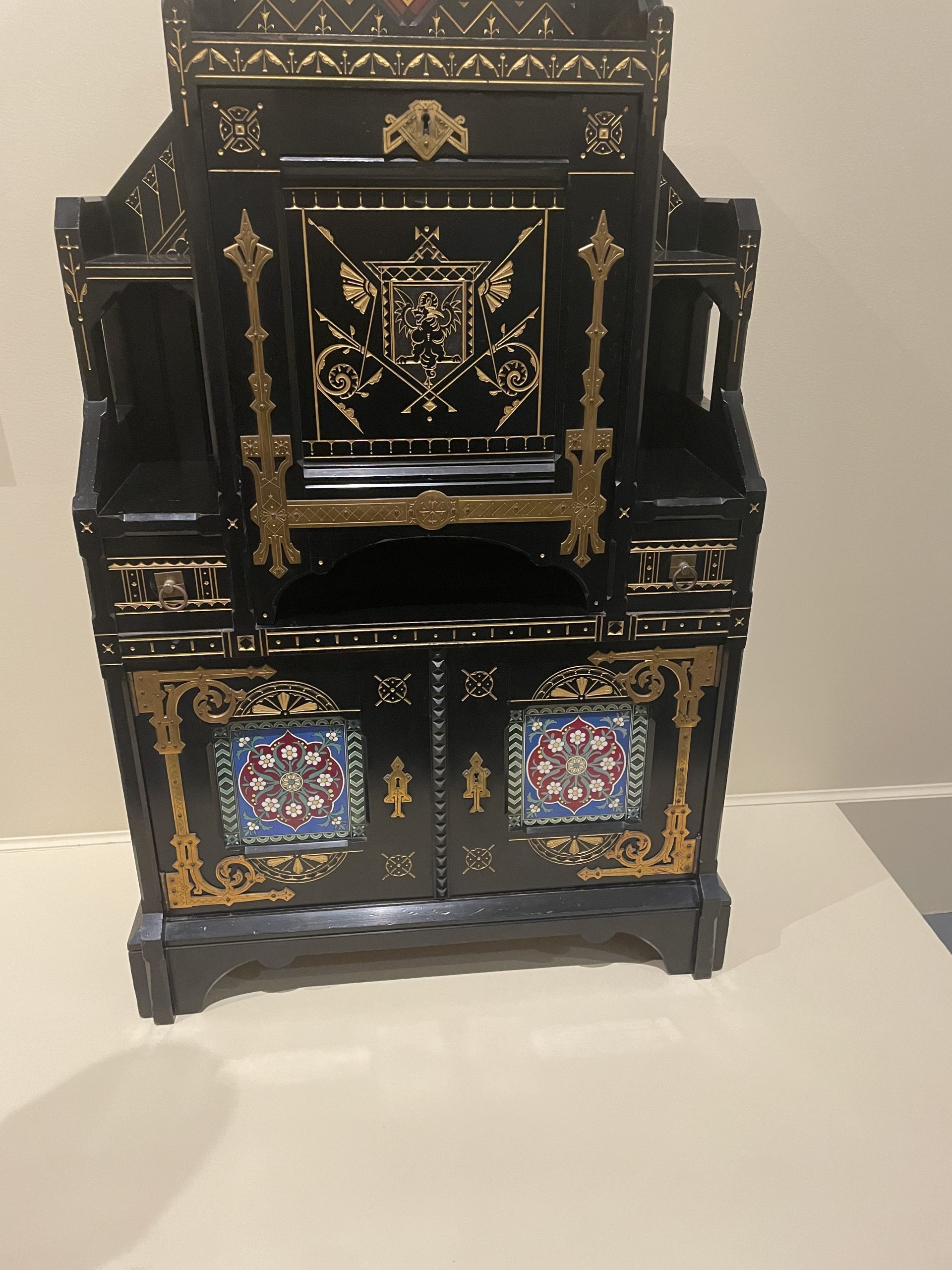
Kimble and Cabus
Antonio Kimble and Joseph Cabus
1875
What do you see going on in this work of art? Is there a story depicted?
I see intriguing floral patterns with some coat of arms on the top. This contains a dragon with tails and flags hanging from it. This represents the inspiration the artists Dre from ancient Asian cultures, that used dragons as symbols for strength and mystery.
What different visual elements (ie: line, color, light, proportions, scale, composition, media type etc.) do you notice, and how do they help you make sense of the artwork?
I noticed how the gold details contrast the dark black color of the furniture. This makes each detail pop out and allows the observer to clearly see every action of the artist on the piece.
How does this object compare to other objects, stories, or ideas you already know about?
This object is similar to pieces of furniture or home decorations I’ve seen at my grandparents home but depicting a different culture. My grandparents contain furniture pieces and glass statues that signify themes regarding their Christian faith. This piece of furniture reflects upon the strong and consistent values of Eastern Asia.
What choices do you think the museum made about the object’s display?
I think the Museum put this piece of furniture on this white pedestal to further emphasize the unique colors of the price. This allows visitors to spot it quickly and take notice.
Group Members
Joshua Mo Jason Moy
-

Still Life
William Mason Brown
1828-1898
What do you see going on in this work of art? Is there a story depicted?
Insect on the peach, grapes, wine glass on plate
What different visual elements (ie: line, color, light, proportions, scale, composition, media type etc.) do you notice, and how do they help you make sense of the artwork?
fuzzy skin of a peach, gold frame, intricate lighting, dramatic lighting.All these elements help make sense of the artwork because the ornate frame gives a very luxurious essence and the detailed fruits give a wealthy status.
Group Members
Nicole Chen, Suchi Dasgupta, Suha Kil

