Introduction
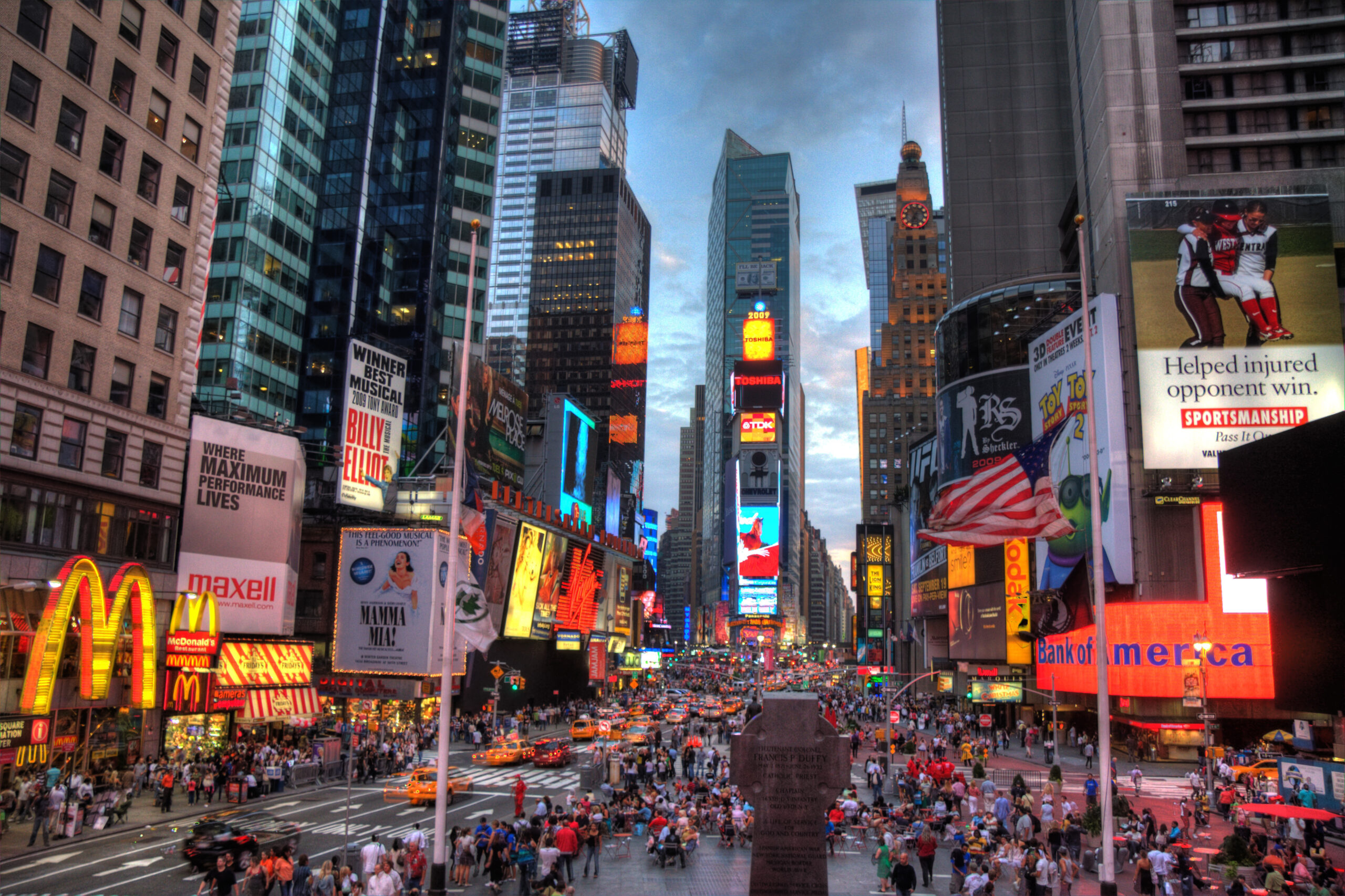
Imagine flying into LaGuardia Airport and emerging from the subway at Times Square, the heart of Manhattan, in arguably America’s most multicultural city. Instead of being greeted by the diversified culinary options that the city is known for, you find yourself standing in front of a Red Lobster and the world’s largest Applebee’s.1 It seems absurd that in a city that is seen as a cultural epicenter, one of the first dining options a tourist encounters is an outlet of a chain restaurant serving the same food they see back home.

Manhattan has long maintained its reputation for diversity of culture, people, and, of course, food. Different neighborhoods offer unique tastes, from soul food in Harlem to Korean BBQ in Koreatown to Dominican mofongo in Washington Heights. The sheer density of global flavors within such a compact city is a point of pride for locals and a major draw for visitors. However, tourist-heavy areas like Times Square are conspicuously packed with recognizable chain restaurants like McDonald’s, Dave & Busters, and Chick-fil-A. The ridiculousness of coming to New York City just to eat at a chain like Applebee’s does not go unnoticed by tourists themselves, yet it happens constantly. So why exactly is Times Square filled with these chains? This article explains the absurdity of why the tourism center of a city celebrated for unparalleled diversity of cuisine has so many visitors eating at chain restaurants, and whether tourists feel their food experiences live up to initial hopes.

Dominador Magtoto Jr., a 19-year-old student from the Philippines, spent a month in New York City this past January with one of his hopes for the trip being to experience the diverse food that Manhattan’s multicultural neighborhoods have to offer. “I did picture myself, you know, going around and trying different types of food,” Dominador recalls of his pre-trip expectations. In reality, however, Dominador admits that “it didn’t really work out that way…I went where was convenient and to places I recognized.” Day after day, he found himself eating at the same global fast-food brands he already knew from back home. In fact, one of his first stops for food was Taco Bell, a chain which he regularly eats from in the Philippines, partially because he was curious how the American version compared. Although it was not his initial intent, he found himself relying on fast food greatly during his trip, especially when he felt pressed for time. Only a few times, when Dominador would meet up with his cousin, a New York native, did he venture into local eateries as he originally imagined.2 According to current research, Dominador is not alone. There appears to be a significant gap between tourists’ intentions and their actual behavior when it comes to food choices. There are various possible reasons for this, but when it comes to Times Square, it may not entirely be at the fault of the tourist.
Manhattan’s Culinary Attraction
Manhattan’s standing as a global tourist destination is deeply intertwined with its culinary appeal. Food diversity is just one of many factors behind its multicultural reputation, but it’s an especially significant one. A 2021 study by Sandeep Chatterjee and Paramita Suklabaidya offers valuable insight into this phenomenon, with the authors holding the view that food is increasingly becoming a central component of the tourist experience in New York. The authors explain that “the culinary tourism of the city emanates from the desire of the tourist to experience a wide range of activities, including sampling of local cuisine.”3 In this way, exploring Manhattan’s culinary scene becomes comparable to the other ways that tourists seek to connect with the city’s culture, such as visiting its landmarks or museums.
Food tourism offers an exciting and rewarding way in which tourists can interact with the cross-cultural offerings of New York City. At face value, this form of cultural interaction seems convenient and accessible. After all, everybody has to eat, so it makes sense that tourists would seek out meals that deepen their immersion in the local experience. So why doesn’t this seem to be the case?
An Economic Perspective
It would be unfair to say that tourists are solely to blame for gravitating to chain restaurants. As mentioned, in Times Square, they may not have much choice. A huge aspect of Times Square’s food options seems to be purely economical. Manhattan real estate is famously expensive, and Times Square commands some of the highest rents in the world. In fact, roughly 231,337 pedestrians pass through Times Square each day (over 84 million a year),4 making it one of the most trafficked locations for any business. Retail real estate in the Times Square area can reach an astronomical rate of $400 per square foot.5 As a result, a restaurant in Times Square might be shelling out rent several times more than what it would in a less central and tourist-focused Manhattan neighborhood.
Such economics have a profound impact on what kinds of establishments can survive in Times Square. The harsh reality is that only existing large chains can shoulder the risk of such expensive rents. This is exactly why the restaurants that occupy Times Square’s prime spaces are those backed by major corporations or investors who can stomach the costs. Simply put, ubiquitous chains easily dominate the tourism scene in Manhattan because smaller businesses are priced out. Tourists who come to Times Square might genuinely search for hidden gem eateries they imagined would make up the culinary landscape of Manhattan, but they’ll mostly find the neon signs of chains, one after another.

Showcase Stores
There is also a strategic aspect as to why chains cluster in places like Times Square. For major restaurant brands, a Times Square location is not just a revenue source, but also a constant advertisement and status symbol. In this tourist-heavy environment, a restaurant’s very presence can serve as a form of marketing. The bright signage of a chain in Times Square is visible not only to those who might dine there, but also to the countless passersby and the backdrop of tourist photographs, social media posts, and even movie scenes. Consequently, having a Times Square location can boost a brand’s global visibility. Chain restaurants might treat their Times Square outpost as a flagship or showcase store. Thus, these companies might be able to accept lower profit margins for these locations in exchange for excellent marketing. As one industry observer noted, “Some big companies are willing to park in high-rent areas and will even do so at a loss as a branding play for New York’s international audience.”6 Even if a visitor doesn’t eat at the Times Square Red Lobster, seeing its gigantic neon red lobster sign might remind them of the brand and lead them to visit a Red Lobster back home. This further suggests why it’s so much easier for chains to survive in Times Square. Not only can they front the initial cost, but they can also afford potential losses, as their global standing ultimately benefits.
Intent Versus Reality
While it’s clear that tourists face limited access to unique cuisine in Times Square, the gap between their culinary intentions and actual choices remains an interesting phenomenon to explore. Research by Birch and Memery highlights a significant gap between stated interest in consuming local cuisine and actual behavior for tourists in general. In their 2020 study, they noted that for some popular destinations across the world, including the United Kingdom, over 70% of tourists claimed to have taken previous interest in trying local food or drink before their trip, but that half of them would end up not purchasing or eating local food at all.7 Although the UK is another popular world destination, it is different due to its lack of food diversity in comparison to NYC. Existing global studies, such as this, however, still provide useful insight into understanding Manhattan’s case, where specific literature remains limited for this issue. The research by Birch and Memery does, most significantly, shine a light on possible reasons as to why this intention-behavior gap may occur.
This disconnect is frequently attributed to barriers such as convenience, price sensitivity, and perceived risk. Tourists may worry about wasting a meal on something unfamiliar or may simply default to chains that are easily accessible, especially in high-traffic areas like Times Square. The study identifies “inconvenience,” “lack of knowledge,” and “familiarity bias” as dominant reasons tourists revert to non-local food options despite their original intentions.8
Exploring Familiarity
While it’s clear that tourists often face limited unique culinary options in Times Square, it’s still worth exploring further the gap between their initial intentions and actual food choices. Current literature suggests that a psychological phenomenon known as familiarity bias is significant to this gap. Familiarity bias is a cognitive bias in which people tend to settle for what they are familiar with because they feel more comfortable with what they know. In the same sense, people impacted by this phenomenon may be less likely to explore unknown options when familiar options are present. Familiarity bias is much more significant in the moment of a decision, which can help explain why tourists picture themselves exploring more than they end up doing when it comes to food. According to an article from Octet Design Journal, the choice of restaurant is indeed one of the major decisions that is affected by familiarity bias. “A person may always eat at the same restaurants or order the same dishes, avoiding trying new cuisines or restaurants. This familiarity can limit their culinary experiences and exposure to different flavors and cultures.”9
Dominador’s experience is reflective of not only how this factor can play a part during a trip to Manhattan, but also how settling for what is easy and familiar once can set a pattern. His experience truly highlights how easily original intentions can be overshadowed by convenience and comfort. Dominador admitted that even at the initial occurrences of his last-minute decision to settle for familiar chains, he did not expect it to become the norm for the remainder of his trip. After describing this, Dominador was subsequently questioned about how he would approach dining differently if he were to visit Manhattan again. He responded, “I think I would rely more on my cousin, because when I did go out with him it was authentic food. Or do more research, I guess, rather than going where I know.”10 In other words, Dominador suggests that if he had spent more time with his cousin, a local, then he would have avoided the tourist-heavy areas like Times Square that are so packed with chains, and thus had more time to explore the food in the varying neighborhoods of the city. He also included that initial research would have helped him in this regard, which suggests that many tourists likely come to Manhattan unaware of this issue, due to the aforementioned unpredictable in-the-moment impacts of familiarity bias. Indeed, Times Square strongly exemplifies how an abundance of chains can contribute to this outcome.
The Reality
Despite Manhattan being globally recognized as a culinary center with diverse ethnic cuisine, Times Square significantly deviates from this. It offers a rather absurd situation, where tourists are met with the same dining options they find back home, primarily due to large corporations pushing out smaller businesses. With astronomical rents reaching up to $400 per square foot, only large, established chains with substantial financial backing can afford to operate in the location, leaving no room for the independent businesses that contribute to the city’s renowned culinary diversity. The global brand recognition that Times Square provides for chains keeps corporations interested, allowing them to accept financial losses that small businesses could never afford. Unsurprisingly, the best way for a tourist to genuinely experience New York City’s food culture is to venture outside of tourist-heavy areas like Times Square, as supported by Dominador’s experience.11 Closing the gap between tourists’ intentions and behavior in regards to food tourism in Manhattan would be greatly beneficial for visitors. Tourists who fulfill their culinary curiosity do tend to have more memorable and satisfying travel experiences,12 and local economies benefit when visitors spend at authentic eateries rather than just global chains. Within Times Square, the economic realities and strategic branding priorities create a culinary landscape that often falls short of these potential benefits, taking away from both the tourist experience and the city’s characteristic diverse food culture.
Step out of the subway at Times Square in Manhattan, the tourism center of a city celebrated as a global culinary capital, and what greets you? Not a showcase of genuine ethnic cuisines or family-owned eateries, but the same chain restaurants you already know too well.
Campus: Hunter College
Professor: Professor Michael Benediktsson
References: Bhatt, Meet. n.d. “What Is Familiarity Bias? Definition & Example.” Octet Design Journal. https://octet.design/journal/familiarity-bias/.
Birch, Dawn, and Juliet Memery. 2020. “Tourists, Local Food and the Intention-behaviour Gap.” Journal of Hospitality and Tourism Management 43 (February): 53–61. https://doi.org/10.1016/j.jhtm.2020.02.006.
Chatterjee, Sandeep, and Paramita Suklabaidya. 2021. “Gap Between Perception and Satisfaction: Exploring Food Tourism in New York.” International Journal of Hospitality and Tourism Systems 14 (1): 90–97. https://www.cabdirect.org/cabdirect/abstract/20203536173?q=(similar%3a20103148250).
Jarvie, Barbara. 2003. “World’S Largest Applebee’S to Debut in NYC.” Benefitspro.Com, September 29, 2003. https://www.globest.com/2003/09/29/worlds-largest-applebees-to-debut-in-nyc/.
Magtoto, Dominador Jr. Interview by Joseph Rippo. March 2025.
“Market Research & Data | Times Square NYC.” n.d. https://www.timessquarenyc.org/business-community/market-research-data.
Sengel, Tarık, Ayşen Karagoz, Gurel Cetin, Fusün Istanbullu Dincer, Suna Mugan Ertugral, and Mehtap Balık. 2015. “Tourists’ Approach to Local Food.” Procedia – Social and Behavioral Sciences 195 (July): 429–37. https://doi.org/10.1016/j.sbspro.2015.06.485.
Vianna, Carla. 2019. “NYC Restaurant Lease Deals Are Getting Tougher to Find, Owners Say.” Eater NY, January 11, 2019. https://ny.eater.com/2019/1/11/18178358/restaurant-rent-nyc-calculation-closings.
- Jarvie, Barbara. 2003. “World’s Largest Applebee’s to Debut in NYC.” Benefitspro.Com, September 29, 2003. https://www.globest.com/2003/09/29/worlds-largest-applebees-to-debut-in-nyc/. ↩︎
- Magtoto, Dominador Jr. Interview by Joseph Rippo. March 2025. ↩︎
- Chatterjee, Sandeep, and Paramita Suklabaidya. 2021. “Gap Between Perception and Satisfaction: Exploring Food Tourism in New York.” International Journal of Hospitality and Tourism Systems 14 (1): 90–97. https://www.cabdirect.org/cabdirect/abstract/20203536173?q=(similar%3a20103148250). ↩︎
- “Market Research & Data | Times Square NYC.” n.d. https://www.timessquarenyc.org/business-community/market-research-data. ↩︎
- Vianna, Carla. 2019. “NYC Restaurant Lease Deals Are Getting Tougher to Find, Owners Say.” Eater NY, January 11, 2019. https://ny.eater.com/2019/1/11/18178358/restaurant-rent-nyc-calculation-closings. ↩︎
- Carla Vianna, “Why It’s So Hard for NYC Restaurants to Calculate a Rent That Works,” Eater New York, January 11, 2019. https://ny.eater.com/2019/1/11/18178358/restaurant-rent-nyc-calculation-closings. ↩︎
- Birch, Dawn, and Juliet Memery. 2020. “Tourists, Local Food and the Intention-behaviour Gap.” Journal of Hospitality and Tourism Management 43 (February): 53–61. https://doi.org/10.1016/j.jhtm.2020.02.006. ↩︎
- Ibid. ↩︎
- Bhatt, Meet. n.d. “What Is Familiarity Bias? Definition & Example.” Octet Design Journal. https://octet.design/journal/familiarity-bias/. ↩︎
- Magtoto, Dominador Jr. Interview by Joseph Rippo. March 2025. ↩︎
- Ibid. ↩︎
- Sengel, Tarık, Ayşen Karagoz, Gurel Cetin, Fusün Istanbullu Dincer, Suna Mugan Ertugral, and Mehtap Balık. 2015. “Tourists’ Approach to Local Food.” Procedia – Social and Behavioral Sciences 195 (July): 429–37. https://doi.org/10.1016/j.sbspro.2015.06.485. ↩︎

