

Author: Kilhah St Fort
Campus: Lehman College CUNY BA
Major(s): Data, Technology, & Society
Minor(s):
Professors: Lisa Brundage, Logan McBride
Macaulay Springboard 2026
Abstract
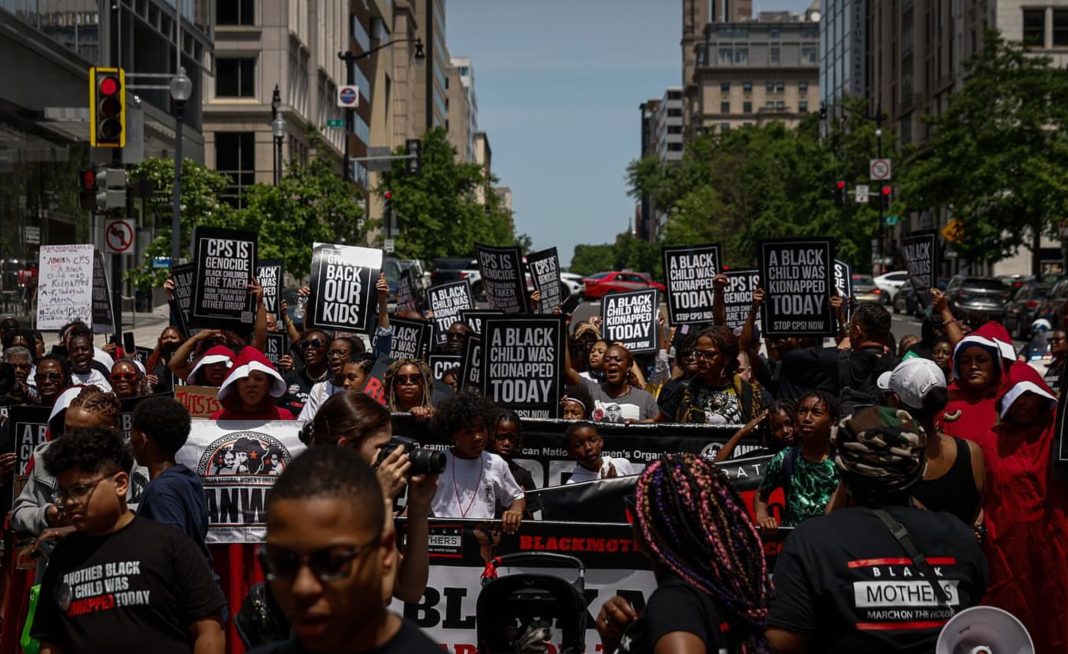
Agencies such as New York City’s Administration for Children Services (ACS) are seen as benevolent institutions protecting vulnerable children. In practice, the United States family policing system functions as a surveillance mechanism that disproportionately tears Black families apart, particularly those headed by LGBTQ+ caregivers. Using New York as a case study, this paper analyzes impacted-parent narratives, legislative history, and interviews with professionals working within and against the family policing system. In doing so, I demonstrate how mandatory reporting laws serve as the gateway into a system that criminalizes poverty and weaponizes race, sexuality, and gender against caregivers who fall outside of dominant notions around family life. I further identify two critical gaps in both scholarship and advocacy: (1) the near-total absence of data on LGBTQ+ parents within publicly-available ACS records, and (2) the hierarchical messaging that sidelines Black lesbian and bisexual mothers – those most overrepresented by the system – from reform conversations entirely. Informed by an abolitionist lens grounded in Black feminist epistemology, the paper concludes with a tiered set of recommendations aimed at reducing the immediate harms of mandatory reporting while building towards a child welfare system rooted in resources, not punishment.
Project Components
Reflections
After going through this process, I’ve realized that choosing to focus on how mandatory reporting intersects with race, class, sexuality, and gender identity was actually a long time in the making. It is the culmination of five years of taking classes pertaining to Black womanhood, three years of working with incarcerated writers, two years of coming to terms with being a lesbian, and one year of learning as much as possible about the family policing system.
Within all these experiences, I kept coming back to the question of “What would it be like to exist in a world that truly cared for people like me?” I’m still trying to figure it out. But this project was one way for me to wrestle with it, and wrestle I did.
My research question changed over ten times. I constantly ran into dead-ends. At times, I felt an inexplicable insecurity about wanting to tackle so much at once. I would ask myself, “Will trying to cover all these systems of dominance weaken my argument? Will this paper add more canon fodder towards communities I feel most protective of?” Answer: yes, no, and maybe. I truly don’t know. But what I do know is that every time I have shared my research, ears have perked. In one way or another, folks got curious and asked me questions neither of us had really thought about.
And so, when it comes to what kept me going and what I’m most proud of, it’s that. I love that this project gets people thinking. Hopefully all that curiosity will lead us one step closer to a world where Black folks, of all sexual orientations and gender identities, are cared for.
Acknowledgements and Notes
Big thank you to everyone in Springboard!! While I definitely did some crying while researching, drafting, and editing, I’m glad that I wasn’t alone in this crazy process.
Thank you to all the experts and professionals within this field who responded to my numerous emails and questions with passion and patience. Although much of our conversations did not make it into the final version of this project, those ideas float around in my head every day.
Thank you to my friends and family who have listened to me ramble about this work. Our conversations made summarizing my findings both easier and more difficult.
Lastly, thank you to the various musicians whose songs kept me typing away at my desk when I really wanted to take a 12-hour nap.
Fields of Study
Black, Race, and Ethnic Studies, Gender and Sexuality Studies, History, Public Good
Generative AI Disclosure
This project is proudly human-made


