Poetry gives new meaning to the mundane. The wind blowing through the bus window splashes onto your face. Crooked streets become tectonic plates. You find new words to describe the pigeons on telephone wires, the platter you order from that food cart, the way your friends clasp their hands in greeting and farewell. You take it all in, you put your mind to pen to paper (or fingers to Notes app), and it becomes much more. It becomes your lived experience, a thousand words no longer confined to your hippocampus, no longer lost when a vibrant image leaves your retina. Indeed, poetry is art.
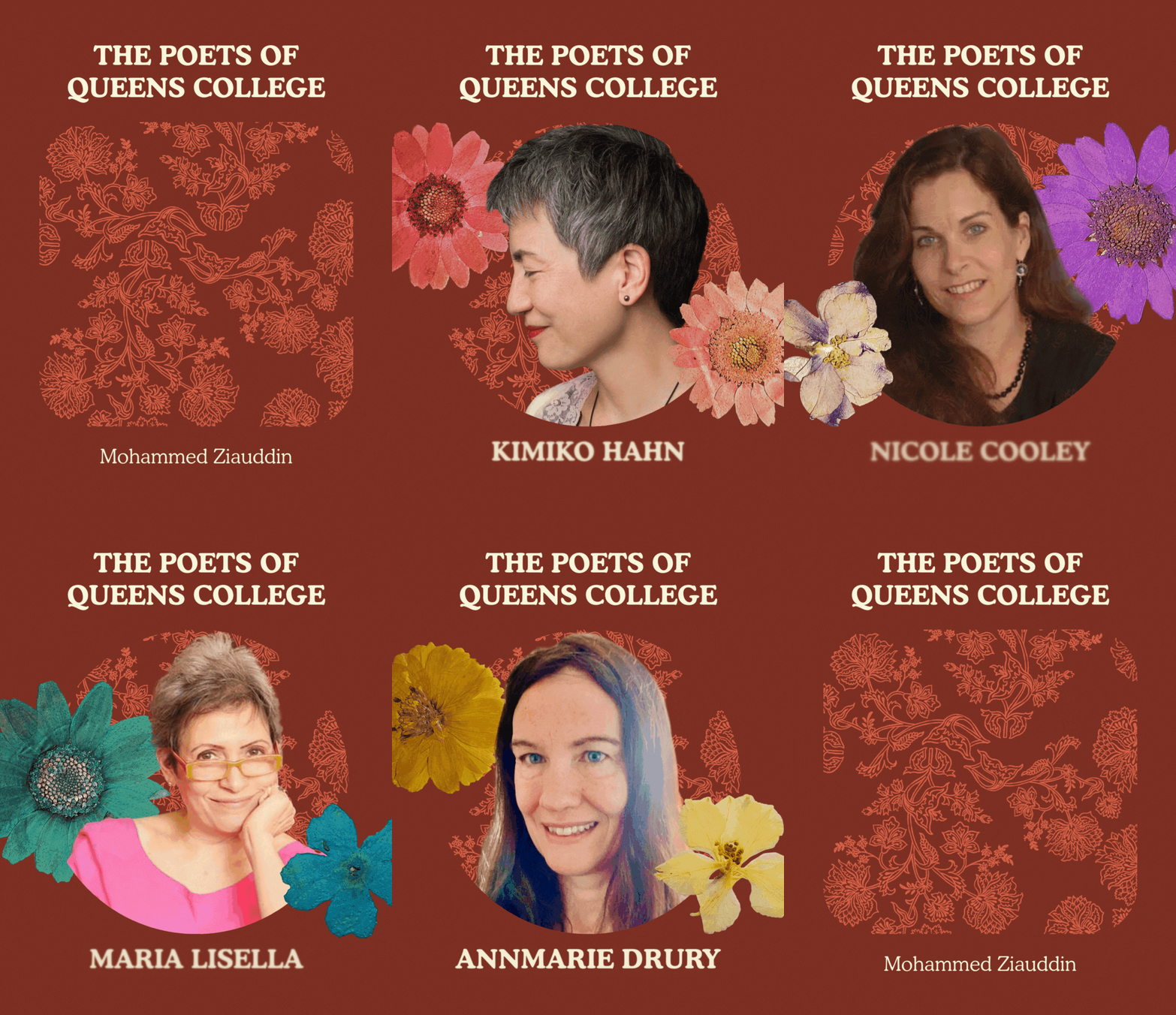
As someone who has found value and a sense of catharsis in writing poems over the years, I am proud to be part of the creative community at The City University of New York (CUNY), which The New York Times writer Elizabeth Harris previously called “Poetry U.” Moreover, I appreciate how my campus of Queens College provides various opportunities for creative expression through poetry, particularly through the English Department and the MFA Program in Creative Writing and Literary Translation. Therefore, through this zine, I hope you gain a similar appreciation for the art of poetry through reading about—and from—poets in the Queens College community. This is not intended to be an exhaustive list of poets; rather, I encourage you to explore more poets and their works, whether at Queens College, other CUNY campuses, or elsewhere in New York City. If you would like to try writing your own poems, there are also writing prompts throughout the zine to spark your imagination.
Thank you, and happy reading (and writing)!
(For more information and references, a bibliography is located towards the end of the zine.)
I came into this project with my experiences writing poetry, which caused me to primarily view this art form as a tool of emotional expression. However, as I started to engage more with the community of writers at Queens College, my view expanded; I ultimately gained a better understanding of how art, especially poetry, plays various roles in the lives of New Yorkers and our communities. One instance that particularly contributed to my new understanding of art was Professor Kimiko Hahn’s poetry reading in late October, which I mentioned in my zine. I learned how Professor Hahn perceives her writing as “playing with language,” and utilizes poetry forms such as the golden shovel and the sestina, which I had never heard of before. By interacting with community members who had more experience in writing poetry, including Professor Hahn and former MFA students who also attended the event, I started to step out of my predominantly emotional connection to poetry and recognize the significance of technique and experimentation. This relates to how New Yorkers create art in our communities because, while emotional expression is no doubt a part of creating art, artists can also create for the sake of taking risks and trying out new techniques, or honoring the artists who came before them through incorporating traditional styles of art.
Additionally, given the community of professors and students that attended the aforementioned event, I realized how communities also form around art, providing sources of knowledge and opportunities to continue being active in particular art forms. Not only did I see this community in the more formal poetry reading, but also an informal “Multilingual Open Mic” event from the Queens College Writing Center that I attended in late November. I went to this event while continuing to work on my project, with the hope that I would learn more about the impact of writing and poetry on my fellow New Yorkers. The event was incredibly lively and had a high turnout; students and staff clapped and cheered in support of everyone who went up to the microphone stand and shared a song, poem, or story that was meaningful to them. This reinforced to me how writing, alongside other art forms, fosters a sense of community, bringing people together even on frigid November nights. Since art seems to be at every corner in New York City, whether visual or audible, I believe that New Yorkers tend to appreciate and make space for such art in the midst of our busy lives. Moreover, the event was multilingual, with some participants sharing writing in their own languages. This helped me understand another significance to poetry and other art forms: given the diversity of New York, art has significance in helping people connect to their cultures, languages, and heritage. Overall, art forms such as poetry can be cathartic for the New Yorkers who make them. However, while working on this project and meeting with writers at Queens College both formally and informally, I learned that there are more roles that art has to offer for New Yorkers, such as experimenting with techniques, creating community, and connecting people to their cultures.

