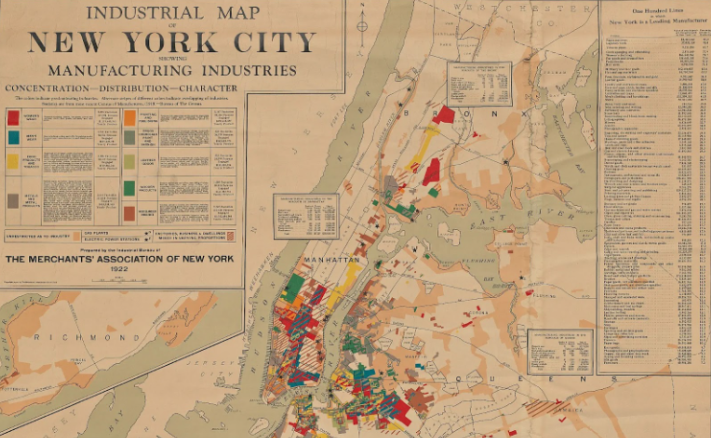
Brooklyn’s industrialization was instrumental in boosting New York’s economic growth, but this reliance on industry also involved the use of pollutants like lead. While those industrial booms are in the past, their legacy remains: Pb is still present within soils that were previously near emitters like smelters.
We explore not the advantages of this historical growth, but the legacy of lead that these historical emitters have left behind to shape the high concentrations of lead seen in today’s soil.
Our main study on public green spaces in Brooklyn showed an overall downward trend in soil Pb concentrations as the distance from the nearest remediated site increased. Despite that, statistical data showed that with a p-value of 0.081 and R squared value of 0.047, this correlation was insignificant and not attributed to the distance of the green space to the historical Pb emitter. This finding makes us wonder about the other factors that have shaped the health of the soils. Factors like water quality, construction, current Pb emitters, and lead in paint/pipes has to be furthered studied as Pb is still commonly found in children’s blood levels. More specifically, there’s a consistently higher number of children exceeding the CDC’s limit of 3.5 μg/dL due to low-exposure of lead, indicating that widespread low-level exposure is the primary public health concern.
With the hypothesis that green spaces play a role in this, we want to make sure that Pb isn’t found in our soils moving forwards.

