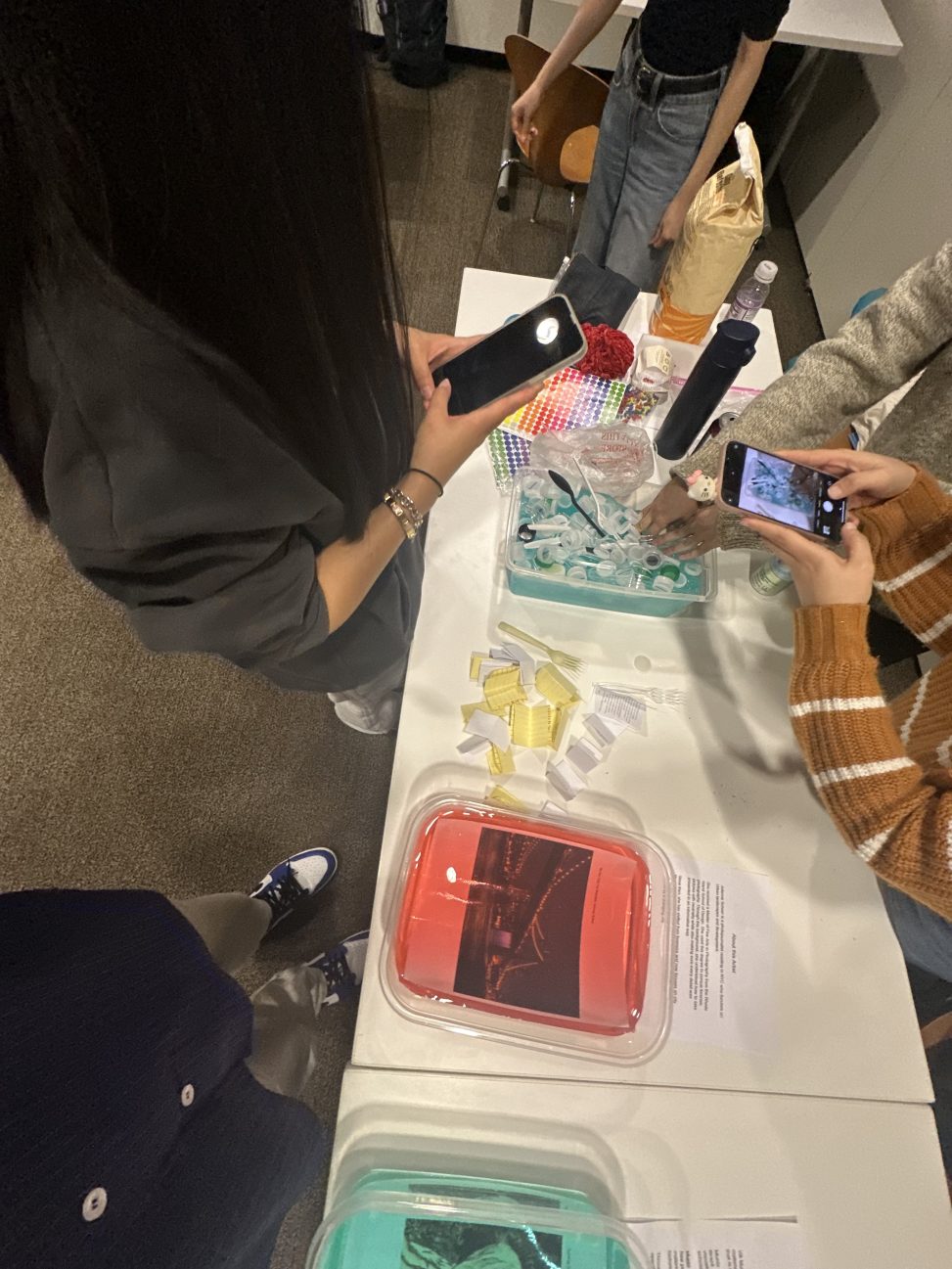
Our project seemed to explore the intersections of water pollution and its impacts on lifestyles. We aimed to fulfill this directive through 3 parts.
The first part included a model of the Hudson River composed of slime and was explained analogously with a short talk on the history of contaminants within the river. Participants were encouraged to place an item from a bag consisting of collected garbage into the slime and remove it. After removing the garbage, a short paper consisting of different artists and their work on bringing awareness to the issue was given. The goal was for participants to challenge the disembodiment we feel from things like littering because we can’t see its direct impact. The project fractures this paradigm by making people emulate the direct impacts that polluting can have on the Hudson River (the slime). In doing so, the project also emphasized the efforts required in reversing the damage caused to the river. This was displayed through the marks on the slime remaining unable to be fixed, drawing attention to the depth of water pollution in the river. Additionally, we hoped to highlight the process by which artists’ efforts combat the issue of pollution in an NYC critical waterway.
The second part is a graffitied MTA subway map colored in with areas affected by contaminated led water and areas prone to flooding. Stickers represent specific cases of lead in drinking water, flooding instances, and visual art exhibits in New York City pertaining to water pollution. Participants were encouraged to “vandalize” the map by place stickers on based on their own experience with water pollution. The goal of the map was to utilize the art form of graffiti to make participants actualize and feel the personal impacts of water pollution in their lives similar to how New York City graffiti artists in the 80s used graffiti to feel a closer connection and ownership of the city. We aimed to educate the audience on the widespread harms of pollution while highlighting how other NYC artists have brought awareness to the issue.
The last part of this project consisted of several buckets of dyed water indicating pollution and different artists’ response to that. The art centered around 4 core individuals, those being Julienne Schaer, Vik Muniz, Alexis Rockman, and Rajiv Mohabir. Each of these artists developed concepts like hope, persistence, community among others to resonate with each spectator. Each of these visual artworks were placed in the buckets containing the dyes. Lastly, we had a final box that was clear of pollution but with a question of how they would inform their legacy and approach water pollution. The aim of this part is for the audience to engage in self reflexivity through interpreting, and reflecting on their own actions and impact on water pollution on their or others lives such as harm to child development and socioeconomic disparities in the human right, water
Completing our project helped us understand art as a mediator between visual and emotional forms of advocacy. Through art we were able to draw attention to visceral images like flooding in Bronx Science or climate change through Alexis Rockmans work. Through reflection and grit, artists’ works were able to create beneficial relationally with water pollution. Art became a tool to help and care for those in our community as well as a bridge towards resolving our own inadequacies when dealing with the environment. By not only honoring the legacy’s and interpretations artists have had in pushing for water, we also have seen art as a subjective thing that still contains a similar message despite how you view objects. This holds true as especially in a tumultuous world, art is the grounding force that allows for our subjectivities to develop and flourish.

