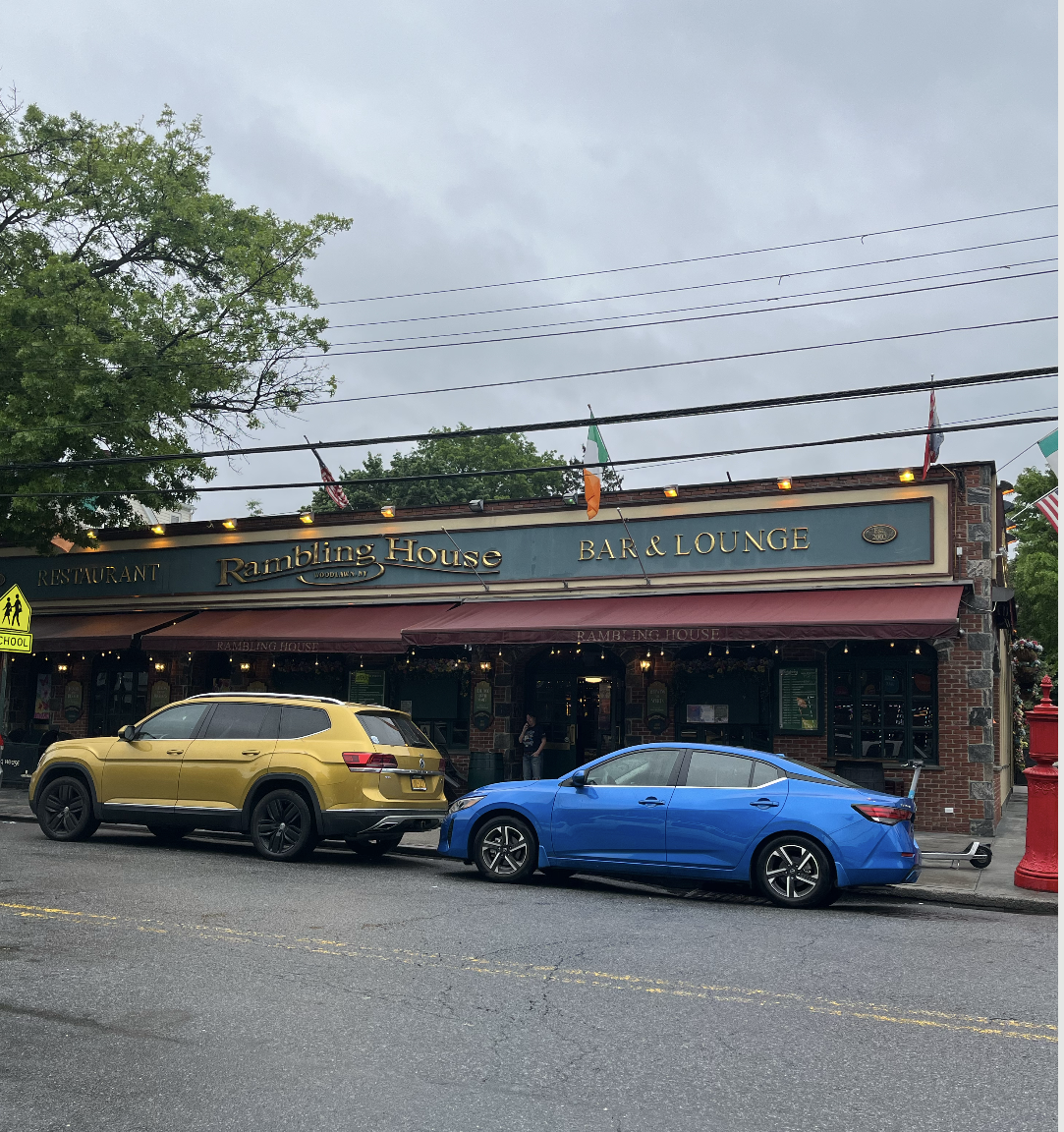
No matter what American city a tourist might find themselves in, the familiar green, white, and gold flag outside an Irish-themed pub will follow. Irish pubs and restaurants are scattered across the US, from upscale steakhouses to cosy pubs nestled in small-town USA. New York City is no exception. Irish pub culture expanded across NYC, which has made pubs synonymous with Irish culture. Irish-Americans’ strong history has ingrained itself into NYC culture, which can be seen in New York’s food and drink scene, which ranges from corned beef and cabbage to weekly ceili sessions that bring people of all backgrounds together. As a result of the expansion of the pub, Irish culture has permeated New York history and society, which is obvious when walking down any given block.
The connections between New York City and Ireland were made widely out of desperation. The Great Hunger, also known as the Irish Famine, forever changed Irish culture and identity. The droves of Irish who arrived in New York City introduced Irish culture to the world. They left their homes behind because of the desolate conditions and the bleak future they faced if they stayed.1 Millions came to the United States, where they were met with more hardship and discrimination, which they hoped to escape from. The predominantly Protestant New York did not sympathize with the Irish and instead subjugated them to second-class status. The Tenement Museum in the Lower East Side of New York City is a testament to this struggle. Despite these hardships, the Irish community in America grew, and today about 15% of Americans claim Irish ancestry, according to Ireland’s Great Hunger Museum.2 While the history of the Irish is widely known, their contributions to modern NYC are rarely recognised. Even though Irish pubs and restaurants are found on street corners in midtown to the furthest reaches of the outer boroughs, the food being served is rarely commemorated for its historical significance. Maybe it’s time for the Big Apple to look deeper into the importance of the pub and look at it as an institution that represents so much more than food.
Woodlawn Heights
Irish culture is a ubiquitous feature of a small neighborhood in the north Bronx. Woodlawn Heights is an exemplary Irish stronghold with a large first-generation Irish population and countless Irish businesses.3 The Rambling House is one such establishment that was founded in 2002. It holds traditional Irish music every Sunday and serves authentic Irish cuisine. My interviewee, Conor, a manager at the Rambling House, spoke about the aims of the restaurant and its part in keeping the Irish spirit of Woodlawn Heights alive. He said there is a “wide range of people” from “kids” to people in their “eighties or nineties” who come to the live music that they host on the weekends.4 Most, if not all, of their live music is traditional and focuses on authenticity. This widespread interest in Irish culture is surprising, as only 44.6% of Woodlawn’s residents claim some Irish ancestry;5 however, if you look around at the shamrocks painted on the street and the Irish flags proudly hung on dozens of houses, you wouldn’t tell. Many dishes on their menu show their Irish roots, including the “Shepherds Pie” and“Fish and chips.” Both of these dishes, which I’ve had the pleasure of trying, are made to replicate how they’ve been made for centuries. The ingredients are simple, but the result is a classic Irish dish that many in the neighborhood enjoy. The Rambling House also includes dishes from other cultures on their menu, including Dumplings and Quesadillas. This decision to include other cultures’ foods exemplifies a greater idea about how cultures sometimes incorporate familiar practices to gain acceptance and assimilate. Often, a business cannot thrive if it doesn’t cater to a wide audience, so restaurants in particular have to sacrifice authenticity for profit and customers. Despite the fact that dumplings and quesadillas are the furthest thing from Irish food, their incorporation into the menu does not hinder the aims of The Rambling House, which is to showcase Irish culture.
Irish Music and Food
The history of Irish pubs and music is closely intertwined, as Irish people utilized pubs to continue their traditional dance and music. A 1992 article written by Marion Casey describes the developments of Ceilis, which were “more structured” versions of “simple country types of dances,” and that these gatherings brought the Irish American communities of America together.6 A Céilí (Pronounced Kay-lee) is an event where musicians, dancers, singers, and onlookers come together to celebrate the Irish arts. While more popular in Ireland, pubs and dance halls across NYC do host these sessions. In modern times, Irish dance and music are still used to draw Irish and non-Irish together, as their popularity has skyrocketed in the past 50 years with the advent of Riverdance. Irish food and dance are commonly found together as live music draws in crowds and allows Irish culture to spread. The Rambling House uses this idea and offers live music every weekend to draw crowds. “Trad music” as it’s colloquially called, brings together traditional Irish instruments such as the Fiddle, tin whistle, and the Bodhrán (Pronounced Baw-ron). This fusion of music and food is an essential part of pub culture and is what makes pubs so popular.
One food in particular that connects with many Americans is corned beef and cabbage, often called bacon and cabbage in Ireland. While corned beef may be eaten in Ireland, the traditional dish is made using pork bacon. The story of how bacon and cabbage became corned beef and cabbage is murky, but some prevailing theories suggest cultural fusion and economic necessity drove the switch. Bacon and cabbage is made by boiling heads of cabbage, potatoes, and thick-cut ham with a variety of herbs and vegetables such as rosemary and carrots. Irish bacon is not what most Americans would consider bacon, as it’s a much leaner cut of meat that resembles a roast ham. Bacon and cabbage may be eaten alongside hot English mustard or a creamy parsley sauce, but it’s up to each individual.

To many Irish families, it is a savory dish of memories of the hard times they have overcome, as the potato is such an important symbol in Irish history. Pork has been a popular meat in Ireland for centuries, however, the Irish immigrants coming to America’s shores couldn’t rely on this staple food. The story of corned beef and cabbage began in the United States when poor Irish immigrants found pork to be too expensive and instead had to settle for less expensive cuts of meat. A cheaper alternative, corned beef, began to rise in popularity with Irish immigrants. Michael O’Dowd, a publisher of Irish America magazine, believes that this replacement was partially thanks to the strong Jewish presence and cuisine in New York in the 19th and 20th centuries.7 Jewish brisket is very similar to corned beef, and this idea may have grown out of the close proximity that Jewish and Irish immigrants had in the tenements. From there, their children brought this recipe out of the tenements and across the US as Irish Americans assimilated into American society.
At the Rambling House, another popular Irish food, Irish soda bread, is served alongside almost every dish, replacing the traditional dinner roll that many restaurants serve. This replacement is another example of the ways in which cultural restaurants take existing traditions and make them their own. Cultural fusion is not unique to just the Irish community, but it does enforce the idea of the American melting pot and how America fundamentally changes its immigrant populations. The story of Irish food and the integration of the Irish people in many ways exemplifies the immigrant experience.
Pub culture: The Future of Irish American food
Pub culture is not defined by just one aspect, so it creates a space that transcends cultural boundaries. The music, food, tradition, and community are what make pub culture so popular around the world and especially in NYC. Whether someone wants to watch Gaelic football or American Football, the pub is a hub for sports fans. Music and art lovers can also find their niche at an Irish pub with the frequent shows of live bands that play. For young Irish students looking for familiarity or older immigrants who have been in the city for decades, the pub is a little taste of home. No matter where you are, when you step into a pub, you can find something that brings you a little bit closer to Ireland or your local community. Unlike diners, the pub has not had to drastically reframe itself to stay current, because what people want, regardless of background, is a place to create a sense of belonging and enjoy the past. There is no pressure for pubs to modernize or change with the times because the demand for nostalgia isn’t going anywhere.

The appeal of the Irish pub has not gone away, and the proof is that these establishments continue to grow and thrive for decades and in some cases centuries. This is because the Irish pub is all about familiarity. It began as a reminder of back home for the Irish but has now become a larger symbol of tradition. Pubs have learned to speak the universal languages of, sports, and drink. As a result, many immigrants who yearn for belonging come to pubs because drinking and sports are so central to many cultures and societies around the world. For example, the World Cup brings hundreds of millions of viewers from all over the world, and people pack pubs to enjoy with their community. Even Americans who may not necessarily need a place to feel belonging, enjoy the simplicity and authenticity of the pub when watching sports. Despite its hurdles, the pub is still a beacon to many non-Irish and Irish alike because of its inclusivity.
New York’s Irish pub culture has flourished since the 1800s, and it could not have been possible without the grit of the Irish people. While pub culture has spread across the US, it is exceptionally strong and authentic in NYC due to the high percentages of Irish immigrants in ethnic enclaves such as Woodlawn Heights. The Rambling House is just one example of the Irish food and trad music that make up the strong Irish identity of New York City. Its dedication to bringing the young and old, Irish and non-Irish, together is what has made it stand the test of time and grow as a business. Its model of keeping its core authentic, but branching out to gain new faces, is not a new story, as many immigrant businesses face the same tough balancing act. As we move into the future, the Irish pub will still be an unwavering symbol of the past and a welcoming place for those looking for an authentic and timeless experience.
How Ireland’s tumultuous history led to a resilient cuisine and pub culture that dominates modern NYC.
Campus: Hunter College
Professor: Professor Michael Bennediksson
References: Sheidlower, Noah. “Guide to NYC’s ‘Little Ireland’ in Woodlawn.” Untapped New York, March 11, 2025. https://www.untappedcities.com/little-ireland-woodlawn/.
“Why Irish Bars in New York City Are Something Special.” IrishCentral.com, July 9, 2022. https://www.irishcentral.com/culture/craic/irish-bars-new-york-city-special.
“Keeping the Tradition Alive – a History of Irish Music and Dance in New York City by Marion R. Casey.” Article Archive of the New York Irish History Roundatable. Accessed March 19, 2025. https://nyirishhistory.us/article/keeping-the-tradition-alive-a-history-of-irish-music-and-dance-in-new-york-city/.
User, Guest. “The Unstoppable Irish: Songs and Integration of the New York Irish, 1783-1883.” The Gotham Center for New York City History, April 16, 2020. https://www.gothamcenter.org/blog/the-unstoppable-irish-songs-and-integration-of-the-new-york-irish-1783-1883.
Connor Carey, Rambling House interview, Breanna Corcoran.
Stack, Liam. “Corned Beef and Cabbage for St. Patrick’s Day? Not so Irish, Historians Say.” The New York Times, March 17, 2016. https://www.nytimes.com/2016/03/18/dining/corned-beef-and-cabbage-not-so-irish-historians-say.html#.
Irelands Great Hunger Museum. “Learn about the Great Hunger at Ireland’s Great Hunger Museum.” Learn | Ireland’s Great Hunger Museum, 2015. https://www.ighm.org/learn.html.
“Rambling House.” New York City Tourism + Conventions. Accessed April 20, 2025. https://www.nyctourism.com/restaurants/rambling-house/.
Tenement Museum. “Luck of the Irish: Not Always a Good Thing.” Tenement Museum, March 17, 2015. https://www.tenement.org/blog/luck-of-the-irish-not-always-a-good-thing/.
Corned beef and cabbage for St. Patrick’s Day? not so Irish, historians say (published 2016). Accessed April 21, 2025. https://www.nytimes.com/2016/03/18/dining/corned-beef-and-cabbage-not-so-irish-historians-say.html.
Alaska, JLS Photography -. “Corned Beef and Cabbage Dinner.” Flickr, May 1, 2025. https://www.flickr.com/photos/akgypsy37/51943607302.
- Ireland’s Great Hunger Museum. “Learn about the Great Hunger at Ireland’s Great Hunger Museum.” Learn | Ireland’s Great Hunger Museum, 2015. https://www.ighm.org/learn.html. ↩︎
- Ireland’s Great Hunger Museum. “Learn about the Great Hunger at Ireland’s Great Hunger Museum.” Learn | Ireland’s Great Hunger Museum, 2015. https://www.ighm.org/learn.html. ↩︎
- “Why Irish Bars in New York City Are Something Special.” IrishCentral.com, July 9, 2022. https://www.irishcentral.com/culture/craic/irish-bars-new-york-city-special. ↩︎
- Connor Carey, Rambling House interview, Breanna Corcoran. ↩︎
- Account management – social explorer. Accessed April 20, 2025. https://www.socialexplorer.com/explore-map. ↩︎
- “Keeping the Tradition Alive – a History of Irish Music and Dance in New York City by Marion R. Casey.” Article Archive of the New York Irish History Roundatable. Accessed March 19, 2025. https://nyirishhistory.us/article/keeping-the-tradition-alive-a-history-of-irish-music-and-dance-in-new-york-city/. ↩︎
- Stack, Liam. “Corned Beef and Cabbage for St. Patrick’s Day? Not so Irish, Historians Say.” The New York Times, March 17, 2016. https://www.nytimes.com/2016/03/18/dining/corned-beef-and-cabbage-not-so-irish-historians-say.html ↩︎

