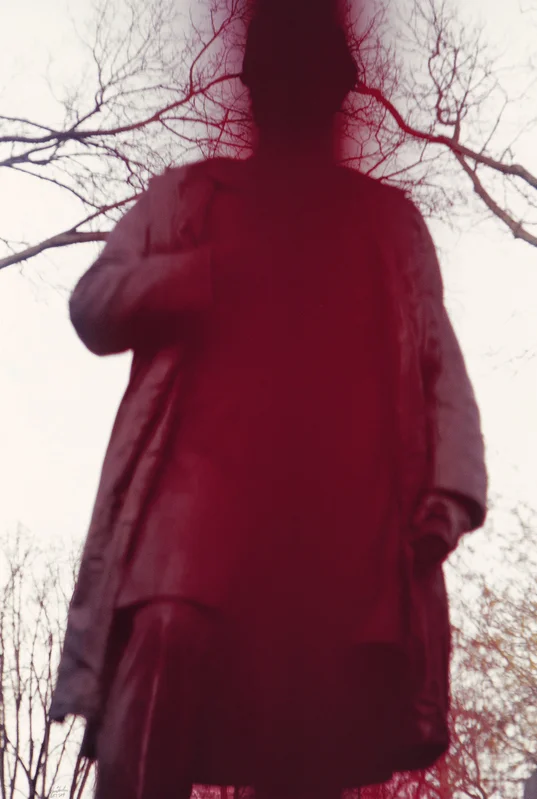
The artwork above, Fragment of Evidence, is from Nona Faustine’s 2019 series of large-scale silkscreen photographs that integrate iconic American symbols with a simple strip of red or black going across the photo. These bars of color intentionally obstruct the audience’s view of certain parts of these ionic symbols. For example, in the artwork above we can only see the upper half of the Statue of Liberty and not the pedestal it is on. This visual juxtaposition of a view you cannot fully see is Faustine’s way of depicting how marginalized groups and minorities in America are not given the full breadth of what America has to offer because of things like systemic racism. It is a powerful symbol that represents seeing the “land of the free” but being blocked from fully attaining it despite helping to build that very same land.
Making History Visible, Rebecca Mero

Dorothy Angola’s goal in Stay Free, In Land Of The Blacks, (Minetta Lane, Village, NYC) artwork is to show how she feels about the world. She believes she can stay free and never has to go through racism or discrimination again. She looks confident and comfortable in the image with herself and her fancy outfit. This image is in New York and she feels a sense of belonging there. She has one foot on a bucket and the other one is turned over. Showing that things might be going on, but when she puts in effort there is no ‘spill’ and ‘messes’.
Making History Visible, Daniel Postelnik

Dr. Marlon Sims (From the My Country series) by Nona Faustine (2019)
Making History Visible, Gianna Bintas
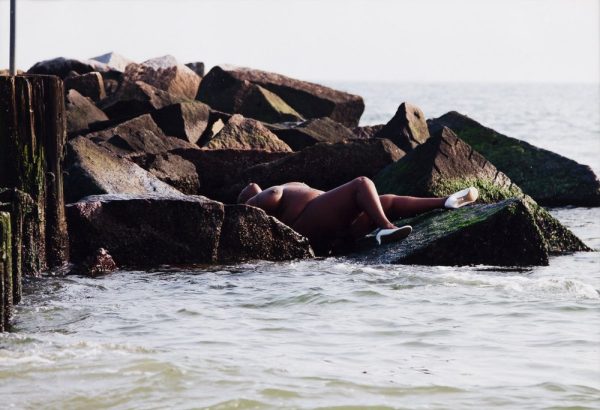
This artwork is titled “Like a pregnant corpse, the ship expelled her into the patriarchy”, a self-portrait taken in 2012 along the Atlantic Coast in Brooklyn, apart of Nona Faustine’s “White Shoes” series. Faustine was a Brooklyn-based photographer who explored race and history, and most specifically New York slave history in this series that includes my chosen self-portrait. She took this photograph, among others, at a historic slave trade site in NYC, and poses herself as completely naked with only white pumps/heels on. Her appearance as “washed upon shore”, in amalgamation with the vulgar and raw language in the title, plays a significant role conveying the message of the barbaric conditions and violence Black women endured. The Brooklyn Rail notes an interesting point about the series, that “she is a channel for, and a physical manifestation of, the countless and nameless women who were subjected to the tortures of slavery, ancestors who did not arrive through Ellis Island, who were never provided a choice of whether they wished to settle in the New World.”
Her deliberate choice to wear nothing but white shoes in these self-portraits also evokes a lot of thought in the viewer. The white in the shoes can symbolize slaves being stripped down to nothing, mentally and physically, but still needing to carry the values of white supremacy. She forces you to digest the brutal trauma the slaves faced with a piece of artwork that’s not easy to look at, but also not easy to look away from.
Making History Visible, Shirley Kabariti
A Proper Place, Nona Faustine (2015) from her White Shoes exhibition
Making History Visible, Angelica Wong

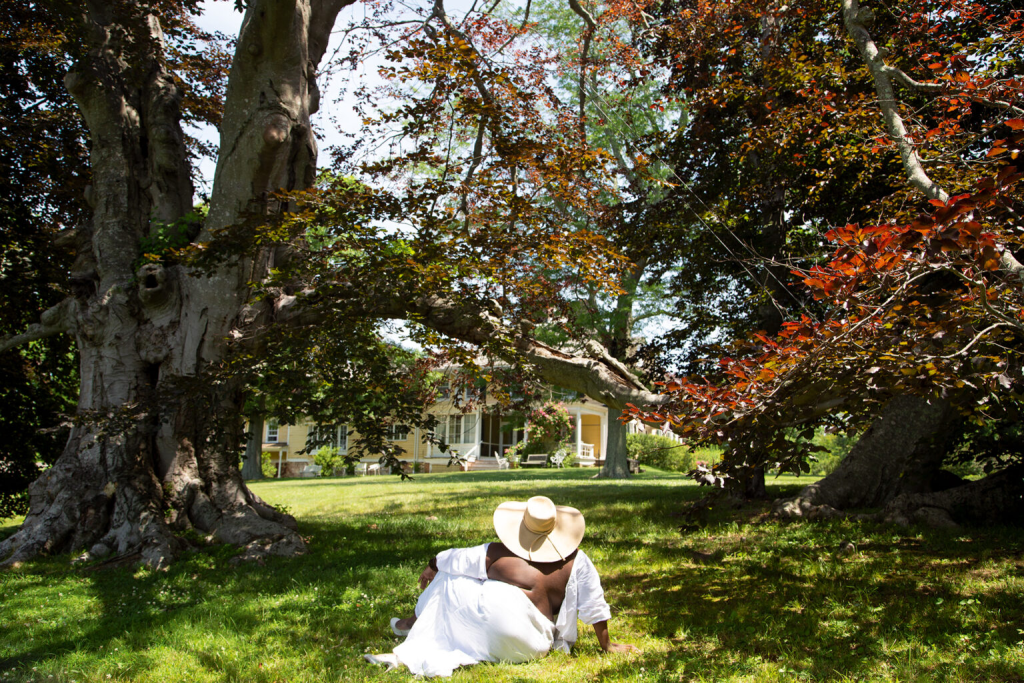
Nona Faustine, There are few markers left but your black body is the marker. The land does hold the memory of your existence. You only have to put it there in its natural state to remember. – Harriet Tubman, Sylvester Manor, Shelter Island, NY, 2021