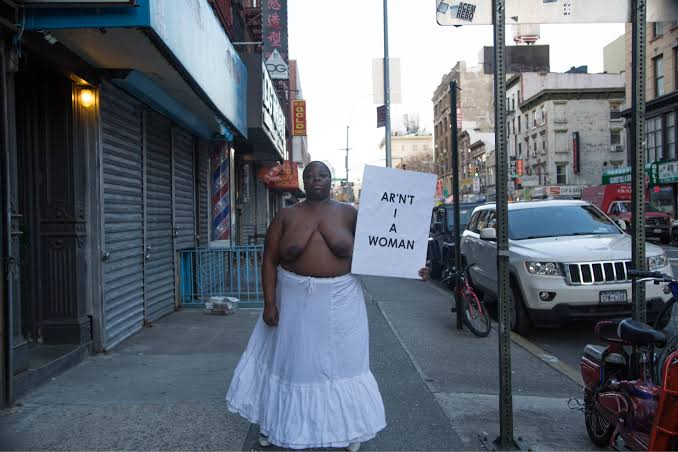
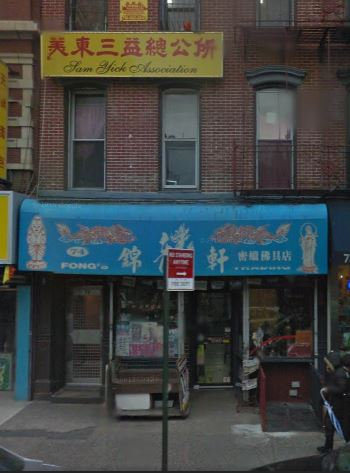
Nona Faustine’s Sojourner Truth, 74 Canal St. brings attention to a part of Black history that is no longer physically visible. Sojourner Truth once lived on 74 Canal Street, despite Sojourner Truth being an integral part of history, her home was not preserved or memorialized. The lack of care for Black’s role in history is apparent in the absence of Sojourner Truth’s home. In the above image, Faustine has placed her own body at the location where Sojourner Truth once lived, in efforts of creating a living monument of the site. The use of her own body also makes the history feel much more personal and relatable to today. Instead of simply showing the location, she becomes part of the landscape, holding up a sign that reads, “Ar’nt I a Woman.” She is referencing one of Sojourner Truth’s famous speeches at a women’s rights convention, bringing her memory to life. This connects strongly to the African Burial Ground because both places show how Black history can be physically erased from New York. These places are an important part of the city’s history and we must make an effort to keep their history alive.
An icon is a highly recognizable and influential person whose work, identity, achievements, or image has had a significant and lasting positive impact on society, culture, or the way people think, behave, create, or see the world.
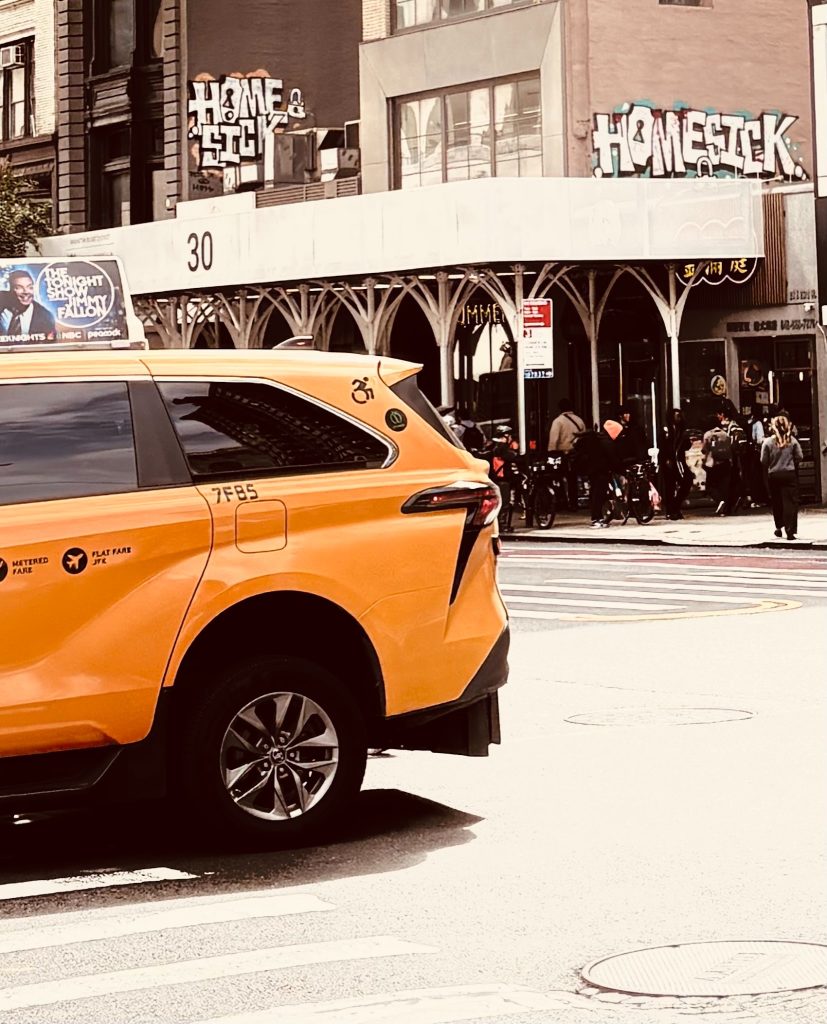
Graffiti is iconic to the streets of New York City. Wherever you walk in New York City you see graffiti on the walls. What is known to be a crime has become a display of human creativity and expression. All around New York there are different forms of graffiti, sometimes it is cultural, or artistic, or sometimes it is used as an outlet for people to express themselves. Though illegal, it does not stop New York from being covered in it, from walls, to buses, vans, street lights, lamp posts. Someone has something to say, anywhere you walk. The image of graffiti I took says, “Homesick.” I believe that this also specifically best represents New York because New York is home. When you leave New York, you feel an incredible sense of homesickness. Leaving New York will leave you forever longing for the city that never sleeps, a city that is incredibly enchanting, a city I call home.
I chose pigeons as an image that best represents New York City. When looking at the history of pigeons, one can see that they are “immigrants”, not completely native to New York. They arrived in the city alongside European immigrants in the 1600s and were originally domesticated. Since then, pigeon life drastically shifted from rooftop coops, pigeon fanciers, and pigeon racing to becoming a wild species on their own in the city. Yet, they persisted to stay on windowsills, skyscraper roofs, and train overpasses. They were resilient and adaptive and still called this city home, much like New Yorkers. The pigeon represents the larger picture of New York City as an icon by reflecting the migrant foundation of the city and how they adapted to constant change. A prominent example of love for our pigeons came from artist Ivan Argote, who sculpted a massive pigeon statue called “Dinosaur”, located on the Highline in New York City. He based this sculpture on the notion of going against the norm of the “traditional historical figure monument”. Unfortunately, the pigeon statue was recently taken down in April 2026, starting a “pigeon protest”, which I think shows how much this city adores pigeons.
An icon is a symbol representing larger, encompassing traits of a place, community, or culture. Icons can be people, like in music or cinema, or they can be icons of a culture, such as black, hispanic, or LGBTQ culture. When considering what an icon of a place would be, it has to be widely recognized and “agreed upon”. Although upfront it’s just a person/monument/object, the icon represents a larger history about the place and the culture of its people.
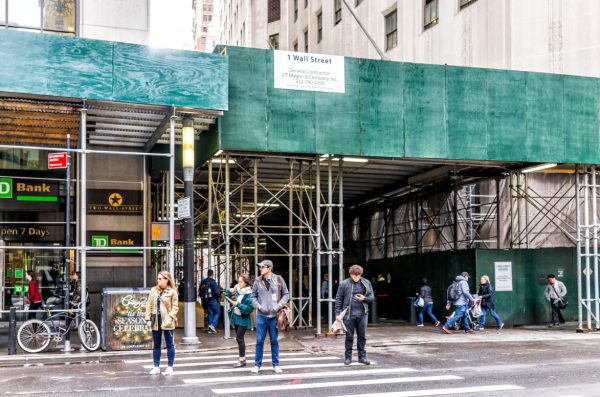
When I think of New York and especially New York City the first thing that comes to mind is the scaffolding. You know, the metal rods and green topper that protect you from the building work on top of you. Some history behind it is that it started to become a requirement to have it during certain construction in 1980, but it was first stated in 1938. If there was no scaffolding it could pose a danger to the public, especially because there is ALWAYS work going on for the buildings of New York City.
That’s my icon of New York.
Funny story, yesterday I was walking to Baruch, and for the first time I saw them building the scaffolding. I was in awe because I’ve never seen them work on it before, it’s just always there. But as they were building it, there was a very small and short opening that I had to go under. As I was about to go under, the unit they were working on started shaking. I said nope, and threw myself on the street and walked the other way. But hey, that’s New York for you, and that’s why this is my icon.
An icon is an object that symbolizes a larger thing or place as a whole. It becomes an almost instant thing that when you see you you know exactly what thing or place on a bigger spectrum you have seen. Although the scaffolding interrupts the beauty of the buildings above you, I kind of find beauty in it as well. The scaffolding is the thing that reminds me of New York, I’ve quite honestly never seen it anywhere else.
In your own words, what is a period room? Have you ever visited a period room? Which one? When?
A period room is a room in a museum that is designed to specifically look like a room from a different time and place. It uses furniture, decorations, pieces of artwork, and everyday objects that may have been used then, to show what the room may have looked like in the past. Museums try to make these rooms feel as historically accurate and authentic as possible, in efforts to transport you into a different reality. I recently visited a period room in the Tenement Museum with my class about two weeks ago!
What was the goal in installing the Afro-Futurist room within the context of the Met?
The goal of installing the Afro-Futurist room within the context of the Met was to provide an alternative design of a period room. Unlike the traditional, conventional period room where European, and American art sections are displayed at the Met, this exhibition “embraces the African and African diasporic belief that the past, present, and future are interconnected.” It is meant to resemble a possible home to a family who might have lived in the nineteenth century in the Seneca Village community, the first free black settlement in NYC. The room explores a bold, “evocative,” and vibrant style.
What is Afro-Futurism?
Afro-Futurism is a way of imagining the future for the Black communities through history, culture, and experiences. It combines ideas about the past and present to expand on possible visions for the future. The Afro-Futurism room explores African cultures with artifacts from Benin, Cameroon, Kenya, South Africa, Ethiopia, and Nigeria, being displayed in the period room.
Why the title of the room in the Met, “Before Yesterday We Could Fly: The Afro-Futurist Room”?
The title of the room in the Met is, “Before Yesterday We Could Fly: The Afro-Futurist Room” because it takes inspiration from a 1985 collection of intergenerational African folk tales called, The People Could Fly. Because the room combines past, present, and future, this idea of “flight” allows one to travel through these different eras. Many of the artworks and objects use birds, feathers, or other images of flight to connect the past with ideas about the future. Tiana Reid mentions the flight that is not explicitly mentioned, how in the past flight for Black people meant trying to fly away from death, but today their flight is towards opportunity, towards a future.
Why is this object in this installation?
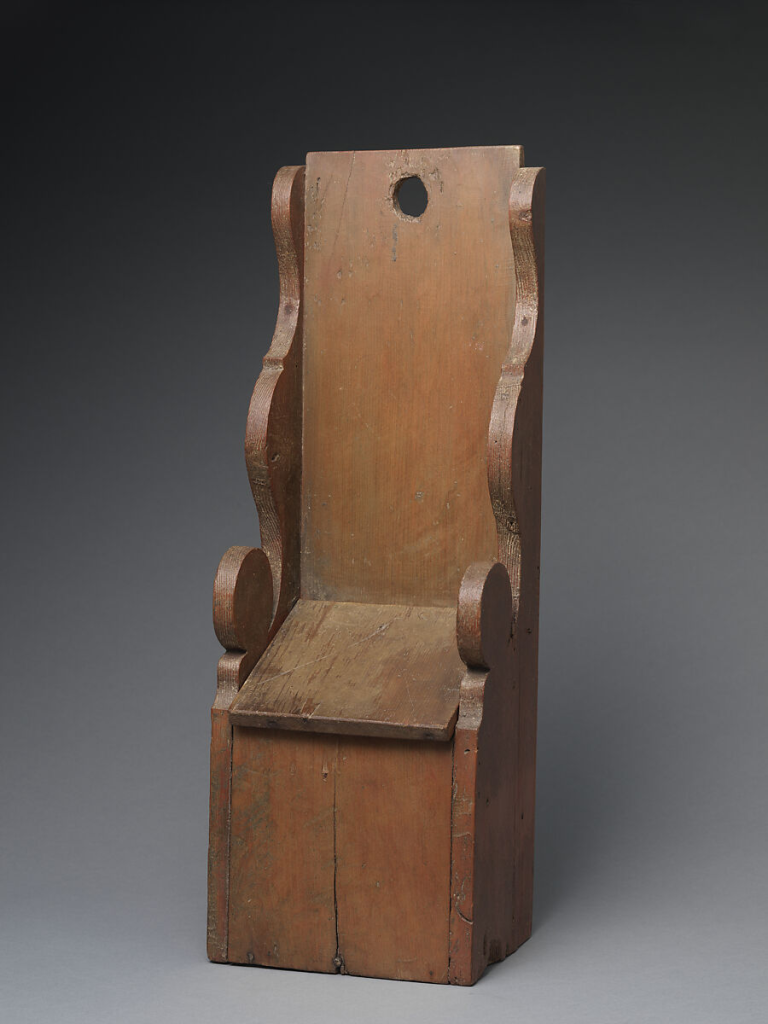
The Salt Box in the “Before Yesterday We Could Fly: The Afro-Futurist Room” at the Met was made in 1850 in Pennsylvania, United States. It is made of Yellow pine and is of American culture. The Salt Box was commonly found in one’s home, in this room it is found near other household objects in the kitchen.
One artist who addresses migration and immigration through her art is Lizania Cruz. Cruz is a Dominican artist who is based in New York City, and much of her work explores how migration affects people’s sense of identity and belonging. Her work often combines photography, installation, research, and personal stories to bring attention to immigrant experiences.
The main issues Lizania Cruz addresses in Flowers for Immigration are immigration, discrimination, undocumented labor, and the lack of representation for immigrants. She worked with undocumented flower workers in New York City and allowed them to create flower arrangements expressing their feelings about immigration policies. I think the artwork is especially powerful because the workers are able to tell their own stories instead of having other people speak for them. The flowers become a way for them to express their opinions and show their humanity while also bringing attention to the struggles they face as undocumented workers.
I think Cruz is a good example of an artist who uses art to tell stories that are sometimes ignored. Her work shows how immigrants contribute to society through their labor while also dealing with uncertainty and discrimination. Her art connects to the ideas discussed by Paola Mendoza and Jose Antonio Vargas because all three use storytelling to make immigration more personal and human. Rather than seeing immigrants as just a category or “box,” Cruz’s work allows people to see their individual experiences and identities.
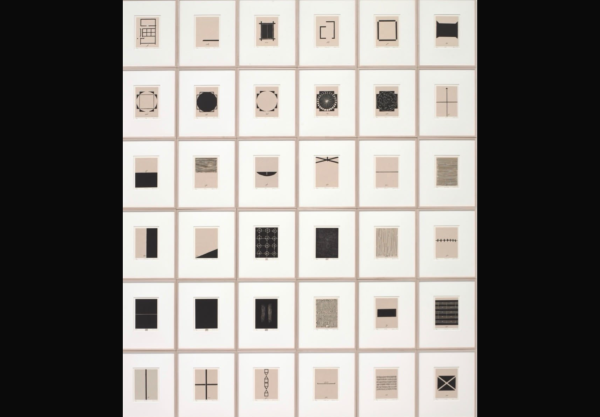
In Home Is a Foreign Place, Zarina Hashmi addresses migration, displacement, language, and the feeling of leaving your home behind. She uses words in Urdu, her native language and images of things like borders, roads, and houses to show her memories of the home she left. I think the artwork shows how moving to a new country can make someone question where they really belong and how they can still carry memories of their original home with them. Her artwork shows how moving to a new country can be extremely difficult even when it can seem easy once you are settled. You always carry memories of where you came from which can make things difficult. The use of Urdu is also important because it connects Zarina to the language and culture of where she came from. Even though she moved and lived in different places, her original home was still a part of her identity. The simple images of houses, borders, and maps also show how home is not always just one physical place. It can be connected to memories, family, language, and experiences. I think the title Home Is a Foreign Place shows how someone can miss their old home while also starting to feel unfamiliar with it after being away for so long. This relates to immigration because immigrants can sometimes feel caught between two places and not feel completely at home in either one. Zarina’s artwork shows both the physical experience of moving and the emotional experience that comes with it.
Jacob Lawrence painted this in 1943 as part of his effort to show the lives of African Americans. His parents were migrants and they migrated during The Great Migration. He was born in 1917 and as a teenager he started his passion for art to express himself and his feelings. He was also a teacher. He was the first African American artist that artwork was in the MOMA.
Jacob Lawrence shows the issues immigrants faced through this piece of art. They had to carry everything and walk with the anxiety of how their lives would change. They were probably nervous of how they would integrate into the new culture, what job they would have, and how they would be treated by others as a immigrant. But, we see some of their hope and excitement for the new opportunities they would encounter through the lens of this art. The sky is blue and a few of them are looking forward to it with the big steps they are taking. On the other hand, we also see the hardships the younger children are facing as they are looking down and burdened with the walking and carrying the bags.
A period room is a room in a museum that is designed to look like a real interior from a certain time or place. To help visitors get a better idea on how people lived it uses furniture, decorations, architecture, and everyday objects.
I don’t think I had knowingly visited a period room before t5his assignment. I may have seen rooms like this in museums before, but I never really knew they were called period rooms or understood their purpose.
The goal in installing the Afro Futurist room was to challenge the traditional idea of a period room. Instead of showing one exact moment in history, Before Yesterday We Could Fly connects the past, present, and future of Black life. The room imagines what a home belonging to descendants of the people of Seneca Village could have looked like. Seneca Village was the first free Black settlement in New York City, but it was destroyed in 1857 to make room for Central Park. The installation brings that erased history back into the Met while also using imagination to show what the lives and futures of those people could have become.
Based on the article, Afro-Futurism is a creative way of connecting Black history, culture, imagination, and the future. The article says it focuses on Black imagination, excellence, and self-determination. It does not only look at what happened in the past. It also uses imagination and creativity to think about different possibilities for the present and future.
The title connects to one of the main ideas of the exhibit, which is that the past, present, and future are connected instead of being completely separate. The article explains that the title comes from The People Could Fly, a collection of African folk tales. The idea of flight appears throughout the exhibit in different ways. There is a bird staff that represents “spiritual flight,” a vase decorated with feathers, a table connected to outer space, and other objects that relate to flying. The words “Before Yesterday” also make the title interesting because they mix up the normal order of time. The exhibit contains objects from different centuries along with modern artwork, so it is not trying to recreate one exact historical period. Instead, it imagines what a home belonging to descendants of Seneca Village could have been like. Reid explains that the title challenges the normal way museums separate history into clear time periods. At the same time, Reid criticizes the exhibit because she feels that it does not connect strongly enough to the lives and struggles of Black New Yorkers in the present day. So the title represents the exhibit’s attempt to bring history, imagination, and the future together.
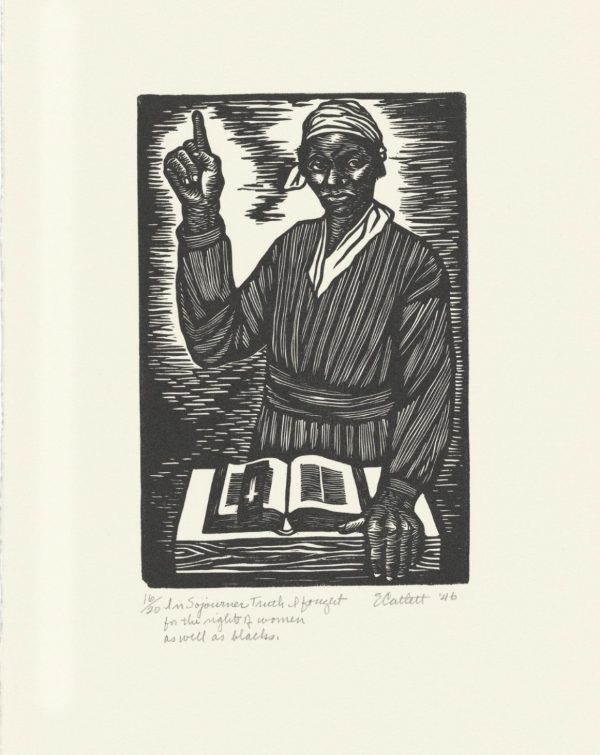
I chose Catlett’s Sojourner Truth. I think it is in the room because it represents Black history and the struggles Black women faced. The article explains that the artwork shows both the difficult conditions of Black women’s labor and their resistance. This connects to the room because the exhibit focuses on Black history, experience, and imagination. It is a linocut made in 1947 and is part of Catlett’s series about Black women. The Met explains that Catlett made the series to recognize Black women’s labor and honor important Black women in history. Sojourner Truth was born into slavery and later became an abolitionist and women’s rights activist. In the artwork, she is shown looking strong and confident, with one hand pointing upward. I think this artwork is in the Afro-Futurist room because the room focuses on Black history, creativity, and imagining what Black life could have looked like if communities like Seneca Village had been allowed to continue and grow. The room brings together different time periods instead of only showing one moment in history. Catlett’s artwork fits because it brings an important Black woman from the past into a room that connects the past, present, and future