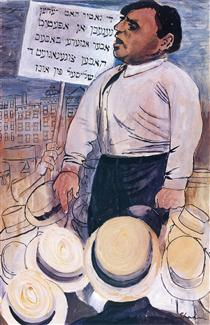
Ben Shahn was a Lithuanian Jewish artist who documented the Lower East Side and Jewish immigrant life in the 1930s-40s. The image I chose from his art is “East Side Soap Box,” which shows a union rally of Jewish workers with protest signs written in Yiddish, a common language spoken by European Jews. The Jewish Museum connects this artwork to poverty in the Great Depression, unemployment, and Shahn’s own Jewish identity. While many Jewish immigrants tried to integrate culturally, it was difficult because many kept Shabbat. This limited them from working on Saturdays, which was extremely important at the time. Many Jewish immigrants were working poorly paid jobs with difficult working conditions. Therefore, because of economic inequality, Shahn depicts working-class Jewish immigrants demanding better treatment. Additionally, Shahn draws attention to how immigrants maintained their cultural roots while adapting to American life through the Yiddish language. In this case, a shared language brought Jewish immigrants together through a common form of communication. However, language can also divide communities through a lack of understanding. Therefore, Shahn’s artwork on Eastern Jewish immigration during the Great Depression era depicted the labor and economic hardships people experienced.
Alice Austen, Abby Badalov
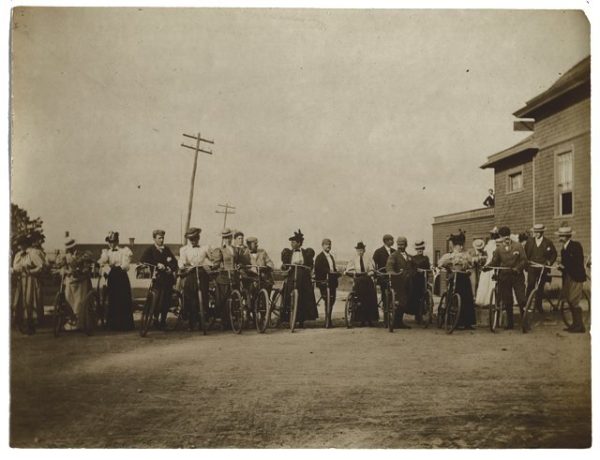
Alice Austen was an American female photographer who worked outside the studio to capture her surroundings. She documented many things, including New York City street life, immigrant populations, the process through quarantine stations, and the activities of Victorian women. In many of Austen’s photographs, women are shown bicycling, going on outings, and joking around, capturing their independence and self-directed nature and thus challenging social norms of the time. These photos are especially important today because they show the viewer how women’s independence developed over time through everyday activities, not solely through political movements. These photos also challenge traditional domestic roles and gender expectations, which can teach any viewer today about the sacrifices women made in their time to be seen and accepted. I especially appreciated the photo of Victorian women in the Staten Island Bicycle Club because it showed something I wouldn’t have initially thought women in that era would do, especially since they were still dressed in their usual clothing. Then, bicycles gave women the ability to travel farther on their own, and today we continue to take advantage of this opportunity with NYC Citi Bikes. Today, biking around New York City has become both a popular attraction for tourists and a mode of transportation for New Yorkers. This photo made me realize how independent movement throughout the city, whether on Citi Bikes, trains, or buses, feels so normal today compared to how freeing it felt for those Victorian women. Movement means access to more opportunities and activities, which are prevalent both then and today, affecting the kind of life we live and experience. Additionally, many similar public fitness groups, like the one in Austen’s image, exist in the city today for those who enjoy running, biking, and more. Therefore, the bicycles in Austen’s photograph and those we use today share the same value across eras.