New York: A City of Migrants and Immigrants, Jack Terzi

Tania Bruguera: Immigrant Movement International
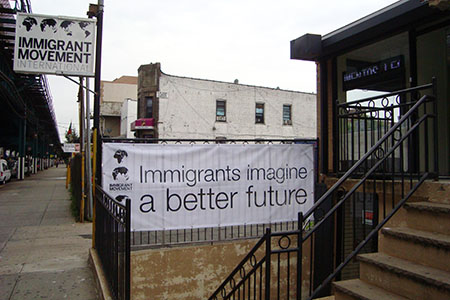
The Immigration Movement International

We watched Paola Mendoza and Jose Vargas discuss art as a means to call for immigration reform, and another artist who addresses immigration through her art is Tania Brugueras. Born in Cuba, and later moved to NYC, she worked on a project called Immigrant Movement International. It takes place in Corona, Queens, and focuses on immigrants’ lives, experiences, and their rights. The artwork isn’t your typical painting or sculpture, instead it is an entire community project, working with politicians, immigrants, and community organizations. It deals with a few issues immigrants face; their lack of voice in the political system, the limited access to resources, and the negative way society can view them. She was interested in the conditions they lived in, so much so that in 2011, she “spent the year living with 5 immigrant families and their children.” She wanted to better understand these problems, like the challenges undocumented immigrants faced surviving with little pay and no health insurance. The project opened a storefront where the immigrants could work on their own art, learn English, and even find employment. It allowed them to become a part of a community. In the Art21 video, where they interview members and attendees of the exhibit, you could so clearly tell how at home, and how comfortable they feel among each other, and when free to just be, and paint, and do whatever. There are shows and displays of the immigrants’ culture, and the scenes of them appreciating it is so wholesome. Its so great that the artist makes something the entire community could interact with. Its something called “Arte Útil”, or useful art in Spanish, and I couldn’t agree more. The piece is so connected to real life. It addresses some social and political problems, while also bringing the community together.
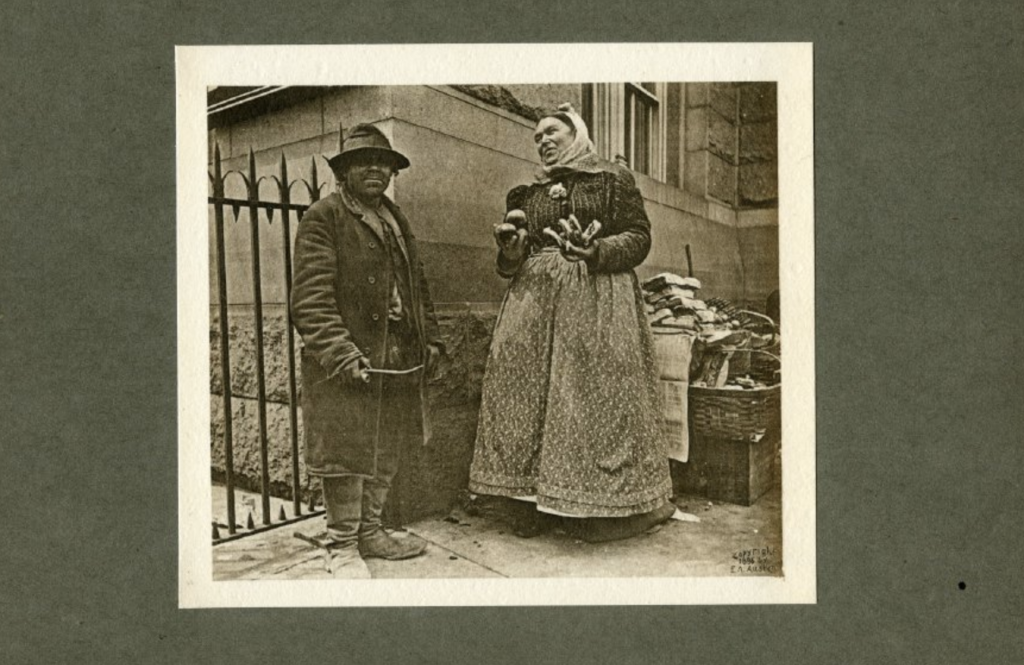
Alice Austen, Jack Terzi

Alice Austen, one of America’s earliest photographers, was introduced to photography at just 10 years old. She lived from 1866 to 1952 and spent much of her life taking pictures, and documenting New York City. Unlike most other photographers of the time, Austen wasn’t limited to a studio. She was able to spend her time actually venturing the streets of New York. She documented all the city’s different elements, and captured thousands of photos showing our city rapidly evolving. She does this by photographing the city’s working class, immigrant populations, and everyday social environment. These pictures are important in 2026 because although the city has changed a lot since then, the specific elements she documented are still central to the city. The street life of people selling goods, commuting or just socializing; the different ethnic groups who are new to the country; the workers who the city largely depends on; and the constant movement and transportation. These are all aspects of the city so very apparent today. They are fundamentals to life in New York, and it’s nice to see that this city remained consistent in its foundation to how it was in Austen’s time. It goes even further. Austen was a rebel, who lived an independent life outside of accepted female behavior. Some of her photos are of her friends and relationships, helping us understand this non-traditional lifestyle. These pictures are from a time where social opportunities for women were much more restrictive, yet it was showing their attempt to break those restrictions. Today, we live in a time much more progressive, and much closer to the freedom Austen dreamed of living in. 

This picture by Austen of a pretzel vendor and an immigrant is significant because it intertwines the city’s immigration and its working class. Historically in New York, the city has been a place where immigrants came searching for opportunities, often starting working in the streets and businesses. That remains just as true today, as immigrants make up a major part of the city’s workforce, while also contributing to the culture, and economy. The photograph also reminds us that the city isn’t only its architecture and beauty, but it’s the average people who work and interact with each other.

Proudly powered by WordPress | Theme: Baskerville 2 by Anders Noren.

Up ↑