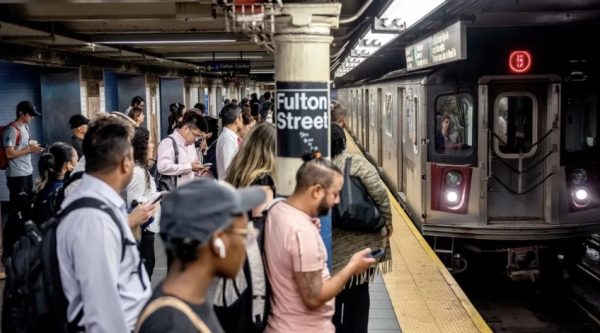
An icon is something that is well known and easily recognized as representing a certain place, culture, or idea. I think an icon of New York should be something that people immediately connect to the city but that also represents what life in New York is actually like. I chose the New York City subway because I think it is one of the things that best represents New York City from my perspective. I chose the subway because it is such a big part of everyday life in New York. People use it to get to work, school, restaurants, stores, and almost anywhere else they need to go. I think it represents how fast-paced and busy New York is. It also connects so many different neighborhoods and brings people from completely different backgrounds together in the same place. On one train you can see students, tourists, people going to work, families, and people from many different cultures. To me, that diversity is a huge part of New York City. I also chose it because the subway is something New Yorkers actually experience regularly instead of just being a famous tourist attraction. The crowded platforms, people rushing for trains, subway signs, announcements, and sounds of the trains are all things I associate with being in New York. Even though the subway can sometimes be crowded, delayed, or stressful, I think that is also part of the real experience of living in the city.
Met Museum: Afro-Futurist Room,ShanaMonas
- A period room is a room in a museum that is designed to look like a real interior from a certain time or place. To help visitors get a better idea on how people lived it uses furniture, decorations, architecture, and everyday objects.
- I don’t think I had knowingly visited a period room before t5his assignment. I may have seen rooms like this in museums before, but I never really knew they were called period rooms or understood their purpose.
- The goal in installing the Afro Futurist room was to challenge the traditional idea of a period room. Instead of showing one exact moment in history, Before Yesterday We Could Fly connects the past, present, and future of Black life. The room imagines what a home belonging to descendants of the people of Seneca Village could have looked like. Seneca Village was the first free Black settlement in New York City, but it was destroyed in 1857 to make room for Central Park. The installation brings that erased history back into the Met while also using imagination to show what the lives and futures of those people could have become.
- Based on the article, Afro-Futurism is a creative way of connecting Black history, culture, imagination, and the future. The article says it focuses on Black imagination, excellence, and self-determination. It does not only look at what happened in the past. It also uses imagination and creativity to think about different possibilities for the present and future.
- The title connects to one of the main ideas of the exhibit, which is that the past, present, and future are connected instead of being completely separate. The article explains that the title comes from The People Could Fly, a collection of African folk tales. The idea of flight appears throughout the exhibit in different ways. There is a bird staff that represents “spiritual flight,” a vase decorated with feathers, a table connected to outer space, and other objects that relate to flying. The words “Before Yesterday” also make the title interesting because they mix up the normal order of time. The exhibit contains objects from different centuries along with modern artwork, so it is not trying to recreate one exact historical period. Instead, it imagines what a home belonging to descendants of Seneca Village could have been like. Reid explains that the title challenges the normal way museums separate history into clear time periods. At the same time, Reid criticizes the exhibit because she feels that it does not connect strongly enough to the lives and struggles of Black New Yorkers in the present day. So the title represents the exhibit’s attempt to bring history, imagination, and the future together.
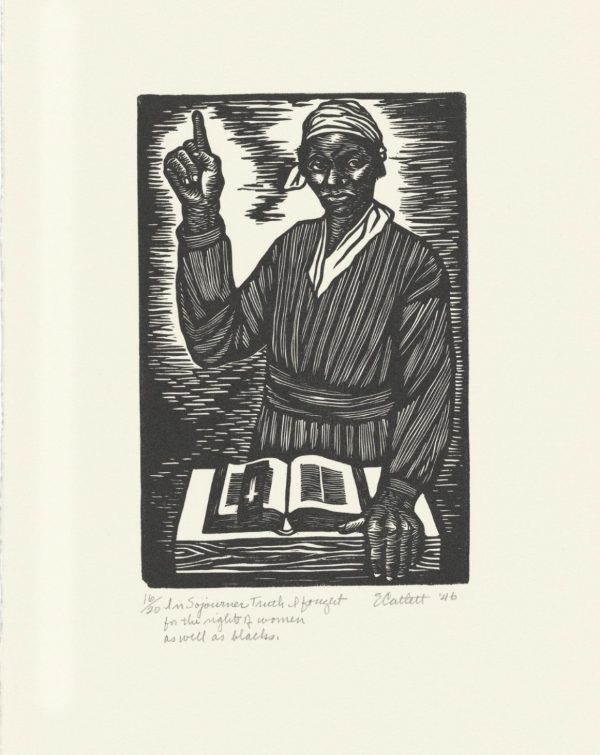
I chose Catlett’s Sojourner Truth. I think it is in the room because it represents Black history and the struggles Black women faced. The article explains that the artwork shows both the difficult conditions of Black women’s labor and their resistance. This connects to the room because the exhibit focuses on Black history, experience, and imagination. It is a linocut made in 1947 and is part of Catlett’s series about Black women. The Met explains that Catlett made the series to recognize Black women’s labor and honor important Black women in history. Sojourner Truth was born into slavery and later became an abolitionist and women’s rights activist. In the artwork, she is shown looking strong and confident, with one hand pointing upward. I think this artwork is in the Afro-Futurist room because the room focuses on Black history, creativity, and imagining what Black life could have looked like if communities like Seneca Village had been allowed to continue and grow. The room brings together different time periods instead of only showing one moment in history. Catlett’s artwork fits because it brings an important Black woman from the past into a room that connects the past, present, and future.
Alice Austin, Shana Monas
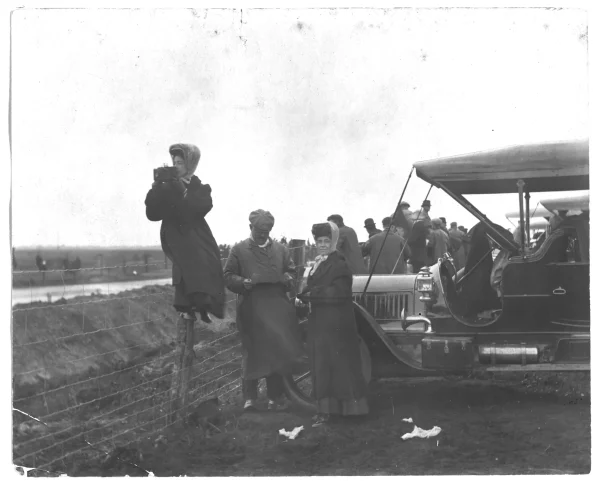
Alice Austin was one of the first female photographers in America, and she started at only ten years old. She lived from 1866 to 1952 and was unusual for her time because she worked outside a photography studio and took pictures of normal day to day life. She took pictures of her family and friends, women’s social activities, sports, homes, nature, immigrants, and different parts of life around New York City. She portrayed women living more independently than what was considered normal during the Victorian era. She took pictures of social activities and everyday life to show what living during that time was like. The subjects of the photographs are important in 2026 because they show what everyday life in New York looked like over 100 years ago. It gives us a better understanding and allows us to see how much society has changed since then. She photographed ordinary people, women, relationships and things that we don’t see and learn from history. Her pictures show details including the way people dressed, socialized, and traveled. They show how women had stricter social expectations than they do today. Some women are naturally posing, standing close together, or doing things that were not so ordinary to do at the time. This shows us that regardless of the strict rules and expectations society had towards women, they still found ways to be independent and express themselves. Today, people usually dress more casually and women have much more freedom to choose how they act, dress, and express themselves. Her pictures are important because pictures back then were rare, and today we can just take out a phone and post a picture anywhere we are. One photograph that stood out to me was Alice on fence point.
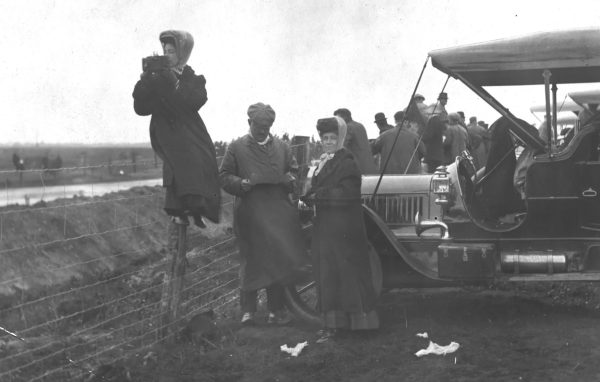
Alice Austen is doing something that was not considered proper at the time by sitting on top of a fence post while Gertrude Tate watches. She did not seem to be afraid to do something that goes against the societal expectations of women. She was willing to climb a fencepost, carry heavy photography equipment, and work outside instead of conforming to the normal social roles of women at the time. She did not care if climbing the fence would expose her ankles, even though this was considered improper for women during this time. Today, people stand by that idea and still find it important to express themselves regardless of what society has to say about it. Women also have much more freedom in the way they behave and dress today.
New York: A City of Migrants and Immigrants II, Shana Monas
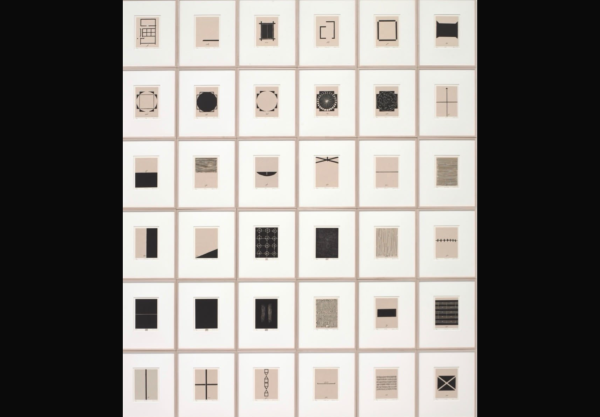
In Home Is a Foreign Place, Zarina Hashmi addresses migration, displacement, language, and the feeling of leaving your home behind. She uses words in Urdu, her native language and images of things like borders, roads, and houses to show her memories of the home she left. I think the artwork shows how moving to a new country can make someone question where they really belong and how they can still carry memories of their original home with them. Her artwork shows how moving to a new country can be extremely difficult even when it can seem easy once you are settled. You always carry memories of where you came from which can make things difficult. The use of Urdu is also important because it connects Zarina to the language and culture of where she came from. Even though she moved and lived in different places, her original home was still a part of her identity. The simple images of houses, borders, and maps also show how home is not always just one physical place. It can be connected to memories, family, language, and experiences. I think the title Home Is a Foreign Place shows how someone can miss their old home while also starting to feel unfamiliar with it after being away for so long. This relates to immigration because immigrants can sometimes feel caught between two places and not feel completely at home in either one. Zarina’s artwork shows both the physical experience of moving and the emotional experience that comes with it.
Met Museum: Afro-Futurist Room, Shana Monas
- A period room is a room in a museum that is designed to look like a real interior from a certain time or place. To help visitors get a better idea on how people lived it uses furniture, decorations, architecture, and everyday objects.
- I don’t think I had knowingly visited a period room before t5his assignment. I may have seen rooms like this in museums before, but I never really knew they were called period rooms or understood their purpose.
- The goal in installing the Afro Futurist room was to challenge the traditional idea of a period room. Instead of showing one exact moment in history, Before Yesterday We Could Fly connects the past, present, and future of Black life. The room imagines what a home belonging to descendants of the people of Seneca Village could have looked like. Seneca Village was the first free Black settlement in New York City, but it was destroyed in 1857 to make room for Central Park. The installation brings that erased history back into the Met while also using imagination to show what the lives and futures of those people could have become.
- Based on the article, Afro-Futurism is a creative way of connecting Black history, culture, imagination, and the future. The article says it focuses on Black imagination, excellence, and self-determination. It does not only look at what happened in the past. It also uses imagination and creativity to think about different possibilities for the present and future.
- The title connects to one of the main ideas of the exhibit, which is that the past, present, and future are connected instead of being completely separate. The article explains that the title comes from The People Could Fly, a collection of African folk tales. The idea of flight appears throughout the exhibit in different ways. There is a bird staff that represents “spiritual flight,” a vase decorated with feathers, a table connected to outer space, and other objects that relate to flying. The words “Before Yesterday” also make the title interesting because they mix up the normal order of time. The exhibit contains objects from different centuries along with modern artwork, so it is not trying to recreate one exact historical period. Instead, it imagines what a home belonging to descendants of Seneca Village could have been like. Reid explains that the title challenges the normal way museums separate history into clear time periods. At the same time, Reid criticizes the exhibit because she feels that it does not connect strongly enough to the lives and struggles of Black New Yorkers in the present day. So the title represents the exhibit’s attempt to bring history, imagination, and the future together.
I chose Catlett’s Sojourner Truth. I think it is in the room because it represents Black history and the struggles Black women faced. The article explains that the artwork shows both the difficult conditions of Black women’s labor and their resistance. This connects to the room because the exhibit focuses on Black history, experience, and imagination. It is a linocut made in 1947 and is part of Catlett’s series about Black women. The Met explains that Catlett made the series to recognize Black women’s labor and honor important Black women in history. Sojourner Truth was born into slavery and later became an abolitionist and women’s rights activist. In the artwork, she is shown looking strong and confident, with one hand pointing upward. I think this artwork is in the Afro-Futurist room because the room focuses on Black history, creativity, and imagining what Black life could have looked like if communities like Seneca Village had been allowed to continue and grow. The room brings together different time periods instead of only showing one moment in history. Catlett’s artwork fits because it brings an important Black woman from the past into a room that connects the past, present, and future
New York: A City Of Migrants and Immigrants II, Shana Monas
In Home Is a Foreign Place, Zarina Hashmi addresses migration, displacement, language, and the feeling of leaving your home behind. She uses words in Urdu, her native language and images of things like borders, roads, and houses to show her memories of the home she left. I think the artwork shows how moving to a new country can make someone question where they really belong and how they can still carry memories of their original home with them. Her artwork shows how moving to a new country can be extremely difficult even when it can seem easy once you are settled. You always carry memories of where you came from which can make things difficult.
Alice Austin, Shana Monas
Alice Austin was one of the first female photographers in America, and she started at only ten years old. She lived from 1866 to 1952 and was unusual for her time because she worked outside a photography studio and took pictures of normal day to day life. She took pictures of her family and friends, women’s social activities, sports, homes, nature, immigrants, and different parts of life around New York City. She portrayed women living more independently than what was considered normal during the Victorian era. She took pictures of social activities and everyday life to show what living during that time was like. The subjects of the photographs are important in 2026 because they show what everyday life in New York looked like over 100 years ago. It gives us a better understanding and allows us to see how much society has changed since then. She photographed ordinary people, women, relationships and things that we don’t see and learn from history. Her pictures show details including the way people dressed, socialized, and traveled. They show how women had stricter social expectations than they do today. Some women are naturally posing, standing close together, or doing things that were not so ordinary to do at the time. This shows us that regardless of the strict rules and expectations society had towards women, they still found ways to be independent and express themselves. Today, people usually dress more casually and women have much more freedom to choose how they act, dress, and express themselves. Her pictures are important because pictures back then were rare, and today we can just take out a phone and post a picture anywhere we are. One photograph that stood out to me was Alice on fence point. Alice Austen is doing something that was not considered proper at the time by sitting on top of a fence post while Gertrude Tate watches. She did not seem to be afraid to do something that goes against the societal expectations of women. She was willing to climb a fencepost, carry heavy photography equipment, and work outside instead of conforming to the normal social roles of women at the time. She did not care if climbing the fence would expose her ankles, even though this was considered improper for women during this time. Today, people stand by that idea and still find it important to express themselves regardless of what society has to say about it. Women also have much more freedom in the way they behave and dress today.