Met Museum:Afro-Futurist Room, Shirley Kabariti

In museums, a period room is a room that uses architecture and different furniture or objects to represent a certain time period and setting. The goal in installing the Afro-Futurist room in the Met was to contrast the idea of a period room by focusing on the African concept that the past, present, and future are all interconnected so instead of creating the exhibition as a certain historical moment they tried to bring that concept to light. The room depicts what a typical African home might’ve looked like in the first free African settlement in New York city known as Seneca Village that was destroyed in the making of Central Park. Afro-Futurism combines African history and culture to be able to imagine possibilities for Africans that go beyond the past and present. The Met chose the title “Before Yesterday We Could Fly: The Afro-Futurist Room” specifically for this room as a reference to The people could fly which is a collection of African folk tales. In African culture there are many references to flights, whether that be a spiritual flight or a flight toward death. Also calling the room Afro-Futurism connects to Seneca Village in a way that suggests a different past of it would have survived so many generations of Africans could’ve grown up there.

In the Afro-Futurist room, one of the artifacts is a hair comb. Unlike many of the other artifacts that were created specifically for this room, this hair comb was actually recovered from a Seneca village site and dates back to 1851. This hair comb was made when manufacturers exploited their workers and natural resources which is why this comb is made from rubber. The chains on the comb represent the bondage and enslavement of Africans during this time period, where even free Africans had to fear being captured and being enslaved.

New York: A City of Migrants and Immigrants II, Shirley Kabariti

Artist Guadalupe Maravilla is an immigrant from El Salvador who came to America at the age of 8 years old. Maravilla combines sculpting, painting, performance and installation to express his own experiences of displacement and forced migration. Maravilla’s Tierra Blanca Joven conveys the need for care and healing specifically for undocumented immigrants. Tierra Blanca Joven, meaning “a young white ash/Earth”, illustrates a common intergenerational struggle of displacement in El Salvador. The sculpture gets its name from the eruption of the Tierra Blanca Joven volcano in the fifth century CE which displaced the Maya people from the region. Additionally the sculpture depicts Maravilla’s own migration as a result of the 1979-92 civil war and connects to the children that are currently fleeing the country due to violence. Maravilla’s work focuses on collective healing of undocumented immigrants and cancer patients and tries to empower people with tools to help their healing process. Though Maravilla’s artwork doesn’t only address immigration in New York, he lives in Brooklyn, New York and his artwork is shown in many museums across NYC.

Alice Austen, Shirley Kabariti

Alice Austen was a Lesbian woman who rebelled against the normal traditional values of a Victorian woman. She lived an independent lifestyle and didn’t follow gender norms. She was one of America’s first woman photographers to look beyond the studio for artistic inspiration. Her intimate relationship with women, such as Gertrude Tate, played a significant relationship in her photography. Her photography showed life through the perspective of a lesbian woman in her time period. Austen was also intrigued by the Quarantine Station at Ellis Island so that is a big part of her photography as well. 

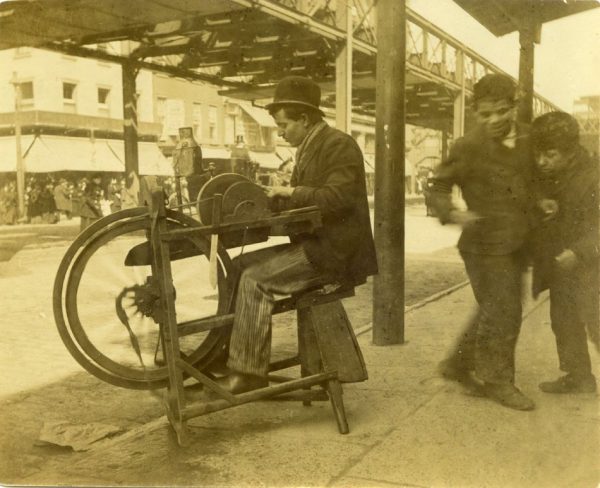
Austen’s photographs are still relevant now in 2026 because it shows us a glimpse of how life was back then. Many of Austen’s photographs appear to be a little random, and they are because these photos are just how she perceived life. One of her photographs that caught my eye was of a man grinding knives. It stood out to me because you can see the busy streets across from the guy and the people surrounding him yet he seems unbothered by any of it. This really resembles New York City today because sometimes we have so much going on around us and we don’t even notice it because we are so deeply involved in what we are doing ourselves. Also New York City is one of the only places you will see something so odd, like someone grinding knives, happening right on the sidewalk. I think overall Austen’s photographs are so important because it reminds us that even though the time that she lived may seem so far away we can still relate to it.

Proudly powered by WordPress | Theme: Baskerville 2 by Anders Noren.

Up ↑