

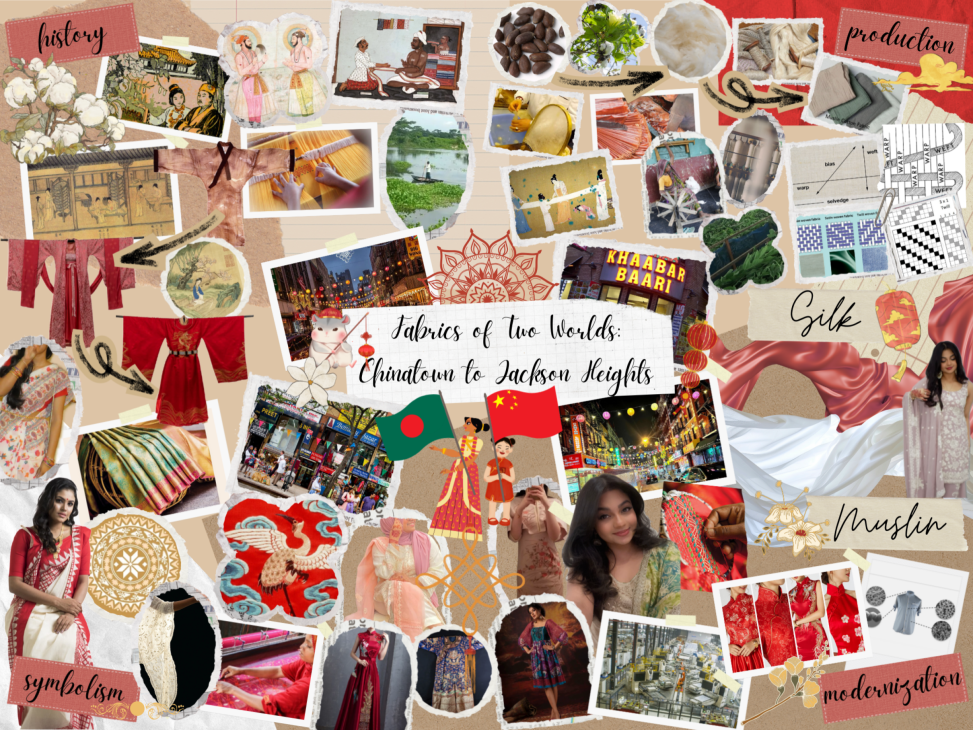
Our project, “Fabrics of Two Worlds,” explores the rich tactile heritage of Bangladesh and China, two countries that are geographically close. However, despite their proximity, their textile traditions evolved in remarkably distinct ways. From the shimmering silks of Chinatown to the handwoven Jamdani saris of Jackson Heights, NYC becomes a living gallery of color, craftsmanship, and cultural identity. Chinese silk, once worn by emperors, and Bangladeshi muslin prized by the Mughals, now displayed side by side in small storefronts, market stalks, and fashion boutiques across the city.
In Chinatown, silk shops, embroidery stores reflect China’s deep heritage of luxury and symbolism. Colors like red and gold dominate shopfronts as signs of joy, luck, and prosperity, while the dragons and phoenix motifs symbolize harmony and strength. The traditional process of silk creation is now more industrialized as modern technology grows, making silk and traditional clothing, such as qipao (旗袍) and hanfu (汉服), more accessible to cultural centers in New York.
Meanwhile, in Jackson Heights, sari stores and tailoring shops display the Bangladeshi artist through Jamdani weaving. From Nakshi Kantha embroidery–where rural women stitch their daily lives and emotions into clothes–to Jamdani (জামদানি) weaving and Muslin, every thread is a story of identity. Here, lotus and fish motifs represent purity and abundance, connecting the diaspora to their roots in the rivers and rural life of Bengal.
We want people to feel the power of fabric as identity and storytelling. Each stitch, motif, and color represents centuries of cultural evolution, and in New York, they coexist, overlap, and inspire each other.
In this urban tapestry, NYC acts as the loom, weaving together two distinct textile traditions. Our identity as immigrants connects us to diversity. Clothing is one of the major ways we are deeply connected with our culture. Completing this project helped us see how textiles and design are a powerful part of cultural identity for New Yorkers, especially in immigrant communities. When we explored the Bangladeshi and Chinese fabrics, we realized that clothing is more than fashion; it keeps our identity alive, tells stories, and creates a belonging in a new place. The tailors and craftsmen in Chinatown and Jackson Heights are actively preserving the traditional production process of the fabrics. In neighborhoods like Jackson Heights and Chinatown, their arts in textiles bring people together, also allow them to celebrate cultural heritage, and help cultures connect through art and creativity. This project showed us that the arts are not just for decoration, but they are a way for communities to express themselves and proudly share their history with New York City. This leads the city itself to become a gallery where creativity, migration, and memory are interwoven.

