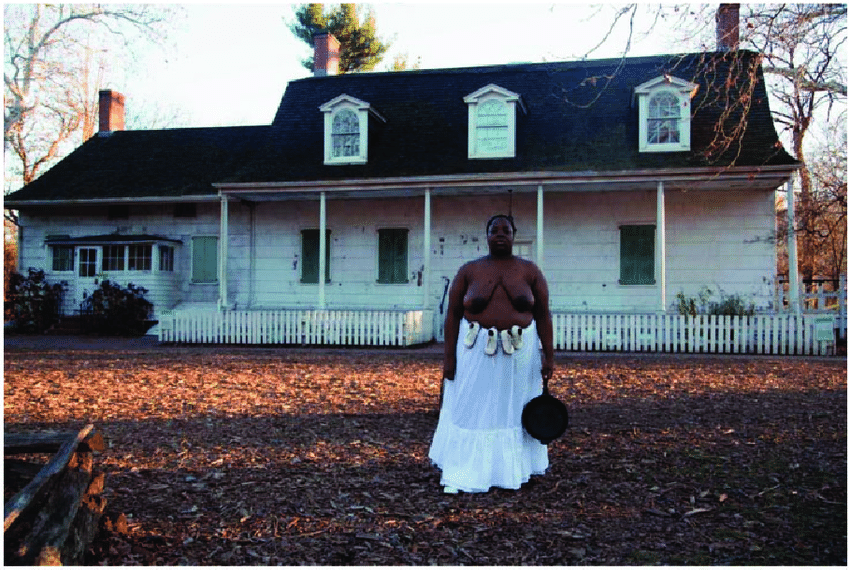
Dorothy Angola’s goal in Stay Free, In Land Of The Blacks, (Minetta Lane, Village, NYC) artwork is to show how she feels about the world. She believes she can stay free and never has to go through racism or discrimination again. She looks confident and comfortable in the image with herself and her fancy outfit. This image is in New York and she feels a sense of belonging there. She has one foot on a bucket and the other one is turned over. Showing that things might be going on, but when she puts in effort there is no ‘spill’ and ‘messes’.
This artwork is titled “Like a pregnant corpse, the ship expelled her into the patriarchy”, a self-portrait taken in 2012 along the Atlantic Coast in Brooklyn, apart of Nona Faustine’s “White Shoes” series. Faustine was a Brooklyn-based photographer who explored race and history, and most specifically New York slave history in this series that includes my chosen self-portrait. She took this photograph, among others, at a historic slave trade site in NYC, and poses herself as completely naked with only white pumps/heels on. Her appearance as “washed upon shore”, in amalgamation with the vulgar and raw language in the title, plays a significant role conveying the message of the barbaric conditions and violence Black women endured. The Brooklyn Rail notes an interesting point about the series, that “she is a channel for, and a physical manifestation of, the countless and nameless women who were subjected to the tortures of slavery, ancestors who did not arrive through Ellis Island, who were never provided a choice of whether they wished to settle in the New World.”
Her deliberate choice to wear nothing but white shoes in these self-portraits also evokes a lot of thought in the viewer. The white in the shoes can symbolize slaves being stripped down to nothing, mentally and physically, but still needing to carry the values of white supremacy. She forces you to digest the brutal trauma the slaves faced with a piece of artwork that’s not easy to look at, but also not easy to look away from.
Nona Faustine, There are few markers left but your black body is the marker. The land does hold the memory of your existence. You only have to put it there in its natural state to remember. – Harriet Tubman, Sylvester Manor, Shelter Island, NY, 2021
This artwork is by the photographer, Nona Faustine. She uses her body and physical form to remember the sacrifices of forgotten enslaved African-Americans. She is showering her full vulnerable self to emphasize the horrid conditions and permanent impact of slavery.
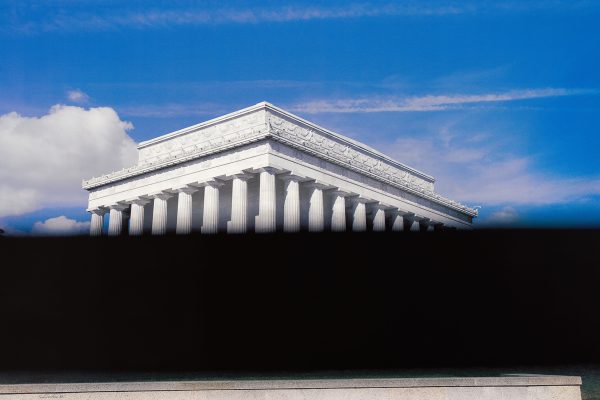
Lincoln Memorial, an artwork created by Nona Faustine in her My Country Series (2015)
Faustine took images of historical monuments and used her camera to reframe conventional colonialist perspectives, and recreated it with a more realistic depiction based of the truth and memorial behind these spaces.
To me, an icon is something that pretty much everybody recognizes right away, and it stands for more than just what it looks like. I think of an icon as almost like a landmark, something that helps you recognize a place or a culture, and it can be physical, like a building or a bridge, digital/untangible, like an app logo or an emoji, or intangible, like a song, a saying, or a feeling everyone connects with a city. What makes an icon different from a regular landmark is that it stands for something bigger than itself. I think an icon needs three things, and the first is that people can recognize it even from a small part of it. The second is that it represents an idea or a way of life and not just itself, and the third is that it has stayed meaningful for a long time, showing up in movies, photos, and everyday conversation. The Empire State Building is a good example because it’s a tall building, but it’s an icon because it stands for New York’s skyline and the city’s ambition.
Why did you choose this image or object?
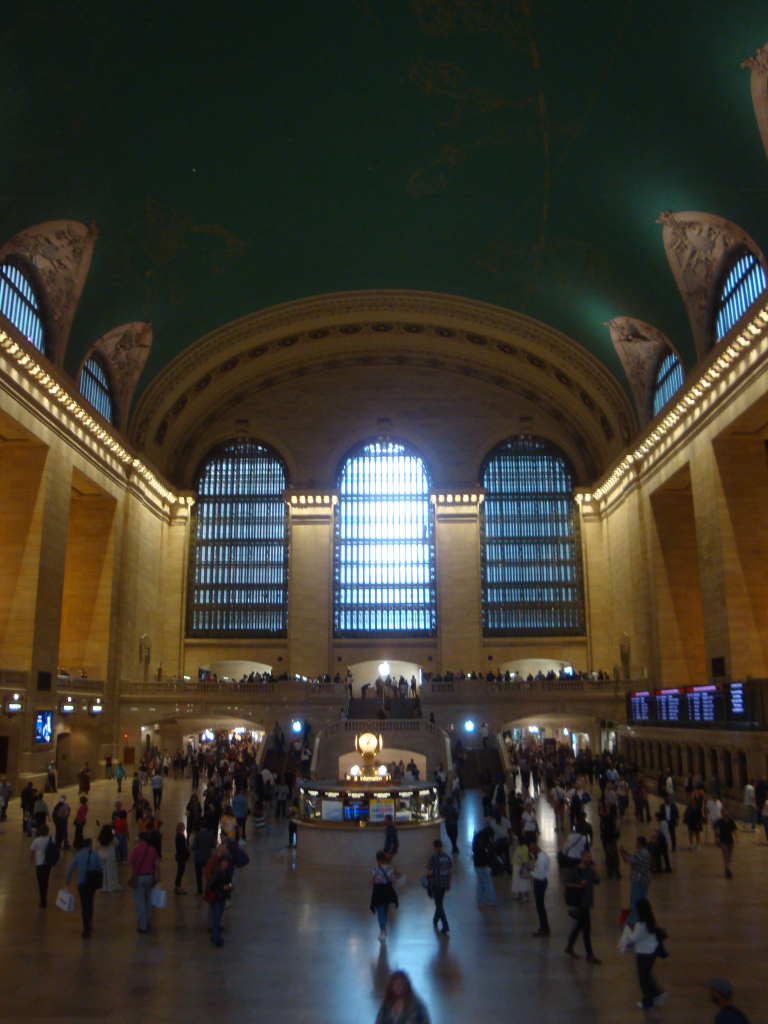
I chose this image because the station acts as a hub, connecting not only the subway system of NYC but also the Metro-North and LIRR lines, which connect many other parts of the tri-state area to NYC, showing how it’s a hub for not only transportation but also for diversity. On top of the subway, Metro-North, and LIRR, there are also city buses running right outside, so in one spot you can go from a bus to a train to a completely different part of the tri-state area without going very far. It also has a very rich history, with numerous renovations that have kept it alive over the years. It opened in 1913, was almost torn down in the 1960s and 70s, and was saved by a preservation fight that ended in a 1978 Supreme Court decision protecting NYC’s landmarks. It was then restored in the 1990s, which brought back details like the green celestial ceiling you can see in my photo, and most recently it was expanded with Grand Central Madison in 2023, which connected the LIRR to Grand Central. Beyond the history aspect, transportation is something so many people do every single day just to get where they need to go. The NYC transportation system is so vast, connecting people from point A to point B at a much more affordable price than owning a car. On a single train, you can look at the person across from you and the person to your left, and they could be going to two completely different places that you would never even know about. That’s what makes Grand Central more than just a beautiful building to me, because it’s where all those separate journeys cross paths, and it’s a big part of how the city runs every day. This is an icon because people recognize it right away, even from just the green ceiling or the clock, and it stands for so much more than a building. It represents how New York never stops moving and how people from every background end up crossing paths in the same place. It has also stayed meaningful for over a hundred years, showing up in movies, photos, and everyday life, and it survived being torn down because so many people believed it was worth saving.
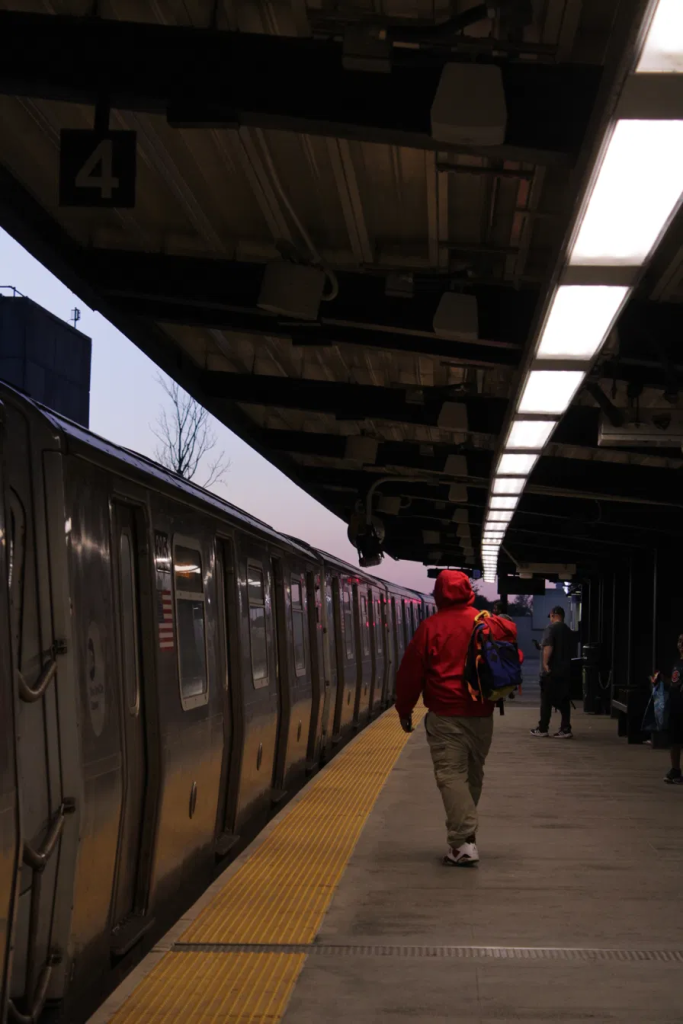
I added this second picture that I took because it shows the everyday side of the same idea. Grand Central is the grand, famous version of transportation in New York, but the real heartbeat of the city is on platforms like this one, where people are just trying to get where they need to go. In this photo, a person in a red hoodie walks down the platform toward the train with a backpack, and the other people waiting nearby are all probably heading somewhere completely different. That’s exactly what I was talking about with the person across from you and the person to your left on the train. Nobody knows each other’s story, but everyone is part of the same system, and that system is how the city runs. Grand Central is the icon, but this is what it looks like in everyday life.
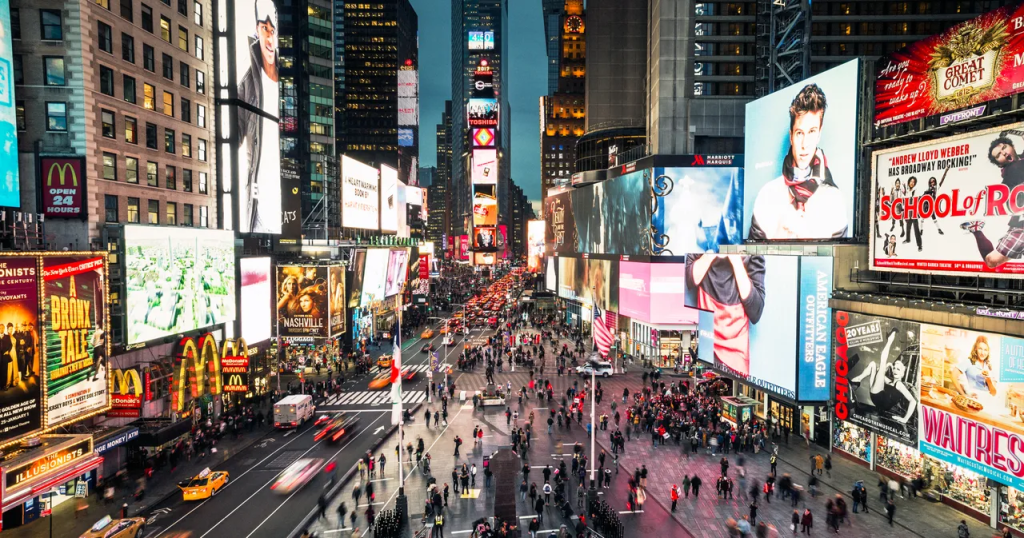
An icon is something that strongly represents a place, culture, or idea. For me, something really iconic, you look at and you just instantly associate that something with something else much larger and broader. Kind of like a microcosm to bigger, more significant concepts. When I think of New York City, there are phrases that come to mind: The city of blinding lights, the city that never sleeps, and the financial capital of the world. These are among many famous phrases referring to the city, and I think they are all encompassed in this image of the iconic Time Square area. This area in the city is the largest tourist attraction, people from all over the world are present in this photo, and they are seeing first hand what it means to be in a “city of blinding lights”, and a “city that never sleeps”. There isn’t a picture of Time Square that doesn’t feature so many people, so much action, and of course, so much light. The people are surrounded by advertisements, all from corporations looking to capitalize on the large group. The city generates a ton of money through the large number of consumers just excited to enjoy what the fantastic city has to offer. And it really has so much to offer, as people from all over come to work, collaborate, and conduct business in this city. So from the city’s energy, tourism, and business opportunity, all these systems and concepts are present in this image.
I chose the New York Public Library lion statues. To me, an icon is the most recognizable idea for a place or an idea. I picked these lions because they embody first off they are very recognizable and show guard the entrance to free knowledge. Something I found out about it is that the lions were sculpted by Edward Clark Potter and installed on Fifth Avenue in 1911, Mayor Fiorello LaGuardia officially named them during the Great Depression to remind New Yorkers of the virtues needed to overcome hard times(Patience and fortitude). Today, they serve as the library system’s official logo and stand as an icon of what New York has not only been through but what it stands for.