

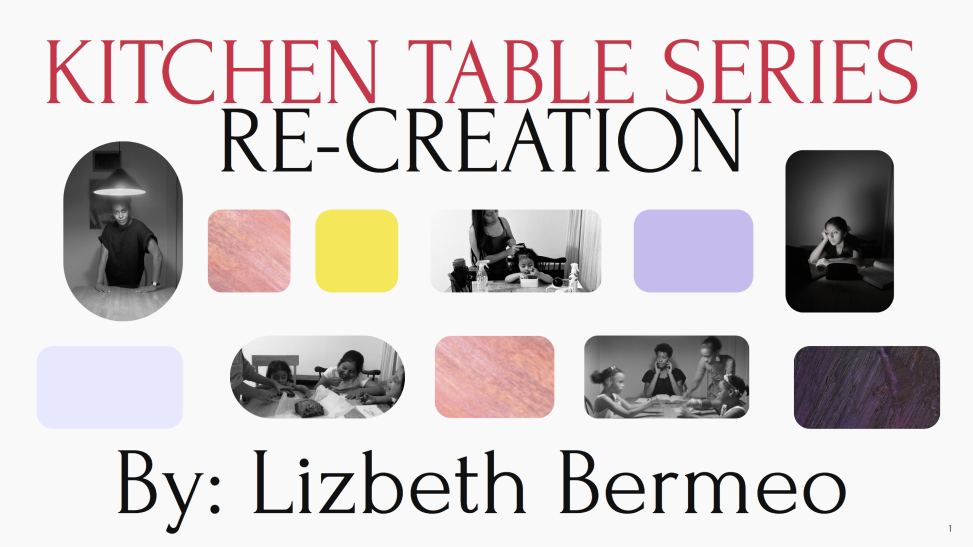
When Carrie Mae Weems finished the Kitchen Table Series in 1990, she believed there was still not enough representation for Black artists like herself. Seeing how iconic this series has become, and how influential she is for representing her community through art, I challenged myself to do the same as a young Hispanic woman. As an artist and eldest daughter of two Ecuadorian immigrants, I grew up with great expectations while simultaneously looking for Ecuadorian artists to call role models. In the art classes I took and art museums I visited, however, I haven’t been able to find many famous young artists who are Ecuadorian like me. Seeing how Carrie Mae Weems decided to make art, regardless of how little her community was represented, made me realize that a re-creation of her work would be a good place to start. My project is made up of five photographs and an oil pastel piece that tell a true story of my everyday routine, roles, and identity.
This project taught me the importance of art that reflects different communities and the value of representation. I also learned that even when art doesn’t completely resonate with me, it can share universal truths and show incredible skills that undoubtedly inspire the creative mind. Growing up in Corona, Queens meant that I grew up surrounded by other Hispanics, but I didn’t find art in my neighborhood with people that looked like me in it. New York is incredibly diverse and the home of many artists, but not all of them feel equally represented. Representation is important because it demonstrates the complexities of different groups of people, and shows us that our stories deserve to be told.

