

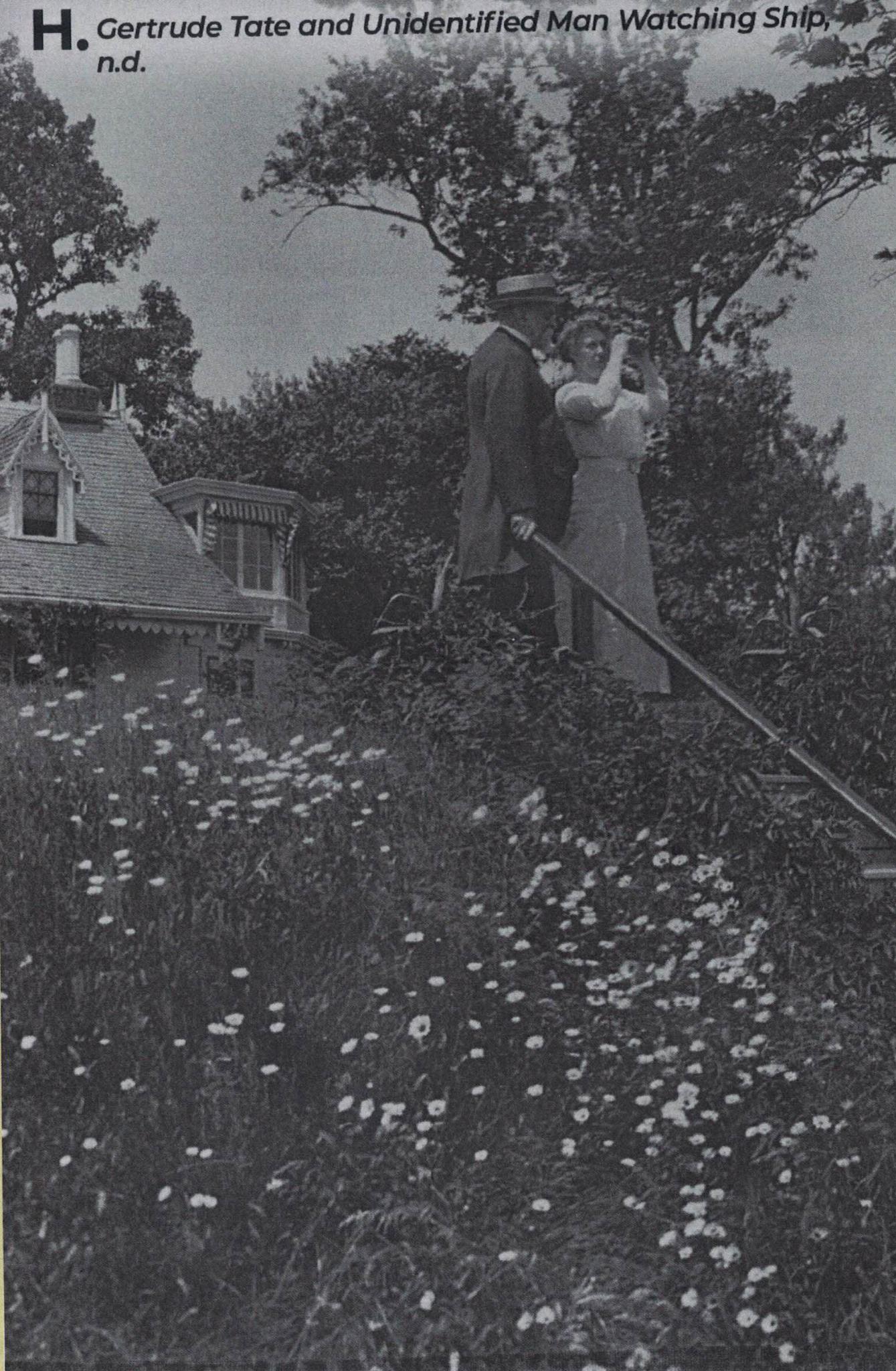
The photograph I am sharing is a recreation of photograph H on the map, Gertrude Tate, and the unidentified man watching ships. The photo was taken close to the shoreline, looking up toward the staircase, and in the background, you can see the rooftop of Clear Comfort. We attempted to match the low angle of the original Alice Austen photo as best as possible. Gertrude was using binoculars to spot the ships, so as our modern day equivalent, we used our phones to get the same effect.
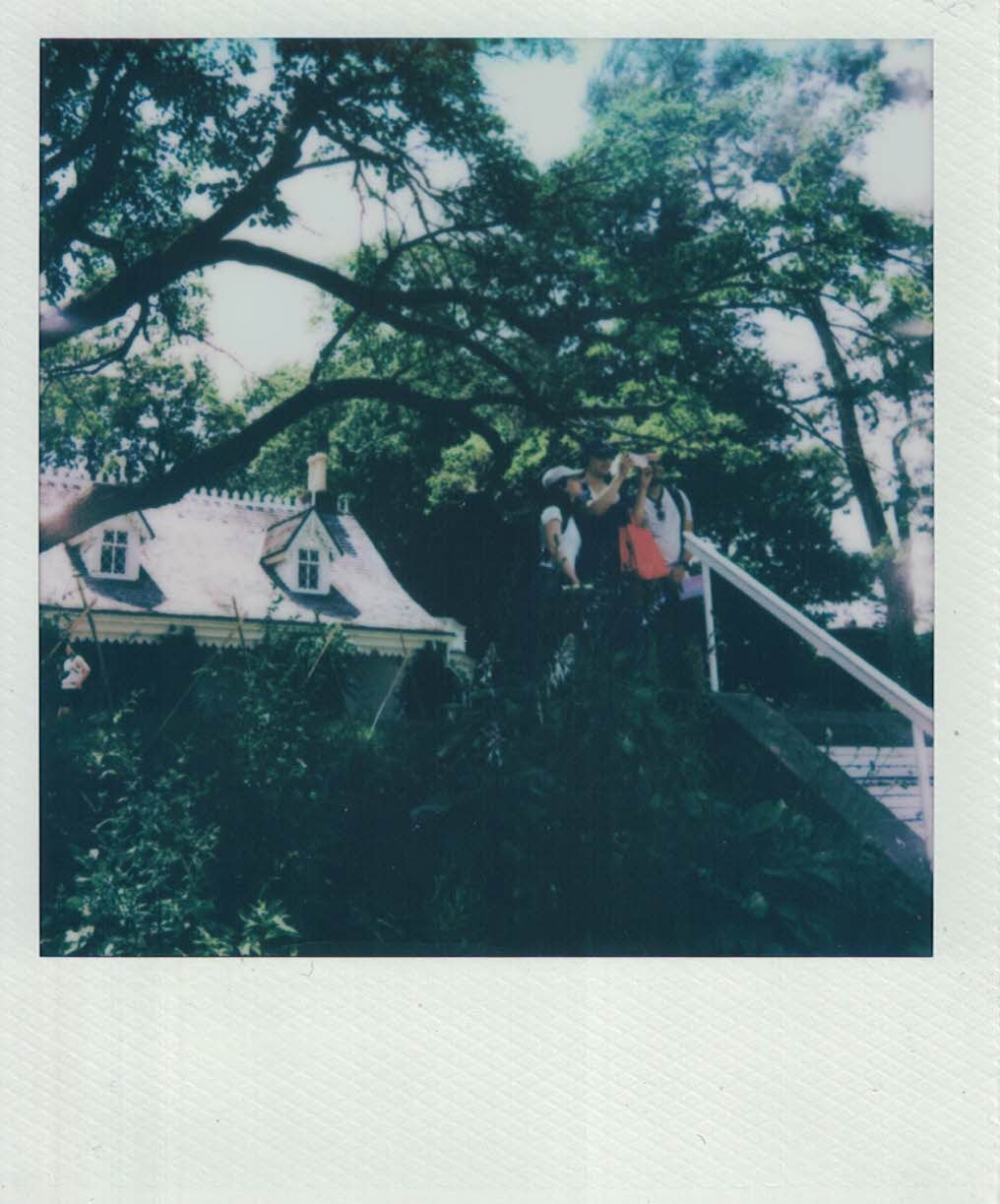
Something that interested me was what could not be captured by our photo. We could match the composition, but not the moment. Gertrude was holding binoculars while we were using phones. We can do everything to copy the frame, but the century in between is still apparent. The wildflower hillside in the original is now denser garden growth, the Polaroid appears washed out, while Alice’s is sharp black and white, and her subjects looked through glass while we look through a screen.
That gap is really the difference between what this photo meant to her and what ours means to us. This was Alice’s home. In taking that picture of Gertrude, Alice was documenting her daily life and her most important relationship, at a time when such a relationship could not be openly named. Her photos were meant to be private, for her and those close to her to reminisce over. Ours is the opposite: visitors to a museum, imitating her, knowing these images would be shared and discussed.
Even so, the activity ended up capturing community in its own way. To recreate her photo, we had to work together, figure out the angle, decide who would stand where, and pose for each other, and in the process, we got to know one another better as classmates. In that sense, our Polaroid does what Alice’s photos did, it captures the people we spent the day with, in a place that mattered to us for that afternoon. Her photo preserved her community, and ours preserved the start of one. I think that is something Alice would have liked.

