Ukrainian Throw Blanket

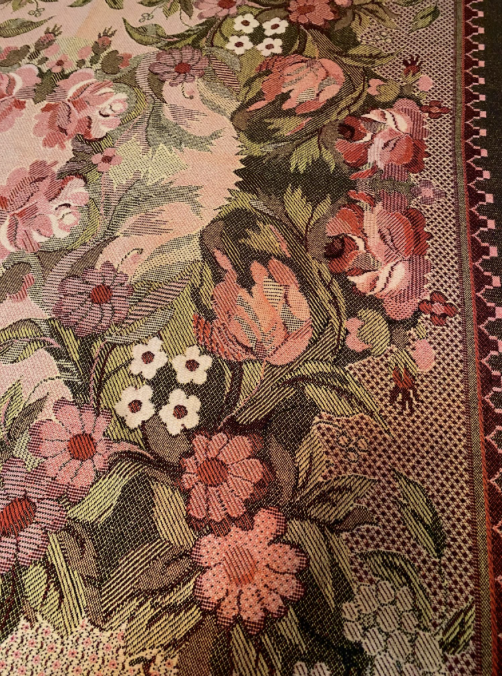
This embroidered throw blanket means a lot to my family because it’s more than just something we use, it’s a piece of my mom’s past. It originally belonged to my grandmother in Ukraine, and she gave it to my mom when she left to move to New York in 2006 to join my dad. At a time when everything in her life was changing, the blanket was something familiar she could hold onto, reminding her of home and her family. Even now, she uses it every day while ironing, which makes it feel less like an old keepsake and more like a living part of our daily life. To me, it shows how my mom carries her history with her, and how something simple can hold so many memories, emotions, and connections to where we come from.

More Than a Coin Purse

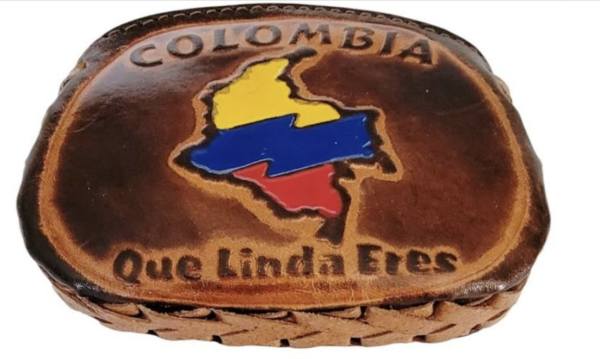
As humans we often assign personal value to objects and my parents were no exception. When my parents migrated from Colombia in 2011, they packed their whole life into one overfilled suitcase and when it could hold no more, they carried essentials in their hands and pockets. One of these essentials was a coin purse. This coin purse was a carefully hand crafted small brown leather coin purse stamped with “Colombia” and the colors of the Colombian flag. To many, it might have seemed like a simple coin purse passing by, but to my parents, it represented the love and pride they had for their country. Despite this, what we love is not always what is best for us. This is why my parents felt forced to leave due to the increasing violence in Colombia associated with the Colombian armed conflict, as well as the economic difficulties that persisted from the early 1980s through the 2000s. They were in search of safety and opportunity. My parents were lucky enough to find that in New York where they were uplifted by their Colombian community in Jamaica, Queens. Over time, the coin purse was passed down to me. Now every time I hold it I am reminded that the coin purse carries more than just physical currency but also cultural currency and it represents a story that didn’t end with my parents, but continues through me.

Authentically Faux Pearls

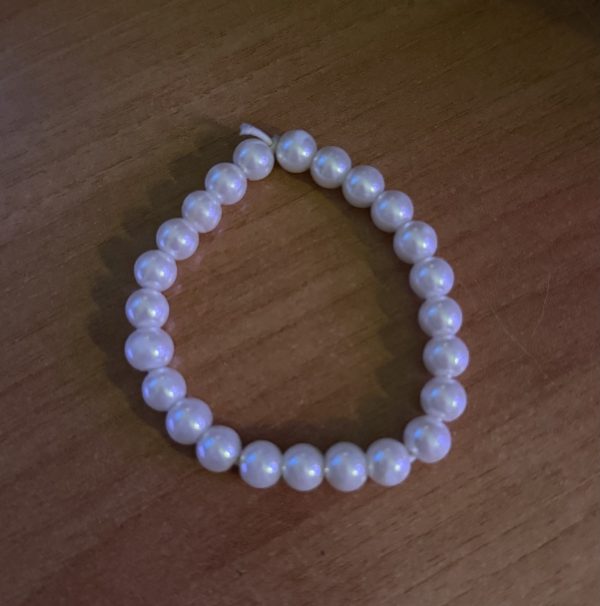
Throughout my life, asking questions about my family’s history within Asia has proved futile. My ancestors arrived in China from Korea multiple generations ago, yet fragments of the past were never passed down and instead were lost. However, during a visit to China in the summer of 2025, my paternal grandmother gifted me a tangible reminder of my family’s muddled history, a faux pearl bracelet. This bracelet, though cheap, has become a priceless symbol of connection. It carries the weight of my family’s migration from South Korea to China, and my maternal grandparents’ and parents’ eventual departure from their homes to live in the United States in the 2000s. My family chose to continue this pattern of migration, cultivating new and better lives for themselves, settling in the Asian-dominated community of Flushing, NYC. Having the privilege of living in the United States, I am constantly reminded of the sacrifices that had to be made for me to lead a more stable life. These reminders fostered a deep desire to situate my family’s unique journey within the broader history of Korean migration and displacement. I have come to understand that 20th-century mass migration from Korea was driven by survival and shaped by multiple instances of wartime and political instability. With this, my simple faux pearl bracelet has come to represent the struggles and resilience of countless Korean migrants, including my family.

Golden Pig, Wealthy Pig, Chinese Pig… Big Pig

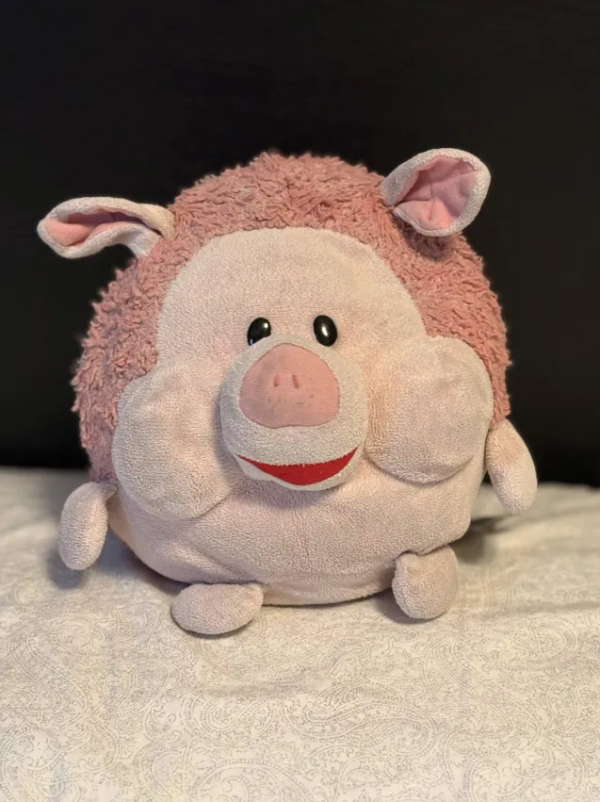
Pigs were a blessing in Chinese culture, symbolizing abundance, wealth, and great fortune. My mother immigrated from the quaint town of Taishan in the mountains of China to the United States in 1997; she later gifted me a pig plushie when I was born in 2007, which I would come to name “Big Pig.” In Cantonese, I call it “大猪猪 (Dà ZhūZhū).” It is a soft, pink stuffed pig plushie with large, adoring, beady black eyes and a cotton-like texture that has worn down over time. As her first gift to me, Big Pig represents the beginning of my life and my relationship with my family. I am a first-generation Chinese American woman, born in the United States. My life has always existed between two worlds. This object has traveled with me between America and China throughout my childhood, when my parents were unsure about our living conditions. I carried it on airplanes when I was navigating Asia, kept it beside my bed in different homes as I moved from Corona to Fresh Meadows, and held onto it on nights when I cried myself to sleep. My family’s roots fresh out of China, our life in America created a constant sense of movement as they attempted to settle down comfortably in the States. Carrying 大猪猪 everywhere with me between homes, cities, and countries symbolizes immigration, cultural identity, and what it means to grow up between being both Chinese and American.

Russian-Soviet-Jewish-New-Yorkian-American-Parisian Tea Culture

Every night after dinner, my mom asks me a one-word question: “Tea?” After I nod my answer, she pulls out two teacups, two saucers, and a teapot from the cabinet behind her. In the teapot, she prepares zavarka, a concentrated form of tea, using black tea, named Paris, which I bought from a company based in SoHo. Over tea, she tells stories about her home country, Moldova, and adjustment to NYC. In 1993, my mom and her family immigrated to NYC from Moldova, along with the 35,900 other Jews emigrating from the former Soviet Union. After 1970, the largest wave of Jewish immigration since the 1920s occurred, and one of the largest locations of settlement was NYC. Migration was influenced in part by war breaking out when Transdniestria, now considered a region in Moldova, declared independence from Moldova. This region was composed mostly of the minorities of Moldova’s population, and Moldova refused to recognize it. When she escaped this situation as a refugee to NYC, my mom was one of many Soviet-Jewish women married early. She received one of the most common Soviet wedding gifts: a tea set. This set now stands in a cabinet in my mom’s kitchen, displayed as a reminder of her Soviet roots, but when used with American tea and her American daughter, the tea set reminds my mom of her adjustment to a new home.

Fruit Blender

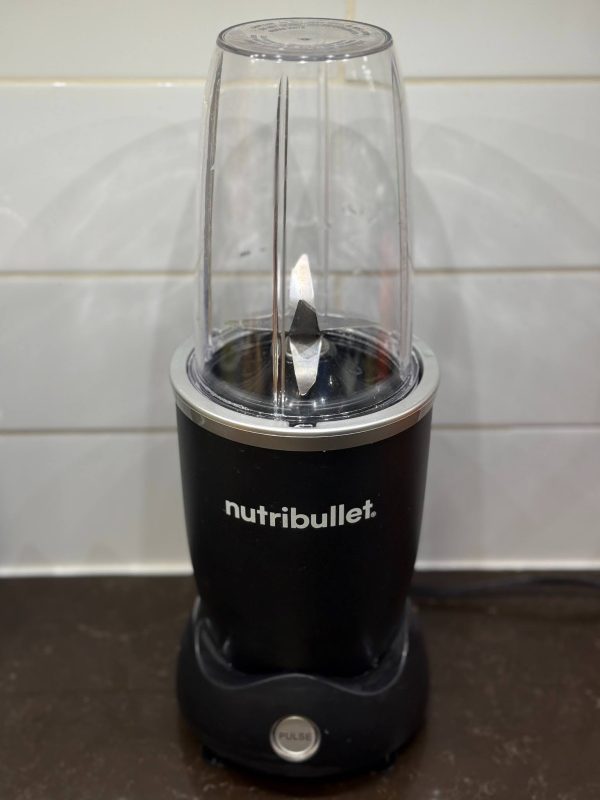
The object I chose is a fruit blender that sits on the kitchen counter in my house. Every morning,
my mom uses it to make smoothies for our entire family before we start the day. The blender
itself is nothing special, it’s just a plastic pitcher attached to a VERY loud motor. I am convinced
she uses it to wake us all up in the morning as well. My mom fills it with frozen berries, bananas,
yogurt, and sometimes honey and blends everything together into a thick drink that we can
enjoy. My grandmother always tells us that it gets the bowels moving in the morning.
When my parents were growing up in Hungary, one of the dishes they often ate during the
summer was something called gyümölcsleves, which directly translates to “fruit soup.” It is a
chilled soup made from fruits like cherries, berries, or peaches, usually mixed with cream or
yogurt and served cold. It is super refreshing and made with ingredients that are easy to find
locally.
When my family immigrated, their routines changed. The fruit soup had to be substituted by
smoothies made in a blender because it was quicker and easier for mornings before work and
school. Even though the dish changed form, the idea stayed the same. The blender always
reminds me how traditions from one place can adapt to life in another while still preserving
where a family comes from.

Central Asian Manti

Manti are steamed dumplings that are common in many Asian cuisines including Uzbek, Turkish, and Afghan. In central Asia, they are usually made from thin dough filled with finely minced beef or lamb, onions, and spices. The dumplings are folded using special techniques and cooked in steamers. In different cultures, they have different wrapping techniques, but the basic idea is the same: A dumpling that brings people together around a table.

In my family, Manti represent a connection to my background. Preparing them takes time and is usually done together with my family. My sister makes the dough from scratch while my dad minces the meat and onions. Later, my mom rolls the dough, I fill them, and my dad wraps them. Because the process is slow and requires many hands, cooking Manti becomes a social activity where we talk, share stories, and spend time together. For me, Manti are more than just food. They remind me of where my family comes from and the traditions that have been passed down across generations even though we live in New York today.

Many immigrant families in the United States maintain traditions through food by making them with their families at home or opening restaurants. Dishes like Manti show how cultural identity can continue even after people move to new places, becoming part of the diverse food culture of cities like New York.

My Father’s Cross

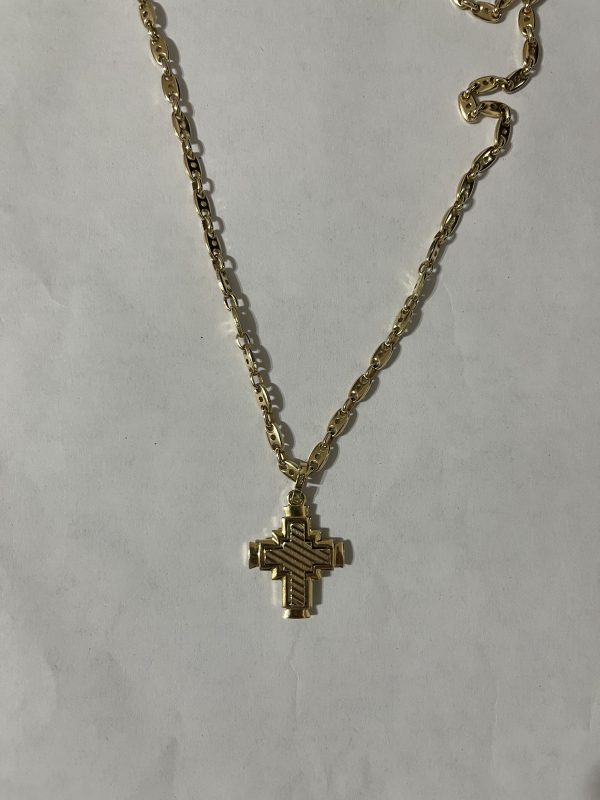
Growing up, there was an old box of family jewelry tucked away in our home that I never paid much attention to. One day I looked through it and discovered a cross. I asked my mom and she told me it belonged to my dad. I was surprised because I had never seen him wear it before.
I wear the cross every day now. My family is Greek and we follow the Greek Orthodox faith that is very important to us. Not just a religion, but a way of life woven into our culture and identity. My mom was born in Greece and when she came to New York she brought that faith with her, passing it down to our family. The cross represents sacrifice and resurrection, but this one also represents connection.
Wearing this cross makes me think about my dad. Every time I look at it I am reminded of who he is. Wearing something that once belonged to him feels very meaningful because every time I am in doubt, I look at this cross and think about what my dad would do. My dad may have put it down but I know I was meant to pick it up and make it part of my identity and my story.
Sometimes the most meaningful things can find you. You just have to be curious enough to go looking.

My Nintendo 3DS

This is my Nintendo 3DS! It’s really important to me since it was a birthday gift from my parents. I’ve had it since 2015 and I still use it today. I’ve taken really good care of it over the years so I’m really proud of it. I really like taking photos on 3DS, and because I’ve had it for a while I’ve accumulated a lot of meaningful photos of my family and friends over the years. Some of my favorite photos I have saved to my 3DS are photos of my family from Brazil. I rarely get to see them anymore so the photos I took with them when I was younger are really important to me. To me my 3DS is more than a gaming console but is also a device that can show the perspective of a child of a Brazilian immigrant being raised in New York City.

– Erika Rodrigues

Bronze Star Medal

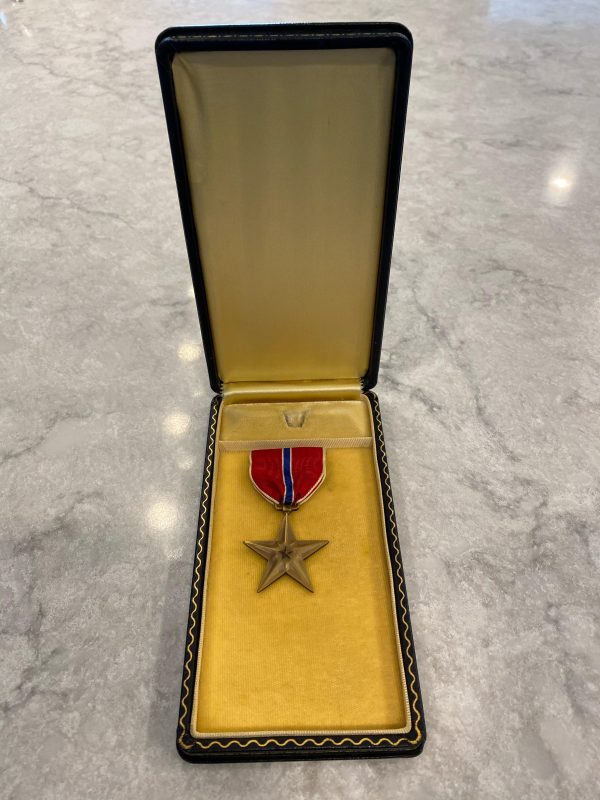
As a child, I was intrigued by the mysterious medal on my grandmother’s shelf, and I sought to uncover what this object is and why it deserved a place of prominence. As I grew up, I discovered that this was my great-grandfather’s Bronze Star medal, awarded in 1945 for his heroism and meritorious achievements during WWII, and an important symbol of my family’s immigration story. My great-grandfather, Manny Weinberg, was born in 1923 in Berlin, Germany, and fled to New York in 1939 as antisemitism and Nazi persecution increased. Following the attack on Pearl Harbor, he enlisted in the U.S. Army, hoping to fight the Nazis who persecuted him. A new military intelligence unit recruited him alongside other Jewish immigrants. They trained at the Military Intelligence Training Center at Camp Ritchie, Maryland, earning them the name “The Ritchie Boys.” My great-grandfather was in one of the first classes to graduate and deploy, landing on D-Day at Omaha Beach. As Jewish immigrants, the Ritchie Boys had the rare opportunity in which members of a community fleeing persecution returned to the place they fled and fought their oppressors. The medal symbolizes immigration to New York, wartime intelligence and how military service can reshape immigrant identity. My great-grandfather’s army service marked his turning point, deploying as a Jewish, German immigrant soldier, and returning to New York as a war hero, securing the right to consider himself a New Yorker and true American.

The Infinite Spiral Cord Between Each Other: The Landline Phone

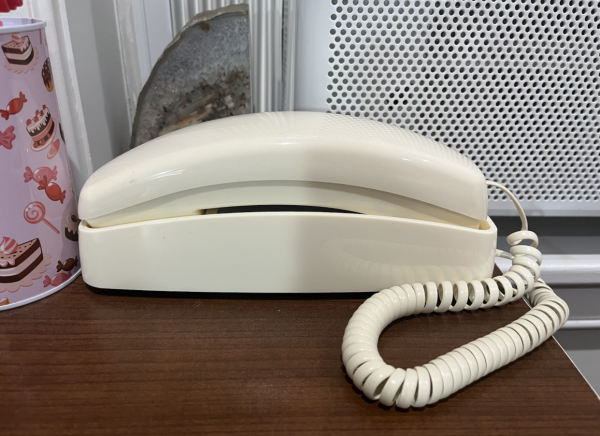
Despite the 3,000 mile distance between Ecuador and New York, my family managed to maintain connection through conversations over the landline phone. This particular phone is not something from my family. Instead, I bought it as a reminiscent artifact. Whether it was on the side table of my great-grandmother’s living room in Portoviejo or the travel agency in Kew Gardens where my mother would make international calls, the landline phone has been a significant part of my early life that I continue to honor and cherish. Its presence in our family was key in making sure we never forgot each other’s voices.

This means of communication began with my grandmother’s immigration to New York in the 1960s. My abuela Josefina came to New York decades ago and eventually brought her children, fostering the beginning of a new life for her family. However, the landline phone was not the main source of communication; the quality was poor and the price was expensive. This may have been especially difficult for Josefina, a new immigrant, as it could have been unreachable to make such calls without access to a landline phone at her place of residence. But with each occasional call, the long process ended. Josefina could finally hear the sounds of home.

Hearing the ring of the phone, I reflect on that same ring echoing through the past apartments of my grandmother, my aunts, and my parents as new residents of the bustling city. ¡Qué dulce!

Salwar Kameez

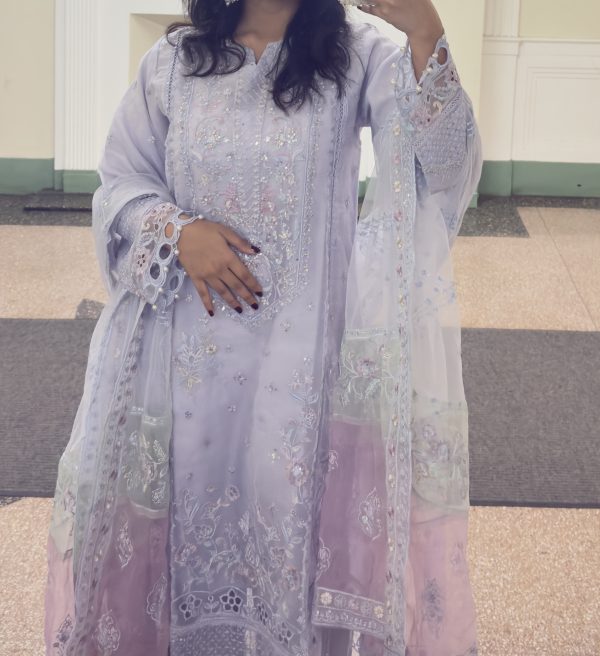
The object I chose is a lavender Bengali salwar kameez, detailed with soft pastel embroidery and paired with a light, flowing dupatta(scarf). I wore it for Eid-Ul-Fitr in 2026 in Queens, New York. At first glance, it is simply a traditional outfit, but to me, it carries a story shaped by memory, growth, and identity.Most of all, it brings nostalgia. The delicate patterns remind me of Eid mornings in Bangladesh when I used to get ready with my cousins, share laughter, and feel surrounded by family. Those moments feel distant now, yet this dress allows me to hold onto them.At the same time, wearing it in New York shows a different side of my identity. In a city where Muslim communities are visible and welcomed, I can celebrate Eid openly. It shows how different communities in Queens tend to have a positive attitude towards different religions. This balance between comfort and change defines my experience.What makes this outfit especially meaningful is that I bought it with my own money. As a child, I admired clothes like this but could not always afford them. Now, earning my own income reflects my transition into adulthood and independence. Although life in the United States is different, this salwar kameez keeps me connected to Bangladesh. It represents both who I was and who I am becoming, showing that identity can grow without being lost.

I Don’t Need the Bat Anymore

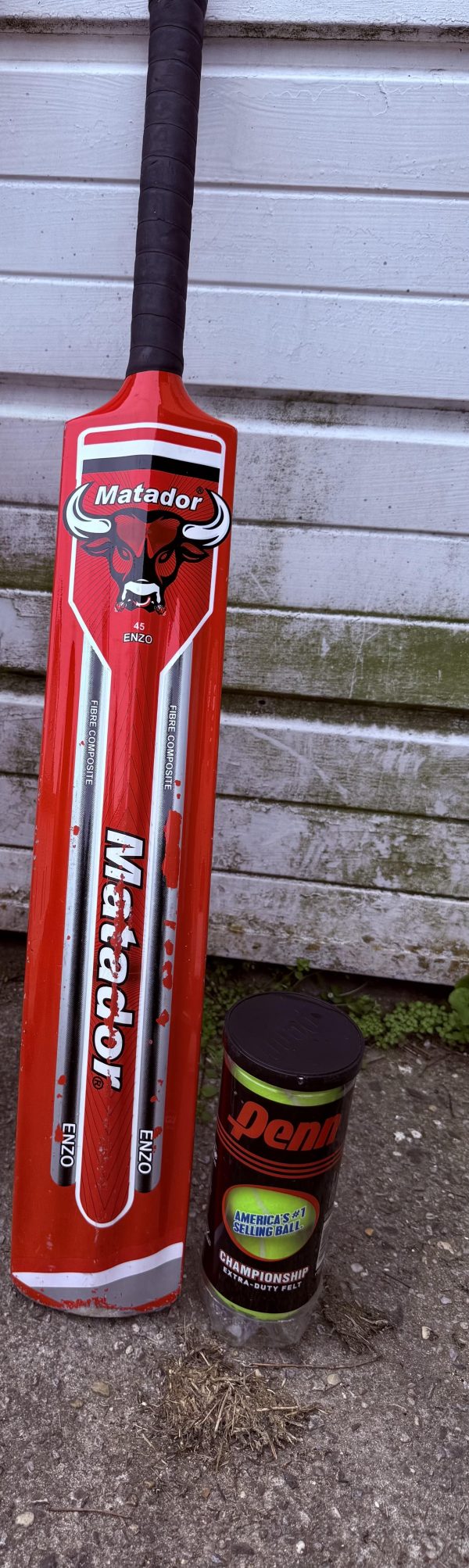
When coming from Trinidad to New York City in early 2001, my dad brought along the most important tool needed to keep his passion alive: his cricket bat. This wooden bat has evolved throughout centuries, dating all the way back to the 17th century in England and it’s swung low to hit a ball. Growing up in a West Indian neighborhood in New York City, cricket was a common sport to me, and I believed it was a globally famous one, like basketball and soccer, that everyone in the world knew and played at least once. However, as I got older and started to become more familiar with New York City as a whole, I realized my childhood community, specifically my father, influenced this way of thinking. 2013 was the first time I held and was taught how to swing a cricket bat by my father. At that age I was shorter than the official bat itself and needed a smaller one, but nonetheless my dad started to pour all the culture of cricket from Trinidad into my mind and hands. This cricket bat, or really the sport of cricket as a whole, puts into focus the impact of Trinidadian immigration and its effect on the New York community, as cricket has become a much more popular sport with many professional leagues in our boroughs. Now, I can stand above the bat and swing just like he taught me to.

Proudly powered by WordPress | Theme: Baskerville 2 by Anders Noren.

Up ↑