Your Story Our Story

For my object, I chose my father’s French passport. This passport represents more than just identification; without it, my father would not have been able to immigrate to New York City in the 1990s. As an official document, it allowed him to legally enter a new country and begin building a life there. It made it possible for him to take advantage of the opportunities that New York offers.

Over time, the meaning of this passport expanded beyond my father’s experience. It became part of my own story, as I grew up as a dual citizen of both France and the United States. This allowed me to move between New York and Paris throughout my childhood. Because of this, I came to understand that migration is not always a one-time event, but can be an ongoing and transnational process.

At the same time, this object highlights inequality. Not everyone has access to the same legal mobility. Many immigrants in New York face barriers that limit their ability to travel freely or return to their home countries. In this way, the passport represents both opportunity and unequal access.

Within the framework of the Tenement Museum’s Your Story, Our Story project, this object shows how everyday items can reveal larger social patterns. My father’s passport connects a personal family story to broader issues of migration, identity, and life in New York City.

The Dao – An Icon of the South Asian Kitchen

An icon of the Bengali kitchen, the dao, a sharp, machete-sized seated blade commonly used by rural housewives to cut vegetables and fish, is an incredibly important symbol of Bengali village culture and is a part of Bangladesh that my parents did not leave behind when they made the voyage to this country some 20 years ago.

The dao is a long, curved iron blade that is seated on a flat plank of wood or short iron tripod, and is used by squatting behind it and driving meat or vegetables into the blade in a pulling motion. Unlike in Western kitchens where food is prepared standing up, all food in traditional Bengali kitchens is prepared in a squatted position over a dao and an outdoor wood-fired stove.

The use of the dao dates back nearly 1300 years ago to the time of the Pala Dynasty in Bengal, a Buddhist kingdom in which the earliest forms of Bengali culture emerged. Collections of poems and terracotta sculptures from the time depict women squatting at their dao’s cutting fish; since the dawn of Bengali culture, the dao has been associated with the woman’s role as the nourisher and sustainer of the household.

The use of the dao is also evidence of the sacredness of the bare earth in early Bengali culture. Toiling behind a dao, sharing a meal with cherished visitors, and sleeping were all practices performed seated or lying on the ground; to stay close to the ground was paramount because the Earth and its soil were sacred, and one had to remain close to it. With the arrival of the British colonialists in Bengal, furniture began to gain popularity among the wealthy and we slowly lifted ourselves off of these sacred grounds. Using a dao became a departure from the British, Western culture imposed on us and a symbol of rural meekness and humility in the modern day.

My mother came to the United States from a small riverside village in Sylhet, Bangladesh where the dao was used extensively. She would watch my grandmother cut mountains of uri, or hyacinth beans, with her blade and toss them into a pot set over burning logs. My mother would purchase a dao in the United States and I remember watching her as she cut and peeled the same hyacinth beans that she’d watched her mother cut. She would rush to process as many beans as possible before she’d have to change the diapers of my younger brothers or feed them, and would leave water droplets that would rust the blade; she embodied the motherly spirit that the dao has always represented. My mother shared a piece of Bangladesh with me, her son born far from home.

My mother brought the essence of her village to our small apartment in the Bronx. The humble dao is truly a testament to how a culture can survive the twisting tides of change and migration.

YSOS at Queens College

Wrapping up our time in the classroom in May, class members agreed enthusiastic to visit the Tenement Museum and identified the field trip tours as semester highlights. The YSOS object work students did this semester was my favorite aspect of the course—I learned so much from the students.

The students all chose illuminating YSOS objects to contribute to the museum archive. YSOS is a project designed to bridge the past and present experiences of New Yorkers, to find common narratives that connect people across differences. These short submissions captured so much of students’ understandings of themselves and their family history. Students presented their YSOS objects in two ways: at the Imagining New York MHC conference and in class. The class presentation assignment invited groups of 3-4 students to creatively “remix” their YSOS in collective stories. Group members were encouraged to use their imaginations and creativity to consider the audience they wanted to reach to with their YSOS contributions and the best medium with which to reach such an audience.

The groups did fabulous, attractive, creative work. We were treated to group presentations in the form of a mini museum—“The Migration Museum”–; a museum exhibit entitled “Journeys of War” that highlighted the role of conflict in immigration; a newspaper dedicated to the push and pull of NYC immigration; a series of connected public service announcement posters about the opportunities and challenges of emigrating to New York; a food blog “Sweets and Stories: The Café Blog” that included advertisements and blog entries; and a guided tour, airport-themed, of New York immigrant experiences through recipes from across the globe.

To the very last submission, student YSOS submissions were excellent. As a result, I cannot choose one or two to highlight but can only thank the students for thinking so carefully about the role of immigration in their lives and in New York City past and present.

Kara Schlichtling
Associate Professor of History
Queens College

See contributions from Queens College students

I Don’t Need the Bat Anymore

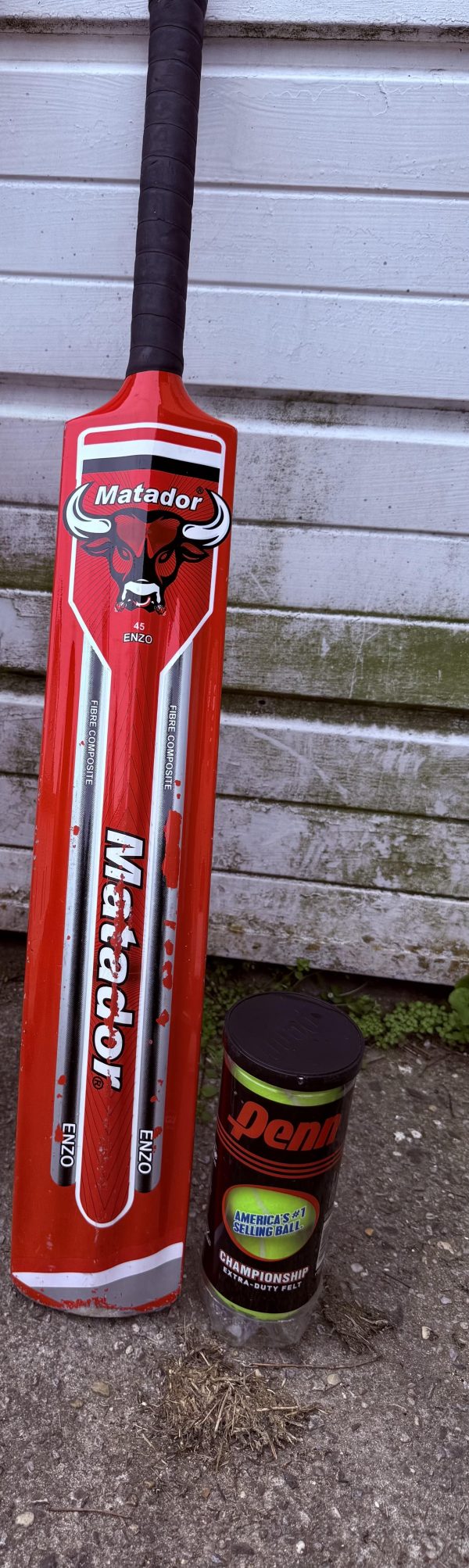
When coming from Trinidad to New York City in early 2001, my dad brought along the most important tool needed to keep his passion alive: his cricket bat. This wooden bat has evolved throughout centuries, dating all the way back to the 17th century in England and it’s swung low to hit a ball. Growing up in a West Indian neighborhood in New York City, cricket was a common sport to me, and I believed it was a globally famous one, like basketball and soccer, that everyone in the world knew and played at least once. However, as I got older and started to become more familiar with New York City as a whole, I realized my childhood community, specifically my father, influenced this way of thinking. 2013 was the first time I held and was taught how to swing a cricket bat by my father. At that age I was shorter than the official bat itself and needed a smaller one, but nonetheless my dad started to pour all the culture of cricket from Trinidad into my mind and hands. This cricket bat, or really the sport of cricket as a whole, puts into focus the impact of Trinidadian immigration and its effect on the New York community, as cricket has become a much more popular sport with many professional leagues in our boroughs. Now, I can stand above the bat and swing just like he taught me to.

The Greatest Fast-Food: Turkish Döner

Gyros, shawarmas, and al pastor tacos. Besides being delicious, what do they all have in common? They are all different variations of the same food: the Turkish döner kebab. The dish consists of seasoned meat in the form of beef/lamb mix or chicken, roasted on a vertical rotating spit device. Döner can be eaten as a sandwich or alongside rice. My parents both ate döners often as children when growing up in Turkey during the 80s and 90s, whether it was a cheap version from a shop off the streets, or a better quality and more expensive version in Turkish restaurants.

My Dad, pictured above in the year 1998 next to a döner device in a Turkish restaurant in Brooklyn, described döner as a “comfort food.” When they immigrated here in the late 1990s, döner became a bridge to Turkish culture for them despite being abroad. For me, growing up in NYC meant eating many different versions of döner: whether it was from an authentic Turkish restaurant in Astoria, a gyro from a Greek food cart, a Berlin-style döner with fresh vegetables and tasty sauces, or as a home-made Iskender kebab (a different Turkish dish with döner meat). All of these foods, while delicious to eat, provide a special connection to me through döner being a cross-cultural food, allowing me to connect my childhood and the döner I eat/ate here to what my parents ate in Turkey.

The Tawa

The tawa is a flat metal pan found in kitchens of many Pakistani households. The pan can be completely flat or concave, and is typically made of cast iron, aluminum, or carbon steel. Its origins trace back to the Indus River Valley civilization, where flat clay discs were used to cook flatbreads over open fires. These early versions were designed to distribute heat evenly, cooking unleavened bread without burning it. As metallurgy advanced, clay gave way to metal. Cast iron tawas remain the most popular due to their improved heat retention, ideal for rotis and parathas, while carbon steel versions are lighter and more modern, suited for everyday cooking and quickly heating packaged flatbreads.
For my family, the tawa is how we hold onto our Pakistani culture. We own both a convex cast iron tawa and a flat carbon steel one. My mother uses the flat tawa to make rotis and parathas for my grandparents and I, while the convex one is reserved for frying puri and daal puri. The tawa instantly brings to mind Sunday morning breakfasts — daal puri or parathas with chickpea curry and a tall cup of chai. Our household makes many kinds of flatbread on it, including chapati, naan, roti, and dhalpuri. Less conventionally, my siblings and I also use it to fry eggs and make veggie omelets.
An archaeologist studying my family’s history would find the tawa invaluable: it is the foundational instrument behind the flatbreads that form the bedrock of Pakistani diet and culture.

A sound carrier: My uncle’s talking drum

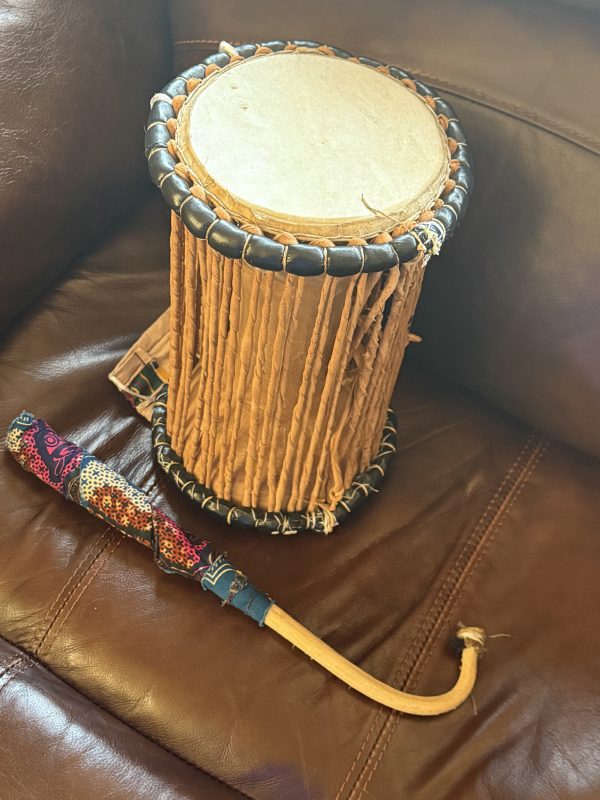
On a shelf in my uncle’s reading room sits a small talking drum. You can easily recognize it by its wooden frame, which is surrounded by leather strings and fitted with two leather faces. The drum only ever leaves the shelf when someone asks about it, and when it does, it always ends up in my uncle’s hands. He is very fond of it and his arms tend to fold around it like wings closing over a nest.

Traditionally, the drum is used during celebrations and coronations for kings because it has the ability to mimic the tone of a person’s voice. However, in my family, it takes on a different role. When it comes out, we gather around whoever is playing and take turns trying to guess what the drum is saying. When it reaches my uncle, the drum settles into a playful rhythm that makes people want to dance. Its crisp, tight sound is what first attracted my uncle to it. That sound was harder for him to find after he moved to the United States in the 2000s, which prompted him to get a talking drum of his own. The sound of the drum celebrates my family’s life in the U.S, but like a heartbeat, it is also a reminder of home. We carry the sounds of home with us, and the talking drum is my family’s way of sharing that sound.

Date Origins

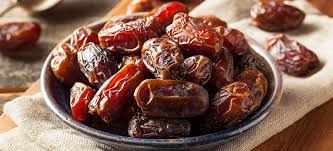
Dates are one of the oldest fruits people have grown, with farming going back more than 7,000 years to ancient Mesopotamia and the Arabian Peninsula. They played an important role across the Middle East and North Africa before many other crops were around, used as sweeteners, trade goods, and even fermented into wine.
In Islam, dates have a deep meaning. The Quran mentions them around 20 times, and the Prophet Muhammad is known to have broken his fast with dates and water. This tradition continues today, especially during Ramadan. In my family, iftar always starts with dates right after the Adhan, just like it did all the way back in Guyana. It’s not only sunnah, but a tradition I’m not sure will ever end for me. Dates are also included in the Bible and the Torah, where they also carry symbolic meaning in both Christianity and Judaism.
On top of tradition and religion, dates are very healthy. They have fiber, potassium, magnesium, and antioxidants, and their natural sugars give quick energy that especially helps after a long day of fasting. The pit inside, which most people throw away, can be ground into a caffeine-free drink called date seed coffee and has also been processed for centuries into kohl, a traditional eye cosmetic still used across the Middle East and South Asia.
There are several kinds of dates, each with its own taste and texture. Medjool dates are soft and caramel-like. Ajwa dates, grown in Madinah, are darker and richer. Deglet Noor dates are firmer, drier, and a little nutty. If you’ve never had one, try a Medjool first. It’s easy to find and sweet enough to show you exactly why people love them. They’re sweet, soft, and way better than any candy.

More than a Scarf

“Come on, Baba. We’re almost late for the prayer at the masjid,” I exclaim.
He responded: “Give me a second. I’m going to get our ajraks.”
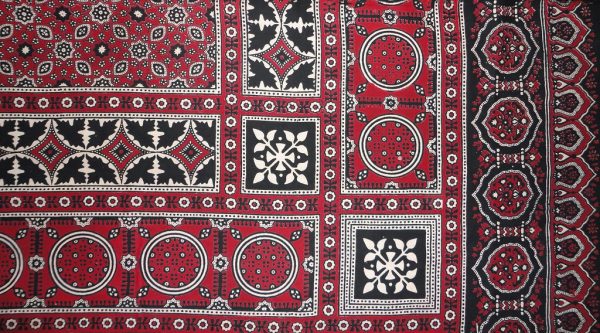
My father has always taken great pride in our culture as Pakistani-Americans living in what he called the greatest city of the world. Regardless if we have to run to the mosque to attend the Eid prayer on time, Baba emphasized the importance of carrying the ajrak with us whenever we go. The ajrak is a cultural scarf embroidered with all sorts of geometric and kaleidoscopic images. Yet to my dad, it was more than a mere piece of clothing worn around the neck. It was one of the only tangible links in his possession that connected him to his village in Sindh, Pakistan which was over 7,000 miles away.
His passion eventually became my own as I started wearing the ajrak for my high school’s cultural events and festivities. I was proud to display the culture that my parents carried with them from Pakistan and wanted to share it with others, telling them of the ajrak’s history and its familial significance. It was small moments like these that reaffirmed to me why my father dedicated himself to preserving his culture abroad. No matter where I am in the world, as long as I have the ajrak, I will always have a piece of my home with me.

Great Grandmother’s Cast Iron Skillet

The cast iron skillet has a long history of migration. The cast iron has its origins in China as early as the 5th century B.C.E. and only began to be imported to Europe in the 14th century C.E. on the trade networks of the Silk Road. During the industrial revolution in Europe and the United States from the 18th and 19th centuries C.E., cast iron cookware became a relatively cheap and incredibly sustainable way to feed families. For many enslaved African American domestic cooks or kitchen laborers, the cast iron skillet became a tool of both oppression and survival used daily. During the Great Migration, these durable appliances were one of the few items that these families could bring with them and impart onto their descendants.

I started my cooking journey in 2023 in my junior year of high school with a longer history of baking stretching back to middle school. Since my first semester of classes at City College last summer my cooking skills have been developing rapidly because I began cooking lunch for myself as often as I could. I feel confident with the oven, stovetop pots, instant pressure pot, and toaster oven we have but the one tool I feel disquieted to even begin using is our cast iron skillets. My family has few heirlooms in our apartment, and our one inherited cast iron skillet is perhaps our most cherished. One of the skillets belonged to my father’s grandmother, and where she got it I don’t know. She was born in 1920 in Maryland and went on to move to West Virginia and raise six of her own children and helped bring up my father and his sister there. Their cousins would also frequent the house growing up, and she often fed up to seven children off of soul food from the two cast iron skillets she had – the one I have today and another deep-dished skillet that’s still in West Virginia. As an African American family growing up in a 96% white state, some of the memories that still bring the most joy in the people she raised and loved is the food she cooked in those skillets in the challenging times of Jim Crow civil rights struggles that they all endured.
When my father traveled from New York back to West Virginia to attend her funeral in 2002, the only thing he physically took back with him was one of her cast iron skillets.
Today her cast iron skillet rests proudly on our stovetop, too emotionally significant to be pushed into the oven with our other pots and trays. My father’s grandmother handled her two cast iron skillets with great care and love for years of her life, and I don’t even know how to season or clean them. My apprehension to use her skillet is out of respect for all she’s done and fear of underwhelming or disappointing her legacy. But I suppose the first step in treating her skillet properly is to practice upkeep and preservation of it.

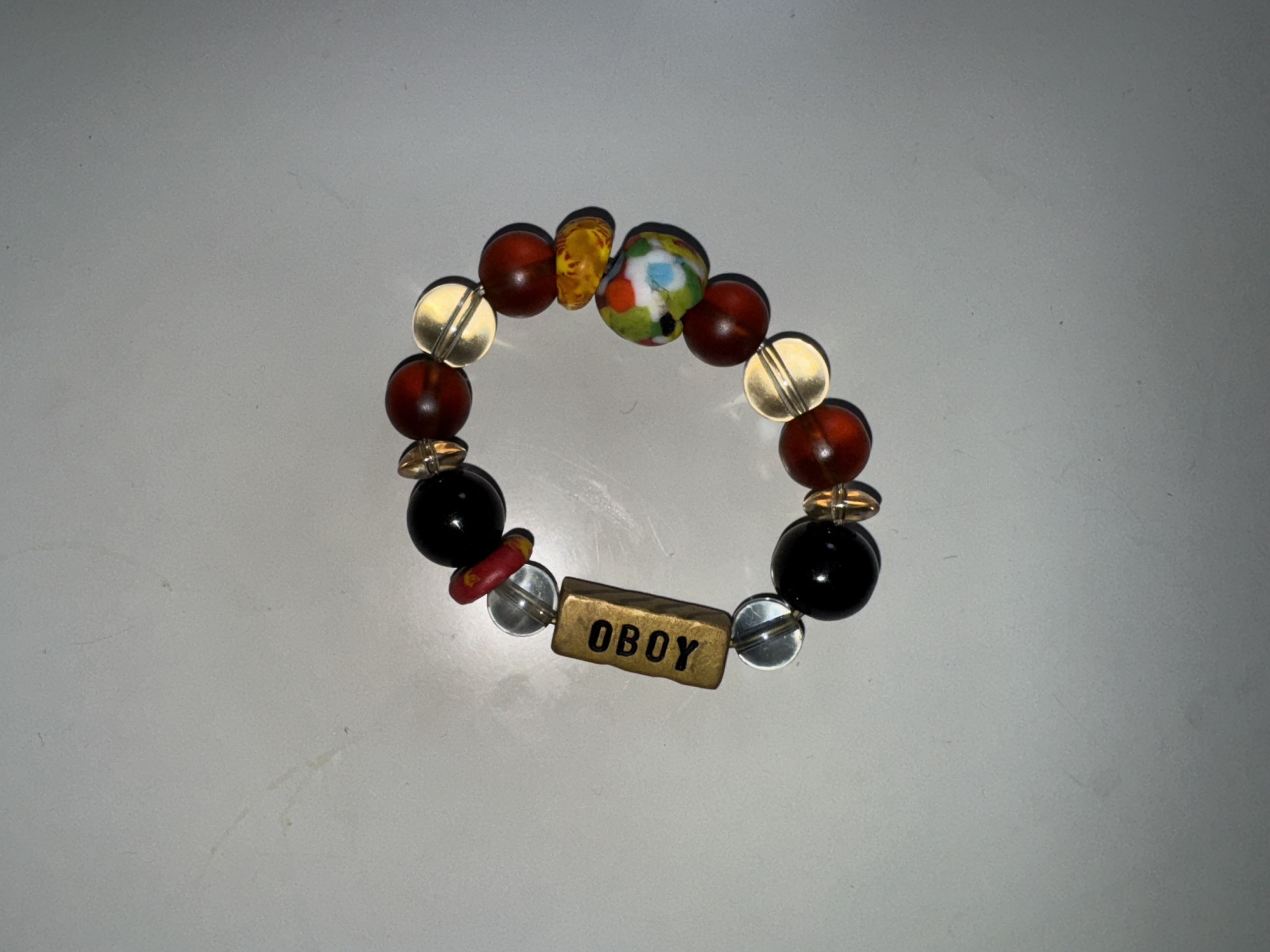
My Story Object

The Ghanaian bracelet is representative of the overall culture and tradition that is preserved within the country. From generations to generations, these bracelets preserve history, values, and the overall gist of what it means to be Ghanaian. From the pure black beads to multi-colored beads, these all have an individual meaning and all serve a collective purpose in conveying a cultural message. The black beads represent faith, strength, and wisdom while the colorful beads represent riches, prosperity, and royalty. These all serve a collective purpose for representing Ghanaian culture. When I first received this bracelet from my aunt who brought it from Ghana, I was indifferent to it. I viewed the bracelet as just another object that I could wear and was creatively distinct from my other accessories. However, as she began to discuss how she views Ghanaian culture and fashion it changed my indifference. I became ecstatic because I had something where I could represent my identity. The bracelet transcends just a fashion piece and is a statement of my heritage and history. It serves as a reminder that I am always representing Ghana and motivates me to put my best foot forward in everything that I do.

Proudly powered by WordPress | Theme: Baskerville 2 by Anders Noren.

Up ↑