My Father’s Cross

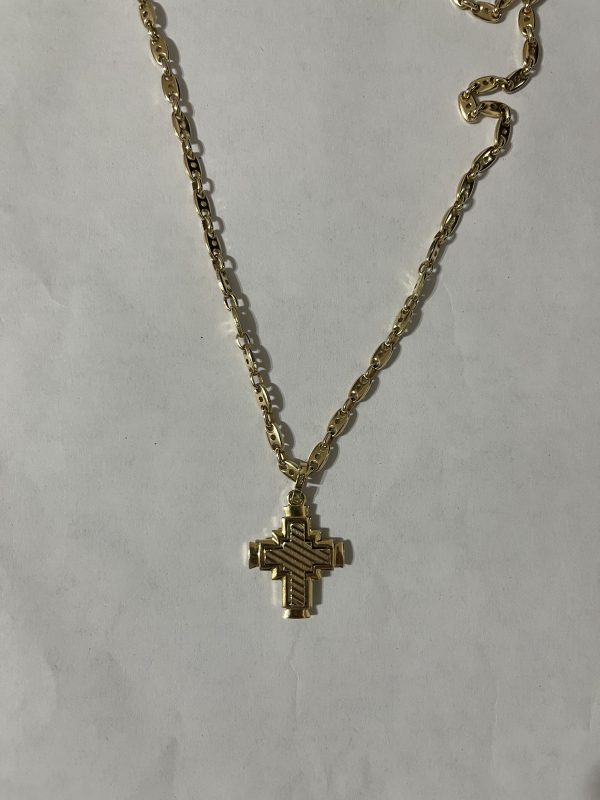
Growing up, there was an old box of family jewelry tucked away in our home that I never paid much attention to. One day I looked through it and discovered a cross. I asked my mom and she told me it belonged to my dad. I was surprised because I had never seen him wear it before.
I wear the cross every day now. My family is Greek and we follow the Greek Orthodox faith that is very important to us. Not just a religion, but a way of life woven into our culture and identity. My mom was born in Greece and when she came to New York she brought that faith with her, passing it down to our family. The cross represents sacrifice and resurrection, but this one also represents connection.
Wearing this cross makes me think about my dad. Every time I look at it I am reminded of who he is. Wearing something that once belonged to him feels very meaningful because every time I am in doubt, I look at this cross and think about what my dad would do. My dad may have put it down but I know I was meant to pick it up and make it part of my identity and my story.
Sometimes the most meaningful things can find you. You just have to be curious enough to go looking.

Salwar Kameez

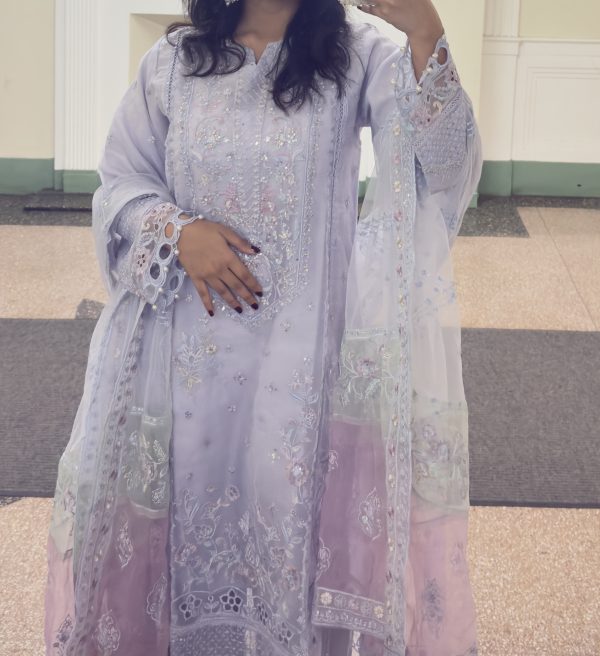
The object I chose is a lavender Bengali salwar kameez, detailed with soft pastel embroidery and paired with a light, flowing dupatta(scarf). I wore it for Eid-Ul-Fitr in 2026 in Queens, New York. At first glance, it is simply a traditional outfit, but to me, it carries a story shaped by memory, growth, and identity.Most of all, it brings nostalgia. The delicate patterns remind me of Eid mornings in Bangladesh when I used to get ready with my cousins, share laughter, and feel surrounded by family. Those moments feel distant now, yet this dress allows me to hold onto them.At the same time, wearing it in New York shows a different side of my identity. In a city where Muslim communities are visible and welcomed, I can celebrate Eid openly. It shows how different communities in Queens tend to have a positive attitude towards different religions. This balance between comfort and change defines my experience.What makes this outfit especially meaningful is that I bought it with my own money. As a child, I admired clothes like this but could not always afford them. Now, earning my own income reflects my transition into adulthood and independence. Although life in the United States is different, this salwar kameez keeps me connected to Bangladesh. It represents both who I was and who I am becoming, showing that identity can grow without being lost.

Kibbe Hamdah

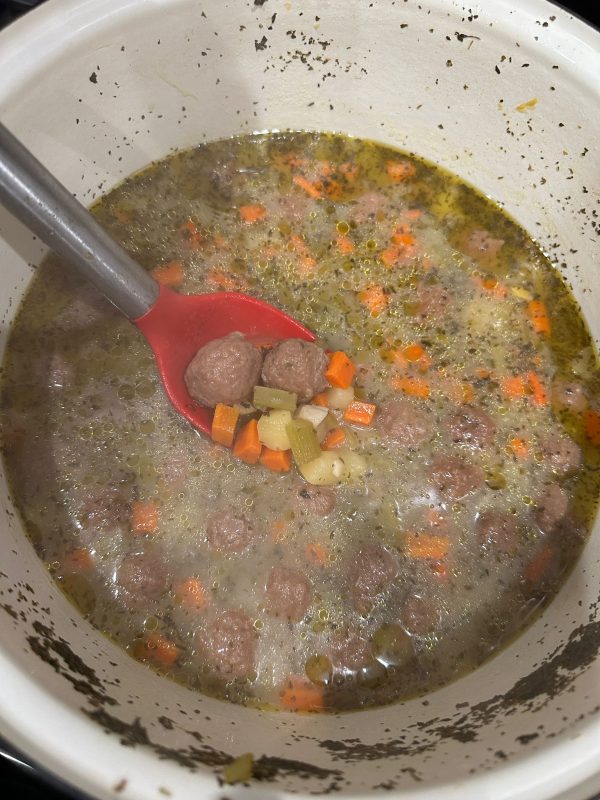
Kibbe Hamdah, also known as Hamid has been a staple dish on my dinner table almost every Friday night for as long as I can remember. It is a Syrian-Jewish dish that my grandma taught my mom to make. The base of the dish is a lemony soup with chopped carrots and celery. Inside the soup there are meatballs stuffed with another type of meat inside. It is often served with white rice. This dish is a staple in almost everyone’s home in my Syrian-Jewish community, and some people even add potatoes or tomato sauce to their soup. It is customary to eat Kibbe Hamdah on the Jewish Sabbath, which begins on Friday, 18 minutes after sunset. Kibbe Hamdah is not just a type of food, it also represents culture and religion. The traditional recipes in my community are very sacred, and they represent who we are. Eating Kibbe Hamdah with my family every week helps me recognize how far my community has come, and appreciate our rich history and culture. When I’m cooking for my family in the future, I know that Kibbe Hamdah will be a weekly staple in my house as well. My mother will pass down the recipe to me, and I will carry out the traditions of my community with pride and excitement. It is very special that even with everyone’s unique recipes, you will almost always find Kibbe Hamdah on their dinner table for the Jewish Sabbath and holidays.

The Cross That Traveled With Us

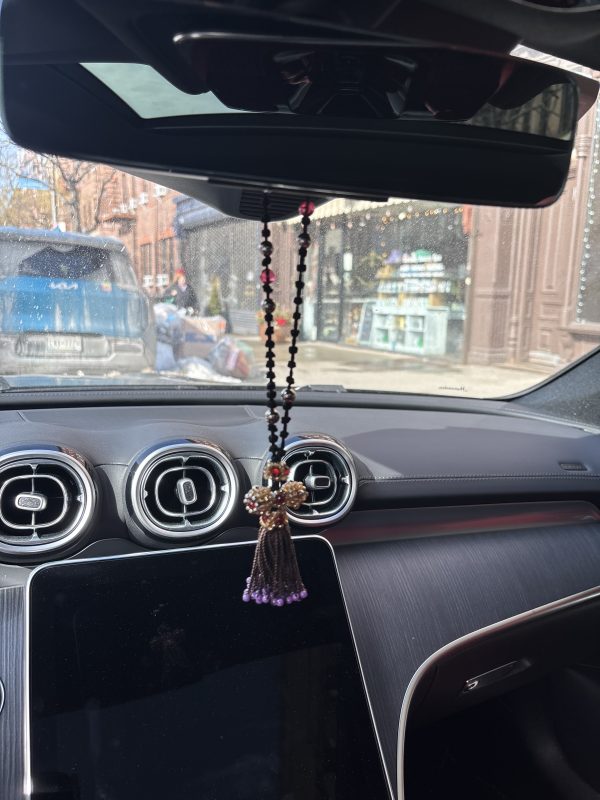
When my mom left Lithuania to start a new life in New York City, she didn’t bring many belongings with her. But she did bring one small object: a beaded cross that now hangs from the rearview mirror in our family’s car. To anyone else, it might look like a simple decoration, but to us it represents protection, memory, and the feeling of being watched over.
My mom grew up surrounded by Catholic and Orthodox traditions, and this cross was something familiar she could hold onto when everything else felt uncertain. When she first arrived in New York, she didn’t know the language, the streets, or the people. Hanging the cross in her car became a quiet ritual that made her feel safer. Over time, it became part of our family’s daily life. Every time we drive, it swings gently with the movement of the car, reminding us of where we come from and the journey that brought us here.
As I’ve gotten older, I’ve realized how much meaning is wrapped up in this small object. It carries my mom’s courage, her faith, and the hope she had when she left home. It also connects me to a larger story shared by many immigrant families who bring pieces of their past with them to feel grounded in a new place. This cross is more than an ornament, it is a symbol of protection, heritage, and the path my family took to build a life in America.

The Megillah

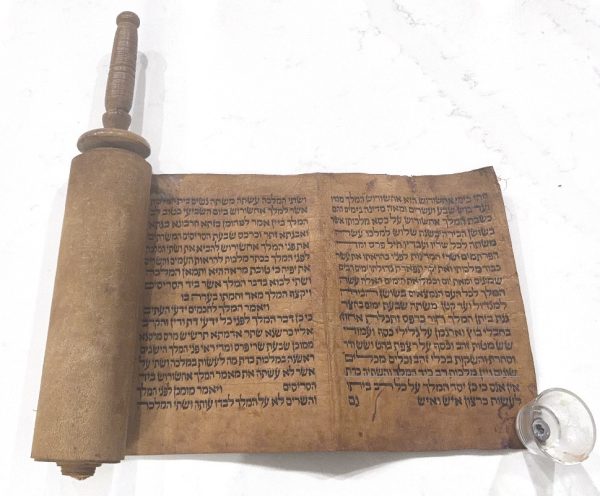
This Megillah was a constant companion in my family’s journey across multiple countries, keeping them connected to their roots. A Megillah is a Hebrew scroll read every year on the holiday of Purim. This Megillah was made in the city of Tetouan, Morocco, where my family lived until the mid-20th century. In the 1950s, after Morocco’s independence, the Megillah took on a more meaningful role in my family. Tension rose between the Muslim and Jewish communities in Morocco. Families started to leave behind the only lives they knew in order to escape the pressure. My family moved to Israel, where they could freely practice their religion. Due to economic difficulties, my family migrated to New York City in 1982, their final destination. Despite various moves, the Megillah has remained a constant pillar and has become a symbol of their identity. Today, our family’s Megillah is read annually in my local synagogue on the holiday of Purim, a community tradition. This object represents the immigrant experience in America by blending personal experiences and community. NYC is a city built by generations of immigrants who have each brought their own unique culture. The Megillah is an example of how culture and tradition can be maintained while still being part of a broader American identity.

The Passover Spoon

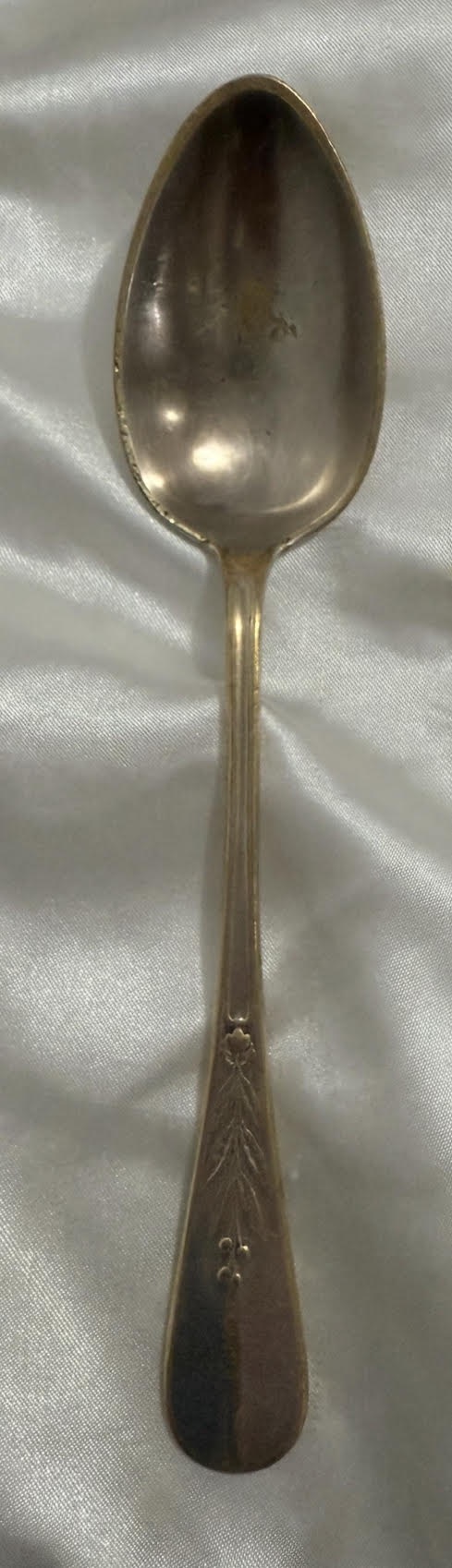
From Silk Road trading tables to my family’s Passover seder in Queens, this gold-plated “Passover spoon” has carried nearly two centuries of movement across continents, holding a significance far greater than the meals it serves. Each year at our Passover seder, we share a bite of my grandmother’s Plov from this spoon, preserved since 1828. As a child, I was fascinated and repelled by how many mouths the spoon had touched, but now I see it as a witness to migration, trade, faith, and continuity. Family oral history suggests the spoon was acquired through trade, reflecting generations of interactions and shared meals among Muslims and Jews in Central Asia. My father’s side of the family are Bukharian (Mizrahi) Jews with roots in Iran, Afghanistan, and Syria, who worked as merchants along the Silk Road before settling in Tajikistan. They lived under Russian and Soviet rule until my father immigrated to New York in 1992. Earlier periods reflected coexistence and shared commerce between Muslims and Jews, but rising antisemitism and restrictive Soviet policies led to major waves of Jewish emigration in the 1970s and early 1990s. Religious holidays, meals, and language unify my family. We speak Russian, Bukharian (a dialect of Farsi), and English. This spoon brings these elements together in a single ritual. In Queens, one of the most ethnically diverse places in the world, our Passover table reflects the cultural coexistence that shaped my ancestors’ lives along the Silk Road.

Date Origins

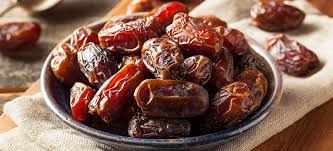
Dates are one of the oldest fruits people have grown, with farming going back more than 7,000 years to ancient Mesopotamia and the Arabian Peninsula. They played an important role across the Middle East and North Africa before many other crops were around, used as sweeteners, trade goods, and even fermented into wine.
In Islam, dates have a deep meaning. The Quran mentions them around 20 times, and the Prophet Muhammad is known to have broken his fast with dates and water. This tradition continues today, especially during Ramadan. In my family, iftar always starts with dates right after the Adhan, just like it did all the way back in Guyana. It’s not only sunnah, but a tradition I’m not sure will ever end for me. Dates are also included in the Bible and the Torah, where they also carry symbolic meaning in both Christianity and Judaism.
On top of tradition and religion, dates are very healthy. They have fiber, potassium, magnesium, and antioxidants, and their natural sugars give quick energy that especially helps after a long day of fasting. The pit inside, which most people throw away, can be ground into a caffeine-free drink called date seed coffee and has also been processed for centuries into kohl, a traditional eye cosmetic still used across the Middle East and South Asia.
There are several kinds of dates, each with its own taste and texture. Medjool dates are soft and caramel-like. Ajwa dates, grown in Madinah, are darker and richer. Deglet Noor dates are firmer, drier, and a little nutty. If you’ve never had one, try a Medjool first. It’s easy to find and sweet enough to show you exactly why people love them. They’re sweet, soft, and way better than any candy.

Threads of Light: From Cairo to New York

The object is a hand-size golden lantern that lights up with batteries. It has a handle at the top and a roof-like top, with a round base and two handles (mostly for decor) on the sides. The lantern was purchased by my mom in NYC. It sits on a medium-sized table within my house, mainly used for guests. Even though it simply looks like a fancy house decoration, it connects me with my culture and memories.

Growing up as an Egyptian, it was normal to see children before sunset running in crowded markets, pushing through adults while holding small lanterns of different shapes and sizes. They’d light up in different colors, not just golden yellow. Most of the time, the lanterns didn’t contain real candles. But they still felt cultural. Children would sing “Ramadan gaana,” and other different songs in anticipation of the month of Ramadan.

Because the small lantern signals Ramadan, it connects me to memories of fasting in Egypt on hot days, especially later in the day when I felt great for making it to the evening, knowing a large feast awaits my family.

This object fits into the broader story of New York City because New York City is a hub of immigrants, of many cultures uniting into one city. This makes New York so much different from other places in America. Being of an Egyptian background, I bring my perspective here, and even meet people from different countries who also celebrate Ramadan.

Gold Buddha

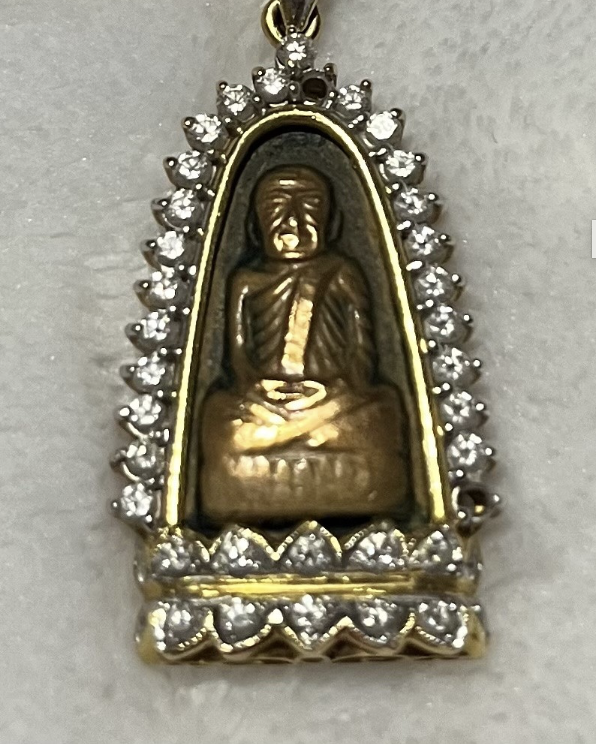
The object I have chosen is my gold and diamond Buddha necklace. It was custom-made in Thailand for me when I was a child. My mom’s side of the family is Thai, and I grew up practicing Buddhism in America. Although, until the age of 10, I went to a private Catholic School, I wore my necklace. Without realizing, it became a reminder of my family’s roots when I was surrounded in a culture around me that wasn’t mine. There’s a specific kind of pressure that comes with growing between two cultures. Do you assimilate to your environment, or stay true to your own beliefs? My Buddha necklace was something I prayed to in times of struggle, when I needed good luck, or when I needed guidance. The reality of never taking off this necklace reflected my family, my culture, my overall morals and character.

Psalms and Self-expression: The Bukharian Jewish Journey

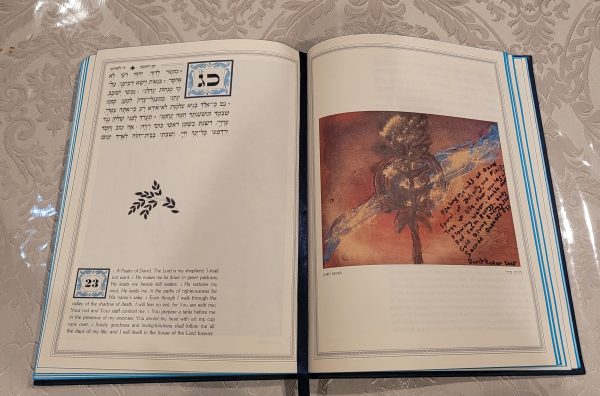
This Book of Psalms was gifted to me by my parents in August of 2018. They were drawn to this contemporary version of the ancient text because it includes different paintings from Jewish artists to match the tone of each Psalm. The Book of Psalms, which Jewish tradition attributes to King David, has been an integral part of Jewish culture for three thousand years. The 150 poems that compose the Psalms reflect diverse themes, such as faith, hardship, and determination. My family is Bukharian Jewish: Jews from Central Asian countries like Uzbekistan. The Book of Psalms has shaped my family’s journey to New York as they escaped the Soviet Union in 1991 and found comfort in the Psalms’ humanity. Chapter 23 of Psalms, which is recited every Sabbath, resonates particularly with Bukharian Jews who immigrated to New York because it contains themes of uncertainty, self-confidence, and belief in God’s protection amid hardship. My object reflects the immigration journeys of Bukharian Jews, who have achieved success despite facing challenges, while maintaining their heritage. To many Bukharian Jews, achieving their dreams and having the freedom for self-expression is the epitome of the American identity. Just as my Book of Psalms contains different pieces of art, Bukharian Jews allowed their creativity to shape their individual paths after immigrating to New York, each embodying their own version of what it means to be an American.

Muchnick Family History

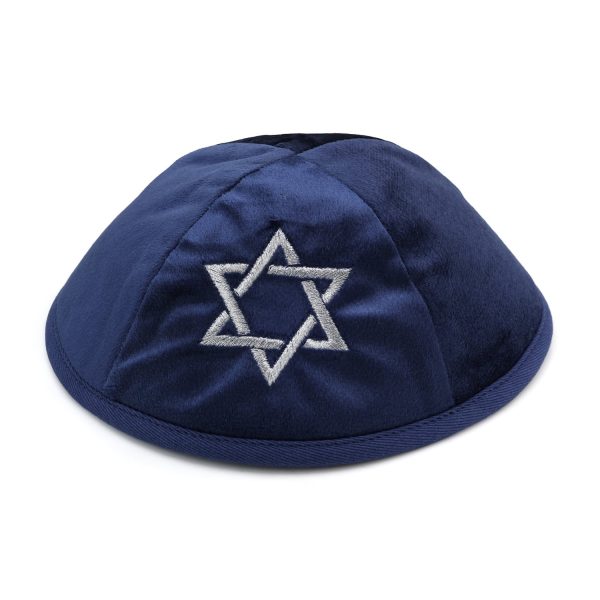
My family’s story is one of migration, survival, and identity, shaped by the waves of immigration that built New York. On my mother’s side, my grandparents are first-generation Holocaust survivors: my grandmother came from Kisvárda, Hungary, a small town whose once-thriving Jewish community was nearly wiped out during the Holocaust, and my grandfather came from Soviet Ukraine. In 1977, feeling there was no future for Jews in Europe, they immigrated to America and settled in Mill Basin, Brooklyn, among other immigrants with similar stories. On my father’s side, the family was already rooted in America, settling on Long Island in Nassau County, though the connections to Europe were never far away—my great-grandmother survived the Holocaust in Hungary before making her way here, and my great-grandfather served in the U.S. Army during World War II, leading a post-war interrogation unit. What carried over from the old world was less about language, since my grandparents speak fluent Hungarian and Russian but never taught it to me, and more about a deep sense of Jewish identity. If I had to choose one object to represent my family, it would be a kippah—small, simple, but carrying everything. My family left Europe because they were Jewish, survived because they held onto who they were, and rebuilt in Brooklyn and Long Island because New York gave them a fresh start. Their story connects directly to the Jewish experience on the Lower East Side and the broader history of immigrant New York.

Symbol of Sikhism

The object I chose is my kada, the bracelet I wear on my wrist every day. It might look simple, just a plain silver circle, but it means a lot to me because it represents my religion, Sikhism.

I’ve actually worn it my whole life. Since I was born, I always had one on, and every time I grew out of it, I would get a new one. It’s something I’ve never taken off, literally never. Because of that, it feels like a part of me, not just something I wear.

As I got older, I started to understand its meaning more. It reminds me to stay strong, make good decisions, and stay connected to my values. Even in normal moments, I notice it, and it kind of keeps me grounded. Overall, my kada isn’t just a bracelet; it’s something that’s always been with me and always reminds me of who I am.

Mezuzah

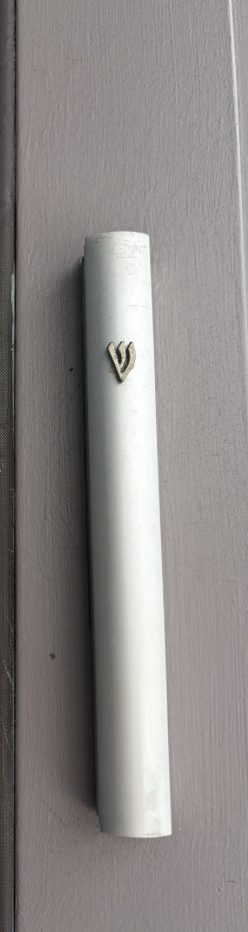
The mezuzah holds a sacred Jewish prayer and is carefully attached to my doorpost, serving as a constant reminder of my family’s faith and identity. Inside it is the Shema, one of the most important prayers in Judaism, which affirms my belief in God and his protection. Each time I pass by, whether entering or leaving, it quietly reinforces a sense of connection to my religion and the values that shape my life.
More than just a ritual object, the mezuzah represents protection. We believe it watches over the household and those within it, offering a spiritual safeguard. At the same time, it designates our home as a Jewish space, marking it with intention and meaning. It is a small but powerful way of expressing identity, not loudly, but with quiet confidence and continuity.
Its straight position on the doorpost is especially significant. While many Jewish families place the mezuzah at an angle, ours reflects the Syrian Jewish tradition that has been passed down for generations. This detail connects me directly to my heritage, honoring the customs of my ancestors. In this way, the mezuzah is not only a religious symbol but also a cultural one, preserving tradition while continuing to shape my sense of belonging in the present.

My Grandmother’s Iranian Passport

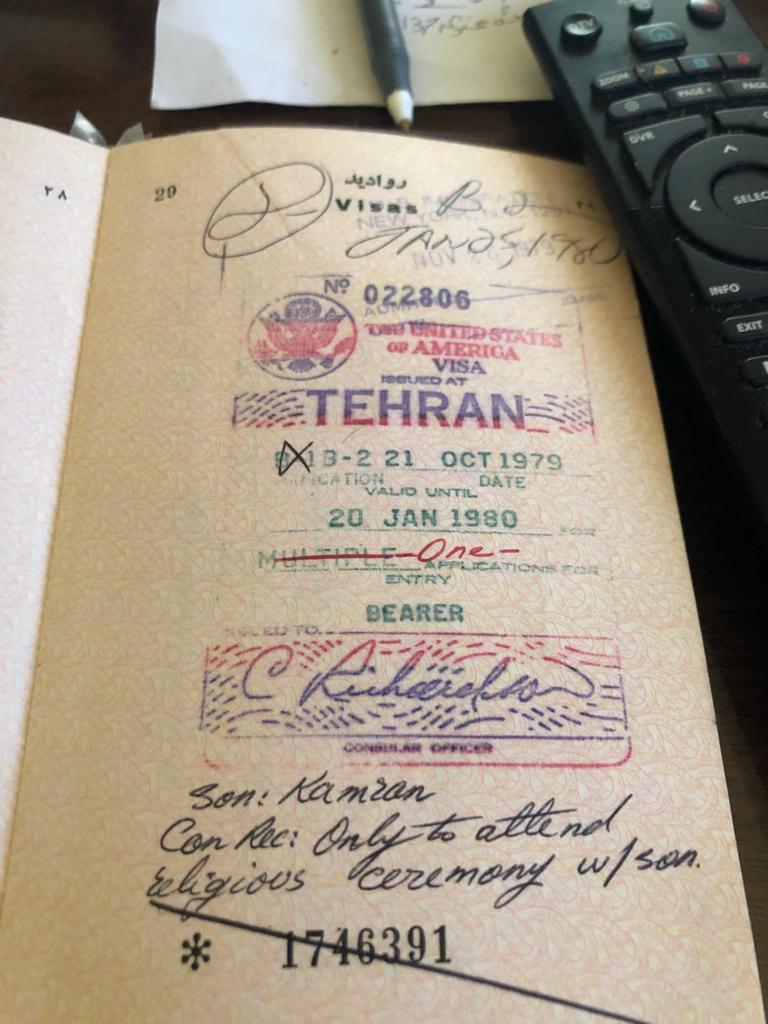
My grandmother’s passport from Iran is one of the most meaningful objects in my family. At the bottom of the page, there is a short but powerful note: “Only to attend religious ceremony with son.” Those few words represent a moment that completely changed her life. At the time, she was stuck in Iran while the rest of her family was already in New York. Her son’s bar mitzvah, a once-in-a-lifetime religious milestone, was coming up, and she was going to miss it. She refused to accept that. My grandmother went to the embassy and explained everything, hoping someone would understand how important it was for her to be there. Somehow, despite how strict and dangerous everything was at the time, they gave her special permission to leave the country just for this religious reason. That alone feels unbelievable. But what makes it even crazier is that only one week after she got her passport stamped and was able to leave, the embassy she went to was bombed during the revolution in Iran. Thinking about that now, feels like a miracle that she got out exactly when she did. To my family, this passport is so much more than just a document. It’s a symbol of faith, courage, and destiny. It shows how strong my grandmother was in such a scary situation and how much her family and religion meant to her. It reminds me that even in moments of fear and uncertainty, faith and determination can guide you exactly where you’re meant to be.

Friday Night Candlesticks

These are my great grandmother’s candlesticks that my family uses every Friday night to bring in the Sabbath. These candlesticks are important to me because they represent my Jewish religion and identity. In Judaism, lighting candles every Friday night starts the Sabbath, a time to pray, relax, and spend time with family. Every week when we light them, it feels like we are continuing something that has been done for generations.
What makes these candlesticks even more meaningful is my grandmother’s story after she received them from her mother. She immigrated from Iran to Israel due to religious persecution, which was a huge change in her life. Even when she was forced to leave her home, she kept her traditions, and these candlesticks are a symbol of that. When she gave them to my mom, her eldest daughter, she was passing down her religion, culture, and personal history.
Now, my family uses the same candlesticks and it makes me feel connected to where I came from. It’s like a reminder of my grandmother and everything she went through. It also shows how important religion is in shaping identity, especially in Jewish families where traditions are such a big part of life.
These candlesticks aren’t just an object, they represent my family’s past, our beliefs, and how we stay connected to our roots. They also remind me that even as life changes, our traditions and identity can stay strong and continue to guide us every day.

Family History Through Jewelry

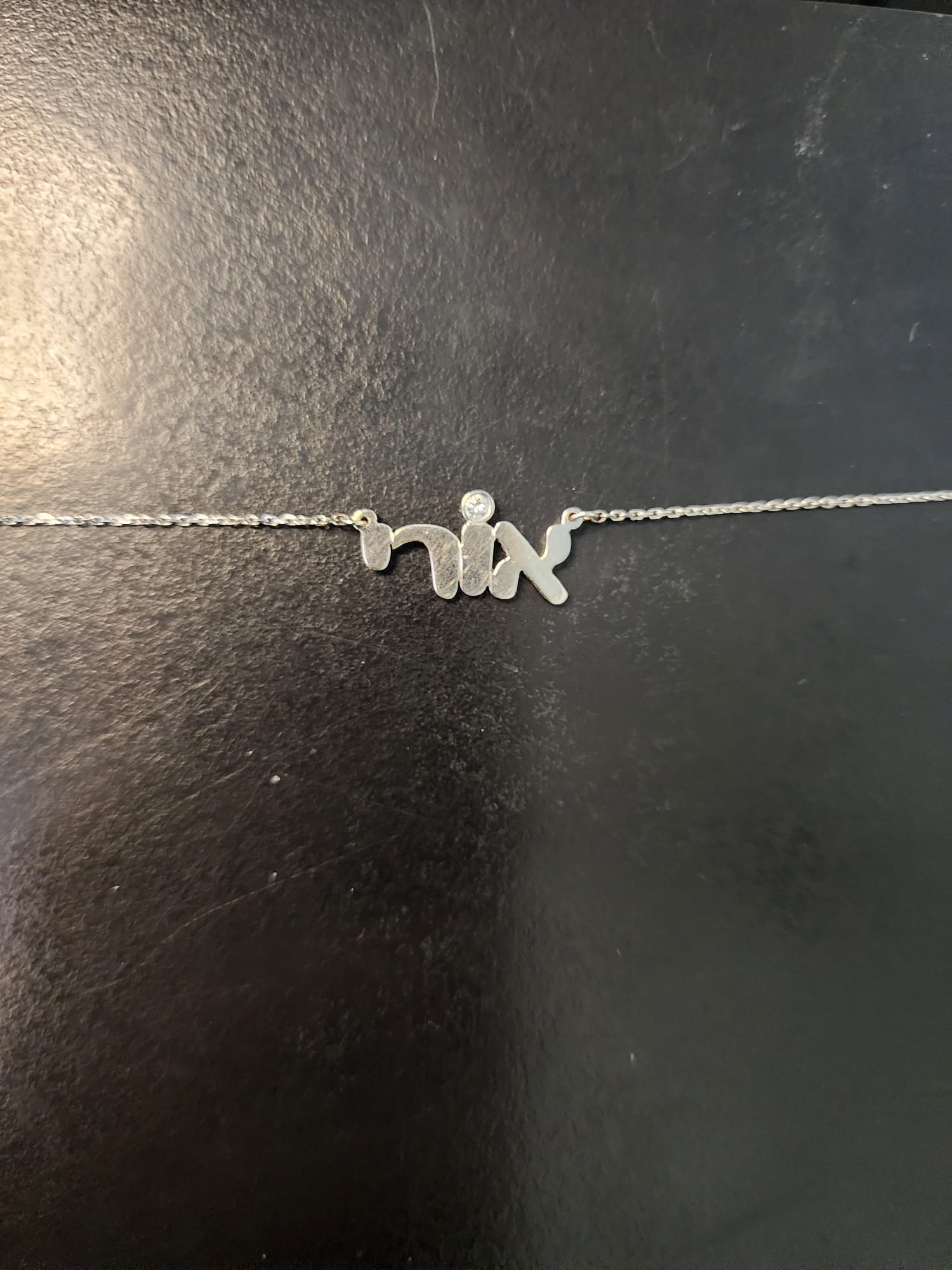
The necklace my grandmother gave me for my Bat Mitzvah is simple, a delicate chain with my name written in Hebrew, but it carries a history far greater than its size. My grandmother was born in Romania in 1957 into a Jewish family that had to hide who they were. Antisemitism shaped her childhood in ways I can barely imagine. Her family couldn’t tell their neighbors they were Jewish, and her father even worked as a mall Santa to avoid suspicion. Their identity had to be concealed for their safety. Everything changed when her family moved to Israel. There, for the first time, she could live openly, without fear. She threw herself into building a new life, learning Hebrew, excelling in school, and eventually becoming a nurse and later a professor at one of Israel’s top universities. Her story is one of resilience, reinvention, and pride in her identity. When she gave me this necklace, it became more than just a piece of jewelry. As an Israeli girl whose parents immigrated to the United States, I see my own story reflected in hers. The necklace represents the journey from hiding to pride, from fear to freedom. Wearing my name in Hebrew is something I never have to think twice about, but for my grandmother, that same expression of identity was once dangerous.

Proudly powered by WordPress | Theme: Baskerville 2 by Anders Noren.

Up ↑