Russian-Soviet-Jewish-New-Yorkian-American-Parisian Tea Culture

Every night after dinner, my mom asks me a one-word question: “Tea?” After I nod my answer, she pulls out two teacups, two saucers, and a teapot from the cabinet behind her. In the teapot, she prepares zavarka, a concentrated form of tea, using black tea, named Paris, which I bought from a company based in SoHo. Over tea, she tells stories about her home country, Moldova, and adjustment to NYC. In 1993, my mom and her family immigrated to NYC from Moldova, along with the 35,900 other Jews emigrating from the former Soviet Union. After 1970, the largest wave of Jewish immigration since the 1920s occurred, and one of the largest locations of settlement was NYC. Migration was influenced in part by war breaking out when Transdniestria, now considered a region in Moldova, declared independence from Moldova. This region was composed mostly of the minorities of Moldova’s population, and Moldova refused to recognize it. When she escaped this situation as a refugee to NYC, my mom was one of many Soviet-Jewish women married early. She received one of the most common Soviet wedding gifts: a tea set. This set now stands in a cabinet in my mom’s kitchen, displayed as a reminder of her Soviet roots, but when used with American tea and her American daughter, the tea set reminds my mom of her adjustment to a new home.

Fruit Blender

The object I chose is a fruit blender that sits on the kitchen counter in my house. Every morning,
my mom uses it to make smoothies for our entire family before we start the day. The blender
itself is nothing special, it’s just a plastic pitcher attached to a VERY loud motor. I am convinced
she uses it to wake us all up in the morning as well. My mom fills it with frozen berries, bananas,
yogurt, and sometimes honey and blends everything together into a thick drink that we can
enjoy. My grandmother always tells us that it gets the bowels moving in the morning.
When my parents were growing up in Hungary, one of the dishes they often ate during the
summer was something called gyümölcsleves, which directly translates to “fruit soup.” It is a
chilled soup made from fruits like cherries, berries, or peaches, usually mixed with cream or
yogurt and served cold. It is super refreshing and made with ingredients that are easy to find
locally.
When my family immigrated, their routines changed. The fruit soup had to be substituted by
smoothies made in a blender because it was quicker and easier for mornings before work and
school. Even though the dish changed form, the idea stayed the same. The blender always
reminds me how traditions from one place can adapt to life in another while still preserving
where a family comes from.

Central Asian Manti

Manti are steamed dumplings that are common in many Asian cuisines including Uzbek, Turkish, and Afghan. In central Asia, they are usually made from thin dough filled with finely minced beef or lamb, onions, and spices. The dumplings are folded using special techniques and cooked in steamers. In different cultures, they have different wrapping techniques, but the basic idea is the same: A dumpling that brings people together around a table.

In my family, Manti represent a connection to my background. Preparing them takes time and is usually done together with my family. My sister makes the dough from scratch while my dad minces the meat and onions. Later, my mom rolls the dough, I fill them, and my dad wraps them. Because the process is slow and requires many hands, cooking Manti becomes a social activity where we talk, share stories, and spend time together. For me, Manti are more than just food. They remind me of where my family comes from and the traditions that have been passed down across generations even though we live in New York today.

Many immigrant families in the United States maintain traditions through food by making them with their families at home or opening restaurants. Dishes like Manti show how cultural identity can continue even after people move to new places, becoming part of the diverse food culture of cities like New York.

The Greatest Fast-Food: Turkish Döner

Gyros, shawarmas, and al pastor tacos. Besides being delicious, what do they all have in common? They are all different variations of the same food: the Turkish döner kebab. The dish consists of seasoned meat in the form of beef/lamb mix or chicken, roasted on a vertical rotating spit device. Döner can be eaten as a sandwich or alongside rice. My parents both ate döners often as children when growing up in Turkey during the 80s and 90s, whether it was a cheap version from a shop off the streets, or a better quality and more expensive version in Turkish restaurants.

My Dad, pictured above in the year 1998 next to a döner device in a Turkish restaurant in Brooklyn, described döner as a “comfort food.” When they immigrated here in the late 1990s, döner became a bridge to Turkish culture for them despite being abroad. For me, growing up in NYC meant eating many different versions of döner: whether it was from an authentic Turkish restaurant in Astoria, a gyro from a Greek food cart, a Berlin-style döner with fresh vegetables and tasty sauces, or as a home-made Iskender kebab (a different Turkish dish with döner meat). All of these foods, while delicious to eat, provide a special connection to me through döner being a cross-cultural food, allowing me to connect my childhood and the döner I eat/ate here to what my parents ate in Turkey.

Kibbe Hamdah

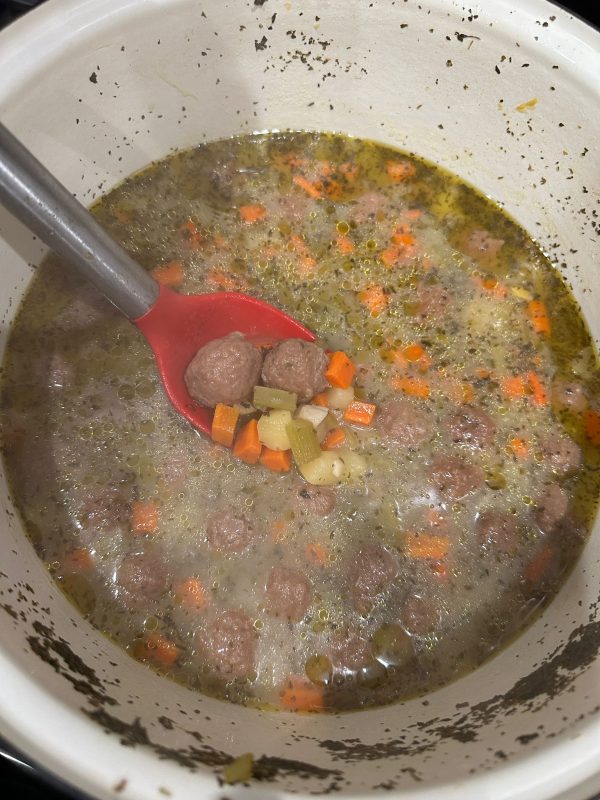
Kibbe Hamdah, also known as Hamid has been a staple dish on my dinner table almost every Friday night for as long as I can remember. It is a Syrian-Jewish dish that my grandma taught my mom to make. The base of the dish is a lemony soup with chopped carrots and celery. Inside the soup there are meatballs stuffed with another type of meat inside. It is often served with white rice. This dish is a staple in almost everyone’s home in my Syrian-Jewish community, and some people even add potatoes or tomato sauce to their soup. It is customary to eat Kibbe Hamdah on the Jewish Sabbath, which begins on Friday, 18 minutes after sunset. Kibbe Hamdah is not just a type of food, it also represents culture and religion. The traditional recipes in my community are very sacred, and they represent who we are. Eating Kibbe Hamdah with my family every week helps me recognize how far my community has come, and appreciate our rich history and culture. When I’m cooking for my family in the future, I know that Kibbe Hamdah will be a weekly staple in my house as well. My mother will pass down the recipe to me, and I will carry out the traditions of my community with pride and excitement. It is very special that even with everyone’s unique recipes, you will almost always find Kibbe Hamdah on their dinner table for the Jewish Sabbath and holidays.

Red Lees Duck

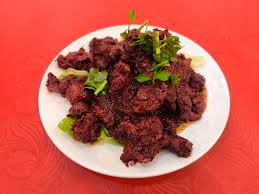
Red lees duck always means the same thing in the family: everyone is home. Whenever this dish appears on the table, it’s a signal of a family gathering. It’s enjoyed by everyone while we catch up on life.
Red lees, known as hongzao in Chinese, is a product of fermenting glutinous rice with red yeast rice to make red rice wine. The bright red paste has a slight sweet, savory flavor that pairs super well with rice. It’s a common well loved condiment in many Fujianese households.
At every big holiday, my grandma would make this dish. It’s a dish that she learned from her older sister back in China, long before our family ever imagined life in America. Now it has become almost automatic: Chinese New Year, reunions, birthdays; there’s always a pot of red lees duck simmering on the stove.
Through this dish, I get a glimpse into the life that my grandma left behind. When she came to the U.S. in 2015, she didn’t bring much with her, but she brought her recipes and culture. Red lees duck was one of them. My grandma is the main reason why I’m so in touch with my culture despite us having little to no relatives in the U.S.

The Passover Spoon

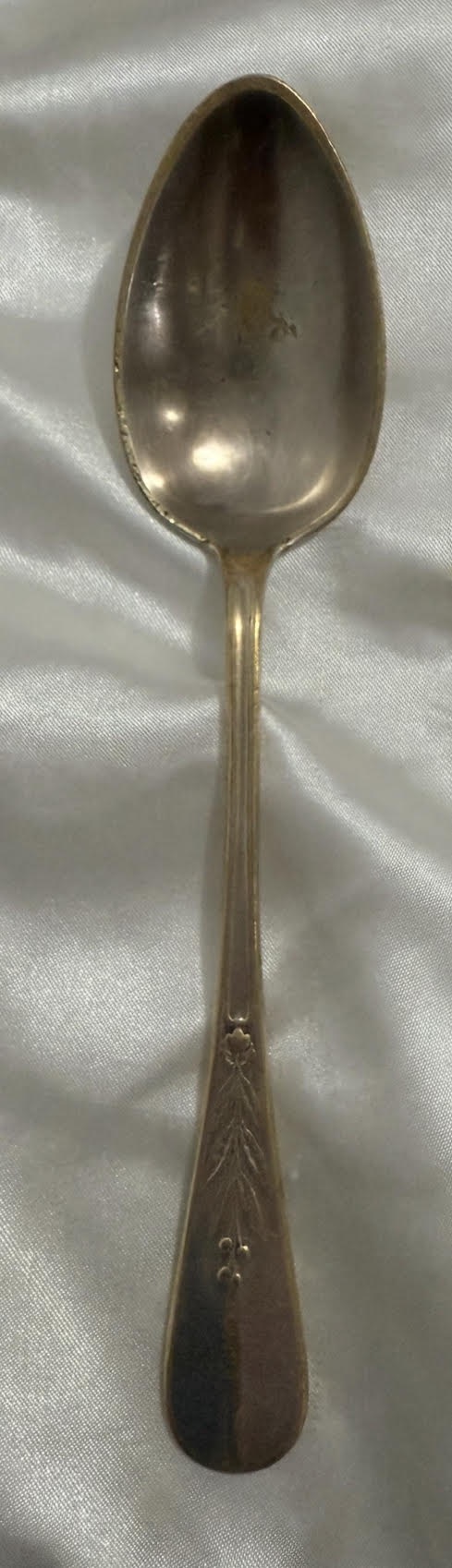
From Silk Road trading tables to my family’s Passover seder in Queens, this gold-plated “Passover spoon” has carried nearly two centuries of movement across continents, holding a significance far greater than the meals it serves. Each year at our Passover seder, we share a bite of my grandmother’s Plov from this spoon, preserved since 1828. As a child, I was fascinated and repelled by how many mouths the spoon had touched, but now I see it as a witness to migration, trade, faith, and continuity. Family oral history suggests the spoon was acquired through trade, reflecting generations of interactions and shared meals among Muslims and Jews in Central Asia. My father’s side of the family are Bukharian (Mizrahi) Jews with roots in Iran, Afghanistan, and Syria, who worked as merchants along the Silk Road before settling in Tajikistan. They lived under Russian and Soviet rule until my father immigrated to New York in 1992. Earlier periods reflected coexistence and shared commerce between Muslims and Jews, but rising antisemitism and restrictive Soviet policies led to major waves of Jewish emigration in the 1970s and early 1990s. Religious holidays, meals, and language unify my family. We speak Russian, Bukharian (a dialect of Farsi), and English. This spoon brings these elements together in a single ritual. In Queens, one of the most ethnically diverse places in the world, our Passover table reflects the cultural coexistence that shaped my ancestors’ lives along the Silk Road.

Family Cookbook

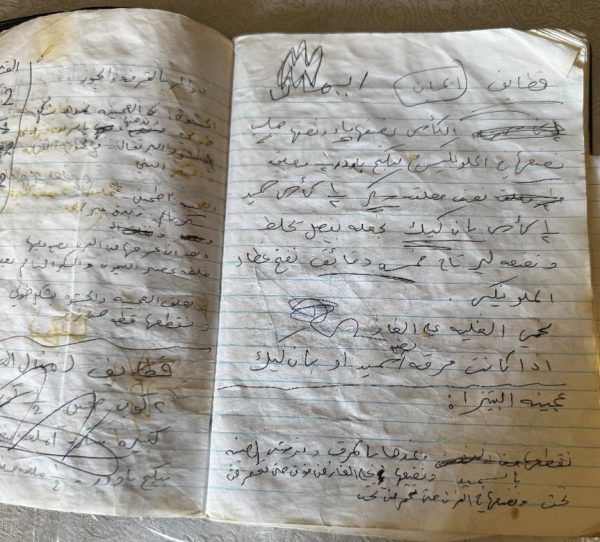
This is a photo of a page from a cookbook my mother has had all my life. The notebook is old and clearly well used, with wrinkled pages, faded ink, and small stains from ingredients that were probably spilled while cooking. My parents’ main language is Arabic, which makes sense for the recipes to be written in Arabic as well. Typically, Arabs don’t follow recipes. If you asked an Arab mother how to make a dish she would tell you, “Just add a little bit of this and all the spices you have in your cabinet” (safe to say Arab food is never under seasoned). But my mother made this cookbook specifically for desserts. She’s not much of a baker as it requires precise measurements, so to make it easier for herself she wrote the recipes down. If anyone can read Arabic, they can tell that this recipe isn’t exactly as specific as a recipe written in English, but it’s specific enough that any Arabic speaking person will understand it. This book is important because it carries the different desserts the represent the culture my parents left behind when they came to the United States from Palestine. It was a way for them to bring with them a piece of home where they started their new lives.

The Dao – An Exploration of Bangladeshi Culture and the Immigrant Experience – Tajrian Jahan

An icon of the Bengali kitchen, the dao, a sharp, machete-sized seated blade commonly used by rural housewives to cut vegetables and fish, is an important symbol of Bengali village culture and a part of Bangladesh that my parents did not leave behind when they arrived here some 20 years ago.

The dao is a long, curved iron blade seated on a flat plank of wood or short iron tripod, used by squatting behind it and driving meat or vegetables into the blade. Its use dates back nearly 1,300 years to the Pala Dynasty in Bengal, a Buddhist kingdom in which early Bengali culture emerged; since the dawn of Bengali culture, the dao has been associated with the woman’s role as the nourisher and sustainer of the household.

The dao is also evidence of the sacredness of the bare earth in early Bengali culture. Toiling behind a dao, sharing a meal, and sleeping were all practices performed on the ground because the Earth and its soil were sacred. With the arrival of British colonialists, furniture and stovetops began to gain popularity and we lifted ourselves off these sacred grounds; using a dao became a symbol of rural meekness against Western culture. My mother came from a riverside village in Sylhet, and I remember watching her cut the same hyacinth beans she had once watched her own mother cut; she embodied the motherly spirit of the dao, and brought the essence of Bangladesh to our small apartment in the Bronx.

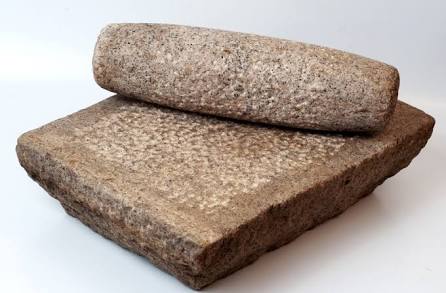
The Sil-Baata

An artifact that highlights the culture of Bangladesh is the sil-batta [sheel baata]. This South Asian tool dates back to 2500 BCE during the Indus Valley Civilization. The tool consists of two parts: the rough stone slab and the stone cylindrical grinder. Used in various South Asian countries including, Bangladesh, India, and more, the sil-batta was used to grind a multitude of spices including chillies, turmeric, ginger, garlic as well as lentils. Often used while sitting on the ground, the tool required great strength to grind the various spices by rolling the cylindrical piece against the spices laid on the slab in an upward motion. The concept of this tool highlights and exemplifies the hard work, patience, and grit carried out by South Asians from many centuries ago to now. Not only is it resourceful but also scientific because manually breaking down these spices releases greater flavor due to a proper breakdown of the cells of the spices, adding to the uniqueness and special flavor of South Asian cuisine.
From my experience, I do not use this tool with my cooking, especially since it is not as prominently used anymore, even in Bangladesh. However, growing up, when I went back home, I observed many of the house-helpers using the sil-batta to grind spices which encouraged me to try out the tool when I was young, though I was not very successful at it. I found this tool very interesting and personally unique to our culture though similar techniques are also applied in other cultures. Currently, for these spices, my family and I usually use a blender/grinder to grind ginger and garlic into pastes. A lot of the spices that we use, however, are generally store bought packs that come grinded. Though, if we have time to grind the spices ourselves, we do buy the spices from the store and grind it at home.
Overall, the sil-batta and its connection to the spices it is used to prepare highlights a significant distinction in South Asian cultures to the rest of the world and reflects the novelty of South Asian foods. This tool plays a role as one of the roots that connects me back to home.

The Power of Rice

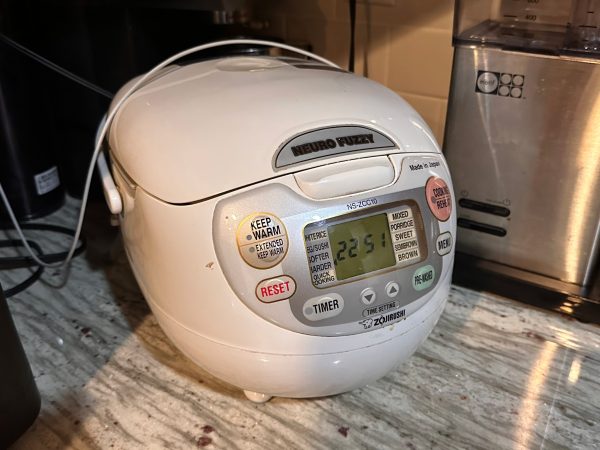
Anyone who lives in an asian household probably uses this every day. My family as well. For almost every meal, we have white rice. Eating rice with miso soup on the side is an essential everyday part of Japanese food culture, and I believe it is important to stay connected to it even when I am not in Japan.

The versatility of rice is what makes it special. Of course, you can eat it directly, but there are many other dishes you can make from rice itself. For example, you can shape the rice into a ball and put ingredients of your preference inside, called onigiri (おにぎり). You can season it with furikake (ふりかけ) or pour Japanese curry over it and enjoy it as curry rice.

The most important time of year for making rice dishes is the New Year. The rice is hammered together until it becomes one big blob, which we all know as mochi (もち). You can enjoy the plain mochi’s stickiness, or, for those who want some flavor, you can add soy sauce or sugar. The mochi is also used in soups called o’zoni (おぞうに) and oshiruko (おしるこ), both of which are traditional New Year’s dishes. The food Japanese people eat on New Year’s is different from the food they eat daily. My family sets up an entire feast, and instead of eating white rice, we eat mochi and other traditional New Year’s delights.

Cookie Tin

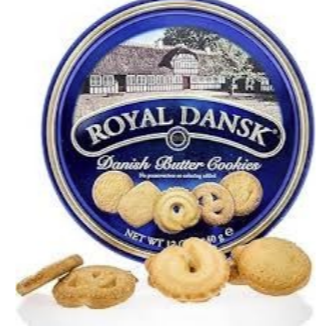
Although my artifact, a blue Danish cookie tin, didn’t originate in Pakistan, where my family and I are from, it’s been used in my family for almost 20 years. The tin originally came into our possession when guests brought over Danish butter cookies as a gift. After the cookies finished, we decided to reuse the tin due to its durability and sturdiness. Since then, this tin is always found on the corner of my counter, filled with flour that we use to dust our work surface when making different types of bread, from naan and roti to chapati and paratha.

This tin truly identifies the importance of resourcefulness in my family because instead of throwing out the cookie tin after the cookies finished, my family reused it. This tin specifically is perfect due to its durability, lightweight material, and depth, which makes it practical to hold flour and dip dough balls in. It also demonstrates the importance of bread in our family since it is eaten with almost every meal. After talking to my mom about this tin, she explained that in Pakistan, flour was traditionally stored in straw containers rather than metal tins, since Danish cookie tins like this were not very common there. Overall, my family’s continuous use of this container shows meaningful memories and significance, since it highlights how migration can also lead to the exposure of different products, like this cookie tin, that might be used in place of traditional family objects, like the straw containers.

Borhani

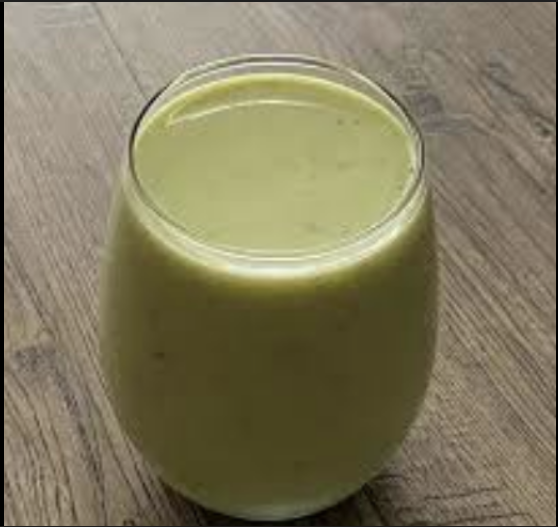
Borhani is a traditional Bangladeshi yogurt-based drink known for its spicy, tangy, and savory flavor. Deeply rooted in Bengali culture, it holds a special place at weddings, Eid celebrations, Ramadan iftar gatherings, and other festive occasions. Served chilled alongside rich dishes like biryani or tehari, borhani not only enhances flavor and aids digestion but also symbolizes hospitality and togetherness during large family and community events. The drink is made from a blend of sour yogurt (tok doi), sweet yogurt (misti doi) or sugar, mint, cilantro, mustard seed paste, green chili, black pepper, and lime juice. For many Bangladeshi families, including mine, borhani carries emotional and cultural significance. Although New York City’s diverse neighborhoods—such as Jackson Heights, Astoria, and Jamaica—offer a variety of Bengali foods, borhani remains a rare specialty we prepare at home, connecting us to our roots and memories of Bangladesh.
A deeper look at borhani reveals the drink’s historical and social dimensions within Dhaka’s culinary identity. Influenced by Mughal and Persian traditions, it reflects how yogurt-based drinks and aromatic spices traveled through empires into Bangladeshi cuisine. Differences in recipes, preparation styles, and availability also highlight social and class differences in Dhaka—from elaborate wedding feasts to adapted versions sold by local vendors.

A recipe through time

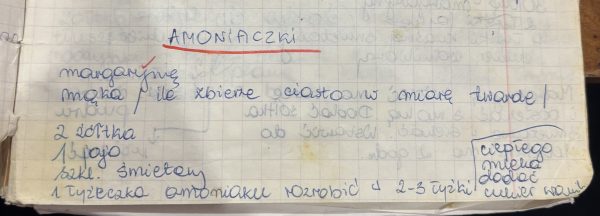
Ever since I was young, the holiday season meant baking desserts and sweet treats with my family. About 10 years ago, in 2016, my mother shared our family amoniaczki recipe with me and passed down the tradition of baking these cookies together. Made with ammonia powder, these cookies are crisp and airy. Also, when baking the cookie, a layer of brown sugar is baked on top which adds the sweetness to the cookies. For years, I thought this recipe was my mothers, until I learned it came from my great grandmother. She originally wrote it by hand in her recipe book with traditional Polish desserts and taught it to my grandmother, who then passed it to my mother when she was growing up in Poland. When my mother immigrated to New York in 2004, she brought this recipe book with the amoniaczki recipe to the United States. She used this recipe as a way to stay connected to her home and preserve her culture while raising her family, especially through her two daughters. Now, baking amoniaczki has been a tradition I continue, especially for Easter and Christmas. I also get to see my sister teach the recipe to my niece and continue to pass down the family tradition. I have seen this recipe for so many years, but now I realize what once seemed like a simple recipe has come to mean much more. It represents history and tradition passed down through generations of women in my family.

Date Origins

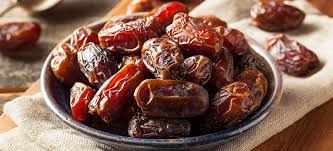
Dates are one of the oldest fruits people have grown, with farming going back more than 7,000 years to ancient Mesopotamia and the Arabian Peninsula. They played an important role across the Middle East and North Africa before many other crops were around, used as sweeteners, trade goods, and even fermented into wine.
In Islam, dates have a deep meaning. The Quran mentions them around 20 times, and the Prophet Muhammad is known to have broken his fast with dates and water. This tradition continues today, especially during Ramadan. In my family, iftar always starts with dates right after the Adhan, just like it did all the way back in Guyana. It’s not only sunnah, but a tradition I’m not sure will ever end for me. Dates are also included in the Bible and the Torah, where they also carry symbolic meaning in both Christianity and Judaism.
On top of tradition and religion, dates are very healthy. They have fiber, potassium, magnesium, and antioxidants, and their natural sugars give quick energy that especially helps after a long day of fasting. The pit inside, which most people throw away, can be ground into a caffeine-free drink called date seed coffee and has also been processed for centuries into kohl, a traditional eye cosmetic still used across the Middle East and South Asia.
There are several kinds of dates, each with its own taste and texture. Medjool dates are soft and caramel-like. Ajwa dates, grown in Madinah, are darker and richer. Deglet Noor dates are firmer, drier, and a little nutty. If you’ve never had one, try a Medjool first. It’s easy to find and sweet enough to show you exactly why people love them. They’re sweet, soft, and way better than any candy.

Persian Kabab

Kabab is a Persian dish eaten in Persian households and restaurants, as well as at family gatherings and celebrations. It has been a central Persian dish for almost 2,000 years, made with ground beef, grated onions, and turmeric placed on skewers and grilled. The dish is commonly accompanied with basmati rice and sumac and a grilled tomato. Kabab is unique as its preparation is communal; in family barbecues, we each work together to get the ground meat, onions, and spices ready, to put beef on the skewers, and to grill. Making cultural dishes is one of the central ways that my family and other Persian immigrant families keep our cultures and traditions alive in our new homes. For American immigrants as a whole, making traditional foods is one of the key ways of maintaining a tangible hold on our cultures and heritages, even when we are not in our homelands. Persian immigration to the United States has dramatically increased following regime change in Iran, with my parents leaving Iran in the late 1980s, and these cultural traditions and dishes always remind us of our family members still in Iran and all we had left behind. Our hearts are in Iran and the war brings pain and sadness to us constantly. We hope that the people of Iran will soon live in freedom and that the people of Iran will continue to flourish as they have for millennia.

Threads of Light: From Cairo to New York

The object is a hand-size golden lantern that lights up with batteries. It has a handle at the top and a roof-like top, with a round base and two handles (mostly for decor) on the sides. The lantern was purchased by my mom in NYC. It sits on a medium-sized table within my house, mainly used for guests. Even though it simply looks like a fancy house decoration, it connects me with my culture and memories.

Growing up as an Egyptian, it was normal to see children before sunset running in crowded markets, pushing through adults while holding small lanterns of different shapes and sizes. They’d light up in different colors, not just golden yellow. Most of the time, the lanterns didn’t contain real candles. But they still felt cultural. Children would sing “Ramadan gaana,” and other different songs in anticipation of the month of Ramadan.

Because the small lantern signals Ramadan, it connects me to memories of fasting in Egypt on hot days, especially later in the day when I felt great for making it to the evening, knowing a large feast awaits my family.

This object fits into the broader story of New York City because New York City is a hub of immigrants, of many cultures uniting into one city. This makes New York so much different from other places in America. Being of an Egyptian background, I bring my perspective here, and even meet people from different countries who also celebrate Ramadan.

Uzbek Qozon

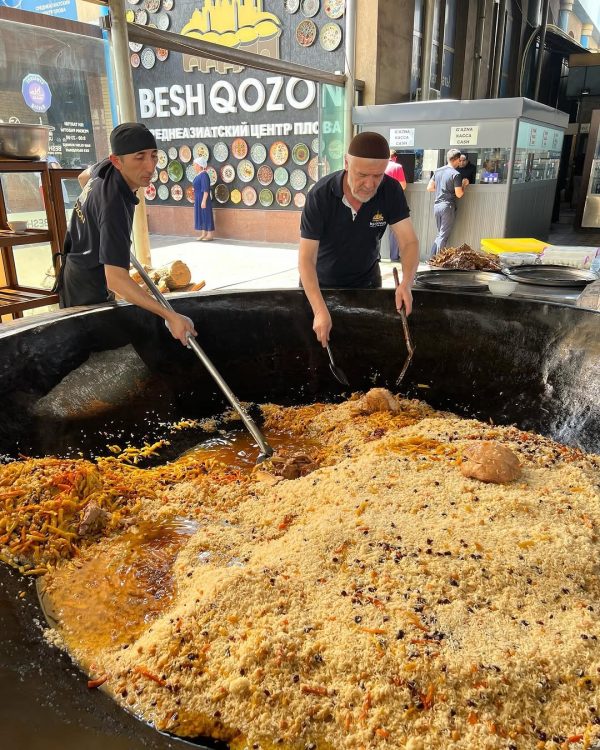
My grandmother has a qozon that looked like the one in the image, only much smaller. It was old and well-used. This is the qozon that made the food that my mom was raised on throughout her entire childhood. This is the qozon that made the food I was raised on during my childhood. It’s not a cooking utensil or a tool; at this point it’s an heirloom. It’s older than I am. It’s probably older than my mom. Its provenance, at least as far back as I can trace it, begins with my grandfather’s mother, who then passed it on to him. Being a stereotypical Uzbek man and not knowing how to cook, he gave it to his wife (my grandmother). My mom hopes to inherit it one day.
It’s funny just how much of Uzbek culture can be explained by this. Uzbek dishes are efficient: large and calorie-dense, a leftover (see what I did there?) from our nomadic days when little could be preserved and even less could be carried on the backs of horses. Because of this, Uzbeks traditionally have no concept of leftovers. My grandmother would cook three meals a day, every single day, each one big enough to fill this qozon to near-overflowing. The qozon is perfectly hemispherical, so an Uzbek kapkir (spatula) can very efficiently stir the food and scoop it out onto the plates of my grandmother’s four children. The pure cast iron gets hot and stays hot, and the material only gets stronger over time as it polymerizes with every use, preserving itself for future generations.
The second image is an example of a qozon used in communal cooking. These huge qozons are called “forty-ears” because they traditionally had forty handles, called ears, around the rim, and it would take forty men to carry them, one for each ear. There are restaurants in Uzbekistan that specialize only in one dish, osh, the national dish of Uzbekistan. The restaurant Besh Qozon makes portions of osh that weigh 350 kilograms (771 pounds).
I’ve had to describe it so many times, and each time I’m left underwhelmed because it’s impossible to experience it adequately (let alone authentically) unless you see it being made in front of your very eyes. It consists of Uzbek rice (not basmati or jasmine), julienned orange and yellow carrots, beef or lamb, spices, and toppings like whole peppercorns, raisins, quail eggs, stuffed grape leaves, whole garlic heads, or even quince. All of the toppings are not used at once; quince and garlic do not go well together. My favorite is fried in linseed oil, but the fanciest osh is made with dumba, the fat of a special type of ram only found in Central Asia.
Because osh comes in so many different forms, it is used in every aspect of Uzbek life: regular ol’ osh at home, fancier osh at restaurants and celebrations, and even fancier to’y oshi for weddings. The wedding, being the most important event in Uzbek culture, naturally gets the fanciest osh with all of the toppings. At the most old-fashioned of weddings, a ram and a big qozon are brought to the home of the bride. I think you can see where this is going. A butcher is called, the ram slaughtered, and some of the male relatives of the bride cook osh for the wedding. These days, things have become a bit more modernized. To’ylar (weddings) are usually held in to’yxonalar (wedding-houses), huge event halls specifically made for Uzbek weddings, which include 500 people on average.
From to’ylar to dumba to paxta-gul to osh, the qozon truly connects every facet of Uzbek culture together.

Calabash

The calabash is a versatile and culturally significant plant that has been cultivated for thousands of years across Africa, Asia, and the Americas. Belonging to the gourd family, the calabash plant produces large, hard-shelled fruits that can be used both as food and as containers. When young, the fruit is edible and often cooked like a vegetable, providing a source of nutrition in many traditional diets. Once matured and dried, the hard shell becomes a durable material that has been used for centuries to make bowls, cups, musical instruments, and even utensils. This dual-purpose nature of the calabash has made it an essential part of daily life in many cultures.

In addition to its practical uses, the calabash carries symbolic and cultural meaning. In West Africa, calabash gourds are often intricately decorated and used in ceremonies or as gifts. Musicians in various African and Caribbean communities use calabash shells to create instruments such as the shekere, which produces rhythmic sounds essential to traditional music. In Latin American cultures, the dried calabash is used to make containers for mate tea, highlighting its continued role in everyday life. The plant also appears in folklore and storytelling, often representing abundance, creativity, and resourcefulness.

Calabash also has a personal significance in my family. My dad is from Jamaica, and when I was born, my grandmother, his mother sent up a bowl made from a dried calabash and told my dad to feed me from it, with porridge, cereal, or fruits. She said it was so I could learn to talk faster. Once I learned how to speak, I didn’t use it anymore, but that wasn’t the end of the story. My younger sister later began using the calabash, and, as you might expect, she learned to speak faster than I did. This family tradition shows how the calabash is not only a practical object but also a symbol of heritage and cultural continuity.

Beyond its cultural and personal significance, the calabash is environmentally sustainable. It grows quickly, requires minimal care, and can thrive in diverse climates, making it a reliable source of food and material for local communities. Its adaptability and multi-functionality illustrate the ingenuity of human societies in utilizing natural resources. Overall, the calabash is much more than a simple plant; it’s a symbol of tradition, utility, and identity that continues to impact lives worldwide.

Great Grandmother’s Cast Iron Skillet

The cast iron skillet has a long history of migration. The cast iron has its origins in China as early as the 5th century B.C.E. and only began to be imported to Europe in the 14th century C.E. on the trade networks of the Silk Road. During the industrial revolution in Europe and the United States from the 18th and 19th centuries C.E., cast iron cookware became a relatively cheap and incredibly sustainable way to feed families. For many enslaved African American domestic cooks or kitchen laborers, the cast iron skillet became a tool of both oppression and survival used daily. During the Great Migration, these durable appliances were one of the few items that these families could bring with them and impart onto their descendants.

I started my cooking journey in 2023 in my junior year of high school with a longer history of baking stretching back to middle school. Since my first semester of classes at City College last summer my cooking skills have been developing rapidly because I began cooking lunch for myself as often as I could. I feel confident with the oven, stovetop pots, instant pressure pot, and toaster oven we have but the one tool I feel disquieted to even begin using is our cast iron skillets. My family has few heirlooms in our apartment, and our one inherited cast iron skillet is perhaps our most cherished. One of the skillets belonged to my father’s grandmother, and where she got it I don’t know. She was born in 1920 in Maryland and went on to move to West Virginia and raise six of her own children and helped bring up my father and his sister there. Their cousins would also frequent the house growing up, and she often fed up to seven children off of soul food from the two cast iron skillets she had – the one I have today and another deep-dished skillet that’s still in West Virginia. As an African American family growing up in a 96% white state, some of the memories that still bring the most joy in the people she raised and loved is the food she cooked in those skillets in the challenging times of Jim Crow civil rights struggles that they all endured.
When my father traveled from New York back to West Virginia to attend her funeral in 2002, the only thing he physically took back with him was one of her cast iron skillets.
Today her cast iron skillet rests proudly on our stovetop, too emotionally significant to be pushed into the oven with our other pots and trays. My father’s grandmother handled her two cast iron skillets with great care and love for years of her life, and I don’t even know how to season or clean them. My apprehension to use her skillet is out of respect for all she’s done and fear of underwhelming or disappointing her legacy. But I suppose the first step in treating her skillet properly is to practice upkeep and preservation of it.

Proudly powered by WordPress | Theme: Baskerville 2 by Anders Noren.

Up ↑