Your Story Our Story

For my object, I chose my father’s French passport. This passport represents more than just identification; without it, my father would not have been able to immigrate to New York City in the 1990s. As an official document, it allowed him to legally enter a new country and begin building a life there. It made it possible for him to take advantage of the opportunities that New York offers.

Over time, the meaning of this passport expanded beyond my father’s experience. It became part of my own story, as I grew up as a dual citizen of both France and the United States. This allowed me to move between New York and Paris throughout my childhood. Because of this, I came to understand that migration is not always a one-time event, but can be an ongoing and transnational process.

At the same time, this object highlights inequality. Not everyone has access to the same legal mobility. Many immigrants in New York face barriers that limit their ability to travel freely or return to their home countries. In this way, the passport represents both opportunity and unequal access.

Within the framework of the Tenement Museum’s Your Story, Our Story project, this object shows how everyday items can reveal larger social patterns. My father’s passport connects a personal family story to broader issues of migration, identity, and life in New York City.

A Family Legacy in Gold

For my special object, I chose my gold heart charm bracelet, which I hold very dearly to my heart. In June 2010, my dad, my sisters and I moved to America in hopes of a better life with financial freedom and education. Unfortunately, we had to leave my mom behind in Guyana because my parents weren’t legally married, so my grandmother couldn’t sponsor her as well. Before we moved our entire lives away without my mother, my father gave her this bracelet as a testament to his love for her. A couple of months later, my dad and I returned to Guyana for my parents’ legal marriage. After this was complete, my dad sponsored my mother, and she came to America in March 2013. Later, in 2018, my mom passed the bracelet down to me, her youngest daughter. This bracelet holds a very special place in my heart because it represents two generations sacrificing, evolving, and changing their lives for a better future. It has traveled across the ocean, existing on two separate continents while symbolizing the connection and love between my parents. It served as a connection between my mother and father through times of separation and now serves as a reminder of how far we’ve come from a little village in Guyana. To honor my family’s immigrant story, this bracelet will continue to be passed down to my daughter and granddaughter for generations to come.

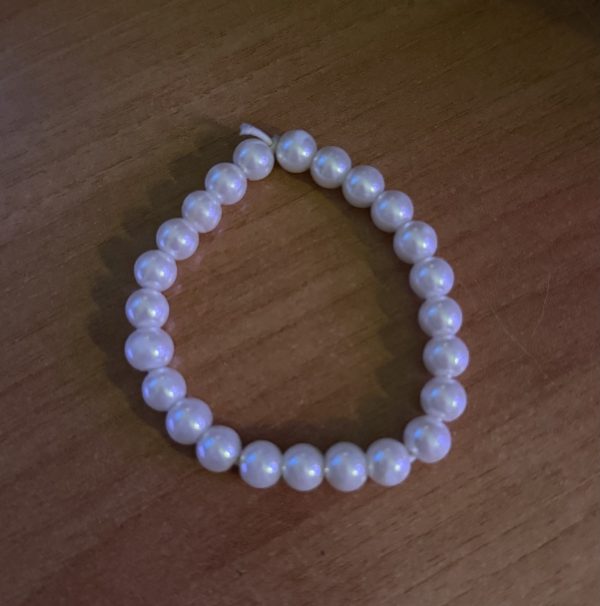
Authentically Faux Pearls

Throughout my life, asking questions about my family’s history within Asia has proved futile. My ancestors arrived in China from Korea multiple generations ago, yet fragments of the past were never passed down and instead were lost. However, during a visit to China in the summer of 2025, my paternal grandmother gifted me a tangible reminder of my family’s muddled history, a faux pearl bracelet. This bracelet, though cheap, has become a priceless symbol of connection. It carries the weight of my family’s migration from South Korea to China, and my maternal grandparents’ and parents’ eventual departure from their homes to live in the United States in the 2000s. My family chose to continue this pattern of migration, cultivating new and better lives for themselves, settling in the Asian-dominated community of Flushing, NYC. Having the privilege of living in the United States, I am constantly reminded of the sacrifices that had to be made for me to lead a more stable life. These reminders fostered a deep desire to situate my family’s unique journey within the broader history of Korean migration and displacement. I have come to understand that 20th-century mass migration from Korea was driven by survival and shaped by multiple instances of wartime and political instability. With this, my simple faux pearl bracelet has come to represent the struggles and resilience of countless Korean migrants, including my family.

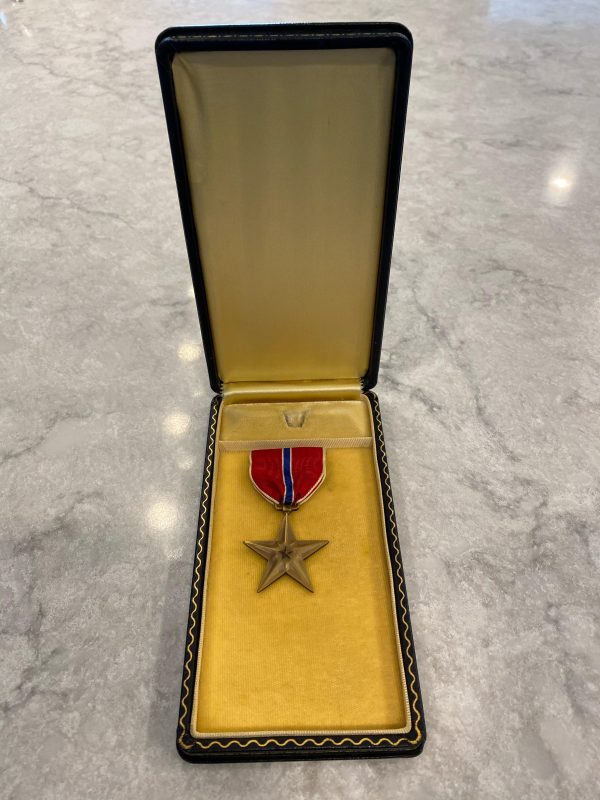
Bronze Star Medal

As a child, I was intrigued by the mysterious medal on my grandmother’s shelf, and I sought to uncover what this object is and why it deserved a place of prominence. As I grew up, I discovered that this was my great-grandfather’s Bronze Star medal, awarded in 1945 for his heroism and meritorious achievements during WWII, and an important symbol of my family’s immigration story. My great-grandfather, Manny Weinberg, was born in 1923 in Berlin, Germany, and fled to New York in 1939 as antisemitism and Nazi persecution increased. Following the attack on Pearl Harbor, he enlisted in the U.S. Army, hoping to fight the Nazis who persecuted him. A new military intelligence unit recruited him alongside other Jewish immigrants. They trained at the Military Intelligence Training Center at Camp Ritchie, Maryland, earning them the name “The Ritchie Boys.” My great-grandfather was in one of the first classes to graduate and deploy, landing on D-Day at Omaha Beach. As Jewish immigrants, the Ritchie Boys had the rare opportunity in which members of a community fleeing persecution returned to the place they fled and fought their oppressors. The medal symbolizes immigration to New York, wartime intelligence and how military service can reshape immigrant identity. My great-grandfather’s army service marked his turning point, deploying as a Jewish, German immigrant soldier, and returning to New York as a war hero, securing the right to consider himself a New Yorker and true American.

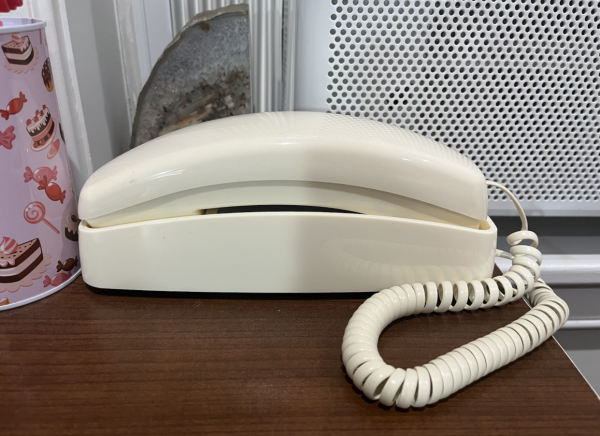
The Infinite Spiral Cord Between Each Other: The Landline Phone

Despite the 3,000 mile distance between Ecuador and New York, my family managed to maintain connection through conversations over the landline phone. This particular phone is not something from my family. Instead, I bought it as a reminiscent artifact. Whether it was on the side table of my great-grandmother’s living room in Portoviejo or the travel agency in Kew Gardens where my mother would make international calls, the landline phone has been a significant part of my early life that I continue to honor and cherish. Its presence in our family was key in making sure we never forgot each other’s voices.

This means of communication began with my grandmother’s immigration to New York in the 1960s. My abuela Josefina came to New York decades ago and eventually brought her children, fostering the beginning of a new life for her family. However, the landline phone was not the main source of communication; the quality was poor and the price was expensive. This may have been especially difficult for Josefina, a new immigrant, as it could have been unreachable to make such calls without access to a landline phone at her place of residence. But with each occasional call, the long process ended. Josefina could finally hear the sounds of home.

Hearing the ring of the phone, I reflect on that same ring echoing through the past apartments of my grandmother, my aunts, and my parents as new residents of the bustling city. ¡Qué dulce!

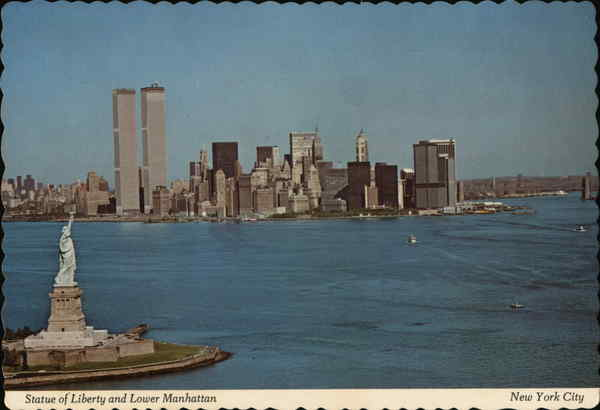
NYC Postcard

In terms of immigration or migration, I may be a citizen but that is only because of the stories that come from my parents before me. My mom immigrated from communist eastern Europe to the United States when she was just eighteen years old. She was born in 1970’s Hungary, during the cold war and occupation of several countries by the Soviet Union. Life during this time was far different from how it is now, with communism and socialism playing roles in my Mom’s life. In 1989 communist rule in eastern Europe collapsed with the dissolution of the Soviet Union and the transition from communist rule to a democratic system in Hungary. Two years later was when she first came to the United States all by herself. My mom was raised in a smaller town, so she was always amazed by the big American cities that were on TV, especially New York. More importantly, she also had a postcard displaying the big buildings in Manhattan. It served as another form of seeing what other parts of the world look like, and what her life could be or look like as well. That postcard she had was something that really helped to give that ambition to change her life trajectory by doing what not many can muster the confidence for in immigrating to NYC alone, and is a big part of why our family is here today.

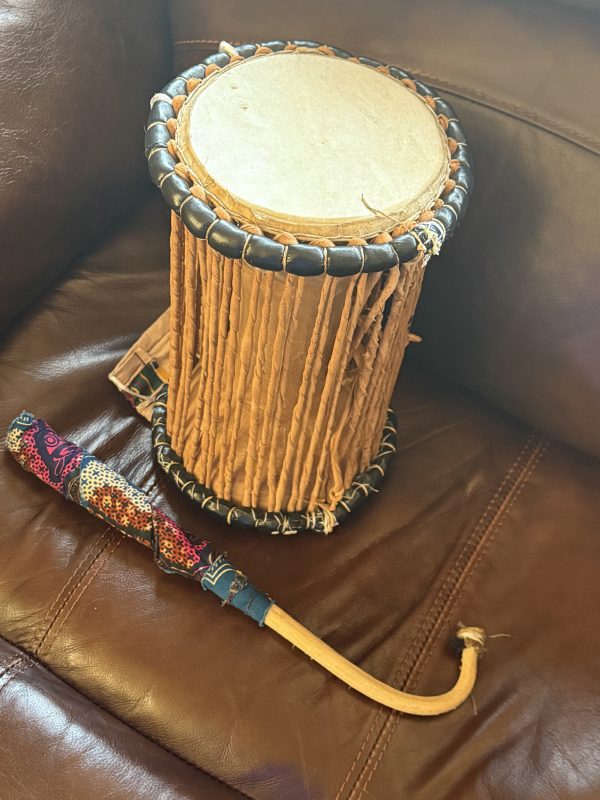
A sound carrier: My uncle’s talking drum

On a shelf in my uncle’s reading room sits a small talking drum. You can easily recognize it by its wooden frame, which is surrounded by leather strings and fitted with two leather faces. The drum only ever leaves the shelf when someone asks about it, and when it does, it always ends up in my uncle’s hands. He is very fond of it and his arms tend to fold around it like wings closing over a nest.

Traditionally, the drum is used during celebrations and coronations for kings because it has the ability to mimic the tone of a person’s voice. However, in my family, it takes on a different role. When it comes out, we gather around whoever is playing and take turns trying to guess what the drum is saying. When it reaches my uncle, the drum settles into a playful rhythm that makes people want to dance. Its crisp, tight sound is what first attracted my uncle to it. That sound was harder for him to find after he moved to the United States in the 2000s, which prompted him to get a talking drum of his own. The sound of the drum celebrates my family’s life in the U.S, but like a heartbeat, it is also a reminder of home. We carry the sounds of home with us, and the talking drum is my family’s way of sharing that sound.

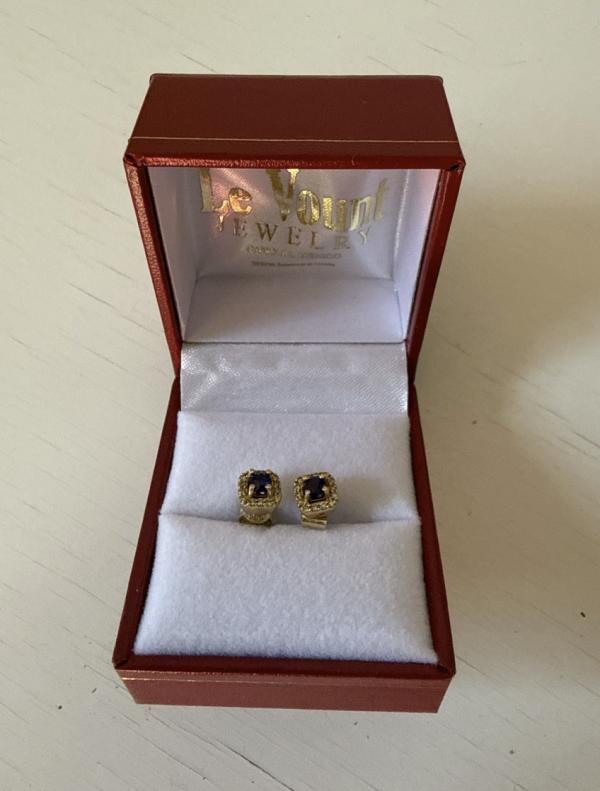
Canadian Gold Sapphire Earrings

On the last day of a trip to Mexico for my eighteenth birthday, my father told me to go
into a store and pick something out. There were two stores at the hotel: a souvenir shop and a
jewelry store. He meant the souvenir shop, but I misunderstood and walked into the jewelry store
instead. Inside, I found a pair of earrings I liked, but they were expensive, so I waited for my
father before deciding.
When he saw the price tag, I could tell they were more than he expected. Instead of
saying no, he suggested we go to dinner and come back later. At dinner he told me how proud he
was of me and how much he loved me. When we returned, the woman working there showed me
another pair she thought would look nice. As I kept looking, I noticed Canadian gold sapphire
earrings and instantly knew those were the ones I loved. But they were more expensive than the
first pair and the other pair combined, so I didn’t bother asking.
Even knowing that, my father bought all three.
Those sapphire earrings mean far more to me than jewelry. My parents immigrated to this
country with almost nothing. Everything they built came from sacrifice and hard work. When I
look at those earrings, I see how far my family has come and feel motivated to expand the
success my parents fought to create.

Psalms and Self-expression: The Bukharian Jewish Journey

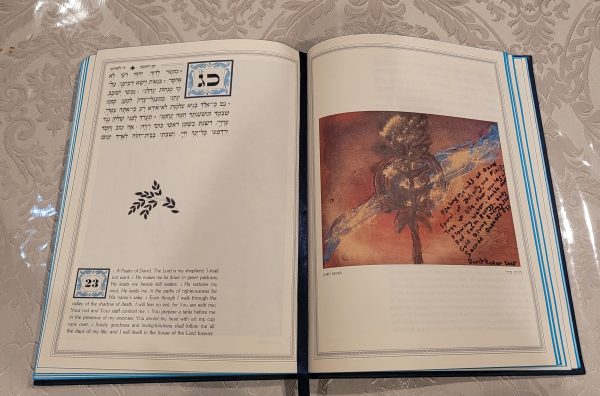
This Book of Psalms was gifted to me by my parents in August of 2018. They were drawn to this contemporary version of the ancient text because it includes different paintings from Jewish artists to match the tone of each Psalm. The Book of Psalms, which Jewish tradition attributes to King David, has been an integral part of Jewish culture for three thousand years. The 150 poems that compose the Psalms reflect diverse themes, such as faith, hardship, and determination. My family is Bukharian Jewish: Jews from Central Asian countries like Uzbekistan. The Book of Psalms has shaped my family’s journey to New York as they escaped the Soviet Union in 1991 and found comfort in the Psalms’ humanity. Chapter 23 of Psalms, which is recited every Sabbath, resonates particularly with Bukharian Jews who immigrated to New York because it contains themes of uncertainty, self-confidence, and belief in God’s protection amid hardship. My object reflects the immigration journeys of Bukharian Jews, who have achieved success despite facing challenges, while maintaining their heritage. To many Bukharian Jews, achieving their dreams and having the freedom for self-expression is the epitome of the American identity. Just as my Book of Psalms contains different pieces of art, Bukharian Jews allowed their creativity to shape their individual paths after immigrating to New York, each embodying their own version of what it means to be an American.

Muchnick Family History

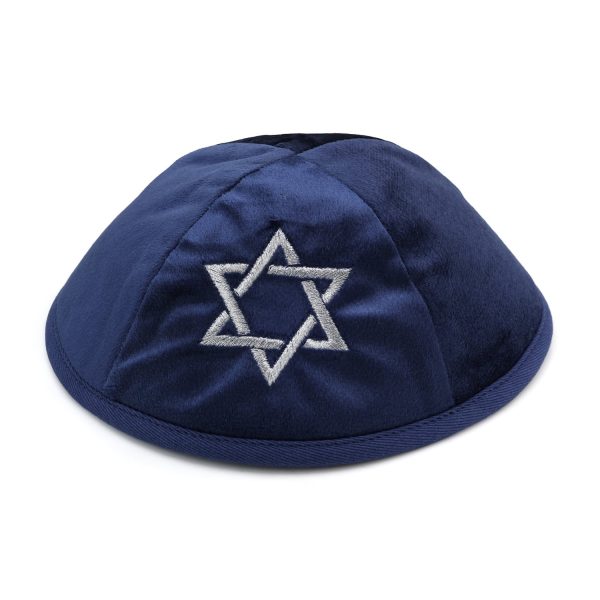
My family’s story is one of migration, survival, and identity, shaped by the waves of immigration that built New York. On my mother’s side, my grandparents are first-generation Holocaust survivors: my grandmother came from Kisvárda, Hungary, a small town whose once-thriving Jewish community was nearly wiped out during the Holocaust, and my grandfather came from Soviet Ukraine. In 1977, feeling there was no future for Jews in Europe, they immigrated to America and settled in Mill Basin, Brooklyn, among other immigrants with similar stories. On my father’s side, the family was already rooted in America, settling on Long Island in Nassau County, though the connections to Europe were never far away—my great-grandmother survived the Holocaust in Hungary before making her way here, and my great-grandfather served in the U.S. Army during World War II, leading a post-war interrogation unit. What carried over from the old world was less about language, since my grandparents speak fluent Hungarian and Russian but never taught it to me, and more about a deep sense of Jewish identity. If I had to choose one object to represent my family, it would be a kippah—small, simple, but carrying everything. My family left Europe because they were Jewish, survived because they held onto who they were, and rebuilt in Brooklyn and Long Island because New York gave them a fresh start. Their story connects directly to the Jewish experience on the Lower East Side and the broader history of immigrant New York.

Friday Night Candlesticks

These are my great grandmother’s candlesticks that my family uses every Friday night to bring in the Sabbath. These candlesticks are important to me because they represent my Jewish religion and identity. In Judaism, lighting candles every Friday night starts the Sabbath, a time to pray, relax, and spend time with family. Every week when we light them, it feels like we are continuing something that has been done for generations.
What makes these candlesticks even more meaningful is my grandmother’s story after she received them from her mother. She immigrated from Iran to Israel due to religious persecution, which was a huge change in her life. Even when she was forced to leave her home, she kept her traditions, and these candlesticks are a symbol of that. When she gave them to my mom, her eldest daughter, she was passing down her religion, culture, and personal history.
Now, my family uses the same candlesticks and it makes me feel connected to where I came from. It’s like a reminder of my grandmother and everything she went through. It also shows how important religion is in shaping identity, especially in Jewish families where traditions are such a big part of life.
These candlesticks aren’t just an object, they represent my family’s past, our beliefs, and how we stay connected to our roots. They also remind me that even as life changes, our traditions and identity can stay strong and continue to guide us every day.

Albanian Shqiponja

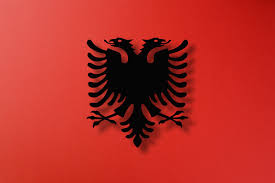
The double headed eagle on the Albanian flag, the Albanian Shqiponja means a lot to both me and my family. As my parents immigrated to the city, it was hard maintaining their Albanian tradition when they were trying so hard to fit into
“New Yorkian” culture. Yet even as they adapted to a new way of life, the Shqiponja remained a constant—stitched into old clothing, hanging quietly on the wall, or spoken about in stories that carried pieces of home across the ocean. It became more than just a symbol; it was a reminder of where we came from, a reminder of resilience, pride, and identity. Growing up, I came to the realization that it wasn’t really about choosing one world over the other, but more importantly learning how to carry and embrace both. The same way the two eagles face two directions, my family learned to look forward while never losing sight of the past.

Golden Chopsticks of the Tieh Family

My mother immigrated to California from Taiwan in 1976. With her were two pairs of golden chopsticks, a family heirloom with engravings in Archaic Chinese that had been passed down for generations. At eight years old, she learned that the American Dream was not in San Francisco. She moved to New York soon after, where her parents worked at a mail facility. Her father’s doctorate in law and her mother’s degree in teaching meant nothing if not in English. The golden chopsticks were shut away in a kitchen drawer. We use forks and knives in America.

In China, chopsticks made from precious metals (usually silver) symbolize wealth and safety. In ancient times, nobles were afraid of being poisoned. Silver and gold would become tainted and turn dark if in contact with certain poisons, so noble families ate with chopsticks made from those metals. The benefit was twofold: a parade of luxury and the calmness of safety. These utensils sometimes also had engravings on the side. My mother’s chopsticks said “Bring Auspiciousness.”

My mother worked towards this goal for years. As she grew older, she seemed every part the quintessential daughter. A division I athlete at Columbia University. Perfect—until she had to transfer. After all, how can an immigrant afford an Ivy League education on a mailman’s salary?

Yet, the engravings on the chopsticks did not rust; her goal stayed the same. She graduated from Baruch and stayed for her MBA, where she met my father, and then started at a top law firm. The chopsticks were polished for her wedding, sitting centerpiece at the dining table. The party was not just a celebration of love, but also for the hard work of her parents. She was their American Dream.

Gardening

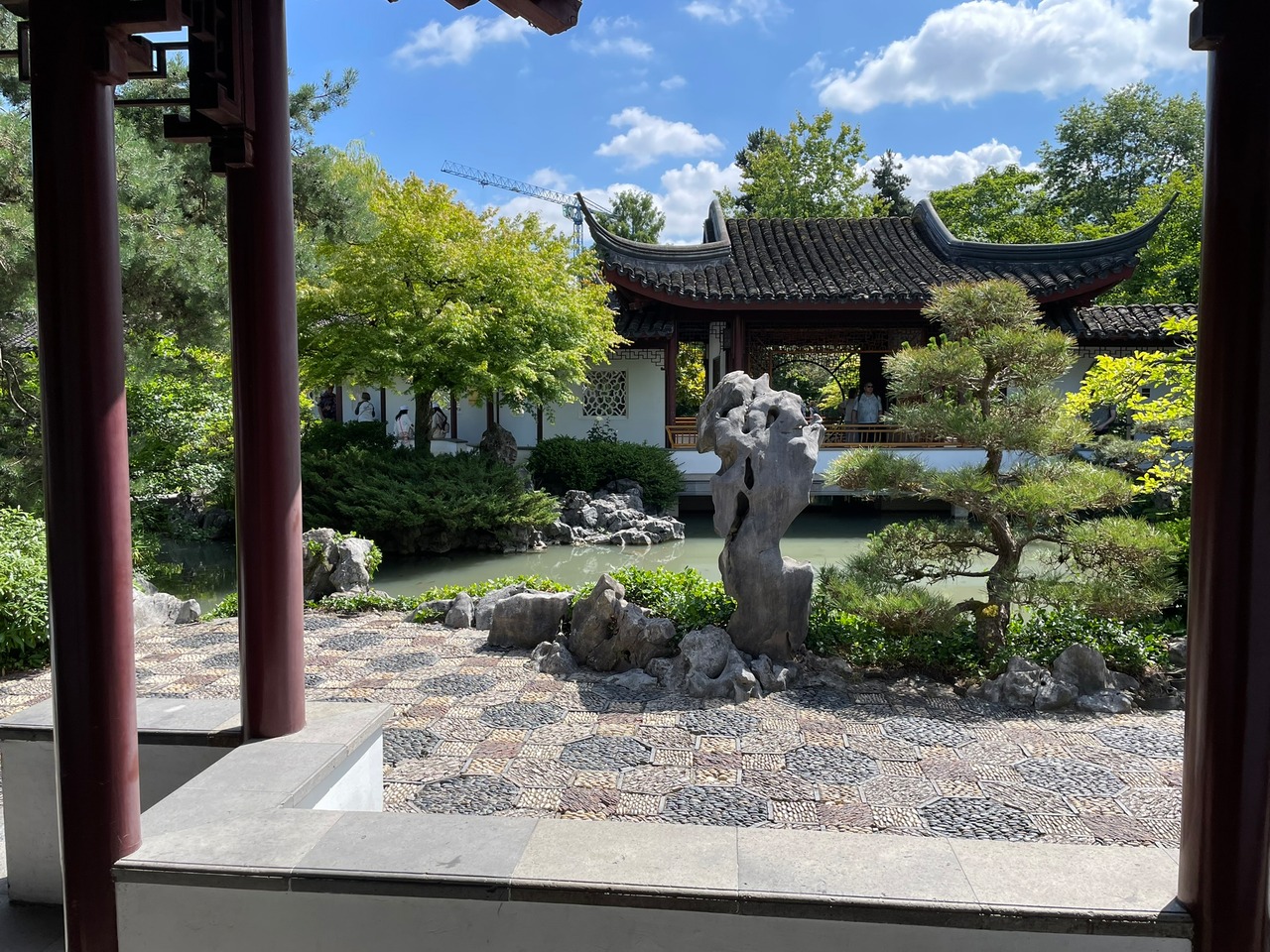
Gardening was never seen as just a hobby on my mother’s side of the family. It was an art, a skill, and a way of understanding feng shui. In direct translation, feng shui means “wind-water,” and it reflects the flow of energy within a home and family. My grandparents, like many people of their generation, believed that when plants grew healthy and strong, it was a sign that the family carried positive energy, along with wealth, prosperity, and good health. To them, a garden was never just decoration. It was a reflection of the people who cared for it and the life growing around it.

Some of my earliest memories are of visiting my grandparents and seeing their garden. I remember the bright leaves shining under the sun, the sharp tang of lemons in the air, and the Golden Nanmu tree that always stood out to me as something rare and almost sacred. Every time I returned, everything seemed bigger, stronger, and more alive. As a child, I used to wonder if my grandpa had some kind of secret potion that made everything grow so beautifully. But there was no secret. It was just patience, routine, and care. He watered each plant carefully, paid attention to every leaf, and nurtured the garden the way someone would care for a child. That was what made it so beautiful. It was not magic.

That is why gardening means so much more to me now. It is not just about plants. It is about what those plants represent. Each tree, fruit, and flower carries a history of where my family came from and what they believed in. My grandparents brought with them not only traditions, but also a way of seeing the world, one where care and growth were deeply connected. They believed that what you nurture will eventually flourish, whether that is a garden, a home, or a family.

My mother inherited that same skill and artistry from her parents and brought it with her to the United States in 2004. Even after moving to a new country, she held onto this part of home. Over time, as she became busy raising my sisters and me, gardening blended into daily life rather than standing apart from it. It became something quieter but still deeply present, woven into the way she cared for our family. My uncles also have gardens of their own, which makes this tradition feel even larger than one person. It stretches across generations. In many ways, my grandparents planted more than seeds when they came here. They planted values, habits, and traditions into foreign soil, trusting that future generations would continue to grow from them.

That is why gardening is my object. It is physical, but it is also symbolic. It represents patience, care, family history, and the idea that growth takes time. It connects me to my grandparents, to my mother, and to a cultural belief system that sees nature as deeply tied to the energy of a home. When I think about gardening, I do not just think about leaves or fruit. I think about inheritance. I think about what gets passed down without always being spoken. I think about how something as ordinary as watering a plant can hold history, love, and intention.

Gardening matters to me; it reflects growth that comes from being nurtured, protected, and given time. In that way, gardening tells the story of my family. It tells the story of how my grandparents carried their beliefs into a new land, how my mother continued them, and how I now see myself as part of that same living history. Gardening is not just a hobby. It is a tradition, a legacy, and a reflection of the roots that continue to ground me.

Proudly powered by WordPress | Theme: Baskerville 2 by Anders Noren.

Up ↑