Fruit Blender

The object I chose is a fruit blender that sits on the kitchen counter in my house. Every morning,
my mom uses it to make smoothies for our entire family before we start the day. The blender
itself is nothing special, it’s just a plastic pitcher attached to a VERY loud motor. I am convinced
she uses it to wake us all up in the morning as well. My mom fills it with frozen berries, bananas,
yogurt, and sometimes honey and blends everything together into a thick drink that we can
enjoy. My grandmother always tells us that it gets the bowels moving in the morning.
When my parents were growing up in Hungary, one of the dishes they often ate during the
summer was something called gyümölcsleves, which directly translates to “fruit soup.” It is a
chilled soup made from fruits like cherries, berries, or peaches, usually mixed with cream or
yogurt and served cold. It is super refreshing and made with ingredients that are easy to find
locally.
When my family immigrated, their routines changed. The fruit soup had to be substituted by
smoothies made in a blender because it was quicker and easier for mornings before work and
school. Even though the dish changed form, the idea stayed the same. The blender always
reminds me how traditions from one place can adapt to life in another while still preserving
where a family comes from.

Central Asian Manti

Manti are steamed dumplings that are common in many Asian cuisines including Uzbek, Turkish, and Afghan. In central Asia, they are usually made from thin dough filled with finely minced beef or lamb, onions, and spices. The dumplings are folded using special techniques and cooked in steamers. In different cultures, they have different wrapping techniques, but the basic idea is the same: A dumpling that brings people together around a table.

In my family, Manti represent a connection to my background. Preparing them takes time and is usually done together with my family. My sister makes the dough from scratch while my dad minces the meat and onions. Later, my mom rolls the dough, I fill them, and my dad wraps them. Because the process is slow and requires many hands, cooking Manti becomes a social activity where we talk, share stories, and spend time together. For me, Manti are more than just food. They remind me of where my family comes from and the traditions that have been passed down across generations even though we live in New York today.

Many immigrant families in the United States maintain traditions through food by making them with their families at home or opening restaurants. Dishes like Manti show how cultural identity can continue even after people move to new places, becoming part of the diverse food culture of cities like New York.

My Father’s Cross

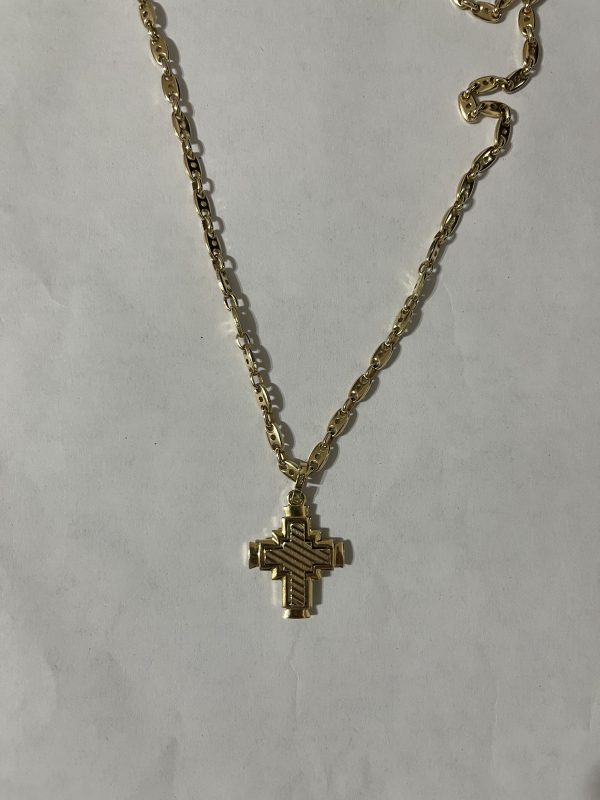
Growing up, there was an old box of family jewelry tucked away in our home that I never paid much attention to. One day I looked through it and discovered a cross. I asked my mom and she told me it belonged to my dad. I was surprised because I had never seen him wear it before.
I wear the cross every day now. My family is Greek and we follow the Greek Orthodox faith that is very important to us. Not just a religion, but a way of life woven into our culture and identity. My mom was born in Greece and when she came to New York she brought that faith with her, passing it down to our family. The cross represents sacrifice and resurrection, but this one also represents connection.
Wearing this cross makes me think about my dad. Every time I look at it I am reminded of who he is. Wearing something that once belonged to him feels very meaningful because every time I am in doubt, I look at this cross and think about what my dad would do. My dad may have put it down but I know I was meant to pick it up and make it part of my identity and my story.
Sometimes the most meaningful things can find you. You just have to be curious enough to go looking.

My Nintendo 3DS

This is my Nintendo 3DS! It’s really important to me since it was a birthday gift from my parents. I’ve had it since 2015 and I still use it today. I’ve taken really good care of it over the years so I’m really proud of it. I really like taking photos on 3DS, and because I’ve had it for a while I’ve accumulated a lot of meaningful photos of my family and friends over the years. Some of my favorite photos I have saved to my 3DS are photos of my family from Brazil. I rarely get to see them anymore so the photos I took with them when I was younger are really important to me. To me my 3DS is more than a gaming console but is also a device that can show the perspective of a child of a Brazilian immigrant being raised in New York City.

– Erika Rodrigues

Kibbe Hamdah

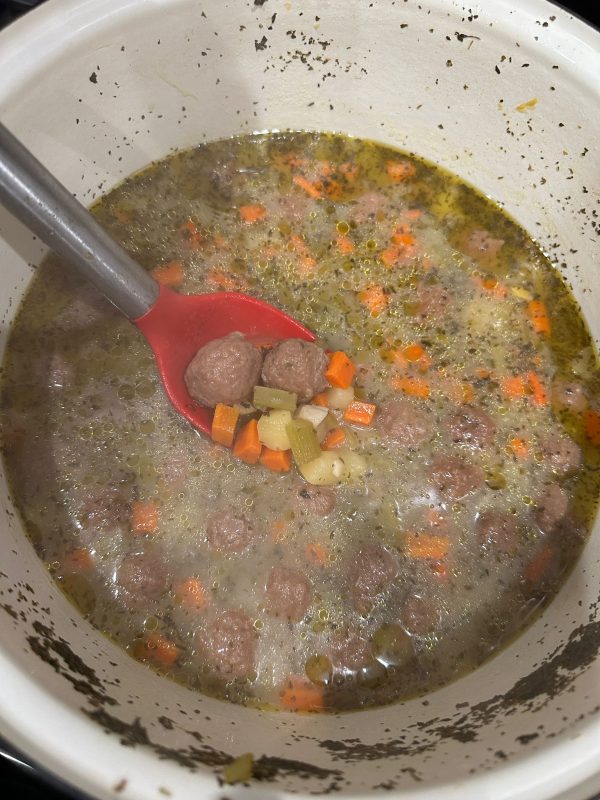
Kibbe Hamdah, also known as Hamid has been a staple dish on my dinner table almost every Friday night for as long as I can remember. It is a Syrian-Jewish dish that my grandma taught my mom to make. The base of the dish is a lemony soup with chopped carrots and celery. Inside the soup there are meatballs stuffed with another type of meat inside. It is often served with white rice. This dish is a staple in almost everyone’s home in my Syrian-Jewish community, and some people even add potatoes or tomato sauce to their soup. It is customary to eat Kibbe Hamdah on the Jewish Sabbath, which begins on Friday, 18 minutes after sunset. Kibbe Hamdah is not just a type of food, it also represents culture and religion. The traditional recipes in my community are very sacred, and they represent who we are. Eating Kibbe Hamdah with my family every week helps me recognize how far my community has come, and appreciate our rich history and culture. When I’m cooking for my family in the future, I know that Kibbe Hamdah will be a weekly staple in my house as well. My mother will pass down the recipe to me, and I will carry out the traditions of my community with pride and excitement. It is very special that even with everyone’s unique recipes, you will almost always find Kibbe Hamdah on their dinner table for the Jewish Sabbath and holidays.

The Cross That Traveled With Us

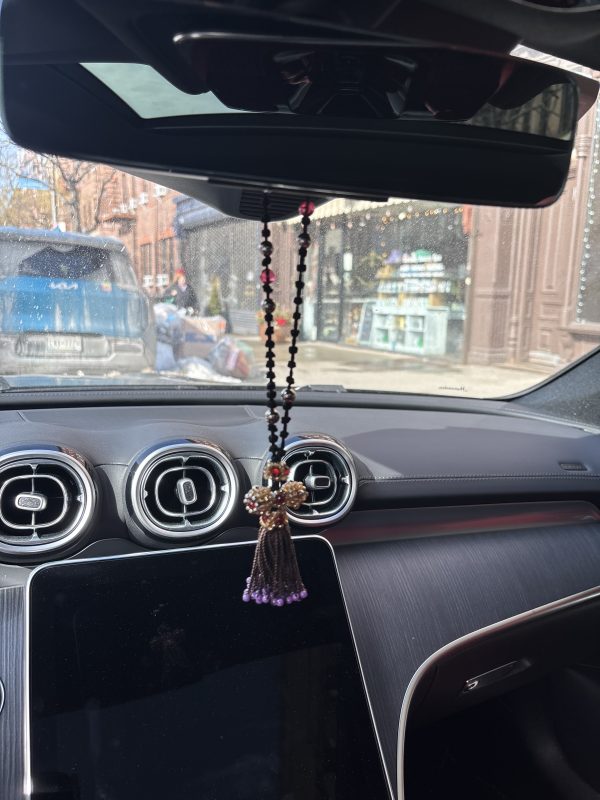
When my mom left Lithuania to start a new life in New York City, she didn’t bring many belongings with her. But she did bring one small object: a beaded cross that now hangs from the rearview mirror in our family’s car. To anyone else, it might look like a simple decoration, but to us it represents protection, memory, and the feeling of being watched over.
My mom grew up surrounded by Catholic and Orthodox traditions, and this cross was something familiar she could hold onto when everything else felt uncertain. When she first arrived in New York, she didn’t know the language, the streets, or the people. Hanging the cross in her car became a quiet ritual that made her feel safer. Over time, it became part of our family’s daily life. Every time we drive, it swings gently with the movement of the car, reminding us of where we come from and the journey that brought us here.
As I’ve gotten older, I’ve realized how much meaning is wrapped up in this small object. It carries my mom’s courage, her faith, and the hope she had when she left home. It also connects me to a larger story shared by many immigrant families who bring pieces of their past with them to feel grounded in a new place. This cross is more than an ornament, it is a symbol of protection, heritage, and the path my family took to build a life in America.

Red Lees Duck

Red lees duck always means the same thing in the family: everyone is home. Whenever this dish appears on the table, it’s a signal of a family gathering. It’s enjoyed by everyone while we catch up on life.
Red lees, known as hongzao in Chinese, is a product of fermenting glutinous rice with red yeast rice to make red rice wine. The bright red paste has a slight sweet, savory flavor that pairs super well with rice. It’s a common well loved condiment in many Fujianese households.
At every big holiday, my grandma would make this dish. It’s a dish that she learned from her older sister back in China, long before our family ever imagined life in America. Now it has become almost automatic: Chinese New Year, reunions, birthdays; there’s always a pot of red lees duck simmering on the stove.
Through this dish, I get a glimpse into the life that my grandma left behind. When she came to the U.S. in 2015, she didn’t bring much with her, but she brought her recipes and culture. Red lees duck was one of them. My grandma is the main reason why I’m so in touch with my culture despite us having little to no relatives in the U.S.

Uzbek Chapan

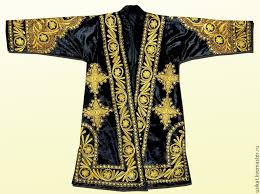
My object is a traditional Uzbek Chapan that has been in my family for almost one hundred
years. A Chapan looks like a long robe and people wear it as a top layer for warmth and
protection. It is made from cotton and covered with colorful patterns and detailed stitching. In
older Central Asian society, a man’s Chapan showed status. The more colorful and intricate it
looked, the more wealth and respect his family held. Today, people still wear chapans during
ceremonies and important celebrations. Wearing one during these events shows respect for
tradition and for family heritage.

I first learned about chapans during my first trip to Uzbekistan when I was twelve years old. After
returning home, I learned that my own family had one passed down through generations. The
men in my family wore it, most recently my grandfather and now it will pass down to me.
This Chapan matters to me because it connects me with my family’s past. Its patterns and
colors reflect the life my family lived in the old world before coming to America. When I look at it,
I think about my grandfather and the generations before him and learning about it helped me
feel more connected to my family history.

This object also tells a larger story. A Chapan shows family history and cultural identity in
Central Asian culture. Clothing like this represents respect, heritage, and social status. Objects
like this pass traditions from one generation to the next and keep family stories alive. My
Chapan also represents immigrant heritage in the United States and it shows how families keep
their traditions after moving across the world. Chapans have existed for centuries in Uzbekistan
and across Central Asia, connecting modern families to older societies and traditions.

Poncho

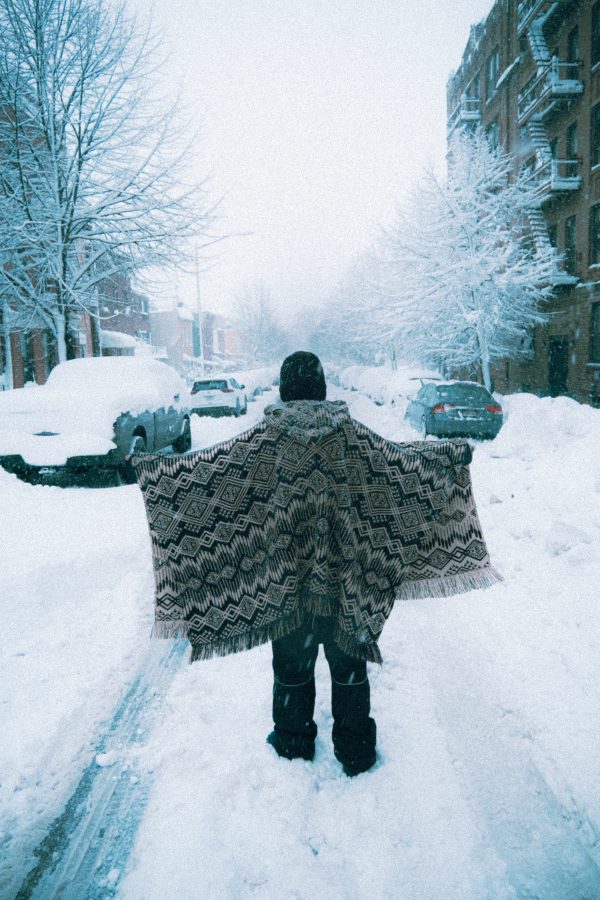
The object I picked of this story is named the poncho. The poncho is prominent in the countries
that reside in the Andes mountains; like from Venezuela all the way to the bottom tip of southern
America which is Argentina. In each country there are different renditions of it with some
prioritizing patterns and or colors etc. The main use of these garments is to protect oneself
against the harsh winds and cold weather of the regions near the Andes Mountains range, dating
back to B.C.E times were indigenous people lived across the large stretch of mountains. My
family and I each got our own ponchos, but I tend to be the one to use it the most. The poncho I
got in Chile, even though I am Ecuadorian marks an important part of my life. Before going to
Chile, I was at a low point of my life, and when my uncle told, me lets go meet some of my
family over there, I instantly said yes. Those 10 days were life changing; I never seen so many
different biomes and animals. My favorite thing to do over there was just staring towards at the
mountain through the car window, cramped in the car with my family. Although the poncho
signifies a changing point in my life, it also signifies my ancestral and family roots. As the only
out of my extended family to be born outside of Ecuador, I always felt like an outsider to my
culture and family, however when I put into my poncho, which is almost daily, I feel more
connected. A nice idea I thought of was the same way ponchos span across the many countries
that contain the Andes Mountains. No matter if we are in Ecuador, Chile, Colombia, and United
States whenever we put our ponchos we’re all connected as a family and to our roots.

Celebrating Christmas at Home and Across the Country

My family has always valued celebrating the holidays together. Every Christmas Eve, my whole family, including my cousins, aunts, uncles, in-laws, and even plus ones, come together and have a big dinner followed by dessert and games and presents. Every year, a different family hosts. It rotates between my house and my two aunt’s houses. We start from dinnertime till late after midnight. Everyone spends the day cooking, baking, or working, then we all hangout together at night. By the end of the night, people are dropping like flies and falling asleep on any couch in sight. This tradition may have only started a few years ago, but it has quickly become something I look forward to every year. It’s a way for everyone to come together and create special memories during the holidays, which can be when you need company the most.

Not only am I lucky enough to spend Christmas with my family in the United States, but I also get to spend it with my family in the Philippines. My parents immigrated from the Philippines when they were young, and slowly all my father’s side came to America too, but minus my mother, her family is all still in the Philippines. Shortly before we started this holiday tradition, one of my family members sent us a traditional, star-shaped Filipino Christmas lantern called a parol. The lantern symbolizes hope, faith, and the triumph of light. Ever since we received this gift, we put it up in the windows, turn it on, and let it light up the house. Having this lantern makes it feel like my family in the Philippines is celebrating with us. Whether it’s in my house or from across the country, I will always feel my whole family’s love during the holidays.

– HC

Family Necklace

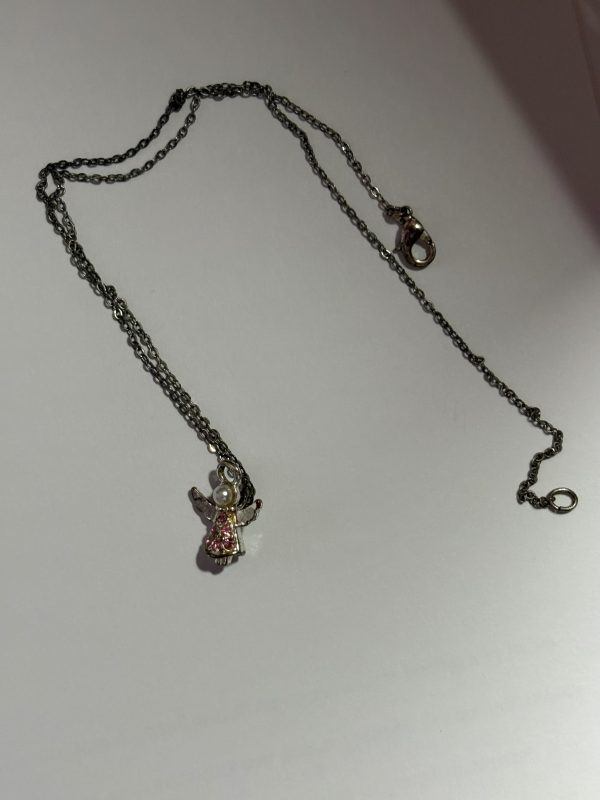
When I was born, my great-grandmother traveled from Argentina to New York City, where she gifted me and my twin sister necklaces. Each necklace had a silver charm of an angel, with a pearl for its head and gems lined up along its body. Similar to my sister and I, the necklaces were identical, except for one difference. The gems on my necklace were pink, while the gems on my sister’s necklace were blue. As my sister and I grew up, our favorite colors later became the same ones on each of our necklaces. Although the necklaces are such small objects, they always held a deeper meaning within our family. By gifting these necklaces to us, my great-grandmother created a connection between generations of our family. She passed away when I was young, leaving me with very faint memories of her, but my necklace still serves as a reminder of this connection and of my Argentinean heritage.

Hamsa’s Hand

July 12th, the day of my birth and unbeknownst to me was that I shared this special day
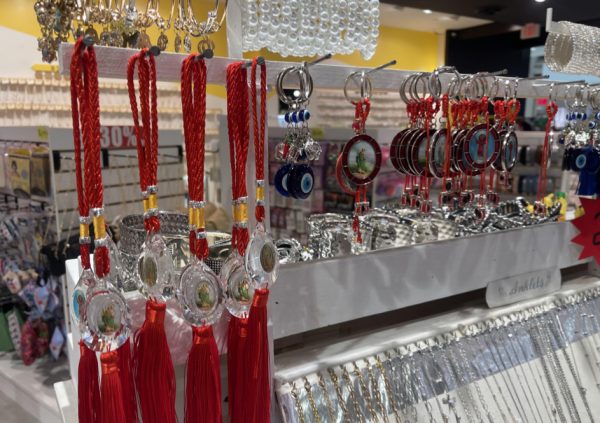
with my great grandmother, in my lifetime I will never have gotten to meet her. But I did know my abuela, and she is the one who tied the red evil eye anklet around my foot. This would have significant meaning because of my great grandmother, the eye looked to not only protect me from ill-intentions from outsiders but also honor the most divine protector I have in my lineage. The evil eye travels continents, cultures, and across time–for it to have reached me goes to show how strenuous its passage has been throughout generations. As someone who is mixed, only my mother’s side upholds these beliefs, and as do I, I find this creates a dynamic connection as to how I relate to each side of my blood. I share my mother’s side’s big eyes, button-nose, and shortened height. One of the few attributes that make me unique to them, I was raised in a family-oriented household, where we were all dependent on one another somehow and this made our bond stronger. Food, of course, had its own hold on our way of preserving our culture, having fusions of food but also ensuring we have traditional dishes that keep us all around a table together, laughing and having a good time. Above our heads, the air held our beliefs and faith after we prayed over what we were to eat and while we didn’t have much, looking around the table, it was more than enough. Whenever I miss this feeling of home, I run my fingers over the woven red string, the steel hamsa hand, and colorful beads woven into the anklet. Its mostly used to guard one’s spirit, and used as much as needed, it will break once it has fulfilled its duties. I have gone through many anklets because of this, I feel safeguarded when I wear it, and because the tradition began with my abuela to honor my great-grandmother I feel prideful of our shared spiritual values. Though if I could speak to my anklet, I would like to ask how far it truly comes from, did the indigenous groups of my heritage also shared this bracelet or had they been the ones to begin its ripple effect that circled all the way back to me. One must know that you can’t obtain an evil eye for yourself, it must be gifted as if reversed you also recede its purpose. It’ll teach you that instead of carrying the anxiety of how others think or wish of you, you must leave it to what can hold it, as humans–we can only do so much. So in a way by wearing the anklet you are also saying baja con dios.

From One Apartment to the Next

In the 1940s, my great-grandmother, Elza Weinman, and her family fled the Nazis in Belgium and eventually settled on the Upper West Side of New York City. They first lived at 145 West 86th Street, where many other Belgian Jewish families who had also escaped Europe began rebuilding their lives. A strong community quickly formed around shared history and culture. West 86th Street was an ideal place to start over because it connected residents all over Manhattan. The neighborhood was lively, filled with shops and businesses, and it was especially known for jewelers like her husband, Leon. While living there, she attended high school and soon after got married and moved just down the block to 98 Riverside Drive. When they were expecting their second child, they needed more space and moved again to 200 West 86th Street for the next 67 years. Those visits are the only memories I have of my great-grandmother, who passed away during my early childhood. I remember being ten years old when my mom would pick me up from school to go visit her. We took the elevator up to the 14th floor, and I remember this vividly because it was when I learned a 13th floor doesn’t exist. We spent the night playing games and watching the Giants vs. Redskins game. The following morning ended with the sweetest treat of all: Dunkin’ Donuts and the tightest, slightly painful, squeeze on the cheek. Although the apartment is gone now, its story lives on, because the journey that brought my great-grandmother to New York City eventually led to me growing up at 225 E 6th Street, a Jewish-built community as well.

“Habichuela con Dulce”

Have you ever eaten a dish that reminds you of your childhood? For me, it would be eating habichuela con dulce, a sweet bean dessert that reminds me of my ethnicity. It isn’t just a dish to eat; it represents the history, culture, and the strength it took to make it with a variety of infused cultures. This dish, originally from the Dominican Republic, is a part of who I am as a person. When I was younger, my mother always made habichuela con dulce during a specific time, which was Holy Week. The tradition that was introduced to me was that this dish had to specifically be eaten on Good Friday to give thanks for Jesus Christ sacrificing himself for us and also to bring blessings to the house. At first, I never believed in that tradition, but as I got older, I started to realize the true significance of this dish and also the happiness that it brings around. The specific recipe that my mom uses was passed down through generations, where she was taught by my great-grandmother. Every time this dish is made, it brings me great comfort because of the smell that enters my house, as well as joy because of the flavor. This dish often gathers my family, no matter what may be going on in their lives, because it’s tradition to eat together during Easter. It is a time to relax and enjoy the gift of life that is given to us.

Family Cookbook

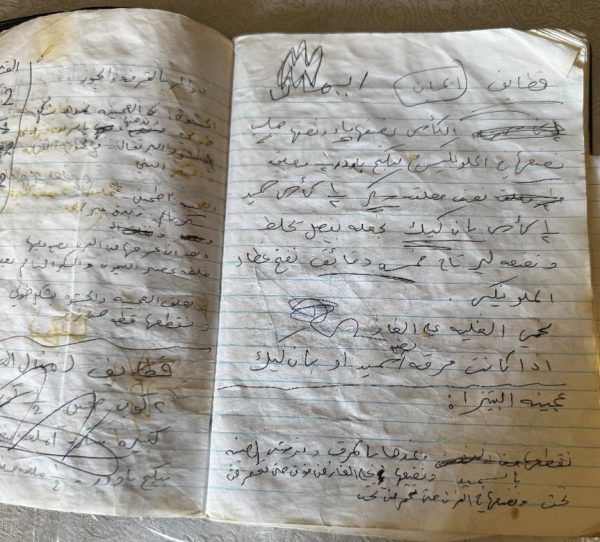
This is a photo of a page from a cookbook my mother has had all my life. The notebook is old and clearly well used, with wrinkled pages, faded ink, and small stains from ingredients that were probably spilled while cooking. My parents’ main language is Arabic, which makes sense for the recipes to be written in Arabic as well. Typically, Arabs don’t follow recipes. If you asked an Arab mother how to make a dish she would tell you, “Just add a little bit of this and all the spices you have in your cabinet” (safe to say Arab food is never under seasoned). But my mother made this cookbook specifically for desserts. She’s not much of a baker as it requires precise measurements, so to make it easier for herself she wrote the recipes down. If anyone can read Arabic, they can tell that this recipe isn’t exactly as specific as a recipe written in English, but it’s specific enough that any Arabic speaking person will understand it. This book is important because it carries the different desserts the represent the culture my parents left behind when they came to the United States from Palestine. It was a way for them to bring with them a piece of home where they started their new lives.

Threads of Light: From Cairo to New York

The object is a hand-size golden lantern that lights up with batteries. It has a handle at the top and a roof-like top, with a round base and two handles (mostly for decor) on the sides. The lantern was purchased by my mom in NYC. It sits on a medium-sized table within my house, mainly used for guests. Even though it simply looks like a fancy house decoration, it connects me with my culture and memories.

Growing up as an Egyptian, it was normal to see children before sunset running in crowded markets, pushing through adults while holding small lanterns of different shapes and sizes. They’d light up in different colors, not just golden yellow. Most of the time, the lanterns didn’t contain real candles. But they still felt cultural. Children would sing “Ramadan gaana,” and other different songs in anticipation of the month of Ramadan.

Because the small lantern signals Ramadan, it connects me to memories of fasting in Egypt on hot days, especially later in the day when I felt great for making it to the evening, knowing a large feast awaits my family.

This object fits into the broader story of New York City because New York City is a hub of immigrants, of many cultures uniting into one city. This makes New York so much different from other places in America. Being of an Egyptian background, I bring my perspective here, and even meet people from different countries who also celebrate Ramadan.

Gold Buddha

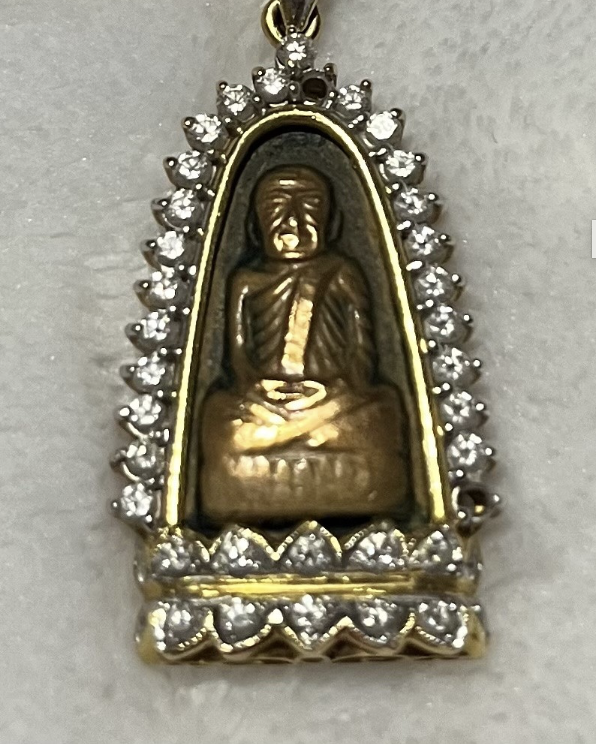
The object I have chosen is my gold and diamond Buddha necklace. It was custom-made in Thailand for me when I was a child. My mom’s side of the family is Thai, and I grew up practicing Buddhism in America. Although, until the age of 10, I went to a private Catholic School, I wore my necklace. Without realizing, it became a reminder of my family’s roots when I was surrounded in a culture around me that wasn’t mine. There’s a specific kind of pressure that comes with growing between two cultures. Do you assimilate to your environment, or stay true to your own beliefs? My Buddha necklace was something I prayed to in times of struggle, when I needed good luck, or when I needed guidance. The reality of never taking off this necklace reflected my family, my culture, my overall morals and character.

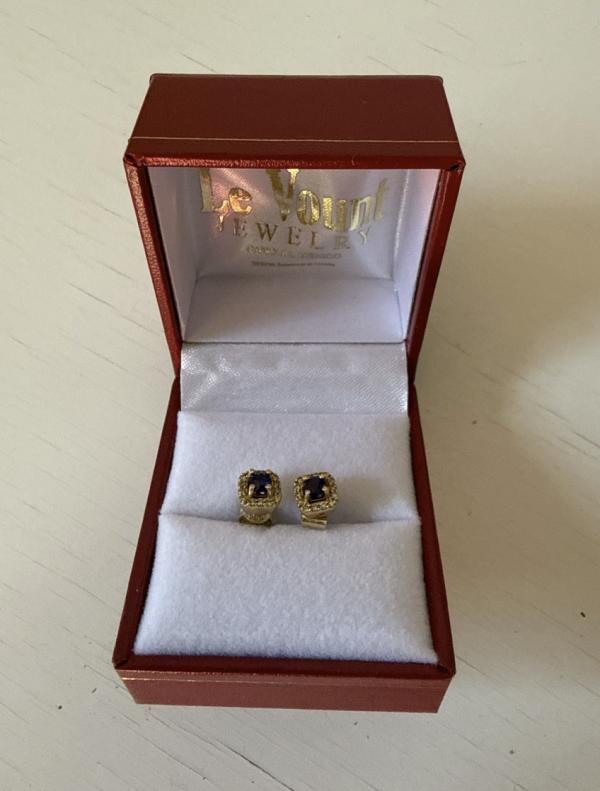
Canadian Gold Sapphire Earrings

On the last day of a trip to Mexico for my eighteenth birthday, my father told me to go
into a store and pick something out. There were two stores at the hotel: a souvenir shop and a
jewelry store. He meant the souvenir shop, but I misunderstood and walked into the jewelry store
instead. Inside, I found a pair of earrings I liked, but they were expensive, so I waited for my
father before deciding.
When he saw the price tag, I could tell they were more than he expected. Instead of
saying no, he suggested we go to dinner and come back later. At dinner he told me how proud he
was of me and how much he loved me. When we returned, the woman working there showed me
another pair she thought would look nice. As I kept looking, I noticed Canadian gold sapphire
earrings and instantly knew those were the ones I loved. But they were more expensive than the
first pair and the other pair combined, so I didn’t bother asking.
Even knowing that, my father bought all three.
Those sapphire earrings mean far more to me than jewelry. My parents immigrated to this
country with almost nothing. Everything they built came from sacrifice and hard work. When I
look at those earrings, I see how far my family has come and feel motivated to expand the
success my parents fought to create.

Photograph of Family Members in the Catskills, c. 1966

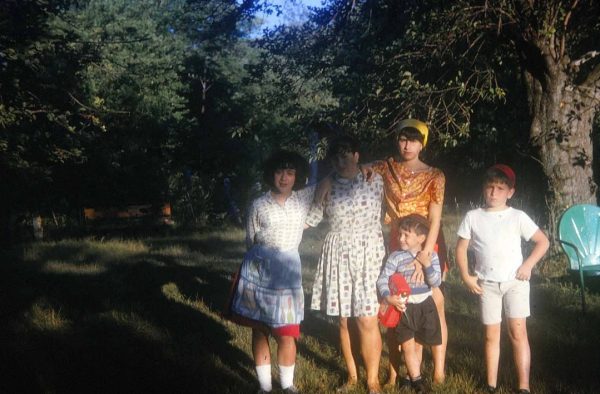
My object is a photograph of my grandmother and her siblings in the Catskills, taken in or around 1966. In the photograph, my grandmother is around 12 years old. My grandmother died from cancer when my father was a teenager, and thus I have never met her. She had eight children, and when her children had daughters, they named them after my grandmother. I often joke that I can know the birth order of my cousins based on what their names are, since if one of them has my grandmother’s name, I know for certain that she is the oldest daughter. Since my grandmother died long before I was born, I have very little tangible connections with her, especially since neither my father nor his siblings tend to speak much about who my grandmother was as a person. This photograph of her is one of the few objects I have that allow me to connect with my grandmother, and see her as a real person rather than as a character that occasionally appears in discussions with family members.

Proudly powered by WordPress | Theme: Baskerville 2 by Anders Noren.

Up ↑