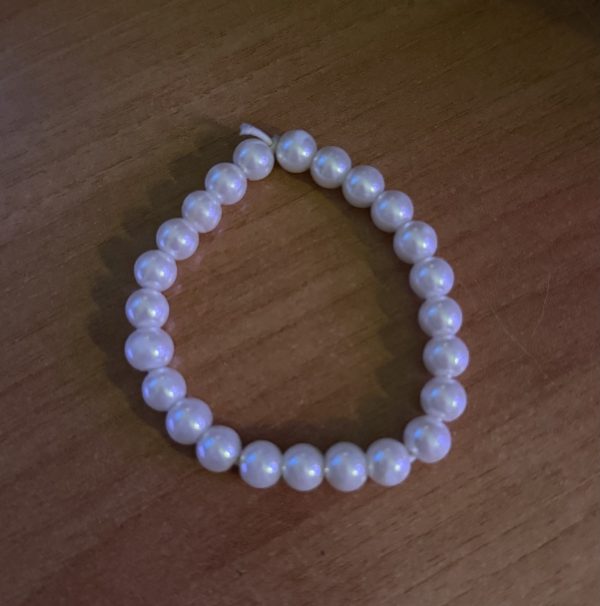
Throughout my life, asking questions about my family’s history within Asia has proved futile. My ancestors arrived in China from Korea multiple generations ago, yet fragments of the past were never passed down and instead were lost. However, during a visit to China in the summer of 2025, my paternal grandmother gifted me a tangible reminder of my family’s muddled history, a faux pearl bracelet. This bracelet, though cheap, has become a priceless symbol of connection. It carries the weight of my family’s migration from South Korea to China, and my maternal grandparents’ and parents’ eventual departure from their homes to live in the United States in the 2000s. My family chose to continue this pattern of migration, cultivating new and better lives for themselves, settling in the Asian-dominated community of Flushing, NYC. Having the privilege of living in the United States, I am constantly reminded of the sacrifices that had to be made for me to lead a more stable life. These reminders fostered a deep desire to situate my family’s unique journey within the broader history of Korean migration and displacement. I have come to understand that 20th-century mass migration from Korea was driven by survival and shaped by multiple instances of wartime and political instability. With this, my simple faux pearl bracelet has come to represent the struggles and resilience of countless Korean migrants, including my family.
Salwar Kameez
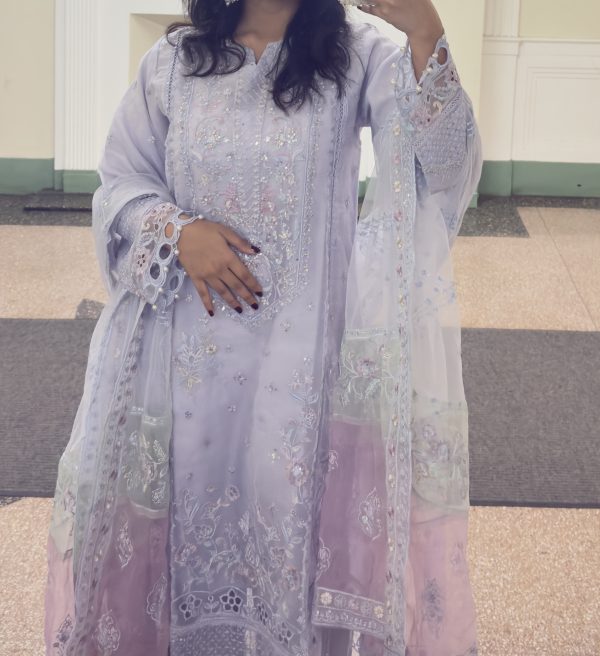
The object I chose is a lavender Bengali salwar kameez, detailed with soft pastel embroidery and paired with a light, flowing dupatta(scarf). I wore it for Eid-Ul-Fitr in 2026 in Queens, New York. At first glance, it is simply a traditional outfit, but to me, it carries a story shaped by memory, growth, and identity.Most of all, it brings nostalgia. The delicate patterns remind me of Eid mornings in Bangladesh when I used to get ready with my cousins, share laughter, and feel surrounded by family. Those moments feel distant now, yet this dress allows me to hold onto them.At the same time, wearing it in New York shows a different side of my identity. In a city where Muslim communities are visible and welcomed, I can celebrate Eid openly. It shows how different communities in Queens tend to have a positive attitude towards different religions. This balance between comfort and change defines my experience.What makes this outfit especially meaningful is that I bought it with my own money. As a child, I admired clothes like this but could not always afford them. Now, earning my own income reflects my transition into adulthood and independence. Although life in the United States is different, this salwar kameez keeps me connected to Bangladesh. It represents both who I was and who I am becoming, showing that identity can grow without being lost.
Uzbek Chapan
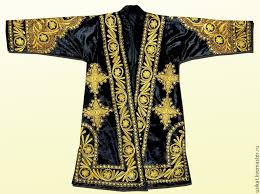
My object is a traditional Uzbek Chapan that has been in my family for almost one hundred
years. A Chapan looks like a long robe and people wear it as a top layer for warmth and
protection. It is made from cotton and covered with colorful patterns and detailed stitching. In
older Central Asian society, a man’s Chapan showed status. The more colorful and intricate it
looked, the more wealth and respect his family held. Today, people still wear chapans during
ceremonies and important celebrations. Wearing one during these events shows respect for
tradition and for family heritage.
I first learned about chapans during my first trip to Uzbekistan when I was twelve years old. After
returning home, I learned that my own family had one passed down through generations. The
men in my family wore it, most recently my grandfather and now it will pass down to me.
This Chapan matters to me because it connects me with my family’s past. Its patterns and
colors reflect the life my family lived in the old world before coming to America. When I look at it,
I think about my grandfather and the generations before him and learning about it helped me
feel more connected to my family history.
This object also tells a larger story. A Chapan shows family history and cultural identity in
Central Asian culture. Clothing like this represents respect, heritage, and social status. Objects
like this pass traditions from one generation to the next and keep family stories alive. My
Chapan also represents immigrant heritage in the United States and it shows how families keep
their traditions after moving across the world. Chapans have existed for centuries in Uzbekistan
and across Central Asia, connecting modern families to older societies and traditions.
Poncho
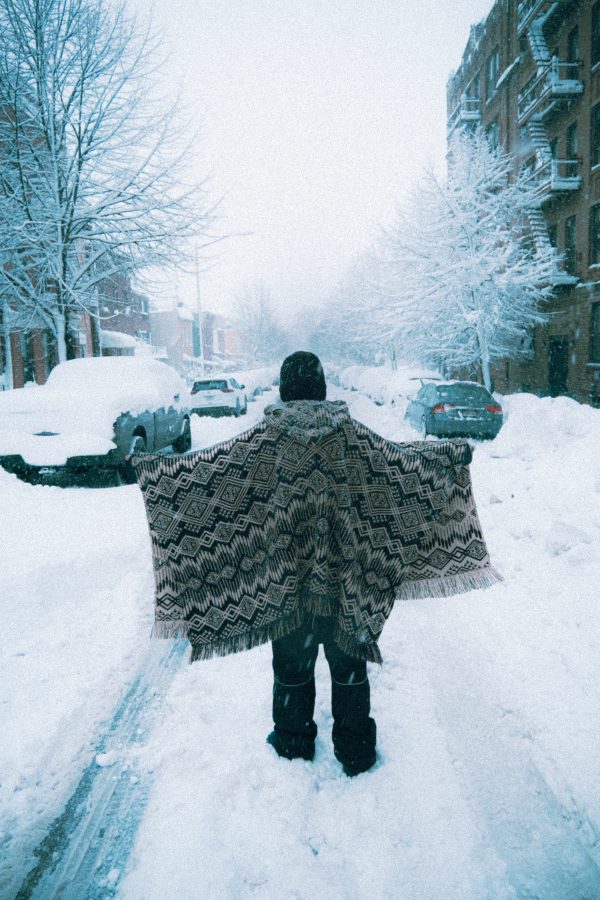
The object I picked of this story is named the poncho. The poncho is prominent in the countries
that reside in the Andes mountains; like from Venezuela all the way to the bottom tip of southern
America which is Argentina. In each country there are different renditions of it with some
prioritizing patterns and or colors etc. The main use of these garments is to protect oneself
against the harsh winds and cold weather of the regions near the Andes Mountains range, dating
back to B.C.E times were indigenous people lived across the large stretch of mountains. My
family and I each got our own ponchos, but I tend to be the one to use it the most. The poncho I
got in Chile, even though I am Ecuadorian marks an important part of my life. Before going to
Chile, I was at a low point of my life, and when my uncle told, me lets go meet some of my
family over there, I instantly said yes. Those 10 days were life changing; I never seen so many
different biomes and animals. My favorite thing to do over there was just staring towards at the
mountain through the car window, cramped in the car with my family. Although the poncho
signifies a changing point in my life, it also signifies my ancestral and family roots. As the only
out of my extended family to be born outside of Ecuador, I always felt like an outsider to my
culture and family, however when I put into my poncho, which is almost daily, I feel more
connected. A nice idea I thought of was the same way ponchos span across the many countries
that contain the Andes Mountains. No matter if we are in Ecuador, Chile, Colombia, and United
States whenever we put our ponchos we’re all connected as a family and to our roots.
Hamsa’s Hand
July 12th, the day of my birth and unbeknownst to me was that I shared this special day
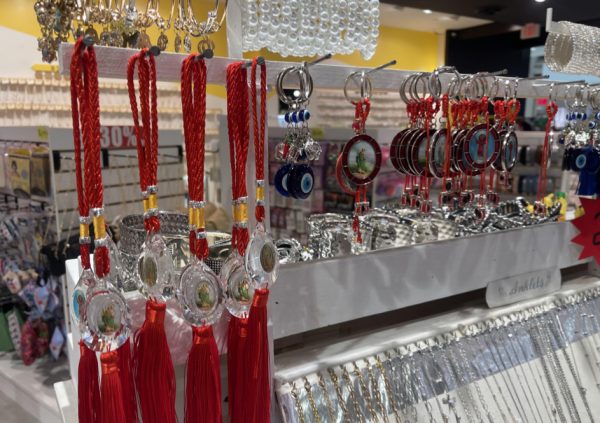
with my great grandmother, in my lifetime I will never have gotten to meet her. But I did know my abuela, and she is the one who tied the red evil eye anklet around my foot. This would have significant meaning because of my great grandmother, the eye looked to not only protect me from ill-intentions from outsiders but also honor the most divine protector I have in my lineage. The evil eye travels continents, cultures, and across time–for it to have reached me goes to show how strenuous its passage has been throughout generations. As someone who is mixed, only my mother’s side upholds these beliefs, and as do I, I find this creates a dynamic connection as to how I relate to each side of my blood. I share my mother’s side’s big eyes, button-nose, and shortened height. One of the few attributes that make me unique to them, I was raised in a family-oriented household, where we were all dependent on one another somehow and this made our bond stronger. Food, of course, had its own hold on our way of preserving our culture, having fusions of food but also ensuring we have traditional dishes that keep us all around a table together, laughing and having a good time. Above our heads, the air held our beliefs and faith after we prayed over what we were to eat and while we didn’t have much, looking around the table, it was more than enough. Whenever I miss this feeling of home, I run my fingers over the woven red string, the steel hamsa hand, and colorful beads woven into the anklet. Its mostly used to guard one’s spirit, and used as much as needed, it will break once it has fulfilled its duties. I have gone through many anklets because of this, I feel safeguarded when I wear it, and because the tradition began with my abuela to honor my great-grandmother I feel prideful of our shared spiritual values. Though if I could speak to my anklet, I would like to ask how far it truly comes from, did the indigenous groups of my heritage also shared this bracelet or had they been the ones to begin its ripple effect that circled all the way back to me. One must know that you can’t obtain an evil eye for yourself, it must be gifted as if reversed you also recede its purpose. It’ll teach you that instead of carrying the anxiety of how others think or wish of you, you must leave it to what can hold it, as humans–we can only do so much. So in a way by wearing the anklet you are also saying baja con dios.
More than a Scarf
“Come on, Baba. We’re almost late for the prayer at the masjid,” I exclaim.
He responded: “Give me a second. I’m going to get our ajraks.”
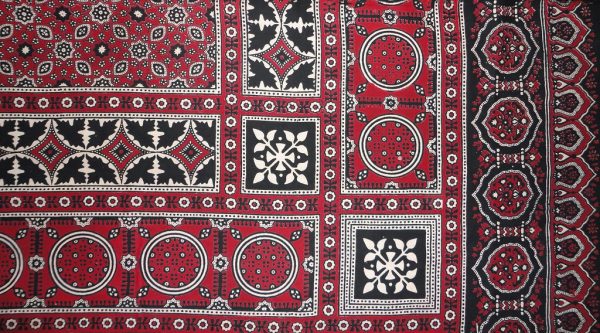
My father has always taken great pride in our culture as Pakistani-Americans living in what he called the greatest city of the world. Regardless if we have to run to the mosque to attend the Eid prayer on time, Baba emphasized the importance of carrying the ajrak with us whenever we go. The ajrak is a cultural scarf embroidered with all sorts of geometric and kaleidoscopic images. Yet to my dad, it was more than a mere piece of clothing worn around the neck. It was one of the only tangible links in his possession that connected him to his village in Sindh, Pakistan which was over 7,000 miles away.
His passion eventually became my own as I started wearing the ajrak for my high school’s cultural events and festivities. I was proud to display the culture that my parents carried with them from Pakistan and wanted to share it with others, telling them of the ajrak’s history and its familial significance. It was small moments like these that reaffirmed to me why my father dedicated himself to preserving his culture abroad. No matter where I am in the world, as long as I have the ajrak, I will always have a piece of my home with me.
Family History Through Jewelry
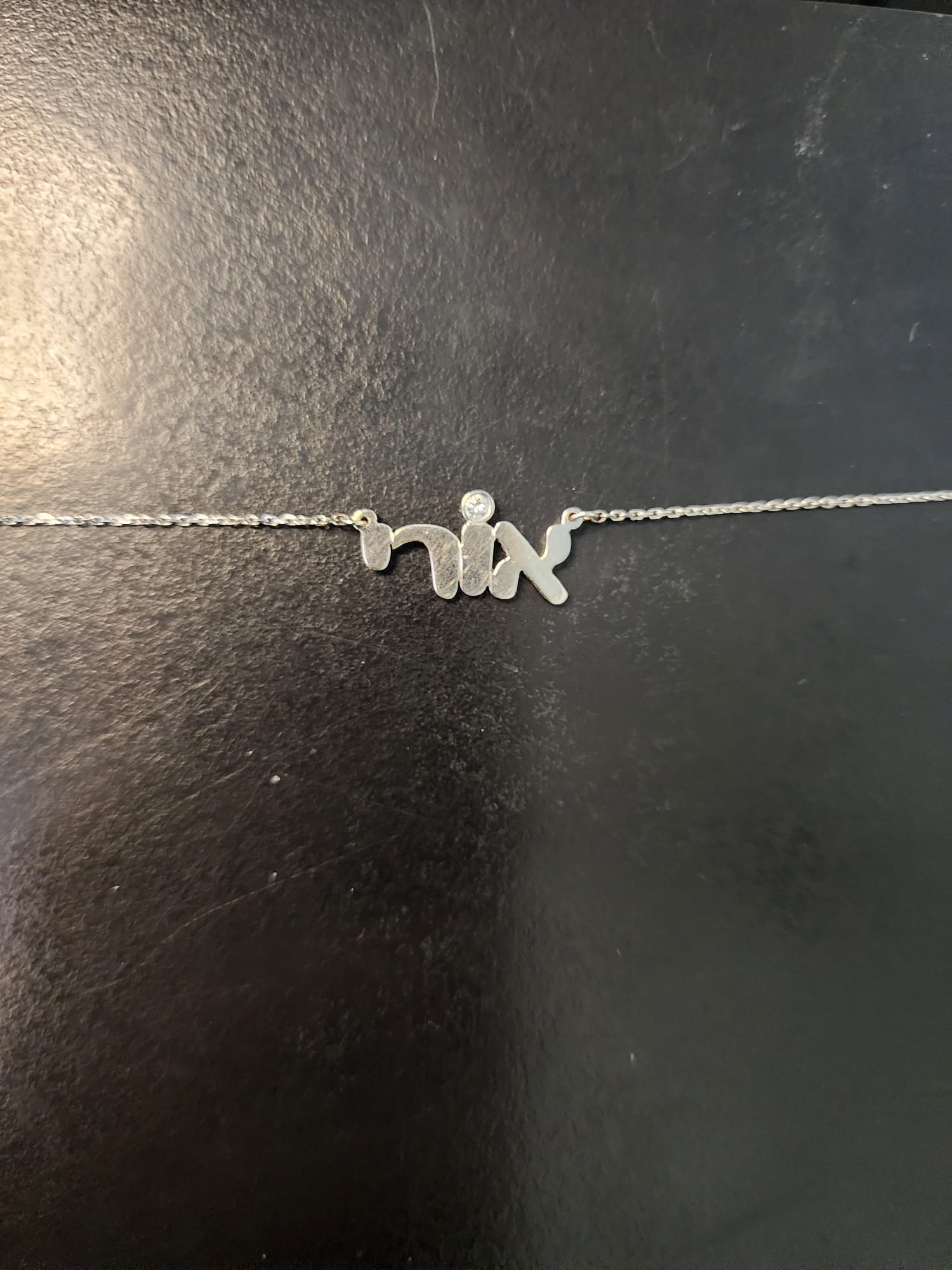
The necklace my grandmother gave me for my Bat Mitzvah is simple, a delicate chain with my name written in Hebrew, but it carries a history far greater than its size. My grandmother was born in Romania in 1957 into a Jewish family that had to hide who they were. Antisemitism shaped her childhood in ways I can barely imagine. Her family couldn’t tell their neighbors they were Jewish, and her father even worked as a mall Santa to avoid suspicion. Their identity had to be concealed for their safety. Everything changed when her family moved to Israel. There, for the first time, she could live openly, without fear. She threw herself into building a new life, learning Hebrew, excelling in school, and eventually becoming a nurse and later a professor at one of Israel’s top universities. Her story is one of resilience, reinvention, and pride in her identity. When she gave me this necklace, it became more than just a piece of jewelry. As an Israeli girl whose parents immigrated to the United States, I see my own story reflected in hers. The necklace represents the journey from hiding to pride, from fear to freedom. Wearing my name in Hebrew is something I never have to think twice about, but for my grandmother, that same expression of identity was once dangerous.
My Story Object
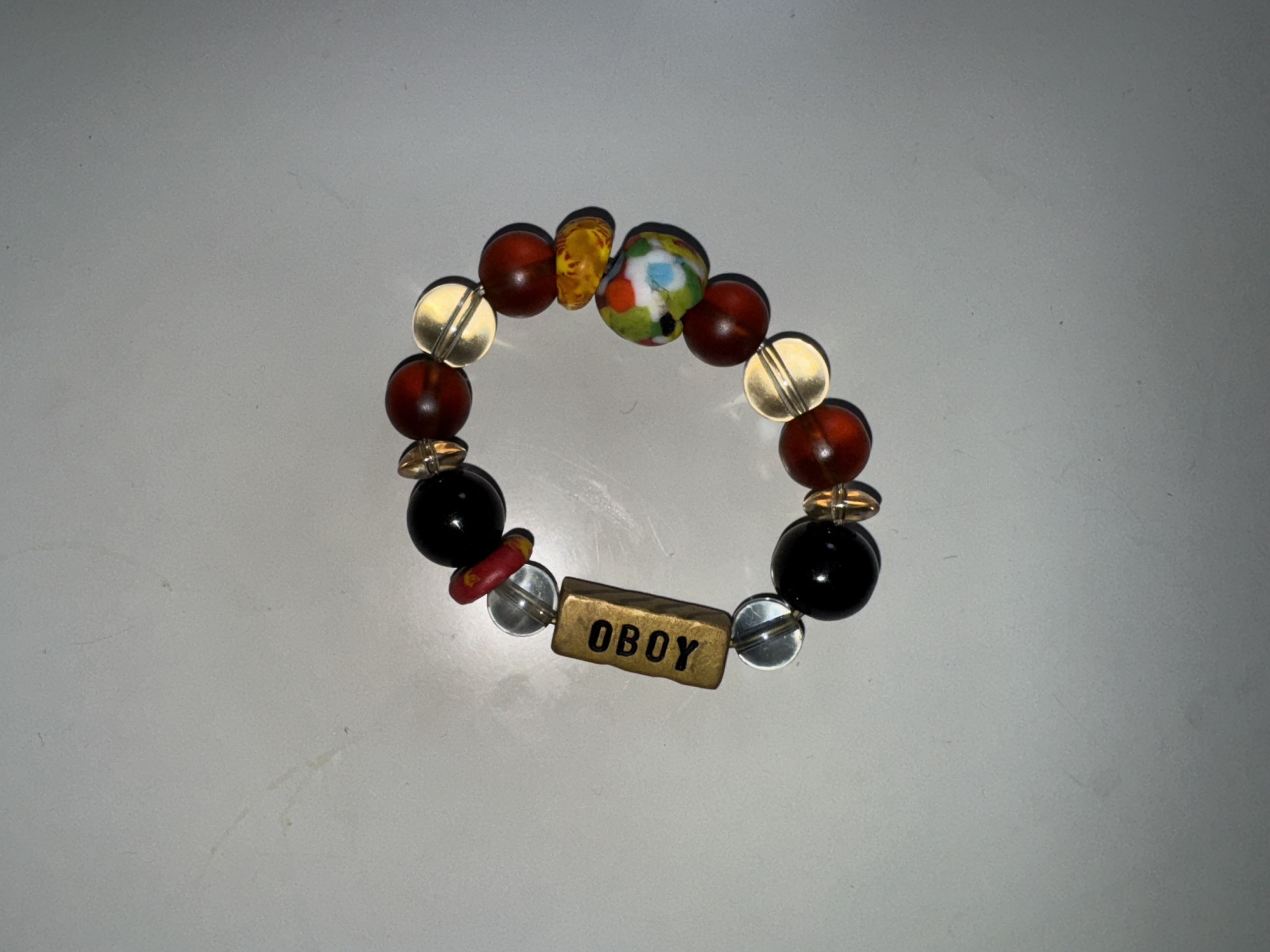
The Ghanaian bracelet is representative of the overall culture and tradition that is preserved within the country. From generations to generations, these bracelets preserve history, values, and the overall gist of what it means to be Ghanaian. From the pure black beads to multi-colored beads, these all have an individual meaning and all serve a collective purpose in conveying a cultural message. The black beads represent faith, strength, and wisdom while the colorful beads represent riches, prosperity, and royalty. These all serve a collective purpose for representing Ghanaian culture. When I first received this bracelet from my aunt who brought it from Ghana, I was indifferent to it. I viewed the bracelet as just another object that I could wear and was creatively distinct from my other accessories. However, as she began to discuss how she views Ghanaian culture and fashion it changed my indifference. I became ecstatic because I had something where I could represent my identity. The bracelet transcends just a fashion piece and is a statement of my heritage and history. It serves as a reminder that I am always representing Ghana and motivates me to put my best foot forward in everything that I do.