The Infinite Spiral Cord Between Each Other: The Landline Phone

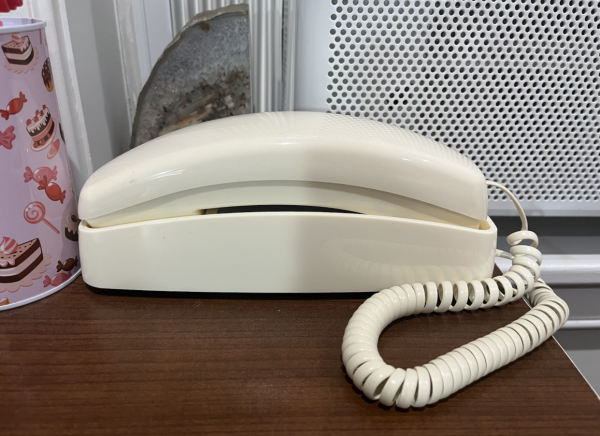
Despite the 3,000 mile distance between Ecuador and New York, my family managed to maintain connection through conversations over the landline phone. This particular phone is not something from my family. Instead, I bought it as a reminiscent artifact. Whether it was on the side table of my great-grandmother’s living room in Portoviejo or the travel agency in Kew Gardens where my mother would make international calls, the landline phone has been a significant part of my early life that I continue to honor and cherish. Its presence in our family was key in making sure we never forgot each other’s voices.

This means of communication began with my grandmother’s immigration to New York in the 1960s. My abuela Josefina came to New York decades ago and eventually brought her children, fostering the beginning of a new life for her family. However, the landline phone was not the main source of communication; the quality was poor and the price was expensive. This may have been especially difficult for Josefina, a new immigrant, as it could have been unreachable to make such calls without access to a landline phone at her place of residence. But with each occasional call, the long process ended. Josefina could finally hear the sounds of home.

Hearing the ring of the phone, I reflect on that same ring echoing through the past apartments of my grandmother, my aunts, and my parents as new residents of the bustling city. ¡Qué dulce!

Poncho

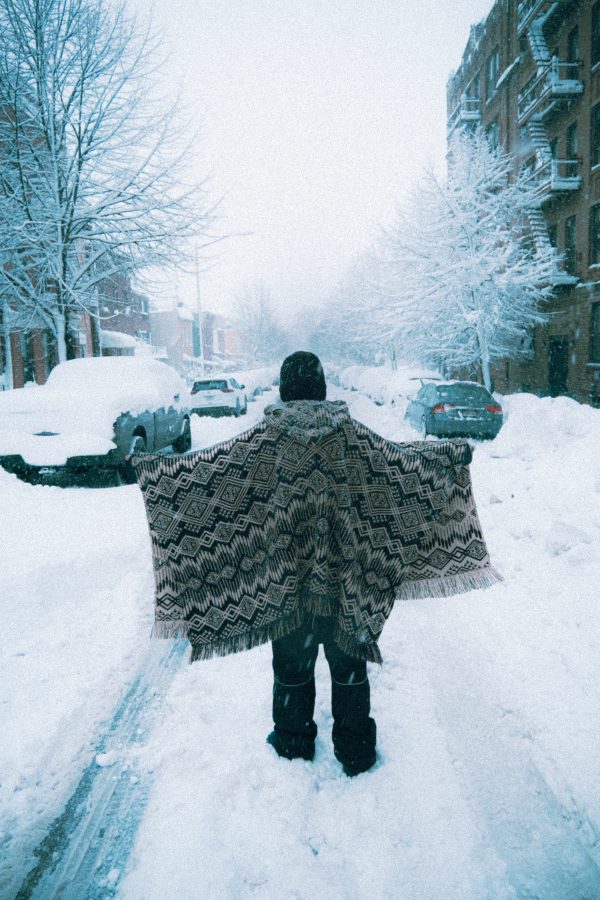
The object I picked of this story is named the poncho. The poncho is prominent in the countries
that reside in the Andes mountains; like from Venezuela all the way to the bottom tip of southern
America which is Argentina. In each country there are different renditions of it with some
prioritizing patterns and or colors etc. The main use of these garments is to protect oneself
against the harsh winds and cold weather of the regions near the Andes Mountains range, dating
back to B.C.E times were indigenous people lived across the large stretch of mountains. My
family and I each got our own ponchos, but I tend to be the one to use it the most. The poncho I
got in Chile, even though I am Ecuadorian marks an important part of my life. Before going to
Chile, I was at a low point of my life, and when my uncle told, me lets go meet some of my
family over there, I instantly said yes. Those 10 days were life changing; I never seen so many
different biomes and animals. My favorite thing to do over there was just staring towards at the
mountain through the car window, cramped in the car with my family. Although the poncho
signifies a changing point in my life, it also signifies my ancestral and family roots. As the only
out of my extended family to be born outside of Ecuador, I always felt like an outsider to my
culture and family, however when I put into my poncho, which is almost daily, I feel more
connected. A nice idea I thought of was the same way ponchos span across the many countries
that contain the Andes Mountains. No matter if we are in Ecuador, Chile, Colombia, and United
States whenever we put our ponchos we’re all connected as a family and to our roots.

Hamsa’s Hand

July 12th, the day of my birth and unbeknownst to me was that I shared this special day
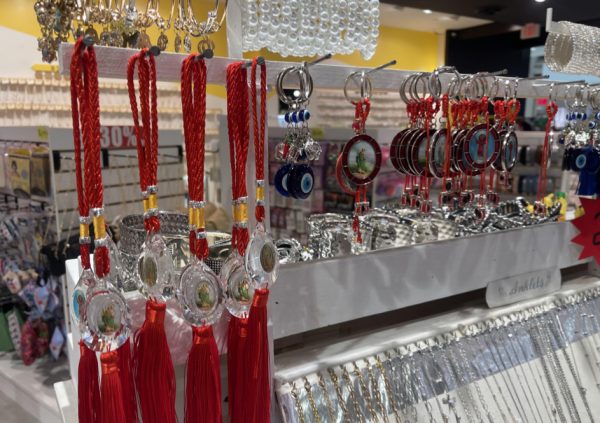
with my great grandmother, in my lifetime I will never have gotten to meet her. But I did know my abuela, and she is the one who tied the red evil eye anklet around my foot. This would have significant meaning because of my great grandmother, the eye looked to not only protect me from ill-intentions from outsiders but also honor the most divine protector I have in my lineage. The evil eye travels continents, cultures, and across time–for it to have reached me goes to show how strenuous its passage has been throughout generations. As someone who is mixed, only my mother’s side upholds these beliefs, and as do I, I find this creates a dynamic connection as to how I relate to each side of my blood. I share my mother’s side’s big eyes, button-nose, and shortened height. One of the few attributes that make me unique to them, I was raised in a family-oriented household, where we were all dependent on one another somehow and this made our bond stronger. Food, of course, had its own hold on our way of preserving our culture, having fusions of food but also ensuring we have traditional dishes that keep us all around a table together, laughing and having a good time. Above our heads, the air held our beliefs and faith after we prayed over what we were to eat and while we didn’t have much, looking around the table, it was more than enough. Whenever I miss this feeling of home, I run my fingers over the woven red string, the steel hamsa hand, and colorful beads woven into the anklet. Its mostly used to guard one’s spirit, and used as much as needed, it will break once it has fulfilled its duties. I have gone through many anklets because of this, I feel safeguarded when I wear it, and because the tradition began with my abuela to honor my great-grandmother I feel prideful of our shared spiritual values. Though if I could speak to my anklet, I would like to ask how far it truly comes from, did the indigenous groups of my heritage also shared this bracelet or had they been the ones to begin its ripple effect that circled all the way back to me. One must know that you can’t obtain an evil eye for yourself, it must be gifted as if reversed you also recede its purpose. It’ll teach you that instead of carrying the anxiety of how others think or wish of you, you must leave it to what can hold it, as humans–we can only do so much. So in a way by wearing the anklet you are also saying baja con dios.

“Habichuela con Dulce”

Have you ever eaten a dish that reminds you of your childhood? For me, it would be eating habichuela con dulce, a sweet bean dessert that reminds me of my ethnicity. It isn’t just a dish to eat; it represents the history, culture, and the strength it took to make it with a variety of infused cultures. This dish, originally from the Dominican Republic, is a part of who I am as a person. When I was younger, my mother always made habichuela con dulce during a specific time, which was Holy Week. The tradition that was introduced to me was that this dish had to specifically be eaten on Good Friday to give thanks for Jesus Christ sacrificing himself for us and also to bring blessings to the house. At first, I never believed in that tradition, but as I got older, I started to realize the true significance of this dish and also the happiness that it brings around. The specific recipe that my mom uses was passed down through generations, where she was taught by my great-grandmother. Every time this dish is made, it brings me great comfort because of the smell that enters my house, as well as joy because of the flavor. This dish often gathers my family, no matter what may be going on in their lives, because it’s tradition to eat together during Easter. It is a time to relax and enjoy the gift of life that is given to us.

Double-headed Eagle

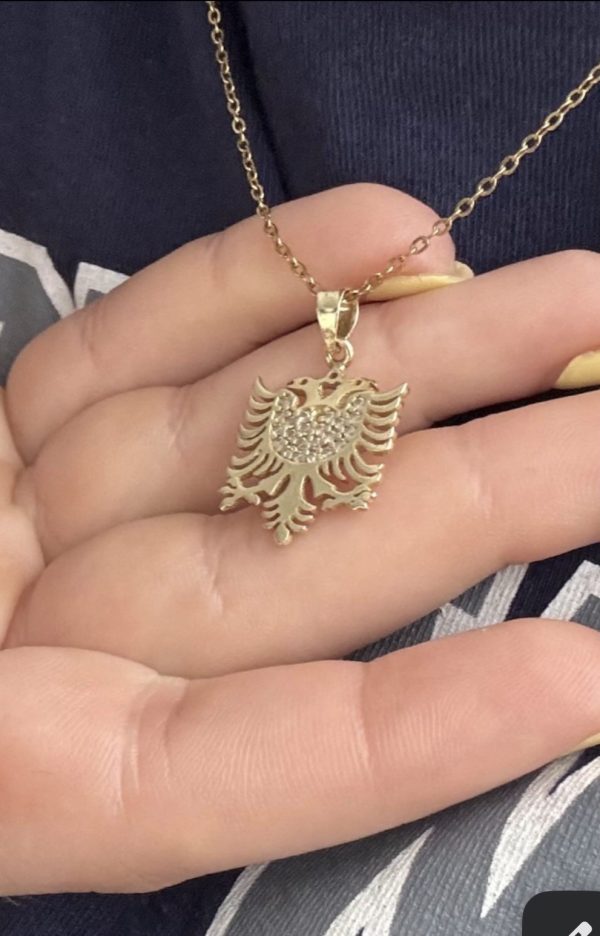
A single piece of jewelry bears the weight of identity, family sacrifice, and cultural survival across generations. My pendant is a small gold necklace featuring a gold double-headed eagle. Two heads are facing outward on a single body, mirroring the Albanian flag. As a first-generation Albanian-American, I did not grasp its significance until my mother gave it to me during my sophomore year of high school, a time when I was searching for who I was and where I came from. The two heads represent the unity of Albania’s two groups, the Gheg and the Tosk, and the nation’s position between the East and West. Under communism, the government forbade citizens from expressing national identity, yet the eagle was worn close to the heart, because identity cannot be legislated away.

My own parents were among the Albanians who left after communism fell. My father served in the military before boarding a boat to New York, where he rebuilt his life working in factories and pizza shops. My mother followed family members by plane, carrying Albania with her while forging something new in America. Together they labored to provide for my siblings and I. This necklace ties me to a country I did not experience firsthand, while enabling me to carry Albania’s history and my family’s story into my own American life. I now use this as a reminder to keep on working hard (just like my parents did) at the things that I want in life.

Family History Through Jewelry

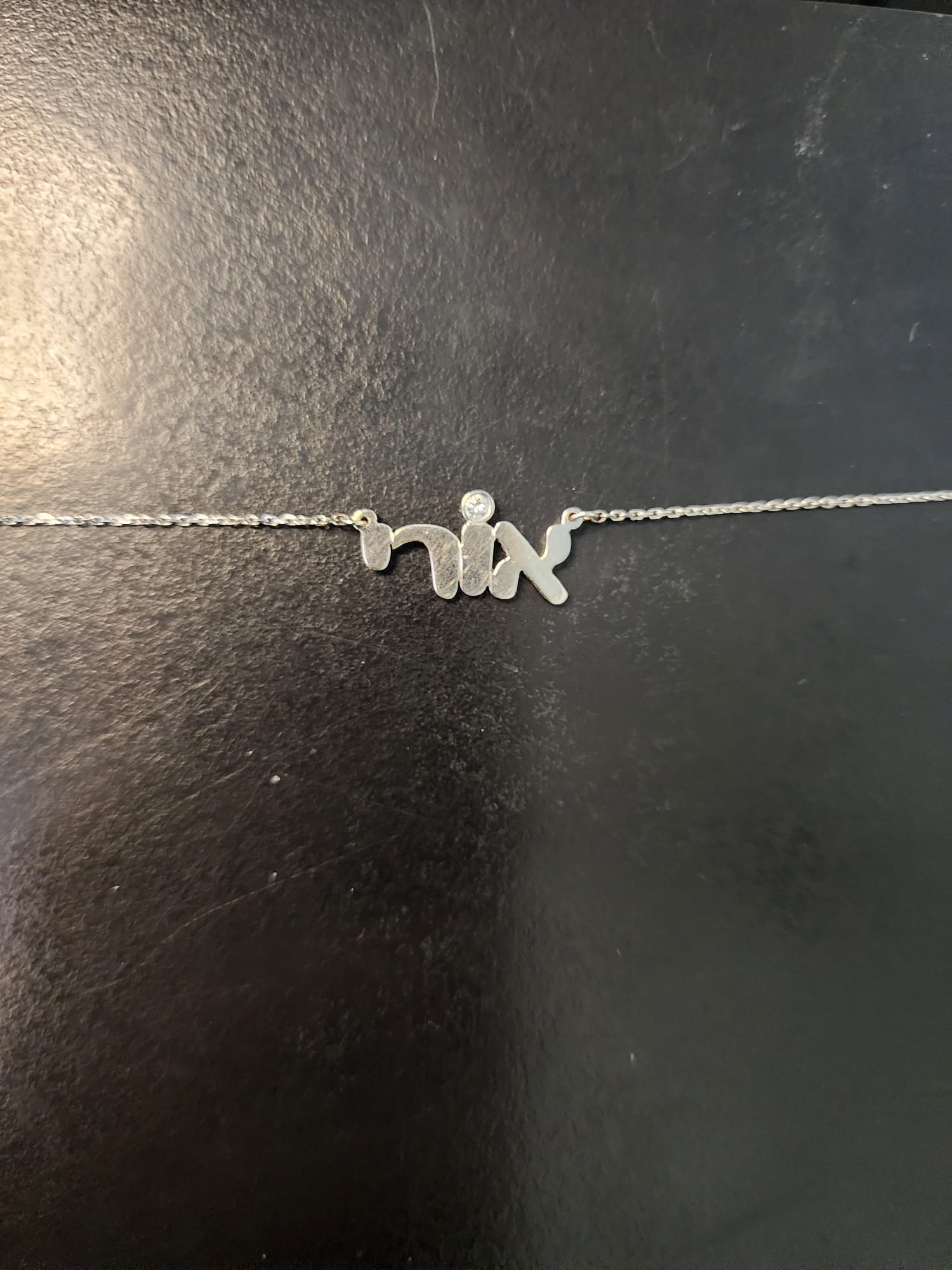
The necklace my grandmother gave me for my Bat Mitzvah is simple, a delicate chain with my name written in Hebrew, but it carries a history far greater than its size. My grandmother was born in Romania in 1957 into a Jewish family that had to hide who they were. Antisemitism shaped her childhood in ways I can barely imagine. Her family couldn’t tell their neighbors they were Jewish, and her father even worked as a mall Santa to avoid suspicion. Their identity had to be concealed for their safety. Everything changed when her family moved to Israel. There, for the first time, she could live openly, without fear. She threw herself into building a new life, learning Hebrew, excelling in school, and eventually becoming a nurse and later a professor at one of Israel’s top universities. Her story is one of resilience, reinvention, and pride in her identity. When she gave me this necklace, it became more than just a piece of jewelry. As an Israeli girl whose parents immigrated to the United States, I see my own story reflected in hers. The necklace represents the journey from hiding to pride, from fear to freedom. Wearing my name in Hebrew is something I never have to think twice about, but for my grandmother, that same expression of identity was once dangerous.

Proudly powered by WordPress | Theme: Baskerville 2 by Anders Noren.

Up ↑