Great Grandmother’s Cast Iron Skillet

The cast iron skillet has a long history of migration. The cast iron has its origins in China as early as the 5th century B.C.E. and only began to be imported to Europe in the 14th century C.E. on the trade networks of the Silk Road. During the industrial revolution in Europe and the United States from the 18th and 19th centuries C.E., cast iron cookware became a relatively cheap and incredibly sustainable way to feed families. For many enslaved African American domestic cooks or kitchen laborers, the cast iron skillet became a tool of both oppression and survival used daily. During the Great Migration, these durable appliances were one of the few items that these families could bring with them and impart onto their descendants.

I started my cooking journey in 2023 in my junior year of high school with a longer history of baking stretching back to middle school. Since my first semester of classes at City College last summer my cooking skills have been developing rapidly because I began cooking lunch for myself as often as I could. I feel confident with the oven, stovetop pots, instant pressure pot, and toaster oven we have but the one tool I feel disquieted to even begin using is our cast iron skillets. My family has few heirlooms in our apartment, and our one inherited cast iron skillet is perhaps our most cherished. One of the skillets belonged to my father’s grandmother, and where she got it I don’t know. She was born in 1920 in Maryland and went on to move to West Virginia and raise six of her own children and helped bring up my father and his sister there. Their cousins would also frequent the house growing up, and she often fed up to seven children off of soul food from the two cast iron skillets she had – the one I have today and another deep-dished skillet that’s still in West Virginia. As an African American family growing up in a 96% white state, some of the memories that still bring the most joy in the people she raised and loved is the food she cooked in those skillets in the challenging times of Jim Crow civil rights struggles that they all endured.
When my father traveled from New York back to West Virginia to attend her funeral in 2002, the only thing he physically took back with him was one of her cast iron skillets.
Today her cast iron skillet rests proudly on our stovetop, too emotionally significant to be pushed into the oven with our other pots and trays. My father’s grandmother handled her two cast iron skillets with great care and love for years of her life, and I don’t even know how to season or clean them. My apprehension to use her skillet is out of respect for all she’s done and fear of underwhelming or disappointing her legacy. But I suppose the first step in treating her skillet properly is to practice upkeep and preservation of it.
Chai Strainer

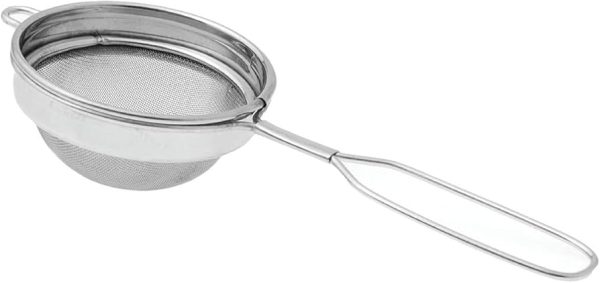
From a small village in India to our home in New York, my family’s chai making tradition tells a story of heritage, migration, and cultural influence. This drink originated in India, where it was consumed for thousands of years as a spiced tea known as “Masala Chai.” Blending traditional black tea with spices such as cardamom, cinnamon, ginger, and cloves, mixed with milk and a sweetener. It became widely popular during British colonial rule when tea production expanded, and Indians adapted it with their own flavors. Later, it became popular in the United States as “Chai Tea”, translating to “Tea Tea”.
In my household, my parents and grandparents make chai at all times of the day. It’s their comfort drink, made for one another with care and for guests who enter their home. Representing hospitality and togetherness. When my grandparents emigrated from Kerala, India, in 1976, they brought with them several sets of strainers from their local appliance store. They firmly believe these are the best strainers and we can’t use any other type. After moving to New York, my family continues to make chai the same way, preserving every detail of the tradition without changing a single thing. My family’s chai, which started as a meaningful tradition, grew into something widely appreciated today in the United States. This illustrates how immigration continuously enriches and reshapes American identity.

A Vietnamese Family’s Hotpot

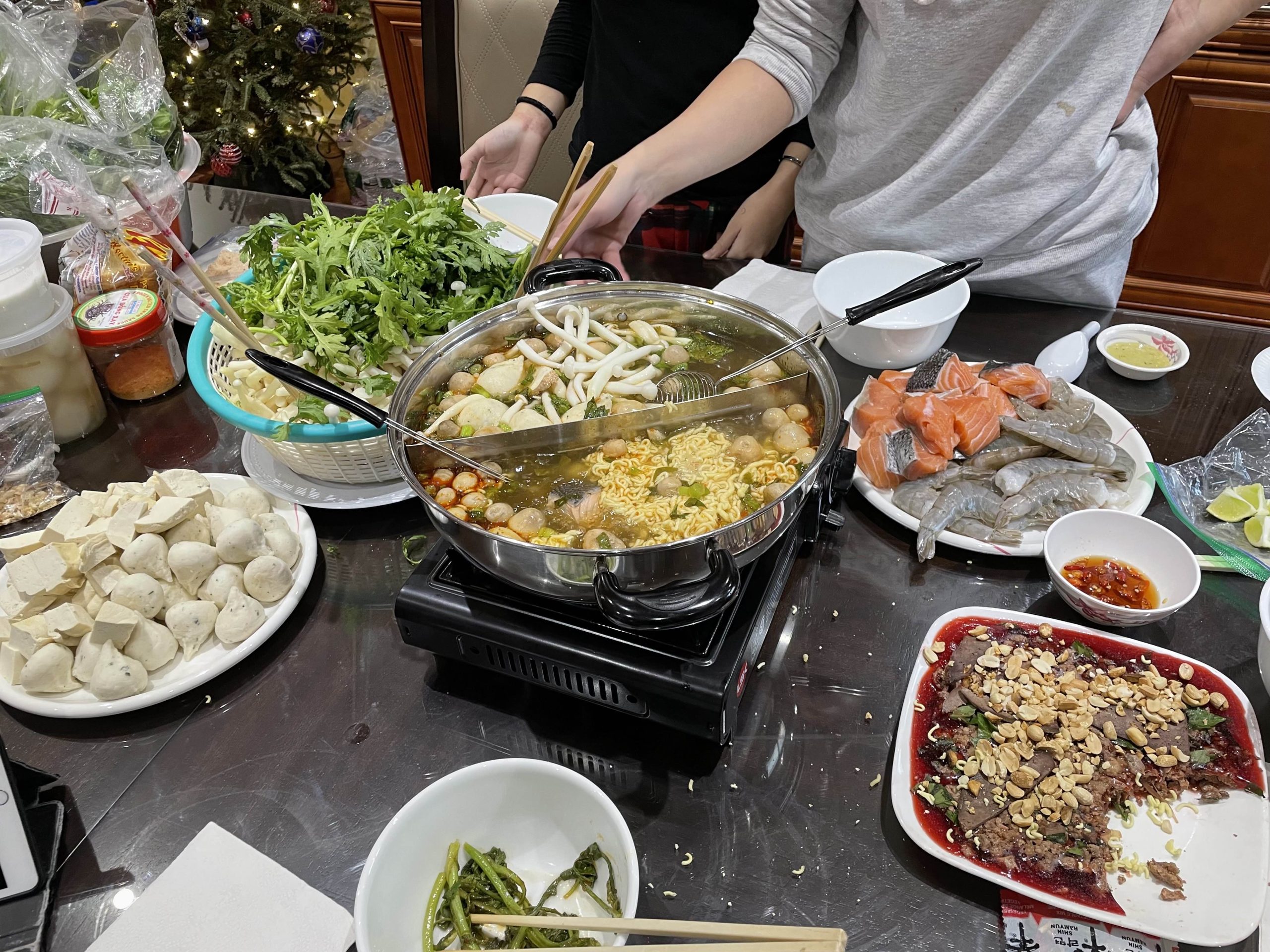
My family doesn’t have many grand objects from our Vietnamese heritage. And of those we do own, I don’t have much personal attachment to them. However, something that I’ve grown up with that I do adore is the Hotpot we always use for big dinners. I don’t know when we got it, all I know is that this pot has been in our family for as long as I can remember. Whenever we have a large group of people, usually family from out of state, we always use this for dinner. This picture is actually from Christmas dinner 2024.

The reason this pot means so much to me specifically is because of how many memories of mine revolve around this piece of cookware. Hotpot always leads to lighthearted conversations, a delicious meal, and patiently waiting for our food to finish cooking. The food each person chooses to cook and eat always reflects who they are. I remember that this specific night was when I tried fish roe dumplings for the first time and fell in love. In fact, part of the reason I’m in college is because of this pot as I actually wrote my college essay on it.

Whenever I go into storage to grab the pot, every memory of the fun and laughter it’s brought to my family comes flooding back. It may not be as glamorous as a piece of jewelry or as grandiose as a family heirloom, but our Hotpot has brought my family a sense of joy that just can’t be recreated.

Bánh bèo & Bánh bột lọc

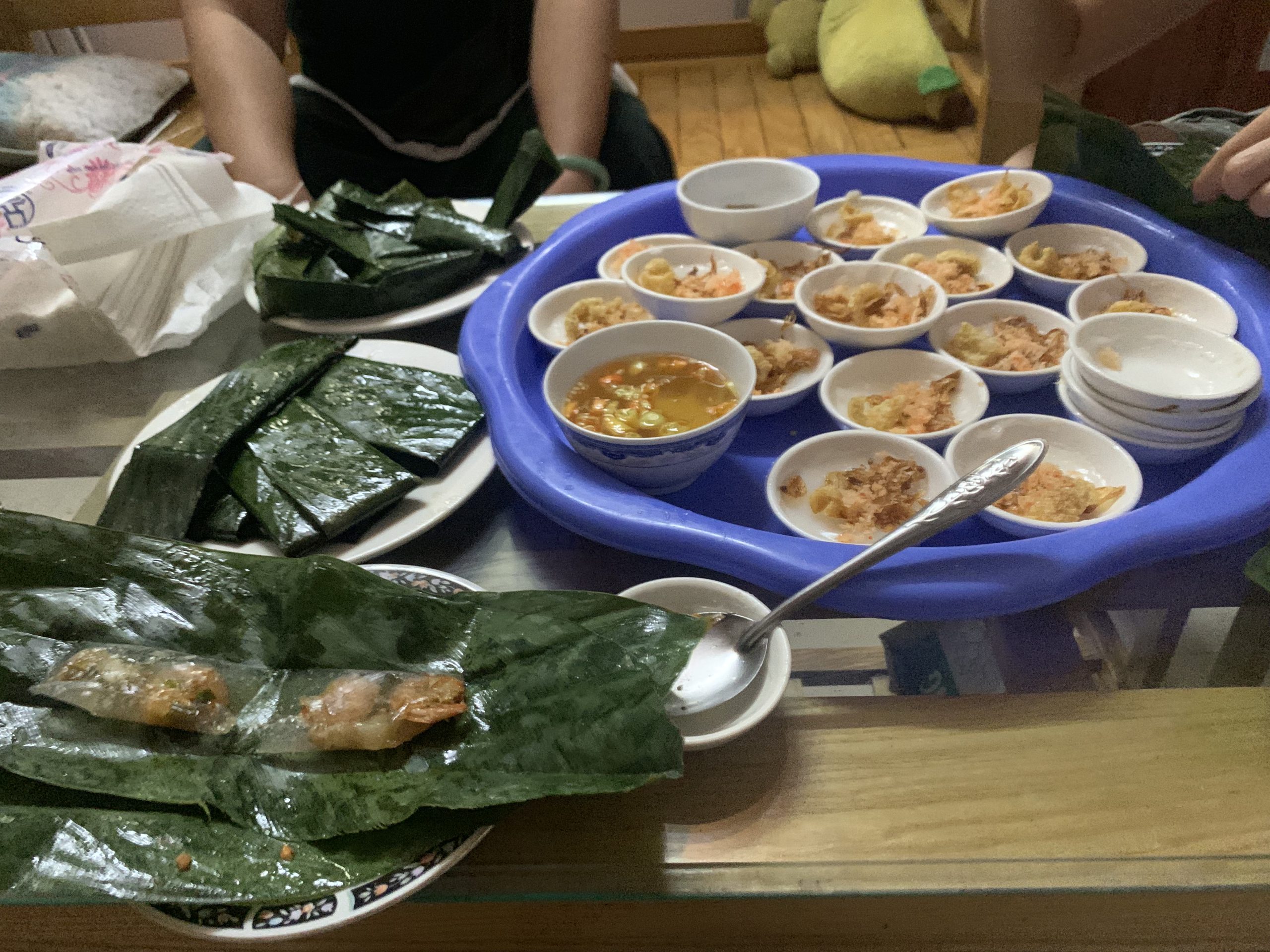
Bánh bèo and Bánh bột lọc are bite sized, savory Vietnamese dishes from the city in Vietnam that my father is from, Huế. Bánh bèo is uniquely served on small, individual dishes, and my father always told me that stacking the dishes became a competition of who could eat the most. Bánh bột lọc is wrapped, steamed, and served in banana leaves, and perhaps part of how much I love this dish is because of the element of surprise. When we eat these dishes, my father always reminds me to drown my bites in the slightly sweet and spicy Vietnamese dipping sauce served on the side, Nước chấm. I’ve been to many Vietnamese restaurants in New York and these specific dishes are rare to find. Ever since I was young, my family would often make an entire trip to Philadelphia to visit an authentic Vietnamese bakery called Ba Le that has a vast selection of traditional Vietnamese desserts, sauces, and dishes. For gatherings, my family sometimes orders large platters of Bánh bèo and Bánh bột lọc from a local family in Queens. When I visited my family in Huế in the summer of 2023, I was so excited to try Bánh bèo and Bánh bột lọc from my aunt’s neighbors. It was served exactly how I’d always eaten it, but it was even more special now that I was enjoying it with my family in Vietnam. Whenever I think of the taste of Vietnam, the first thing I think of are these two special dishes.

Proudly powered by WordPress | Theme: Baskerville 2 by Anders Noren.

Up ↑